Reviewed by our editorial team Published
Few European cities wear Christmas quite like Bruges. Its cobbled medieval centre, laced with quiet canals and watched over by the soaring Belfry, needs almost no dressing up to look like a storybook illustration, and every December it gets the full treatment anyway. The city’s winter festival, known as Winter Glow, wraps the historic core in fairy lights, chalets and the smell of mulled wine from late November through to early January.
At the heart of it sit two genuine Christmas markets, one on the vast, gabled Markt square beneath the Belfry, the other tucked into the smaller, quieter Simon Stevinplein a few minutes’ walk away. Around them, Bruges layers in an indoor ice rink, a covered winter bar, a new “Winter Giant” trail and a dedicated weekend market for local makers, so there is genuinely more to a festive visit here than one square full of stalls.
This guide covers exactly what you will find at the Bruges Christmas markets themselves, from what is actually sold and eaten there to real prices, honest opening-time rules over the holidays, and how the city marks New Year’s Eve. Because Bruges is so compact, and because it sits so close to Brussels and Ghent by train, it also covers how to fold a market visit into a wider trip without needing a car at any point.
First-time visitors often assume one evening covers everything, but the markets, the rink and the wider Winter Glow lights genuinely reward a slower, two-evening pace instead. Spreading a visit across an afternoon of shopping and a separate evening at the stalls lets the compact old town’s atmosphere properly sink in.
| Market / Location | Approx. Dates (2026) | Hours | Nearest Transport |
|---|---|---|---|
| Markt Christmas Market | 20 Nov 2026 – 3 Jan 2027 (confirmed by Visit Bruges) | Previous edition ran 10:30am–10:30pm Mon–Thu, 10:30am–12:30am Fri–Sun; 2026 hours not yet published | Bruges railway station, then a 20-minute walk or short bus ride to Markt |
| Simon Stevinplein Christmas Market | 20 Nov 2026 – 3 Jan 2027 | Same lighting hours as Markt (to be confirmed for 2026) | 5-minute walk from Markt, off Zuidzandstraat |
| Ice Rink, Koning Albert I-park | Runs across the same winter season (last confirmed: 21 Nov 2025 – 4 Jan 2026) | Daily, roughly mid-morning to evening; confirm on arrival | 10-minute walk from Markt, near the station side of the centre |
| Handmade in Brugge MAKERSmarkt, Stadshallen | 18–20 December 2026 | Daytime market hours | Inside the City Halls on the Markt, beneath the Belfry |
The Christmas Markets on the Markt and Simon Stevinplein
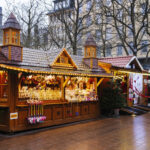
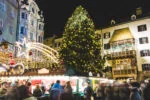
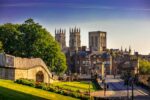
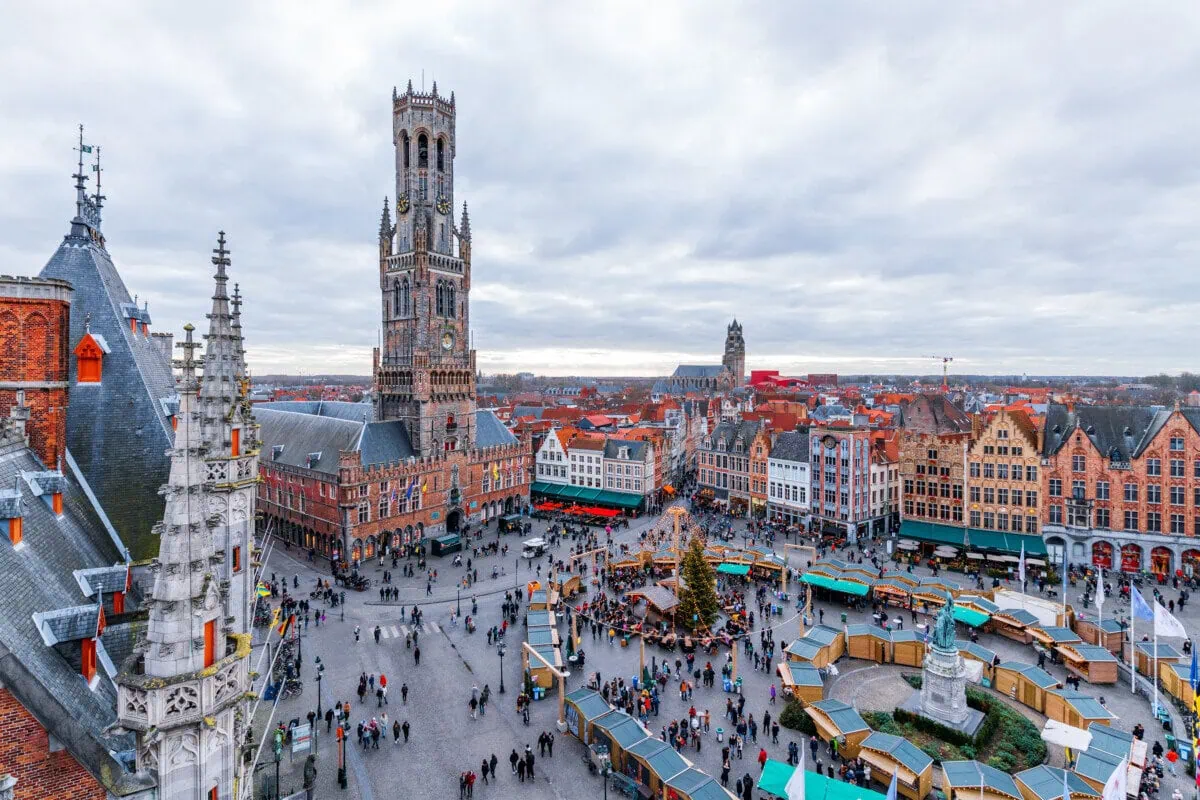
The main event is the market on the Markt, Bruges’ central square, where wooden chalets ring the cobbles beneath the 83-metre Belfry and the ornate gabled guild houses that line the square’s edges. Visit Bruges describes it as a traditional Christmas market in the city’s own “Wintergloed” style, and it is genuinely the visual centrepiece of the whole season, especially once the lights come on after dusk.
A short walk away, the second market sits on Simon Stevinplein, a smaller, leafier square named for the Bruges-born mathematician whose statue stands at its centre. Officially this market is built around short supply chains and artisanal products, which in practice means a noticeably more local, small-producer feel than the bigger Markt setup, and a calmer place to browse if the main square gets crowded.
Both markets sit inside Bruges’ compact, largely pedestrianised medieval core, so hopping between them takes only a few minutes on foot past canal bridges and floodlit facades. For everything else worth doing in the city outside the festive stalls, from the Belfry climb to the Béguinage and the canal boat routes, the site’s own Things to Do in Bruges guide covers the year-round highlights that sit around the market squares.
Because the two markets are genuinely different in character rather than duplicates of each other, it is worth building in time for both rather than treating Simon Stevinplein as an afterthought. The Markt delivers the postcard view and the bigger crowds; Simon Stevinplein delivers the quieter, more local browsing experience just a few minutes further on.
Ice Skating at the Koning Albert I-park Rink
Bruges runs a genuine, purpose-built ice rink each winter as part of Winter Glow, most recently sited in Koning Albert I-park (King Albert I Park), right beside the “IJsgloed” winter bar. The rink is a covered, 525-square-metre indoor surface using real ice on an energy-efficient system, rather than a synthetic outdoor patch, which makes it a reliable option whatever the weather does that day.
On the most recently confirmed pricing, admission runs around €8 (£7/$9) per adult session, with a €7 (£6/$8) group rate for parties of ten or more and a discounted €5 (£4/$6) rate for local Bruges school groups. Children under three skate free, and skate hire is normally included in the ticket price rather than charged separately.
One practical point worth knowing before you go: the rink has historically taken Bancontact card and cash only, so a UK debit or credit card that doesn’t support Bancontact payments may not work at the gate. It is worth carrying some euros in cash as a backup rather than assuming a standard contactless card will be accepted.
Sessions typically run daily through the winter season, from mid-morning into the evening, though exact 2026 timings had not been published at the time of writing. There is no need to pre-book a specific slot in past editions, so turning up and queuing has generally been the normal approach for visitors.
Best for a short trip. Compare rooms by neighbourhood, price and guest rating before you book.
Compare hotelsBest for families, or any stay past about four nights. A kitchen and a washing machine start paying for themselves.
Browse rentalsBest if you have already picked a hotel. Checks the big booking sites for the same room and shows who is cheapest.
Check dealsThe Winter Giant, IJsgloed Bar and Other Winter Glow Highlights
Winter Glow is bigger than the two Christmas markets alone, and for 2026 the festival itself runs from 20 November 2026 to 14 February 2027, a noticeably longer window than the markets themselves, which wrap up on 3 January. That extra stretch is built around quieter winter attractions once the market stalls have packed away for the year.
New for this edition is the Winter Giant, an interactive winter legend the city is building with community participation woven into the concept, alongside the more established “IJsgloed” winter bar next to the ice rink in Koning Albert I-park. The bar is styled as an outdoor spot for a drink under string lights with a direct view over the skaters, and it is a genuinely pleasant stop even if you have no intention of lacing up skates yourself.
For a more hands-on festive stop, the Handmade in Brugge MAKERSmarkt takes over the historic Stadshallen (City Halls) beneath the Belfry from 18 to 20 December, showcasing genuinely local makers under the Handmade in Brugge label rather than imported market-stall stock. It is a good complement to the two outdoor markets if you want a concentrated dose of local craft in one indoor venue.
Beyond named events, the wider city centre is threaded with light trails and decorated squares through the season, so simply walking between the Markt, Simon Stevinplein and the canals after dark is worthwhile in its own right. There is no single “must-see” light installation to chase down; the atmosphere is spread across the whole historic core rather than concentrated in one spot.
Christmas Markets After Dark: The Winter Glow Light Trail
Once the stalls on the Markt and Simon Stevinplein close for the night, Bruges keeps going through the wider Winter Glow light trail, a free illuminated route that winds roughly three kilometres through the historic centre. Rather than concentrating everything in the two market squares, the trail threads quiet squares, canal-side stretches and hidden alleys that most daytime visitors never find.
The trail is built around a series of light installations spread across the old town, from playful, interactive pieces to quieter, atmospheric lighting on bridges and waterside facades. Landmarks such as Minnewater park and the canal-side stretches near the Church of Our Lady take on a genuinely different character once they become part of a deliberately lit route after dark.
This is genuinely different from browsing the market itself, since the trail is walked rather than shopped, and it rewards a slower pace than an evening spent queuing for a hot drink. It also runs for longer than the markets: while the Markt and Simon Stevinplein stalls close on 3 January, Winter Glow’s wider lights continue until 14 February 2027.
Doing the trail after the market crowds have thinned, rather than squeezing it into the same busy evening as market browsing, is the better way to see it properly. Comfortable shoes matter here too, since the route covers cobbles and canal paths rather than the flatter market squares, and there is no single fixed starting point to worry about.
Christmas Shopping Streets: Steenstraat and Beyond
Away from the market stalls themselves, Bruges turns several of its main shopping streets into genuinely pedestrian-friendly spaces for the festive period. Steenstraat, the city’s principal shopping artery running off the Markt, goes car-free every day between 1pm and 6pm through the season, which makes it a far more relaxed browse than its normal traffic-sharing self.
Katelijnestraat, running from Ankerplein back towards the centre, follows the same low-traffic pattern daily between 1pm and 6pm, while Geldmuntstraat and Zuidzandstraat go low-traffic on Saturdays and Sundays across the same afternoon window. Together these streets form a genuinely walkable shopping loop around the two Christmas markets rather than a single isolated strip.
On these designated festive shopping days, Bruges has also offered free public transport into the centre, specifically to reduce the pressure on parking during the busiest browsing hours. Visit Bruges confirms free bus travel has run on shopping days plus every day from 25 December to 1 January, which is a genuinely useful detail for anyone staying slightly outside the old city walls.
Expect a mix of independent concept stores, small boutiques and long-established chocolate and lace shops along these streets, alongside the more familiar chain names. This is where the bulk of Bruges’ famous chocolate and lace shopping actually happens, in permanent shopfronts rather than at the outdoor market stalls themselves.
What to Buy at the Bruges Christmas Markets
The market stalls on the Markt and Simon Stevinplein are built around gifts, winter treats and seasonal decorations rather than everyday souvenirs, and that distinctly local flavour is part of the appeal. Expect hand-strung wreaths, tree ornaments, wool and knitwear, candles and small home decor pieces alongside the food and drink stalls, genuinely different browsing to a generic city-centre gift shop.
Because Simon Stevinplein’s market is explicitly built around short supply chains and artisanal products, it is the better of the two squares for genuinely handmade items with a traceable local maker behind them, rather than imported stock. The Markt’s larger footprint means a wider spread of general gift and decoration stalls alongside its own artisanal entries.
Bruges’ two most famous specialities, chocolate and lace, are worth a specific honest note here: while a handful of market stalls do sell packaged chocolates and small lace items, the serious, high-quality versions of both are overwhelmingly sold in the city’s dedicated chocolate shops and lace boutiques along Steenstraat and the surrounding streets rather than from outdoor chalets. Treat the market stalls as a good spot for smaller, gift-priced items and save a proper chocolate or lace purchase for a specialist shop.
For genuinely local, small-batch craft in a single indoor stop, the Handmade in Brugge MAKERSmarkt at the Stadshallen in mid-December is the most concentrated place to buy directly from the makers themselves, covering everything from ceramics to textiles under the city’s own local-craftsmanship label.
Food and Drink at the Markets
Food is where the Bruges markets earn their keep on a cold afternoon, and the stalls lean hard into genuine Belgian and Flemish specialities rather than generic festive snacks. The two headline drinks are glühwein (mulled wine), served hot and spiced from countless stalls, and jenever, the traditional Dutch and Belgian juniper spirit that locals often drink neat or warmed against the cold.
Belgian waffles are everywhere, sold fresh off the iron and topped with anything from simple icing sugar to chocolate sauce and whipped cream, alongside crisp Belgian frites served in a paper cone with mayonnaise. Hot chocolate and fresh pancakes round out the sweeter end of the stalls, and both are genuinely worth queuing for rather than a tourist-trap afterthought.
On the savoury and drinks side, expect stalls pouring genuine Belgian beer, often including seasonal winter ales alongside the country’s better-known Trappist and abbey styles, plus grilled sausages and other warm street food typical of Flemish winter markets. The overall spread favours quick, warming food you can eat while walking rather than a sit-down meal, which suits the compact, wander-between-stalls nature of both squares.
Cups for hot drinks at Belgian Christmas markets typically carry a small refundable deposit, so it is worth holding onto your receipt or token if you want that couple of euros back at the end. This is standard practice across Belgian and wider European Christmas markets rather than anything Bruges-specific, but it catches first-time visitors out often enough to be worth flagging.
How Much Does It Cost to Visit the Bruges Christmas Markets
Walking around both the Markt and Simon Stevinplein markets is free, with no entry gate or ticket required to browse the stalls, watch the lights or simply enjoy the atmosphere. The only costs are what you actually choose to eat, drink or buy, which makes the markets themselves an easy, budget-friendly addition to any Bruges itinerary.
On typical Belgian Christmas market pricing, a cup of glühwein or hot chocolate runs somewhere around €4-6 (£3-5/$4-7), a fresh waffle around €4-6 (£3-5/$4-7), and a cone of frites in the same rough bracket. A jenever shot is typically a little cheaper than a full glühwein, and most food stalls accept card as well as cash, though carrying some euros is still sensible for smaller vendors.
The one genuinely ticketed activity in this guide is the ice rink, at around €8 (£7/$9) per adult session on the last confirmed pricing, with group and school discounts described in the ice skating section above. Remember that the rink has historically taken Bancontact and cash only, not all UK cards, so plan your payment method before joining the queue.
Gifts and craft items at the market stalls vary widely by what you buy, but small decorations and stocking-filler items generally start from a few euros, rising into the tens of euros for larger handmade pieces, particularly at the artisanal Simon Stevinplein market and the MAKERSmarkt. There is no obligation to spend beyond what genuinely appeals, which is part of what keeps a Bruges market visit feeling relaxed rather than pressured.
Best for long or awkward journeys. Builds one itinerary out of separate flights.
View flightsBest if you want maps and messaging working the moment you switch your phone on.
See eSIM plansBest if you would rather not work out the transport on arrival. Book it now and forget it.
View transfersChristmas and New Year Opening Times in Bruges
Belgium’s public holiday pattern around Christmas is easy to get wrong if you’re used to a different country’s rules, so it’s worth setting out plainly. Christmas Day (25 December) and New Year’s Day (1 January) are genuine Belgian public holidays, and general shops, supermarkets and many businesses across Bruges close for the day, though the Christmas markets themselves generally stay open as a specific festive exception.
Critically, 26 December is not a public holiday in Belgium, unlike the UK’s Boxing Day. Shops in Bruges reopen with their usual hours on the 26th, so anyone expecting a UK-style extra closed day after Christmas should plan around normal Belgian trading instead, with regular shops and supermarkets open as on any other day.
On Christmas Eve (24 December), general shops and supermarkets typically close earlier in the afternoon rather than trading their full usual hours, so it is worth doing any last errands before lunchtime rather than late afternoon. The Christmas market stalls themselves have historically kept shorter hours on both 24 and 31 December, closing earlier in the evening than their standard festive-season pattern.
Public transport in Belgium generally runs on a reduced, Sunday-style timetable on Christmas Day, and pharmacies and postal services also close, with only on-duty emergency pharmacies operating. It is sensible to check specific opening times for any restaurant or attraction you’re relying on for 25 December and 1 January rather than assuming normal service, since individual businesses vary even within a public holiday.
New Year’s Eve in Bruges
Bruges’ New Year’s Eve celebration traditionally centres on ‘t Zand, the wide modern square on the western edge of the historic centre, rather than the medieval Markt itself. Crowds typically start gathering here from around 10:30pm, building towards a free, genuinely public countdown to midnight rather than a ticketed event.
At midnight, a fireworks display traditionally lights up ‘t Zand and the striking modern facade of the nearby Concertgebouw concert hall, with the crowd joining in a local tradition of singing together in both Flemish and English as the display goes up. It’s a genuinely warm, community-feeling way to see in the new year rather than a purely tourist spectacle.
Once the fireworks finish, the celebration typically spills into the bars and pubs along Vlamingstraat and the surrounding side streets, which stay busy well into the early hours. With the Christmas markets themselves running until 3 January 2027, and Winter Glow’s wider lights and ice rink continuing into February, Bruges keeps its festive atmosphere going well past the New Year’s Eve celebrations on ‘t Zand.
Because ‘t Zand draws a genuine local crowd rather than a purely tourist one, arriving reasonably early secures a decent vantage point without needing to fight through the busiest part of the square right at midnight. Dress warmly and expect standing room only close to the fireworks, since this is a street-level celebration with no seating or barriers involved.
Getting to Bruges by Train from Brussels and Ghent
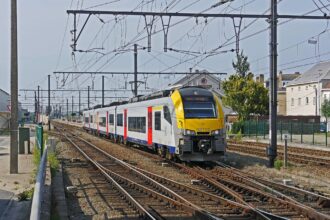
Bruges’ railway station sits a genuine 20-minute walk from the Markt, or a short bus ride if you’d rather not walk with luggage, and it’s exceptionally well connected by train given the city’s small size. Direct services run frequently from Brussels, typically taking around an hour, which makes a Bruges Christmas market visit an easy day trip for anyone based in the capital over the festive season.
If Brussels is your actual base for a wider Belgian Christmas trip, the site’s own Day Trips from Brussels guide and Things to Do in Brussels guide both cover Bruges alongside the capital’s own considerable Christmas market scene, useful if you’re deciding how to split a short trip between the two cities.
For anyone buying point-to-point tickets rather than a rail pass, the Belgium Train Tickets Explained guide covers how Belgian rail fares actually work, including the standard, non-reservation domestic system that covers the Brussels-Bruges and Ghent-Bruges routes. International rail travellers combining Bruges with a wider European itinerary may find the Interrail Benelux Pass Guide useful for weighing up whether a regional pass makes sense against buying tickets individually.
Ghent, Belgium’s other great canal city and a genuine rival to Bruges for festive atmosphere, sits roughly 25-30 minutes away by direct train, making the two an easy pairing on a longer Belgian winter break. Many visitors base themselves in one city and day-trip to the other, since both have their own distinct Christmas market scene worth seeing rather than one being a lesser substitute for the other.

Bruges’ Fairytale Backdrop and What Makes It Different
What genuinely sets Bruges apart from most other European Christmas market cities is how little the city needs to try. Its canals, humpbacked bridges and gabled medieval houses are already postcard material year-round, and December simply adds lights, chalets and skaters into a setting that a purpose-built festive backdrop elsewhere is trying to imitate.
The city’s compact, largely car-free medieval centre means almost everything covered in this guide, both markets, the ice rink, the MAKERSmarkt and the main shopping streets, sits within a comfortable 15-20 minute walk of the Markt. That’s a genuine practical advantage over larger festive cities where a market, a rink and a shopping district can be scattered across an entire metro system.
Expect properly cold, damp Belgian winter weather, typically somewhere around 2-7°C (36-45°F) through December, with a genuine chance of fog rolling in off the surrounding flat countryside, which if anything only adds to the atmosphere along the canals after dark. Warm, waterproof layers and comfortable shoes for cobbles matter more here than in a city with wider, flatter pavements.
The Belfry itself, looming over the Markt and its market stalls, is worth the climb even in winter for a genuinely different view over the rooftops, canals and the twinkling market below, weather permitting. Combined with the canal boat routes that run a reduced winter schedule and the Béguinage’s quiet, snow-dusted courtyard, Bruges rewards slowing down rather than rushing between the market stalls alone.
More Than the Market: Bruges’ Medieval Core
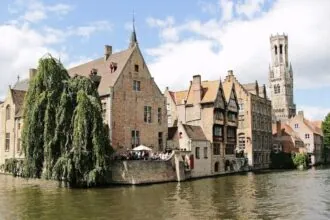
Strip away the chalets and the lights, and Bruges’ Christmas market success still rests on a medieval core that would draw visitors even in July. The compact web of canals, humpbacked bridges and gabled guild houses gives every market photo its backdrop, and it is worth setting aside time to see these streets as more than a festive stage set.
A short canal-side walk from the Markt and Simon Stevinplein takes in pedestrianised medieval lanes, quiet courtyards and the same waterways that draw boat tours the rest of the year. Even without booking a single attraction, wandering between the two Christmas markets past floodlit facades and canal bridges covers a decent slice of what makes Bruges’ old town distinctive.
For visitors who want to go beyond the market squares and the Belfry view above them, the site’s own Things to Do in Bruges guide covers the full year-round highlights of the historic centre, from the Beguinage and canal cruises to the city’s museums and chocolate attractions. It is the natural next stop for anyone planning more than an evening at the stalls.
Because the old town is so walkable, folding a proper look at the canals and medieval streets into a market visit costs very little extra time. A festive trip built only around the two squares and the ice rink misses a city that earns its fairytale reputation well beyond December.
A One-Day Bruges Winter Glow Itinerary
A Winter Glow day works best if it starts on the Markt itself, before the late-morning crowds fill the square beneath the Belfry. Browsing the chalets while the cobbles are still quiet gives a proper first look at the market’s biggest attractions, and a short walk to Simon Stevinplein afterwards swaps the crowds for a calmer, more local browse among the artisanal stalls.
By early afternoon, Koning Albert I-park is the natural next stop, whether or not skating actually appeals. The covered ice rink and its adjoining winter bar make a good lunch-hour pause, and anyone visiting during the Handmade in Brugge MAKERSmarkt weekend can fold a stop at the Stadshallen into the same stretch of the day for genuinely local craft shopping.
Mid-afternoon suits the Winter Giant trail and a slower loop through the compact medieval core, since daylight still makes the canals and the Belfry’s rooftop view worth the detour. Steenstraat and Katelijnestraat, both pedestrianised in the early afternoon through the season, are worth threading into this stretch for chocolate and lace shopping away from the market stalls.
Evening is when Bruges genuinely changes character, so timing dinner for dusk lets the lights come up around you rather than arriving after dark. The Winter Glow light trail comes into its own here, leading on foot through quieter squares, canal-side stretches and hidden alleys well away from the Markt’s bigger crowds.
Close the day back at the Markt or Simon Stevinplein, when the stalls, the illuminated guild houses and the Belfry lit up overhead give a genuinely different atmosphere to the same spaces seen that morning. A last gluhwein or hot chocolate is the natural way to end a day that has covered markets, ice, art and the wider city in a single loop.

Rupert’s Handy Travel Tips
I’ve trotted round the Bruges markets more than once, and here’s what actually helps on the ground.
- Carry euro cash: the ice rink takes Bancontact and cash only, so a UK contactless card may not work at the gate.
- Visit both squares: don’t stop at the Markt, the Simon Stevinplein market a few minutes away has a genuinely different, more local character.
- Save chocolate and lace shopping for the shops: the good stuff is in the boutiques along Steenstraat, not the market stalls themselves.
- Time your last errands before lunch on 24 December: general shops close early that afternoon, unlike the market stalls.
- Remember 26 December is a normal working day: Belgium has no Boxing Day holiday, so shops reopen as usual.
- Arrive early for New Year’s Eve at ‘t Zand: it’s standing room only close to the fireworks at midnight.
- Pack for cobbles, not just cold: comfortable, grippy footwear matters as much as a warm coat in Bruges’ historic centre.
Want to meet the reindeer behind our travel tips? Find out more in our page Who is Rupert?.



Frequently Asked Questions
When do the Bruges Christmas markets take place in 2026?
Visit Bruges confirms the Christmas markets on the Markt and Simon Stevinplein run from 20 November 2026 to 3 January 2027, while the wider Winter Glow festival, including the ice rink and lights, continues until 14 February 2027.
Is it free to visit the Bruges Christmas markets?
Yes, walking around both the Markt and Simon Stevinplein markets is completely free, with the only costs being whatever food, drink or gifts you choose to buy, plus a separate ticket if you want to use the ice rink.
Where is the Bruges ice rink and how much does it cost?
The rink sits in Koning Albert I-park beside the “IJsgloed” winter bar, and on the last confirmed pricing costs around €8 (£7/$9) per adult session, with group and school discounts, skate hire included and Bancontact or cash as the only accepted payment.
Are shops open in Bruges on 26 December?
Yes, unlike the UK’s Boxing Day, 26 December is a normal working day in Belgium, so general shops and supermarkets in Bruges reopen with their usual hours, while 25 December and 1 January are genuine public holidays with most shops closed.
Does Bruges have New Year’s Eve fireworks?
Yes, Bruges traditionally holds a free public countdown and midnight fireworks display at ‘t Zand square, with crowds gathering from around 10:30pm before the celebration spills into the bars along Vlamingstraat afterwards.
Can I visit Bruges and Ghent’s Christmas markets on the same trip?
Yes, Ghent sits roughly 25-30 minutes from Bruges by direct train, and both cities run their own distinct Christmas markets, so many visitors base themselves in one and day-trip to the other over a longer Belgian winter break.
Further Reading
For everything else worth seeing in the city once the market stalls close for the night, our Things to Do in Bruges guide covers the Belfry, the canals and the rest of the historic centre’s year-round attractions in full. If Bruges is one stop on a wider trip, the Day Trips from Brussels guide and our broader Things to Do in Brussels page both help with planning how to split time between the capital and Bruges.
On the practical side of getting there, Belgium Train Tickets Explained breaks down how domestic rail fares work for the Brussels-Bruges and Ghent-Bruges routes, while the Interrail Benelux Pass Guide is worth a look for anyone combining Belgium with a wider international rail trip. For the official word on this year’s exact dates and any programme changes, Visit Bruges keeps its own Winter Glow Christmas Markets page updated as the season approaches, and it’s the best source to double-check details closer to your trip.