Reviewed by our editorial team Published
Travellers who have just ridden the Bergen Line or the Flåm Railway and assume Norway’s rail network will simply carry them on to Stavanger are in for a surprise: there is no railway line connecting the two cities at all, and never has been. Despite both sitting on Norway’s dramatic western coast only around 200km apart as the crow flies, the fjords and mountains between them have never been bridged by rail.
That leaves four genuinely practical ways to make the journey: a short domestic flight, a coastal bus that itself crosses two fjords by ferry, a direct Fjord Line ferry that sails the whole way by sea, or driving yourself with two mandatory car-ferry crossings built into the route.
Each option trades speed for scenery in a different way, and which one suits a particular trip depends more on how much time is available and how much of the journey itself is meant to be part of the holiday, rather than any one option being straightforwardly best.
It is also a route many travellers end up doing only once each way rather than twice, pairing a fast flight in one direction with a slower ferry, bus or drive in the other so the trip includes at least one properly scenic leg without doubling the total travel time. Anyone building a wider Norway itinerary around the Norway in a Nutshell style of multi-modal travel will recognise the same logic applied here.
Bergen to Stavanger at a Glance
| Option | Typical Duration | Approx. Starting Fare | Best For |
|---|---|---|---|
| Flight | 40 minutes | Varies by carrier and date | Speed, or a same-day return trip |
| Coastal bus (Kystbussen / Vy express) | Around 4 hours 20 minutes to 5 hours | From roughly 499 NOK (£40/$54/€46) | Budget travellers, or anyone prone to motion sickness on the boat |
| Fjord Line ferry | Around 5 hours 30 minutes | From roughly 555 NOK (£44/$60/€52) | Travellers who want the whole journey to be the scenic part |
| Driving (two car ferries) | Around 4.5 to 5 hours including crossings | Fuel plus roughly 219 NOK (£18/$24/€20) and 167 NOK (£13/$18/€16) in ferry fares | Flexibility to stop along the way, including Hardangerfjord |
| Ryfylke Route (scenic drive) | Around 8 hours | Fuel plus two included ferry crossings, no separate booking needed | A full day with no schedule to keep, prioritising scenery over speed |
Why There Is No Train Between Bergen and Stavanger
Norway’s rail network was built outward from Oslo, and both Bergen and Stavanger ended up connected to the capital by their own separate lines rather than to each other directly. The terrain between them, cut through by deep fjords including the Hardangerfjord and a long stretch of mountainous coastline, would make a direct railway an extraordinarily expensive piece of engineering, and it has simply never been built.
The practical result is that anyone travelling between the two cities without flying is always going to cross water at some point, whether that means a short car ferry, a coastal express boat, or an inland detour around the fjords by road. This is worth knowing before assuming a rail pass or an Interrail ticket will cover the whole journey, since it simply cannot.
The scale of the detour becomes obvious looking at the wider rail map rather than just this one gap: both cities do connect to Oslo by train, Bergen via the famous Bergensbanen and Stavanger via the separate Sørlandsbanen through Kristiansand, but riding a train between Bergen and Stavanger would mean travelling the length of one line into the capital and back out on the other. That is a rail detour of well over a thousand kilometres for a direct distance of barely 200km.
Fixed road links across this stretch of coast have also arrived slowly, and part of the reason a continuous ferry-free road still doesn’t exist is the sheer scale of the engineering involved in crossing fjords this deep. Norway’s Rogfast project, currently under construction beneath the Boknafjorden, will eventually replace the Arsvågen-Mortavika ferry with what is planned to be the world’s longest and deepest subsea road tunnel, part of a wider ambition to make the whole E39 coastal highway ferry-free between Kristiansand and Trondheim, though its opening is not expected before the early 2030s.
Best if you want daily housekeeping and a front desk. Filter by area first, then by price.
Check availabilityBest for groups who want one address and separate bedrooms rather than three hotel rooms.
See holiday homesBest as a last check before booking. Compares Bergen hotel rates across several sites in one search.
Compare ratesFlying: The Fastest Option
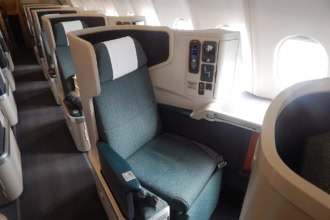
A direct flight between Bergen Airport Flesland and Stavanger Airport Sola takes around 40 minutes in the air, with multiple departures most days from Norway’s domestic carriers. For anyone short on time, or simply wanting to reach Stavanger and its famous Preikestolen hiking trails with minimal fuss, this is comfortably the quickest way to cover the distance.
The trade-off is obvious: flying skips the fjord and coastal scenery that makes the other three options worth considering in the first place, and both airports sit a short transfer outside their respective city centres rather than in the middle of town.
Several airlines compete on the short hop, principally Norwegian, SAS and Widerøe, and on a typical weekday there can be ten or more flights in each direction. That frequency makes it realistic to book on genuinely short notice rather than needing to plan weeks ahead, outside the fare spikes of peak summer weekends.
The flight itself is so short that the time spent at the airport, clearing security and walking out to the gate on either end, comfortably exceeds the roughly 40 minutes actually spent in the air. It is worth remembering before assuming flying automatically saves the most time door to door, especially against the coastal bus on a good traffic day.
Both airports run dedicated airport coaches into their respective city centres, the Flybussen from Flesland taking around 30 to 40 minutes into central Bergen, and a similar service linking Sola to downtown Stavanger, so neither transfer adds serious time to the overall journey once the flight itself is done.
The Coastal Bus: Kystbussen and Vy Express
The Kystbussen coastal bus, along with a competing Vy express service, covers the route in around 4 hours 20 minutes to 5 hours depending on traffic and which crossing it catches, with fares starting from roughly 499 NOK (£40/$54/€46). Both services actually cross the fjords by ferry themselves, built into the ticket, so passengers can get off, stretch their legs and watch the crossing from the open deck rather than staying seated on the coach.
The road route itself is comparatively direct and doesn’t wind through the same degree of mountain terrain as some other Norwegian long-distance journeys, which makes it a genuinely more comfortable option for anyone prone to motion sickness than the longer sea crossing on the Fjord Line ferry.
Both companies run buses at roughly hourly intervals through peak weekday travel times, thinning out to a handful of departures on Sundays and public holidays, and the coastal bus follows the same E39 corridor drivers use, crossing the fjords on the same Halhjem-Sandvikvåg and Arsvågen-Mortavika ferries built into the ticket price.
Free wifi and onboard toilets are standard on both services, and the coaches terminate at each city’s central bus station rather than an out-of-town depot, which makes the bus the most straightforward option for anyone without checked luggage or a rental car to return at the other end.
Because both operators effectively compete on the same corridor, it is worth comparing Kystbussen and Vy express departure times directly rather than assuming either is automatically cheaper, since fares and schedules shift with demand and neither company holds a fixed monopoly on the route.
The Direct Fjord Line Ferry
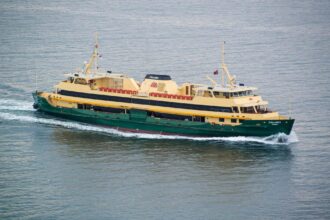
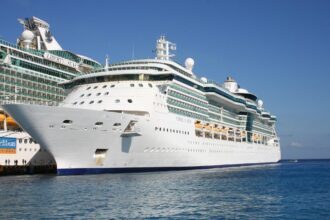
Fjord Line runs a domestic coastal ferry directly between Bergen and Stavanger, taking around 5 hours 30 minutes for the whole crossing, with fares starting from roughly 555 NOK (£44/$60/€52). The ship carries both foot passengers and vehicles, and onboard shopping and a restaurant or buffet make it feel closer to a short cruise than a simple transport link.
Passengers are free to walk around the ship for the whole journey rather than staying in an assigned seat, and the route runs along Norway’s dramatic western coastline the entire way, making this the option that treats the journey itself as the main event rather than a means of getting somewhere else.
Two purpose-built ships, MS Bergensfjord and MS Stavangerfjord, share the domestic route between them, both fitted out with a full restaurant, a café-bar and cabins ranging from simple inside berths to outside cabins with sea views for anyone wanting to sleep through part of the crossing. Tax-free shopping, a feature of Fjord Line’s international Hirtshals sailings, is not available on this purely domestic leg under Norwegian law.
Cars, motorhomes and even motorcycles can be booked onto the crossing alongside foot passengers, which makes the ferry a genuine alternative to the two-ferry driving route for anyone who would rather hand the fjord crossings over to a ship’s crew than queue at a car-ferry ramp twice in one afternoon.
Our separate Ferries from Bergen guide covers this and Bergen’s other coastal and fjord ferry routes, including the famous Hurtigruten coastal voyage, in more detail.
Bergen to Stavanger Ferry Times & Departures
Use Ferryhopper to check live sailings between Bergen and Stavanger in both directions. Select your travel date to compare scheduled ferry departures, sailing times and available tickets.
Select the date you want to travel. The times shown on the right-hand side are the scheduled departure and arrival times for each ferry.
Availability can change quickly, particularly during weekends and the summer season. Some sailings may stop accepting bookings a few hours before departure. If a timetable is blank, there may be no available sailings for today. Try moving to a later date to check future services.
This is the timetable for the outward direction. Use it to check sailings from Bergen to Stavanger for the date you plan to travel.
This is a separate timetable for the opposite direction. It does not select a return ticket for the journey above. Use it to check sailings from Stavanger to Bergen.
Want to compare different routes and other ferry options?
Compare routes, operators, sailing times and prices with Ferryhopper or Direct Ferries.
Driving with Two Ferry Crossings
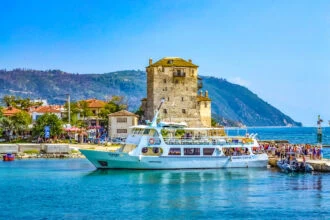
Driving is, somewhat counterintuitively, one of the faster options on this route, at around 4.5 to 5 hours including two short car-ferry crossings that are simply part of the road itself: Halhjem to Sandvikvåg (about 45 minutes) and Arsvågen to Mortavika (about 25 to 40 minutes, depending on the source). Both run frequently enough that advance booking generally isn’t necessary, and fares are paid per car rather than needing a separate ticket booked ahead.
The real advantage of driving is flexibility rather than raw speed: a rental car allows stops along the way, including a detour into the Hardangerfjord region, without being tied to a bus or ferry timetable.
The Halhjem-Sandvikvåg crossing lands drivers on Stord, and the road south off the ferry quickly crosses the Triangle Link (Trekantsambandet), a striking run of bridges and a subsea tunnel linking Stord to Bømlo and the mainland at Sveio. The centrepiece, Stord Bridge, is a suspension bridge worth a proper look rather than just a drive-through, and Leirvik, Stord’s small main town just off the route, makes a sensible coffee stop before the second ferry.
Further south, a short detour off the direct E39 leads to Haugesund, a proper working harbour town with waterfront restaurants and a walkable centre, genuinely worth breaking the drive for rather than just passing the exit sign. From the same stretch of coast, a longer detour reaches the island of Karmøy, where the wooden fishing village of Skudeneshavn and the Nordvegen Historiesenter museum reward anyone with an extra hour or two to spare.
Both crossings are themselves part of the scenery rather than a delay to sit through: the Halhjem-Sandvikvåg ferry in particular runs across open, fjord-fringed water with hills rising on both sides, and most drivers get out of the car to watch the crossing from the open deck rather than staying behind the wheel for the ride.
The Scenic Ryfylke Route
For drivers with a full day to spare rather than a schedule to keep, the inland Ryfylke route offers a genuinely different way to make the trip, winding through rocky highland scenery and small fjord communities inland of the direct coastal road. It is widely rated among the most beautiful drives in Norway, but it takes roughly eight hours door to door, so it suits a proper road trip rather than a quick transfer between cities.
The route is an official Norwegian Scenic Route, one of eighteen government-designated drives chosen specifically for the quality of the landscape rather than as a practical shortcut, and it covers around 260km with two ferry crossings built in along the way. It broadly runs through the towns of Sauda and Sand, tracing the inland fjords of Ryfylke rather than hugging the open coast the direct E39 follows.
One of the route’s signature stops is Allmannajuvet, a former zinc mining site turned into a striking rest area and small museum designed by the Swiss architect Peter Zumthor, tucked into a narrow ravine that makes the drive-in itself part of the experience. A little further along, Svandalsfossen tumbles down beside the road with a 540-step staircase climbing alongside the falls for anyone willing to get out and stretch their legs properly.
The Nesvik-Hjelmeland ferry, running roughly every twenty minutes, and the mountain pass at Suldalsporten both punctuate the drive, while the route’s own Ryfylke Tunnel, a 14.4km subsea crossing opened in 2019, has quietly replaced what used to be a third ferry on the approach into Stavanger. Drivers with even more time to spare can detour towards Preikestolen (Pulpit Rock) near the route’s southern end, since the famous clifftop hike sits close enough to the Ryfylke road to combine with the drive rather than needing a separate trip.
Fuel and food options thin out considerably once the route leaves the coastal towns behind, so filling the tank in Sauda or Sand before the final stretch is worth doing rather than relying on finding a station along the more remote inland sections. Mobile signal can also drop out in the narrower valleys, which is one more reason this route suits a leisurely day trip rather than a tightly scheduled transfer.
Which Option Suits Which Traveller
Travellers on a tight schedule, or simply keen to maximise time actually spent hiking Preikestolen or exploring the Lysefjord rather than travelling, should fly. Budget travellers, or anyone who would rather watch the fjords from a bus window than a boat railing, should take the coastal bus.
Anyone treating the transfer itself as part of the holiday, with time to spare and no urgency to arrive, gets the most out of the Fjord Line ferry. Drivers wanting maximum flexibility, or a chance to break the journey up with stops in the Hardangerfjord region, are best served behind the wheel.
Families and groups travelling with a car already tend to gravitate towards driving regardless of the time saved, simply because it avoids paying for extra seats or vehicle space on the bus or ferry and allows a stop in Haugesund or on Stord without any extra planning. Solo travellers and couples without a car more often default to the bus or the flight, since neither requires the added cost and hassle of a rental.
Photographers and anyone building their whole trip around Norway’s scenery specifically should lean towards the Ryfylke route over any of the faster options, since it is the one choice on this page picked out by Norway’s own tourist board for the views rather than for efficiency. Everyone else is generally better served weighing time against budget among the other three, rather than trying to force the scenic detour into a tight schedule.
Best for finding routes the airlines do not sell as a single ticket. Combines carriers to bring the fare down.
Search flightsBest for short trips. Install the eSIM at home and arrive in Bergen with working data, no shop queue.
Browse eSIMsBest after a long flight or a late landing. Price agreed before you travel, and no taxi queue.
Check transfersDoor to Door: Real Journey Time and Cost Compared
The “at a glance” table further up gives sailing and flight times, but the real comparison depends on getting from one city centre to the other, transfers included, since those transfers eat into the time a fast option appears to save. Once they are added in, the gap between the quickest and slowest choices narrows considerably, and one detail catches almost every visitor out: not every terminal actually sits in the middle of town.
| Option | Door-to-Door Time | Typical Total Cost |
|---|---|---|
| Flight | Around 2 hours 15 minutes to 2 hours 45 minutes, including Flybussen transfers and airport check-in | Airfare plus two Flybussen tickets (from around 150 NOK/£12/$16/€14 each way at the Stavanger end) |
| Coastal bus | Around 4 hours 20 minutes to 5 hours, terminal to terminal | From roughly 499 NOK (£40/$54/€46) |
| Fjord Line ferry | Around 5 hours 50 minutes to 6 hours, including the transfer from Risavika Port into Stavanger | From roughly 555 NOK (£44/$60/€52), plus a local bus or taxi at the Stavanger end |
| Driving (two car ferries) | Around 4.5 to 5 hours, city to city | Fuel plus roughly 219 NOK (£18/$24/€20) and 167 NOK (£13/$18/€16) in ferry fares |
| Ryfylke Route | Around 8 hours, city to city | Fuel plus two included ferry crossings |
The flight’s advantage shrinks once airport buffers are added, but it remains comfortably the fastest option door to door. The bigger surprise is the Fjord Line ferry: while the Bergen terminal on Nøstegaten sits genuinely within walking distance of Bryggen, the Stavanger side docks at Risavika Port, a 20 to 30 minute bus or taxi ride from the city centre rather than a harbourside stroll into town.
Costs follow a similar pattern to the time comparison. The coastal bus stays the cheapest fixed-price option, the flight’s total cost depends entirely on how far ahead it is booked, and drivers pay per crossing rather than a single ticket, so the cheapest option on paper is not always the cheapest once fuel, parking and the extra Risavika transfer are all added up.
Luggage, Car Space and Booking the Fjord Line Ferry
The Fjord Line ferry works differently for someone travelling on foot compared with someone bringing a car, and it is worth knowing the rules for each before turning up at the terminal. Foot passengers check in either at the terminal counter or at a self-service machine, scan a boarding pass to enter the departure lounge, and can only bring as much luggage as they can carry in one go, since there is no separate baggage drop for this domestic crossing.
A free luggage storage area on deck 7 opens ten minutes after departure and closes ten minutes before arrival, useful for anyone wanting to leave a bag behind while exploring the rest of the ship rather than keeping it at a seat for the whole five-and-a-half-hour crossing. Vehicles work on a separate system entirely: cars, motorhomes and caravans are reserved directly against the specific sailing at the point of booking, not added on arrival, so a car needs to go into the booking itself rather than being assumed.
Cabins are not compulsory on this daytime domestic crossing the way they effectively are on Fjord Line’s overnight route to Denmark, so most passengers simply use the restaurant, café and open decks instead of booking one. Anyone bringing a vehicle in July or August, the route’s busiest months, is better off booking well ahead rather than assuming a space will still be free at the terminal, since car capacity on any single sailing is limited by deck space. Full details on both booking processes sit on Fjord Line’s own route page for the crossing.
Weather, Winter Driving and Seasonal Reliability
All four of the regular options on this route are more exposed to autumn and winter weather than travellers from milder climates might expect, and it is worth building at least a little slack into any itinerary that isn’t a same-day flight. Norway’s open-water ferries, including the two car ferries on the direct road route and the longer Fjord Line crossing, can be delayed or occasionally suspended during severe autumn and winter storms, the kind that regularly close other exposed stretches of Norway’s coast to shipping for a few hours at a time.
Norwegian law requires winter tyres on any vehicle driven between 1 November and the first Sunday after Easter, and heavier vehicles such as motorhomes must also carry snow chains regardless of tyre type, rules that apply just as much to a rental car on this route as to a local’s own vehicle. The direct E39 road itself stays open through winter, unlike some of Norway’s higher mountain passes, since neither Halhjem-Sandvikvåg nor Arsvågen-Mortavika climbs into genuine high-altitude terrain.
The inland Ryfylke route is the option most affected by the season, climbing through open highland country around Suldalsporten that sees proper snow and ice through the winter months, even though it isn’t one of Norway’s officially gated seasonal closures like Trollstigen or Sognefjellet. Anyone tempted by the scenic detour outside the May-to-September window should treat it as a fair-weather option rather than a year-round alternative, and default to the direct road, the bus or the ferry once the clocks go back.

Connecting to a Flight at Bergen or Stavanger Airport
Anyone using Bergen or Stavanger purely as a stopover between flights needs to think about this route differently. Both Bergen Airport Flesland and Stavanger Airport Sola handle a reasonable spread of routes within Norway and nearby Europe, but neither is a major long-haul hub, so it is worth checking whether an onward itinerary beyond Northern Europe actually routes through Oslo Gardermoen instead.
For a genuine same-day connection, only the short flight between the two cities leaves a safe margin, and it is worth booking it as part of one onward itinerary rather than two separate tickets, so a delay on the first leg becomes the airline’s problem rather than a missed connection. The bus, ferry and driving routes all run four hours or more, fine for a same-day city stay but too tight to reliably catch a departing flight at the other airport.
The Fjord Line ferry deserves particular caution: it lands at Risavika Port rather than central Stavanger, adding a bus or taxi transfer on top of an already weather-exposed 5 hour 30 minute crossing, so anyone relying on it to reach Sola Airport the same day should build in a generous buffer, or plan an overnight stay instead. The winter delays covered above apply just as much to a flight connection as to any other plan.
Both airports run their transfer coaches to a fixed timetable rather than meeting every arrival, so checking the specific Flybussen departure times before relying on a tight connection is worth the extra few minutes, particularly for an early morning or late evening flight when services thin out considerably.

Rupert’s Handy Travel Tips
There’s no train between Bergen and Stavanger, so here are a few tips for whichever of the other four options you choose.
- Don’t assume a rail pass covers this leg: Interrail and Eurail passes have no railway to ride on this particular route.
- Choose the bus over the ferry if you’re prone to motion sickness: the road route is more direct and spends far less time on open water.
- Book flights early in summer: the short hop is popular enough that fares climb quickly during peak season.
- Driving? Don’t pre-book the car ferries: both crossings run frequently enough that turning up and queuing works fine outside the busiest summer weekends.
- Only pick the Ryfylke route if you have a full day: it’s beautiful, but at around eight hours it’s a road trip, not a transfer.
Want to meet the reindeer behind our travel tips? Find out more in our page Who is Rupert?.




Frequently Asked Questions About Bergen to Stavanger Travel
Is there a train between Bergen and Stavanger?
No. There is no railway line connecting the two cities, and travellers need to fly, take a coastal bus, sail the direct Fjord Line ferry, or drive with two car-ferry crossings instead.
What is the fastest way to get from Bergen to Stavanger?
Flying, at around 40 minutes in the air, is by far the fastest option, followed by driving or the coastal bus at around 4.5 to 5 hours.
How long is the ferry between Bergen and Stavanger?
The direct Fjord Line ferry takes around 5 hours 30 minutes, sailing the whole route by sea along Norway’s western coastline.
Can you drive from Bergen to Stavanger?
Yes, in around 4.5 to 5 hours including two mandatory car-ferry crossings that run frequently and generally don’t need advance booking outside peak summer weekends.
Does an Interrail or Eurail pass cover this route?
No, since there is no railway between the two cities for a rail pass to cover. Bus and ferry tickets need to be booked and paid for separately.
Further Reading & Related Guides
Anyone tempted to turn this crossing into a longer coastal adventure rather than a single transfer should also read our Ferries from Bergen guide, which covers the Hurtigruten coastal voyage and Bergen’s other fjord routes in far more depth than a single point-to-point page can.
Travellers who reached Bergen by the famous Bergen Line railway rather than flying in should start with our Bergen Line Guide for the full story of that route, and anyone chasing a different overnight sleeper elsewhere in the country will find our Norway Night Trains guide useful for planning onward journeys to Trondheim or Bodø instead.
Not every minute of a Bergen stopover needs to be spent working out the next leg of the trip. Our Things to Do in Bergen guide rounds up the city’s funiculars, museums and Bryggen’s UNESCO waterfront, while the separate Day Trips from Bergen guide covers the wider Norway in a Nutshell route and fjord excursions further afield for anyone with a day or two to spare before or after the Stavanger leg.
Given how quickly ferry, bus and flight fares can add up across a longer Norwegian itinerary, it is worth reading our Norway on a Budget guide before booking any of the four options above, since discounted DNT cabins, AutoPASS Ferry’s fare reductions and a handful of other genuine savings can all be built around a Bergen to Stavanger trip.