Reviewed by our editorial team Updated
Bath to Stonehenge: Best Ways to Travel
Travelling from Bath to Stonehenge is a popular route, especially for visitors exploring the historic highlights of southern England. While the distance is not particularly large, the journey requires a bit more planning than routes from Salisbury, as there is no simple direct connection.
Stonehenge sits around 35 miles or 55 kilometres from Bath, and most journeys take between 1 hour 15 minutes and 2 hours, depending on how you travel. This makes it very achievable as a half-day or full-day trip, but choosing the right option is key to keeping things smooth.
The main difference with this route is that you are deciding between convenience and independence. Some options remove all planning but cost more, while others are cheaper but require changes and careful timing.
For most travellers, the aim is to reach Stonehenge without wasting time on complicated transfers or long waits between connections. The sections below break down exactly how each option works in practice, so you can choose the one that fits your itinerary.
Guided Tours from Bath: The Most Straightforward Option
For many visitors, the easiest way to travel from Bath to Stonehenge is to join a guided tour, which handles transport, tickets, and timing in one simple package.
These tours are designed to remove all of the complexity from the journey. Transport, entry tickets, and timing are handled for you, which means you do not need to plan routes, book multiple tickets, or coordinate connections.
Most tours depart from central Bath and travel directly to Stonehenge, with journey times of around 1 hour 15 minutes. Many also include additional stops, such as Avebury, Lacock, or the Cotswolds, turning the trip into a full-day experience rather than a simple transfer.
The main advantage of this option is simplicity. Everything is organised in advance, and you move through the day on a clear schedule. This is particularly useful if you are short on time or prefer a structured experience.
However, this convenience comes at a cost. Tours are generally more expensive than independent travel, and you have less flexibility over how long you spend at each location.
For first-time visitors or those who want a stress-free, all-in-one experience, guided tours are often the best choice.
Browse hotels and accommodation for your journey.
View staysBrowse apartments, homes and self-catering accommodation.
Browse rentalsCompare prices from multiple hotel booking sites.
Check dealsHalf-Day Tours from Bath: A Faster, Focused Stonehenge Visit
If you are short on time or prefer a more focused experience, half-day tours from Bath to Stonehenge offer a much more direct approach.
These tours are designed to get you to Stonehenge quickly, give you enough time to explore properly, and return you to Bath within a few hours. Travel is usually by minibus, with journey times of around one hour each way, depending on traffic.
Most half-day tours include entry tickets, transport, and a driver-guide, along with around two hours at Stonehenge itself. This is generally enough time to explore the visitor centre, take the shuttle or walk to the stones, and complete the full circuit around the monument.
The main benefit of this option is efficiency. You avoid the longer commitment of a full-day tour while still experiencing one of the UK’s most important landmarks. It also leaves the rest of your day free to explore Bath or other nearby attractions.
This type of tour works best if your priority is seeing Stonehenge without adding multiple extra stops, or if you are fitting the visit into a tighter itinerary.
Full-Day Tours from Bath: Stonehenge and Beyond
For travellers who want to turn their visit into a complete day out, full-day tours from Bath offer the most comprehensive experience. These tours typically combine Stonehenge with other highlights across Wiltshire and the Cotswolds, allowing you to see far more than just the monument itself.
A typical full-day itinerary includes Stonehenge with entry tickets, followed by stops at places such as Avebury, Lacock, and Castle Combe. This gives you a mix of prehistoric landmarks, historic villages, and classic English countryside, all within a single trip.
The main advantage of a full-day tour is that everything is organised in advance. Transport, entry tickets, and timing are all handled for you, which removes the need to plan routes or coordinate multiple bookings. You simply join the tour in Bath and follow a structured, well-paced itinerary.
Travel is usually by small group minibus or coach, often with a driver-guide providing commentary throughout the day. This adds context and makes the journey itself part of the experience, rather than just a transfer between locations.
These tours typically last a full day, returning to Bath in the late afternoon or early evening, and are ideal if you want to make the most of your time in the region without needing to organise everything yourself.
Train via Salisbury: The Fastest Independent Route
If you prefer to travel independently, the most practical route from Bath to Stonehenge is to take a train to Salisbury, and then continue onwards to Stonehenge from there.
Train services between Bath and Salisbury usually require a change, often at places such as Bristol or Westbury, with total journey times typically between 1 hour 20 minutes and 1 hour 45 minutes. While this is not a direct route, it is usually the fastest and most reliable option for independent travellers.
Once you arrive in Salisbury, you can continue to Stonehenge using the dedicated tour bus, which runs directly from the station and city centre. This final leg takes around 25 minutes, making the overall journey manageable within a few hours.
This route works well because it combines rail speed with a simple final connection, avoiding the need for long walks or complex bus changes. It also gives you the option to spend time in Salisbury itself, which adds value to the journey.
For travellers using rail passes, options like the Interrail Great Britain Pass or the BritRail Pass can make this route more cost-effective and flexible, particularly if you are visiting multiple cities.
This is generally the best independent route if you want to balance speed, structure, and flexibility.

Driving from Bath to Stonehenge: Flexible but Traffic Dependent
Driving from Bath to Stonehenge gives you the most control over your journey, but it comes with a few important considerations.
The route is relatively simple, usually following a combination of A roads through Wiltshire, with a typical journey time of around 1 hour 15 minutes to 1 hour 30 minutes. However, traffic conditions can vary significantly, especially during peak travel periods.
The main issue is congestion on roads such as the A303, which is one of the busiest routes in the region. Delays are common in summer and on weekends, and this can add time to your journey if you are not prepared.
Parking is available at the Stonehenge visitor centre, and if you have pre-booked tickets, it is usually included. From there, you will either take the shuttle or walk to the stones themselves.
Driving works particularly well if you want to explore more of the surrounding area. It allows you to visit additional locations such as Lacock Abbey or smaller villages, without being tied to transport schedules.
For travellers who are comfortable driving and want maximum flexibility, this is a strong option. For those who prefer a simpler, more predictable journey, train and tour options are often easier.
Public Transport by Bus: Possible but Not the Easiest Route
Travelling from Bath to Stonehenge by bus is possible, but it is not the most straightforward option and requires more effort than other routes.
There is no single direct bus from Bath to Stonehenge, so the journey involves multiple stages and careful timing. Typically, you will need to take a bus from Bath towards Salisbury or Amesbury, and then connect onto another service or complete part of the journey on foot.
The total journey time can vary significantly, but it is usually between 2 and 3 hours, depending on connections and waiting times. This makes it noticeably slower than both the train and driving options.
One of the main challenges is the final leg. Standard bus services do not stop directly at the monument, so you may need to walk from a nearby stop, often for 20 to 30 minutes, which can be inconvenient in poor weather or if you are short on time.
The main advantage of this route is cost. It is often cheaper than guided tours or combined transport tickets, making it a potential option for budget-conscious travellers. However, the trade-off is complexity and time.
For most visitors, especially those on a short trip, the bus route is not the most practical choice. It is better suited to travellers who are comfortable navigating local transport systems and are not in a rush.
Best Time to Visit Stonehenge from Bath
When travelling from Bath, timing becomes even more important because of the longer journey time compared to Salisbury. Choosing the right part of the day can make a significant difference to both your travel experience and your time at the site.
The best approach is to aim for either an early arrival or a later afternoon visit. These periods tend to be quieter, with fewer crowds around the stones and a more relaxed atmosphere overall.
If you are taking a guided tour, your timing will usually be fixed, which means you may arrive during busier periods. In this case, it is worth choosing a tour that departs early in the day, as this often results in a better experience at Stonehenge.
For independent travellers, planning your connections carefully is key. If you are travelling via Salisbury, you can aim to reach Stonehenge before the main midday rush or after it begins to ease, which usually happens later in the afternoon.
Midday, particularly between 11am and 3pm, is the busiest time. This is when the majority of day trips from London and organised tours arrive, and the site can feel crowded.
Seasonality also plays a role. Summer brings the largest crowds but also longer opening hours, while spring and autumn offer a better balance between visitor numbers and comfortable weather. Winter is quieter, but travel conditions may be less predictable.
Because Bath is further away, it is especially important to build your day around your Stonehenge entry time, rather than treating the visit as something you can easily adjust once you arrive.
Compare routes and fares for your next trip.
Compare flightsUse an eSIM to get online without hunting for a local SIM after arrival.
See eSIM optionsCheck private airport pickup options and plan the first part of your journey in advance.
View transfersStonehenge Tickets: Booking Strategy and Entry Tips
Stonehenge uses a timed entry system, which means you must select a specific time slot when purchasing your ticket. This system helps manage visitor numbers, but it also means that planning ahead is essential, particularly when travelling from Bath.
Ticket prices are generally in the range of £20 to £30 for adults, with reduced rates for children and families. Prices can vary slightly depending on the time of year and demand.
If you are taking a guided tour, your ticket will usually be included, which removes the need to book separately. This is one of the main advantages of tours, as it simplifies the process and ensures your entry time matches your arrival.
For independent travellers, booking in advance is strongly recommended. This allows you to secure your preferred time slot and avoid the risk of tickets selling out, which is common during peak travel periods.
When planning your visit from Bath, it is important to allow for travel time, connections, and possible delays. Booking a time slot that is too tight can create unnecessary stress if your journey does not go exactly as planned.
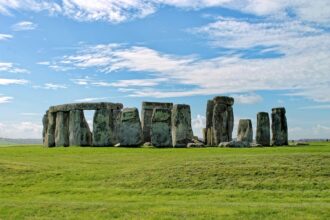
Once you arrive at the visitor centre, you will either take the shuttle bus or walk to the stones, which takes around 20 to 30 minutes on foot. Most visitors spend between 1.5 and 2 hours at the site, including the exhibition areas and the monument itself.
The key to a smooth visit is aligning your transport choice with your ticket timing, so that everything flows naturally without long waits or rushed decisions.

Rupert’s Handy Travel Tips
Rupert enjoys heading out from Bath towards Stonehenge, especially when it means swapping city streets for open countryside and ancient history. Here are his top tips for making the journey work smoothly:
- Choose your route carefully: guided tours are the simplest, while trains via Salisbury offer more flexibility.
- Allow extra travel time: this route takes longer than it looks, especially with connections.
- Book your tickets in advance: timed entry means last-minute plans can be risky in busy periods.
- Plan your return: knowing how you are getting back to Bath avoids unnecessary delays at the end of the day.
Want to meet the reindeer behind our travel tips? Find out more in our page Who is Rupert?.




Frequently Asked Questions About Bath to Stonehenge Travel
How far is Bath from Stonehenge?
Bath is around 35 miles (55 km) from Stonehenge, with typical journey times of 1 hour 15 minutes to 2 hours.
What is the easiest way to get from Bath to Stonehenge?
The easiest option is usually a guided tour, which includes transport and entry and removes the need for planning.
Can you travel independently from Bath to Stonehenge?
Yes, the most practical route is to travel by train to Salisbury and then take the Stonehenge Tour Bus from there.
Is there a direct train from Bath to Stonehenge?
No, you need to travel to Salisbury first and then continue to Stonehenge by bus, taxi, or tour.
Is it worth doing as a day trip from Bath?
Yes, but it requires planning. Allow enough time for travel and aim to visit early or later in the day for the best experience.
Further Reading & Related Guides
To plan your visit properly, it helps to connect this journey with the wider Wiltshire travel network. Our Stonehenge travel guide explains the best times to visit, ticket options, and how to avoid the busiest periods once you arrive.
If you want a simpler route, the Salisbury to Stonehenge guide focuses on the quickest and most direct connections, showing why Salisbury is often the best base for visiting the site. For a broader overview, the Salisbury travel guide helps you plan accommodation, attractions, and how to structure your time in the area.
If you are comparing routes, the London to Stonehenge travel guide breaks down the fastest options from the capital, while our Lacock Abbey guide adds a quieter historic stop that works well alongside Bath and Stonehenge in a longer itinerary.