Reviewed by our editorial team Updated
Discover One of France’s Best Kept Secrets
Mention Le Mans and most people immediately think of the 24 Hours of Le Mans, one of the world’s most famous motor races. While the legendary circuit undoubtedly attracts thousands of visitors every year, the city itself has far more to offer than motorsport alone. Le Mans is home to one of France’s largest and best-preserved medieval quarters, impressive Roman remains, beautiful churches, riverside walks and excellent museums, making it a rewarding destination whether you’re visiting for a day or staying longer.
Situated in the Sarthe department of the Pays de la Loire region, Le Mans occupies an ideal position between Paris, the Loire Valley and Brittany. Thanks to excellent TGV rail connections and an extensive motorway network, it’s easy to reach from many parts of France, making it an excellent stop on a wider road trip or rail holiday.
The city successfully blends over 2,000 years of history with modern attractions. Wander through cobbled medieval streets lined with half timbered houses, admire one of France’s finest Gothic cathedrals, discover remarkably preserved Roman walls or experience the excitement of the world’s oldest active endurance motor race. Few French cities offer such a fascinating contrast between ancient history and cutting-edge engineering.
Whether you’re interested in history, architecture, motorsport, food, photography or simply exploring somewhere a little different, Le Mans offers enough attractions to fill several days while remaining compact enough to explore largely on foot.
| Attraction | Time Needed | Admission | Best For |
|---|---|---|---|
| Cité Plantagenêt | 1.5 to 2 hours | Free | Medieval history and photography |
| Le Mans Cathedral | 45 to 60 minutes | Free | Gothic architecture and history |
| 24 Hours of Le Mans Circuit | 1 to 2 hours | Free to visit public areas | Motorsport fans |
| 24 Hours Museum | 1.5 to 2 hours | Paid | Racing history and families |
| Roman Walls | 30 to 45 minutes | Free | Ancient history |
| Jardin des Plantes | 45 to 90 minutes | Free | Gardens and relaxation |
| Musée de Tessé | 1 to 2 hours | Usually free permanent collection | Art and archaeology |
| Abbaye Royale de l’Épau | 1 to 2 hours | Paid | Historic abbey and gardens |
Step Inside the Beautiful Cité Plantagenêt
The highlight of any visit to Le Mans is undoubtedly the Cité Plantagenêt, the city’s beautifully preserved medieval old town. Covering around 20 hectares, it is one of the largest historic centres in France and contains more than 150 protected historic buildings, many dating back hundreds of years.
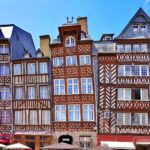
Walking through the old town feels like stepping onto a film set. Narrow cobbled streets weave between elegant half timbered houses, Renaissance mansions, stone townhouses and charming squares filled with cafés and restaurants. In fact, the area has appeared in numerous films and television productions thanks to its remarkably authentic medieval atmosphere.
The district also has royal connections. The powerful Plantagenet dynasty, which went on to rule England, has strong links to Le Mans, and exploring these historic streets offers a fascinating insight into a period that shaped both French and British history.
Rather than following a fixed route, simply allow yourself time to wander. Around almost every corner you’ll discover hidden courtyards, colourful doorways, ancient staircases and beautifully restored buildings. Early mornings and evenings are particularly atmospheric, when the crowds thin out and the golden stone buildings are illuminated by soft light. For photographers, it’s easily one of the most rewarding places in western France.
Best for two or three nights. The widest choice of rooms, with filters for free cancellation and included breakfast.
View staysBest for families, or any stay past about four nights. A kitchen and a washing machine start paying for themselves.
Browse rentalsBest for double-checking. Runs the same Brittany search across several booking sites so you are not leaving money behind.
Compare pricesVisit the Magnificent Le Mans Cathedral
Dominating the skyline above the old town is the magnificent Cathédrale Saint-Julien du Mans, one of the finest Gothic cathedrals in France and an absolute must-see during your visit. Construction began in the eleventh century and continued for several hundred years, creating a remarkable building that combines both Romanesque and Gothic architectural styles.
The cathedral’s most impressive feature is its enormous Gothic choir, widely regarded as one of the masterpieces of medieval religious architecture. Inside, visitors are greeted by soaring vaulted ceilings, intricate stone carvings and spectacular stained glass windows, many of which date back to the thirteenth century and remain remarkably well preserved.
Take time to walk slowly through the interior, appreciating the craftsmanship that went into every column, arch and chapel. Even visitors with little interest in religious buildings are often impressed by the sheer scale and beauty of the cathedral.
Outside, the elevated position provides excellent views across the rooftops of Le Mans. The surrounding streets are equally attractive, making this an excellent starting point for exploring the rest of the Cité Plantagenêt.
Experience the Legendary 24 Hours of Le Mans
No visit would be complete without discovering the home of the 24 Hours of Le Mans, the world’s oldest active endurance motor race and one of motorsport’s most prestigious events. Even outside race week, the famous Circuit de la Sarthe remains one of the city’s biggest attractions. Race dates, ticketing and circuit visit information are all available through the official 24 Hours of Le Mans website.
The full circuit combines a permanent racing facility with sections of public road, creating a challenging course stretching over 13 kilometres. Throughout much of the year you can visit many famous locations, including the start and finish straight, the Dunlop Bridge, Ford Chicane and the spectator areas that come alive each June when hundreds of thousands of fans descend on the city.
Even if you’re not a dedicated motorsport enthusiast, standing beside such an iconic circuit gives you a real appreciation of the history that has unfolded here since 1923. Many of the greatest names in racing, including Ferrari, Porsche, Ford, Audi, Toyota and Jaguar, have all competed on this legendary track.
If possible, check the circuit calendar before visiting. Throughout the year the venue hosts additional race meetings, driving experiences and public events, meaning there is often something happening beyond the famous 24 Hours of Le Mans itself.
Discover the 24 Hours of Le Mans Museum
While the racing circuit is impressive in its own right, no motorsport fan should miss the 24 Hours of Le Mans Museum (Musée des 24 Heures du Mans). Located beside the circuit entrance, this outstanding museum tells the story of the world’s most famous endurance race through an exceptional collection of historic racing cars, motorcycles, trophies, driver memorabilia and interactive exhibits.
The museum traces the evolution of endurance racing from the very first event in 1923 through to the latest Hypercar era. Along the way you’ll see legendary machines from Bentley, Ferrari, Ford, Porsche, Jaguar, Audi, Peugeot, Toyota and many other manufacturers that have shaped the history of Le Mans.
One of the highlights is seeing the famous Ford GT40, the dominant Porsche 956 and 962, modern Audi prototypes and numerous championship-winning cars displayed just metres away from where they once competed. Information panels explain not only the technical development of the vehicles but also the stories behind some of the race’s most dramatic victories and heartbreaking retirements.
Even visitors with only a casual interest in motorsport are often surprised by how engaging the museum is. The exhibits are beautifully presented, the collection changes regularly and the museum provides valuable context before or after visiting the circuit itself.
Walk Along the Ancient Roman Walls
Long before Le Mans became famous for motor racing, it was one of the most important cities in Roman Gaul. One of the finest reminders of that period is the city’s remarkably preserved Roman wall, considered to be one of the best surviving Roman defensive walls anywhere in Europe.
Constructed during the third century AD, the wall originally stretched for more than 1.3 kilometres around the ancient city. Today, large sections remain standing, complete with their distinctive decorative patterns created using alternating layers of red brick, white limestone and pink sandstone. The colourful geometric designs make the walls unlike almost any other Roman remains in France.
The best preserved sections can be found around the Cité Plantagenêt, where they form a dramatic backdrop to the medieval streets. Walking alongside them provides a fascinating reminder that Le Mans has been an important settlement for almost two thousand years, with Roman, medieval and modern history sitting side by side.
Information panels explain the construction techniques, defensive purpose and later history of the walls, making this one of the city’s most rewarding attractions for anyone interested in history, archaeology or architecture. Better still, much of it can be explored completely free of charge.
Enjoy a Walk Along the Sarthe River
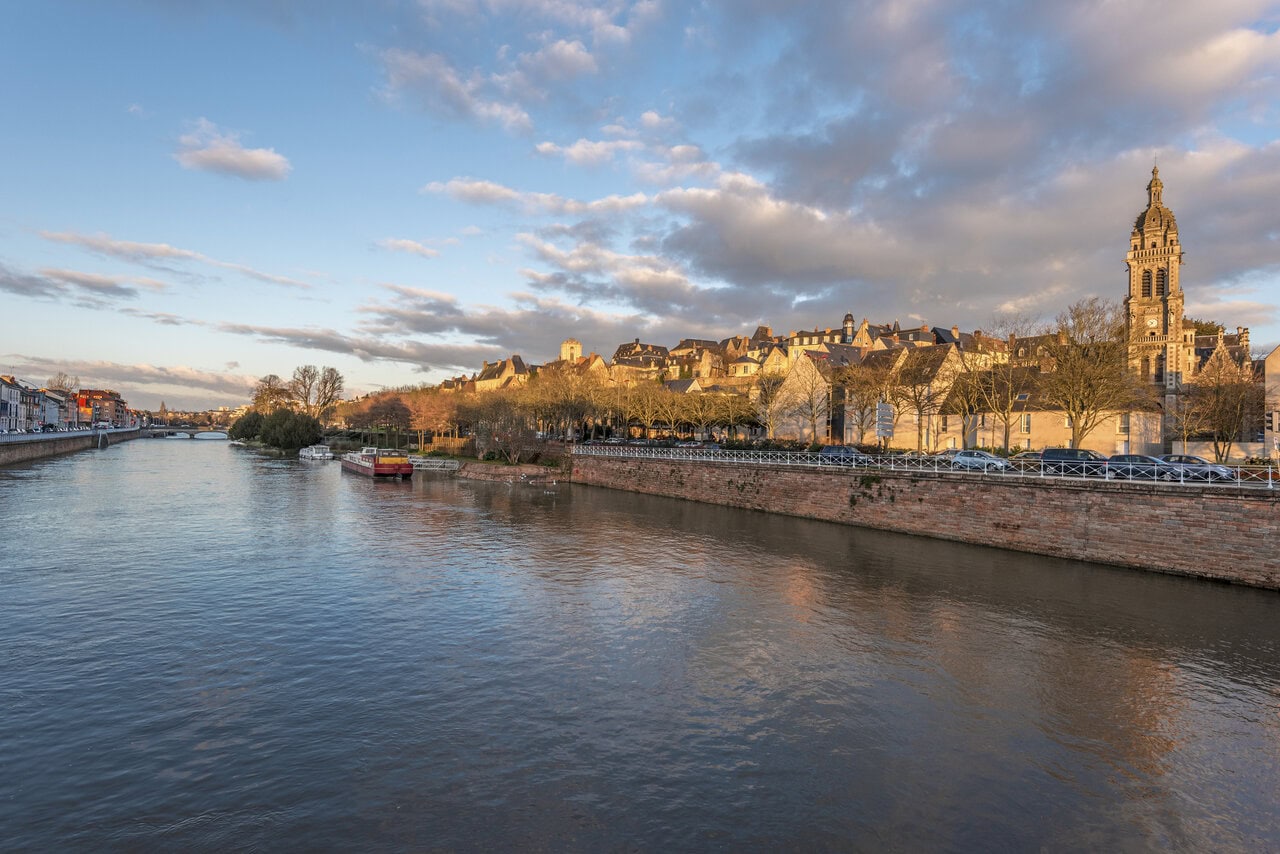
When you’ve finished exploring the historic centre, head down towards the River Sarthe for a completely different side of Le Mans. The riverside provides a much more relaxed atmosphere, with attractive walking routes, colourful gardens and excellent views back towards the medieval skyline.
Several pedestrian bridges cross the river, creating circular walking routes that are ideal for photographers. From the opposite bank you’ll enjoy some of the best panoramic views of the Cité Plantagenêt, with the towering Cathedral of Saint-Julien rising dramatically above the medieval rooftops. It’s one of the city’s most photographed viewpoints and is particularly beautiful during the golden hour before sunset.
The riverside paths are also lined with cafés, restaurants and small green spaces where you can simply sit and watch boats pass by. During the warmer months you’ll often find locals enjoying picnics, jogging or cycling along the river, giving the area a welcoming and authentic atmosphere.
If you’re looking for a quieter break from sightseeing, this is the perfect place to slow down for an hour before continuing your exploration of Le Mans.
Relax in the Jardin des Plantes
If you need a break from museums and historic streets, the Jardin des Plantes offers one of the city’s most peaceful green spaces. Created during the nineteenth century, this beautifully landscaped public garden is filled with flower beds, mature trees, ornamental ponds, winding paths and shaded seating areas.
The gardens are carefully maintained throughout the year, meaning every season brings something different to enjoy. In spring and summer, colourful displays of flowers provide plenty of opportunities for photography, while autumn transforms the park into a sea of warm reds, oranges and golds.
Families will appreciate the open spaces and relaxed atmosphere, while couples often enjoy taking a leisurely stroll before returning to the historic centre. The gardens also provide a welcome escape during the hotter summer months thanks to the abundance of mature trees providing natural shade.
Located only a short distance from the city centre, the Jardin des Plantes is easy to combine with the Cathedral, Old Town or the Museum of the 24 Hours of Le Mans, making it an excellent addition to any sightseeing itinerary.
Best if you can move a day either way. Shows how the fare to Brittany changes across the month.
Compare flightsBest for short trips. Install the eSIM at home and arrive in Brittany with working data, no shop queue.
Browse eSIMsBest if you would rather not work out the transport on arrival. Book it now and forget it.
View transfersExplore the Musée de Tessé
One of Le Mans’ most underrated attractions is the Musée de Tessé, a fascinating museum that combines fine art, ancient archaeology and Egyptian history under one roof. Housed inside an elegant nineteenth-century mansion, it’s the perfect place to escape for a couple of hours, particularly if the weather isn’t ideal.
The museum’s collection includes works by renowned European artists, with paintings spanning several centuries. You’ll also find impressive sculptures, decorative arts and temporary exhibitions that regularly bring new reasons to visit. However, for many people, the museum’s real highlight lies beneath the main galleries.
Hidden in the lower level are full-scale recreations of two ancient Egyptian tombs, complete with beautifully reproduced wall paintings, hieroglyphics and burial chambers. These remarkable reconstructions allow visitors to experience the atmosphere of an Egyptian tomb without travelling to Egypt and are unlike anything else you’ll find in western France.
Better still, admission is often free to the permanent collections, making the Musée de Tessé one of the best value attractions in Le Mans. Whether you’re interested in art, history or simply looking for something a little different, it’s well worth including in your itinerary.
Wander Through Place Saint-Pierre and the Historic Streets
The heart of the Cité Plantagenêt isn’t defined by one single landmark but by its maze of narrow medieval streets, charming squares and hidden courtyards. One of the most attractive areas is Place Saint-Pierre, a picturesque square surrounded by beautifully preserved historic buildings that perfectly capture the atmosphere of old Le Mans.
From here, simply allow yourself to get lost. Streets such as Grande Rue and the surrounding lanes are lined with timber-framed houses, elegant stone façades, traditional cafés, independent boutiques and small art galleries. Every corner seems to reveal another beautifully restored building or hidden architectural detail that many visitors simply walk past.
This part of Le Mans is particularly rewarding in the early morning, when the streets are quiet, or during the evening, when subtle lighting transforms the medieval buildings into one of the city’s most atmospheric settings. During the summer months, outdoor terraces spill into the squares, creating a lively yet relaxed atmosphere that’s perfect for enjoying a coffee or a glass of local wine.
It’s also one of the best areas in the city for photography, with countless opportunities to capture historic doorways, colourful shutters, cobbled lanes and impressive views towards the cathedral.
Visit the Covered Market
For a taste of everyday life in Le Mans, spend some time exploring the city’s covered market, where local producers have been selling fresh food for generations. It’s one of the best places to discover the flavours of the Sarthe region while experiencing the city away from its main tourist attractions.
Inside you’ll find stalls selling artisan cheeses, fresh bread, pastries, charcuterie, seasonal fruit and vegetables, locally produced honey and freshly caught seafood. The market is also an excellent place to sample traditional regional specialities, including the famous rillettes du Mans, a rich slow-cooked pork spread that originated in the area and remains one of the region’s best-known delicacies.
Many of the stallholders are passionate about their produce and are happy to explain where it comes from, making a visit feel far more authentic than shopping in a supermarket. If you’re staying in self-catering accommodation, it’s also the perfect place to pick up ingredients for a picnic or evening meal.
Even if you don’t intend to buy anything, the lively atmosphere, colourful displays and delicious aromas make the market an enjoyable stop while exploring the city centre.
Discover the Abbaye Royale de l’Épau
Located just outside the city centre, the Abbaye Royale de l’Épau is one of the finest examples of Cistercian architecture in France and offers a peaceful contrast to the bustling streets of central Le Mans. Founded in 1229 by Queen Berengaria of Navarre, the widow of King Richard the Lionheart, the abbey has played an important role in the region’s history for almost eight centuries.
Today, visitors can explore the beautifully restored church, cloisters, chapter house and surrounding gardens, all set within tranquil parkland beside the River Huisne. The elegant Gothic architecture, peaceful atmosphere and carefully maintained grounds make it one of the city’s most relaxing places to visit.
Throughout the year the abbey also hosts concerts, art exhibitions, cultural festivals and seasonal events, meaning there’s often something extra to enjoy alongside the historic buildings themselves. During the warmer months, many visitors combine their visit with a leisurely walk through the surrounding gardens or along the nearby riverside paths.
Although it’s slightly further from the historic centre than many of Le Mans’ other attractions, the Abbaye Royale de l’Épau rewards anyone willing to make the short journey and provides another reminder that the city offers far more than its world-famous race circuit.
Experience Le Mans After Dark
As daylight fades, Le Mans takes on an entirely different character. The already beautiful Cité Plantagenêt becomes even more atmospheric as its medieval streets, historic churches and stone buildings are illuminated, creating one of the most enchanting evening settings in western France.
During the summer months, one of the city’s biggest attractions is La Nuit des Chimères. This spectacular free event transforms the old town into an open-air gallery, with colourful light projections, animations and artistic displays projected directly onto the cathedral, ancient walls and historic buildings. Following the illuminated trail through the old streets is a magical experience for both adults and children and has become one of Le Mans’ signature attractions.
If you prefer a quieter evening, head to one of the many wine bars, traditional bistros or riverside restaurants around the old town. Local menus feature specialities such as rillettes du Mans, fresh regional produce and excellent wines from the nearby Loire Valley, making dinner an experience in itself.
Those visiting during the 24 Hours of Le Mans or other major race meetings will find the city buzzing with activity long after sunset, with temporary events, live music, outdoor bars and thousands of motorsport fans creating a lively atmosphere that is unlike any other time of year.
Family-Friendly Things to Do in Le Mans
Le Mans is an excellent destination for families, with a wide variety of attractions suitable for children of all ages. While the famous race circuit naturally appeals to young motorsport fans, there are plenty of other activities to keep the whole family entertained.
The 24 Hours of Le Mans Museum is surprisingly engaging for children thanks to its colourful racing cars, interactive exhibits and fascinating displays. Many youngsters also enjoy standing beside the famous Dunlop Bridge and watching activity at the circuit if an event is taking place.
Families looking for outdoor space will enjoy the Jardin des Plantes, where children can run around while parents relax beneath the mature trees. The riverside paths along the River Sarthe are equally suitable for family walks, offering plenty of space and excellent views of the historic city skyline.
During the summer, the illuminated La Nuit des Chimères trail is another favourite with children, while the maze of medieval streets often feels like stepping into a fairy tale. With its mix of history, green spaces, interactive museums and famous racing heritage, Le Mans offers far more for families than many visitors expect.
Best for solo travellers and anyone watching the budget. Dorm beds and private rooms in the same search.
Browse hostelsBest if you have ever given up on a claim. AirHelp checks whether the flight qualifies and pursues it for you.
See the benefitsBest if your room is not ready yet. Left luggage booked in advance, so you are not hunting for a locker.
Check storageBest Day Trips from Le Mans
Le Mans is perfectly positioned for exploring some of north western France’s most beautiful destinations. Thanks to excellent road and rail connections, several outstanding places can easily be visited in a single day.
To the north lies Alençon, a charming town renowned for its UNESCO-listed lace making tradition and elegant historic centre. To the west, the picturesque town of Laval offers a beautiful château overlooking the River Mayenne, while Angers is home to one of France’s finest medieval castles and the extraordinary Apocalypse Tapestry.
Wine lovers may wish to head south towards the Loire Valley, where world-famous vineyards, magnificent châteaux and attractive riverside towns provide endless opportunities for sightseeing. Meanwhile, history enthusiasts can explore Tours, Saumur or Blois, each offering its own unique blend of architecture, culture and gastronomy.
If you’re travelling by car, the surrounding Sarthe countryside is filled with peaceful villages, forests and quiet country roads that are ideal for leisurely exploration. Whether your interests lie in history, wine, gardens or castles, Le Mans makes an excellent base for discovering this fascinating part of France.
Where to Eat in Le Mans
Le Mans has developed an excellent reputation for its food, with everything from traditional French bistros and elegant fine dining restaurants to lively cafés and relaxed brasseries scattered throughout the city. The Cité Plantagenêt is particularly atmospheric during mealtimes, with many restaurants occupying beautifully restored medieval buildings complete with outdoor terraces during the warmer months.
No visit would be complete without sampling rillettes du Mans, the city’s most famous culinary speciality. Unlike pâté, these slow-cooked strands of pork are rich, tender and traditionally served with fresh bread and pickles. You’ll also find plenty of restaurants showcasing Sarthe beef, regional cheeses, locally grown vegetables and seasonal produce sourced from nearby farms.
If you’re celebrating a special occasion, Le Mans also offers several highly regarded gourmet restaurants where talented chefs combine classic French cooking with modern techniques. For something more relaxed, head towards the riverside or the old town squares, where you’ll find welcoming cafés serving everything from freshly baked pastries and coffee to generous evening meals.
Whether you’re looking for a quick lunch between sightseeing or a memorable dinner after a day exploring the city, Le Mans offers an impressive choice of restaurants that reflects the region’s strong culinary traditions.

Rupert’s Handy Travel Tips
Le Mans is much more than a racing city. Give yourself enough time to explore both its medieval heritage and its world-famous motorsport attractions.
- Spend time in the old town. The Cité Plantagenêt is one of France’s finest medieval quarters and deserves at least a couple of hours of unhurried exploration.
- Check the circuit calendar. Even outside the famous 24 Hours race there are often driving experiences, race meetings and special events taking place.
- Don’t miss La Nuit des Chimères. If you’re visiting during summer, the free evening light projections across the cathedral and old town are one of Le Mans’ biggest attractions.
- Wear comfortable shoes. Much of the historic centre is covered with cobbled streets and gentle hills, making supportive footwear a good idea.
- Try the local speciality. Rillettes du Mans originated here and is one of the region’s signature dishes, alongside excellent Loire Valley wines.
Want to meet the reindeer behind our travel tips? Find out more on our page Who is Rupert?.




Frequently Asked Questions
How many days do you need in Le Mans?
A full day is enough to see the main highlights, including the Cité Plantagenêt, Le Mans Cathedral and the 24 Hours of Le Mans Museum. However, two to three days allows time to explore the city at a more relaxed pace and enjoy nearby attractions.
Is Le Mans worth visiting if you’re not interested in motorsport?
Absolutely. While the 24 Hours of Le Mans is world famous, the city is also known for its medieval old town, Roman walls, magnificent cathedral, excellent museums and attractive riverside setting.
Can you visit the Le Mans race circuit?
Yes. Large parts of the Circuit de la Sarthe can be visited throughout the year, and the 24 Hours of Le Mans Museum is open to visitors even when no racing is taking place.
Is Le Mans easy to explore on foot?
Yes. Most of the city’s main attractions are located within or close to the Cité Plantagenêt, making Le Mans an excellent city to explore on foot. Comfortable footwear is recommended because of the cobbled streets.
What is Le Mans famous for?
Le Mans is best known for hosting the 24 Hours of Le Mans, the world’s oldest active endurance motor race. It is also famous for its medieval old town, Roman walls, Cathedral of Saint-Julien and the regional delicacy rillettes du Mans.
How do you get to Le Mans?
Le Mans is served by high-speed TGV trains from Paris, with journey times of around one hour. The city is also easily reached by road via the French motorway network.
When is the best time to visit Le Mans?
Late spring and early autumn offer pleasant weather and fewer crowds. June is ideal for motorsport fans visiting the 24 Hours of Le Mans, while summer evenings bring the spectacular La Nuit des Chimères light show.
Is Le Mans suitable for families?
Yes. Families can enjoy the 24 Hours Museum, Jardin des Plantes, riverside walks, medieval streets and seasonal events, making Le Mans an enjoyable destination for visitors of all ages.
Further Reading
Continue exploring the region with our guides to Things to Do in Nantes, the Best Day Trips from Nantes, Explore Rennes and Visiting Brest, covering more of western France’s finest cities and coastline.
If you’re planning your onward rail journey, our guides to the Interrail France Pass, the Carte Avantage France and the Eurostar Guide will help you travel around France with confidence.