
Flying with Royal Air Maroc: What Travellers Should Know
For travellers heading to Morocco, West Africa or connecting between continents, understanding how the airline operates can make trip planning much easier. This Royal Air Maroc guide explains what to expect from Morocco’s national airline and how its network fits into the wider global aviation system.
Founded in 1957, Royal Air Maroc serves as the flag carrier of Morocco and is a member of the global Oneworld airline alliance. That membership places it alongside major international carriers such as British Airways, Qatar Airways and Iberia. For travellers, this means smoother connections, shared loyalty benefits and access to a wider global route network.
The airline has carved out a particularly important role linking Europe, North America and Africa. While many airlines focus primarily on long-haul travel between major global hubs, Royal Air Maroc has built a strong reputation for connecting secondary European cities with destinations across West and Central Africa.
Passengers flying with the airline will often transit through Mohammed V International Airport, the airline’s main hub. Casablanca acts as a bridge between continents, allowing travellers to connect quickly between Europe and destinations that may otherwise require complex itineraries.
In practical terms, Royal Air Maroc tends to appeal to three types of travellers. Tourists visiting Morocco, passengers connecting onward to Africa, and travellers seeking competitive fares on long-haul routes between Europe and North America. Understanding this positioning helps explain why the airline’s network looks slightly different from many other international carriers.
History of Royal Air Maroc
Royal Air Maroc was created in 1957 shortly after Morocco gained independence. The airline emerged from the merger of two earlier aviation companies and quickly became the country’s official flag carrier. From the beginning, its role was not only commercial but also strategic — helping connect Morocco with Europe, Africa and the wider world.
During its early decades, the airline primarily focused on routes linking Morocco with major European cities. These connections were vital for tourism, trade and migration, particularly with France and Spain, which historically maintained strong ties with Morocco.
As international travel expanded during the late twentieth century, the airline gradually broadened its network. New services connected Casablanca with North America and an increasing number of destinations across Africa. This expansion helped position the airline as one of the continent’s most important connectors between regions.
A significant milestone came in 2020 when Royal Air Maroc joined the Oneworld alliance. This step dramatically strengthened the airline’s international reach by integrating it into a global partnership of major carriers. Travellers gained the ability to earn and redeem frequent flyer miles across partner airlines and access a larger network of connecting flights.
Today the airline continues to operate as Morocco’s national carrier while pursuing an increasingly international strategy. Modern aircraft, expanding long-haul routes and alliance partnerships all play a role in strengthening its position within global aviation.
Main Hub and Route Network
At the centre of Royal Air Maroc’s operations is Mohammed V International Airport, located just outside the city of Casablanca. The airport functions as the airline’s primary hub, allowing passengers to transfer between flights travelling across three continents.
Casablanca’s geographic location gives the airline a strategic advantage. Positioned at the crossroads of Europe, Africa and the Atlantic, it allows relatively short connection times between regions that are not always well linked by other airlines.
From Europe, the airline operates flights from major cities such as Paris, Madrid, London and Milan. These routes feed passengers into the Casablanca hub, where they can transfer to flights heading south into Africa or west across the Atlantic.
Royal Air Maroc has also developed one of the most extensive African networks operated by any airline outside the continent’s largest hubs. Destinations include cities across West and Central Africa, making Casablanca an important gateway for travellers moving between Africa and Europe.
Long-haul flights connect Morocco with North America as well. Services to cities such as New York and Montreal provide direct access between Morocco and the United States or Canada, while also allowing onward connections across Africa.
This hub-and-spoke structure means that Casablanca effectively functions as a bridge between continents, giving Royal Air Maroc a distinct role within global aviation.
Aircraft Fleet and Cabin Classes
Royal Air Maroc operates a mixed fleet designed to handle both long-haul and regional routes. The airline’s aircraft range from modern wide-body jets used on intercontinental flights to smaller planes serving shorter regional services.
Long-haul routes are primarily operated by the Boeing 787 Dreamliner, a modern aircraft known for improved fuel efficiency and passenger comfort. These planes are typically used on services connecting Casablanca with North America and other distant destinations.
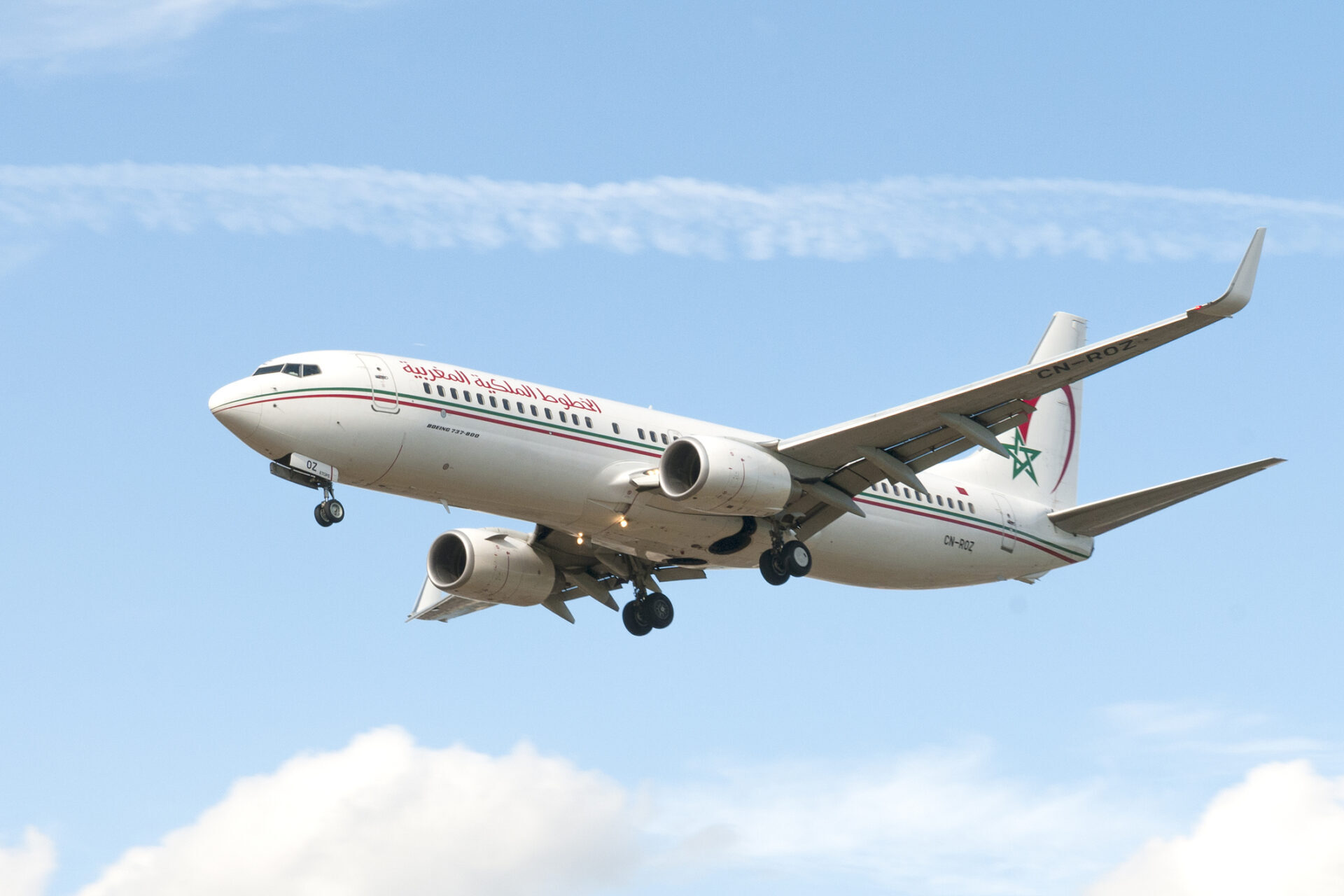
Medium-haul routes within Europe and parts of Africa are commonly operated by the Boeing 737, one of the most widely used aircraft families in the world. These planes provide reliable capacity on high-frequency routes between Morocco and European cities.
For shorter regional services, the airline also operates aircraft such as the Embraer E190, which are well suited to thinner routes and smaller airports.
Passengers generally have two main cabin options when flying with the airline. Business Class offers larger seats, priority boarding and enhanced onboard service, while Economy Class provides a more affordable travel option with standard seating and onboard entertainment depending on the aircraft.
The experience can vary slightly depending on the specific aircraft and route. However, on long-haul services operated by the Dreamliner, travellers can expect a more modern cabin environment with improved lighting, quieter engines and better air pressure — features designed to make long flights more comfortable.
Royal Air Maroc Destinations
One of the airline’s strongest advantages is the breadth of its route network. While many international carriers focus primarily on Europe or North America, Royal Air Maroc has developed a multi-continent network linking Europe, Africa and the Americas through its Casablanca hub.
For travellers visiting Morocco, the airline provides direct connections from numerous European cities. These routes are particularly important for tourism, allowing visitors to reach Morocco quickly from countries such as France, Spain, Italy, Germany and the United Kingdom.
The airline also plays a key role in connecting Europe with West and Central Africa. Many cities across this region have limited direct flights to Europe, which makes Casablanca an efficient transfer point. Passengers travelling to destinations such as Dakar, Abidjan or Lagos often connect through Morocco rather than taking longer indirect routes.
Across the Atlantic, Royal Air Maroc operates long-haul services to major North American cities including New York, Washington and Montreal. These routes serve both tourism and the large Moroccan diaspora living abroad.
For travellers planning itineraries across multiple regions, this structure makes the airline particularly useful. Flights can connect Europe with Africa, North America with Morocco, or Africa with the wider global network, often with only one connection in Casablanca.
The Royal Air Maroc App
Modern airline travel increasingly depends on mobile technology, and Royal Air Maroc is no exception. The airline’s official mobile application acts as a central hub for managing your journey from booking through to arrival.
After purchasing a ticket, travellers can use the app to access their booking, check flight details and receive notifications about schedule changes or delays. This makes it easier to stay informed about gate information, boarding times and any last-minute adjustments to the itinerary.
One of the most useful features is mobile check-in. Instead of waiting in line at the airport, passengers can check in through the app and receive a digital boarding pass on their phone. This can significantly speed up the airport experience, especially when travelling with only hand luggage.
The app also allows travellers to manage seat selection, baggage options and special service requests. In addition, members of the airline’s loyalty programme can track their mileage balance and monitor upcoming rewards.
For many travellers, downloading the app before departure simply removes uncertainty. Having flight details, boarding passes and travel notifications in one place makes the entire journey easier to manage.


Loyalty Programme: Safar Flyer
Royal Air Maroc’s frequent flyer programme is called Safar Flyer, and it is designed to reward regular travellers with points, upgrades and travel benefits. Like most airline loyalty schemes, passengers earn miles whenever they fly with the airline or its partner carriers.
Members accumulate miles based on the distance travelled and the type of ticket purchased. These miles can later be redeemed for free flights, seat upgrades or additional services such as extra baggage allowance.
Because the airline belongs to the Oneworld alliance, Safar Flyer members can also earn and redeem miles when flying with partner airlines. This significantly expands the usefulness of the programme, allowing travellers to collect points across a much larger international network.
The programme typically includes several membership tiers that provide increasing benefits as travellers accumulate more miles. Higher levels may offer perks such as priority boarding, lounge access and additional baggage allowances.
For frequent travellers to Morocco or across Africa, the programme can be particularly valuable. Regular flights through Casablanca can quickly build mileage balances, making upgrades or reward flights achievable over time.
Baggage Allowances and Travel Rules
Understanding baggage policies before travelling can prevent unexpected fees at the airport. Like most airlines, Royal Air Maroc has specific baggage allowances that vary depending on the route and cabin class.
Economy Class passengers are generally permitted one cabin bag plus a personal item, although the exact size and weight limits depend on the ticket type. Checked baggage allowances may also vary depending on the route and fare category purchased.
Business Class tickets usually include a more generous allowance. Travellers may be able to check additional luggage and carry slightly heavier cabin bags, reflecting the premium nature of the ticket.
For long-haul flights, baggage allowances are often more flexible than on shorter routes. However, travellers should always check the exact rules associated with their specific booking before departure.
It is also important to note that excess baggage fees can be significant. Pre-purchasing additional baggage online is usually cheaper than paying at the airport, which is something many travellers overlook when preparing for their journey.
Carefully reviewing baggage policies in advance helps ensure a smoother airport experience and avoids unnecessary delays during check-in.
Is Royal Air Maroc a Good Airline?
Choosing an airline often depends on a combination of price, convenience and route availability. For many travellers, Royal Air Maroc stands out because of its unique network linking Europe, Africa and North America through Casablanca.
One of the airline’s biggest strengths is its position as a gateway to Africa. Many cities across West and Central Africa have relatively limited international connections, which means travellers often rely on airlines that specialise in linking those regions with Europe. Royal Air Maroc has built a strong reputation in this area, providing connections that would otherwise require multiple stops.
Another advantage is the airline’s membership in the Oneworld alliance. This partnership allows passengers to earn and redeem frequent flyer miles across a large network of partner airlines while benefiting from smoother connections and coordinated schedules.
Travellers also often find that fares can be competitive, particularly on routes connecting Europe with Africa or North America. Casablanca’s location allows relatively efficient routing between continents, which can help keep travel times reasonable compared with more complicated itineraries.
However, like many airlines, the experience can vary depending on the aircraft and route. Some travellers report excellent service and comfortable long-haul flights, particularly on newer aircraft, while others note that short-haul services can feel more basic.
For travellers heading to Morocco or connecting across Africa, the airline remains an important option and often one of the most practical ways to reach certain destinations.
Further Reading & Related App Guides
Want to make your journey smoother before you even reach the airport? These practical travel-tech guides will help you stay organised, connected and informed throughout your trip.
Relax before departure with our guide to the best airport lounge access apps → Airport Lounge Access Apps Guide
Track your aircraft in real time with our guide to the best flight tracker apps → Flight Tracker Apps Guide
Stay connected abroad without expensive roaming using our eSIM apps guide → eSIM Apps Guide
Find the best fares using our guide to the top flight aggregator apps → Flight Aggregator Apps Guide
Avoid unexpected disruption by reading our guide to the best travel insurance apps → Travel Insurance Apps Guide
Last Updated
March 2026
Affiliate Disclosure
This page contains affiliate links. If you click through and make a purchase or booking, we may earn a small commission at no extra cost to you. This helps support our work and allows us to continue providing detailed, independent travel advice. We only recommend apps and services we personally use or have verified as high-quality.