Reviewed by our editorial team Updated
Discover France by Rail
France is famous for its high-speed TGV trains, but some of its greatest railway experiences take place far away from the country’s busiest main lines. Hidden among the Alps, Pyrenees, Atlantic coastline, Mediterranean hills, forests and rolling countryside are dozens of remarkable railways that offer unforgettable journeys through some of Europe’s most spectacular landscapes.
These routes are much more than a way of travelling between two places. They are attractions in their own right, carrying passengers across towering viaducts, through deep river gorges, alongside dramatic coastlines and into mountain scenery that would otherwise be difficult to reach. Some trains climb to glaciers more than 2,000 metres above sea level, while others wind through vineyards, national parks or protected wetlands where wildlife is often easier to spot from the railway than from the road.
Many of these lines were originally constructed to connect isolated communities, transport timber, carry minerals or support local industries long before modern roads reached these remote regions. Today they have been lovingly preserved, allowing visitors to experience historic rolling stock, beautifully restored stations and engineering achievements that have survived for more than a century.
Whether you enjoy steam locomotives, mountain railways, narrow-gauge trains, rack railways or simply beautiful scenery, France offers one of the finest collections of scenic rail journeys anywhere in Europe. Some can easily be enjoyed as a day trip, while others deserve to be the highlight of an entire holiday.
In this guide, we’ll explore the very best scenic train journeys in France, explaining what makes each one special, who they’re best suited for and why they deserve a place on your travel itinerary.
| Route | Journey Time | Scenery/Highlight | Best For |
|---|---|---|---|
| Le Train Jaune | ~3 hours (63 km) | Pont Gisclard suspension bridge, Séjourné Viaduct, 19 tunnels through the eastern Pyrenees | Scenery lovers & railway enthusiasts |
| Le Train Rouge | ~2 hours (60 km) | Roussillon vineyards and Cathar castles along the Agly Valley | Slow travel and wine-country fans |
| Le Train des Pignes | ~3.5 hours (151 km) | Riviera-to-mountain contrast, passing the fortified village of Entrevaux | Day trip from Nice without a car |
| Montenvers Railway | ~20 minutes (5.1 km) | Rack railway climb to the Mer de Glace glacier above Chamonix | Chamonix visitors wanting glacier views |
| Mont-Blanc Express | ~1 hour 45 minutes (55 km) | Cross-border Alpine scenery beneath Mont Blanc, from France into Switzerland | An easy international day out from Chamonix |
| Chemin de Fer de la Baie de Somme | 30–90 minutes (27 km) | Tidal salt marshes, a seal colony and heritage steam locomotives | Wildlife lovers and family days out |
| Le Train de la Rhune | ~35 minutes (4.2 km) | Rack-and-pinion climb to a Basque summit with views over France and Spain | Panoramic summit views and short hikes |
| Le Train de l’Artouste | ~50 minutes plus cable car (10 km) | Cliffside track above alpine lakes in the Pyrenees National Park, one of Europe’s highest railways | Adventurous travellers (summer only) |
| U Trinighellu | Full line ~232 km, journeys vary | Vizzavona Forest and the approach to Corte through Corsica’s mountainous interior | Exploring Corsica without a car |
| Le Train des Hirondelles | ~2.5 hours (123 km) | More than 30 viaducts and tunnels through the Jura Mountains | Quiet, off-the-beaten-path rail travel |
| Le Train du Vivarais | ~2 hours (33 km) | Steam-hauled journey along the River Doux through the Ardèche | Steam train enthusiasts and families |
| Gentiane Express | ~1 hour return (16 km) | Volcanic Auvergne plateau and viaducts near Riom-ès-Montagnes | Peaceful countryside seekers |
| Le Train de l’Aubrac | ~6 hours (around 387 km) | The Eiffel-designed Garabit Viaduct and the wide-open Aubrac Plateau | A long, authentic cross-country rail journey |
| Le Train à Vapeur du Trieux | ~50 minutes each way (17 km) | Tidal crossing of the Trieux Estuary to the town of Pontrieux | Brittany coastal day trips (June–September) |
| Napoléon Express | ~1 hour return (18 km) | Peaceful farmland and forests of central Brittany | A tranquil countryside excursion |
| Train Touristique du Cotentin | ~30 minutes each way (10 km) | Norman coastal villages along the western Cotentin Peninsula | Short family excursions in Normandy |
| Train Forestier d’Abreschviller | ~1 hour 15 minutes return (6 km) | Steam journey through Moselle woodland on a former timber railway | Families and photographers |
| Chemin de Fer de la Vallée de l’Ouche | ~90 minutes return (7 km) | Canal de Bourgogne and rural Burgundy scenery | A relaxing outing near Dijon and Beaune |
| Le Train des Mouettes | ~45 minutes (21 km) | Seudre Estuary and the oyster beds of Marennes-Oléron | Atlantic coast day trips near Île d’Oléron |
Why France Has Some of Europe’s Most Beautiful Railway Journeys
France’s scenic railways are remarkable not simply because of the landscapes they pass through, but because of the incredible variety they offer. Within a single country you can travel from snow-covered Alpine peaks to the Mediterranean coast, from volcanic mountains to Atlantic marshes, all by train.
Unlike many scenic railways that were built solely for tourism, most of France’s famous routes began life with an important practical purpose. They carried local communities across difficult terrain, transported agricultural produce from remote valleys or connected mountain villages with larger towns. The fact that so many continue operating today means travellers can still experience these historic routes much as passengers did generations ago.
Engineering also plays a huge part in their appeal. You’ll cross soaring stone viaducts, travel over suspension bridges, pass through countless tunnels and climb gradients that once seemed impossible for railway builders to conquer. Every journey tells a story of determination, innovation and remarkable engineering skill.
Another reason these routes are so enjoyable is how easily they fit into a wider holiday. You can ride the Train des Pignes during a stay on the French Riviera, board the Montenvers Railway while exploring Chamonix, experience the Train Jaune as part of a trip through the Pyrenees, or discover heritage steam railways while touring Normandy, Brittany or the Loire Valley.
Perhaps most importantly, these railways encourage visitors to slow down. Instead of rushing between destinations, you have time to appreciate changing landscapes, discover forgotten villages and enjoy one of the oldest pleasures of travel: simply watching the world pass by from a train window.
Best if you want daily housekeeping and a front desk. Filter by area first, then by price.
Check availabilityBest for longer stays. Whole apartments and houses, so you are not eating out three times a day.
View rentalsBest if you have already picked a hotel. Checks the big booking sites for the same room and shows who is cheapest.
Check dealsScenic Railways Across France
One of the joys of exploring France by rail is that spectacular railway journeys can be found in almost every corner of the country. Whether you’re planning a holiday on the French Riviera, hiking in the Alps, touring the Pyrenees, relaxing on the beaches of Normandy, discovering the villages of Brittany or exploring the vineyards of Burgundy, there’s usually a memorable railway experience nearby.
The country’s greatest concentration of scenic railways is found in the mountain regions. The Pyrenees are home to the famous Le Train Jaune, the heritage Le Train Rouge and the adventurous Train de l’Artouste, each offering a completely different way to experience one of France’s most dramatic landscapes. In the French Alps, visitors based in Chamonix can ride both the Montenvers Railway to the Mer de Glace glacier and the Mont-Blanc Express, which continues across the border into Switzerland beneath Europe’s highest peaks.
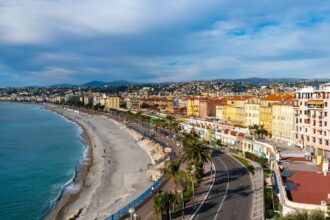
Travellers staying on the French Riviera can leave the beaches of Nice behind and board Le Train des Pignes, climbing from the Mediterranean into the mountains of Haute-Provence in just a few hours. Meanwhile, visitors to Corsica can discover the island’s rugged interior aboard U Trinighellu, one of the most scenic public railways anywhere in Europe.
Elsewhere across the country, every region has its own character. Brittany offers nostalgic steam journeys aboard Le Train à Vapeur du Trieux and the Napoléon Express, while Normandy is home to the Train Touristique du Cotentin. In northern France, the Chemin de Fer de la Baie de Somme combines historic trains with one of Europe’s most important wildlife reserves, while eastern France offers beautiful mountain scenery aboard Le Train des Hirondelles and peaceful woodland journeys on the Train Forestier d’Abreschviller.
Central and southern France provide even more variety. Visitors to Burgundy can enjoy a relaxing heritage railway beside the Canal de Bourgogne, the Massif Central offers the remote landscapes of the Gentiane Express and the scenic Train de l’Aubrac, while the Ardèche is home to the much-loved Train du Vivarais. On the Atlantic coast, Le Train des Mouettes combines beautifully restored steam locomotives with the seaside atmosphere of Charente-Maritime.
The result is an extraordinary collection of railway journeys that showcase almost every landscape France has to offer. Rather than travelling to a single destination, many visitors now plan their holidays around these remarkable routes, using them to discover regions, towns and scenery that they might otherwise never experience
Le Train Jaune (The Yellow Train)
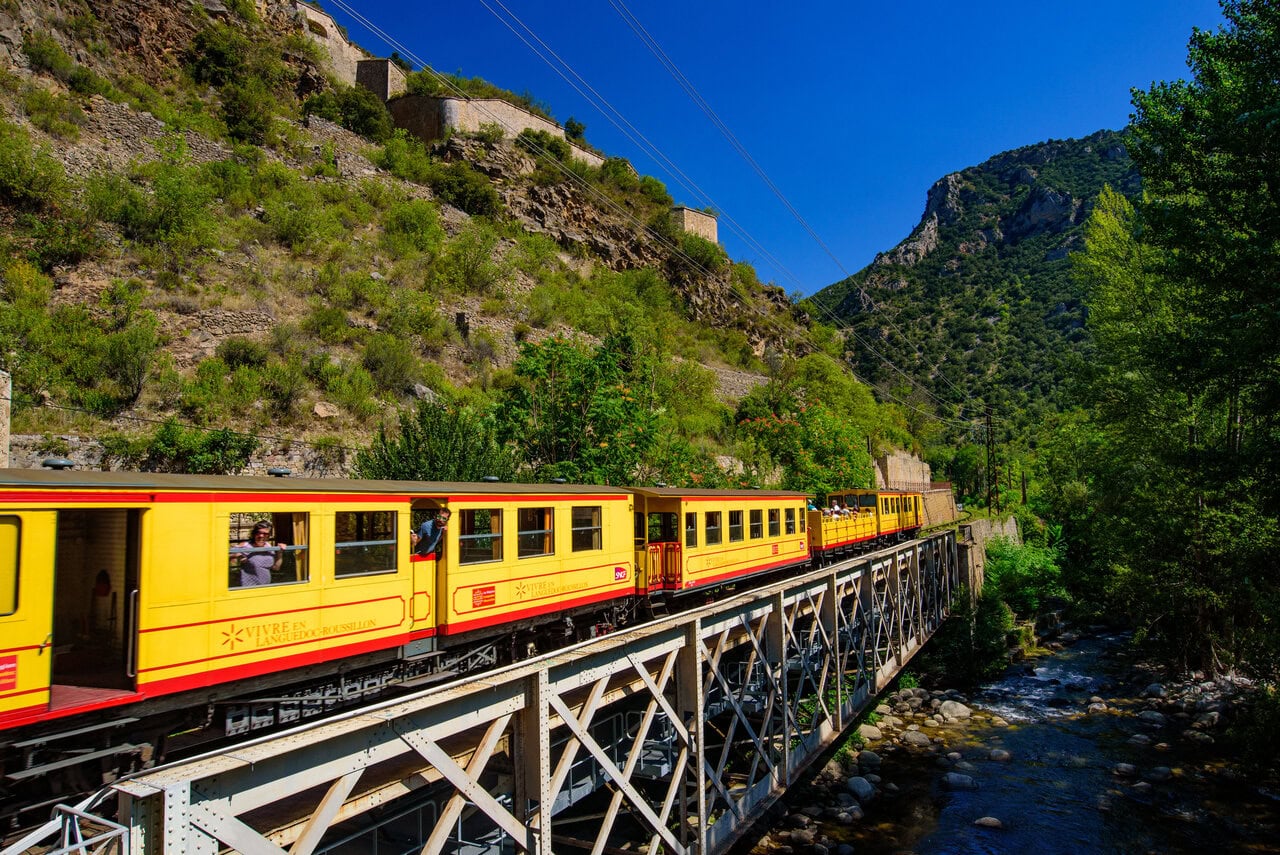
Widely regarded as France’s most spectacular railway journey, Le Train Jaune has been carrying passengers through the dramatic landscapes of the eastern Pyrenees since 1910. Its unmistakable yellow carriages have earned it the nickname “The Yellow Train”, while its combination of breathtaking scenery and remarkable engineering has made it one of the country’s most iconic rail experiences.
The railway runs for approximately 63 kilometres between the fortified town of Villefranche-de-Conflent and Latour-de-Carol-Enveitg, close to the Spanish border. The complete journey takes around three hours, climbing from the lower valleys to more than 1,590 metres above sea level. Along the way, the train serves a series of mountain communities including Olette-Canaveilles, Fontpédrouse, Mont-Louis-La Cabanasse, Bolquère-Eyne and Font-Romeu-Odeillo-Via, making it both a scenic attraction and an important transport link for the region.
As the train climbs higher into the mountains, passengers are rewarded with constantly changing views across deep valleys, rugged peaks, forests and traditional Catalan villages. The route passes through 19 tunnels and crosses numerous bridges, but two engineering masterpieces stand out above all others. The magnificent Pont Gisclard is the only operational railway suspension bridge in France, while the elegant Séjourné Viaduct spans a dramatic gorge with breathtaking views in every direction. These structures alone make the railway worth travelling.
One of the highlights of travelling during the warmer months is the opportunity to ride in the famous open-air carriages, allowing you to fully appreciate the fresh mountain air and panoramic views across the Pyrenees. The railway operates throughout the year, although timetables vary by season and additional services usually run during the busy summer months. Winter transforms the landscape completely, with snow-covered mountains creating an equally memorable journey.
Many visitors begin by exploring Villefranche-de-Conflent, a beautifully preserved fortified town whose Vauban fortifications form part of the UNESCO-listed Fortifications of Vauban, before boarding the train. Others stop at Mont-Louis, another fortified mountain town, or Font-Romeu, one of the Pyrenees’ best-known ski and walking destinations. Because trains stop at numerous stations along the route, it’s easy to break the journey and explore before continuing later in the day.
Whether you’re a railway enthusiast, photographer or simply someone who enjoys spectacular scenery, Le Train Jaune offers one of the greatest rail journeys in Europe. It perfectly combines history, engineering and mountain landscapes into an experience that’s every bit as memorable as the destination itself.
Le Train Rouge (The Red Train)
Running through the heart of Occitanie, Le Train Rouge is one of southern France’s most underrated railway journeys. Unlike the famous Yellow Train, this heritage railway follows a quieter route through vineyards, river valleys and medieval landscapes, offering visitors the chance to discover a side of France that remains largely untouched by international tourism.
The railway operates between Rivesaltes, just north of Perpignan, and the mountain village of Axat, covering approximately 60 kilometres through the beautiful Agly Valley. The complete journey takes around two hours, passing through changing landscapes that include vineyards, limestone cliffs, forests and picturesque villages as the railway gradually leaves the Mediterranean behind and heads towards the foothills of the Pyrenees.
Originally built to connect isolated communities, the line now operates primarily as a seasonal heritage railway, generally running between spring and autumn, with additional themed departures and special events during the busiest months. Carefully restored historic railcars and locomotives help recreate the atmosphere of railway travel from a bygone era, allowing passengers to enjoy the journey at a wonderfully relaxed pace.
One of the railway’s greatest attractions is the variety of places it passes through. Along the route you’ll see famous Roussillon vineyards, cross rivers on historic bridges and travel close to several impressive Cathar castles, whose ruined fortresses still dominate the surrounding hillsides. The changing scenery means there’s always something new to admire through the windows, making it a favourite with photographers and lovers of slow travel.
Many passengers choose to combine the railway with time in Rivesaltes, Perpignan or nearby Villefranche-de-Conflent, creating a memorable itinerary that includes both Le Train Rouge and Le Train Jaune. Together they provide two completely different, yet equally rewarding, ways to experience the spectacular landscapes of southern France.

Le Train des Pignes
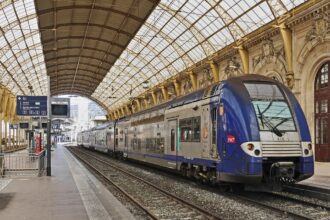
Departing from the elegant city of Nice, Le Train des Pignes provides one of the most dramatic changes of scenery you’ll find anywhere in Europe. Within a few hours, passengers travel from the glamorous French Riviera into the peaceful mountains of Haute-Provence, passing rivers, forests, dramatic gorges and traditional villages that feel a world away from the Mediterranean coast.
The railway runs between Nice and Digne-les-Bains, covering approximately 151 kilometres in around three and a half hours. Along the route the train serves numerous communities including Colomars, Plan-du-Var, Puget-Théniers, Annot, Entrevaux, Saint-André-les-Alpes and several smaller mountain villages before reaching the spa town of Digne-les-Bains.
Unlike many of the heritage railways featured in this guide, Le Train des Pignes is a genuine regional railway that operates throughout the year, providing an important transport link for local communities as well as a memorable journey for visitors. Regular daily services make it easy to travel the entire route or simply ride one of its most scenic sections as part of a day trip from Nice.
One of the route’s highlights is passing through the spectacular landscapes around Entrevaux, one of France’s most beautiful fortified villages. Further north, the scenery becomes increasingly mountainous as the railway follows rivers, crosses impressive bridges and threads through narrow valleys surrounded by towering cliffs. The constant contrast between Mediterranean vegetation and Alpine scenery makes this one of France’s most varied rail journeys.
Railway enthusiasts should also look out for the Train des Pignes à Vapeur, a separate steam-operated heritage service that runs on selected dates between Puget-Théniers and Annot. This beautifully restored steam train offers a nostalgic way to experience part of the line and is particularly popular during the summer season.
For visitors staying on the French Riviera, Le Train des Pignes is one of the easiest scenic railways in France to experience. You can leave the beaches of Nice after breakfast and find yourself surrounded by dramatic mountain scenery before lunchtime, all without needing a car.
Le Train du Montenvers (Mer de Glace Railway)
Few railway journeys are as famous, or as spectacular, as the climb aboard the Montenvers Railway in Chamonix. Since opening in 1908, this remarkable rack railway has carried millions of visitors high into the Mont Blanc Massif, providing access to one of France’s most famous natural attractions, the magnificent Mer de Glace glacier.
The railway begins in the centre of Chamonix and climbs approximately 5.1 kilometres to the Montenvers station at an altitude of 1,913 metres. Although the journey takes only around 20 minutes, it packs an extraordinary amount of scenery into a relatively short distance. As the train steadily climbs the mountainside, forests gradually give way to dramatic views of glaciers, granite peaks and the towering summits surrounding Mont Blanc.
The line operates throughout the year, although services become especially busy during the summer hiking season and the winter ski period. Modern electric rack trains climb gradients far too steep for conventional railways, making the journey itself an impressive feat of engineering long before passengers reach the summit.
Arriving at Montenvers, visitors can enjoy panoramic views across the Mer de Glace, France’s largest glacier. From the station it’s possible to continue by cable car and stairway to visit the famous Ice Cave, recreated each year within the glacier, while the Glaciorium and surrounding walking trails provide further opportunities to learn about the area’s remarkable geology and changing climate.
The railway is also an excellent starting point for mountain walks during the summer months, while photographers are rewarded with some of the finest Alpine scenery anywhere in Europe. Even travellers who have visited glaciers elsewhere often describe the views from Montenvers as among the most impressive they have ever experienced.
For anyone visiting Chamonix, the Montenvers Railway isn’t simply another attraction. It is one of the defining experiences of the French Alps and an essential journey for anyone interested in mountains, railways or spectacular natural scenery.
Mont-Blanc Express
Crossing national borders beneath Western Europe’s highest mountain, the Mont-Blanc Express is one of the most spectacular railway journeys in the Alps. Unlike many scenic railways that simply travel to a viewpoint before returning, this is a fully operational international railway linking Saint-Gervais-les-Bains-Le Fayet in France with Martigny in Switzerland. The complete journey covers approximately 55 kilometres and takes around one hour and 45 minutes, making it an unforgettable way to experience the Alps without the stress of mountain driving.
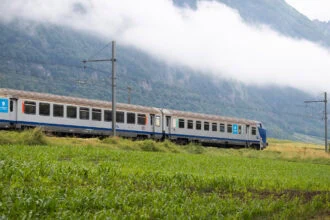
Leaving Saint-Gervais, the train soon reaches the famous resort of Chamonix-Mont-Blanc, before continuing through Les Bossons, Les Houches, Argentière and Vallorcine. After crossing the frontier at Le Châtelard, the line descends through dramatic Swiss mountain scenery before arriving in the historic town of Martigny. Throughout the journey, enormous panoramic windows frame glaciers, waterfalls, alpine forests, rushing rivers and some of Europe’s highest peaks.
The Mont-Blanc Express operates throughout the year, making it equally attractive in every season. During the summer it provides access to hiking trails, mountain villages and outdoor activities, while winter transforms the route into a spectacular journey through snow-covered forests and ski resorts. Frequent daily departures mean you can ride the entire route or simply travel between individual villages depending on your plans.
One of the railway’s greatest strengths is its flexibility. Visitors staying in Chamonix often use the train to explore neighbouring villages before returning later in the day, while others continue all the way into Switzerland before travelling back by train. It’s one of the easiest international rail journeys in Europe and a wonderful way to experience two countries in a single day.
Combined with the nearby Montenvers Railway, the Mont-Blanc Express makes Chamonix one of the finest destinations in Europe for anyone who loves scenic rail travel. Together they showcase two completely different but equally unforgettable railway experiences set against the magnificent backdrop of the Mont Blanc Massif.
Best if you can move a day either way. Shows how the fare to France changes across the month.
Compare flightsBest if you want maps and messaging working the moment you switch your phone on.
See eSIM plansBest after a long flight or a late landing. Price agreed before you travel, and no taxi queue.
Check transfersChemin de Fer de la Baie de Somme
If you enjoy historic steam trains, beautiful coastal scenery and abundant wildlife, the Chemin de Fer de la Baie de Somme is one of the finest heritage railways in Europe. Running through the protected landscapes of the Baie de Somme, this beautifully preserved railway combines nostalgic steam travel with one of France’s most important nature reserves.
The railway links Le Crotoy, Noyelles-sur-Mer, Saint-Valery-sur-Somme and Cayeux-sur-Mer, following a route of around 27 kilometres around the edge of the bay. Depending on the service and destination, journeys take between 30 minutes and 90 minutes, with many visitors choosing to stop and explore the attractive towns before continuing later in the day.
Services generally operate from spring until autumn, with a more limited timetable during the winter months and additional departures during school holidays and special events. Much of the railway is worked by beautifully restored steam locomotives, although heritage diesel trains also appear throughout the season. Special themed events, including festive Christmas services, have become increasingly popular in recent years.
The scenery is constantly changing because of the tides. At high tide, the railway runs beside sparkling water stretching towards the horizon, while low tide reveals vast salt marshes and sandbanks where the famous Baie de Somme seal colony can often be seen resting. Birdwatchers regularly spot migratory species throughout the year, making the railway a favourite with wildlife enthusiasts as well as railway lovers.
Each station along the route has something different to offer. Saint-Valery-sur-Somme is famous for its medieval streets and bustling harbour, Le Crotoy boasts one of the few south-facing beaches in northern France, while Cayeux-sur-Mer offers a traditional seaside atmosphere with its famous beach huts stretching along the promenade.
The combination of steam trains, coastal scenery, wildlife and historic towns makes the Chemin de Fer de la Baie de Somme one of the most varied railway journeys in France and an easy highlight of any visit to the region.
Le Train de la Rhune
Climbing steadily towards one of the highest summits in the French Basque Country, Le Train de la Rhune offers a railway journey unlike any other in France. Since 1924, this remarkable rack railway has carried visitors from the village of Sare to the summit of La Rhune, where breathtaking panoramic views stretch across both France and Spain.
The route covers approximately 4.2 kilometres, taking around 35 minutes to climb from the lower station to the mountain summit at 905 metres above sea level. Because the gradients are far too steep for conventional trains, the railway uses a rack-and-pinion system, allowing the historic wooden carriages to climb slopes that would otherwise be impossible by rail.
The railway operates seasonally, usually from spring until early autumn, although exact opening dates depend on weather conditions. Throughout the journey the train passes open mountainsides where it’s common to see the famous Pottok ponies, sheep and birds of prey, while the scenery becomes increasingly spectacular with every metre of climbing.
Reaching the summit is only the beginning of the experience. On clear days you can enjoy extraordinary views across the Atlantic Ocean, the Basque coastline, the Pyrenees and into northern Spain. Walking trails, cafés and viewing areas encourage visitors to spend time on the mountain before catching a later train back down.
The combination of historic rolling stock, remarkable engineering and unforgettable scenery has made Le Train de la Rhune one of the Basque Country’s most iconic attractions. Whether you’re interested in railways, mountain landscapes or simply spectacular viewpoints, it’s an experience that’s difficult to match anywhere else in France.
Le Train de l’Artouste
High in the Pyrenees National Park, Le Train de l’Artouste delivers one of the most adventurous railway journeys in Europe. Originally built during the 1920s to transport workers constructing hydroelectric dams, the railway has been transformed into an unforgettable tourist attraction that takes passengers deep into some of the wildest mountain scenery in France.
The experience begins near Fabrèges, where visitors first board a cable car that climbs dramatically into the mountains. At the upper station, passengers transfer onto the narrow-gauge railway for a journey of around 10 kilometres to Lake Artouste, making it one of the highest tourist railways in Europe. The train journey itself takes approximately 50 minutes, hugging mountainsides and crossing breathtaking landscapes throughout.
Unlike most of the railways in this guide, Le Train de l’Artouste operates only during the summer season, typically from late May until early October, as heavy snowfall makes winter operation impossible. Advance booking is strongly recommended because services regularly sell out during school holidays and peak summer weekends.
The railway follows an extraordinary route carved into the mountainside, offering uninterrupted views across alpine lakes, rocky peaks, waterfalls and deep valleys. At several points the track appears to cling impossibly to the cliffs, creating one of the most dramatic railway experiences anywhere in Europe. Every seat provides fantastic views, making cameras an essential part of the journey.
Many passengers choose to spend several hours exploring Lake Artouste and the surrounding hiking trails before returning on a later train. This combination of cable car, mountain railway and alpine walking makes the experience feel more like a full-day adventure than a simple scenic train ride.
Although it requires a little more planning than many of France’s other scenic railways, Le Train de l’Artouste rewards visitors with an unforgettable journey through one of the country’s most spectacular mountain landscapes. It’s an essential experience for anyone exploring the Pyrenees and one of the true highlights of scenic rail travel in France.

U Trinighellu (The Corsican Railway)
Affectionately known as U Trinighellu, meaning “The Little Train” in the Corsican language, this remarkable railway offers one of the most scenic rail journeys in the Mediterranean. Unlike many of France’s heritage railways, U Trinighellu is a fully operational public railway, carrying both local residents and visitors across the rugged interior of Corsica. For many travellers, it isn’t simply the best way to get around the island – it’s one of the highlights of visiting Corsica itself.
The railway stretches for approximately 232 kilometres, linking the island’s three principal towns of Ajaccio, Bastia and Calvi. The main line runs between Ajaccio and Bastia, while a branch line leaves the route at Ponte-Leccia before heading north-west to Calvi. Trains pass through numerous towns and villages including Bocognano, Vivario, Vizzavona, Corte, Francardo, Ponte-Leccia, L’Île-Rousse and many smaller communities that would otherwise be difficult to reach without a car.
The route operates throughout the year, with additional services during the busy summer season when tourists flock to the island. Rather than being designed purely as a sightseeing railway, U Trinighellu forms an essential part of Corsica’s public transport network, giving the journey an authentic feel as locals and visitors travel together through the island’s spectacular mountain landscapes.
Leaving either Ajaccio or Bastia, the train gradually climbs into the mountainous heart of Corsica, crossing impressive stone viaducts, passing through tunnels and following narrow valleys carved by fast-flowing rivers. The scenery changes constantly, from dense forests of pine and chestnut trees to dramatic granite peaks and deep gorges that showcase why Corsica is often described as “the mountain in the sea.” One of the highlights is travelling through Vizzavona Forest, while the approach to Corte, the island’s historic capital, offers some of the most spectacular scenery anywhere on the network.
The railway also provides access to many of Corsica’s best walking routes, making it popular with hikers who use stations such as Vizzavona or Corte as starting points for exploring the mountains. Others simply remain onboard for the entire journey, enjoying one of Europe’s most underrated railway experiences from the comfort of their seat.
For anyone visiting Corsica, U Trinighellu is far more than a means of transport. It offers a unique perspective on the island, revealing landscapes, villages and mountain scenery that most visitors travelling by road never experience.
Le Train des Hirondelles
Running through the heart of the Jura Mountains, Le Train des Hirondelles is one of France’s most beautiful regional railway journeys. Although it receives far less international attention than the country’s famous mountain railways, many experienced travellers consider it one of the finest scenic train rides in eastern France thanks to its extraordinary combination of forests, deep valleys and remarkable railway engineering.
The route runs between Dole and Saint-Claude, covering approximately 123 kilometres in around 2 hours and 30 minutes. Along the way the train serves towns including Mouchard, Champagnole, Morez and several smaller mountain communities before reaching Saint-Claude close to the Swiss border. The line remains part of France’s regular regional rail network and therefore operates throughout the year, making it easy to include within a wider itinerary.
The railway climbs steadily into the Jura, crossing more than 30 viaducts and passing through over 30 tunnels as it negotiates the region’s rugged terrain. Every few minutes the view changes, with dramatic limestone cliffs, wooded valleys, rivers and traditional mountain villages appearing outside the window. It’s an astonishing feat of nineteenth-century railway engineering that still impresses more than a century after the line first opened.
One of the route’s greatest strengths is the changing scenery throughout the seasons. Spring brings lush green forests, summer offers long sunny days and clear mountain views, autumn transforms the valleys into brilliant shades of orange and gold, while winter often blankets the Jura in snow, creating one of France’s most atmospheric railway journeys.
Because the service operates as a normal passenger railway, it’s easy to stop along the route and explore. Morez is famous for its spectacular viaduct and watchmaking heritage, while Saint-Claude is well known for its traditional craftsmanship and beautiful mountain setting. Travelling the line becomes much more than simply reaching the final destination.
For visitors wanting to experience a quieter, less touristy side of France, Le Train des Hirondelles is an outstanding choice and deserves far greater recognition than it currently receives.
Le Train du Vivarais
The unmistakable sound of a steam locomotive echoing through the Doux Valley is one of the defining experiences of Le Train du Vivarais, one of France’s best-preserved heritage railways. Operating through the beautiful countryside of the Ardèche, this historic narrow-gauge railway combines spectacular scenery with beautifully restored steam locomotives to create an unforgettable journey into the golden age of rail travel.
The railway runs between Saint-Jean-de-Muzols and Lamastre, covering approximately 33 kilometres through one of the most scenic river valleys in south-eastern France. The full journey takes around two hours, passing through stations including Colombier-le-Vieux – Saint-Barthélemy-le-Plain and several smaller stopping points as the train steadily climbs through the valley.
Le Train du Vivarais operates seasonally, generally between spring and autumn, with additional departures during the school holidays and special themed events throughout the summer. Steam locomotives haul many of the services, although historic diesel trains also appear on selected dates. Because operating days vary during the year, it’s worth checking the timetable before travelling.
The scenery is every bit as impressive as the locomotives. The railway follows the winding River Doux, crossing elegant stone viaducts, disappearing through tunnels and hugging the sides of steep wooded valleys. Vineyards, traditional farms and picturesque villages appear throughout the journey, while open sections provide wonderful views across the surrounding countryside.
The arrival in Lamastre provides plenty of time to explore before returning later in the day. Many visitors enjoy lunch in the town, browse local shops or simply watch the locomotive prepare for the return journey. Combined with the relaxed pace of travel and beautifully restored rolling stock, the entire experience feels wonderfully nostalgic.
For railway enthusiasts, families and photographers alike, Le Train du Vivarais remains one of France’s finest steam railway experiences and a highlight of any visit to the Ardèche.
Best for a short stop where being central matters more than the room. Dorms and private rooms both listed.
See hostelsBest arranged before you fly rather than after. Covers claim handling, plus lounge access on eligible delays.
Explore AirHelp+Best for a day with a bag and nowhere to put it. Find a storage point near where you already are.
View storageGentiane Express
Crossing the volcanic landscapes of the Auvergne, the Gentiane Express showcases one of the quietest and least explored regions of France. Rather than dramatic mountain peaks or famous tourist resorts, this heritage railway offers something different: wide open landscapes, peaceful countryside and an authentic glimpse into rural France that few international visitors ever experience.
The railway operates over approximately 16 kilometres between Riom-ès-Montagnes and Lugarde, following part of the former line towards Bort-les-Orgues. The return journey takes around one hour, with trains operating seasonally, usually from late spring until early autumn, together with selected themed departures and special events during the tourist season.
As the train leaves Riom-ès-Montagnes, it crosses the high volcanic plateau of the Massif Central, passing forests, grazing cattle, rivers and traditional farming villages that have changed little over the generations. The route also crosses several impressive viaducts, offering panoramic views across the rolling countryside and reminding passengers of the engineering skill required to build railways through this challenging landscape.
The Auvergne is famous for its extinct volcanoes, and the railway provides a wonderful introduction to this remarkable region. During spring and summer, wildflowers blanket the surrounding meadows, while autumn brings vibrant colours to the forests. The peaceful pace of the train allows plenty of time to appreciate the scenery, making the journey as relaxing as it is beautiful.
Although smaller than many of the other railways featured in this guide, the Gentiane Express perfectly demonstrates that memorable railway journeys don’t always require towering mountains or famous landmarks. Sometimes the simple pleasure of travelling slowly through beautiful countryside is enough to create a truly unforgettable experience.
Le Train de l’Aubrac
Although it doesn’t usually appear on lists of France’s tourist railways, Le Train de l’Aubrac is one of the country’s finest scenic rail journeys. Crossing the wild landscapes of the Massif Central, it links the historic city of Clermont-Ferrand with Béziers in southern France, travelling through remote plateaus, volcanic scenery and traditional villages that few international visitors ever see. It is a journey that demonstrates how some of France’s best railway experiences are found on everyday passenger services rather than heritage lines.
The complete route covers approximately 335 kilometres and takes around six hours, passing through Issoire, Saint-Flour, Neussargues, Aumont-Aubrac, Marvejols, Banassac-La Canourgue, Millau, Saint-Chély-d’Apcher and numerous smaller communities before descending towards the Mediterranean. Unlike many of the railways in this guide, the line operates as a year-round regional service, making it possible to travel all or part of the route on most days of the year.
The scenery changes dramatically throughout the journey. Leaving Clermont-Ferrand, the railway climbs into the volcanic uplands of the Auvergne, crosses the vast open landscapes of the Aubrac Plateau, before descending through deep valleys and crossing spectacular engineering works including the famous Garabit Viaduct, designed by Gustave Eiffel. Further south, passengers enjoy sweeping views across the dramatic limestone scenery of the Grands Causses before finally reaching the warmer landscapes of Occitanie.
One of the greatest attractions of the route is that it feels authentic. Local commuters, walkers completing the Camino de Santiago, cyclists and visitors all share the train, creating an experience that’s far removed from purpose-built tourist attractions. It’s also an excellent way to discover places such as Millau, home to the spectacular Millau Viaduct, or the traditional villages of the Aubrac region.
For travellers who enjoy slow journeys through landscapes that remain largely untouched by mass tourism, Le Train de l’Aubrac is one of France’s true hidden gems and proves that ordinary trains can offer extraordinary scenery.
Le Train à Vapeur du Trieux
One of Brittany’s most charming railway journeys, Le Train à Vapeur du Trieux combines beautifully restored steam locomotives with some of the region’s most attractive coastal scenery. Running between the bustling fishing port of Paimpol and the medieval town of Pontrieux, the railway follows the peaceful Trieux Estuary, where changing tides constantly transform the landscape outside the carriage windows.
The heritage railway covers approximately 17 kilometres, with the journey taking around 50 minutes each way. Services generally operate between June and September, with steam locomotives hauling most departures during the summer season. Outside these months, the line returns to normal regional rail services, making the steam railway a special seasonal attraction.
Leaving Paimpol, the train soon passes quiet harbours, wooded riverbanks and small Breton villages before reaching the spectacular crossing of the Trieux Estuary. Depending on the state of the tide, passengers may see sailing boats floating on the water or resting on the exposed riverbed, while seabirds and wading birds are common throughout the journey.
The arrival in Pontrieux is another highlight. Often described as one of Brittany’s prettiest small towns, it’s famous for its half-timbered houses, flower-lined canals and traditional washhouses. Many visitors spend time exploring the town before returning to Paimpol on a later train, creating an enjoyable half-day excursion.
For anyone visiting northern Brittany, Le Train à Vapeur du Trieux offers the perfect combination of historic steam travel, beautiful scenery and authentic Breton character.

Le Napoléon Express
Running through the peaceful countryside of central Brittany, Le Napoléon Express offers a completely different railway experience from the region’s coastal steam trains. Instead of dramatic cliffs and harbours, passengers discover rolling farmland, forests, rivers and quiet Breton villages, all while travelling aboard beautifully restored heritage rolling stock.
The railway operates over approximately 18 kilometres between Pontivy and Lambel-Camors, with return journeys taking around one hour. Services are seasonal, generally operating from late spring until early autumn, together with special themed trains and family events during school holidays.
The line follows part of the former Napoléon Railway, originally constructed during the nineteenth century to improve transport across Brittany. Although regular passenger services disappeared many years ago, volunteers have carefully preserved part of the route, allowing today’s visitors to experience the gentle pace of railway travel through the Breton countryside.
As the train leaves Pontivy, passengers pass forests, rivers and peaceful farmland that has changed remarkably little over the decades. Rather than dramatic engineering or towering mountains, the attraction here lies in the tranquillity of the landscape. It’s a journey designed to be savoured, giving visitors time to appreciate rural Brittany in a way that’s impossible from the motorway.
Many visitors combine the railway with time exploring Pontivy, a fascinating town known for its impressive château, medieval streets and canals. Together they make an enjoyable day out for anyone interested in Brittany’s history, landscapes and railway heritage.
Le Train Touristique du Cotentin
The Cotentin Peninsula is famous for its rugged coastline, maritime history and the events of D-Day, but it is also home to one of Normandy’s most enjoyable heritage railways. Le Train Touristique du Cotentin provides a nostalgic journey through peaceful countryside, allowing visitors to discover a quieter side of the region while travelling aboard beautifully restored historic trains.
The railway operates between Carteret and Port-Bail-sur-Mer, covering approximately 10 kilometres along the west coast of the Cotentin Peninsula. Journeys take around 30 minutes each way, with trains running seasonally during the summer months when the region welcomes the largest number of visitors.
Although relatively short, the route passes through attractive coastal landscapes, traditional Norman villages and open countryside where grazing cattle, stone farmhouses and quiet lanes create the classic scenery for which Normandy is famous. The leisurely pace of the train makes it easy to enjoy the views while appreciating the restored heritage coaches and locomotives.
Because of its location, the railway is easy to combine with a wider exploration of the peninsula. Visitors often include nearby attractions such as Cherbourg, Cap de Carteret, the beaches of the western Cotentin or the historic towns that played important roles during the Second World War.
Le Train Touristique du Cotentin may not be one of France’s longest scenic railways, but its combination of heritage rolling stock, beautiful Norman scenery and relaxed atmosphere makes it a delightful addition to any holiday in the region.
Le Train Forestier d’Abreschviller
Hidden deep within the forests of Moselle in north-eastern France, Le Train Forestier d’Abreschviller offers a fascinating journey through one of the country’s most important woodland regions. Originally constructed to transport timber from the surrounding forests, the railway has been preserved as a heritage attraction, allowing visitors to experience a route that once played a vital role in the local forestry industry.
The railway runs for approximately 6 kilometres between Abreschviller and Grand-Soldat, with the return journey taking around one hour and 15 minutes, including a short stop at the terminus. Services operate seasonally, generally from April until October, with additional departures during school holidays and themed events throughout the year.
As the steam locomotive leaves Abreschviller, the line immediately disappears beneath a canopy of towering pine and beech trees. The railway follows the valley floor, crossing streams and winding gently through woodland that changes dramatically with the seasons. Spring brings vibrant green leaves, summer offers welcome shade beneath the trees, while autumn transforms the forest into a spectacular display of gold, orange and crimson.
At Grand-Soldat, passengers have the opportunity to stretch their legs before the locomotive runs around the train for the return journey. The peaceful forest setting provides a glimpse into the area’s industrial past, when thousands of tonnes of timber were transported along this very line.
Unlike France’s mountain railways, the appeal here lies in the tranquillity. The sound of birdsong mixes with the rhythmic exhaust of the steam engine, creating a wonderfully relaxing journey that’s particularly popular with families and photographers. It’s a reminder that some of France’s most enjoyable railway experiences don’t require towering peaks or dramatic coastlines.

Chemin de Fer de la Vallée de l’Ouche
Running alongside the peaceful Canal de Bourgogne, the Chemin de Fer de la Vallée de l’Ouche offers one of the most relaxing railway journeys in France. Located in the heart of Burgundy, this heritage line celebrates both the region’s railway history and its beautiful rural landscapes, making it a delightful excursion for anyone exploring one of France’s great wine-producing regions.
The railway operates over approximately 7 kilometres between Bligny-sur-Ouche and Pont-d’Ouche, with the return journey taking around 90 minutes. Trains generally run between late spring and early autumn, with extra departures during the busiest holiday periods and on selected special event days.
Leaving Bligny-sur-Ouche, the train follows the gentle contours of the Ouche Valley, travelling through rolling countryside, woodland and open fields before reaching the historic canal basin at Pont-d’Ouche. Throughout the journey, passengers enjoy attractive views of the canal, stone bridges and traditional Burgundian villages that have changed little over the generations.
Because of its location, the railway is easy to combine with visits to Dijon, Beaune or the famous vineyards of Burgundy. Many visitors enjoy a leisurely morning on the train before spending the afternoon exploring local wineries, medieval villages or cycling along the canal towpaths.
Although modest in length, the Chemin de Fer de la Vallée de l’Ouche perfectly captures the slower pace of rural Burgundy and provides a charming insight into one of France’s most picturesque regions.
Le Train des Mouettes
The aptly named Le Train des Mouettes, or “Train of the Seagulls,” is one of the finest preserved steam railways on France’s Atlantic coast. Operating through the beautiful landscapes of Charente-Maritime, it combines nostalgic railway travel with easy access to beaches, historic ports and some of the country’s most famous oyster-producing areas.
The railway runs between Saujon and La Tremblade, covering approximately 21 kilometres in around 45 minutes. Services are seasonal, usually operating from spring through to early autumn, with frequent departures during the summer holiday season when visitors flock to the nearby coast.
The route passes through peaceful marshland, forests and traditional villages before reaching La Tremblade, the gateway to the Seudre Estuary and the famous oyster beds of Marennes-Oléron. Along the way, beautifully restored steam locomotives haul vintage carriages through landscapes that seem largely unchanged since the railway first opened in the nineteenth century.
Many visitors combine the journey with a visit to La Tremblade, where colourful fishing boats, seafood restaurants and nearby beaches provide plenty to enjoy before catching a later train back to Saujon. Others continue to Île d’Oléron, making the railway an excellent addition to a wider tour of France’s Atlantic coastline.
The combination of coastal scenery, heritage steam locomotives and traditional seaside towns makes Le Train des Mouettes one of western France’s most enjoyable railway experiences and an ideal day out for visitors of all ages.
Buying Tickets for France’s Scenic Railways
One of the first things you’ll notice when planning these journeys is that there isn’t a single website that sells tickets for every scenic railway in France. Some routes form part of the national rail network, while others are operated by regional authorities, heritage railways or volunteer organisations, meaning each has its own booking system.
Railways such as Le Train Jaune, Le Train des Pignes, Le Train des Hirondelles, Le Train de l’Aubrac and the Mont-Blanc Express generally allow tickets to be purchased through the SNCF network or at station ticket offices, depending on the route. Because these trains operate as public transport, you can often buy tickets on the day, although reserving ahead is sensible during busy holiday periods.
Many of the heritage railways, including the Chemin de Fer de la Baie de Somme, Le Train du Vivarais, Le Train à Vapeur du Trieux, Le Train Forestier d’Abreschviller and Le Train des Mouettes, sell tickets directly through their own official websites. Advance booking is strongly recommended during school holidays and weekends, particularly if you’re hoping to travel behind a steam locomotive or on one of the railway’s special themed services.
A handful of routes have limited capacity because of the terrain they cross. Le Train de l’Artouste, for example, combines a cable car and mountain railway, and departures frequently sell out during the summer. If you’re visiting in July or August, booking several days, or even weeks, in advance is often the safest option.
If you’re planning to experience several of these railways during one holiday, it’s worth organising your itinerary before you travel. Some heritage lines operate only on certain days of the week, while others run seasonally between spring and autumn. Checking timetables and booking in advance where necessary will help you avoid disappointment and make the most of your trip

Planning Your Scenic Rail Adventure in France
One of the great advantages of France’s scenic railways is that they’re spread across almost every region of the country, making it easy to include at least one memorable journey in almost any itinerary. Whether you’re exploring the French Riviera, hiking in the Alps, touring the Pyrenees, discovering Brittany or enjoying a road trip through Normandy, there’s usually a remarkable railway waiting nearby.
Some routes, such as the Mont-Blanc Express, Train Jaune and Le Train des Pignes, operate as part of the regular public transport network and run throughout much of the year. Others are heritage railways that operate only between spring and autumn, while a handful, including Le Train de l’Artouste, are open only during the summer months because of snow at higher elevations. Checking operating dates before travelling is therefore essential, particularly if you’re visiting outside the main tourist season.
If time allows, don’t simply ride the train from end to end. Many of these railways pass through fascinating towns and villages that deserve exploring in their own right. Breaking your journey for lunch, a walk or an overnight stay often transforms an enjoyable railway ride into one of the highlights of your holiday.
Whether you’re travelling behind a historic steam locomotive, climbing into the Alps on a rack railway or winding through vineyards on a regional train, France offers an astonishing variety of railway experiences. Together they reveal a slower, more authentic side of the country and prove that sometimes the journey really is every bit as memorable as the destination.

Rupert’s Handy Travel Tips
I’ve hopped aboard more than a few of France’s scenic railways, and here’s what I always tell fellow travellers before they set off.
- Book ahead for the popular routes: Le Train de l’Artouste and other high-demand journeys regularly sell out in July and August, so reserve seats several days or weeks in advance.
- Check the season before you travel: many heritage lines like Le Train du Vivarais and Le Train des Mouettes only run between spring and autumn, while high-altitude routes such as Le Train de l’Artouste operate summer only.
- Dress for open-air carriages: if you’re riding Le Train Jaune in its open carriages, bring a layer even in summer as mountain air can turn cool once you’re climbing above 1,000 metres.
- Break up long journeys: routes like Le Train de l’Aubrac or Le Train des Pignes stop at plenty of stations, so it’s worth hopping off to explore a village rather than riding end to end.
- Buy tickets from the right place: national network routes are booked via SNCF, but most heritage railways sell tickets only through their own official websites, so check in advance rather than assuming one booking site covers everything.
Want to meet the reindeer behind our travel tips? Find out more in our page Who is Rupert?.




Frequently Asked Questions
What is the most scenic train journey in France?
Many travellers consider Le Train Jaune in the Pyrenees to be France’s most scenic railway thanks to its spectacular mountain views, historic viaducts and open-air carriages. Other outstanding routes include the Mont-Blanc Express, Le Train des Pignes and the Montenvers Railway.
What is the best steam railway in France?
France has several excellent steam railways, but the Chemin de Fer de la Baie de Somme, Le Train du Vivarais, Le Train à Vapeur du Trieux and Le Train des Mouettes are widely regarded as the finest preserved heritage steam railways.
Do these scenic railways operate all year?
Some do, while others are seasonal. Railways such as Le Train Jaune, Le Train des Pignes, Le Train des Hirondelles and the Mont-Blanc Express operate throughout the year, while many heritage railways generally run between spring and autumn. High-altitude routes such as Le Train de l’Artouste usually operate only during the summer months.
Can you visit these railways without a car?
Yes. Many begin in towns served by France’s national rail network. Nice, Chamonix, Perpignan, Saint-Gervais-les-Bains, Dole, Ajaccio, Bastia and Calvi all have rail connections, making it possible to reach many of the country’s best scenic railways entirely by public transport.
Which scenic railway is best for families?
Families often enjoy the Chemin de Fer de la Baie de Somme, Le Train Forestier d’Abreschviller, Le Train du Vivarais and Le Train à Vapeur du Trieux, where the combination of steam locomotives, shorter journeys and interesting places to explore appeals to visitors of all ages.
Which French scenic railway offers the best mountain views?
For dramatic mountain scenery it’s difficult to beat Le Train Jaune, the Mont-Blanc Express, Le Train du Montenvers and Le Train de l’Artouste. Each provides spectacular views of the Pyrenees or the French Alps, with glaciers, forests, high peaks and deep valleys visible throughout much of the journey.
Further Reading
If you’re basing a trip around one of these routes, our guides to Things to Do in Nice and Things to Do in Perpignan are handy for planning time either side of Le Train des Pignes or Le Train Jaune, while our Things to Do in Dijon guide pairs nicely with a ride on the Chemin de Fer de la Vallée de l’Ouche in nearby Burgundy.
Since several of these journeys, including Le Train Jaune, Le Train des Pignes and the Mont-Blanc Express, run on France’s national rail network, it’s worth checking whether our Interrail France Pass or Carte Avantage France guides could save you money on tickets. If you’re combining a trip to Chamonix with the Mont-Blanc Express or Montenvers Railway, our French Alps Ski Train Line guide covers the wider rail network serving the region’s resorts.