Reviewed by our editorial team Published
Milan is one of the easiest big Italian cities to get around without ever needing a car, and understanding the network before you land will save you real time and confusion. The city runs on a genuinely joined-up system of five metro lines, seventeen tram routes, and a dense bus network, all covered by the same simple ticket. Unlike Rome or Naples, Milan’s transport authority, ATM Milano, has built one of the most modern and reliable urban networks in the country.
Most first-time visitors are surprised by how compact the useful part of the network actually is. The historic centre, the Duomo, the Navigli canal district, and the main shopping streets around Via Montenapoleone all sit within a short walk of a metro or tram stop, so you rarely need more than one change to reach anywhere on a typical sightseeing day. This guide focuses purely on moving around once you have already arrived in the city.
If you are still planning your arrival, our dedicated guides to Malpensa, Bergamo, and Linate airports cover the fastest ways into town from each one, since the right route in depends heavily on which airport your flight lands at. Once you are here, though, the same single ticket type covers the metro, trams, buses, and trolleybuses, which makes day-to-day travel far simpler than it might first appear on a metro map covered in coloured lines.
The other thing worth knowing early is that Milan mixes brand-new infrastructure with genuinely old rolling stock still doing daily work. Some of the trams rattling along the Corso streets today are nearly a century old, running alongside a fully automated, driverless metro line that only fully opened in the past couple of years. That contrast is part of what makes getting around Milan an experience in itself, not just a way to close the gap between two attractions.
| Ticket Type | Price | Validity |
|---|---|---|
| Single ticket (biglietto ordinario) | €2.20 (£1.90/$2.40) | 90 minutes, one metro ride plus unlimited bus/tram transfers |
| 24-hour pass | €7.60 (£6.60/$8.40) | 24 hours from first validation |
| 72-hour pass | €15.50 (£13.50/$17) | Until end of service on the third day |
| 10-ride carnet | €19.50 (£17/$21.50) | 10 separate 90-minute journeys |
| Weekly pass | €18.50 (£16/$20.50) | 7 consecutive days |
| Monthly pass | €39 (£34/$43) | Calendar month |
Which Milan Ticket Should You Buy?
The best-value ticket depends mostly on how many journeys you will actually make. Milan’s standard fares are cheap enough that occasional travellers do not need to overthink it, while the 24-hour and 3-day options start to make sense once you are using the network repeatedly.
For anyone making just one or two journeys, the simplest option is the €2.20 (£1.90/$2.40) single ticket, or tapping a contactless card and letting pay as you go work out the fare automatically. The same logic applies if you expect to spend most of the day walking around the centre, since a full-day or multi-day pass rarely pays off unless you are genuinely riding the network several times.
Once your plans involve more movement, the value calculation shifts quickly. A full sightseeing day with four or more journeys usually makes the €7.60 (£6.60/$8.40) 24-hour ticket the simplest choice, since it removes the need to keep buying and validating singles between stops. For a two or three day city break, the €15.50 (£13.50/$17) 3-day ticket is the clearest value option, covering unlimited travel across the whole network for visitors who expect to be moving around every day of their stay.
One caveat applies whichever ticket you choose: anyone travelling beyond Milan itself, towards Monza or other outlying suburbs, should check the fare zone first, since standard ATM tickets are built around the city’s urban fare zones and do not automatically cover every suburban or regional rail journey.
ATM’s official ticket page lists the current Milan and Mi3 fares, while its contactless guide explains how tap-and-go applies the cheapest eligible fare when you keep using the same card or device.
The Metro Network: Five Lines Across Milan
Milan’s metro is the fastest way to cross the city, and it is built around five colour-coded lines that most visitors pick up within a day or two. The red M1 and green M2 are the oldest and busiest, running through the heart of the city and out to the suburbs, while the yellow M3 cuts a north-south line through the centre and past the Duomo.
The two newer lines are where things get more interesting for anyone who has visited Milan before. The blue M4 is a fully automated, driverless line that runs from San Cristoforo in the west out to Linate Airport, making it the direct rail link for that terminal. The purple M5 is also driverless, connecting Bignami in the north to San Siro Stadio, and it was Italy’s first fully automatic metro line when it opened.
Between them, the five lines cover well over a hundred stations across more than a hundred kilometres of track, which is a genuinely large network for a city of Milan’s size. Interchange stations such as Duomo, Cadorna, and Loreto tie the lines together, so most journeys across the city need no more than one change.
Trains run frequently through the day, typically every 2 to 5 minutes at peak times on the busier lines, dropping to a still-reasonable gap in the evenings. For most visitors staying centrally, the metro will do the bulk of the heavy lifting, with trams and buses filling in the gaps for shorter, more local hops.
Best for two or three nights. The widest choice of rooms, with filters for free cancellation and included breakfast.
View staysBest for longer stays. Whole apartments and houses, so you are not eating out three times a day.
View rentalsBest for double-checking. Runs the same Milan search across several booking sites so you are not leaving money behind.
Compare pricesTrams: Milan’s Rolling History
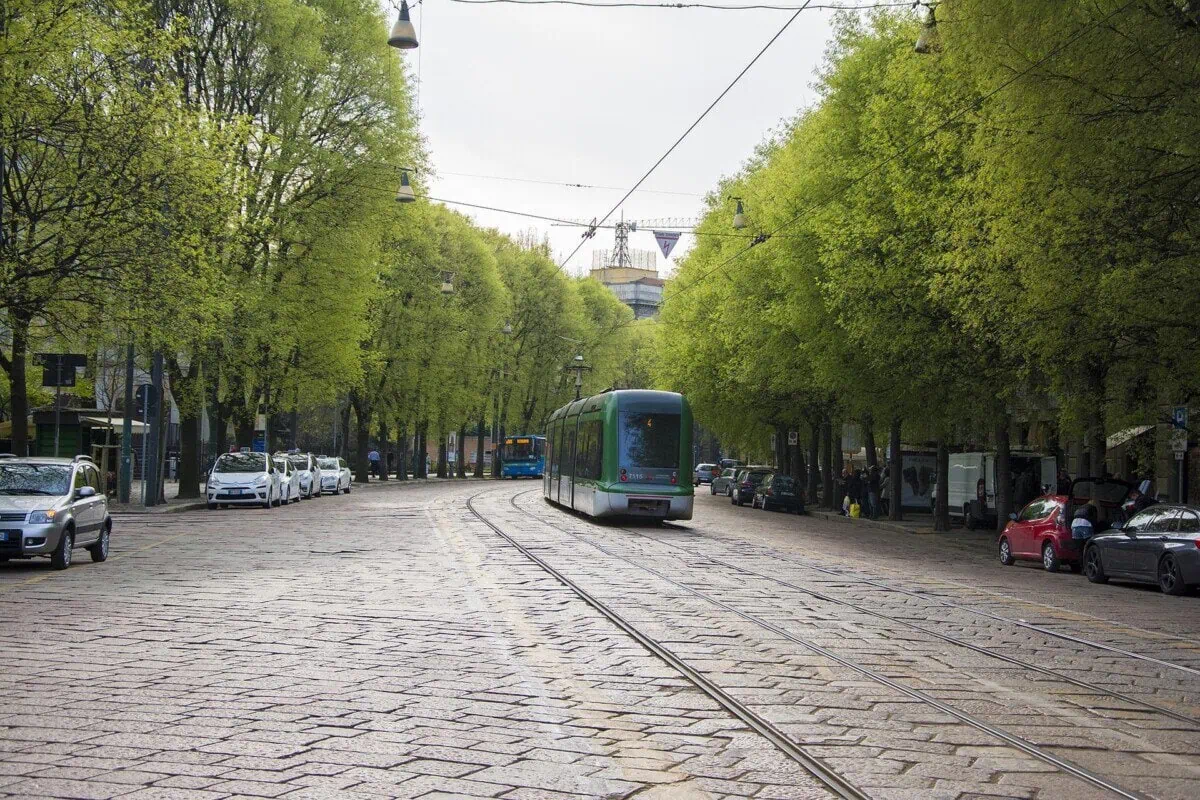
Milan runs one of the largest tram networks left in Europe, with seventeen urban lines criss-crossing the city on a mix of modern low-floor cars and genuinely historic rolling stock. Riding a tram here is not just a practical way to travel, it is one of the more enjoyable low-key experiences in the city.
The standout feature is the survival of the 1928 Class 1500 trams, nicknamed the “Ventotto”, which were modelled on the American Peter Witt streetcars of the era and are still in regular passenger service on several routes today, including route 10 between Porta Ticinese and Viale Lunigiana behind Central Station. They are wooden-floored, olive green, and unmistakably vintage, but they run the same timetables as every other line.
Alongside the veterans, Milan also operates newer 4700 and 4900-series trams, the latter known locally as JumboTram for their length, which handle the busier cross-city routes with more capacity and step-free boarding. Trams use the same tickets as the metro and buses, and stops are clearly marked with route numbers and the ATM logo.
Trams are particularly useful for reaching neighbourhoods the metro does not cover directly, such as parts of the Navigli canal district and Brera, and they are a genuinely pleasant way to see the city passing by at street level between stops.
Buses and Trolleybuses: Filling the Gaps
Milan’s bus and trolleybus network is the least glamorous part of the system, but it is what makes the rest of the network work as a whole. Dozens of routes reach streets and neighbourhoods that the metro and tram lines simply do not touch, and they use the exact same ticket, so there is no separate fare to think about.
Buses are especially useful for reaching quieter residential districts, some out-of-centre attractions, and connecting from tram or metro stations to addresses that are a genuine walk from the nearest rail stop. Electric trolleybuses, which draw power from overhead wires, cover several of the busier central corridors and are gradually being expanded as older diesel routes are replaced.
Tickets validate the same way as on the metro, by tapping a card reader or scanning a QR code on board, and the 90-minute window applies just as it does on the trams. This is genuinely helpful in practice, since it means a single ticket can carry you across a bus, a tram, and a short metro hop within the same trip without paying twice.
Real-time arrival information for buses is available through the official ATM app, which is worth checking before a longer bus journey since surface traffic can add unpredictable delays that the metro simply does not have to deal with.
Tickets, Fares and Zones Explained
Milan’s fare system is simpler than it looks once you understand the basics. A single ordinary ticket costs €2.20 (£1.90/$2.40) and is valid for 90 minutes from the moment you first validate it, covering one metro ride plus unlimited transfers on buses and trams within that window.
Almost everything a visitor needs falls inside the Mi1 to Mi3 fare zone, which covers the city itself and its immediate surroundings, so you do not need to worry about crossing zone boundaries for normal sightseeing. If your trip extends further out, for example towards Monza or some outlying suburbs, a different ticket is needed, but this rarely affects a standard city visit.
For anyone staying more than a day or two, the time-based passes tend to work out cheaper than buying single tickets each time. A 24-hour pass costs €7.60 (£6.60/$8.40) and a 72-hour pass is €15.50 (£13.50/$17), both covering unlimited travel on the whole network for their duration rather than counting individual rides.
A 10-ride carnet, priced at €19.50 (£17/$21.50), is a good middle option if you are staying a few days but not travelling constantly, since it works out slightly cheaper per ride than buying singles while not committing you to a full unlimited pass. Children under 14 travel free with a paying adult, which is worth knowing for families.
Buying Tickets: Machines, Tabacchi and the ATM App
Buying a ticket in Milan is straightforward once you know where to look, and there are more options than most first-time visitors expect. Vending machines at every metro station sell single tickets and all the standard passes, and most accept cards as well as cash, so you rarely need to queue at a staffed counter.
Away from the stations, tickets are also sold at tobacco shops and newsstands displaying the ATM logo, which is a genuinely useful option if you are already out walking and want to stock up before your next journey. This is a very Italian quirk of the system, but it works well and means you are rarely far from somewhere to top up.
The official ATM Milano app lets you buy digital tickets that display as a QR code on your phone, which is scanned at the gate or by an inspector on board. This is the most convenient option for most visitors, since it avoids finding a machine at all and lets you buy a ticket the moment you need one, even standing at a bus stop.
Whichever method you use, remember that a ticket must be validated at the start of your journey, either by tapping it at a turnstile or scanning it on board a bus or tram, since an unvalidated ticket is treated the same as travelling without one if an inspector checks.
Contactless Tap and Go on Metro, Trams and Buses
One of the more traveller-friendly features of Milan’s network is genuine contactless payment, which removes the need to think about tickets at all for most journeys. Simply tapping a contactless Visa, Mastercard, American Express or Maestro card, or a linked Apple Pay or Google Pay wallet, at the reader on a metro gate or aboard a bus or tram charges you automatically.
The system applies the cheapest available fare without you having to work it out yourself. Multiple taps within the 90-minute window are treated as one journey, and the system automatically caps your spending at the 24-hour pass price once you have made enough trips in a day, so frequent travellers benefit without buying a pass in advance.
The one important habit to build is using the same card for every tap during your trip, since the fare calculation and any daily cap are tracked per card, not per person. Mixing cards, or switching to a phone wallet halfway through the day, resets the counting and can end up costing more.
Contactless is not accepted on Trenord regional trains or the S-line suburban services, only on genuine ATM-operated metro, tram, bus and trolleybus services, so it is worth carrying a backup ticket if your day includes a suburban rail leg. Full details are available directly from ATM Milano.
Late-Night Travel and Accessibility
Milan’s metro does not run all night, so it is worth planning ahead if your evening plans stretch past midnight. Lines generally operate from around 6am until shortly after midnight, after which the network switches over to a dedicated overnight bus system rather than shutting down entirely.
Once the metro closes, night bus routes marked with the letter N take over the main corridors that the closed metro lines would normally cover, running through until the network reopens in the morning. A separate service of radiobuses marked with the letter Q operates from around 10pm to 2am, connecting outer districts to the nearest working metro station, which is a useful option if you are staying somewhere less central.
Accessibility across the network has improved significantly with the newer lines. The M4 and M5 were both built with step-free access and lifts at every station from the outset, since they are fully automated lines designed to modern standards, while older stations on M1, M2 and M3 have been retrofitted with lifts on a rolling basis, though coverage is not yet complete everywhere.
Trams and buses generally offer low-floor, step-free boarding on newer vehicles, though the historic 1928 trams are an obvious exception given their age and original design. If accessibility is a priority for your trip, checking the ATM app’s station-by-station accessibility information before you travel is worth the extra couple of minutes.
Best for long or awkward journeys. Builds one itinerary out of separate flights.
View flightsBest if you want maps and messaging working the moment you switch your phone on.
See eSIM plansBest if you would rather not work out the transport on arrival. Book it now and forget it.
View transfersBikeMi: Milan’s Bike-Share Network
Alongside the rail and road network, Milan also runs a well-established bike-share scheme called BikeMi, which is worth considering for shorter hops or for exploring flatter districts like the Navigli or Sempione Park at your own pace. Stations are dotted across the city centre and most inner suburbs, with both standard and electric bikes available.
Pricing works on a subscription basis rather than a single fare. A day pass costs €4.50 (£3.90/$5) and a weekly pass costs €9 (£7.80/$10.50), both covering unlimited short rides with the first 30 minutes included on a standard bike before small additional charges kick in.
Signing up is done through the BikeMi app or website, where you create a profile and link a payment card before your first ride. Only Visa, Mastercard or American Express are accepted, and riders need to be at least 14 years old, with parental permission required for minors.
BikeMi is best treated as a supplement to the metro and trams rather than a replacement, since Milan’s traffic and occasional cobbled streets can make longer rides less relaxing than a short hop between two nearby stations.
Getting Here vs Getting Around
It is worth being clear about what this guide covers and what it does not, since Milan’s three airports each need their own dedicated planning. This page is entirely about moving around once you are already in the city, not about the journey from the airport itself.
If you are flying into Linate, the M4 metro line covered above is the same line that connects the airport directly to the centre, so the two guides work as a natural pair. Our dedicated Milan Linate Airport to City Centre guide covers the full journey, timings and alternatives from that specific terminal.
Travellers arriving at Malpensa or Bergamo need a different approach entirely, since neither airport connects directly into the metro network covered here. Our dedicated guides to Milan Malpensa Airport to City Centre and Milan Bergamo Airport to City Centre cover the trains, coaches and taxis that bridge that gap before you reach the network this page describes.
Once any of those journeys ends, generally at Milano Centrale or Milano Cadorna, everything from that point onward is exactly what this guide covers, so the two sets of guides are designed to be read together rather than as one long page.

Rupert’s Handy Travel Tips
Rupert always says that Milan’s network looks confusing on a map covered in coloured lines, but it is far simpler once you have ridden it once.
- Buy a pass if you’re staying a few days: the 24-hour or 72-hour options work out cheaper than singles the moment you make more than three or four trips.
- Use the same contactless card all day: switching between a card and a phone wallet resets the daily fare cap, so stick to one payment method.
- Ride the old trams for fun, not just transport: route 10’s 1928 carriages are a genuine sightseeing experience in themselves, not just a way to get somewhere.
- Keep a backup paper ticket handy: contactless doesn’t work on Trenord suburban trains, so a physical ticket avoids being caught out on a day trip.
- Download the ATM app before you land: it covers live arrivals, digital tickets and route planning in one place, which beats hunting for a machine at a busy station.
Want to meet the reindeer behind our travel tips? Find out more in our page Who is Rupert?.




Frequently Asked Questions About Milan Public Transport
How much is a single ticket on Milan’s public transport?
A single ordinary ticket costs €2.20 (£1.90/$2.40) and is valid for 90 minutes, covering one metro ride plus unlimited bus and tram transfers within that window.
Can I use contactless bank cards on the Milan metro?
Yes, contactless Visa, Mastercard, American Express and Maestro cards, along with Apple Pay and Google Pay, work directly at metro gates and on trams and buses, with the cheapest fare applied automatically.
Do I need a different ticket for the tram or bus?
No, the same ticket covers the metro, trams, buses and trolleybuses across Milan’s Mi1 to Mi3 fare zone, so there is no separate fare to work out for each mode.
Is Milan’s metro accessible for wheelchairs and pushchairs?
The newer M4 and M5 lines have step-free access and lifts at every station, while older stations on M1, M2 and M3 have been retrofitted with lifts on an ongoing basis, though not every station is covered yet.
What happens once the metro stops running at night?
Night bus routes marked with the letter N take over the main corridors after the metro closes, and radiobuses marked with the letter Q run from around 10pm to 2am connecting outer districts to the nearest working station.
Are the old trams in Milan still actually used, or just for tourists?
They are genuine working vehicles on the regular timetable, most famously the 1928 Class 1500 cars on routes such as tram 10, and locals use them for everyday journeys just like any other tram.
Further Reading & Related Guides
If you are still working out how to reach the city before using any of the network above, our airport guides are the natural starting point. Milan Linate Airport to City Centre covers the M4 metro link described in this guide in full detail, while Milan Malpensa Airport to City Centre and Milan Bergamo Airport to City Centre explain the trains and coaches needed from Milan’s other two airports before you reach the network this page covers.
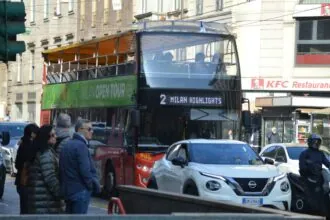
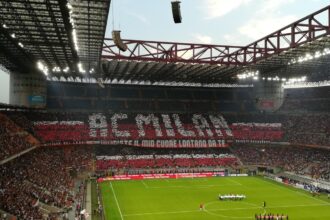
If you’re still deciding what to see once you’re moving around the city, our Things to Do in Milan hub pulls together the sights this guide’s network can take you to. For a different way of covering the same ground, our Milan Hop-On Hop-Off Bus Guide is worth comparing against if you’d rather sit back than juggle metro, tram and bus tickets yourself. Football fans should also note that the M5 line detailed above continues out to San Siro, and our Getting to San Siro Stadium in Milan guide covers the full route and match-day timings.
Once you have the city itself figured out, it is worth thinking about where the network can take you beyond it. Our guide to Milan to Lake Como explains the train routes for a classic day trip, and Milan to the Ski Resorts covers the transfers for a longer trip into the Alps, both starting from the same central stations this guide’s metro and tram lines connect into.
Staying connected makes all of this easier in practice, since checking live departures or buying a digital ticket depends on a working data connection. Our local transport apps guide covers tools that work alongside the official ATM app, and our eSIM apps guide explains how to get reliable data in Italy from the moment you land, rather than relying on patchy hotel WiFi to plan your route.