Reviewed by our editorial team Published
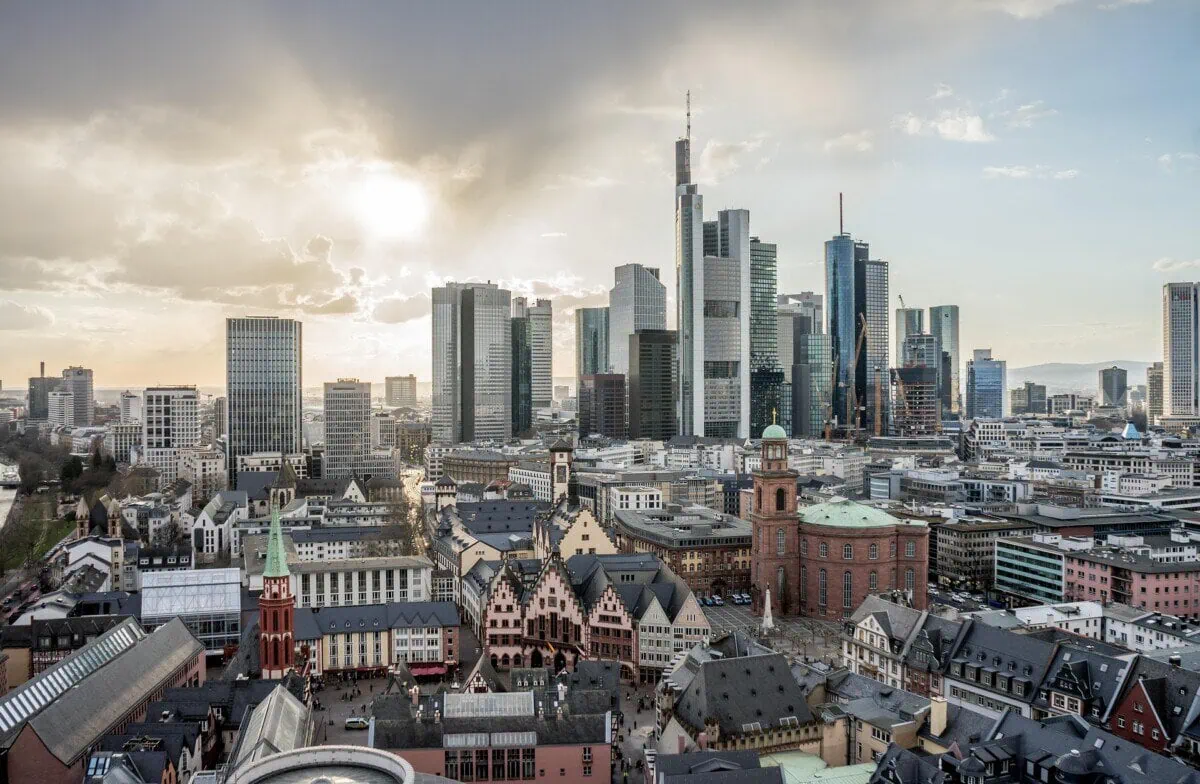
Frankfurt often gets treated as a stopover, a business hub travellers pass through instead of a destination in its own right, but that reputation sells the city short. Frankfurt am Main packs a reconstructed medieval old town, world-class art museums, and Germany’s most striking skyline into a compact area that’s easy to explore on foot or by tram. Its centre sits on the banks of the Main river, with the glass towers of the financial district rising just steps from half-timbered houses and Gothic church spires.
The city earned the nickname “Mainhattan” for its cluster of skyscrapers, a rarity in Germany where most cities kept height limits low, but that modern skyline sits right alongside one of the country’s most ambitious historic reconstructions. The Altstadt around Römerberg square was rebuilt from photographs and salvaged fragments after wartime bombing destroyed almost the entire old town, and the results are genuinely convincing.
Culture runs deep here too. The Museumsufer, or Museum Embankment, lines both banks of the Main with dozens of galleries and collections, anchored by the Städel Museum’s seven centuries of European painting.
Add in a botanical garden, a medieval gate tower, an opera house rebuilt from ruins, and the cider taverns of Sachsenhausen, and a weekend in Frankfurt fills up fast. Families, art lovers, history fans and food-focused travellers all find something to anchor a trip around.
This guide covers the essential sights, the best viewpoints, where to eat and drink like a local, and how to plan a trip that works for solo travellers, couples, and families alike. Eighteen sections follow, moving roughly from the historic centre out towards the skyline, the riverside districts, and practical planning for families and rainy days.
Prices and opening hours below reflect standard 2026 rates, though it’s worth double-checking before you visit since German museums and attractions do periodically adjust theirs. If you’re flying in, our companion guide to Frankfurt Airport transfers covers exactly how to get from the terminal into the city centre.
The table below summarises every section in this guide, with typical visit time and who it’s best for noted where that detail applies.
| Section | What You’ll Find | Typical Visit Time | Best For |
| Wander the Rebuilt Römerberg and Altstadt | The rebuilt medieval square and half-timbered houses at the heart of the Altstadt. | 30–45 mins | First-time visitors |
| Climb the Towers of Frankfurt Cathedral | A Gothic cathedral tower with panoramic views over the old town. | 45–60 mins | History fans |
| Explore the Städel Museum’s Old Masters | One of Germany’s leading art museums, spanning seven centuries of paintings. | 2–3 hours | Art lovers |
| Discover the Museumsufer’s Riverside Museums | A cluster of museums lining the Main, from natural history to film and applied art. | Half day | Culture enthusiasts |
| Cruise the Main River on a Sightseeing Boat Tour | Guided boat cruises along the Main with skyline views from the water. | N/A | N/A |
| Escape to the Palmengarten Botanical Garden | Greenhouses, themed gardens and open lawns for a slower-paced visit. | 2–3 hours | Families & nature lovers |
| Ride to the Top of the Main Tower | An open-air observation deck above the financial district skyscrapers. | 45 mins | Skyline views |
| Ride the Hop-On Hop-Off Bus Around Frankfurt | An 11-stop bus loop linking the city’s main sights with a 24-hour ticket. | N/A | N/A |
| Step Inside Goethe’s Birthplace | The restored townhouse where the writer Johann Wolfgang von Goethe was born. | 1 hour | Literature fans |
| Stand Beneath the Medieval Eschenheimer Turm | A 13th-century city gate tower that survived the war largely intact. | N/A | N/A |
| Save with the Frankfurt Card City Pass | A transport-and-discount pass covering the city and airport. | N/A | N/A |
| Catch a Concert at the Alte Oper | Frankfurt’s restored 19th-century opera house, now a concert venue. | N/A | N/A |
| Shop Along the Zeil Pedestrian Street | The main shopping strip, running from the Hauptwache to the Zeilgalerie. | N/A | N/A |
| Go Further with the Frankfurt RheinMain Card | A regional pass extending transport and discounts beyond the city. | N/A | N/A |
| Sip Apfelwein in Sachsenhausen | The traditional cider taverns of the Alt-Sachsenhausen district. | Evening | Food & drink fans |
| Admire Frankfurt’s “Mainhattan” Skyline | The best viewpoints for the city’s cluster of skyscrapers. | N/A | N/A |
| Cross the Eiserne Steg Footbridge | A pedestrian bridge linking the Altstadt with Sachsenhausen across the Main. | N/A | N/A |
| Visit the Birthplace of German Democracy | The Paulskirche, site of Germany’s first democratic national assembly. | N/A | N/A |
| Meet the Animals at Frankfurt Zoo | One of Germany’s oldest zoos, near the city centre. | Half day | Families |
| Taste Frankfurt’s Signature Dishes | Local specialities such as Grüne Soße and Handkäse. | N/A | N/A |
| Plan a Family Day Out | Suggested combinations of sights that work well with children. | N/A | N/A |
| Pick Rainy-Day Indoor Options | Museums, markets and other covered activities for wet weather. | N/A | N/A |
| Frequently Asked Questions About Things to Do in Frankfurt | Quick answers to common visitor questions. | N/A | N/A |
| Further Reading & Related Guides | Links to related city and region guides. | N/A | N/A |
Wander the Rebuilt Römerberg and Altstadt
The Römerberg is Frankfurt’s historic central square and the natural starting point for exploring the old town. It’s flanked by the Römer, the ornate Gothic town hall whose stepped gables have symbolised civic Frankfurt for centuries.
Almost everything around the square was destroyed in Allied bombing raids in 1944, and for decades the area was rebuilt in a plain postwar style that locals never warmed to. Between 2012 and 2018, the city undertook the Neue Altstadt (New Old Town) project, reconstructing 35 buildings on their original medieval footprints using a mix of faithful replicas and modern interpretations.
The result is one of Europe’s most convincing historic reconstructions, with narrow lanes, half-timbered facades, and small squares that feel centuries old despite being barely a decade old. Wander from Römerberg through Hühnermarkt and Markt to see how carefully the project balanced authenticity with usability.
The Alte Nikolaikirche, a red sandstone church on the square, dates to the 12th century and survived the bombing largely intact, giving a rare glimpse of pre-war Frankfurt. Its bells still ring a Renaissance-style carillon several times a day, audible across the whole square.
Cafes and restaurants ring the Römerberg, making it a natural spot to pause with a coffee or an Apfelwein while people-watching. In December, the square transforms into one of Germany’s most photographed Christmas markets, with stalls climbing right up to the Römer’s steps.
Because the Altstadt is compact, it’s easy to combine with a visit to the nearby cathedral or the Museumsufer across the river. Give yourself at least 30 to 45 minutes just to walk the lanes slowly and take in the details on the rebuilt facades.
Climb the Towers of Frankfurt Cathedral
Frankfurt Cathedral, properly the Kaiserdom St. Bartholomäus, is the red sandstone church that has dominated the old town skyline since the Middle Ages. Despite its name, it was never actually a cathedral in the formal sense, but ten Holy Roman Emperors were crowned here between 1562 and 1792.
The church itself is free to enter and worth a look for its Gothic choir and the coronation-era artefacts inside. Like much of the Altstadt, it suffered heavy bomb damage in 1944 and was carefully restored over the following decades.
The real draw for most visitors is the tower climb. A spiral staircase of 300 steps leads up to a viewing platform 66 metres above the square, with sweeping views back over the Altstadt roofs to the Main and the skyscraper skyline beyond.
Admission to the tower costs €3 (£3/$4) for adults and €2 (£2/$3) for reduced-rate visitors, with weekend exhibition access sometimes pushing the price slightly higher. It’s one of the cheapest viewpoints in the city and arguably the most atmospheric, since you’re climbing through centuries-old brick rather than a modern lift shaft.
Opening hours shift with the seasons, running roughly from 10am to 6pm in summer and 10am to 5pm in winter, with shorter Monday hours and last ascent 30 minutes before closing. Weekends can bring queues at the base of the staircase, so arriving early or late afternoon tends to be quieter.
Note that the climb closes during storms or high winds, since the platform is fully exposed. Pack a jacket even in summer, since it can be breezy up top even when the streets below feel warm.
Best for a short trip. Compare rooms by neighbourhood, price and guest rating before you book.
Compare hotelsBest for longer stays. Whole apartments and houses, so you are not eating out three times a day.
View rentalsBest as a last check before booking. Compares Frankfurt hotel rates across several sites in one search.
Compare ratesExplore the Städel Museum’s Old Masters
The Städel Museum is Germany’s oldest museum foundation and one of the most important art collections in the country, spanning 700 years of European painting from medieval altarpieces to contemporary work. Its collection includes major names such as Rembrandt, Vermeer, Botticelli, Monet, and Picasso, spread across three architectural eras of the building itself.
The standout is the underground extension opened in 2012, a sunlit hall lit by 195 circular skylights set into a grassy roof that doubles as a public park. It houses the museum’s contemporary galleries and is worth visiting for the architecture alone.
Standard adult admission costs €19 (£16/$22), with a reduced Tuesday evening ticket from 3pm to 6pm priced at €10 (£9/$12). Students, visitors with disabilities, and several other groups qualify for discounted rates on regular tickets too.
The museum is open Tuesday, Wednesday, Friday, Saturday, and Sunday from 10am to 6pm, with Thursday hours extended to 9pm for evening visitors. It’s closed on Mondays, so plan around that if the Städel is a priority.
Because the collection is so large, first-time visitors often benefit from picking a handful of galleries rather than trying to see everything in one visit. The medieval and early Renaissance rooms upstairs pair well with the modern basement galleries for a sense of the full sweep of European art.
The museum sits directly on the Museumsufer, so it’s easy to combine with a walk along the riverside path to other collections nearby. Allow at least two to three hours if you want to see the highlights without rushing.
Discover the Museumsufer’s Riverside Museums
The Museumsufer, or Museum Embankment, is the collective name for the cluster of museums lining both banks of the Main just south and west of the Altstadt. Frankfurt’s tourism board counts roughly 39 museums across the wider city, and a striking concentration of them sit within walking distance of each other along the river.
Beyond the Städel, highlights include the Liebieghaus for sculpture, the Museum für Angewandte Kunst for applied arts and design, and the Deutsches Filmmuseum for cinema history. On the opposite bank, the Deutsches Architekturmuseum appeals to anyone curious about the city’s skyline and reconstruction projects.
Families often gravitate towards the Senckenberg Naturmuseum, a large natural history museum with dinosaur skeletons, though it sits slightly further north near the university rather than directly on the embankment. Closer to the river, the Ikonenmuseum houses one of Europe’s largest collections of Eastern Orthodox icons in a converted former hospital chapel.
Many of the municipal museums along the embankment offer combined or discounted tickets, and the city occasionally runs a Museumsuferfest festival each summer that turns the whole stretch into an open-air event with music and food stalls. Checking the current museum admission page before visiting can save a few euros if you’re planning to see more than one.
The riverside setting is part of the appeal even if you skip the museums entirely. A walk along Schaumainkai, the promenade on the Sachsenhausen side, gives good views back across the water to the Altstadt and the skyline behind it.
Because the museums vary so much in size and subject, it’s worth picking two or three that match your interests rather than trying to cover the whole embankment. A half day is realistic for a focused visit, or a full day if you want to properly explore several collections.
Cruise the Main River on a Sightseeing Boat Tour
Seeing Frankfurt from the water gives a completely different sense of the skyline than walking the embankment does. Boats leave from the Eiserner Steg landing stage in the city centre, with commentary in German and English pointing out the buildings and bridges along both banks.
Two lengths are usually on offer: a 50 minute round trip and a longer 100 minute cruise that pushes further upriver toward Gerbermühle or downriver past the Griesheim lock. Either route passes beneath the glass towers of the financial district and along the museums lining the Sachsenhausen side, so the Museumsufer looks noticeably different from a boat deck than from the towpath.
Sailings run roughly hourly from around 11am, with a fuller timetable between March and October and a reduced service over winter. The shorter cruise starts at about €16 (£14/$19) per adult and the 100 minute version at around €19.50 (£17/$23), with cheaper tickets for children and family bundles from about €39 (£34/$46).
Because the jetty sits right next to the Eiserner Steg footbridge, the cruise slots naturally into a day that already includes the riverside museums or the Altstadt. Seating is available both in the enclosed cabin and on the open top deck, so it works as a relaxed way to end a day of walking rather than start one.
Escape to the Palmengarten Botanical Garden
The Palmengarten is Frankfurt’s largest botanical garden, a green escape covering more than 20 hectares just west of the city centre. It opened in 1871 and today combines historic greenhouses with open-air gardens, ponds, and a small train that loops through the grounds in summer.
The standout features are the Palmenhaus, a soaring 19th-century glasshouse filled with tropical palms, and a series of themed houses recreating desert, rainforest, and subtropical climates under one roof. Even on a grey Frankfurt afternoon, stepping into the humid warmth of the tropical house feels like a mini holiday.
Outside, the gardens include a rose garden, a rock garden, and a large lawn area that fills with picnicking locals whenever the sun comes out. Seasonal displays change through the year, from spring bulbs to summer perennials to autumn colour among the older trees.
Adult admission costs €9 (£8/$11), with a cheaper after-work ticket available on weekdays from 6:30pm for €5 (£4/$6), and children under 18 enter free. Opening hours run from 9am to 7pm between March and October, shortening to 9am to 4pm from November to February.
The garden closes only on December 24th and 31st, making it a reliable option almost any time of year. It’s particularly popular with families, since there’s enough open space for children to run around away from city traffic.
Getting there is straightforward by U-Bahn to Westend or Bockenheimer Warte, both a short walk from the entrance. Budget two to three hours to see the greenhouses properly and still leave time to relax on the lawns.
Ride to the Top of the Main Tower
The Main Tower is one of the few skyscrapers in Frankfurt’s financial district open to the public, and its observation deck is the best value skyline view in the city. At 200 metres including its antenna, it’s not the tallest tower in Frankfurt, but its central location makes the panorama especially useful for orientation.
An elevator whisks visitors up in seconds to an open-air platform on the 54th floor, with 360-degree views over the Altstadt’s red rooftops, the Main river, and the surrounding cluster of glass towers that gave the city its “Mainhattan” nickname. On a clear day, you can pick out landmarks as far as the Taunus hills to the north.
Adult admission costs €9 (£8/$11), and the platform stays open into the evening, making it one of the few spots in the city centre where you can watch the sunset over an entire skyline. Summer hours run from 10am to 9pm Sunday through Thursday and to 11pm on Friday and Saturday, with winter hours closing a couple of hours earlier.
The last elevator ride up departs 45 minutes before closing, so it’s worth timing a visit for late afternoon if sunset views are the goal. A small café near the base of the tower is a convenient spot to wait if you arrive slightly early for your slot.
Because the platform is genuinely outdoors rather than behind glass, wind can be noticeable at height even on calm days at street level. It’s worth checking the forecast, since access can be limited during storms.
Compared with private skybars elsewhere in the city, the Main Tower remains the most straightforward way to get above Frankfurt without booking a table or a drink. Pair it with a walk through the Altstadt beforehand for a “then and now” contrast between medieval streets and modern towers.
Ride the Hop-On Hop-Off Bus Around Frankfurt
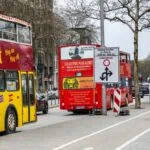
For visitors who would rather sit than walk between sights, a hop-on hop-off bus loops around eleven stops covering most of central Frankfurt. The route links Paulskirche, the Römer, Goethe-Haus, the Main Tower, the Senckenberg Museum, the trade fair grounds, the main station, the Museumsufer, the Eiserner Steg, Alt-Sachsenhausen and the zoo.
A ticket is valid for 24 hours from first use, so riders can get off at any stop, spend as long as they like, and catch a later bus onward without buying again. The full loop on the open-top double-decker takes about 90 minutes if you stay aboard the whole way, and some tickets also cover a shorter express version for anyone short on time.
Commentary is delivered through onboard headphones in eight languages, including English, German, French, Spanish and Italian, so the tour works well for solo travellers as much as groups. It’s a practical way to string together attractions that sit too far apart to walk comfortably in one day, particularly the zoo and Sachsenhausen, which sit at opposite ends of the route from the Römerberg.
Booking ahead means the ticket is ready on a phone rather than needing to be collected in person, and buses run frequently enough that waiting times between stops are usually short. Pairing it with a walk through the Altstadt on foot afterwards works well, since the bus covers the wider layout of the city before you go back to explore specific streets on foot.
Best for finding routes the airlines do not sell as a single ticket. Combines carriers to bring the fare down.
Search flightsBest if you want maps and messaging working the moment you switch your phone on.
See eSIM plansBest if you would rather not work out the transport on arrival. Book it now and forget it.
View transfersStep Inside Goethe’s Birthplace
The Goethe House, or Frankfurter Goethe-Haus, is the reconstructed childhood home of Germany’s most famous writer, Johann Wolfgang von Goethe, born here in 1749. The building was destroyed in the same 1944 bombing raids that flattened much of the Altstadt, then rebuilt after the war using surviving furniture, artwork, and detailed records of the original interior.
Rooms are furnished to recreate the household as it would have looked during Goethe’s childhood, including the writing desk where he is said to have begun early drafts of his work. It offers a genuinely personal counterpoint to Frankfurt’s grander civic monuments, showing the domestic world of an 18th-century merchant family rather than a public square or church.
An adjoining Goethe Museum houses paintings and artefacts connected to his life and the wider Romantic era, including works by contemporaries who shaped the literary and artistic scene of the time. Together, the house and museum give a fuller picture of Frankfurt’s cultural history beyond its more commercial reputation.
Standard admission costs €12 (£10/$14) for the combined house and museum ticket, with a reduced student rate of €7 (£6/$8) and a family ticket at €18 (£15/$21) for up to two adults and children. The museum-only exhibition ticket, when a special show is running, is priced separately at around €7 (£6/$8).
Opening hours run 10am to 6pm most days, with Thursday extended to 9pm for later visitors, making it easy to fit in after work or before dinner in the Altstadt. The house sits just a few minutes’ walk from Römerberg, making it easy to combine with a broader old-town wander.
Allow around an hour for a relaxed visit, longer if a temporary exhibition is running in the museum wing. It’s a quieter stop than the cathedral or the Städel, which makes it a good option if you want a break from busier crowds.
Stand Beneath the Medieval Eschenheimer Turm
The Eschenheimer Turm is one of the last survivors of Frankfurt’s medieval city fortifications, a 47-metre gate tower built between 1400 and 1428 by architect Madern Gerthener. Of roughly 60 towers and gates that once ringed the old city walls, only three remain, and the Eschenheimer Turm is by far the most complete and recognisable.
Its square base, round upper section, and steep spire topped with four small turrets make it instantly distinctive against the modern office blocks that now surround it. Remarkably, city planners scheduled it for demolition in the early 1800s, and it was reportedly saved only because a French ambassador objected to the plan.
Today the tower sits in the middle of a busy roundabout, Eschenheimer Tor, with a U-Bahn and tram interchange running directly beneath it. A pedestrian zone added in 1992 finally made the tower easy to approach again after decades of being cut off by traffic on a central island.
The ground floor now functions as a restaurant and bar, so it’s possible to actually sit inside a 600-year-old tower over a coffee or a beer rather than just photographing it from outside. There’s no general public access to climb it, though a local heritage group holds occasional meetings in the upper fireplace room.
It’s a five-minute walk north of the main shopping district, making it easy to fold into a wider walk through the city centre rather than requiring a special trip. Locals use it constantly as a meeting point, so don’t be surprised to find it a popular rendezvous spot at any hour.
Even a brief pause here rewards a closer look, since the tower’s carved stonework and asymmetric turrets reward slow observation more than a passing glance. It’s a useful reminder of just how much of medieval Frankfurt vanished, and how much effort has gone into preserving what little survived.
Save with the Frankfurt Card City Pass
The Frankfurt Card bundles unlimited public transport with discounted entry to dozens of attractions on one ticket. It covers free travel on the S-Bahn, U-Bahn, trams, buses and night buses across the city, including the journey to and from Frankfurt Airport.
On top of the transport, cardholders get up to 50% off admission at around 38 museums and attractions, among them the Städel Museum, the Goethe-Haus and the Senckenberg Natural History Museum. That makes it worth considering for anyone planning to visit more than one paid attraction in a day, since the transport savings alone can cover a good part of the cost.
It’s sold as a 1-day card, valid until around 5am the following morning, or a 2-day version covering two consecutive days, and prices start from about €13 (£11/$15) per person. A group card is also available, covering up to five people travelling together on a single pass, which works out cheaper per head than buying individual cards.
Tickets are issued digitally, so there’s nothing to collect or print before travelling, just a code to show on boarding or at the ticket gate. For a trip built around the Römerberg, the museums and a couple of the paid viewing platforms, the card is usually the more economical option compared with buying every ticket separately.
Catch a Concert at the Alte Oper
The Alte Oper, Frankfurt’s grand old opera house, opened in 1880 as one of the most lavish theatres in Germany, modelled on the great opera houses of Paris and Vienna. Its facade still carries the inscription “Dem Wahren Schönen Guten” (“To the True, the Beautiful, the Good”), a motto that has outlasted the building’s original purpose by more than a century.
Allied bombing gutted the interior in 1944, leaving only the shell standing for decades while Frankfurt debated whether to demolish it entirely. Public campaigns eventually won out, and after extensive reconstruction the building reopened in 1981, not as an opera house but as a concert and congress hall.
Frankfurt’s actual opera company now performs at a separate modern venue, so the Alte Oper today hosts orchestral concerts, chamber music, and conferences rather than staged opera. The main hall seats around 2,500 and is known for excellent acoustics, making it a highlight for classical music fans visiting the city.
Even without a ticket to a performance, the building is worth a look from the square outside, particularly the ornate facade and the fountains and gardens in front of it. The surrounding Opernplatz is a pleasant spot to sit, especially in warmer months when outdoor cafes set up tables facing the building.
Programming runs year-round and includes visiting orchestras from around the world alongside resident Frankfurt ensembles, so it’s worth checking the schedule in advance if live music is a priority for your trip. Ticket prices vary widely depending on the performance and seating, from budget balcony seats to premium stalls.
The Alte Oper sits at the top of the elegant Bockenheimer Landstraße, within easy walking distance of the Zeil shopping district and the Westend residential area. It’s a good stop for an evening out, whether or not classical music is normally your thing.
Shop Along the Zeil Pedestrian Street
The Zeil is Frankfurt’s principal shopping street, a 1.2-kilometre pedestrian strip running east from Hauptwache to Konstablerwache in the heart of the city centre. Its name comes from the German word “Zeile,” meaning row, and the street has been a commercial hub since at least the 14th century.
Most of the grand prewar buildings that once lined the Zeil were destroyed in the same 1944 raids that devastated the Altstadt, and unlike Römerberg, they were never rebuilt in period style. What stands today is largely postwar and contemporary architecture, including large department stores and modern retail blocks.
The centrepiece is MyZeil, a striking glass-fronted shopping centre with a swirling atrium design that’s become a landmark in its own right, alongside long-standing anchor Galeria Kaufhof. Between them sit dozens of international chains, flagship stores, and smaller boutiques catering to every budget.
Since a major renovation completed in 2009, the pedestrian zone extends further west towards Börsenstraße, giving shoppers more car-free space to wander between stores. The street remains one of Germany’s busiest retail addresses, reflecting just how much foot traffic passes through daily.
Beyond the shops, the Zeil works as a practical route between the Altstadt and the northern parts of the city centre, with several U-Bahn and tram connections along its length. Street performers and seasonal markets add to the atmosphere, particularly around the Hauptwache end.
It’s not the place to come for boutique charm or historic character, but it’s an efficient stop for practical shopping or simply people-watching between sightseeing. Allow an hour or two if browsing is the goal, less if you’re just passing through.
Go Further with the Frankfurt RheinMain Card
The RheinMainCard works like a regional upgrade to the standard city pass, covering the entire RMV transport network rather than just Frankfurt itself. That means unlimited travel on trains, trams, subways and buses across the whole Rhine-Main region, useful for day trips to nearby towns such as Wiesbaden, Mainz or Darmstadt.
Alongside the transport, the card gives free or reduced entry to more than 40 museums, attractions and leisure facilities spread across the wider region, not just within Frankfurt’s city limits. It suits travellers who want to combine a Frankfurt visit with a side trip rather than stay within the city for their whole stay.
The card is only valid for two consecutive days, running from the date printed on it until the end of service around 5am on the following day. Unlike the standard Frankfurt Card, it does not offer separate discounted rates for children, pensioners or people with disabilities, though individual venues may still apply their own reductions on top.
Because it’s built around RMV’s fare zone rather than the city boundary, it’s the better choice if the itinerary includes anywhere outside central Frankfurt, while the standard Frankfurt Card remains the simpler option for a visit that stays entirely within the city and airport. Either way, both are digital tickets that activate as soon as they’re bought.
Best for solo travellers and anyone watching the budget. Dorm beds and private rooms in the same search.
Browse hostelsBest for anyone flying more than once or twice a year. Handles the compensation claim so you are not chasing the airline.
See AirHelp+Best for a day with a bag and nowhere to put it. Find a storage point near where you already are.
View storageSip Apfelwein in Sachsenhausen
Sachsenhausen, the district on the southern bank of the Main directly across from the Altstadt, is where Frankfurt’s culinary identity is most on display. Its historic core, known as Alt-Sachsenhausen, is dense with traditional taverns serving the region’s signature drink, Apfelwein, a dry, tart apple cider that locals treat with the seriousness other regions reserve for wine.
Apfelwein is traditionally served in a distinctive dimpled glass called a Gerippe and poured from a specially shaped jug known as a Bembel. Taverns range from tourist-friendly spots with English menus to tiny neighbourhood bars where regulars have their own reserved tables, and both are worth experiencing on different visits.
Classic dishes to pair with a glass include Handkäs mit Musik, a pungent sour milk cheese served with onions and vinegar, and Frankfurter Grüne Sauce, a herb sauce made from seven fresh herbs served over boiled eggs and potatoes. Both are unapologetically local flavours that reward a bit of culinary courage.
A glass of Apfelwein typically costs somewhere between €4 and €8 (£3 to £7/$5 to $9) depending on the venue, making an evening of tavern-hopping an affordable way to spend a night out. Many places also serve it mixed with sparkling water as a lighter “Sauergespritzter.”
Beyond the taverns, Alt-Sachsenhausen’s narrow streets are worth a daytime wander too, with a quieter, more residential character than the busier Altstadt across the river. The Museumsufer sits just to the west along the riverbank, making it easy to combine culture and cuisine in a single afternoon.
Evenings here have a genuinely local feel that’s harder to find in the more touristed parts of the city centre. Arrive hungry, order in German if you can manage it, and don’t be surprised if a stranger at the next table strikes up a conversation.
Admire Frankfurt’s “Mainhattan” Skyline
Frankfurt is the only German city with a genuine skyscraper skyline, a distinction that earned it the affectionate nickname “Mainhattan,” a play on the Main river and Manhattan. While most German cities kept strict height limits after the war, Frankfurt’s role as the country’s banking capital pushed it to build upward instead.
The skyline is dominated by towers such as the Commerzbank Tower, once the tallest building in Europe, and the twin-towered Deutsche Bank headquarters, both clustered in the compact financial district known as Bankenviertel. Seen from across the river or from the Main Tower’s platform, the density of glass and steel packed into such a small footprint is genuinely striking.
The contrast with the reconstructed medieval Altstadt just a few hundred metres away is part of what makes Frankfurt visually distinctive among European cities. Few places let you photograph a 15th-century gate tower and a modern skyscraper cluster in the same frame.
The best free viewpoints include the Eiserne Steg footbridge and the Sachsenhausen riverbank, both offering a clean sightline across the Main to the towers beyond. For a paid, elevated perspective, the Main Tower observation deck remains the most accessible option described earlier in this guide.
Night is arguably the best time to appreciate the skyline, when office towers light up and reflect off the river’s surface. A slow walk along either riverbank after dark, particularly between the Eiserne Steg and the Alte Brücke, takes in the view without needing a ticket or a booking.
Photographers often favour the golden hour just before sunset, when the low light catches the glass facades without the harsher glare of midday. Whatever time you choose, the skyline is one of the few Frankfurt sights that costs nothing and needs no advance planning at all.
Cross the Eiserne Steg Footbridge
The Eiserne Steg, meaning “Iron Footbridge,” is a pedestrian-only crossing linking the Altstadt on the north bank to Sachsenhausen on the south. First built in 1869 and rebuilt several times since, including after wartime damage, the current bridge dates largely from a 1993 reconstruction that preserved the original ironwork style.
It’s one of the most direct ways to walk between the old town and Sachsenhausen without detouring to a road bridge, and its lattice ironwork gives it a distinctive silhouette against the water. On a clear day, the views up and down the Main from the middle of the bridge take in both the Altstadt skyline and the modern towers beyond.
Like similar bridges in other European cities, the Eiserne Steg has become a spot for couples to attach padlocks engraved with their names, a tradition that’s grown steadily over the years despite periodic clear-outs by the city. Thousands of locks now cover sections of the railings, glinting in the sun alongside the ironwork.
The bridge is particularly atmospheric at dusk, when the lights of the Bankenviertel towers start to reflect in the river and the Altstadt’s spires silhouette against the sky. It costs nothing to cross and takes only a couple of minutes, making it an easy addition to almost any Frankfurt itinerary.
It sits directly between two of the city’s best-known areas, so most visitors cross it naturally while moving between the Museumsufer, Sachsenhausen’s taverns, and the Römerberg Altstadt. There’s no need to plan a special trip; it’s simply part of the walking route.
For photographers, the bridge offers one of the cleanest angles in the city to capture the “then and now” contrast between medieval rooftops and modern skyscrapers in a single frame. Even a brief pause here, locks and all, rewards a few extra minutes with the camera out.

Visit the Birthplace of German Democracy
St Paul’s Church, or Paulskirche, looks unassuming from the outside, a round sandstone building near Römerberg with none of the cathedral’s soaring towers. Its significance is historical rather than architectural: in 1848, it hosted the Frankfurt National Assembly, the first freely elected all-German parliament, making it one of the most important sites in the story of German democracy.
Delegates met here to draft a constitution for a unified, constitutional Germany, an ambitious project that ultimately failed politically but left a lasting legacy in German constitutional thought. The building has been described ever since as the symbolic birthplace of German parliamentary democracy, even though the 1848 assembly itself dissolved without achieving unification.
The church was heavily damaged in the 1944 bombing raids and was among the very first buildings restored after the war, reopening in 1948 to mark the centenary of the assembly. That speed of restoration, ahead of much of the rest of the Altstadt, reflects how much symbolic weight Frankfurt placed on the building.
Inside, a small exhibition covers the history of the 1848 assembly and the building’s role in German political history, with information available in English for international visitors. The building continues to host commemorative events and occasional ceremonies tied to German democratic history.
Entry is generally free, and the building sits just a couple of minutes’ walk from Römerberg, making it easy to combine with an Altstadt wander. It’s a quieter, more contemplative stop than the busier squares nearby, and rarely draws crowds despite its historical importance.
For visitors interested in European political history rather than just architecture or art, this is arguably one of the most underrated stops in central Frankfurt. Even a brief 20-minute visit adds real context to the more famous sights clustered around it.
Meet the Animals at Frankfurt Zoo
Frankfurt Zoo opened in 1858, making it one of the oldest zoos in Germany, and it remains one of the city’s most popular family attractions today. Located just east of the city centre, it’s home to more than 4,500 animals across roughly 250 species, from big cats to primates to an extensive bird collection.
The zoo is particularly known for its Grzimekhaus, a nocturnal house that flips day and night lighting so visitors can observe naturally nocturnal species such as bats and bushbabies during normal opening hours. It’s one of the more memorable exhibits for children, who often find the darkened, active enclosures more engaging than daytime displays of sleeping animals.
Other highlights include the Exotarium, combining an aquarium, reptile house, and insect displays under one roof, and outdoor enclosures for animals such as gorillas, giraffes, and various big cats. The zoo’s long conservation history includes involvement in several international breeding programmes for endangered species.
Standard adult admission costs €12 (£10/$14), or €13 (£11/$15) including a voluntary nature conservation contribution, with reduced rates for children and concessions. Given the size of the site, most visitors need a good half day to see everything without rushing.
The zoo sits close to the Ostend area, a short tram or U-Bahn ride from the city centre, and there’s a pleasant park, the Günthersburgpark, nearby if you want to extend the outing. On warmer days, the zoo’s cafes and picnic areas fill up quickly with local families.
It’s a reliable choice regardless of weather, since many of the larger exhibits, including the Grzimekhaus and Exotarium, are indoors. Combined with the nearby Palmengarten, it makes for one of the most family-friendly days out anywhere in the city.
Taste Frankfurt’s Signature Dishes
Frankfurt’s food culture runs deeper than the Apfelwein taverns of Sachsenhausen, though that’s certainly where much of it is concentrated. The city gave its name to the Frankfurter Würstchen, a thin pork sausage protected by EU designation and traditionally boiled rather than grilled, served simply with mustard and bread.
Handkäs mit Musik remains one of the most distinctive local specialities, a small round of sour milk cheese marinated in oil, onions, and vinegar, served with dark rye bread. The name translates roughly to “hand cheese with music,” a nod to the digestive consequences of the raw onions rather than any literal soundtrack.
Grüne Sauce, or green sauce, is a Frankfurt institution built from seven fresh herbs including parsley, chives, and sorrel, blended into a tangy sauce served cold over boiled eggs and potatoes. Locals take the exact herb mix seriously enough that the “Frankfurter Grie Soß” has its own dedicated growers’ association just outside the city.
For something sweeter, Bethmännchen, small marzipan cookies traditionally topped with three almond halves, appear in bakery windows especially around Christmas. Frankfurt’s large Turkish and international communities have also shaped the food scene well beyond traditional Hessian cooking, with excellent döner, Vietnamese, and Middle Eastern food widely available.
The city’s central market hall, Kleinmarkthalle, just off the Altstadt near the Römerberg, is one of the best places to sample local specialities without committing to a full restaurant meal. Stalls sell everything from fresh produce to prepared regional dishes, and it’s a favourite lunch spot for locals as much as visitors.
Whether you’re after a quick sausage from a street stand or a full Apfelwein tavern meal, Frankfurt’s food scene rewards a bit of curiosity beyond the obvious tourist restaurants. Pair a meal with a glass of Apfelwein for the most authentically local combination the city has to offer.

Plan a Family Day Out
Frankfurt works well as a family destination, with several attractions specifically suited to younger visitors alongside the historic sights adults tend to prioritise. The Palmengarten and Frankfurt Zoo, both covered earlier in this guide, are the two most reliable choices, offering open space, animals, and greenhouses that keep children engaged for hours.
For something more hands-on, Experiminta, Frankfurt’s interactive science museum, lets children experiment directly with more than 130 exhibits covering physics, perception, and technology. It’s a particularly good option on a day when younger travellers need to burn energy indoors rather than walk another museum quietly.
The Struwwelpeter Museum, dedicated to the cautionary Victorian children’s book born and set in Frankfurt, offers a quirky, quick stop that appeals to both curious children and parents who grew up with the stories. It sits close to the Hauptwache, making it easy to combine with a Zeil shopping trip.
Boat trips along the Main run seasonally from docks near the Eiserne Steg, offering a relaxed way to see the skyline and riverbanks without tiring small legs on cobblestones. These typically run an hour or so and appeal to almost any age group.
The pedestrian-friendly Altstadt and riverside paths mean pushchairs and prams are rarely a problem in the city centre, unlike some older European towns with narrow, cobbled lanes. Public transport, including trams and U-Bahn, is generally straightforward for families too, with clear signage and frequent services.
For a full day, pairing a morning at the zoo or Palmengarten with an afternoon at Experiminta or a relaxed river cruise covers a good mix of activity levels. Save the more adult-paced museums, like the Städel, for a day when childcare or a quieter moment allows a slower visit.
Pick Rainy-Day Indoor Options
Frankfurt’s weather can turn quickly, and the city has enough strong indoor attractions that a wet day doesn’t need to derail a trip. The Städel Museum, already covered earlier, is the obvious first choice, with several hours’ worth of galleries to explore without stepping outside.
The Senckenberg Naturmuseum, a large natural history museum near the university with dinosaur skeletons and extensive geological displays, is another solid full-morning option regardless of weather. Its scale and variety make it one of the better rainy-day choices for families with older children in particular.
MyZeil, the striking glass-fronted shopping centre on the Zeil, offers hours of browsing entirely under cover, alongside cafes and restaurants for a lunch break. It’s not a cultural highlight, but it’s a genuinely useful fallback when the forecast turns grim.
The Goethe House and Frankfurter Kunstverein, a contemporary art space near Römerberg, both offer smaller, quieter indoor visits that work well on a shorter rainy afternoon. Neither requires the multi-hour commitment of the Städel, making them easy to fit around lunch or other plans.
Even the Main Tower observation deck, though technically outdoors, has covered elevator access and can still be worthwhile on a day with light drizzle if the cloud base sits above the platform. It’s worth checking conditions before heading over, since heavy rain or storms can close access entirely.
Frankfurt’s extensive U-Bahn and tram network also makes hopping between indoor attractions painless, so a rainy day rarely means being stuck in one place. With this many solid indoor options clustered close together, bad weather is more of an inconvenience than a reason to change plans entirely.

Rupert’s Handy Travel Tips
Planning a trip around Frankfurt’s sights? Rupert has a few tips that can save both time and money:
- Buy a Frankfurt Card if you’re museum-hopping: It bundles public transport with discounted or free entry to many Museumsufer museums, and pays for itself quickly with two or more stops.
- Visit the Städel on a Tuesday evening: The reduced 3pm to 6pm ticket is nearly half the standard price, and the museum is noticeably quieter after work hours.
- Time the Main Tower for sunset: Book the last elevator slot of the day for the best light over the skyline, but check the forecast first since the platform is open-air.
- Don’t skip Sachsenhausen after dark: The Apfelwein taverns across the river feel far more local in the evening than during a daytime walk-through.
- Cross the Eiserne Steg on foot between sights: It’s the quickest link between the Altstadt, the Museumsufer, and Sachsenhausen, and doubles as one of the best free viewpoints in the city.
Want to meet the reindeer behind our travel tips? Find out more in our page Who is Rupert?.




Frequently Asked Questions About Things to Do in Frankfurt
How many days do you need in Frankfurt?
Two to three days covers the main sights comfortably, including the Altstadt, a museum or two, the Main Tower, and an evening in Sachsenhausen. A single day is possible if you focus tightly on the old town and one museum.
Is Frankfurt’s Altstadt really historic if it was rebuilt?
Most of it was reconstructed between 2012 and 2018 on original medieval footprints after wartime bombing destroyed the originals. It’s a genuine, carefully researched reconstruction rather than a modern pastiche, and it’s widely regarded as one of Europe’s most successful historic rebuilding projects.
Is the Städel Museum worth the entry price?
Yes, for anyone with an interest in European art. It houses 700 years of paintings including major names like Rembrandt and Botticelli, and the Tuesday evening discount ticket makes it noticeably cheaper for a shorter visit.
What is Apfelwein and where should I try it?
Apfelwein is a dry, tart apple cider that’s Frankfurt’s signature drink, traditionally served in a dimpled glass called a Gerippe. The taverns of Alt-Sachsenhausen are the classic place to try it, ideally alongside Handkäs mit Musik or Grüne Sauce.
Should I climb Frankfurt Cathedral’s tower or go up the Main Tower?
They offer different experiences: the cathedral tower is cheaper, more atmospheric, and closer to the Altstadt, while the Main Tower is taller, has a lift, and gives a wider view of the skyscraper skyline. Doing both is easy in a single day if time allows.
Is Frankfurt good for families?
Yes. The Palmengarten and Frankfurt Zoo are both strong family options, and the pedestrian-friendly Altstadt and riverside paths make getting around with children straightforward.
Why is Frankfurt called “Mainhattan”?
The nickname combines the Main river with Manhattan, reflecting Frankfurt’s cluster of skyscrapers in the Bankenviertel district, a rarity among German cities where height restrictions are more common. The name has stuck as a shorthand for the city’s distinctive skyline.
Is Frankfurt worth visiting beyond its airport?
Absolutely. Despite its reputation as a transit hub, Frankfurt has a reconstructed medieval old town, major art museums, a genuine skyscraper skyline, and a distinct local food and drink culture that reward a proper stay rather than a quick transfer.

Further Reading & Related Guides
If you’re flying in, our Frankfurt Airport Transfers Guide covers exactly how to reach the city centre by S-Bahn, taxi, or private transfer, plus onward rail connections across Germany. Planning a wider German trip should also take in our Best Things to Do in Nuremberg Guide and our Best Things to Do in Hamburg Guide, both covering similarly historic German cities worth a stop. If your visit falls in December, our Frankfurt Christmas Market guide covers the Römerberg tree and the rest of the city’s six festive squares.
For the Rhine region, our Best Things to Do in Cologne Guide and Best Things to Do in Düsseldorf Guide round out a longer western Germany itinerary. If you’re travelling onward by train, our German Rail Tickets Explained guide covers cheaper regional alternatives to the ICE network, and our Interrail Germany Pass Guide explains how a country-specific pass can work alongside a Frankfurt-based trip.