Reviewed by our editorial team Updated
Travelling Between Ireland’s Two Capitals
Dublin and Belfast sit just 182 kilometres apart, yet they belong to two different jurisdictions, two different currencies and, in many ways, two different worlds. The Republic of Ireland’s capital and Northern Ireland’s largest city are linked by one of the oldest cross-border rail routes in Europe, and thousands of travellers make the trip every week for business, football matches, weekend breaks and day trips to see the Titanic Quarter or start a run up the Causeway Coast. If you have spent a few days exploring things to do in Dublin, heading north to Belfast is a natural next step, and it is far easier than most first-time visitors expect.
There are three realistic ways to make the journey. The Enterprise train is the classic option, running directly between Dublin Connolly and Belfast’s new Grand Central Station. Express coaches, led by Aircoach, offer a cheaper and surprisingly comparable journey time with more pickup points around the city. Driving via the M1 motorway gives you the most flexibility, particularly if you plan to continue on to the Antrim coast afterwards. Each option has a different balance of price, comfort and convenience, and the right choice usually depends on whether you are travelling with luggage, on a budget, or trying to squeeze in a day trip.
Before getting into the detail, here is how the three main options compare at a glance.
| Option | Journey Time | Typical Price | Frequency | Best For |
|---|---|---|---|---|
| Enterprise train | 2 hours to 2 hours 20 minutes | From €15.99 / £13.50 booked ahead; up to €30.40 on the day | Roughly hourly Mon–Sat, every 2 hours Sunday | Comfort, city centre to city centre, no driving |
| Aircoach express coach | Just under 2 hours | From £11 / €12 booked online | Up to 34 services a day, 364 days a year | Budget travel, flexibility, airport pickups |
| Driving (M1) | Around 2 hours | Fuel plus tolls; no fixed fare | Whenever you like | Groups, luggage, continuing on to the Antrim coast |
This guide breaks down all three, along with realistic pricing, timetables and tips for making the crossing as smooth as possible, including how to connect onward once you land in Belfast, whether that is a first look at the city or a run out to the Giant’s Causeway.
Taking the Enterprise Train
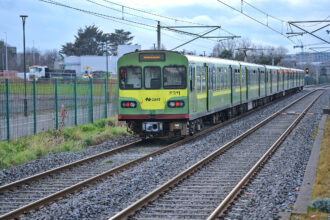
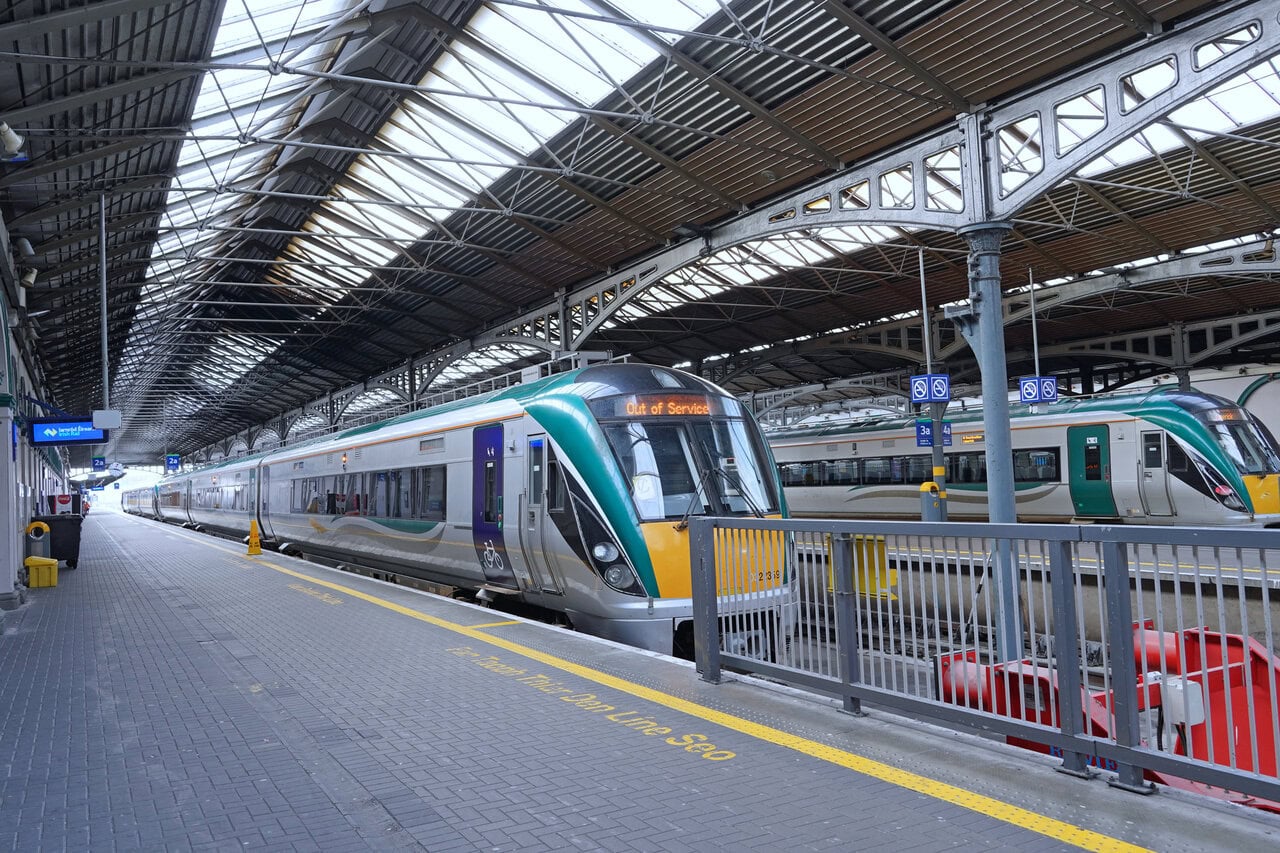
The Enterprise is the jointly operated cross-border service run by Iarnród Éireann and Translink, connecting Dublin Connolly with Belfast Grand Central Station, the new terminus that opened in late October 2024 and replaced the old Belfast Central and Lanyon Place stop as the city’s main rail hub. The train calls at Drogheda, Dundalk, Newry and Portadown along the way, and the full journey takes roughly two hours to two hours and twenty minutes depending on the service. Since the Grand Central opening, the timetable runs on a broadly hourly frequency Monday to Saturday, with the first departure from Dublin around 05:50 and the last around 20:50, while Sunday services run roughly every two hours.
Fares vary considerably depending on how far in advance you book. Online single fares start from around €15.99 or £13.50, while walk-up tickets bought at the station on the day can cost noticeably more, with standard single fares listed up to €30.40 and an open return around €44. Travelling from a station closer to the border, such as Newry, can bring the single fare down to as little as £9.99 when booked online well in advance. First class, branded Enterprise Plus, starts from about €25.99 or £22 and includes at-seat food and drink service on trains fitted with the dedicated Enterprise carriages. Every service has free WiFi and power sockets at each seat. Live timetables for both sides of the border are available on the Translink website.
The route has a genuinely long history. It launched on 11 August 1947 as the Enterprise Express, run by the Great Northern Railway with steam locomotives, cutting the journey from three hours forty-five minutes down to two hours fifteen. Nearly eighty years later it remains one of the most important rail links on the island, arriving right in the heart of the city and setting you up perfectly to explore the best things to do in Belfast within minutes of stepping off the platform.
Browse hotels and accommodation for your visit to Belfast.
View staysBrowse apartments, homes and self-catering accommodation in Belfast.
Browse rentalsSee hotel prices from multiple booking sites in one search.
Compare ratesCatching an Express Coach
If price matters more than speed, the coach is usually the better call. Aircoach operates the 705X express route between Dublin and Belfast, and it is a genuinely direct service, with no changes required. The journey typically takes just under two hours, which is comparable to the train once you factor in city centre pickup points, and single fares start from as little as £11 or €12 when booked online in advance. Aircoach runs an impressive up to 34 services a day, operating 364 days a year, which makes it one of the most flexible ways to cross the border without needing to plan around a fixed handful of departure times.
On the Dublin side, pickups run from O’Connell Street in the city centre as well as both Dublin Airport Terminal 1 and Terminal 2, which is particularly handy if you are flying in and heading straight north rather than stopping in Dublin first. On the Belfast side, the coach terminates at Grand Central Station in the city centre, with a stop at Belfast International Airport also served, useful if Belfast is a stopover before a connecting flight. Discounted fares are available for younger travellers aged fourteen to twenty-one, and a family discount of around 10 percent applies for two adults travelling with two children when booked online, with infants aged three and under travelling free.
Because the coach drops you in the centre of Belfast rather than at a station a short walk from the action, it works well for travellers heading straight out on further exploring, whether that means one of the day trips from Belfast or simply a walk around the city on arrival. Luggage space is generous, and the lower price point makes it an easy choice for budget-conscious travellers or those making the trip more than once.
Driving to Belfast
Driving is the most flexible option, and it is a straightforward route. From Dublin you pick up the M1 motorway heading north, which carries you almost the entire way, passing Drogheda, Dundalk and Newry before crossing into Northern Ireland and continuing on toward Belfast. The total distance is around 168 kilometres or 104 miles, and in normal traffic conditions the drive takes roughly two hours, similar to the train and coach once you account for parking and getting into the city centre at the other end.
The border itself is unmarked and there are no checkpoints thanks to the Common Travel Area between Ireland and the UK, so you will not need a passport to cross, though it is worth carrying photo ID regardless. What does change the moment you cross is far more practical day to day. Northern Ireland uses pounds sterling (GBP) rather than the euro, so card payments will be converted at your bank’s exchange rate and it is worth having a little cash on hand for smaller purchases. Speed limits also switch from kilometres per hour to miles per hour, and road signage changes style, so pay attention as you cross rather than relying on muscle memory from the Republic’s roads.
Driving is the clear winner if your plans extend beyond Belfast itself. It puts you in full control of timing and makes it easy to continue north afterwards toward the Antrim coast and the Giant’s Causeway, rather than being tied to a train or coach timetable back into the city.
Choosing Between Train, Bus and Car
All three options cover the Dublin to Belfast route in a similar window of time, somewhere between two hours and two hours twenty minutes, so the decision usually comes down to comfort, budget and what you are doing once you arrive. The Enterprise train is the most comfortable choice, with a smooth ride, generous seating and city centre stations at both ends, but it is also the priciest option if you buy tickets close to travel, and services can sell out on peak weekends and around major events.
The Aircoach coach service is the best value option for most budget travellers, especially with fares starting from around £11 or €12 and the sheer frequency of departures, up to 34 a day, meaning you rarely have to plan your whole day around a single timetable slot. It is a slightly less comfortable ride than the train for a two hour journey, but the difference is minor, and the airport pickup points give it an edge for anyone flying into or out of Dublin. Driving makes sense mainly if you are travelling as a group, carrying a lot of luggage, or planning to explore beyond Belfast itself, since it removes the return timetable pressure entirely and lets you build your own itinerary.
For a first visit with no onward driving plans, most travellers find the train or coach easier than dealing with a rental car, parking and an unfamiliar currency and speed limit system. If you are already comfortable using Dublin’s transport network from our Dublin public transport guide, getting to Connolly Station or an Aircoach pickup point will feel familiar and low stress.
Finding the Cheapest Tickets
The single biggest factor in what you pay for the Enterprise train is how far in advance you book. Online web fares start from around €15.99 or £13.50 for a single, but these lower-priced tickets are limited in number and tend to disappear first on popular departures, particularly early morning and Friday evening trains. Waiting until the day of travel to buy at the station can mean paying close to double, with standard walk-up singles listed as high as €30.40. Booking through the Irish Rail or Translink websites a week or more ahead is the most reliable way to lock in the lower fare bracket.
Students and young adults travelling with a Leap Card can access reduced fares, and family day return tickets bring the per-person cost down noticeably for anyone travelling with children. If your dates are flexible, midweek travel tends to have better fare availability than weekend departures, since weekends are popular for both leisure trips and events in either city.
On the coach side, Aircoach fares from £11 or €12 are already close to the lowest end of the market, and booking online in advance rather than paying on board is generally cheaper. Discounts of 20 percent for travellers aged fourteen to twenty-one and a 10 percent family discount for two adults and two children make the coach an especially strong option for younger travellers and families watching their budget. Comparing both the train and coach for your specific travel dates before booking is worth the extra five minutes, since prices shift depending on demand.
Making the Journey as a Day Trip
Belfast works well as a day trip from Dublin, though it does require an early start to make the most of it. Taking one of the first Enterprise trains, around 05:50 from Dublin Connolly, gets you into Belfast by roughly 08:00, giving you a full day in the city before catching a train back in the evening. The same logic applies to the early Aircoach departures, which run frequently enough that you are not tied to a single early slot. With a journey time of about two hours each way, you are looking at four hours of travel out of your day, leaving somewhere around eight to ten hours on the ground in Belfast depending on how early you start and how late you are willing to return.
That is a realistic amount of time to cover the highlights, including the Titanic Quarter, the Cathedral Quarter and a walk through the city centre, all covered in more detail in our guide to the best things to do in Belfast. What is not realistic in a single day trip from Dublin is adding on a trip further up the coast. The Giant’s Causeway alone is around an hour and a half beyond Belfast each way, so combining Dublin, Belfast and the Causeway in one day is not practical without an extremely long day and very little time actually spent anywhere.
If Belfast is only the first stop on a longer Northern Ireland itinerary, it is worth considering an overnight stay instead, which opens up options such as the day trips from Belfast guide for planning what comes next.
Planning Your Return Journey
Whichever way you travel up, it pays to check the return schedule before you leave Dublin, especially if you are doing the trip as a day return. The last Enterprise train back from Belfast Grand Central typically leaves in the early evening, broadly mirroring the 20:50 final departure pattern on the Dublin side, though exact times vary slightly by day of the week, so it is worth checking the live timetable on the Irish Rail or Translink website for your specific travel date rather than assuming a fixed time. Missing the last train back means either an unplanned overnight stay or scrambling for a late coach or taxi option, so building in a buffer before your final departure is sensible, particularly if you are cutting it close after a full day of sightseeing.
Aircoach’s frequency works in your favour here, since with services running throughout the day rather than on a sparse timetable, there is more flexibility if plans run long. It is still worth checking the last departure time for your specific pickup point in Belfast before you head out for the day, rather than assuming coaches run late into the night.
If you booked a lower advance fare on the outbound leg, be aware that some ticket types are tied to a specific train, so double check whether your return ticket is flexible or fixed to a particular departure before you commit to a full day of exploring without a set schedule in mind.
Search routes and flight options for your trip to Belfast.
Search flightsBrowse Airalo eSIM options for convenient travel data.
Check eSIMsCheck private pickup options and plan your onward journey before arrival.
View transfersUseful Apps for the Journey
For the Enterprise train, the official Iarnród Éireann Irish Rail app is worth having on your phone, though it is fair to set expectations: it is genuinely useful for finding your nearest station and checking live departure boards and real-time delay alerts, but ticket purchases still hand off to the website to complete, so do not expect a slick end-to-end booking experience. On the Northern Ireland side, Translink offers two separate apps that are worth downloading together: the Translink Planner handles cross-border journey planning and live departure information across NI Railways, Metro, Glider and Ulsterbus, while Translink mLink is the better option specifically for buying and storing mobile tickets once you are travelling within Northern Ireland.
If you are taking the coach, the Aircoach app lets you plan, book and store tickets as a QR code that the driver scans as you board, along with managing or amending an existing booking. It is a relatively recent addition to the company’s booking options, and reviews are mixed, some travellers rate it as the best coach app in Ireland, while others have reported bookings not always appearing correctly in the app, so it is worth also taking a screenshot or PDF of your confirmation email as a backup rather than relying on the app alone.
For getting around once you land, whichever way you travelled, a taxi app such as FreeNow works in both Dublin and Belfast and is worth having installed in advance, since it saves hunting for a local taxi firm’s number the moment you step off the train, coach or out of the car.

Rupert’s Handy Travel Tips
I have trotted between these two cities more times than I can count on my hooves, so here is what actually helps on the Dublin to Belfast run.
- Book the train early: the cheapest Enterprise web fares are limited in number, so booking a week or more ahead saves real money compared with buying at the station on the day.
- Pack a little sterling: Northern Ireland uses pounds, not euros, so carrying a small amount of cash avoids awkward card conversion fees for small purchases right after you arrive.
- Sit on the right heading north: the Enterprise train gives good views over the Mourne Mountains and the coast around Newry, so grab a right hand window seat if you can.
- Check the last service before you go exploring: whether you take the train or the coach, confirm your return time before you head off for the day, since options thin out after early evening.
- Consider the coach for flexibility: with departures running throughout the day, Aircoach is the easiest option if your plans are loose or you are travelling on a tighter budget.
Want to meet the reindeer behind our travel tips? Find out more in our page Who is Rupert?.




Frequently Asked Questions
How long does the train from Dublin to Belfast take?
The Enterprise train takes around two hours to two hours and twenty minutes, covering roughly 182 kilometres between Dublin Connolly and Belfast Grand Central Station.
Do I need a passport to travel from Dublin to Belfast?
No passport is required to cross the border, since Ireland and the UK share the Common Travel Area, though it is still sensible to carry photo identification with you.
Is the coach cheaper than the train?
Generally yes, Aircoach fares start from around eleven pounds or twelve euro when booked online, which is usually cheaper than the equivalent Enterprise train fare, especially if the train is booked close to the travel date.
Can I do Belfast as a day trip from Dublin?
Yes, taking an early train or coach gives you roughly eight to ten hours in Belfast before you need to head back, which is enough time to cover the city centre highlights comfortably.
What currency do I need in Belfast?
Northern Ireland uses pounds sterling rather than the euro used in the Republic of Ireland, so it is worth carrying some cash or checking your card works without excessive conversion fees.
Can I buy Enterprise train tickets through an app?
The Irish Rail app lets you start a booking but hands off to the website to complete it. Translink’s mLink app is a more complete option once you are booking journeys within Northern Ireland.
Further Reading
Once you have your Dublin to Belfast journey sorted, it is worth planning what to do once you get there. Our guide to the best things to do in Belfast covers the Titanic Quarter, the Cathedral Quarter and the city’s museums, and pairs well with the day trips from Belfast guide if you have more than a single day to spend in Northern Ireland.
If a coastal drive is part of your plans, the Giant’s Causeway visitor guide covers everything you need for the journey north along the Antrim coast. And if you are still finishing up your time in the capital before heading north, our things to do in Dublin guide and Dublin public transport guide will help you make the most of your time getting around before you set off.