
Why Visit Belfast?
Belfast is one of the UK’s most fascinating city break destinations, combining a rich industrial heritage with a vibrant modern culture. As the capital of Northern Ireland, it offers visitors the chance to explore world-famous attractions, discover the story of the RMS Titanic, learn about the city’s complex political history and enjoy an excellent food and pub scene, all within a compact city centre that’s easy to navigate.
Once known primarily for its shipbuilding industry, Belfast has reinvented itself over recent decades into a welcoming and exciting destination. Today, you’ll find award-winning museums, lively entertainment districts, historic landmarks, beautiful green spaces and a bustling waterfront sitting alongside reminders of the city’s past. Whether you’re interested in history, architecture, live music or simply soaking up the atmosphere, Belfast offers something for every type of traveller.
One of the city’s biggest advantages is how accessible its attractions are. Many of Belfast’s highlights are within walking distance of one another, while the excellent Hop-On Hop-Off sightseeing bus makes it easy to reach attractions further from the city centre. If you’re staying for longer, Belfast also serves as the perfect base for exploring Northern Ireland, with destinations such as the Giant’s Causeway, Carrick-a-Rede Rope Bridge and the spectacular Causeway Coastal Route all within easy reach.
Whether you’re visiting for a day, enjoying a weekend break or beginning a longer journey around the island of Ireland, this guide covers the very best things to do in Belfast, helping you make the most of your time in one of the most captivating cities in the British Isles.
Walk Along the Maritime Mile
The Maritime Mile follows Belfast’s historic waterfront and celebrates the city’s extraordinary shipbuilding heritage. Stretching from Belfast City Centre through the Titanic Quarter, this scenic walking route links many of Belfast’s most important attractions while showcasing the docks where some of the world’s most famous ships were built.
Along the route you’ll pass iconic landmarks including Titanic Belfast, the SS Nomadic, HMS Caroline, the Titanic Slipways and the enormous Samson and Goliath cranes, which continue to dominate Belfast’s skyline. Informative interpretation boards explain the history of each location, allowing visitors to appreciate how the area has evolved from one of the busiest shipyards in the world into a vibrant modern waterfront district.
The route is mostly flat and easy to follow, making it suitable for visitors of all ages. Along the way you’ll also discover public art installations, waterside cafés, viewing points and open spaces where you can relax while watching boats move around Belfast Harbour.
Walking the Maritime Mile provides an excellent opportunity to connect many of Belfast’s biggest attractions without relying on transport. It’s a relaxing way to experience the city’s maritime history while enjoying one of the most attractive waterfront regeneration projects anywhere in the United Kingdom.
Search accommodation
Browse hotels and accommodation for your journey.
View staysBook your own place
Browse apartments, holiday homes and self-catering stays.
View rentalsCheck hotel deals
Compare prices from multiple hotel booking sites.
Check dealsVisit Titanic Belfast
Standing on the very site where RMS Titanic was designed, built and launched in 1912, Titanic Belfast is the city’s flagship attraction and an essential stop for almost every visitor. The striking six-storey building has become one of Belfast’s most recognisable landmarks and welcomes hundreds of thousands of visitors each year from around the world.
It’s important to know that this experience is much more than simply visiting a museum. Your ticket includes entry to an immersive self-guided visitor experience that takes you through ten interactive galleries exploring Belfast’s shipbuilding heritage, the construction of Titanic, her luxurious interiors, maiden voyage, tragic sinking and the continuing story of her discovery on the Atlantic seabed. Multimedia displays, large-scale models, authentic artefacts and the impressive Shipyard Ride help bring the story to life in a way that’s engaging for both adults and children.
Your admission also includes entry to the historic SS Nomadic, the last surviving White Star Line ship in the world. Often referred to as Titanic’s little sister, this beautifully restored vessel once ferried first and second-class passengers from Cherbourg to Titanic before her ill-fated voyage. Exploring both attractions together provides a far more complete understanding of the people, engineering and history behind the world’s most famous ocean liner.
To get the most from your visit, allow at least two to three hours to explore both the galleries and the SS Nomadic. Even if you’re not a Titanic enthusiast, the attraction offers an outstanding insight into Belfast’s industrial past and explains why shipbuilding played such a significant role in shaping the city that exists today.
Getting to Titanic Belfast is straightforward from the city centre. The attraction is located in the Titanic Quarter, around 1.5 miles (2.4 km) from Belfast City Hall. If you enjoy walking, the journey takes approximately 25 to 30 minutes, following the River Lagan and passing several modern developments along the waterfront.
Alternatively, Metro services 26, 26A, 26B and 26C operate regularly between Belfast city centre and the Titanic Quarter, with the journey taking around 10 to 15 minutes.
Visitors using the Belfast Hop-On Hop-Off Bus can also travel directly to the attraction, making it one of the easiest ways to include Titanic Belfast as part of a busy day exploring the city.
Visit the SS Nomadic
Moored beside Titanic Belfast, the SS Nomadic is a fascinating attraction in its own right and is included with admission to the Titanic Belfast Experience. Built in the same Belfast shipyard as the RMS Titanic, she is the last remaining White Star Line vessel anywhere in the world, making her an important piece of maritime history.
Often referred to as Titanic’s little sister, the SS Nomadic was designed to transport first and second-class passengers from the port of Cherbourg out to the Titanic before she began her transatlantic voyage. While much smaller than her famous sister ship, visitors will immediately notice the similarities in design, craftsmanship and luxurious interiors. Beautifully restored wood panelling, elegant public spaces and original fittings help recreate what passengers would have experienced in 1912.
The ship also has an extraordinary story beyond Titanic. During her long career she served in both World War I and World War II, before later becoming a floating restaurant and entertainment venue in Paris. Following an extensive restoration, she returned home to Belfast where visitors can once again explore her decks and learn about the remarkable journeys she has witnessed over more than a century.
Because entry is included with your Titanic Belfast ticket, it’s well worth taking the time to explore the ship after visiting the galleries. Together, the two attractions provide one of the most complete maritime experiences anywhere in Europe.
Explore HMS Caroline
Moored in the historic Titanic Quarter, HMS Caroline is one of Belfast’s lesser-known attractions but one of its most fascinating. Commissioned in 1914, she is the last surviving warship from the Battle of Jutland, the largest naval battle of the First World War, making her an important piece of British naval history.
Visitors can explore the restored ship at their own pace, discovering what life was like for the officers and crew who served on board during wartime. Interactive exhibits, recreated living quarters, original equipment and multimedia displays help bring the ship’s remarkable story to life while explaining her role in both world wars.
Unlike many historic ships where visitors can only view certain sections, HMS Caroline allows you to explore a large proportion of the vessel, from operational areas and crew accommodation to command spaces and exhibition galleries. Throughout the experience you’ll learn about naval life, communications, engineering and the challenges faced by sailors during the early twentieth century.
Located close to Titanic Belfast and the SS Nomadic, HMS Caroline is easy to include as part of a day exploring the Titanic Quarter. While it receives fewer visitors than Belfast’s flagship attractions, it’s an excellent choice for anyone interested in military history, maritime heritage or historic ships.
Visit W5 Interactive Discovery Centre
If you’re travelling with children, or simply enjoy hands-on attractions, W5 is one of the best family-friendly experiences in Belfast. Located within the Odyssey Complex on the waterfront, this award-winning interactive discovery centre encourages visitors to learn through play, experimentation and exploration.
Spread across multiple themed zones, W5 features hundreds of interactive exhibits covering science, engineering, technology, creativity and the natural world. Visitors can test their skills on climbing structures, experiment with optical illusions, build inventions, explore immersive digital experiences and take part in live science demonstrations throughout the day.
Unlike a traditional museum, W5 is designed to be highly interactive, making it particularly popular with younger visitors who are encouraged to touch, build and experiment rather than simply observe. Adults often find themselves just as engaged, with many exhibits offering fun challenges and practical demonstrations suitable for all ages.
Situated close to Titanic Belfast, SS Nomadic and HMS Caroline, W5 can easily be combined with other attractions in the Titanic Quarter, making it an excellent option for families spending a full day exploring Belfast’s waterfront.
Explore Belfast on the Hop-On Hop-Off Bus
If it’s your first time visiting Belfast, the Hop-On Hop-Off Belfast Open Top Bus Tour is one of the easiest and most convenient ways to discover the city’s major attractions. With a 48-hour ticket, you can board and leave the bus as often as you like, allowing you to explore Belfast at your own pace while learning about the city’s fascinating history from live commentary and multilingual audio guides.
The circular route connects many of Belfast’s most popular sights, including Titanic Belfast, Belfast City Hall, St George’s Market, the Ulster Museum, Queen’s University, Crumlin Road Gaol, the famous Peace Walls and the colourful political murals that have become symbols of the city’s recent history. Rather than relying on taxis or public transport, the sightseeing bus makes travelling between attractions simple and stress-free.
One of the biggest advantages of the tour is that it saves both time and walking. While many attractions are relatively close together, others, including Titanic Belfast, are further from the city centre than many visitors realise. The Hop-On Hop-Off bus stops close to the attraction, making it a far easier option than walking, particularly if you’re planning a full day of sightseeing.
Whether you use it as your main method of transport or simply enjoy completing the full circuit to get your bearings, the tour provides an excellent introduction to Belfast and helps visitors understand the layout of the city before deciding which attractions they’d like to explore in greater depth.
See the Peace Walls and Political Murals
The Peace Walls and Belfast’s famous political murals are among the city’s most recognisable landmarks and offer visitors a powerful reminder of Northern Ireland’s recent history. Stretching across several neighbourhoods, these towering barriers were originally built to separate nationalist and unionist communities during The Troubles. Although violence has largely ended, many sections of the walls remain in place today.
The best-known murals can be found along the Falls Road and Shankill Road, where enormous works of art depict historical events, political figures, cultural identity and messages of remembrance. Over the years, the murals have become internationally recognised symbols of Belfast and continue to evolve, with new artwork regularly appearing alongside older pieces that have become historic landmarks in their own right.
Many visitors choose to explore this area as part of a Political Black Taxi Tour, where local guides explain the stories behind the artwork and provide valuable context about the communities that created them. While it’s possible to visit independently, understanding the background greatly enhances the experience and helps visitors appreciate the significance of what they are seeing.
The Peace Walls themselves have become an unexpected symbol of hope. Visitors are invited to leave messages on designated sections of the walls, joining thousands of others from around the world. It’s a thought-provoking experience that encourages reflection on Belfast’s past while highlighting the progress the city has made towards a more peaceful future.

Take a Belfast Political Black Taxi Tour
For many visitors, the Political Black Taxi Tour is the most memorable experience they have in Belfast. Led by local taxi drivers, many of whom lived through The Troubles, these tours provide a personal and balanced insight into one of the most significant periods in Northern Ireland’s modern history.
Travelling through both the Falls Road and Shankill Road, you’ll visit the famous political murals created by nationalist and unionist communities while learning about the events, people and stories behind them. The tour also includes stops at the towering Peace Walls, where visitors are often invited to leave their own messages alongside thousands of others from around the world. Rather than simply looking at murals from a distance, you’ll gain a much deeper understanding of why they exist and what they represent today.
One of the reasons these tours receive such consistently high reviews is the guides themselves. Many drivers share first-hand experiences of growing up during the conflict, answering questions openly and encouraging visitors to develop their own understanding of Belfast’s history. The emphasis is on providing context rather than taking sides, making the experience both educational and thought-provoking.
Although the tour typically lasts around one hour, it leaves a lasting impression and provides valuable context for exploring the rest of the city. After learning about Belfast’s recent past, landmarks such as the murals, Peace Walls and surrounding neighbourhoods take on a far greater meaning, making this one of the most worthwhile experiences you can include in your itinerary.
Discover Belfast City Hall
Standing proudly in the centre of the city, Belfast City Hall is one of Northern Ireland’s most recognisable buildings and a must-see during any visit. Completed in 1906, the magnificent Baroque Revival building symbolises Belfast’s rapid growth during the height of its industrial success, when the city was one of the world’s leading centres for shipbuilding, engineering and linen production.
The beautifully landscaped grounds surrounding City Hall are a popular place to relax, particularly during warmer months, while the building itself offers free guided tours that explore its impressive marble halls, grand staircase, council chambers and fascinating history. Along the way you’ll discover stories about Belfast’s development, notable local figures and the city’s role in shaping modern Northern Ireland.
Outside, visitors can admire a number of important memorials, including the Titanic Memorial Garden, dedicated to those who lost their lives aboard the famous liner. Throughout the year the grounds also host festivals, food markets, seasonal events and one of the UK’s most popular Christmas Markets, making City Hall a lively focal point regardless of when you visit.
Its central location means you’ll almost certainly pass through the area several times during your stay, making it an ideal place to begin your exploration of Belfast before heading to nearby attractions, shops, restaurants and the bustling Cathedral Quarter.
Wander Around the Cathedral Quarter
The Cathedral Quarter is widely regarded as Belfast’s cultural heart and is one of the city’s most enjoyable areas to explore on foot. Named after St Anne’s Cathedral, this lively district combines historic cobbled streets with independent cafés, traditional pubs, live music venues, galleries and colourful street art.
During the day, visitors can browse boutique shops, enjoy locally roasted coffee or admire the ever-changing murals that decorate many of the surrounding buildings. As evening approaches, the neighbourhood comes alive with musicians, outdoor seating and some of Belfast’s best restaurants, making it one of the city’s most popular places to spend an evening.
One of the area’s most famous attractions is the Commercial Court, a narrow alleyway decorated with hundreds of colourful umbrellas suspended overhead. It’s one of Belfast’s most photographed locations and has become something of an unofficial symbol of the Cathedral Quarter. Nearby you’ll also find historic pubs that have been serving locals for generations alongside contemporary cocktail bars and craft breweries.
Whether you’re looking for a leisurely lunch, an evening of traditional Irish music or simply somewhere to soak up Belfast’s atmosphere, the Cathedral Quarter offers the perfect blend of history, culture and nightlife, making it an essential stop on any city itinerary.
Explore St George’s Market
Dating back to the late nineteenth century, St George’s Market is one of Belfast’s oldest attractions and one of the finest covered markets anywhere in the United Kingdom. Housed inside a beautifully restored Victorian building, the market brings together local food producers, artists, craftspeople and musicians under one impressive roof.
The market is best known for its excellent selection of fresh local produce, including artisan breads, cheeses, seafood, homemade pastries and traditional Irish specialities. Alongside the food stalls you’ll also find local artwork, handmade jewellery, clothing, souvenirs and unique gifts, making it an excellent place to pick up something different to remember your visit.
At weekends, the atmosphere is particularly lively thanks to regular live music performances, with local musicians creating a welcoming backdrop as visitors browse the stalls or enjoy breakfast and freshly brewed coffee. It’s a favourite with both tourists and Belfast residents, giving the market an authentic atmosphere that many modern shopping centres simply can’t replicate.
Even if you’re not planning to buy anything, St George’s Market is well worth visiting to experience one of Belfast’s best-loved landmarks. Arriving in the morning allows you to enjoy the widest selection of traders before continuing your day exploring the rest of the city.
Step Inside Belfast’s Infamous Crumlin Road Gaol
For more than 150 years, Crumlin Road Gaol was one of the most feared prisons in Ireland. From ordinary criminals and murderers to political prisoners and those awaiting execution, thousands of men, women and children passed through its heavy stone walls. Today, it’s one of Belfast’s most compelling visitor attractions, offering a fascinating glimpse into the city’s criminal justice system and the turbulent events that shaped Northern Ireland.
Built in 1846, the imposing Victorian prison remained in operation until 1996, making it one of the last Victorian-era prisons to close in the United Kingdom. As you walk through its echoing corridors and rows of original prison cells, it’s easy to imagine what life was like for the inmates who spent weeks, months or even years confined behind its iron doors.
One of the highlights of any visit is the underground tunnel connecting the prison with the historic courthouse on the opposite side of the road. Prisoners were escorted through this passage before standing trial, often unsure whether they would return to a prison cell or face execution. Visitors can also explore the execution chamber, the condemned man’s cell, the governor’s office and several restored prison wings, each revealing a different chapter in the gaol’s long and often unsettling history.
The prison also played an important role during The Troubles, holding both republican and loyalist prisoners at different times. Through exhibitions, photographs and personal stories, visitors gain an understanding of how the prison reflected the changing political landscape of Northern Ireland, while maintaining a balanced and informative approach to this complex period of history.
Located around 1.5 miles (2.5 km) from Belfast City Hall, Crumlin Road Gaol is easily reached by taxi, local bus or the Belfast Hop-On Hop-Off Bus, making it simple to include in a day’s sightseeing. Most visitors spend 90 minutes to two hours exploring the prison, although guided tours provide additional stories and access to areas that help bring the gaol’s remarkable history to life.
If you’re looking for an attraction that goes beyond the usual museums and galleries, Crumlin Road Gaol is one of Belfast’s most thought-provoking experiences and offers a deeper understanding of the people, events and history that helped shape the city you see today.
Discover Northern Ireland’s History at the Ulster Museum
If you’re looking for one attraction that brings together history, archaeology, art and natural science, the Ulster Museum is difficult to beat. Located beside the beautiful Botanic Gardens, it’s the largest museum in Northern Ireland and one of Belfast’s best free attractions, making it an excellent addition to any itinerary.
Rather than focusing on a single subject, the museum tells the story of both Northern Ireland and the wider world. As you move through the galleries you’ll discover everything from ancient Egyptian mummies and prehistoric dinosaur skeletons to fine art collections, Irish archaeology and fascinating exhibitions exploring the development of Belfast and Ulster over thousands of years. The variety means there’s genuinely something to interest visitors of every age.
One of the museum’s most thought-provoking areas explores The Troubles, helping visitors understand the conflict that shaped modern Northern Ireland. Through personal stories, photographs, artefacts and carefully curated displays, the exhibition provides valuable context for anyone planning to visit the city’s famous political murals or take a Political Taxi Tour later in the day.
Families will appreciate the interactive displays and hands-on exhibits, while those interested in history can easily spend several hours exploring the museum’s extensive collections. Best of all, admission is completely free, making it one of the best-value attractions anywhere in Belfast.
The museum sits just over 1.5 miles (2.5 km) from Belfast City Hall and is easily reached in around 10 minutes by local bus or the Belfast Hop-On Hop-Off Bus. It’s also just a short walk from Botanic railway station. Most visitors combine the museum with a stroll through the neighbouring Botanic Gardens, making this one of the city’s most enjoyable half-day outings.
Escape the City in Belfast’s Beautiful Botanic Gardens
Just a few minutes from the bustling city centre, Botanic Gardens offers a peaceful escape where visitors can slow the pace and enjoy one of Belfast’s most attractive green spaces. Opened in 1828, the gardens have been welcoming visitors for almost two centuries and remain popular with both locals and tourists throughout the year.
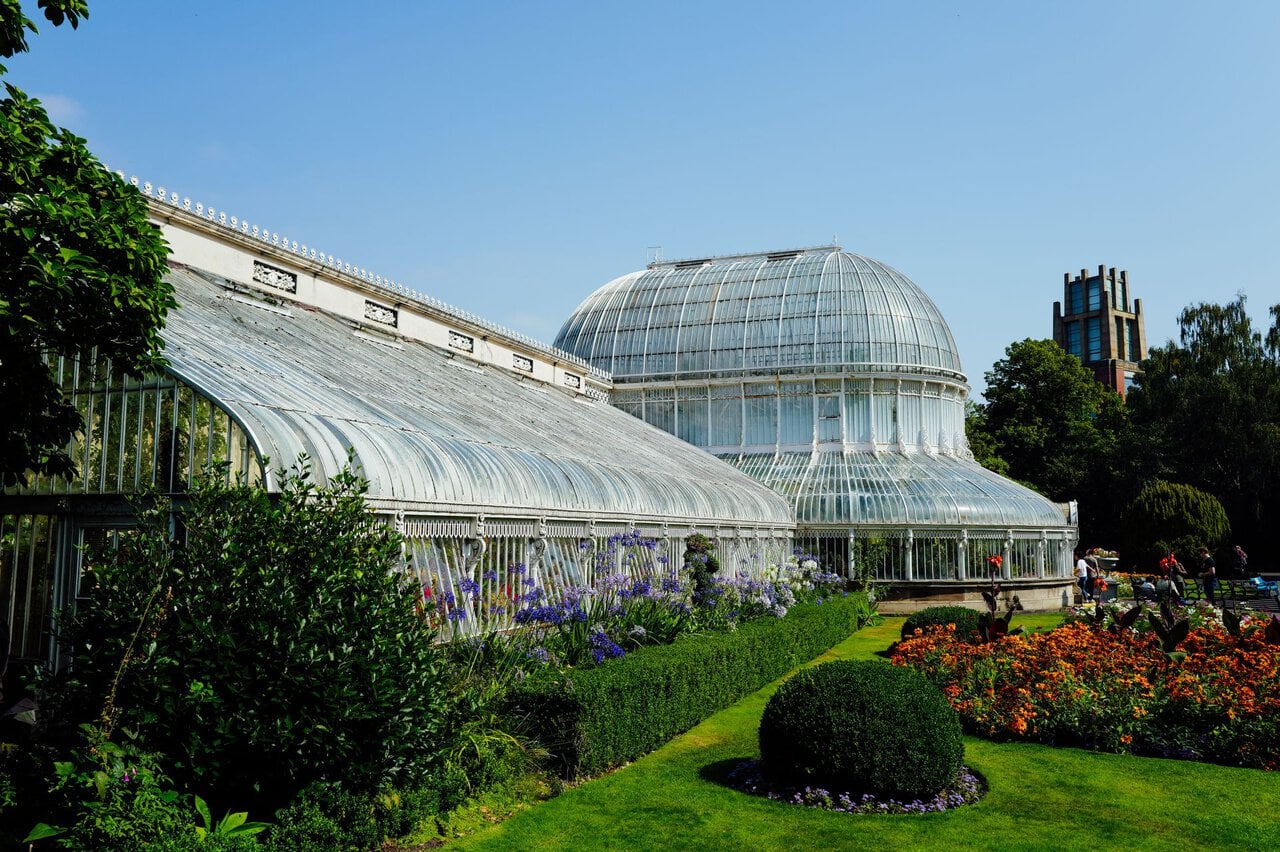
The park’s most famous landmark is the magnificent Palm House, one of the earliest examples of a curved cast-iron and glass conservatory anywhere in the world. Step inside and you’ll discover an impressive collection of tropical plants, colourful flowers and exotic species beneath its elegant Victorian glass roof. Nearby, the beautifully restored Tropical Ravine recreates the humid conditions of a rainforest, allowing visitors to explore lush vegetation rarely seen elsewhere in Northern Ireland.
Beyond the historic glasshouses, the gardens feature wide lawns, colourful flower beds, mature trees and quiet pathways that make them an ideal place to relax after a busy morning exploring the city. During the warmer months, you’ll often find outdoor concerts, festivals and community events taking place, adding an extra sense of atmosphere to this much-loved public park.
Located beside the Ulster Museum and Queen’s University Belfast, the gardens are only around 10 minutes by bus from the city centre or approximately 30 minutes on foot from Belfast City Hall. Whether you’re looking for somewhere to enjoy a picnic, stretch your legs or simply escape the crowds for an hour, Botanic Gardens is one of Belfast’s most relaxing attractions.
Enjoy Spectacular Views from Cave Hill Country Park
Towering above the northern edge of Belfast, Cave Hill Country Park offers some of the finest views anywhere in the city. Its distinctive basalt cliffs dominate the skyline and are believed to have inspired Jonathan Swift’s description of Lilliput in Gulliver’s Travels. Today, it’s one of Belfast’s favourite destinations for walkers, photographers and anyone looking to experience the city’s natural beauty.
A network of walking trails winds through woodland, open grassland and rocky outcrops before climbing towards the summit. As you gain height, the views become increasingly spectacular, stretching across Belfast Lough, the city skyline, the Mourne Mountains and, on particularly clear days, even the coast of Scotland. Although the climb requires a reasonable level of fitness, the scenery makes every step worthwhile.
The park is also home to McArt’s Fort, an ancient Iron Age hillfort dating back more than two thousand years. Standing among these historic earthworks while looking out across Belfast provides a fascinating reminder that this commanding viewpoint has been valued for centuries.
Located around 4 miles (6.5 km) from the city centre, Cave Hill is easily reached by car, taxi or local bus, with the journey usually taking around 15 to 20 minutes. Comfortable walking shoes are recommended, particularly if you’re planning to reach the summit, but even the lower trails offer beautiful views and a refreshing break from the city.
Explore the Historic Belfast Castle
Standing on the lower slopes of Cave Hill, Belfast Castle combines impressive architecture, beautifully maintained gardens and sweeping views across Belfast Lough. Although the original medieval castle once stood in the city centre, the present Scottish Baronial-style building dates from 1870 and remains one of Belfast’s most elegant landmarks.
Visitors are welcome to explore the castle’s public areas free of charge, where grand staircases, period features and beautifully restored interiors offer a glimpse into Belfast’s Victorian past. Outside, landscaped terraces, colourful gardens and woodland paths provide some of the city’s finest viewpoints, making the castle a favourite destination for photographers and anyone looking to escape the bustle of the centre.
One of the castle’s most charming features is the Cat Garden, where nine bronze cat sculptures are hidden throughout the grounds. According to local legend, Belfast Castle will only prosper while a resident cat lives there, and many visitors enjoy trying to spot each sculpture during their walk around the estate.
Because Belfast Castle sits directly beside Cave Hill Country Park, the two attractions are best visited together. Allow at least two to three hours to explore both properly, whether you’re climbing to the summit of Cave Hill or simply enjoying the gardens and panoramic views. Located around 15 to 20 minutes from Belfast city centre by car, taxi or local bus, it’s one of the city’s most rewarding half-day excursions.
Climb the Victoria Square Dome
For one of the best free viewpoints in Belfast, head to the glass dome at the top of Victoria Square Shopping Centre. While the centre itself is home to a wide selection of shops, cafés and restaurants, it’s the panoramic viewing gallery that attracts many visitors.
A short lift ride takes you to the top of the striking glass dome, where you’ll be rewarded with 360-degree views across Belfast. From here, it’s easy to spot many of the city’s best-known landmarks, including Belfast City Hall, Titanic Belfast, Samson and Goliath, the famous Harland & Wolff cranes, Cave Hill and the surrounding Belfast Hills.
Because admission to the viewing gallery is completely free, it’s an excellent addition to any sightseeing itinerary. Many visitors stop by after exploring the nearby shopping streets or before heading towards the Cathedral Quarter or Titanic Quarter.
The dome is particularly beautiful around sunset, when the changing light reflects across the rooftops and Belfast Lough. Even if you’re not planning to shop, it’s worth making the short trip to the top for one of the city’s best viewpoints.
Check hostel options
Compare hostels and lower-cost accommodation for your trip.
Search hostelsBe ready for flight disruption
Get help with compensation, eligible lounge access and disruption support.
Explore AirHelp+Drop your bags and keep exploring
Use convenient luggage storage between arrival, check-in and departure.
Check storageEnjoy a Drink at The Crown Liquor Saloon
Few pubs in the United Kingdom are as famous as The Crown Liquor Saloon. Located on Great Victoria Street, this beautifully preserved Victorian pub has been welcoming customers since the nineteenth century and is widely regarded as one of Belfast’s most iconic landmarks. Now cared for by the National Trust, it remains both a working pub and a historic attraction.
Step inside and you’ll immediately notice the extraordinary interior. Ornate carved woodwork, colourful stained glass, decorative ceiling tiles and original gas lamps create an atmosphere that has changed remarkably little over the past century. One of the pub’s most distinctive features is its collection of private snugs – small wooden booths with doors and bells that allowed customers to enjoy a little privacy while ordering drinks.
Although many visitors stop by simply to admire the architecture, The Crown is also an excellent place to experience Belfast’s famous hospitality. Whether you’re sampling a pint of Guinness, trying a locally brewed beer or enjoying a traditional Irish meal, the historic surroundings make it a memorable place to take a break from sightseeing.
Its central location also makes it an easy stop during a walking tour of the city. Even if you only stay for a quick drink, visiting The Crown Liquor Saloon offers a glimpse into Belfast’s Victorian past and remains one of the city’s classic experiences.
Watch a Show at the Grand Opera House
Standing just a short walk from Belfast City Hall, the Grand Opera House has been entertaining audiences since 1895 and remains Northern Ireland’s premier theatre. Designed by the celebrated architect Frank Matcham, the building is considered one of the finest surviving examples of Victorian theatre design anywhere in the UK.
The beautifully restored auditorium regularly hosts an impressive programme of West End musicals, drama, comedy, ballet, opera and live music, attracting performers and productions from across the world. Even if you don’t have time to see a performance, the building itself is well worth admiring for its ornate architecture and rich history.
Throughout its lifetime, the Grand Opera House has survived wars, political unrest and extensive restoration projects, becoming an enduring symbol of Belfast’s cultural life. Today it continues to play a central role in the city’s thriving arts scene, welcoming thousands of visitors every year.
If your visit coincides with a performance, it’s well worth checking what’s on before you arrive in Belfast. Watching a show inside one of the city’s most beautiful historic buildings can be a wonderful way to round off a day of sightseeing.
Experience Belfast’s Food and Pub Scene
Belfast has earned a reputation as one of the best food destinations on the island of Ireland, with everything from traditional Irish pubs and cosy cafés to Michelin-recognised restaurants and modern street food markets. Whether you’re looking for a hearty breakfast before a day of sightseeing or a memorable evening meal, you’ll find plenty of excellent options throughout the city.
The Cathedral Quarter is one of the best places to begin your culinary journey. Here you’ll discover independent restaurants serving locally sourced seafood, traditional Irish dishes and international cuisine, alongside lively pubs where live music is often part of the evening’s entertainment. Nearby, the Linen Quarter and city centre also offer an excellent selection of cocktail bars, coffee shops and contemporary dining venues.
No visit to Belfast would be complete without sampling a few local favourites. Fresh seafood, Ulster Fry breakfasts, Irish stews and locally produced cheeses regularly feature on menus, while many pubs stock craft beers brewed across Northern Ireland alongside famous Irish stouts and whiskeys.
Whether you’re looking for a relaxed lunch, an atmospheric traditional pub or fine dining to celebrate a special occasion, Belfast’s food scene has become one of the city’s biggest attractions in its own right.


One Day in Belfast
If you only have one day in Belfast, it’s still possible to experience many of the city’s biggest highlights with a little planning. Begin your morning at Titanic Belfast, allowing enough time to explore both the interactive galleries and the historic SS Nomadic before making your way back towards the city centre.
After lunch, join a Political Black Taxi Tour to gain a deeper understanding of Belfast’s history and visit the famous Peace Walls and political murals. The personal stories shared by local guides provide valuable context that will enhance the rest of your visit.
Finish the afternoon exploring Belfast City Hall, Victoria Square and the Cathedral Quarter, where you’ll find excellent shops, historic pubs and lively streets filled with cafés and restaurants. End your evening with dinner in the Cathedral Quarter or enjoy a drink inside the historic Crown Liquor Saloon before heading home.
Although one day only scratches the surface, this itinerary covers many of Belfast’s most iconic attractions while providing an excellent introduction to Northern Ireland’s capital.
Two Days in Belfast
With two days in Belfast, you’ll have the opportunity to explore the city at a much more relaxed pace while discovering attractions that many day visitors simply don’t have time to see.
Spend your first day visiting Titanic Belfast, the SS Nomadic, the Maritime Mile and nearby HMS Caroline, before enjoying an evening in the Cathedral Quarter with its excellent restaurants, traditional pubs and live music venues.
On your second day, start with a Political Black Taxi Tour before visiting Crumlin Road Gaol, Belfast City Hall, St George’s Market (if open) and the Ulster Museum. If time allows, take a stroll through the beautiful Botanic Gardens or enjoy panoramic views from the Victoria Square Dome before finishing your visit.
Two days provides enough time to appreciate both Belfast’s fascinating history and its vibrant modern culture without feeling rushed between attractions.
Three Days in Belfast
A three-day visit allows you to experience Belfast in depth while also exploring some of Northern Ireland’s spectacular scenery beyond the city limits.
Spend your first two days enjoying the attractions highlighted above, taking your time to explore the city’s museums, historic sites, markets and neighbourhoods. With the extra time available, you can also visit Belfast Castle, hike to the summit of Cave Hill or simply enjoy a slower pace while discovering independent shops, cafés and hidden corners of the city.
Your third day is the perfect opportunity to venture beyond Belfast on a day trip. The spectacular Giant’s Causeway, dramatic Causeway Coastal Route, Carrick-a-Rede Rope Bridge and the historic walled city of Derry~Londonderry are all popular choices and showcase some of Northern Ireland’s most breathtaking landscapes.
If you’re planning to use Belfast as a base for exploring the region, spending three days or more offers the ideal balance between discovering the city itself and experiencing the natural beauty that has made Northern Ireland an increasingly popular travel destination.
Where to Stay in Belfast
Choosing the right area to stay can make a big difference to your visit, but the good news is that Belfast is a relatively compact city, with many of its main attractions located within easy reach of one another. Whether you’re looking for nightlife, historic surroundings or easy access to transport, there’s a neighbourhood to suit every type of traveller.
The Cathedral Quarter is one of the most popular choices thanks to its lively atmosphere, independent restaurants, traditional pubs and live music venues. It’s an excellent base if you plan to spend your evenings enjoying Belfast’s nightlife while remaining within walking distance of many of the city’s major attractions.
The City Centre is another excellent option, particularly for first-time visitors. Staying close to Belfast City Hall places you within easy walking distance of shops, museums, transport links and attractions such as the Grand Opera House, Victoria Square and St George’s Market.
If you’re planning to spend plenty of time exploring the city’s maritime attractions, consider staying in the modern Titanic Quarter. This regenerated waterfront district is home to Titanic Belfast, the SS Nomadic, HMS Caroline and the Maritime Mile, while still being only a short journey from the city centre.
Getting Around Belfast
One of the best things about visiting Belfast is how easy it is to get around. The city centre is compact, with many of the major attractions located within comfortable walking distance of one another. It’s perfectly possible to spend a day exploring Belfast City Hall, the Cathedral Quarter, St Anne’s Cathedral and St George’s Market without using any public transport at all.
For attractions further afield, including Titanic Belfast, Botanic Gardens, the Ulster Museum, Crumlin Road Gaol and Belfast Castle, the city has an excellent public transport network operated by Translink. The bright pink Metro buses cover Belfast and the surrounding suburbs, while the modern Glider rapid transit service connects east and west Belfast through the city centre with frequent departures throughout the day.
If you’re planning to make several journeys, it’s worth purchasing a day ticket rather than paying for each trip individually. Tickets can be bought through the Translink mLink app, from ticket machines where available or directly from the driver on many services. Contactless payment is also accepted on most Metro and Glider buses, making it quick and easy to hop on without needing cash.
For first-time visitors, we often recommend the Belfast Hop-On Hop-Off Bus instead of using the regular bus network. Not only does it stop at many of the city’s biggest attractions, including Titanic Belfast, Crumlin Road Gaol, the Peace Walls, Queen’s University and the Ulster Museum, but the live commentary also provides an excellent introduction to Belfast’s history. If you’re only spending a day or two in the city, it’s one of the simplest ways to travel between attractions while learning more about the places you’re visiting.
Taxis are readily available throughout Belfast and can usually be found outside Belfast Grand Central Station, Lanyon Place, the airports, major hotels and popular tourist attractions. They’re a convenient option if you’re travelling later in the evening or heading somewhere that’s less well served by public transport. Belfast is also well covered by ride-hailing apps, giving visitors another easy way to move around the city.
Whichever method you choose, you’ll find that getting around Belfast is straightforward, affordable and stress-free. Most visitors combine walking with the occasional bus or taxi journey, allowing them to see a surprising amount of the city in just a single day.
When is the Best Time to Visit Belfast?
Belfast is a year-round destination, with each season offering something a little different depending on your interests and travel style.
Spring is one of the best times to visit, as parks and gardens begin to bloom and temperatures become more comfortable for sightseeing. Visitor numbers are generally lower than during the peak summer months, allowing you to enjoy popular attractions with fewer crowds.
Summer brings the longest daylight hours, outdoor festivals and the warmest weather of the year. This is an excellent time to explore the Maritime Mile, hike Cave Hill or enjoy outdoor dining in the Cathedral Quarter, although accommodation prices and visitor numbers tend to be at their highest.
Autumn offers colourful scenery, comfortable temperatures and a more relaxed atmosphere. It’s a particularly good time for exploring museums, historic attractions and nearby coastal routes without the busiest summer crowds.
During winter, Belfast takes on a festive atmosphere with seasonal markets, Christmas lights and cosy traditional pubs providing welcome shelter from the cooler weather. While daylight hours are shorter, attractions remain open throughout the year, making winter an excellent time for a city break.
Money-Saving Tips for Visiting Belfast
Belfast offers excellent value compared with many other UK and Irish cities, but there are still plenty of ways to make your travel budget go even further.
If you’re planning to visit several attractions, consider using the Hop-On Hop-Off Bus on your first day. Not only does it provide transport between many of the city’s biggest sights, but it also helps reduce the need for taxis while giving you a useful overview of the city.
Many of Belfast’s most popular attractions are completely free. Visitors can explore Belfast City Hall, admire the Peace Walls, walk the Maritime Mile, visit the Botanic Gardens, enjoy panoramic views from the Victoria Square Dome and spend hours discovering the collections inside the Ulster Museum without paying an admission fee.
Finally, if you’re planning to explore destinations beyond Belfast, such as the Giant’s Causeway or the Causeway Coastal Route, comparing organised tours with public transport or car hire can often help you find the best value option depending on your itinerary.

Rupert’s Handy Travel Tips
Planning a trip to Belfast? Here are a few tips that will help you make the most of your visit:
- Book Titanic Belfast in advance: It’s the city’s most popular attraction and timed-entry slots regularly sell out during weekends, school holidays and the summer months.
- Use the Hop-On Hop-Off Bus on your first day: The 48-hour ticket is an easy way to reach attractions such as Titanic Belfast, Crumlin Road Gaol and the Peace Walls while helping you get your bearings around the city.
- Don’t miss the Political Black Taxi Tour: It provides valuable insight into The Troubles from local guides and gives much greater context to the murals and neighbourhoods you’ll see around Belfast.
- Leave time for a day trip: If you’re staying for more than one day, use Belfast as a base to visit the spectacular Giant’s Causeway, Carrick-a-Rede Rope Bridge and the beautiful Causeway Coastal Route.
Want to meet the reindeer behind our travel tips? Find out more in our page Who is Rupert?.
Frequently Asked Questions
What are the best things to do in Belfast?
The best things to do in Belfast include visiting Titanic Belfast, taking a Political Black Taxi Tour, exploring St George’s Market, wandering through the Cathedral Quarter, visiting Crumlin Road Gaol, discovering the Peace Walls, walking along the Maritime Mile and enjoying the panoramic views from Cave Hill. If you’re staying longer, Belfast is also the perfect base for visiting the Giant’s Causeway and the spectacular Causeway Coastal Route.
Is Titanic Belfast worth visiting?
Yes. Titanic Belfast is widely regarded as one of the UK’s best visitor attractions. Located on the site where RMS Titanic was built, the experience features ten interactive galleries, the immersive Shipyard Ride and admission to the historic SS Nomadic, the last remaining White Star Line vessel. It’s far more than a traditional museum and is considered an essential part of any visit to Belfast.
How many days should I spend in Belfast?
While you can see many of Belfast’s highlights in a single day, two or three days is recommended. This gives you enough time to visit the city’s major attractions, enjoy its restaurants and nightlife, and take a day trip to destinations such as the Giant’s Causeway, Carrick-a-Rede Rope Bridge or Derry~Londonderry.
Is Belfast a walkable city?
Yes. Belfast is a compact and easy city to explore on foot, with many of its most popular attractions located within walking distance of the city centre. For places slightly further away, such as Titanic Belfast or Cave Hill, public transport, taxis and the Hop-On Hop-Off Bus make getting around quick and straightforward.
Is Belfast safe for tourists?
Yes. Belfast is considered a safe destination for visitors, welcoming millions of tourists every year. As with any major city, you should take sensible precautions with your belongings and remain aware of your surroundings, particularly late at night, but the city’s main tourist areas are friendly, well-policed and popular with international visitors.
What is Belfast famous for?
Belfast is best known as the birthplace of RMS Titanic, but it is also famous for its rich shipbuilding heritage, the history of The Troubles, colourful political murals, lively pub and music scene, Victorian architecture and its role as the capital of Northern Ireland.
When is the best time to visit Belfast?
Belfast can be visited throughout the year. Spring and summer offer the warmest weather and longest daylight hours, making them ideal for sightseeing, while autumn provides fewer crowds and pleasant temperatures. During winter, the city comes alive with festive lights, Christmas markets and cosy pubs, making it a popular destination for seasonal breaks.
Can you visit the Giant’s Causeway from Belfast?
Yes. The Giant’s Causeway is one of the most popular day trips from Belfast and can be reached by organised coach tour, public transport or car. Many visitors also combine the journey with stops at Dunluce Castle, Carrick-a-Rede Rope Bridge and the Dark Hedges along the spectacular Causeway Coastal Route.
Is the Belfast Hop-On Hop-Off Bus worth it?
For first-time visitors, the Belfast Hop-On Hop-Off Bus is one of the easiest ways to explore the city. Your 48-hour ticket allows unlimited travel between many of Belfast’s top attractions, including Titanic Belfast, Crumlin Road Gaol, St George’s Market, Queen’s University, the Peace Walls and Belfast City Hall, while the onboard commentary provides an excellent introduction to the city’s history.
Are the Belfast Political Black Taxi Tours worth doing?
Absolutely. The Political Black Taxi Tours are consistently among Belfast’s highest-rated experiences because they offer a unique insight into The Troubles from local guides, many of whom experienced the conflict first-hand. Visiting the Peace Walls, Falls Road and Shankill Road with someone who can explain their history provides a far deeper understanding than exploring independently.
What are the best free things to do in Belfast?
Some of the best free attractions in Belfast include visiting Belfast City Hall, exploring the Botanic Gardens, discovering the collections inside the Ulster Museum, walking through the Cathedral Quarter, enjoying the panoramic views from the Victoria Square Dome, admiring the Peace Walls and following the Maritime Mile through the city’s historic waterfront. These attractions allow you to experience much of Belfast without spending a penny.
Further Reading
If you’re arriving by sea, our Belfast Port Guide explains everything you need to know about the ferry terminal, including transport into the city centre and onward travel options. If you’re flying into Northern Ireland, our Belfast International Airport Guide and George Best Belfast City Airport Guide cover transfers, public transport and the quickest ways to reach Belfast.
Once you’ve explored the city, continue your adventure with our Day Trips from Belfast Guide, which covers the best excursions across Northern Ireland, including the spectacular Giant’s Causeway, one of the country’s most famous natural attractions. If the Causeway is already on your itinerary, our dedicated Giant’s Causeway Visitor Guide includes everything you need to know before you visit.
Travelling onwards around Ireland? Our Ireland Rail Travel Guide explains how to explore the island by train, while our Holyhead to Dublin Ferry Guide is useful if you’re continuing to or from Great Britain by sea. If you’re flying with Ireland’s national airline, our Aer Lingus Travel Guide includes helpful information on routes, baggage and travel tips.
Finally, if you’re planning to continue your Irish adventure, don’t miss our Best Things to Do in Dublin Guide, where you’ll find the top attractions, visitor tips and must-see sights in Ireland’s capital.