
Why Visit the Giant’s Causeway?
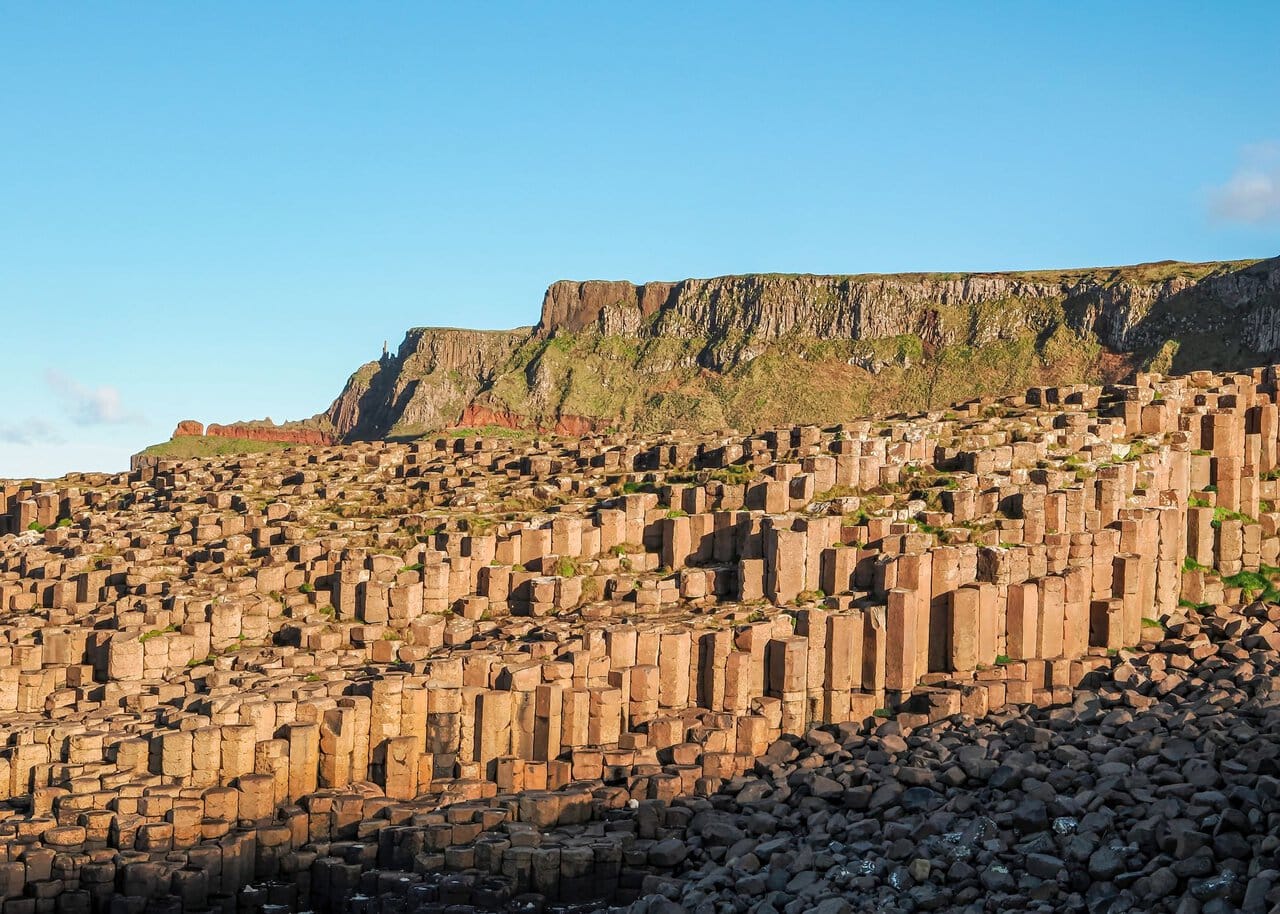
Few natural attractions are as instantly recognisable as the Giant’s Causeway. Located on Northern Ireland’s spectacular north coast, this extraordinary landscape of around 40,000 interlocking basalt columns has fascinated visitors for centuries and today ranks among the most visited attractions anywhere on the island of Ireland.
Recognised as Northern Ireland’s only UNESCO World Heritage Site, the Giant’s Causeway offers far more than a collection of unusual rocks. It’s a place where geology, mythology, dramatic coastal scenery and Irish folklore combine to create an unforgettable visitor experience. Whether you’re climbing across the famous hexagonal stones, walking the clifftop trails or simply admiring the Atlantic views, it’s easy to understand why millions of people make the journey here every year.
The Causeway is also surprisingly accessible. Visitors can explore the famous stones independently, enjoy spectacular walking routes overlooking the coastline or simply spend an hour taking in one of Europe’s most unique natural landscapes. Combined with nearby attractions such as Dunluce Castle, Carrick-a-Rede Rope Bridge and the Old Bushmills Distillery, it also forms the highlight of any journey along the Causeway Coastal Route.
Whether you’re visiting from Belfast, Derry~Londonderry or travelling around the island of Ireland, the Giant’s Causeway is one of those rare places that genuinely lives up to its reputation.
Learn More from UNESCO
This destination is connected to a UNESCO World Heritage Site, recognised for its outstanding cultural, historical, or natural importance. You can explore official listings, background information, and protected heritage sites through UNESCO’s global database.
Discover the Legend of Finn McCool
Long before scientists explained how the Giant’s Causeway was formed, local people believed there was a far more exciting explanation. According to Irish legend, the remarkable stone columns were built by the giant Finn McCool (Fionn mac Cumhaill), who constructed a bridge across the sea to challenge his Scottish rival, Benandonner.
As the story goes, Finn built the stone causeway stretching from Ireland to Scotland so the two giants could finally settle their rivalry. However, when Finn caught sight of the enormous Benandonner approaching, he realised his opponent was much bigger than expected and quickly retreated home.
Finn’s wife, Oonagh, came up with a clever plan. She disguised Finn as a baby and tucked him into a giant cradle. When Benandonner arrived looking for his rival, Oonagh invited him inside. Seeing the enormous “baby”, Benandonner panicked. If the child was that size, he imagined the father must be truly gigantic.
Terrified, Benandonner fled back to Scotland, tearing up the stone bridge behind him to prevent Finn from following. According to the legend, the remaining sections of that bridge are what we now know as the Giant’s Causeway in Northern Ireland and the matching basalt formations on the Scottish island of Staffa.
Today, the story of Finn McCool remains one of Ireland’s best-loved legends and adds an extra layer of magic to every visit. While geology explains the science behind the Causeway, the local folklore continues to capture the imagination of visitors from around the world.
How Was the Giant’s Causeway Formed?
While the legend of Finn McCool is great fun, the real story behind the Giant’s Causeway is every bit as fascinating. Around 60 million years ago, this part of Ireland experienced intense volcanic activity. Molten basalt lava flowed across the landscape before gradually cooling and contracting.
As the lava cooled, it cracked into thousands of tightly packed columns. Because nature naturally distributes stress evenly as rock contracts, many of these columns formed into hexagonal shapes, although some have four, five, seven or even eight sides. Over millions of years, erosion by the Atlantic Ocean exposed the remarkable formations we see today.
The result is an extraordinary landscape consisting of approximately 40,000 basalt columns, stretching from the cliffs into the sea. Their almost perfectly regular appearance often leads visitors to assume they were carved by people, when in fact they are entirely natural.
The scientific importance of the site led to the Giant’s Causeway being designated a UNESCO World Heritage Site in 1986, recognising it as one of the world’s finest examples of basalt column formations. Today it is also protected as a National Nature Reserve, ensuring this unique landscape can be enjoyed by future generations.
Explore the Giant’s Causeway
While many visitors come simply to see the famous basalt columns, there’s much more to discover once you arrive. The Giant’s Causeway is filled with distinctive rock formations, each with its own appearance, name and story, making it easy to spend several hours exploring the coastline.
The most famous section is the Grand Causeway, where thousands of perfectly formed basalt columns stretch towards the sea like an ancient stone pathway. This is where most visitors take their photographs and experience the iconic landscape that has made the Causeway famous around the world.
Nearby you’ll find the Wishing Chair, a naturally formed stone seat polished smooth by generations of visitors. Local tradition says that anyone who sits on the chair may have their wish granted, making it one of the most popular photo opportunities on the site.
Other fascinating formations include the enormous Giant’s Boot, the towering basalt columns known as The Organ, the rock formation called The Camel, and the dramatic Shepherd’s Steps, which climb high above the coastline to provide breathtaking panoramic views across the Atlantic Ocean.
One of the greatest pleasures of visiting the Giant’s Causeway is simply taking your time. Every section of the coastline reveals something different, whether it’s unusual rock formations, crashing waves, nesting seabirds or spectacular sea views. The longer you spend exploring, the more you’ll appreciate why this remarkable landscape is considered one of Europe’s greatest natural wonders.
Choose the Best Walking Trail
The Giant’s Causeway offers much more than a short walk across the famous basalt columns. A network of well-maintained trails allows visitors to explore the surrounding coastline, with routes ranging from an easy stroll to more demanding clifftop walks offering spectacular views across the Atlantic Ocean.
If you’re short on time, the Blue Trail provides the quickest and easiest route between the Visitor Centre and the Grand Causeway. Visitors looking for more dramatic scenery can continue onto the higher trails, where panoramic viewpoints, rugged cliffs and quieter sections of coastline reward the extra effort.
| Trail | Difficulty | Approx. Time | Highlights |
|---|---|---|---|
| Blue Trail | Easy | 30–45 minutes | Direct route to the Grand Causeway, accessible path and visitor facilities. |
| Green Trail | Easy to Moderate | 45–60 minutes | Excellent coastal views with fewer visitors than the Blue Trail. |
| Yellow Trail | Moderate | 1–1.5 hours | Combines clifftop scenery with the famous basalt columns. |
| Red Trail | Challenging | 2–3 hours | The highest trail, featuring the Shepherd’s Steps and spectacular views across the coastline. |
Whichever route you choose, sturdy footwear is recommended, particularly after wet weather when some paths and rocks can become slippery. If you only have limited time, the Blue Trail is perfect, while keen walkers will be rewarded by venturing onto the higher routes overlooking one of Northern Ireland’s most spectacular coastlines.
Browse hotels
Compare hotels and other places to stay for your trip.
Check availabilityBook your own place
Browse apartments, holiday homes and self-catering stays.
View rentalsSee who has the better rate
Compare hotel prices across multiple booking sites.
Compare ratesVisitor Centre, Tickets & Parking
One of the most common questions visitors ask is “Do I have to pay to visit the Giant’s Causeway?” The simple answer is no.
The Giant’s Causeway itself is free to access. The admission charge is for the National Trust Visitor Experience, not for the UNESCO World Heritage Site itself. This means you can walk to the famous basalt columns without buying a ticket.
If you’re arriving by public transport, such as the train to Coleraine followed by the Ulsterbus 402 Causeway Rambler, you’ll be dropped beside the Giant’s Causeway Visitor Centre. There’s no requirement to purchase a Visitor Experience ticket. Instead of entering the exhibition, simply continue past the Visitor Centre and follow the clearly signposted public footpath to the Giant’s Causeway. The walk takes around 10 to 15 minutes and leads directly to the stones.
If you’re arriving as part of an organised coach tour, your tour operator will normally drop you close to the Visitor Centre, from where you simply follow the same signed path to the coastline. Most tours allow plenty of time to explore the Causeway before returning to the coach.
The main difference comes if you’re driving. The official National Trust car park is reserved for visitors who have purchased the Visitor Experience or who are eligible to park as National Trust members. If you don’t wish to buy the Visitor Experience, you’ll need to use alternative parking nearby before walking to the Causeway via the public access route.
So, what does the Visitor Experience actually include? As well as parking, you’ll have access to the award-winning Visitor Centre, interactive exhibitions explaining both the geology and legends of the Causeway, visitor information, the café, gift shop and other on-site facilities. For many first-time visitors arriving by car, it’s the easiest and most convenient option. However, if your main goal is simply to stand on the famous basalt columns, it’s reassuring to know that you can still visit the Giant’s Causeway without paying an admission fee.
How to Get to the Giant’s Causeway
Whether you’re travelling by car, public transport or organised tour, reaching the Giant’s Causeway is relatively straightforward. The best option depends on where you’re staying and how much flexibility you want during your visit.
Driving from Belfast is the quickest and most popular option, taking around 1 hour 20 minutes via the A26. If you’re not in a hurry, consider following the Causeway Coastal Route instead. Although the journey takes longer, you’ll pass attractions including Carrickfergus Castle, Carnlough Harbour, Carrick-a-Rede Rope Bridge, Dunluce Castle and the Dark Hedges, making the journey just as memorable as the destination.
If you’re travelling from Derry~Londonderry, the drive takes around one hour, while visitors coming from Dublin should allow approximately three hours, depending on traffic.
For those using public transport, begin by taking a Northern Ireland Railways service to Coleraine. Outside the railway station you’ll find the Ulsterbus 402 Causeway Rambler, which operates during the tourist season and stops at the Giant’s Causeway Visitor Centre. If the Causeway Rambler isn’t running, Translink also operates alternative bus services from Coleraine, although these may require a short walk or connection.
If you’re staying in Belfast and don’t want the hassle of driving or changing between trains and buses, an organised day tour is often the easiest solution. Most tours depart from Belfast city centre, include transport throughout the day and combine the Giant’s Causeway with attractions such as Dunluce Castle, the Dark Hedges, Bushmills Distillery and the Causeway Coastal Route.
Whichever option you choose, it’s worth arriving early in the day, particularly during the summer months. The Giant’s Causeway is one of Northern Ireland’s most popular attractions, and an early start usually means quieter walking trails, easier parking and a more relaxed visit.
| Starting Point | Approximate Drive | Public Transport |
|---|---|---|
| Belfast | 1 hr 20 mins | Train to Coleraine, then Ulsterbus 402 |
| Derry~Londonderry | 1 hour | Direct bus services available |
| Dublin | 3 hours | Train or coach via Belfast and Coleraine |
For visitors who don’t want the responsibility of driving or coordinating train and bus connections, an organised day tour from Belfast is often the most convenient option. Many tours combine the Giant’s Causeway with attractions such as Dunluce Castle, Carrick-a-Rede Rope Bridge, the Dark Hedges and the spectacular Causeway Coastal Route, allowing you to experience Northern Ireland’s north coast in a single unforgettable day.
Book a Giant’s Causeway Tour from Belfast
If you’re visiting Belfast for a weekend or short break, joining an organised tour is one of the easiest ways to experience the Giant’s Causeway without worrying about transport, parking or planning an itinerary. Instead of simply taking you to the Causeway, the best tours showcase many of Northern Ireland’s most famous attractions during the same journey.
One of our favourite options is this highly rated full-day guided tour from Belfast, which follows much of the breathtaking Causeway Coastal Route before visiting the Giant’s Causeway, Dunluce Castle, the Dark Hedges, Carnlough Harbour and the Old Bushmills Distillery. Along the way you’ll also enjoy views of the famous Carrick-a-Rede Rope Bridge, with live commentary from an experienced local guide helping bring the region’s history, myths and landscapes to life.
With approximately 105 minutes at the Giant’s Causeway, there’s plenty of time to explore the famous basalt columns, take photographs and enjoy the spectacular coastal scenery before continuing your journey. Because the itinerary includes many of Northern Ireland’s most iconic landmarks, it’s an excellent choice for visitors who only have one day available to explore beyond Belfast.
The combination of excellent reviews, knowledgeable guides and a carefully planned itinerary makes this one of the best-value day trips from Belfast. If it’s your first visit to Northern Ireland and you only have time for a single excursion, this is the tour I’d recommend.
Discover More Along the Causeway Coast
While the Giant’s Causeway is undoubtedly the highlight of Northern Ireland’s north coast, it certainly isn’t the only attraction worth visiting. If you’ve travelled all this way, it’s well worth exploring some of the other spectacular destinations nearby. Many are only a few minutes apart, making it easy to create a full day’s itinerary packed with dramatic scenery, historic landmarks and picturesque villages.
Whether you’re driving the Causeway Coastal Route yourself or joining an organised tour, these attractions perfectly complement a visit to the Giant’s Causeway and showcase why this stretch of coastline is regarded as one of the most beautiful anywhere in Europe.
Explore the Dramatic Ruins of Dunluce Castle
Standing on a rocky headland overlooking the Atlantic Ocean, Dunluce Castle is one of the most spectacular medieval castles in Ireland. Dating back to the 13th century, its dramatic location has helped make it one of the most photographed landmarks along the Causeway Coastal Route, with sheer cliffs surrounding the ruins on three sides.
Visitors can explore the remains of the castle while learning about the powerful MacDonnell clan, who once ruled this part of Northern Ireland. Interpretation panels explain the castle’s fascinating history, while the views across the coastline are every bit as impressive as the ruins themselves. One of the castle’s most famous stories tells of part of the kitchen collapsing into the sea during a violent storm, adding another layer of intrigue to this already atmospheric site.
Located less than 10 minutes from the Giant’s Causeway, Dunluce Castle is an easy addition to any itinerary. If you’re interested in history, photography or simply want to experience one of Northern Ireland’s most iconic coastal landmarks, it’s a stop you shouldn’t miss.
Visit the World’s Oldest Licensed Whiskey Distillery
Just a few miles from the Giant’s Causeway lies the village of Bushmills, home to the famous Old Bushmills Distillery. Granted a licence to distil in 1608, it proudly claims to be the world’s oldest licensed whiskey distillery, attracting visitors from around the globe.
Guided tours take you behind the scenes to see how Bushmills Irish Whiskey is produced, from milling and mashing through to distillation and maturation. Along the way you’ll learn about more than four centuries of whiskey-making history before finishing with an optional tasting of some of the distillery’s best-known expressions.
Even if whiskey isn’t your favourite drink, Bushmills itself is worth a visit. The attractive village offers independent cafés, traditional pubs and local shops, making it an excellent place to stop for lunch or enjoy a relaxed break before continuing along the coast.
Located around five minutes from the Giant’s Causeway, Bushmills is one of the easiest nearby attractions to combine with your visit and is included on many organised tours departing from Belfast.
See the Famous Dark Hedges
Although they’re located slightly inland from the coast, the Dark Hedges remain one of Northern Ireland’s most visited attractions. This beautiful avenue of twisted beech trees was planted in the eighteenth century to create an impressive entrance to Gracehill House, but today it’s recognised around the world thanks to its appearance in Game of Thrones.
The tree-lined road has become a favourite destination for photographers, particularly during the early morning and late afternoon when the light filters through the branches to create a magical atmosphere. Every season offers something different, with lush green foliage in summer and golden leaves carpeting the road during autumn.
Situated around 20 minutes from the Giant’s Causeway, the Dark Hedges are frequently included as part of organised day tours and are an easy detour for visitors travelling by car. Even if you’ve never watched Game of Thrones, it’s one of the most distinctive and photogenic locations in Northern Ireland.

Best Time to Visit the Giant’s Causeway
The Giant’s Causeway is open throughout the year, and every season offers a different experience. While summer brings the warmest weather and longest daylight hours, spring and autumn often provide a quieter and more relaxed visit. Even winter has its appeal, with dramatic waves and fewer crowds creating an entirely different atmosphere along the coastline.
If possible, try to arrive early in the morning or later in the afternoon. Between late morning and mid-afternoon, particularly during weekends and school holidays, the Causeway can become extremely busy with coach tours and independent visitors. An earlier start not only makes parking easier but also gives you more space to explore the famous basalt columns and walking trails.
Weather can change quickly on the north coast, regardless of the season. It’s not unusual to experience sunshine, strong winds and rain within the same day, so carrying a waterproof jacket is always a sensible idea. If you’re planning to walk the higher cliff paths, good footwear is equally important as some sections can become slippery after wet weather.
For photographers, sunrise and the final few hours before sunset provide the most rewarding light, with the low sun highlighting the unique shapes of the basalt columns while casting dramatic shadows across the coastline.
Essential Visitor Tips
A little preparation will help you get the most from your visit to the Giant’s Causeway, particularly if it’s your first time exploring the north coast.
Allow at least two to three hours for your visit. This gives you enough time to walk to the famous stones, explore the surrounding coastline and enjoy the Visitor Centre if you’ve purchased the Visitor Experience. Keen walkers following the higher cliff trails should allow considerably longer.
Wear comfortable walking shoes with good grip. Although the basalt columns are remarkably stable, they can become slippery after rain, and some of the surrounding footpaths include uneven ground and steep steps.
Check the weather forecast before setting off. The Atlantic coastline is exposed, and strong winds are common throughout the year. Even during summer it’s worth carrying an extra layer or lightweight waterproof jacket.
Finally, remember that the Giant’s Causeway is both a UNESCO World Heritage Site and a National Nature Reserve. Help preserve this remarkable landscape by sticking to marked paths where possible, taking any litter home with you and respecting any temporary safety barriers or path closures.

Rupert’s Handy Travel Tips
Planning a visit to the Giant’s Causeway? Here are a few tips that will help you get the most from your day:
- Arrive early if you can: The Giant’s Causeway is one of Northern Ireland’s busiest attractions. Visiting before the coach tours arrive makes for a much quieter experience and better photographs.
- Allow more time than you think: Many visitors expect to spend an hour here, but once you start exploring the coastline and walking trails, it’s easy to spend half a day at the Causeway.
- Combine nearby attractions: Don’t just visit the Giant’s Causeway and head home. Dunluce Castle, Bushmills, Carrick-a-Rede Rope Bridge and the Dark Hedges are all within easy reach and make for an unforgettable day out.
- Dress for the weather, not the forecast: The north coast is exposed to the Atlantic and conditions can change quickly. A waterproof jacket and comfortable walking shoes are always worth bringing, even during summer.
Want to meet the reindeer behind our travel tips? Find out more in our page Who is Rupert?.
Frequently Asked Questions
Is the Giant’s Causeway free to visit?
Yes. The Giant’s Causeway itself is free to access via the public right of way. The paid Visitor Experience includes the official car park, Visitor Centre, exhibition and additional facilities, but you do not need to purchase it simply to walk on the famous basalt columns.
How long should I spend at the Giant’s Causeway?
Most visitors spend between two and three hours exploring the Giant’s Causeway. If you’re planning to follow the clifftop walking trails or visit nearby attractions such as Dunluce Castle and Bushmills Distillery, it’s worth allowing most of the day.
Can you visit the Giant’s Causeway without using the Visitor Centre?
Yes. Visitors are free to walk directly to the Causeway using the public access route without purchasing the National Trust Visitor Experience. However, if you’re driving you’ll need to arrange alternative parking unless you have access to the official National Trust car park.
Is the Giant’s Causeway suitable for children?
Absolutely. Families regularly visit the Giant’s Causeway, and children usually enjoy climbing across the famous basalt columns. Parents should supervise younger children carefully, particularly near the sea and on uneven rocks.
Is the Giant’s Causeway wheelchair accessible?
Many areas around the Visitor Centre and lower paths are accessible, although some sections of the coastline and higher walking trails are naturally uneven and steep. The National Trust also operates an accessible shuttle bus between the Visitor Centre and the Causeway during much of the year.
Are dogs allowed at the Giant’s Causeway?
Yes. Dogs are welcome throughout much of the site provided they are kept under control. If you’re planning to enter the Visitor Centre or café, it’s worth checking the latest guidance before your visit.
What is the best way to visit the Giant’s Causeway from Belfast?
If you’re hiring a car, driving gives you the flexibility to explore the Causeway Coastal Route and nearby attractions at your own pace. If you don’t want to drive, an organised day tour from Belfast is often the easiest option, combining several of Northern Ireland’s highlights into one itinerary.
Is the Giant’s Causeway worth visiting?
Without question. The combination of spectacular coastal scenery, fascinating geology, Irish folklore and excellent walking trails makes the Giant’s Causeway one of the most memorable attractions anywhere on the island of Ireland. Whether you’re visiting for an hour or spending the entire day exploring the coastline, it’s an experience few travellers forget.
Further Reading
If you’re planning to explore more of Northern Ireland’s spectacular north coast, our Best Day Trips from Belfast Guide explains how to visit the region’s top attractions, while our Best Things to Do in Belfast Guide is perfect if you’re spending a few days in the capital before heading to the Causeway.
If you’re arriving by ferry or plane, our Belfast Port Guide, Belfast International Airport Guide and George Best Belfast City Airport Guide explain the easiest ways to begin your journey.
Travelling onwards around Ireland? Our Ireland Rail Travel Guide, Holyhead to Dublin Ferry Guide and Aer Lingus Travel Guide will help you plan the next stage of your adventure.