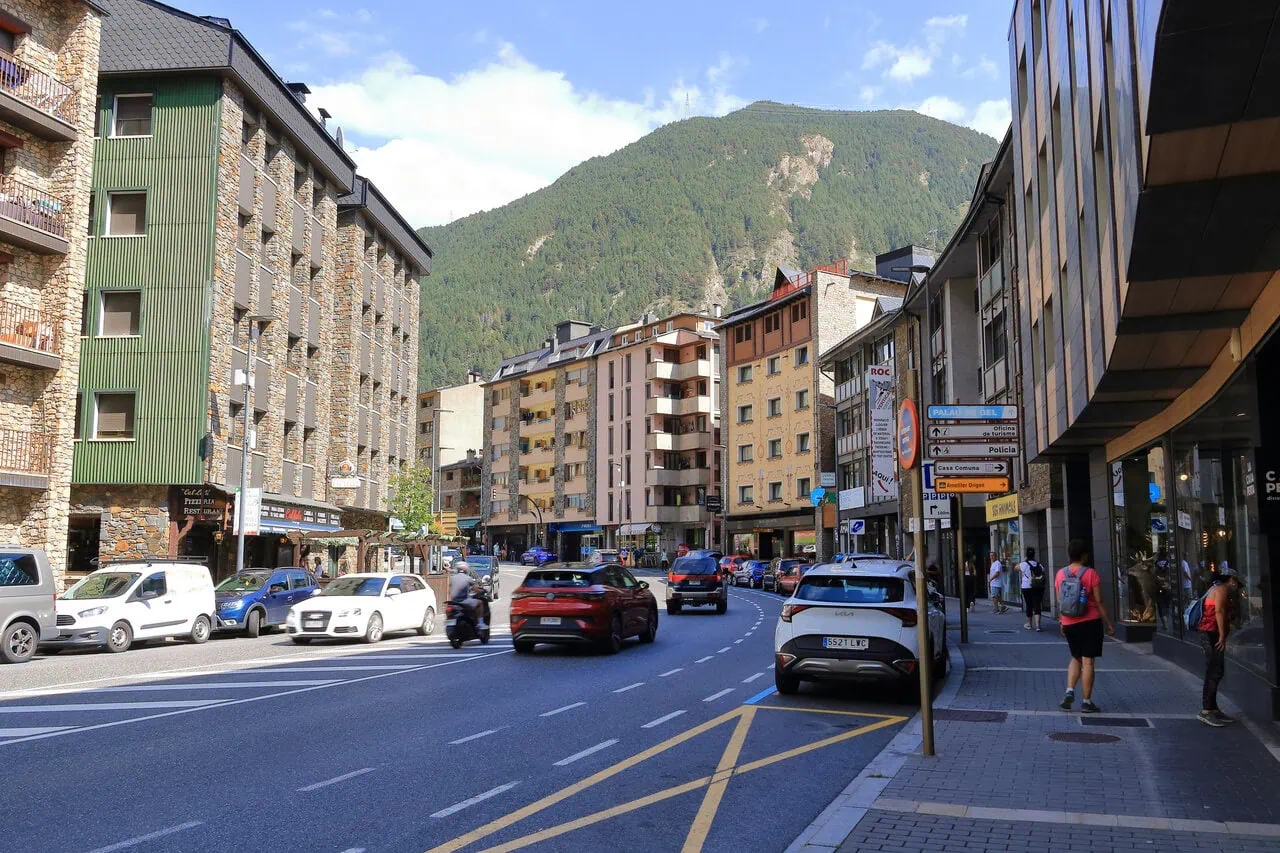
Why Drive in Andorra
Driving is one of the easiest ways to explore Andorra properly. The country sits high in the Pyrenees and is spread across valleys rather than built around one flat central area. This means many of the best places to visit are outside the main town and difficult to reach quickly by bus. If you want to visit ski resorts, hiking areas, scenic viewpoints, or smaller villages like Ordino or Pal, having a car makes the trip much easier.
Another advantage is flexibility. Distances in Andorra are short, but mountain roads mean journeys can take longer than expected, especially if you rely on public transport connections. With a car, you can move between towns quickly, stop at viewpoints, and travel early in the morning or late in the evening when buses are limited.
Driving also makes accommodation easier to plan. Hotels outside Andorra la Vella are often cheaper and quieter, and parking is usually easier as well. For ski trips, shopping trips, hiking holidays, or scenic road trips, driving in Andorra is often the most convenient option.
Driving Into Andorra (Border Crossings)
Andorra does not have an airport or train station, so everyone arrives by road. Most visitors drive in from Spain or France, and both routes are straightforward, although the scenery and road conditions are quite different depending on which direction you arrive from.
The most common route is from Spain via La Seu d’Urgell. This road is wide, well maintained, and follows a valley into the country, so the drive is relatively easy. If you are coming from Barcelona or Zaragoza, this is usually the fastest and simplest way to enter Andorra.
The route from France enters the country at Pas de la Casa. This road crosses high mountain terrain and includes steep climbs, tight bends, and tunnels. In good weather the drive is beautiful, but in winter conditions it can be slow or difficult. Snow and fog are common near the French border during winter months, so drivers need to be prepared for mountain driving.
Because Andorra is not part of the EU customs area, there are border controls on both sides. You may be waved through, but sometimes cars are stopped for passport checks or customs checks. This is especially common on the Spanish border when leaving Andorra due to duty-free goods limits.
Road Conditions in Andorra
Roads in Andorra are generally very good. The main routes through the country are modern mountain roads that are well surfaced, clearly marked, and maintained throughout the year. Most driving is done on the main CG road network, which connects all major towns, ski resorts, and border crossings.
The roads follow the valleys rather than crossing mountains directly, so although the country looks very mountainous on a map, many of the main drives are actually quite straightforward. However, once you leave the main valley roads and head into smaller villages or mountain areas, roads can become narrow, steep, and winding. You may encounter tight bends, steep climbs, and narrow streets in older towns.
Traffic can build up in Andorra la Vella and Escaldes-Engordany, especially in the evenings and during ski season. The main road through the capital often becomes congested, particularly on Fridays, Saturdays, and Sundays. Allow extra time if you need to drive through the capital during busy periods.
Fuel is cheaper in Andorra than in France or Spain, so many drivers fill up before leaving the country.
Winter Driving in Andorra
Winter is the most important time to think carefully about driving conditions. From roughly December to March, snow is common in the mountains and around ski resorts. Roads are usually cleared quickly, but snow and ice can still make driving slow or difficult, especially early in the morning or late at night.
Snow tyres are strongly recommended during winter, and many rental cars from nearby airports include them during ski season. In heavy snowfall, snow chains may be required on certain roads, particularly near ski resorts and high mountain routes. Police can stop vehicles that are not properly equipped for winter conditions.
Weather in the mountains can change quickly. A clear morning can turn into heavy snow or fog later in the day. If you are planning to drive to ski resorts or cross the French border in winter, always check weather and road conditions before setting off.
Andorra has an official road and traffic information website that provides live updates on road closures, weather conditions, and traffic delays. This is the best place to check before driving in winter.
Speed Limits and Driving Rules
Driving rules in Andorra are similar to Spain and France, but speed limits are generally lower because of the mountainous terrain and winding roads. In towns and built-up areas, speed limits are usually around 40 to 50 km/h, while main roads between towns typically range between 60 and 90 km/h depending on the road layout. Speed cameras are used in some areas, and limits can change quickly, especially near tunnels, junctions, and built-up areas, so it is important to pay attention to road signs.
Seat belts are mandatory for all passengers, and using a mobile phone while driving is illegal unless you have hands-free. Drink driving laws are strict, and random police checks do happen, particularly late at night and during busy tourist periods. Headlights should be used in tunnels and during poor weather, which is quite common in the mountains.
Mountain driving is the biggest adjustment for most visitors. Roads often include steep climbs and long descents, so using lower gears when going downhill is important to avoid overheating brakes. You may also encounter cyclists on mountain roads, particularly in summer, and they often ride in groups. Take extra care when overtaking and expect slow-moving traffic on narrow sections of road.
Local drivers are usually very confident on mountain roads and may drive faster than visitors expect. Do not feel pressured to keep up. Drive at a comfortable speed, keep a safe distance, and use pull-in areas if traffic builds up behind you.
Parking in Andorra
Parking in Andorra is generally easy, but it is rarely completely free in central areas. Most towns operate a combination of street parking zones and underground car parks. Underground car parks are often the easiest and most convenient option, especially in Andorra la Vella and Escaldes-Engordany where street parking is limited.
Street parking is usually divided into coloured zones, with blue zones being short-stay paid parking and other areas allowing longer stays. Payment is typically made at machines on the street, and you place the ticket on your dashboard. In busy areas, parking spaces can fill quickly, particularly in the evenings and during ski season.
Underground car parks are clearly signposted as you drive into towns and are normally charged by the hour. Many are located close to shopping areas, main streets, and tourist attractions. If you are visiting the capital for shopping or sightseeing, using an underground car park is usually the easiest option.
At ski resorts and mountain areas, there are large outdoor car parks, some free and some paid depending on the resort and time of year. During peak ski season, these can fill early in the morning, so arriving early is recommended.
Hotels often provide parking, but always check in advance, especially if staying in Andorra la Vella where space is limited.
Car Hire for Andorra
Most people who hire a car for Andorra actually pick it up in Spain or France rather than in Andorra itself. The closest airports are Barcelona and Toulouse, and both are popular starting points for driving into the country. Hiring a car at the airport and driving to Andorra is usually the easiest option.
If you hire a car in Spain or France, you must check that the rental company allows the car to be taken into Andorra. Most companies do allow this, but it must be included in the rental agreement and insurance. This is normally called cross-border travel or international travel permission.
In winter, you should also check whether the rental car includes snow tyres or chains. Some companies include winter equipment automatically during ski season, while others charge extra. If you are visiting between December and March, winter tyres are strongly recommended.
Manual cars are much more common than automatic cars in Spain and France, and automatics are usually more expensive and must be booked in advance. Fuel in Andorra is usually cheaper than in neighbouring countries, so many visitors fill up before leaving the country.
If you plan to explore different towns, ski resorts, hiking areas, and scenic drives, having a hire car gives you far more flexibility than relying on buses and taxis.
Scenic Drives in Andorra
One of the best reasons to drive in Andorra is the scenery. The country is full of mountain roads, valleys, viewpoints, and small villages, and many of the best views are only accessible by car. Even short drives in Andorra can be incredibly scenic, especially in autumn and winter when the mountains are covered in snow.
The drive from Andorra la Vella towards Ordino is one of the most scenic routes in the country, passing through mountain villages and forests before reaching the Arcalís area, which is popular for skiing in winter and hiking in summer. Another beautiful drive is towards Pal and Arinsal, where the road climbs into the mountains with views back down the valley.
The road towards Pas de la Casa near the French border is also very scenic, especially once you climb higher into the mountains. This route includes tunnels, mountain passes, and wide open views across the Pyrenees. In good weather, this is one of the most impressive drives in the region.
Because distances are short, you can easily combine several scenic drives into one day. Many visitors base themselves in one town and then explore different valleys each day by car. This is one of the best ways to see Andorra properly rather than just staying in the capital.
Driving Tips for Andorra
Driving in Andorra is not difficult, but it is different from driving in flat countries. The roads follow valleys and climb into the mountains, which means you will spend a lot of time driving uphill and downhill rather than on flat roads. Take your time, especially on your first day, and get used to the mountain roads before attempting longer drives.
One of the most important things to remember is to use lower gears on long downhill sections. Riding the brakes all the way down a mountain road can cause them to overheat and become less effective. Using engine braking by selecting a lower gear makes driving much safer and more controlled.
Weather can change quickly in the mountains. A sunny morning can turn into fog, rain, or snow later in the day, particularly near the French border and higher ski resort areas. Always check the weather if you are planning a longer drive or heading into the mountains. In winter, allow extra time for journeys and keep a greater distance between vehicles.
Traffic is usually light outside the capital, but Andorra la Vella can become very congested, especially in the evenings and on weekends. If possible, avoid driving through the capital during rush hour and park once rather than moving the car multiple times.
Fuel stations are easy to find along the main roads, and fuel is usually cheaper than in France or Spain, so it is often worth filling up before leaving the country.
Do You Need a Car in Andorra?
Whether you need a car in Andorra depends on what type of trip you are planning. If you are staying only in Andorra la Vella or Escaldes-Engordany for shopping, restaurants, and spas, you can manage without a car. The main towns are walkable, and buses connect most towns and ski resorts.
However, if you want to explore properly, visit different valleys, go hiking, visit viewpoints, or travel between ski resorts, having a car makes the trip much easier and saves a lot of time. Public transport exists, but buses do not always run frequently, and journeys often require changing buses in the capital.
A car is particularly useful if you:
- Are staying outside the capital
- Are visiting ski resorts
- Plan to go hiking or sightseeing
- Want to visit multiple towns
- Are arriving from Barcelona or Toulouse
- Want to explore scenic mountain roads
If your trip is mainly shopping and restaurants in the capital, you probably do not need a car. If your trip involves exploring the mountains, villages, and ski areas, a car is highly recommended.

Rupert’s Handy Travel Tips
Driving in Andorra is easy once you get used to the mountain roads, but a few simple tips will make your trip much smoother:
- Fill up with fuel before leaving: Fuel is usually cheaper in Andorra than in Spain or France.
- Use underground car parks: Parking in Andorra la Vella is much easier underground than on the street.
- Allow extra time in winter: Snow and fog can slow journeys, especially near the French border.
- Avoid Sunday afternoons: Border queues leaving Andorra can be very long at the end of weekends.
- Book winter tyres with rental cars: Essential if visiting during ski season.
Want to meet the reindeer behind our travel tips? Find out more in our page Who is Rupert?.
Frequently Asked Questions About Driving in Andorra
Can tourists drive in Andorra?
Yes, tourists can drive in Andorra using a full driving licence from the UK, EU, or most other countries. Most visitors simply drive into the country from Spain or France without any issues.
Do I need an international driving permit for Andorra?
If you have a UK or EU driving licence, you normally do not need an international driving permit for short visits. Visitors from some other countries may need one, so it is worth checking before travelling.
Are roads in Andorra difficult to drive?
The main roads are modern and well maintained, but many are mountain roads with bends and steep sections. Most drivers find them easy once they get used to mountain driving.
Can I rent a car in Spain and drive to Andorra?
Yes, this is very common. Most visitors rent cars in Barcelona or Toulouse and drive to Andorra. Just make sure your rental company allows cross-border travel and includes insurance for Andorra.
Is winter driving difficult in Andorra?
It can be during heavy snowfall, especially near ski resorts and the French border. Winter tyres or snow chains may be required, and checking road conditions before driving is recommended.
Further Reading & Related Guides
Planning a trip to Andorra involves more than just driving. These related guides will help you plan your journey, accommodation, and activities so you can make the most of your visit.
Travel from Spain with our route guide → Barcelona to Andorra Travel Guide
Travel from France with our route guide → Toulouse to Andorra Travel Guide
Stay connected for maps and travel apps →eSIM Apps Guide
Plan your trip with our main country guide → Andorra Travel Guide
Prepare for skiing and winter travel → Andorra Ski Resorts Guide
Last Updated
March 2026
Affiliate Disclosure
This page contains affiliate links. If you click through and make a purchase or booking, we may earn a small commission at no extra cost to you. This helps support our work and allows us to continue providing detailed, independent travel advice. We only recommend apps and services we personally use or have verified as high-quality.