Reviewed by our editorial team Updated
Why Turin Makes the Perfect Base
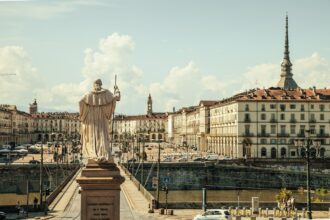
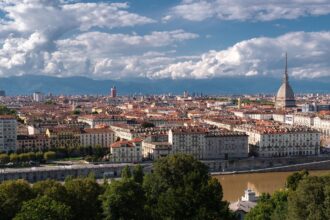
Turin’s real strength as a base is not just what sits within the city itself, but how much genuinely spectacular territory sits within easy reach of it. Ringed by the Alps to the north and west, the wine hills of Piedmont to the south, and connected by fast, frequent trains to Milan and the Ligurian coast, Turin quietly makes one of the best jumping off points for day trips found anywhere in Italy.
Within roughly two hours of the city, you can genuinely reach snow capped mountain passes, Roman ruins, UNESCO listed vineyard landscapes, a baroque royal palace nicknamed the Versailles of Piedmont, and the port city of Genoa on the Mediterranean coast. Few Italian cities pack quite this much geographic variety into such a manageable travelling radius.
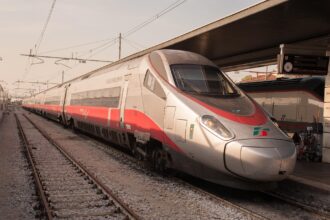
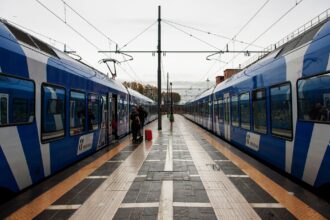
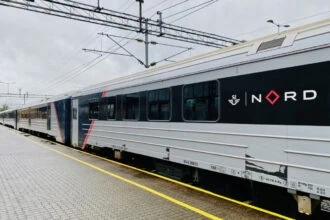
Piedmont’s regional rail network, run largely by Trenitalia, is genuinely well suited to day tripping, with frequent departures from Torino Porta Nuova and Torino Porta Susa covering most of the destinations in this guide without needing a car at all. Where public transport genuinely falls short, organised tours fill the gap, particularly for wine regions and more remote abbeys where public transport exists but is not always convenient for a single day visit.
This guide covers twelve of the best day trips from Turin, from an hour long hop to Milan through to crossing the border into France by train, along with honest guidance on when public transport works well and when booking an organised tour is genuinely the better option. Whichever destination you choose, having Turin as your base for a few days opens up considerably more of northern Italy than staying in the city alone ever could.
Best Day Trips at a Glance
Before working through each destination in detail, it genuinely helps to see how the best day trips from Turin compare on travel time, transport options and who each one actually suits. Some destinations, like Milan or Bardonecchia, are served by direct trains and need almost no planning at all, while others, particularly the wine regions around Alba and Asti, are genuinely easier with an organised tour unless you are already comfortable driving yourself around unfamiliar rural roads.
Journey times below are given from Turin’s main stations, generally Porta Nuova or Porta Susa depending on the specific route, and reflect typical off peak service rather than the absolute fastest connection available. Actual travel times can vary depending on the exact train you catch, the day of the week, and whether a change is required along the route.
Distance from Turin genuinely does not always predict how easy a particular destination actually is to reach by public transport. Aosta, for example, sits closer to Turin on the map than Genoa, but the railway beyond Ivrea is closed for electrification works, so the final leg currently runs as a replacement coach, while Bardonecchia, considerably further into the mountains, has frequent direct services running throughout the day without any change required at all.
Use this table as a starting point for planning your own itinerary, then read the dedicated section further down this guide for the destination or destinations that catch your eye, since each one goes into considerably more detail on timings, what to see, and whether public transport or an organised tour genuinely makes more sense for that specific trip on the day.
| Destination | Travel Time | Best Transport | Best For |
|---|---|---|---|
| Milan | ~1 hour (direct) | High speed train | A city break contrast in a single day |
| Aosta | ~3 hours (train to Ivrea, then replacement coach) | Regional train plus rail replacement coach | Roman ruins and Alpine scenery |
| Alba | ~2 hours | Train or organised wine tour | Truffles and Barolo/Barbaresco wine |
| Asti & Monferrato | ~1 hour to Asti | Train to Asti, car/tour for Monferrato villages | Sparkling wine and gentler pace |
| Sacra di San Michele | ~1h15 by train, plus a hike or shuttle | Regional train + hike, shuttle or taxi | Dramatic abbey and Alpine views |
| Venaria Reale | ~30 minutes | Train or city bus | An easy half day royal palace visit |
| Lake Maggiore | ~2 to 2.5 hours | Train via Milan + local connection | Boat trips and lakeside scenery |
| Bardonecchia | ~1h26 (direct) | Direct train | Easy, low effort Alpine escape |
| Sestriere | Train to Oulx + bus | Car or organised transfer | Skiing and Winter Olympics history |
| Ivrea | ~1 hour | Regional train | UNESCO industrial architecture |
| Genoa | ~1.5 to 2 hours (direct) | Direct train | Coastal city, pesto and focaccia |
| France (Modane) | ~1.5 hours (direct) | Direct train via Fréjus tunnel | Rail enthusiasts crossing the Alps |
See hotel options and places to stay in Turin.
Browse hotelsBrowse apartments, holiday homes and self-catering stays in Turin.
View rentalsCompare prices for Turin hotels across multiple booking sites.
Check dealsExperience Milan in a Day
Milan is genuinely the easiest big city day trip from Turin, connected by high speed trains that cover the distance in around an hour, making it entirely realistic to have breakfast in Turin and be standing in front of the Duomo before mid morning. Given how different the two cities feel despite their proximity, the contrast alone makes the trip worthwhile.
The obvious starting point is the Duomo di Milano, one of the largest Gothic cathedrals in the world, with a rooftop terrace offering genuinely spectacular views across the city and, on a clear day, out towards the Alps. From there, the elegant Galleria Vittorio Emanuele II connects directly to Piazza della Scala and the world famous La Scala opera house, making for a natural walking route through the heart of the city.
Art lovers should book well in advance to see Leonardo da Vinci’s The Last Supper, housed in the Santa Maria delle Grazie convent and limited to small, timed viewing slots that sell out considerably faster than most visitors expect, particularly during peak season. Milan’s reputation as a global shopping capital is also well earned, with the Quadrilatero della Moda district offering some of the most exclusive retail anywhere in Europe, alongside considerably more affordable options throughout the wider city centre.
Given the short travel time, Milan works well even as a half day trip if your schedule is tight, though a full day genuinely lets you cover the cathedral, a proper lunch, and at least one or two additional sights without feeling rushed. Trains run frequently throughout the day from both Porta Nuova and Porta Susa, so there is genuinely no need to plan around a single fixed departure time.
Explore the Roman City of Aosta
Aosta is genuinely one of the more overlooked day trips from Turin, a small alpine city with a surprisingly rich Roman heritage sitting at the heart of its own semi autonomous valley close to the borders of both France and Switzerland. Given how few visitors make it this far north, Aosta offers a genuinely uncrowded alternative to the more famous Roman sites further south in Italy.
The city’s Roman credentials are on full display around its compact historic centre. The Arch of Augustus, built to commemorate the Roman conquest of the region, still stands close to the well preserved Roman Theatre, whose surviving facade rises an impressive twenty two metres and remains one of the tallest Roman structures anywhere in the Alps. Nearby, Aosta Cathedral adds a considerably later medieval layer to the city’s long architectural history, and the surrounding streets retain a genuinely different, more Alpine character than anywhere else covered in this guide.
Reaching Aosta is currently a two stage journey rather than a straight train ride. The railway between Ivrea and Aosta has been closed since 2024 while Rete Ferroviaria Italiana electrifies the line, so regional trains from Turin run only as far as Ivrea and a rail replacement coach covers the last stretch up the valley. Allow around three hours each way, and check current timetables before you set out, since the reopening date has already moved more than once. The route still passes the vineyards near Châtillon and the Roman town of Pont Saint Martin, so the scenery survives the change of transport.
Once you arrive, sampling local Aosta Valley specialities such as Fontina cheese and hearty polenta dishes is genuinely worth building into your day, particularly if you are visiting during the cooler months when these dishes feel especially fitting. Given the travel time involved, Aosta works best as a full day trip rather than a rushed half day excursion.
Taste Truffles and Wine in Alba
Alba is genuinely one of Piedmont’s great culinary destinations, a medieval hilltop town surrounded by the vineyards of Barolo and Barbaresco and famous internationally for the elusive white truffles that grow naturally in the hills just outside the town. For food and wine focused travellers, Alba is arguably the single best day trip from Turin covered in this guide.
The town itself is genuinely attractive in its own right, with medieval towers, a compact historic centre and the kind of unhurried atmosphere that makes wandering without a fixed plan a genuine pleasure. Alba is also widely credited as the birthplace of Nutella, since the Ferrero company that created it was founded here, giving the town an unexpected secondary claim to global fame alongside its more traditional truffle and wine credentials.
Autumn is genuinely the best time to visit, when the International Alba White Truffle Fair draws visitors from around the world and the surrounding countryside puts on its finest display of colour among the vineyards. If your dates line up, truffle hunting excursions combined with a tasting lunch are widely available and genuinely worth the extra cost for a memorable, hands on experience of the region’s most famous product.
Alba is reachable from Turin by regional train in around two hours, making it comfortably feasible as a day trip, though many visitors find that renting a car or joining an organised wine tour makes far more sense here than relying purely on public transport, since the most rewarding parts of the Langhe wine region, including Barolo and Barbaresco themselves, sit some distance outside Alba and are considerably easier to reach with your own transport or a guide.
Discover Asti and Monferrato
Asti and the surrounding Monferrato hills offer a genuinely rewarding alternative to Alba for travellers keen on Piedmont’s wine culture without necessarily wanting to travel quite as far or spend quite as much on truffle focused experiences. The wider Langhe, Roero and Monferrato landscape has been recognised as a UNESCO World Heritage Site, reflecting centuries of careful vineyard cultivation across these gently rolling hills.
Asti itself is genuinely worth an hour or two of exploring beyond its famous sparkling wine, with a medieval historic centre, several notable churches and towers, and a lively central piazza that hosts the historic Palio di Asti horse race each September, one of the oldest such traditions in Italy and considerably less internationally known than its more famous equivalent in Siena. The town makes a genuinely pleasant base for a slower, more relaxed day trip than some of the more heavily touristed destinations covered elsewhere in this guide.
Asti Spumante, the region’s famous sparkling wine, is produced throughout the surrounding Monferrato hills, and several wineries within a short drive of the town offer tastings and cellar tours for visitors keen to understand the production process rather than simply sampling the finished product. The wider Monferrato landscape, dotted with small hilltop villages and castles, rewards slow exploration by car considerably more than a rushed itinerary planned around public transport timetables.
Asti is reachable from Turin by regional train in around an hour, making it genuinely one of the quicker wine focused day trips covered in this guide. However, exploring the wider Monferrato countryside beyond the town itself is considerably easier with a rental car or an organised tour, since the smaller villages and individual wineries are not always well served by public transport.
Climb to the Sacra di San Michele
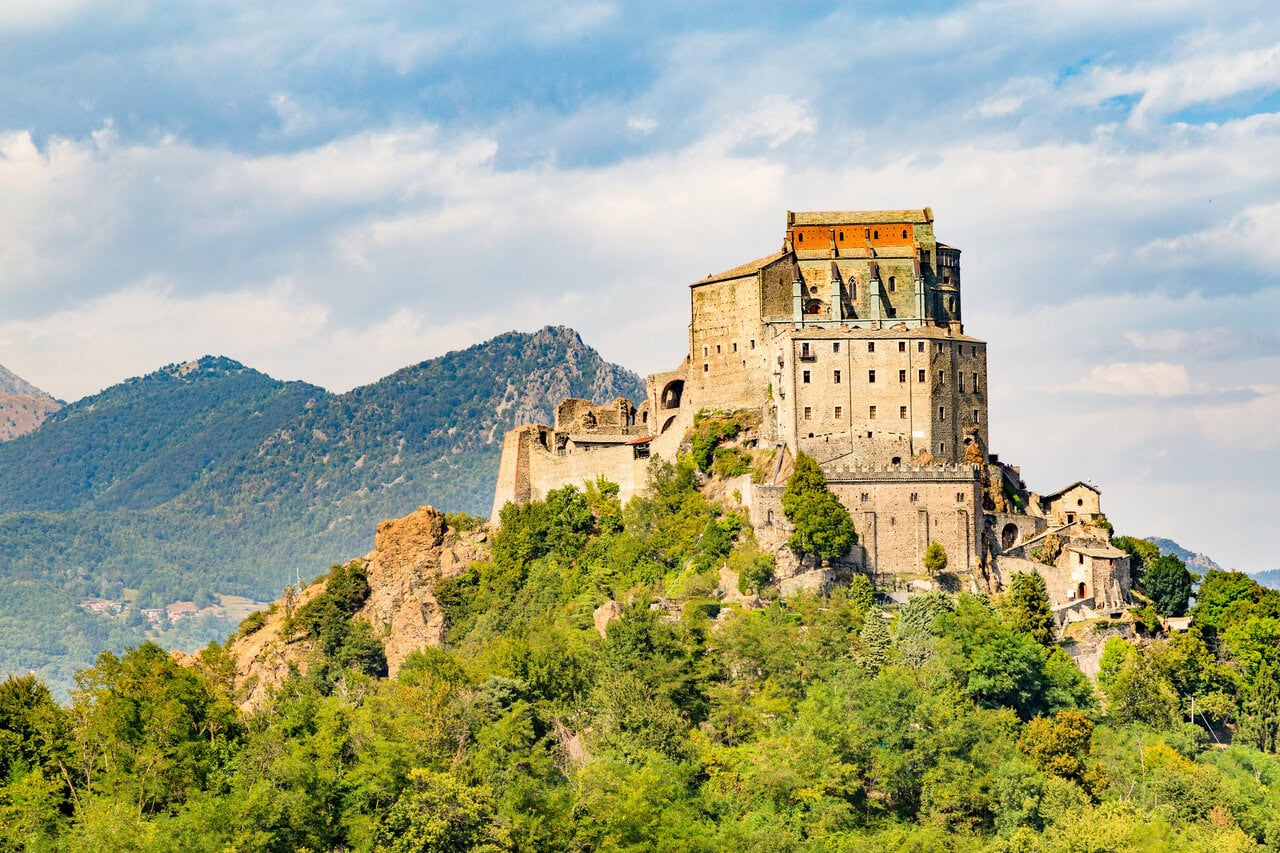
The Sacra di San Michele is genuinely one of the most dramatic day trips from Turin, a Romanesque abbey perched high on a rocky outcrop at the entrance to the Susa Valley, with views stretching out across the surrounding mountains that alone would justify the trip. The abbey’s atmospheric setting also made it the acknowledged inspiration for Umberto Eco’s novel The Name of the Rose, adding a genuine literary dimension for visitors familiar with the book.
Completed in stages from the eleventh century onward, the abbey combines a genuinely striking mix of Romanesque and Gothic architecture, with the Stairway of the Dead, a massive stone staircase that historically displayed the remains of monks along its walls, ranking among its most memorable and slightly eerie interior features. The site is generally open daily, with guided tours available at weekends, though sporadic seasonal or holiday closures do occur, so checking ahead is genuinely worth doing before you travel.
Reaching the abbey by train involves a regional service from Torino Porta Susa, with trains typically departing hourly and the journey itself taking around an hour and fifteen minutes to the nearest stations. From there, visitors have a choice between a genuinely demanding uphill hike of around ninety minutes, a seasonal shuttle bus service, or a taxi for those who would rather skip the climb entirely and preserve their energy for exploring the abbey itself.
Given the physical effort involved in reaching the summit on foot, this trip suits visitors with reasonable fitness and comfortable walking shoes considerably better than those hoping for an entirely relaxed day out. That said, the combination of history, architecture and genuinely spectacular scenery makes the Sacra di San Michele one of the most rewarding half day excursions covered anywhere in this guide.
Wander Through Venaria Reale
The Reggia di Venaria Reale is genuinely one of the easiest and most rewarding day trips from Turin, a former royal hunting lodge turned lavish baroque palace sitting just outside the city and often nicknamed the Versailles of Piedmont for good reason. As part of the wider Savoy Residences UNESCO World Heritage listing, it ranks alongside the Royal Palace covered in our Turin city guide as one of the finest surviving symbols of the Savoy dynasty’s wealth and ambition.
The palace complex is genuinely enormous, spanning around eighty thousand square metres of ornate baroque interiors alongside sixty hectares of meticulously landscaped formal gardens, giving visitors considerably more to explore than a typical museum visit. Highlights include lavishly frescoed state rooms, the dramatic Great Gallery, and gardens dotted with fountains, sculpted hedges and seasonal displays that change throughout the year, making a return visit at a different time of year genuinely worthwhile for keen garden enthusiasts.
Given how close Venaria sits to Turin, roughly thirty minutes away, this trip works comfortably even as a half day excursion, though the sheer scale of the palace and gardens means many visitors end up staying considerably longer than they originally planned. Regional trains run directly to Venaria Reale station, a short walk from the palace gates, while city buses, including route 11 on weekdays, also connect from central Turin for a genuinely affordable alternative.
A full day ticket covering the palace and gardens costs around twenty euros, and the site is closed on Mondays, so plan your visit for another day of the week accordingly. Given how many of Turin’s other paid attractions overlap with the same Torino+Piemonte Card, it is genuinely worth checking whether that card covers Venaria too before buying a standalone ticket.
Search flights and useful route combinations for your trip.
View flightsUse an eSIM to get online without hunting for a local SIM after arrival.
See eSIM optionsCheck private pickup options and plan your onward journey before arrival.
View transfersCruise Across Lake Maggiore
Lake Maggiore offers a genuinely different pace from the historic towns and cities covered elsewhere in this guide, swapping palaces and museums for alpine scenery, lakeside villages and boat trips across some of northern Italy’s most photographed water. Straddling the border between Piedmont and Lombardy, with a small section extending into Switzerland, the lake makes a genuinely refreshing change of scenery for a day away from Turin.
The undoubted highlight for most visitors is a boat trip out to the Borromean Islands, a small cluster of islands in the lake’s widest bay, each with its own distinct character. Isola Bella is home to a lavish baroque palace and elaborate terraced gardens, while the smaller Isola dei Pescatori retains a genuinely working fishing village atmosphere, with narrow lanes, small restaurants and considerably fewer crowds than the more famous palace island nearby.
Lakeside towns such as Stresa and Verbania make natural bases for a day trip, offering waterfront promenades, cable car rides up into the surrounding hills, and a noticeably slower, more relaxed atmosphere than anywhere else covered in this guide. Stresa in particular has long been a favourite retreat for wealthy Milanese and international visitors alike, and its grand nineteenth century hotels along the waterfront reflect that history clearly.
Reaching Lake Maggiore from Turin typically involves a train to Milan or a more direct regional connection depending on your exact starting station, followed by a local service or bus to the lakeshore itself, making the full journey somewhere in the region of two to two and a half hours each way. Given the travel time involved, this trip suits a full, unhurried day rather than a rushed half day excursion squeezed in around other plans.
Escape to Bardonecchia
Bardonecchia is genuinely one of the most convenient mountain escapes from Turin, a well known ski resort in the upper Susa Valley reached by direct train in a little over an hour, with no change required and a genuinely frequent service running throughout the day. For visitors wanting a taste of the Alps without committing to a full ski holiday, Bardonecchia offers an easy, low effort day trip that still delivers genuine mountain scenery.
In winter, the resort’s slopes attract skiers and snowboarders from across Piedmont and beyond, with a well developed lift network and a reputation as one of the more accessible Italian resorts for visitors arriving without their own transport. Even for non skiers, riding a cable car or chairlift up into the mountains for the view alone is genuinely worth the ticket price, particularly on a clear winter day when the surrounding peaks are at their most striking.
Outside the winter season, Bardonecchia shifts into a genuinely different rhythm, with hiking trails through the surrounding valleys and forests replacing the ski runs, and a noticeably quieter, more relaxed atmosphere throughout the town itself. Summer visitors can explore the historic centre, sample local Piedmontese mountain cuisine, and take in scenery considerably less crowded than during the peak winter months.
Given its position right at the base of the Fréjus rail tunnel, Bardonecchia also functions as a natural staging point for travellers continuing on into France, a route covered in more detail later in this guide. With around seventeen direct trains running each day from Turin, this is genuinely one of the easiest and most flexible mountain day trips covered anywhere in this guide, needing very little advance planning to pull off successfully.
Enjoy the Mountain Air in Sestriere
Sestriere is genuinely one of the more historically significant ski resorts in the Italian Alps, purpose built in the late 1930s by the Agnelli family, the founders of Fiat, and later serving as a host venue for events during the 2006 Winter Olympics staged across the wider Turin region. For visitors interested in winter sports history as much as the mountains themselves, Sestriere offers a genuinely distinctive story behind its slopes.
The resort forms part of the vast Via Lattea, or Milky Way, ski area, one of the largest interconnected lift networks anywhere in Europe, linking Sestriere with neighbouring resorts across the French and Italian border, including Montgenèvre on the French side. This cross border connectivity makes Sestriere a genuinely appealing base for skiers who want to sample runs in two countries without needing to relocate between them during a single trip.
Sestriere’s two distinctive circular tower hotels, built as part of the resort’s original 1930s design, remain instantly recognisable landmarks and a genuinely interesting piece of rationalist architecture from the period, standing out from the more traditional alpine chalet style seen at many other Italian resorts. Even outside the ski season, the surrounding mountain scenery and hiking trails make Sestriere worth a summer visit for travellers keen to escape the heat of the Piedmont plains for a day.
Unlike Bardonecchia, Sestriere does not have its own direct rail connection, and reaching the resort from Turin typically involves a train to Oulx followed by a bus for the final stretch up into the mountains, or a direct coach service during the winter season specifically. Given this extra step, a car or an organised transfer genuinely makes the journey considerably more straightforward than relying purely on public transport.
Visit the UNESCO Town of Ivrea
Ivrea is genuinely one of the more unusual day trips from Turin, a historic town recognised by UNESCO back in 2018 not for ancient ruins or medieval architecture, but for its role as a twentieth century company town built around the Olivetti typewriter and computing empire. For anyone interested in industrial design or architecture, Ivrea offers a genuinely unique story found nowhere else covered in this guide.
Olivetti transformed Ivrea across the middle decades of the twentieth century, commissioning leading modernist architects to design factories, offices and workers’ housing that blended progressive social ideas with genuinely striking rationalist architecture. Walking through the town today, this legacy remains clearly visible in buildings that still look strikingly modern despite being built many decades ago, making Ivrea feel unlike anywhere else in Piedmont.
Beyond its industrial heritage, Ivrea also has a genuinely older side worth exploring, including the Castello di Ivrea and a compact historic centre with roots stretching back to Roman times. The town is equally famous for its historic Carnival, centred on the Battle of the Oranges, a boisterous, good natured mock battle staged each February that draws visitors from across the region and remains one of Italy’s most distinctive local festivals.
Ivrea sits directly on the Chivasso to Aosta railway line, making it easily reachable from Turin by regional train in around an hour, considerably quicker than continuing onward to Aosta itself. Given the relatively short journey time, Ivrea works well either as a standalone half day trip focused on its UNESCO listed architecture, or as a natural stopping point if you are continuing further north into the Aosta Valley, since Ivrea is where the rail replacement coaches for Aosta now begin.
Spend the Day in Genoa
Genoa offers a genuinely different flavour of day trip from Turin, swapping mountains and vineyards for the Mediterranean coast and one of Europe’s largest and most atmospheric historic city centres. The maze of narrow medieval alleyways known locally as caruggi forms the heart of the old town, and simply wandering without a fixed destination is genuinely one of the best ways to experience Genoa’s distinctive character.
The city’s maritime history runs deep, reflected in genuinely grand palaces built by wealthy merchant families along Via Garibaldi, several of which are now open to the public as museums and together form part of a wider UNESCO World Heritage listing. Down by the water, the historic port area has been considerably regenerated in recent decades, and now includes the Aquarium of Genoa, one of the largest in Europe, alongside restaurants and waterfront promenades that make a genuinely pleasant contrast to the tightly packed old town streets nearby.
Food is arguably the biggest draw for many visitors, since Genoa and the wider Liguria region are considered the birthplace of pesto, and sampling it here, made fresh with local basil rather than the jarred version found elsewhere, is genuinely worth the trip on its own. Focaccia, another Ligurian speciality, is sold throughout the city from small bakeries, and pairing a slice with a coffee makes a genuinely satisfying, low cost lunch between sightseeing stops.
Genoa is reached from Turin by direct train in around one and a half to two hours, making it entirely feasible as a full day trip, though the sheer scale of the historic centre means many visitors wish they had allowed themselves considerably more time. Trains run frequently throughout the day, so there is genuinely no need to plan your entire day around a single fixed departure or return time.
Cross into France by Train
Crossing into France for the day is a genuinely more adventurous option than most of the other trips covered in this guide, but it is entirely achievable by train thanks to the historic Fréjus railway line running from Turin through the Susa Valley and beneath the Alps via the Fréjus Rail Tunnel. The line has occasionally faced closures due to landslides and engineering works over recent years, so it is genuinely worth checking current operational status before building a whole day trip around it.
The most straightforward destination is Modane, a small French town on the far side of the tunnel, reached from Turin in around an hour and a half with a handful of direct services running each day. Modane itself is a modest railway town rather than a major tourist destination, but it makes a genuinely satisfying goal for rail enthusiasts specifically wanting to say they have crossed the Alps by train in a single day, and it also connects onward to considerably larger destinations in the French Alps for travellers wanting to continue further.
For those willing to change trains, continuing beyond Modane opens up destinations throughout the Maurienne valley and onward towards Chambéry, Grenoble or even further into the French rail network, making this route a genuinely useful gateway for a longer multi day trip rather than purely a single day excursion. The scenery along the way, climbing steadily through the Susa Valley before disappearing into the tunnel itself, is genuinely one of the more dramatic rail journeys covered anywhere in this guide.
Given the relatively limited number of daily services and the possibility of seasonal disruption, this trip suits travellers who enjoy a bit of rail adventure and flexible planning considerably more than those wanting a guaranteed, tightly scheduled day out. Checking timetables close to your travel date is genuinely essential before committing to this particular route.
Browse hostels and budget-friendly stays around Turin.
See hostelsGet help with compensation, eligible lounge access and disruption support.
Explore AirHelp+Use convenient luggage storage around Turin between arrival, check-in and departure.
Check storagePublic Transport or Organised Tour?
Deciding between public transport and an organised tour genuinely makes the biggest difference to how smoothly your day trip from Turin actually goes, and the right answer depends heavily on which destination you have chosen from this guide. Some trips are genuinely straightforward by train alone, while others benefit considerably from the structure and local knowledge an organised tour provides.
Destinations directly served by regional or high speed rail, including Milan, Genoa, Bardonecchia and Ivrea, work extremely well with public transport alone, since frequent direct services remove most of the planning burden and let you set your own pace once you arrive. The same goes for Venaria Reale and the Sacra di San Michele, both reachable by a combination of train and a short bus, taxi or walk at the other end.
Wine focused destinations such as Alba, Barolo, Barbaresco and the wider Monferrato countryside genuinely favour an organised tour or a rental car instead, since the most rewarding parts of these regions, individual wineries, hilltop villages and truffle hunting grounds, sit some distance from the nearest railway station and are not well served by local buses. A guided wine tour also solves the genuinely practical problem of tasting several wines across the day while someone else handles the driving.
For destinations like Sestriere that require changing from train to bus partway through the journey, a tour or private transfer can also remove a layer of complexity, particularly during busy ski season when public buses can fill quickly. As a general rule, if a destination in this guide is directly reachable by train, public transport is usually the simpler and cheaper choice, while anything requiring multiple connections or reaching remote countryside genuinely benefits from the convenience of a guide or your own car.
Using the Italia in Tour Pass for These Day Trips
Most of the destinations covered in this guide sit on Trenitalia’s regional network rather than the high speed line, which makes the Italia in Tour Pass genuinely worth knowing about if you are planning to squeeze several day trips into a short stay. Rather than buying an individual ticket for every journey, the pass offers unlimited travel on Regionale and Regionale Veloce services for a fixed number of consecutive days.
The pass comes in two versions, a three day pass costing around thirty five euros and a five day pass costing around fifty nine euros, both covering unlimited second class travel once activated. Destinations in this guide reachable on regional trains, including Alba, Asti, Ivrea, Venaria Reale, Bardonecchia and the regional service to the Sacra di San Michele, are all genuinely covered, meaning a few of these trips across a three or five day stay can already work out cheaper than paying for each ticket separately.
Not every destination in this guide fits neatly under the pass, however. Milan is normally reached by high speed train, which sits outside the pass entirely, though a slower regional alternative via Novara does exist for pass holders happy to trade an extra hour for the saving. Genoa is often served by a mix of regional and faster services depending on the specific train, so it is worth checking which type of ticket a particular departure requires before assuming it is included. Crossing the border to Modane in France also sits outside the pass, since it runs beyond Trenitalia’s domestic regional network, so that leg should be budgeted separately regardless of which pass you are carrying.
For visitors building an itinerary around several of Piedmont’s regional day trips rather than a single dash to Milan, the pass genuinely earns its cost back quickly. Our full Italia in Tour Pass guide covers exact pricing, which services are and are not included, how to buy and activate the pass through the Trenitalia app, and suggested itineraries for making the most of unlimited regional travel across your stay.

Rupert’s Handy Travel Tips
Piedmont rewards a bit of planning, so here’s what I’d want to know before choosing a day trip.
- Match the destination to the transport: Milan, Genoa, Bardonecchia and Ivrea work brilliantly by train alone, but the wine regions genuinely need a car or a tour.
- Book The Last Supper in Milan well ahead: timed slots sell out considerably faster than most visitors expect, especially in peak season.
- Check the France line before travelling: the Fréjus railway has faced closures in the past, so confirm current status before building a day around it.
- Wear proper shoes for the Sacra di San Michele: the hike up from the station takes around ninety minutes if you skip the shuttle bus or taxi.
- Visit truffle country in autumn if you can: the Alba White Truffle Fair and the vineyard colours make October and November genuinely the best time to go.
Want to meet the reindeer behind our travel tips? Find out more in our page Who is Rupert?.



Frequently Asked Questions
What is the best day trip from Turin?
It depends on your interests. Milan suits a city contrast in a single day, Alba suits food and wine lovers, Venaria Reale suits an easy half day, and the Sacra di San Michele suits travellers wanting dramatic scenery and a bit of a hike.
Can I visit Milan from Turin without a car?
Yes, high speed trains connect the two cities in around an hour, running frequently throughout the day from both Porta Nuova and Porta Susa.
Do I need a car to visit Alba and Barolo?
Alba itself is reachable by train, but exploring the wider Barolo and Barbaresco wine region is considerably easier with a rental car or an organised wine tour, since many wineries sit outside the town.
Is it possible to reach France from Turin by train?
Yes, via the Fréjus railway line through the Susa Valley to Modane, though services are limited and the line has occasionally faced closures, so check current status before travelling.
How do I get to the Reggia di Venaria Reale?
Regional trains run directly to Venaria Reale station, a short walk from the palace, and city buses including route 11 also connect from central Turin.
What is the best time of year for a Piedmont wine day trip?
Autumn, particularly October and November, coincides with the grape harvest, the Alba White Truffle Fair, and the best colours across the vineyard landscape.
Further Reading
If you’re planning your time in the city itself, our Things to Do in Turin guide covers the Egyptian Museum, Mole Antonelliana and every other essential city sight in detail. For train travel further afield, our Trenitalia Pass guide explains how to book a set number of high speed journeys across the country, and our Italia in Tour Pass guide covers a regional alternative for slower, more flexible travel.
Arriving by air, our Turin Airport to Turin City Centre guide covers every transfer option, and our Turin Airport to Ski Resorts guide is worth reading if Bardonecchia, Sestriere or the wider Alps are the focus of your trip.
Football fans in the city on a matchday should also read our dedicated How to Get to Juventus Stadium guide, which covers every route from the city centre in detail. If you are planning to visit several paid attractions, our Torino + Piemonte Card guide explains whether the official city pass is worth buying.