Reviewed by our editorial team Updated
Why Turin Should Be on Your Italy Itinerary
Turin does not always make the shortlist when people plan a first trip to Italy, and that is genuinely one of its biggest advantages. While Rome, Florence and Venice absorb most of the attention, Turin quietly offers royal palaces, world class museums and a genuinely elegant city centre without the crowds that can make those better known destinations feel exhausting rather than enjoyable to visit.
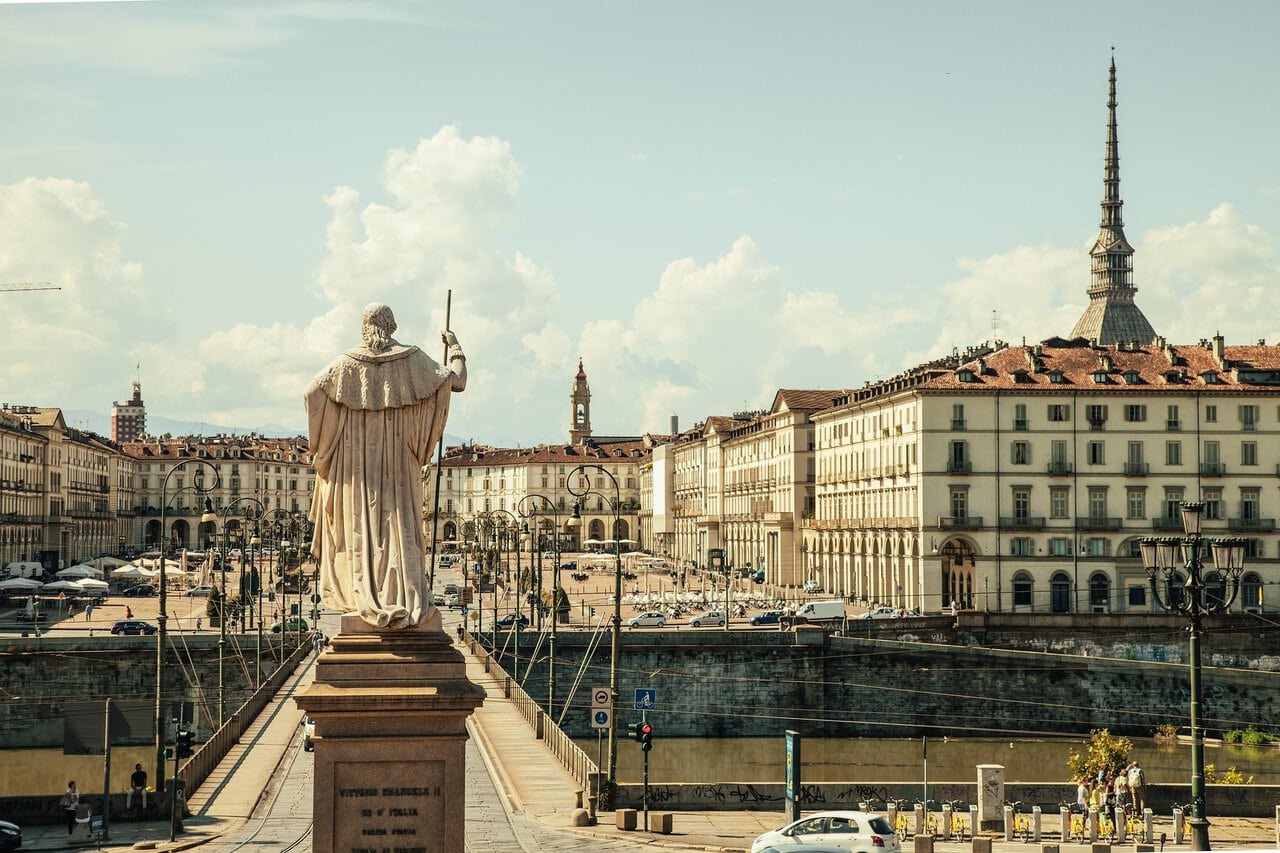
As the former capital of Italy and the historic seat of the House of Savoy, Turin has the grand boulevards, arcaded streets and baroque squares to genuinely match cities far more heavily marketed to first time visitors. Add in the Alps rising dramatically on the horizon, and you get a backdrop that few other Italian cities can genuinely rival on a clear winter or spring day.
The city also happens to be the birthplace of Italian cinema, home to one of the world’s finest Egyptian collections outside Cairo, and the spiritual home of Juventus, one of football’s most decorated and successful clubs anywhere in Europe. Add a genuinely serious café and chocolate culture, and Turin turns out to be a city that rewards curiosity and a slower pace rather than a simple checklist of sights.
This guide covers the essential Turin attractions, from the Mole Antonelliana and the Egyptian Museum through to the Superga Basilica and Juventus Stadium, along with practical advice on museums, family friendly options and the festivals and seasonal markets worth timing your visit around. Whether you have a single day or a full week, there is genuinely more here than most itineraries allow time for, and plenty worth building an entire trip around on its own.
Top Attractions at a Glance
Before diving into the detail of each individual attraction, it genuinely helps to see how Turin’s biggest draws actually compare on price, time needed and who each one genuinely suits. Some, like the Egyptian Museum, genuinely reward setting aside a full half day, while others, such as a walk through Piazza Castello or an evening beside the Po, cost nothing at all and can be folded into almost any itinerary without much advance planning required on your part.
Turin genuinely rewards a mix of paid and free attractions rather than leaning entirely on ticketed museums the way some other Italian cities tend to do. The table below groups the essentials by rough cost and time commitment, so you can build a realistic day by day plan rather than trying to squeeze everything into a single rushed afternoon.
Prices and opening hours in Turin do shift periodically, particularly around major exhibitions, public holidays or seasonal closures, so it is always genuinely worth checking official websites close to your travel dates rather than relying purely on older guides found elsewhere online. That said, the figures below reflect current typical pricing and should give you a genuinely reliable starting point for budgeting your trip.
Note that several of the city’s biggest sights, including the Egyptian Museum and Mole Antonelliana, offer combined tickets or city passes that can meaningfully reduce the total cost if you are planning to visit more than two or three paid attractions during your stay, so it is worth comparing the individual prices below against a multi attraction pass before buying every ticket separately at full price.
| Attraction | Cost | Time Needed | Best For |
|---|---|---|---|
| Mole Antonelliana | €18 museum, €9 lift, €23 combined | 1.5 to 2 hours | City views and cinema history |
| Egyptian Museum | From €18 | 2 to 3 hours | One of the world’s best Egyptian collections |
| Piazza Castello | Free | 30 to 60 minutes | A first orientation walk |
| Royal Palace | From €15 | 1.5 hours | Savoy history and state rooms |
| Palazzo Madama | From €10 | 1 to 2 hours | Medieval and baroque architecture |
| Turin Cathedral | Free (chapel/museum may charge) | 30 to 45 minutes | The Shroud of Turin |
| Sassi–Superga Tramway | A few euros each way | 20 minutes each way | A scenic historic ride |
| Superga Basilica | Free church, small fee for crypt/dome | 1 to 1.5 hours | Views and Savoy royal tombs |
| Parco del Valentino | Free | 1 to 2 hours | A relaxed break from sightseeing |
| MAUTO (Automobile Museum) | Around €12 | 1.5 to 2 hours | Car history and design |
| Juventus Stadium Tour | Varies by tour type | 1 to 2 hours | Football fans |
| Porta Palazzo Market | Free to browse | 1 to 2 hours | Local food culture, best on Saturdays |
Compare hotels and other places to stay in Turin.
Check availabilityBrowse apartments, homes and self-catering accommodation in Turin.
Browse rentalsCompare hotel deals in Turin from multiple booking sites.
Compare pricesClimb the Mole Antonelliana
The Mole Antonelliana is Turin’s defining landmark, and climbing it is genuinely one of the best ways to start a visit to the city. Designed by architect Alessandro Antonelli and originally intended as a synagogue when construction began in 1863, the building was eventually completed in 1889 as something closer to a monument to the city itself, its unusual dome and spire rising far above anything else on the skyline.
Since 2000, the Mole has housed the National Museum of Cinema, one of the most complete collections of film history anywhere in the world. The museum traces cinema from its earliest optical experiments through to contemporary blockbusters, and its centrepiece hall, arranged beneath the dome with themed alcoves circling a central viewing area, is genuinely one of the more atmospheric museum spaces in Italy.
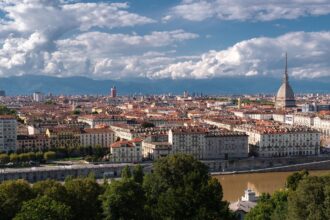
The real highlight for most visitors, though, is the panoramic lift that climbs through the centre of the building to an observation deck near the top of the dome. On a clear day, the 360 degree view stretches across the rooftops of Turin all the way to the Alps, and it is genuinely worth timing your visit for late afternoon if you want to catch the light as the sun starts to set over the surrounding hills.
Museum entry costs €18 (£15 / $21), the lift alone €9 (£8 / $10.50), and a combined ticket covering both €23 (£20 / $27), with the museum closed on Tuesdays and open until 7pm most other days. Booking a timed slot online in advance is genuinely worth doing, particularly in summer, since queues for the lift can build up quickly during the middle of the day, especially at weekends.
Explore Turin on the Hop-On Hop-Off Sightseeing Bus
If you’re only in Turin for a day or two, the city’s hop-on hop-off sightseeing bus is one of the easiest ways to get around while also learning about its history. Tickets are available for 24, 48 or 72 hours, and you can choose either a single route or a pass covering all three routes, giving you the flexibility to tailor your sightseeing to your interests.
The Red Line is the best choice for first-time visitors. It focuses on Turin’s historic centre, stopping close to many of the city’s most famous attractions including Piazza Castello, the Mole Antonelliana, the Egyptian Museum, Valentino Park, the Cathedral of Saint John the Baptist, and the elegant streets surrounding Piazza Carlo Felice. If you simply want to see Turin’s highlights, this is the route to start with.
The Blue Line explores a different side of the city, showcasing modern Turin and its industrial heritage. It heads towards the impressive National Automobile Museum, the former Lingotto Fiat Factory, the shopping and food complex at Eataly, the Agnelli Art Gallery, and several venues created for the 2006 Winter Olympics. This route is ideal for visitors interested in architecture, design, cars or contemporary Turin beyond the historic centre.
For those wanting to venture a little further, the Green Line connects several of Turin’s biggest attractions outside the city centre. It serves the Juventus Stadium and Museum, the magnificent Royal Palace of Venaria (La Venaria Reale), Porta Palazzo Market, the striking Nuvola Lavazza headquarters and the regenerated Parco Dora district. This line is particularly useful if you’re planning a Juventus stadium tour or want to visit one of Italy’s finest royal residences without arranging separate transport.
All buses feature multilingual audio commentary, free Wi-Fi and wheelchair accessibility, allowing you to hop on and off throughout the day. If your itinerary includes attractions across different parts of Turin, the three-route ticket usually offers the best value, while visitors concentrating on the historic centre will often find the Red Line more than sufficient. Do note that the Green Line is occasionally suspended, so it’s worth checking the latest operating information before planning your day.
Step Inside the Egyptian Museum
The Egyptian Museum, known locally as the Museo Egizio, is the single attraction most visitors put at the top of their Turin list, and for good reason. It is the second most important collection of Egyptian antiquities anywhere in the world after Cairo, and the oldest museum on earth dedicated entirely to Egyptian civilisation, having opened its doors long before similar collections were assembled elsewhere in Europe.
The collection runs to more than forty thousand objects spread across four floors and roughly two and a half kilometres of exhibition space, including twenty four remarkably well preserved human mummies, hundreds of complete papyri, and the intact tomb of the architect Kha and his wife Merit, discovered undisturbed and considered one of the most important Egyptological finds of the twentieth century. The Gallery of Kings, lined with monumental statues in dim, atmospheric lighting, is genuinely one of the most striking single rooms in any Italian museum.
Given the sheer scale of the collection, most visitors need at least two to three hours to do it justice, and serious Egyptology enthusiasts can easily spend the best part of a day working through every floor. A licensed guide is genuinely worth considering for a first visit, since the sheer volume of objects can feel overwhelming without some context to anchor what you are looking at.
The museum is open from 9am to 6.30pm Tuesday to Sunday, and 9am to 2pm on Mondays, with standard admission starting from €18 (£15 / $21). Booking a timed entry slot online in advance is strongly recommended, particularly during peak season, since walk up queues at the entrance on Via Accademia delle Scienze can run considerably longer than most visitors expect.
Wander Around Piazza Castello
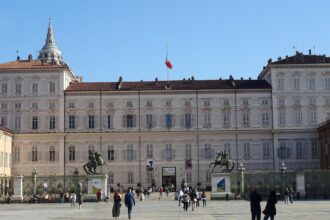
Piazza Castello is Turin’s grand central square and the natural starting point for exploring the historic centre on foot. Framed by porticoed streets, elegant cafés and some of the city’s most important buildings, it has functioned as the ceremonial heart of Turin since the days when the House of Savoy ruled from the palace at its northern edge.
At the centre of the square sits Palazzo Madama, a genuinely striking building that combines a medieval castle core with an eighteenth century baroque facade added later by architect Filippo Juvarra, making it one of the more visually layered landmarks anywhere in the city. Just beyond it, the Royal Palace and Turin Cathedral sit within easy walking distance, meaning a single stroll around the piazza can take in three of the city’s most significant historic buildings without needing to plan a separate route for each one.
The square itself costs nothing to visit and works well at almost any time of day. Mornings bring a gentler, more local atmosphere as residents cut across on their way to work, while evenings see the porticoes fill with people meeting for an aperitivo before dinner, a genuinely Turinese ritual well worth experiencing at least once during your stay in the city.
Piazza Castello also connects directly onto Via Roma and Via Po, two of the city’s grandest arcaded shopping streets, both worth a wander in their own right for the architecture alone, even if you have no particular interest in the shops lining them. Together, this stretch of the city genuinely forms the natural backbone of a first day exploring Turin entirely on foot, without needing to touch public transport at all.
Discover Turin’s Hidden Underground Tunnels
Most visitors spend their time admiring Turin’s elegant piazzas, royal palaces and grand boulevards, but beneath the streets lies a completely different city. The Turin Underground Tunnels Tour takes you below ground to explore 18th-century military passages, hidden corridors and Second World War air raid shelters, revealing a side of Turin that few visitors ever experience.
Accompanied by an expert guide, you’ll descend around 15 metres (50 feet) below the city streets to discover the network of tunnels that once played a vital role in defending Turin and protecting its residents. Some of these passages were originally constructed during the 18th century as military escape routes and strategic corridors, while others were later converted into air raid shelters during World War II, offering refuge during Allied bombing raids.
Along the way you’ll hear fascinating stories about Turin’s military history, ancient legends and mysterious underground world, as well as learning more about landmarks on the surface, including the Cathedral of Saint John the Baptist, home to the famous Holy Shroud of Turin. The tour also explains how the city’s underground infrastructure developed over centuries and why so much of Turin’s history remains hidden beneath modern streets.
The experience lasts around 2½ to 3 hours and begins outside the Pietro Micca Museum, itself dedicated to the siege of Turin and the city’s military past. Because much of the tour takes place underground, it isn’t suitable for visitors with limited mobility, but anyone with an interest in history, architecture or unusual attractions will find it one of the city’s most memorable experiences. If you’ve already seen Turin’s main sights above ground, this tour offers a fascinating opportunity to discover the secret city beneath your feet.
Tour the Royal Palace of Turin
The Royal Palace of Turin, known in Italian as the Palazzo Reale, served as the primary residence of the House of Savoy for centuries and remains one of the most complete royal interiors anywhere in Italy. Its relatively plain exterior gives little away, which makes the transition into the ornate state rooms inside genuinely striking the first time you walk through.
Highlights include the lavish ceremonial staircase, a throne room dripping in gilt and red velvet, and a series of state apartments filled with period furniture, tapestries and paintings collected across generations of Savoy rule. The palace also connects directly to the Royal Armoury, home to one of the largest collections of historic weaponry in the world, an unexpected but genuinely fascinating addition for visitors who assumed a royal palace tour would be entirely furniture and frescoes.
Behind the palace, the Royal Gardens offer a formally landscaped green space that makes a pleasant place to sit after touring the interior, particularly on a warm afternoon when the shaded pathways offer welcome relief from the sun. The gardens are generally free to enter even when the palace itself requires a ticket, making them a worthwhile stop even for visitors on a tighter schedule.
As part of the wider Savoy Residences UNESCO World Heritage Site, alongside the Reggia di Venaria a short trip outside the city, the Royal Palace is genuinely one of the best places in Turin to understand how deeply the Savoy dynasty shaped both the city and the wider Piedmont region. A standard ticket typically runs to €15 (£13 / $17.50), with combined tickets covering the Armoury available for a modest supplement on top of the base entrance fee.
Search routes and flight options for your trip to Turin.
Search flightsUse an eSIM to get online without hunting for a local SIM after arrival.
See eSIM optionsHave a private airport pickup arranged before you travel.
Book a transferAdmire Palazzo Madama
Already glimpsed from Piazza Castello, Palazzo Madama genuinely deserves a proper visit in its own right rather than simply a photograph taken from outside its front steps. Few buildings in Turin capture the city’s layered history quite as neatly, since the structure quite literally combines a medieval fortress core, built on the site of an ancient Roman gate, with an elegant eighteenth century baroque facade added centuries later.
The building takes its name from two so called “madame reali”, royal women of the Savoy dynasty who used the palace as their residence during the seventeenth and eighteenth centuries, and their influence is still visible in the grand staircase and formal rooms designed during that period. Today, Palazzo Madama houses Turin’s Civic Museum of Ancient Art, with a collection spanning painting, sculpture, ceramics and decorative arts from the medieval period through to the eighteenth century.
One of the more unexpected highlights is the chance to descend into the medieval towers and foundations beneath the baroque shell, where the building’s earlier defensive history becomes far more tangible than the elegant facade above might suggest. The contrast between the fortified stonework below and the gilded rooms above is genuinely one of the more memorable transitions found in any museum across the whole city.
Standard admission runs to €10 (£8.50 / $12), making it noticeably cheaper than either the Egyptian Museum or the Royal Palace nearby, and the relatively compact scale of the collection means a full visit fits comfortably into an hour or two at most. Given its central location right on Piazza Castello, it pairs naturally with a wider walking tour of the surrounding squares, arcades and side streets nearby.
Discover Turin Cathedral
Turin Cathedral, dedicated to Saint John the Baptist and known locally as the Duomo di Torino, is the city’s only genuine example of Renaissance architecture, standing out among the largely baroque buildings that surround Piazza Castello and the historic centre. Completed in the late fifteenth century, its relatively restrained white marble facade offers a deliberate contrast to the more elaborately decorated churches found elsewhere in the city.
The cathedral’s real fame, however, rests on what it holds rather than how it looks from outside. This is the home of the Shroud of Turin, the linen cloth long associated with the burial of Jesus Christ and one of the most studied and debated religious relics anywhere in the world. The shroud itself is rarely on public display, kept in a specially controlled chapel and shown only during infrequent, carefully announced exhibition periods, but a dedicated museum nearby explores its history, scientific study and cultural significance in considerable depth even when the original is not on view.
Attached to the cathedral is the Chapel of the Holy Shroud, designed by architect Guarino Guarini and considered one of the finest examples of baroque architecture anywhere in Piedmont. Its distinctive dark stone dome, built using a striking geometric pattern of interlocking arches, was badly damaged by a fire in 1997 and has since undergone a lengthy and painstaking restoration.
Entry to the cathedral itself is free, making it an easy addition to any walking route through the historic centre. The chapel and adjoining museum occasionally carry a modest admission charge depending on current exhibitions, so it is worth checking ahead if visiting the shroud related exhibits specifically is a priority for your trip.
Ride the Historic Sassi–Superga Tramway
Few attractions in Turin combine transport nostalgia and genuine scenery quite as neatly as the Sassi–Superga tramway, a rack railway that has been carrying passengers up the hillside east of the city since 1884. Rather than simply a way of getting somewhere, the journey itself is a big part of the appeal, climbing steeply through wooded slopes on vintage rolling stock that still evokes its nineteenth century origins.
The tramway departs from the Sassi station, itself easily reached by regular city bus from the centre, and climbs roughly three kilometres up a gradient steep enough to require a rack and pinion system rather than standard adhesion. The ride takes around twenty minutes, and the carriages themselves, with their wooden interiors and old fashioned brass fittings, feel genuinely like stepping into a different era rather than a modern tourist attraction dressed up to look historic.
As the tram climbs, views open up steadily across the city and the Po valley below, with the Alps visible on a clear day stretching along the horizon behind Turin’s rooftops. The final approach to the top station delivers the payoff for the whole trip, arriving directly beside the Basilica of Superga, which is covered in more detail in the following section of this guide.
Tickets are inexpensive, generally only a few euros each way, and the tramway typically runs on a limited schedule rather than continuously throughout the day, so it is worth checking current departure times in advance rather than simply turning up and hoping for the best. GTT, Turin’s public transport operator, publishes the seasonal timetable and fares, and the tramway does not run every day of the week. Weekends in particular can see queues build for the more popular departure slots during the summer months, so arriving a little earlier than planned is generally a sensible precaution.
Enjoy the Views from Superga Basilica
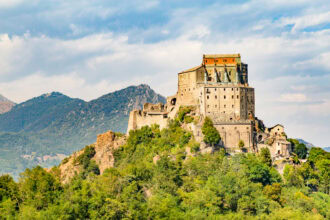
Perched on a hilltop east of the city, the Basilica of Superga is genuinely one of Turin’s most rewarding attractions, combining architectural grandeur with some of the finest panoramic views anywhere in the region. Commissioned by Duke Victor Amadeus II of Savoy in fulfilment of a vow made during a battle in 1706, the basilica was designed by architect Filippo Juvarra and completed in 1731 in a style that manages to feel both monumental and remarkably light given its scale.
The domed basilica also serves as the royal crypt of the House of Savoy, with several kings and other members of the dynasty interred beneath the main church, giving the site a genuine dynastic weight beyond its architectural beauty alone. Visitors can tour both the church interior and, for a modest extra fee, climb into the dome itself for an even more expansive view across Turin and the surrounding Alpine foothills.
Superga also carries a much sadder chapter of more recent history. In 1949, an aircraft carrying the entire Torino football team, then one of the strongest sides in Europe, crashed into the hillside just behind the basilica in thick fog, killing everyone on board. A memorial plaque marks the crash site, and the tragedy remains deeply significant to football fans across Italy, adding a genuinely reflective note to what is otherwise a purely scenic and historical visit.
The basilica is most commonly reached via the historic Sassi–Superga tramway covered in the previous section, though it is also accessible by road for visitors with a car or taxi. Entry to the church itself is generally free, with a small charge applying to the crypt and dome, and the site is well worth combining with the tram journey as a single half day excursion from the city centre.
Relax in Parco del Valentino
Parco del Valentino is Turin’s largest and most popular green space, stretching along the banks of the Po river close to the city centre and offering a genuinely welcome break from museums and monuments if you need one during a busy trip. Wide tree lined paths, riverside benches and open lawns make it a natural spot for a picnic, a jog, or simply somewhere to sit and watch the city go by for an hour.
The park’s most distinctive feature is the Borgo Medievale, a carefully reconstructed medieval village and castle built for the 1884 General Italian Exhibition. Though entirely a nineteenth century creation rather than an authentic medieval survival, the level of detail is genuinely convincing, with cobbled lanes, artisan workshops and a small fortified castle that visitors can tour for a modest admission fee, making it feel considerably older than it actually is.
Elsewhere in the park, Castello del Valentino, a genuine seventeenth century Savoy residence and now part of the local university, sits closer to the river’s edge and is recognised as part of the wider Savoy Residences UNESCO listing alongside the Royal Palace and Reggia di Venaria. Its formal French style gardens are open to wander even when the building itself is not accessible to the public.
The park is entirely free to enter and works well at almost any time of year, though spring and early autumn tend to bring the most pleasant weather for a proper walk. Rowing clubs based along the river add a genuinely pleasant, active atmosphere on weekend mornings, and the park connects easily on foot to both the university district and the wider riverside paths covered later in this guide.
Experience Italy’s Automobile Museum
Given that Turin was the historic heart of Italy’s car industry, home to Fiat and the wider automotive supply chain that grew up around it, it makes sense that the city is also home to one of the finest automobile museums anywhere in the world. The National Automobile Museum, known locally as MAUTO, traces the history of the car from its earliest experimental beginnings through to contemporary design, and it is a genuinely fascinating visit even for people who would not otherwise call themselves car enthusiasts.
The collection spans more than two hundred vehicles, arranged thematically rather than in strict chronological order, covering everything from early steam and electric prototypes through to iconic Italian sports cars and the mass produced models that transformed everyday transport across the twentieth century. Interactive displays explore the wider cultural and industrial impact of the automobile, situating individual cars within the broader story of design, engineering and social change rather than simply lining them up as static exhibits.
Fiat inevitably looms large throughout the museum, reflecting the company’s outsized role in shaping both Turin and the wider Italian economy over the past century, but the collection extends well beyond a single manufacturer to include vehicles from across Europe and beyond. Temporary exhibitions rotate regularly, often focusing on specific design movements, motorsport history or individual iconic models.
MAUTO is located a little further from the historic centre than most of the attractions covered in this guide, close to the river on Corso Unità d’Italia, and is easily reached by tram or bus in around fifteen to twenty minutes from central stops. Standard admission runs to around €12 (£10 / $14), and the museum is well worth building into a half day itinerary alongside Parco del Valentino nearby.
Browse hostels and budget-friendly stays around Turin.
See hostelsGet help with compensation, eligible lounge access and disruption support.
Explore AirHelp+Use convenient luggage storage around Turin between arrival, check-in and departure.
Check storageTake a Tour of Juventus Stadium
For football fans, a tour of Juventus Stadium, officially known today as the Allianz Stadium, is genuinely one of the most compelling reasons to visit Turin at all. Home to one of Italy’s most successful and decorated clubs, the stadium opened in 2011 on the site of the old Stadio delle Alpi and remains one of the more modern, purpose built football grounds anywhere in Europe.
Guided stadium tours take visitors through areas normally closed to the public on matchdays, including the players’ tunnel, the dressing rooms, and pitchside access that gives a genuine sense of scale you simply cannot appreciate from the stands alone. Tours typically run throughout the week outside matchdays and last around an hour, with an audio guide available in multiple languages for visitors exploring at their own pace rather than as part of a group.
Adjacent to the stadium, the J-Museum tells the story of Juventus in considerable depth, from the club’s founding in 1897 through to its many domestic and European trophies, with a genuinely impressive trophy room that ranks among the most decorated collections in world football. Interactive displays and match footage bring the club’s history to life for supporters and casual visitors alike, and the museum works well combined with a stadium tour on the same visit.
The stadium sits in the Continassa district north of the city centre, roughly seven kilometres from Porta Nuova station, and is best reached by metro to Bernini station followed by a short bus connection, or a regional train to the nearby Venaria Reale Rigola Stadio stop, a route covered in far more detail in our dedicated guide to reaching Juventus Stadium from across the city.
Sample Turin’s Café and Chocolate Culture
Turin takes its coffee and chocolate genuinely seriously, and spending an afternoon exploring the city’s historic cafés is one of the more understated pleasures of visiting. The city is widely credited as the birthplace of gianduja, the smooth hazelnut and chocolate paste that eventually inspired products sold globally, and it remains one of the best places in Italy to sample chocolate making traditions that stretch back well over two centuries.
The signature drink to try is bicerin, a layered mix of espresso, drinking chocolate and whipped cream served in a small glass, traditionally at Caffè Al Bicerin near Piazza della Consolata, a café that has been serving the drink in more or less the same form since the early nineteenth century. Several other historic cafés around the city, many with elaborate belle époque interiors of marble, velvet and gilt mirrors, offer their own versions worth comparing over the course of a longer stay.
Beyond bicerin, Turin’s chocolate shops are worth seeking out in their own right, particularly around the arcaded streets near Piazza San Carlo, where artisan producers continue making gianduja and other chocolate specialities using techniques passed down across generations. Many offer tastings alongside sales, making a chocolate focused walking route a genuinely enjoyable way to explore parts of the city centre you might otherwise walk straight past.
Aperitivo culture is equally strong here, with early evening drinks in the historic cafés around Piazza Castello and Via Po typically accompanied by a generous spread of snacks included in the price of your drink, a tradition that makes Turin a genuinely good value city for a relaxed evening out. Timing a visit around late afternoon or early evening lets you experience both traditions in a single, unhurried outing.
Browse Porta Palazzo Market
Porta Palazzo Market is one of the largest open air markets anywhere in Europe, and a genuinely brilliant way to see a side of Turin that most museum focused itineraries miss entirely. Spread across a large square just north of the historic centre, the market has operated in some form since the eighteenth century and today draws both locals doing their weekly shopping and visitors curious to see the city’s food culture up close.
Stalls sell everything from fresh Piedmontese produce, cheeses and cured meats through to clothing, household goods and secondhand items, with the atmosphere considerably busier and more chaotic than the elegant arcaded streets found elsewhere in central Turin. Saturday mornings are genuinely the best time to visit, when the market reaches its fullest scale and the widest range of stalls set up across the square.
Within the market complex, the covered Mercato Centrale building offers a more curated, sit down food hall experience, with individual vendors serving everything from regional Piedmontese specialities to pizza and craft beer, making it a genuinely good option for lunch if the open air stalls outside feel overwhelming for a first visit. It works particularly well as a lower cost, more casual alternative to a sit down restaurant meal elsewhere in the city.
Porta Palazzo sits within easy walking distance of the historic centre, making it simple to combine with a morning spent at Piazza Castello or the Egyptian Museum before heading over for lunch. Note that the market is considerably quieter on Sundays and largely closed on Mondays, so plan your visit for earlier in the week if experiencing it at full scale is a genuine priority for your trip.

Spend an Evening Along the River Po
The Po river runs directly through Turin, and spending an evening along its banks is genuinely one of the more relaxed, low cost ways to experience the city outside its museums and monuments. Murazzi del Po, the stretch of riverside embankment closest to the historic centre, has long been associated with the city’s nightlife, with bars and small venues built directly into the old stone arches lining the water’s edge.
Further along, the paths through Parco del Valentino, covered earlier in this guide, offer a quieter riverside walk during the day, with rowing clubs, joggers and cyclists making regular use of the paths alongside the water. As evening falls, the same stretch takes on a noticeably calmer, more romantic atmosphere, particularly around sunset when the light catches the surface of the river and the surrounding trees.
For a slightly different perspective on the city, short river cruises operate seasonally along this stretch of the Po, offering views of Turin’s riverside architecture and the wooded hills beyond from the water itself rather than from the surrounding streets. These trips are generally brief and inexpensive, making them an easy addition to an otherwise unplanned afternoon rather than something that needs booking far in advance.
Whichever stretch you choose, the riverside works well as a genuine change of pace after a day spent moving between museums and monuments in the city centre. Combining a late afternoon walk along the Po with dinner at one of the restaurants overlooking the water is a genuinely pleasant way to close out a day in Turin, particularly during the warmer months when outdoor riverside seating tends to fill up quickly shortly after sunset.
Museums You Shouldn’t Miss
Beyond the headline attractions covered earlier in this guide, Turin has a genuinely deep bench of smaller museums worth knowing about, particularly if you are staying more than a couple of days or have specific interests to follow. The city’s museum density is one of the more underrated things about it, and several of these smaller collections are excellent even though they rarely make it onto a first time visitor’s shortlist.
The Galleria Sabauda houses an important collection of European paintings assembled by the House of Savoy over several centuries, including significant works by Flemish, Dutch and Italian masters, and since 2014 has occupied the Manica Nuova of the Royal Palace as part of the Musei Reali complex, making it easy to combine with the Royal Palace and Royal Armoury on a single ticket. Meanwhile, GAM, the Civic Gallery of Modern and Contemporary Art, offers a strong collection of nineteenth and twentieth century Italian art in a considerably less crowded setting than Turin’s more famous museums.
For natural history enthusiasts, the Museo Regionale di Scienze Naturali, Turin’s regional natural sciences museum, reopened in 2024 after more than a decade closed and now shows its zoological, palaeontological and entomological collections alongside interactive projections. Meanwhile, the Pietro Micca Museum, built around a genuine network of underground military tunnels beneath the city, offers a genuinely unusual, slightly eerie experience for visitors interested in Turin’s military history rather than its art and architecture.
If your schedule allows, the Torino+Piemonte Card can offer meaningful savings across several of these smaller museums plus the bigger attractions covered earlier in this guide, particularly if you are planning to visit four or more paid sites during your stay, so it is genuinely worth comparing the combined cost before buying individual tickets one at a time.
Save Money with a Turin City Card
Turin’s biggest attractions genuinely add up quickly if you buy tickets one at a time, and the city’s official Torino+Piemonte Card exists specifically to bring that cost down for visitors planning to see more than a couple of paid sights. Rather than a transport pass, this is a museum and attraction card, covering free or discounted entry to dozens of sites across both Turin and the wider Piedmont region.
The card comes in four durations to match different lengths of stay. The 24-hour card costs €29.90 (£26 / $35) and covers free entry to a maximum of three attractions, which suits a single intensive day of sightseeing. The 48-hour card runs to €39.90 (£34 / $47), the 72-hour card to €45.90 (£40 / $54), and the 120-hour card to €52.90 (£46 / $62), with the longer versions removing the three attraction cap entirely and opening up free entry across the full participating list for as long as the card remains valid.
To see where the genuine savings kick in, it helps to work through the numbers using Turin’s own admission prices covered earlier in this guide. Individual tickets for the Egyptian Museum, the Mole Antonelliana combined ticket, and the Royal Palace alone come to somewhere in the region of €56 (£48 / $65), already well above the cost of the 24-hour card and comfortably exceeding it once discounts on top of free entry are factored in. Add Palazzo Madama and MAUTO to that same itinerary across a longer stay, and the total climbs past €78 (£67 / $91) individually, against €45.90 (£40 / $54) for the 72-hour card covering all five. For a family bringing one child under twelve, who typically travels free alongside a paying adult on the card, the maths becomes considerably more favourable still.
Whether the card genuinely makes sense for your trip depends entirely on how many paid attractions you are actually planning to visit. Anyone building a museum heavy itinerary around the Egyptian Museum, the Royal Palace, Palazzo Madama and similar sights will typically save money from the third attraction onward, while visitors mainly focused on free sights like Piazza Castello, the riverside, or Porta Palazzo Market may not use enough of the card to justify the upfront cost. Our full Torino + Piemonte Card guide breaks down which version suits different lengths of stay, exactly which attractions are included, and how to activate the card correctly to get full value from it.

Family-Friendly Attractions
Turin is a genuinely underrated destination for families, offering a good mix of hands on attractions alongside the more traditional museums and monuments covered earlier in this guide. Several of the city’s biggest draws work well for children as much as adults, and a handful of dedicated attractions make it easy to build a full day around younger visitors specifically.
The National Automobile Museum, covered in more detail earlier, tends to go down particularly well with children thanks to its interactive displays and the sheer visual appeal of the vehicles on show, even for kids with no particular interest in cars beforehand. Similarly, the Borgo Medievale within Parco del Valentino offers a genuinely immersive, castle like setting that younger visitors often respond to more enthusiastically than a traditional gallery or museum interior.
For a dedicated science focused outing, the Museo Regionale di Scienze Naturali pairs skeletons, mastodon models and interactive videomapping with displays that hold children’s attention well, while Zoom Torino, an immersive zoo built around open habitats rather than cages, located around forty five minutes outside the city in Cumiana, offers a genuinely enjoyable half day trip for families wanting a full break from indoor sightseeing entirely. Parco del Valentino itself also has open lawns and play areas well suited to letting energetic children run around between more structured activities.
Public transport in Turin is generally straightforward for families, with prams and pushchairs well accommodated on the metro and most tram routes, and central attractions positioned close enough together that a family group rarely needs to plan long transfers between sights. Combined with the city’s relatively manageable size compared to somewhere like Rome or Milan, Turin genuinely works well as a family friendly city break rather than purely a destination for adult culture seekers.
Festivals, Christmas Markets and Seasonal Events
Turin’s calendar of festivals and seasonal events is genuinely worth checking before booking a trip, since the right timing can add a whole extra dimension to a visit that might otherwise focus purely on museums and monuments. The city takes its cultural calendar seriously, and several events draw visitors from well beyond the immediate region.
Winter is arguably Turin’s strongest season for atmosphere. The city’s Christmas markets, particularly around Piazza San Carlo and Piazza Castello, run from late November through early January, with wooden stalls selling crafts, food and mulled wine against a backdrop of illuminated arcades and squares. Turin also hosts one of Italy’s most spectacular light installations each December, with elaborate illuminated artworks strung across streets throughout the historic centre rather than simple string lights, a tradition the city has become genuinely known for nationally.
Cinema fans should look out for the Torino Film Festival, held each November and one of Italy’s most respected film events outside the bigger Venice festival, fitting neatly given the city’s status as the birthplace of Italian cinema and home to the National Cinema Museum covered earlier in this guide. Meanwhile, food and wine focused visitors should watch for events tied to the wider Piedmont region’s harvest season in autumn, when Turin often serves as a base for truffle and wine focused excursions into the surrounding countryside.
Summer brings a different rhythm entirely, with outdoor concerts, riverside events along the Po and extended café terrace hours making the warmer months a genuinely pleasant time to combine sightseeing with a more relaxed, outdoor paced visit. Whichever season you choose, checking the local events calendar before finalising your dates can genuinely reshape how you plan your time in the city.

Rupert’s Handy Travel Tips
Turin rewards a bit of planning, so here’s what I’d want to know before exploring the city.
- Book the Egyptian Museum and Mole Antonelliana in advance: both are extremely popular and timed entry slots can sell out during peak season, especially at weekends.
- Compare a city card before buying individual tickets: the Torino+Piemonte Card can work out cheaper if you’re visiting four or more paid attractions during your stay.
- Check the Sassi–Superga tramway timetable first: it runs on a limited schedule rather than continuously, so confirm departure times before heading to Sassi station.
- Visit Porta Palazzo Market on a Saturday: it’s considerably quieter on Sundays and largely closed on Mondays, so time your visit for earlier in the week.
- Save the panoramic lift for late afternoon: the light over the Alps is genuinely at its best in the hour or so before sunset.
Want to meet the reindeer behind our travel tips? Find out more in our page Who is Rupert?.




Frequently Asked Questions
How many days do you need in Turin?
Two to three days covers the main attractions comfortably, including the Egyptian Museum, Mole Antonelliana and a walk around the historic centre. A longer stay allows time for Superga, a day trip, or the smaller museums covered in this guide.
What is Turin best known for?
Turin is known for the Egyptian Museum, the Shroud of Turin, its royal Savoy palaces, Italian cinema history, the automobile industry through Fiat, and its café and chocolate culture, particularly bicerin and gianduja.
Is the Egyptian Museum in Turin worth visiting?
Yes. It is the second most important collection of Egyptian antiquities in the world after Cairo, with more than 40,000 objects on display, and is widely considered one of Italy’s best museums.
Can you see the Shroud of Turin?
Only rarely. The Shroud is kept in a controlled chapel within Turin Cathedral and is displayed publicly only during infrequent, specially announced exhibition periods, though a dedicated museum nearby covers its history in depth at other times.
Is Turin walkable?
Yes, the historic centre is genuinely compact and pleasant to explore on foot, with Piazza Castello, Palazzo Madama, the Royal Palace and Turin Cathedral all within a short walk of one another.
How do I get to the Basilica of Superga?
The most scenic route is the historic Sassi–Superga rack tramway, a short bus ride from the city centre, though the basilica is also reachable by road for visitors with a car or taxi.
Is Turin good for families?
Yes. Attractions like the National Automobile Museum, the Borgo Medievale and Zoom Torino work well for children, and the city’s compact size and accessible public transport make it easy to manage with a family group.
Further Reading
If Turin is one stop on a wider Italian trip, our Trenitalia Pass guide explains how to book a set number of high speed journeys across the country, and our Italia in Tour Pass guide covers a regional alternative better suited to slower, more flexible travel around Piedmont and beyond.
Arriving by air, our Turin Airport to Turin City Centre guide covers every transfer option into the city, and if you’re continuing into the mountains afterwards, our Turin Airport to Ski Resorts guide explains the best routes from the terminal.
Football fans should also read our dedicated How to Get to Juventus Stadium guide, which covers every route from the city centre in detail, and if you have time to explore beyond Turin itself, our Best Day Trips from Turin guide rounds up the best excursions into Piedmont and the wider region. If you’re planning to visit several museums and palaces, our Torino + Piemonte Card guide explains whether the official city pass is worth buying.