Reviewed by our editorial team Published
Daugavpils is Latvia’s second-largest city, sitting on the Daugava river in the Latgale region in the country’s far southeast. It sits close enough to both Belarus and Lithuania that either border is reachable within a short drive, and Russia lies not much further beyond that.
The city carries a very different character to Riga’s Art Nouveau boulevards, shaped by centuries as a fortress town, a railway junction and a meeting point for Latvian, Russian, Polish, Belarusian and Jewish communities. That mixed heritage is still visible on almost every street, in the architecture, the churches and the languages you hear around the market.
One hill in the city centre carries four working churches from four different Christian traditions standing within sight of each other, a genuinely unusual sight even by Latvia’s diverse standards. A short walk away, a 19th-century Russian Imperial fortress, one of the largest ever built in Europe, has been converted into one of the region’s most significant contemporary art quarters.
Daugavpils is also, notably, the birthplace of Mark Rothko, the American abstract expressionist painter, who left Latvia as a child and never returned. The city has built a genuinely serious museum around that connection inside the old fortress, rather than settling for a token plaque.
This guide works through what actually makes Daugavpils worth the detour from Riga, starting with how to get there since the city has no airport of its own. From there it moves through the fortress and its arts quarter, the city’s museums, churches and parks, the riverside promenade, and the practicalities of getting around once you arrive.
Use the table below for a quick sense of what’s covered and roughly how long each stop deserves, then read on for the detail on prices, opening hours and what each place is genuinely like to visit.
| Attraction | What It’s For / Why Visit | Duration |
|---|---|---|
| Daugavpils Fortress (grounds) | Vast 19th-century Russian Imperial fortress turned cultural quarter, the anchor of a Daugavpils visit | 1-2 hours |
| Mark Rothko Art Centre | The only venue in Eastern Europe dedicated to Rothko, alongside rotating contemporary art shows | 1-1.5 hours |
| Daugavpils Ceramics Centre | Open-storage chamber holding over 500 contemporary ceramic pieces from 40 countries | 30-45 minutes |
| Church Hill | Four working churches from four Christian traditions standing within sight of each other | Around 1 hour |
| Regional History and Art Museum | The city’s oldest museum, covering Daugavpils and the wider Latgale region’s history | Around 1 hour |
| Unity House | Interwar civic hub housing the theatre, library and Latgale Culinary Heritage Centre | 20-30 minutes |
| Dubrovin Park | The city’s favourite green space, with a fountain and evening light show | 30-45 minutes |
| Daugava riverside promenade | Rebuilt riverside walking and cycling route lined with local wall murals | 30-60 minutes |
| Latgale Zoo | Small, hands-on family zoo with a weekly potter’s workshop | 1-1.5 hours |
| Jewish heritage museum | Museum and memorial sites preserving Daugavpils’s pre-war Jewish community | 45 minutes-1 hour |
| Rainis Memorial House, Berķenele | Childhood home of Latvia’s national poet, set in rural Latgale | Half-day trip |
How to Get There
Daugavpils has no significant airport of its own, so every visit starts with an overland journey, almost always from Riga. Daugavpils International Airport was a Soviet-era military airfield that never developed into a real commercial gateway, and the municipality voted in 2021 to wind down its operations entirely.
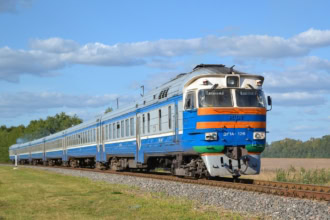
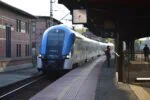
The most comfortable option is the train, run by Vivi, Latvia’s state passenger rail operator, on the line that continues on to Krāslava. Four trains run daily in each direction, and the journey takes roughly two hours 50 minutes to just over three hours depending on how many stops a particular service makes.
A standard one-way second-class fare on this route costs around €8.90 (£7.65/$10.40), making it one of the cheaper long-distance rail journeys in the Baltics for the distance covered. Trains depart from Rīga Central Station across the day, with early-morning, late-morning and evening departures giving enough flexibility for a day trip or an overnight stay.
Buses are the budget alternative, run by operators including Lux Express, FlixBus and Infobus, with around five departures a day between the two cities. They cost from roughly €7 (£6/$8.20) one way, though the journey typically takes longer than the train at around four hours, so the saving comes at the cost of comfort and time.
Driving covers the roughly 190km (118 miles) between Riga and Daugavpils in about two and a half hours on the A6 highway, a reasonable option for anyone planning to combine the trip with other stops in Latgale. Car hire is straightforward from Riga, and parking in central Daugavpils is generally easy to find and inexpensive compared with the capital.
However you arrive, Daugavpils itself is compact enough to explore on foot or by local bus once you’re there, with most of the attractions in this guide sitting within a manageable walk of the city centre or the fortress.
Daugavpils Fortress: Napoleon’s Battleground Turned Arts Quarter
Daugavpils Fortress is one of the largest and best-preserved 19th-century fortifications anywhere in Europe, built between 1810 and 1878 under Tsar Alexander I as a western defensive point for the Russian Empire. Around 10,000 workers laboured on it in two shifts over nearly seven decades, and the result is a vast ring of ramparts, bastions and red-brick barracks that still dominates the northern edge of the city.
The fortress saw genuine combat early on, when Napoleon’s forces attacked in 1812 with around 24,000 soldiers against a garrison of roughly 3,300 defenders, before construction had even finished. It went on to host Russian nobility travelling between St Petersburg and Western Europe, including several tsars, and later served as a Latvian military base until the Second World War.
Today the fortress functions as a genuine cultural quarter rather than a museum piece behind glass, with the Mark Rothko Art Centre, a ceramics storage gallery and several other institutions occupying its old arsenal and barrack buildings. Wandering the grounds costs nothing, and the mix of grassy ramparts, water-filled moats and repurposed 19th-century architecture makes it easy to spend an hour or two just walking the perimeter.
Surviving structures worth seeking out include the Engineering Arsenal, the old gunpowder warehouse, the Commandant’s House and the Nicholas Gate, one of the fortress’s original ceremonial entrances. A Baroque Jesuit church once stood inside the walls but was destroyed during the Second World War, and its footprint is one of the few visible scars from that period.
The fortress is a short walk or a quick taxi ride from the city centre, and its scale means it rewards at least half a day if you’re planning to see the Rothko Centre and the ceramics gallery inside it as well. Treat it as the anchor of a Daugavpils visit rather than a single stop, since most of the city’s best cultural attractions sit within its walls.
Best for a short trip. Compare rooms by neighbourhood, price and guest rating before you book.
Compare hotelsBest for longer stays. Whole apartments and houses, so you are not eating out three times a day.
View rentalsBest for double-checking. Runs the same search across several booking sites so you are not leaving money behind.
Compare pricesThe Mark Rothko Art Centre
The Mark Rothko Art Centre occupies the former artillery arsenal inside Daugavpils Fortress, and it’s the single reason many art-minded travellers make the trip to this city at all. Mark Rothko, one of the twentieth century’s defining abstract expressionist painters, was born in Daugavpils in 1903 before his family emigrated to the United States when he was ten.
The centre bills itself as a multifunctional hub for contemporary art, culture and education rather than a narrow shrine to one painter, and it’s genuinely the only venue in Eastern Europe dedicated to exploring Rothko’s work. Its more than 2,500 square metres of exhibition space host over 40 temporary shows a year alongside its permanent Rothko-related holdings.
It’s open Tuesday and Sunday from 11:00 to 17:00 and Wednesday to Saturday from 11:00 to 19:00, with Mondays closed, so it’s worth checking the day of the week before planning a visit around it. Ticket prices vary by exhibition rather than sitting at one fixed figure, so it’s worth checking the current admission before travelling.
Alongside the exhibitions, the centre runs artist symposia, workshops and educational programmes, and it has a café, gift shop and even accommodation for visiting artists, which gives it a genuinely working, lived-in feel rather than a static museum. Martinsons House, an adjacent building that opened in 2022, adds a further rotating exhibition space focused on ceramic art.
For up-to-date opening times, ticket prices and details of whatever exhibition is currently showing, the Mark Rothko Art Centre’s official website is the most reliable source, since programming changes throughout the year. Advance booking only tends to matter for group tours, and individual visitors can generally just turn up and buy at the door.
The Daugavpils Ceramics Centre
Inside the fortress’s 7th bastion casemate sits one of Latvia’s more unusual museum experiences, an open-storage chamber holding more than 500 pieces of contemporary ceramic art from artists across 40 countries. Rather than rotating a handful of pieces through a gallery, the Rothko Museum has put its entire ceramics collection on permanent public display, storage racks and all.
The collection has been built up since 2013 through the annual International Ceramic Laboratory Symposium, the Latvia Ceramics Biennale and targeted purchases, making it Latvia’s largest and most valuable repository of contemporary ceramic work. Visitors can see everything from raw clay and chamotte pieces through to fired stoneware and porcelain, covering a genuinely wide range of techniques in one room.
The chamber opened to the public in September 2023 and sits at Nikolaja iela 1, within the fortress grounds a short walk from the Rothko Centre itself. It’s open daily from 8:00am to 8:00pm, and unlike most of the fortress’s other cultural attractions, admission is completely free.
The restoration of the casemate that now houses the collection was supported by European Neighbourhood Instrument funding, and the open-storage format is still relatively rare in Latvia, which makes it a genuinely distinctive stop rather than a bolt-on to the Rothko Centre next door. It’s an easy add-on to a fortress visit rather than a destination in its own right, but well worth the short detour.
Because it sits inside the fortress rather than requiring a separate ticket or booking, it’s easy to combine with the Rothko Centre and a walk along the ramparts in a single half-day loop around the site. Go later in the day if you want quieter galleries, since school groups and coach tours tend to arrive earlier.
Church Hill’s Four Faiths
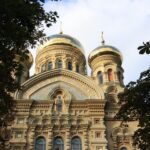
Church Hill, in the Jaunbūve district on 18. Novembra Street, is one of the more striking sights in Daugavpils: four working churches from four different Christian traditions standing within sight of each other on the same small rise. It’s a physical record of the city’s genuinely mixed religious history, one that survived multiple regime changes and periods of destruction largely intact.
The Martin Luther Cathedral, a Lutheran church built in 1893, anchors the site and includes a viewing platform roughly 40 metres up its tower, open April to September, weekdays and Saturdays 10:00 to 16:00 and Sundays 10:00 to 14:00. The climb rewards visitors with a genuine panorama over the hill’s other churches and the surrounding rooftops.
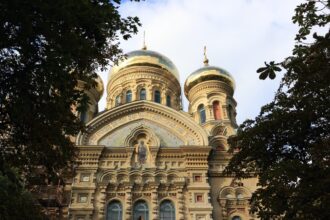
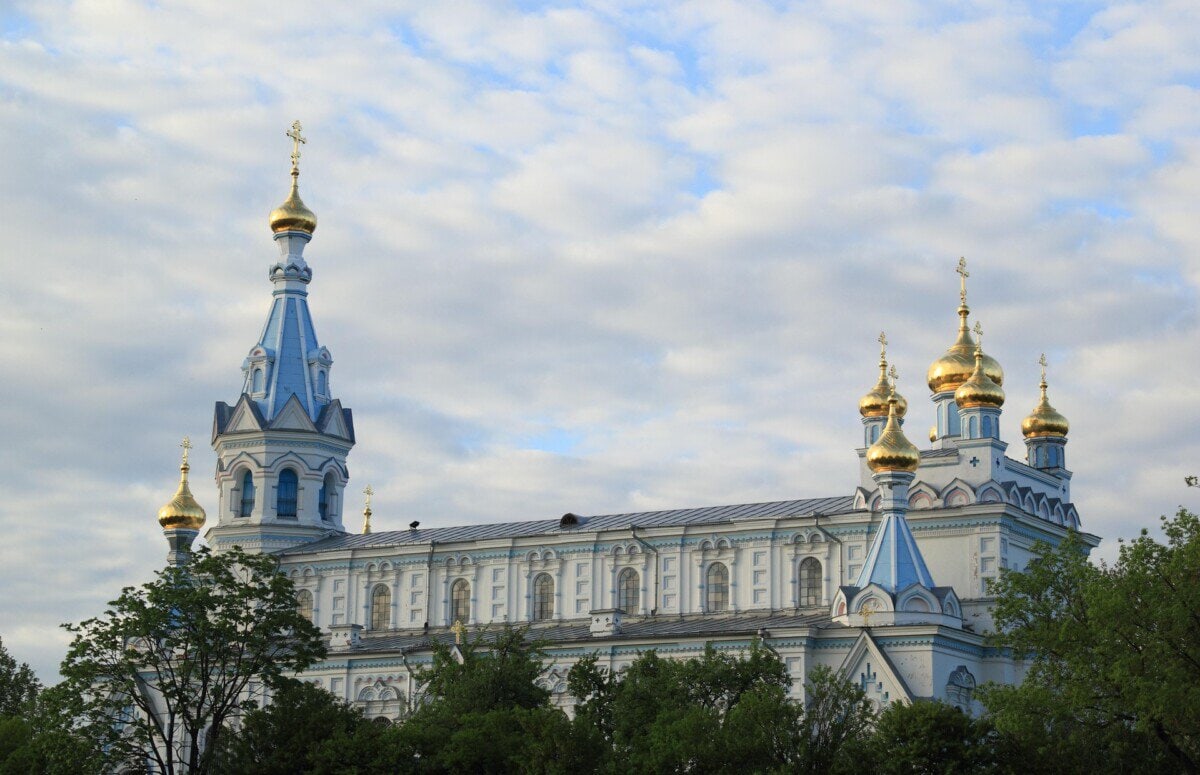
Alongside it stand the Roman Catholic Church of the Blessed Virgin Mary, built in 1905 and home to a 1909 organ made by Polish organ builder A. Homan, and the SS Boris and Gleb Russian Orthodox Cathedral, also completed in 1905, which began life as a garrison church for the fortress.
The fourth building, the Church of the Community of Old Believers, was built between 1908 and 1928 and represents a distinct branch of Russian Orthodoxy that split from the mainstream church in the 17th century. Between them, the four buildings cover Baroque, Neo-Gothic and Byzantine architectural styles within a single compact area.
Visiting is free and largely a matter of walking between the four buildings, though respectful dress and quiet behaviour are expected since these remain active places of worship rather than tourist sites. Give the hill around an hour, longer if the Lutheran cathedral’s tower happens to be open when you arrive.

Daugavpils Museum of Regional History and Art
Founded in 1938, this is one of the oldest and largest museums in the Latgale region and the only municipal museum in Daugavpils itself. It occupies a striking Art Nouveau building dating from 1883, itself a protected cultural and historical monument, which makes the setting almost as interesting as what’s inside.
The collection covers the cultural, historical, artistic and natural heritage of the wider Daugavpils region, spanning everything from archaeological finds to fine art and folk artefacts. It’s a useful stop for anyone wanting the fuller historical context behind the fortress, Church Hill and the city’s multi-ethnic past, rather than piecing it together from separate sites.
Opening hours run Monday 10:00 to 16:00, Tuesday to Saturday 10:00 to 18:00, and Sunday 10:00 to 16:00, giving reasonably generous access across the week. Guided excursions are available in Latvian and Russian by prior arrangement, useful for visitors wanting more depth than the exhibits alone provide.
The museum doesn’t publish its admission price prominently online, so it’s worth checking or calling ahead if cost matters to your planning, though regional museums of this kind in Latvia are typically inexpensive by Western European standards. Budget around an hour for a proper look through the main galleries.
It sits within easy walking distance of the city centre, making it simple to combine with Unity House or a stroll along Rīgas Street on the same outing. It’s a quieter, less-visited stop than the fortress, which makes it a good choice for travellers who prefer museums without crowds.
Unity House and the Daugavpils Theatre
Unity House, or Vienības nams, opened in December 1937 as one of the most architecturally ambitious buildings of Latvia’s interwar independence period, blending classical proportions with functionalist design. It was funded partly through public donations under President Kārlis Ulmanis’s initiative, genuinely intended to bring the city’s cultural and civic life under one roof.
That original vision is still largely true today: the building houses the Daugavpils Theatre, the Latgale Central Library, the House of Traditions and the Latgale Culinary Heritage Centre, all under the same address at 22a Rīgas Street. It’s as much a working civic hub as a heritage building, with a café and banking services alongside its cultural functions.
The Daugavpils Theatre itself stages a regular programme of Latvian and Russian-language productions, and while a language barrier makes a full performance a big ask for most foreign visitors, checking the current schedule is worth it if timing happens to align. The building’s interwar architecture alone justifies a look inside the foyer even without booking a show.
Unity House is also home to the city’s Tourist Service Centre, which makes it a sensible first stop for maps, advice and bookings for things like the retro tram tour or guided excursions elsewhere in the city. Staff here can also confirm current opening hours and prices for attractions that don’t publish them clearly online.
Visiting the building itself is free, and it sits right in the city centre, making it an easy combination with Dubrovin Park or the Daugava promenade on the same walk. Give it 20 to 30 minutes unless you’re specifically there for the theatre programme or the tourist centre’s services.
Dubrovin Park: Daugavpils’s Favourite Fountain and Evening Light Show
Dubrovin Park sits between Rīgas and Parādes streets in the heart of Daugavpils, and it’s the city’s favourite green space for exactly the reasons you’d expect: shade, a fountain and somewhere pleasant to sit away from traffic. It’s named after Pavel Dubrovin, the city’s mayor from 1876 to 1890, who championed the park’s development during his time in office.
A bronze statue of Dubrovin, roughly two metres tall and created by sculptor Alexander Taratynov in 2007, stands as the park’s centrepiece and gives the space its clearest sense of history. Nearby, a Soviet-era memorial to Red Army soldiers is a reminder that the park’s story spans several very different political periods.
The park’s fountain is its real draw in summer, offering genuine relief from the heat during the day and a proper light show after dark, when the water is lit for evening visitors. It’s a popular spot for locals rather than tourists, which gives it an authentic, lived-in feel.
There’s no admission charge and no fixed opening hours beyond general daylight access, so it works well as a quick stop between the fortress and the city centre or as an evening walk after dinner. 30 to 45 minutes is enough for most visitors, longer if you’re happy to just sit and watch the fountain.
It’s within easy walking distance of Unity House and the Daugavpils Museum of Regional History and Art, so it slots naturally into a city-centre walking loop rather than needing a special trip of its own. Combine it with a coffee stop nearby before continuing on to the riverside promenade.
Best if you can move a day either way. Shows how the fare changes across the month.
Compare flightsBest if you want maps and messaging working the moment you switch your phone on.
See eSIM plansBest if you would rather not work out the transport on arrival. Book it now and forget it.
View transfersThe Daugava Riverside Promenade
Daugavpils takes its name from the Daugava river, and the city has invested seriously in giving that river a proper public frontage rather than leaving it as a service backwater. The clearest example is the 1.2-kilometre promenade along Bruģu Street on the river’s right bank, running from 18. Novembra Street to Ūdensvada Street.
The promenade was rebuilt with separate pedestrian and cycle lanes, new lighting, safety railings, benches and even outdoor exercise equipment, funded largely through the European Regional Development Fund. It’s a genuinely modern piece of public infrastructure rather than a token riverside path, and it shows in how well used it is by joggers, cyclists and evening strollers.
A distinctive touch is the series of wall murals depicting the history of the surrounding Ģajok district, coordinated by the city’s chief municipal artist and painted over what was previously a stretch of unofficial graffiti. They add a genuine sense of place rather than generic decoration.
Rīgas Street, the city’s main pedestrianised shopping street, connects into this riverside network and is worth combining with a promenade walk if you want cafés and shops alongside the river views. Neither the promenade nor Rīgas Street charges admission, and there’s no fixed schedule beyond daylight hours.
Half an hour to an hour covers a decent stretch of the promenade at a relaxed pace, and it pairs naturally with Dubrovin Park or a visit to the fortress, which sits a short distance further along the riverbank.
Latgale Zoo: Hands-On Animals and a Weekly Potter’s Workshop
Latgale Zoo, at Vienības iela 27, is a small but genuinely engaging city zoo that leans toward hands-on encounters rather than large-scale animal enclosures. Its residents include spotted pythons, spectacled caimans, red koi carp and playful macaques and sugar gliders, alongside more familiar rabbits and guinea pigs that younger visitors can get close to.
It’s a good option for families travelling with children who might otherwise find the fortress and museums a bit dry, and the zoo runs a potter’s workshop every Wednesday from 12:00 to 14:00 for anyone wanting a hands-on activity alongside the animals. Feeding exotic fish is another regular hands-on feature.
Opening hours run Wednesday to Sunday from 10:00 to 18:00, with the zoo closed on Mondays and Tuesdays, so it’s worth checking the day of the week before planning a visit specifically around it. Admission pricing isn’t published in the zoo’s own materials, so confirming the current rate before travelling is sensible.
The zoo sits a short walk or quick bus ride from the city centre, making it easy to combine with Unity House or Dubrovin Park earlier in the same day. It’s not a major wildlife destination in the way a national zoo would be, but it’s a pleasant, low-key stop that fills an hour or so nicely, especially for families.
Budget an hour to ninety minutes for a full visit, including the potter’s workshop if your timing lines up with a Wednesday. It’s one of the few genuinely child-focused stops in this guide, worth prioritising if travelling with younger children.
Jewish Heritage in Daugavpils and Latgale
Before the Second World War, Daugavpils had one of Latvia’s largest Jewish communities, making up roughly 27% of the city’s population in 1930 and shaping much of its commercial and cultural life. That history was devastated by the Holocaust: the Daugavpils Ghetto operated from June 1941 to October 1943, and historians estimate that somewhere between 13,000 and 16,000 Jews from the city and surrounding towns were murdered, with only around 100 survivors.
The main memorial sites sit outside the city centre, including the Mežciems forest memorial commemorating the victims of the ghetto and the wider genocide against Latgale’s Jewish population, the location of one of the largest single massacres in November 1941. These are sobering, quiet sites rather than tourist attractions, and worth visiting with that in mind.
In the city itself, the Museum “Jews in Daugavpils and Latgale”, at Cietokšņa 38 within the fortress area, preserves the region’s Jewish heritage through photographs, documents, religious objects including a Sefer Torah, and personal testimonies. Today only around 200 Jews live in the wider Latgale region, with just over 150 in Daugavpils itself, making the museum’s preservation work genuinely urgent rather than purely historical.
The museum offers guided tours by arrangement and accepts donations to support its ongoing heritage work, and it’s a meaningful, low-key stop for anyone wanting to understand a part of Daugavpils’s history that the fortress and Church Hill don’t fully cover on their own. Confirm current opening hours directly with the museum before visiting, since these aren’t consistently published online.
Together, the memorial sites and the museum give Daugavpils’s Jewish history the weight it deserves, and they’re worth building into an itinerary alongside the fortress rather than treated as optional extras. Allow 45 minutes to an hour for the museum, plus separate time if visiting the Mežciems memorial, which sits a taxi ride from the centre.
The Rainis Memorial House in Berķenele
A short drive from central Daugavpils, in the village of Berķenele, sits the childhood home of Jānis Rainis, widely regarded as Latvia’s greatest poet and a defining figure of the national awakening that preceded independence. The house has been preserved and turned into a memorial dedicated to his early life and the rural Latgale surroundings that shaped him.
Rainis was born in 1865 and spent part of his childhood at this rural estate, and the memorial house uses that connection to explore both his personal story and the wider literary and political movement he became part of as an adult. For readers already familiar with Rainis’s poetry and plays, seeing the actual landscape behind it adds a layer that a city-centre plaque couldn’t.
The site functions partly as tourist accommodation as well as a memorial, meaning it’s set up for visitors who want to actually spend time in the setting rather than just pass through on a quick stop. That makes it a slightly different kind of attraction to everything else in this guide, worth building a little extra time around.
Because it sits outside the city itself, visiting realistically requires your own transport or a taxi rather than a casual walk-in, and it’s best treated as a half-day add-on for travellers with a car rather than a core stop for anyone relying purely on trains and buses. Confirm current opening arrangements directly before making the trip, since access can depend on prior booking.
Retro Tram Tours and Getting Around
Daugavpils runs one of the more charming ways to get an overview of a city: a retro tram tour using authentic mid-20th-century trams built at the Riga Wagon Factory, still running on the city’s working tram network. The tour combines tram routes 1 and 3 into a single loop covering roughly 16 kilometres and taking around an hour.
Two trams are used for these tours, a smaller 24-seat tram with tables, well suited to small groups or families, and a larger 36-seat tram without tables for bigger parties. Tours can include a guide covering the city’s history and landmarks, and the trams double as venues for private events like birthday celebrations and school excursions.
Booking has to be arranged in advance by phone, email or through an online form on the city transport operator’s website, since these aren’t scheduled public services running on a fixed timetable. Pricing isn’t published as a standard fixed fare, so it’s worth confirming cost when booking rather than assuming a set rate.
Beyond the tram tour, Daugavpils is straightforward to get around on foot in the city centre, with local buses covering the outer attractions like Latgale Zoo and the museum quarter for anyone who’d rather not walk everywhere. Taxis are inexpensive by Western European standards and a sensible option for reaching Berķenele or the Mežciems memorial.
The Tourist Service Centre inside Unity House is the best first stop for booking the tram tour, picking up a city map and confirming current opening hours for attractions that don’t publish them reliably elsewhere. It’s a small enough city that a few practical questions there can save real time later in the day.
Things to Do in Daugavpils in the Rain
Daugavpils holds up better in wet weather than its outdoor reputation might suggest, since most of its headline sights already sit inside solid nineteenth-century walls. The fortress’s arsenal buildings alone can fill several hours without stepping back out into the rain, and Church Hill’s four interiors add another dry stretch nearby.
The Mark Rothko Art Centre and the adjoining ceramics gallery are the obvious anchor for a rainy day, since both sit inside the fortress’s old arsenal and casemate buildings rather than anywhere exposed. Between the rotating exhibitions and the open-storage ceramics chamber, a determined visitor can comfortably spend half a day under cover without feeling short-changed.
Church Hill works surprisingly well in poor weather too, because the point of a visit is stepping inside four different church interiors rather than admiring exteriors from the pavement. The Lutheran cathedral’s tower climb is the one weather-dependent element, so skip that in heavy rain and focus on the ground-floor interiors instead.
For a further dry option, the Regional History and Art Museum‘s galleries inside its Art Nouveau building are entirely indoors, as is Unity House a short walk away. Unity House also holds a small museum dedicated to shmakovka, Latgale’s traditional home-distilled spirit, a genuinely offbeat rainy-day stop tucked inside the same building as the theatre and library.
Where Daugavpils is honestly weather-dependent is the fortress ramparts themselves, Dubrovin Park, the Daugava promenade and Latgale Zoo, all of which lose most of their appeal in a downpour. The retro tram tour splits the difference nicely, since the ride itself is covered even though it’s really a way of seeing the outdoor city rather than escaping the weather.
Best if you would rather spend the money on the trip than on the room. Compare hostels by location and rating.
Search hostelsBest for anyone flying more than once or twice a year. Handles the compensation claim so you are not chasing the airline.
See AirHelp+Best for the gap between checking out and your train. Drop bags at a shop or hotel nearby and carry on.
Store your bagsFood Scene and Food Halls
Daugavpils’ food scene is more cosmopolitan than its size might suggest, blending Latvian staples with Russian, Polish and Georgian influences that reflect the city’s mixed communities. Restaurants along Rīgas Street range from pizza and sushi to Georgian bakeries serving khachapuri, alongside a smaller number of places leaning specifically into Latgalian home cooking.
For a genuine taste of the region rather than an international menu, Rūdzupuķes is the name most consistently pointed to for Latgalian-style meals and home-style Latvian cooking. Expect hearty, unfussy dishes built around potatoes, grains and pork, the kind of cooking Latgale’s rural households have relied on for generations rather than a restyled tasting menu.
The closest thing Daugavpils has to a food hall sits inside the SOLO shopping centre on Rīgas Street, where a small farmers’ market area sells smoked meat, smoked fish, cheese, bread and other regional produce alongside the centre’s regular shops. It’s a useful stop for self-catering or simply tasting local produce without committing to a full restaurant meal.
Unity House adds a further layer of food culture beyond restaurants, since the Latgale Culinary Heritage Centre based there works specifically to preserve the region’s traditional recipes and cooking methods. The same building holds a small museum dedicated to shmakovka, Latgale’s traditional home-distilled spirit, which says as much about the region’s food and drink culture as any restaurant menu.
As with several of the city’s smaller venues, exact opening hours, menus and prices at Daugavpils’ restaurants change often enough that it’s worth checking ahead rather than assuming a place matches what’s listed online. A reservation is rarely essential outside peak local events, and most menus run noticeably cheaper than equivalent restaurants in Riga.
Nightlife and After Dark
Daugavpils is not a nightlife destination in any conventional sense, and expectations should be set accordingly: it’s a modest regional city where evenings revolve around dinner and a drink rather than a bar crawl. Rīgas Street and the surrounding centre hold most of what evening activity there is, and it thins out noticeably once the working week is over.
The most reliable evening venues lean toward the gastrobar model rather than a club scene, pairing food with drinks in a way that suits a couple of hours rather than a late night out. Artilērijas Pagrabi, set in an old fortress-era cellar, is one of the more atmospheric options, combining a bar with occasional live rock music.
For a quieter evening, Albrecht Art & Wine leans into a wine bar format that suits conversation over cocktails, and a handful of similarly low-key spots around the centre serve the same purpose without pretending to be something louder. These are places for an evening drink rather than dancing until sunrise.
Daugavpils does have at least one proper nightclub, Bastīlija, for visitors specifically after a later, louder night, though it operates on a smaller scale than anything comparable in Riga and won’t suit everyone’s idea of a big night out. Expect it to draw mostly a local, rather than tourist, crowd.
Realistically, most visitors get more out of treating Daugavpils’s evenings as a wind-down after a day at the fortress rather than a destination in themselves. Public transport and taxis both thin out later at night, so it’s worth confirming how you’re getting back before settling in for a long evening.
Shopping and Markets
Shopping in Daugavpils splits neatly into two types: the pedestrianised Rīgas Street running through the centre for cafes and smaller shops, and two larger shopping centres for anything more substantial. Between them, they cover most of what a visitor is likely to need without venturing far from the fortress or Church Hill.
SOLO, at Rīgas Street 9 in the same building as Park Hotel Latgola, is the more central of the two, holding around sixty shops across two floors alongside a supermarket and a small farmers’ market corner selling smoked meat, cheese and bread. It’s a practical stop for basics or last-minute souvenirs rather than a destination shopping trip.
Ditton, built on the site of the city’s former open-air marketplace, is considerably larger again, describing itself as the biggest shopping and entertainment centre in the whole Latgale region rather than just Daugavpils. Alongside the larger retail count, it holds a cinema and food options, making it a workable option for a rainy afternoon as well as routine shopping.
For something more specifically local, a handful of small gift and souvenir shops around the centre, including Valda and Dāvanu pasaule, sell items themed around Daugavpils and Latgale rather than generic Baltic souvenirs. These are worth a browse if you want something more specific than a magnet from a museum shop.
None of this amounts to a major shopping destination, and most visitors will find an hour or two along Rīgas Street and a look inside one of the two centres more than covers it. Cash and card are both widely accepted at the larger centres, though smaller independent shops can still lean more heavily on cash than visitors from Western Europe might expect.

Rupert’s Handy Travel Tips
Daugavpils rewards a bit of planning given how spread out its best sights are compared with a compact old town, so here are a few tips before setting off.
- Check the Rothko Centre’s exhibition calendar first: pricing and what’s on display can shift with whatever show is currently running.
- Time Church Hill for April to September: the Lutheran cathedral’s viewing tower only opens in the warmer months.
- Book the retro tram ahead, not on the day: it runs by arrangement only, not on a fixed public timetable.
- Carry some cash for the smaller museums: several don’t publish card payment as standard, even though most now accept it.
- Confirm opening days before visiting: the zoo, the Rothko Centre and several museums close on different days of the week, so a quick check saves a wasted trip.
- Base yourself in central Daugavpils: nearly everything in this guide sits within the city except the Rainis House at Berķenele, which needs its own transport.
Want to meet the reindeer behind our travel tips? Find out more in our page Who is Rupert?.





Frequently Asked Questions About Things to Do in Daugavpils
How do I get from Riga to Daugavpils?
The train, run by Vivi, is the most comfortable option, taking around two hours 50 minutes to just over three hours and costing about €8.90 (£7.65/$10.40) one way; buses are cheaper but slower, and driving covers the roughly 190km route in about two and a half hours.
Does Daugavpils have its own airport?
No. Daugavpils International Airport is a former Soviet-era airfield with no scheduled commercial flights, and the municipality voted in 2021 to wind down its operations, so every visit is overland from Riga.
How many days do I need in Daugavpils?
A full day covers the fortress, the Rothko Centre and Church Hill comfortably, though two days gives more breathing room to add the regional museum, Dubrovin Park and a trip out to the Rainis Memorial House.
Is Daugavpils safe to visit given how close it is to Belarus and Russia?
Yes, Daugavpils itself is a normal, safe Latvian city to visit; the borders nearby are patrolled international frontiers rather than active conflict zones, though casual crossing on foot isn’t something to attempt without the correct documentation.
What is Daugavpils best known for?
It’s best known as the birthplace of painter Mark Rothko and for its well-preserved 19th-century Russian Imperial fortress, alongside a genuinely multi-faith religious heritage visible on Church Hill.
Is English widely spoken in Daugavpils?
Less consistently than in Riga, since Russian is the more commonly spoken second language locally; most museum and tourist-facing staff manage enough English for practical purposes, but a translation app is a sensible backup.
Further Reading
For travellers planning a wider Baltic rail trip, our Interrail Latvia Pass guide covers the Riga to Daugavpils line in the context of the country’s full rail network, useful if Daugavpils is one stop on a longer Latvian itinerary.
Most visits to Daugavpils begin in the capital, and our Things to Do in Riga guide covers the Art Nouveau old town and markets that make a natural first stop before heading southeast.
Latvia’s other major city outside the capital is Things to Do in Liepāja, a very different secondary city on the Baltic coast with its own beach, Art Nouveau streets and former naval district, worth weighing up against Daugavpils’s inland fortress-and-Rothko character.
Travellers weighing up a wider Baltic itinerary may find our Best Things to Do in Vilnius and Best Things to Do in Tallinn guides useful for comparing Latvia’s second city against the region’s two Baltic capitals.
For the most current details on the Mark Rothko Art Centre’s opening hours, admission and whatever exhibition is currently showing, checking directly with the museum before travelling is the most reliable approach, since programming changes throughout the year.