Reviewed by our editorial team Updated
Kiruna sits deep inside Swedish Lapland, roughly 145 kilometres north of the Arctic Circle, and it has become one of the most talked-about towns in the Nordic north for reasons few other places can claim. It draws visitors for a genuine iron ore mine running beneath the streets, ice architecture rebuilt from scratch every winter, and some of the most reliable aurora viewing in Europe.
What makes Kiruna genuinely unusual is that the town itself is part of the attraction. LKAB’s mine has expanded so far beneath the original townsite that Kiruna has spent the past two decades physically relocating several kilometres east, and visitors can watch that transformation happening in real time rather than reading about it after the fact.
The result is a place with two very different sides to explore. One is Arctic wilderness, dog sledding trails, reindeer herds and the ICEHOTEL’s ice art, while the other is a genuinely rare piece of urban history, a town rebuilding its own centre a few kilometres from where it started.
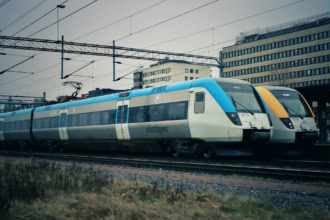
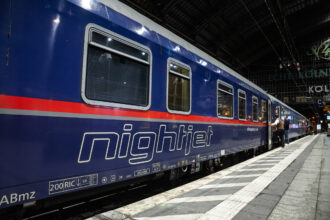
Getting there usually means flying into Kiruna Airport or taking one of Sweden’s long-distance sleeper trains, and the overnight route north is an experience many travellers rank alongside the attractions themselves. Anyone using the wider rail network can combine a stay here with the Interrail Sweden Pass, and the same Stockholm to Narvik line is covered in more depth in our European Sleeper Trains Guide, since the sleeper continues over the border on a route also touched on in our Norway Night Trains guide.
Getting between Kiruna Airport and the town centre itself is covered in our Kiruna Airport Transfers guide, so this page focuses purely on what there is to actually do once you have arrived. That holds whether you are stopping for a single overnight break or building a full week around Arctic Sweden.
Because Kiruna sits so far north, the calendar matters more here than in most destinations, and what is genuinely worth doing changes sharply between the polar night of midwinter and the endless daylight of high summer. The sections below cover attractions across both seasons and flag clearly which are winter-only, summer-only, or available whatever month you arrive.
Kiruna at a Glance
Kiruna covers a lot of ground for a town its size, from an underground iron ore mine to Arctic wilderness on its doorstep, so this table pulls together its main attractions before the full detail below. Use it to see roughly how each one fits into a trip and how long it realistically deserves.
| Attraction | What It’s For / Why Visit | How Long to Spend |
|---|---|---|
| Kiruna Church | Sweden’s celebrated wooden church, relocated across town in 2025 | Around twenty to thirty minutes |
| Kristallen | New city hall with a library, café and a viewing point over the new town | Around twenty to thirty minutes |
| LKAB Visitor Centre and Mine Tour | Guided tour into the working underground iron ore mine | Around three hours |
| Hjalmar Lundbohmsgården | Preserved home of Kiruna’s founder and a small heritage park | Thirty to forty-five minutes |
| ICEHOTEL Jukkasjärvi | Ice art suites and the Icebar, seasonal plus a permanent year-round wing | An hour or two |
| Nutti Sámi Siida | Sámi reindeer herding experience and camp visit | Around four hours |
| Esrange Space Center | Active rocket launch facility with a free visitor centre | Around an hour |
| Abisko National Park | Aurora Sky Station chairlift, hiking trails and dark-sky viewing | Half a day |
| Dog Sledding | Guided husky sledding through Arctic forest and snowfields | Around four hours |
| Snowmobile Safaris | Guided snowmobile trips across the snowfields | Two hours to a full day |
| Northern Lights Tours | Guided aurora-hunting trips away from town lights | A few hours after dark |
| Midnight Sun | Weeks of round-the-clock summer daylight for hiking and cycling | Best experienced across your stay |
Kiruna Church and Its Journey Across Town
Kiruna Church is widely regarded as one of Sweden’s most beautiful wooden buildings, an early twentieth century structure designed to echo both a traditional Sámi tent and a Gothic chapel. It has repeatedly topped national polls of the country’s favourite buildings, and its blend of Nordic and Sámi design cues makes it unlike almost any other church in the country.
The church became part of the relocation story itself in August 2025, when the entire 672 tonne timber structure was lifted onto trailers and rolled across town rather than being dismantled and rebuilt. The move covered around five kilometres over roughly two days at a crawling pace of about half a kilometre an hour, and it drew visitors and international media from well beyond Sweden.
The church now stands on its new site closer to the emerging town centre, alongside other historic parish buildings being reassembled around it to recreate something of its original setting. Restoration of the grounds has continued since the move, so this is honestly an evolving site rather than a finished one at the time of writing.
It is worth being upfront that a firm date for a full public reopening or rededication service was not confirmed when this page was researched, and that detail is best checked directly with the local parish before planning a visit around specific opening hours. What is certain is that the building itself survived its journey fully intact, and it remains one of the most photographed landmarks anywhere in Swedish Lapland.
For most visitors, simply seeing the church up close, whether from outside or during open hours, is a rare chance to witness a genuine feat of engineering as much as a piece of religious architecture. Kiruna’s tourist office is the best source for current access details and for any guided town walks that include the church on their route.
Best for a short trip. Compare rooms by neighbourhood, price and guest rating before you book.
Compare hotelsBest for longer stays. Whole apartments and houses, so you are not eating out three times a day.
View rentalsBest as a last check before booking. Compares hotel rates across several sites in one search.
Compare ratesKristallen, Kiruna’s New City Hall
Kristallen, Kiruna’s striking new city hall, was the very first major building completed in the town’s new centre, opening back in 2018 as a deliberate statement of intent for the whole relocation project. Designed by the Danish firm Henning Larsen, it takes the form of an angular, crystalline tower clad in wood, glass and a distinctive clock façade salvaged from the old town hall.
Inside, the building houses Kiruna’s municipal offices, a library and a small café, and it is genuinely open to the public rather than being purely administrative space. A viewing area near the top gives visitors a rare elevated view across the new town centre and out toward the mine works in the distance, which is one of the few places in Kiruna where the scale of the relocation is easy to take in at a glance.
The building sits at the heart of what is still, honestly, a construction zone. Kiruna Lappland’s own city transformation pages describe a culture centre, a public bathhouse, emergency services buildings and residential blocks around Kristallen as still under construction, so visitors should expect scaffolding and building sites alongside the finished landmarks for some time yet.
Entry to Kristallen itself is free, and it makes a natural first stop for understanding the wider story before heading out to the mine, the church or the old town site. Give it twenty to thirty minutes, longer if the café and library are open and you want to linger.
Witnessing a Town in Motion
It is easy to describe Kiruna’s relocation as a curiosity, but seeing it in person is genuinely one of the more unusual things you can do anywhere in Europe right now. The reason it is happening at all is straightforward: LKAB’s underground iron ore body extends directly beneath the old town, and continued mining causes ground deformation that would eventually swallow the original streets.
As of now, the picture is genuinely mixed rather than finished. The new city hall, several relocated heritage buildings including the church, and realigned roads and railway lines are already in place roughly three kilometres east of the old centre, while a culture centre, bathhouse, schools and housing blocks around them remain under active construction.
Large parts of old Kiruna, meanwhile, have already been demolished to make way for expanding mine infrastructure, and the areas closest to the pit are fenced off for safety rather than open for casual exploration. It is honestly worth not assuming the move has finished just because the most photogenic buildings have already made the journey.
The most reliable way to actually understand what has moved, what is still standing, and what has been lost is a guided town walk booked through the Kiruna tourist office, several of which are built specifically around the transformation story. Self-guided visitors can still get a strong sense of it simply by walking between Kristallen and the church’s new site, comparing the newly built streets against older photographs of the original town.
LKAB Visitor Centre and the Underground Mine Tour
Kiruna’s mine is not just the reason the town is moving, it is also one of the most genuinely memorable attractions in northern Sweden in its own right. LKAB runs public guided tours down into the working mine, taking visitors by bus directly into the mountain to reach the Visitor Centre at the 540 metre level, a purpose-built exhibition space carved out of the rock itself.
The centre spans some 20,000 square metres and combines working machinery displays with a small mining museum covering the site’s history back to the early 1900s. It is a genuinely underground experience rather than a surface-level museum, and tours run with a guide throughout, typically lasting around three hours in total including transfer time and a coffee break.
As of the most recent booking information available, adult tickets run at roughly 590 SEK, which converts to approximately €53 (£45/$57), with a reduced rate of about 490 SEK, or €44 (£38/$47), for students and seniors. Children between six and fifteen years old, subject to a minimum height requirement, are charged around 190 SEK, or €17 (£15/$18).
Places are limited and tours must be booked in advance through the Kiruna tourist centre on Malmvägen, since schedules, languages offered and available days shift with the seasons and with ongoing mine operations. Warm clothing is worth bringing regardless of the time of year, since the underground sections stay cool whatever the weather is doing on the surface.

Hjalmar Lundbohmsgården, Home of Kiruna’s Founder
Hjalmar Lundbohmsgården is the preserved former residence of Hjalmar Lundbohm, the mining director widely credited as the founder of modern Kiruna, and it offers a much smaller, quieter counterpoint to the industrial scale of the mine itself. The house sits within a small heritage park of relocated period buildings, giving a genuine sense of what the early mining town actually looked like.
Inside, the rooms are kept largely as they were during Lundbohm’s own time, complete with original furniture and personal effects, and displays cover his unusual role in shaping the town’s early culture and its close relationship with the local Sámi community. It is a modest visit by scale, but a genuinely useful one for understanding why Kiruna exists at all.
Opening hours are seasonal and considerably more limited outside the main summer months, so it is worth checking current times through the Kiruna Lappland tourist information site before making a special trip. Entry is inexpensive relative to the town’s bigger paid attractions, and a visit realistically takes thirty to forty-five minutes.
The site works well paired with a walk past Kristallen and the church’s new location, since together the three give a reasonably full picture of Kiruna’s story from its founding through to its ongoing relocation. It is an easy, low-cost addition to a day otherwise built around the mine tour or Kristallen.
ICEHOTEL Jukkasjärvi and the Icebar
Roughly twenty kilometres east of Kiruna, the village of Jukkasjärvi is home to the original ICEHOTEL, arguably the single most famous attraction anywhere in Swedish Lapland. The main ice structure, including its ornately carved art suites, is rebuilt entirely from scratch each winter using snow and ice cut from the nearby Torne River, and it exists only for as long as the season’s ice holds.
That seasonal building typically opens in December and stands until the ice begins to melt in April, though the exact dates shift slightly year to year depending on the weather, so it is genuinely worth checking current opening information before booking a stay around it. Outside those months, there is no seasonal ice hotel to visit at all.
Alongside it, ICEHOTEL 365 is a separate, permanent, solar-cooled building that keeps a smaller ice art gallery, ice suites and an Icebar running all year round, including through the height of the Arctic summer. This is the part of the experience that survives regardless of when you visit, and it is the reason ICEHOTEL genuinely works as a year-round attraction rather than a purely winter one.
Day-visit tickets that include access to the art exhibition run at roughly 325 SEK for adults, around €29 (£25/$31), with a reduced student and senior rate near 225 SEK, or €20 (£17/$22), and a small children’s charge. Overnight stays in the ice suites themselves cost considerably more and vary widely by room type and season, so it is worth treating any headline overnight price with caution until confirmed directly on booking.
Nutti Sámi Siida and Reindeer Encounters
Also based in Jukkasjärvi, close to the ICEHOTEL, Nutti Sámi Siida is a family-run Sámi reindeer herding business that opens its own working herd and camp to visitors. It is a genuine, active herding operation rather than a staged tourist set piece, run by a local Sámi family who have herded reindeer in this area for generations.
Its best-known excursion, often called Ráidu, combines a short reindeer sledding ride with time spent at the camp learning about traditional Sámi lavvu tents, clothing and herding practices over coffee cooked on an open fire. The whole experience typically runs to around four hours, and it is offered primarily as a winter activity when sledding is possible.
Pricing is not published in detail on the operator’s own site and is confirmed directly at the time of booking, so it is worth contacting Nutti Sámi Siida or the Kiruna tourist office ahead of a visit rather than assuming a fixed rate. Booking ahead is strongly advised in the main winter season, since group sizes are kept deliberately small.
For visitors keen to understand Sámi culture beyond a brief photo stop, this is a considerably more substantial option than the roadside reindeer encounters found elsewhere in Lapland. It pairs naturally with a visit to the ICEHOTEL, since both sit in the same small village a short drive from central Kiruna.
Best if you can move a day either way. Shows how the fare changes across the month.
Compare flightsBest for anyone whose home plan charges by the megabyte abroad. Pay a fixed price up front.
Check eSIMsBest after a long flight or a late landing. Price agreed before you travel, and no taxi queue.
Check transfersEsrange Space Center
A short drive from Kiruna, Esrange Space Center is a genuine, active rocket and satellite launch facility run by the Swedish Space Corporation, and one of the more unexpected attractions this far into the Arctic. It has been used since the 1960s for scientific rocket launches, balloon flights and satellite tracking, and remains operational today.
The site’s own visitor centre, a small museum near the entrance covering the history of Swedish space research, is genuinely free to enter and open to the public during the day. It makes for a quick, interesting stop even without joining a longer tour, with interactive exhibits explaining what actually happens on the site beyond the visitor centre’s doors.
Deeper guided tours into the working parts of Esrange, such as the launch control areas, do exist but are not run as a standard daily public product, and availability genuinely depends on current activity at the site. These are best arranged directly with the Kiruna tourist office or the Swedish Space Corporation itself well ahead of a planned visit, rather than assumed available on the day.
Because access can vary considerably depending on what is happening operationally, it is worth treating Esrange as a worthwhile add-on rather than a guaranteed centrepiece of a Kiruna itinerary. Confirming current tour availability before travelling saves a wasted trip out to the site.
Abisko National Park and the Aurora Sky Station
Abisko sits around ninety kilometres west of Kiruna and is one of the most respected northern lights viewing spots anywhere on earth, largely thanks to a local microclimate that keeps the skies above the lake noticeably clearer than the surrounding mountains. It is reachable from Kiruna by train, bus or car, making it a realistic day trip rather than a remote expedition.
The park’s chairlift climbs Mount Nuolja to the Aurora Sky Station, a viewing platform and café set well above the treeline, originally built to give researchers and visitors a clear line of sight for aurora watching on dark winter nights. Seats are limited and the lift’s operating schedule is weather and season dependent, so checking current hours before travelling out is worth the few minutes it takes.
In summer, the same chairlift and station work as a genuine hiking and scenery destination rather than an aurora one, with long daylight hours making the climb up Nuolja a pleasant way to see the surrounding fells and the lake below. This is a completely different visit from the winter version, built around views and walking trails rather than dark skies.
Current ticket pricing for the chairlift and station was not consistently published at the time of writing and is best confirmed directly with Aurora Sky Station or STF Abisko Turiststation before travelling out. Abisko National Park itself, including its well-known Kungsleden hiking trail entrance, remains free to enter on foot regardless of the chairlift’s operating status.
Dog Sledding Through the Arctic Wilderness
Dog sledding around Kiruna is genuinely one of the best versions of this activity anywhere in Scandinavia, run through forested trails and open snowfields with working husky teams rather than a short novelty loop. Several local kennels operate day and half-day excursions, most letting visitors drive their own sled for at least part of the route under a guide’s supervision.
A typical half-day guided excursion runs to around four hours including a warm drink stop out on the trail, and local operators commonly price this in the region of 2,250 SEK per adult, roughly €200 (£170/$215). Reduced rates are widely offered for students and for children, usually somewhere between roughly €95 (£80/$100) and €185 (£155/$195), depending on age and the specific operator.
This is firmly a winter activity, running on snow through the core season from around December to April, and it is worth booking well ahead in peak weeks since kennels genuinely limit group sizes to keep the dogs comfortable and the experience worthwhile. Warm, windproof outer layers are usually provided, but thermal base layers are worth bringing yourself.
Several kennels also offer longer multi-day expeditions further into the wilderness for anyone wanting more than a single afternoon, and most will collect and return visitors directly from central Kiruna hotels. Checking a specific operator’s current dog-welfare practices before booking is a reasonable thing to do, and most reputable kennels are happy to explain them.

Snowmobile Safaris Across the Snowfields
Snowmobiling is one of the more adrenaline-driven ways to see the country around Kiruna, covering far more ground in a few hours than dog sledding or skiing realistically can. Guided safaris range from short two-hour introductions right up to full-day expeditions, often built around a specific destination such as the ICEHOTEL, a frozen lake, or a wilderness cabin for lunch.
A commonly advertised half-day snowmobile safari out to the ICEHOTEL and back, including snacks and hot drinks, starts from around €121, which works out to roughly £104 ($130) at current rates, with longer or more remote routes priced accordingly higher. No previous experience is required for most standard tours, since guides lead the group and set the pace throughout.
Like dog sledding, this is a strictly seasonal activity dependent on reliable snow cover, generally available from December through to April depending on how the winter is running. A valid driving licence is normally required to pilot your own machine, though most operators offer a passenger seat behind a guide for anyone who would rather not drive.
Full protective clothing, helmets and gloves are almost always included in the tour price, which is worth confirming before travelling with only light layers of your own. Booking a couple of days ahead is normally enough outside the busiest holiday weeks, though peak season slots around Christmas and February half-term fill up faster.
Chasing the Northern Lights from Kiruna
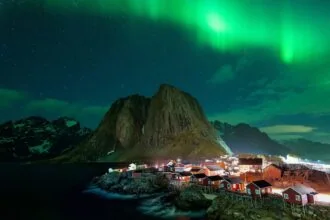
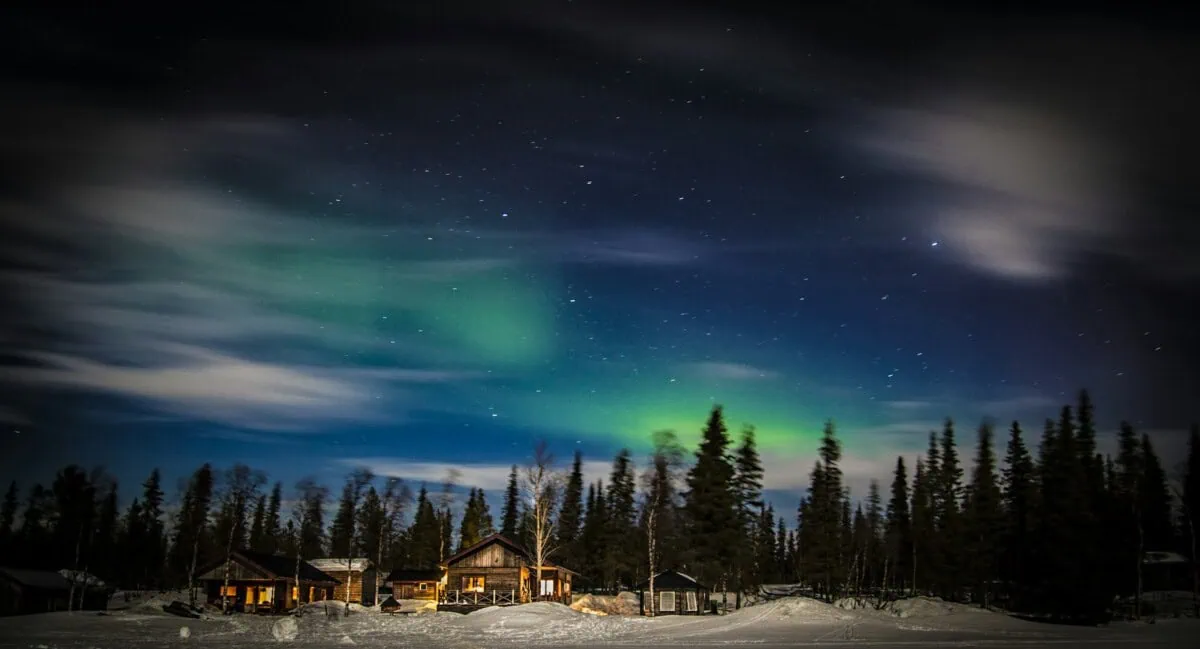
Kiruna’s location well above the Arctic Circle, combined with genuinely dark skies once winter sets in, makes it one of the more reliable places in Europe to see the aurora borealis without travelling far from town. The main viewing season runs roughly from late August through to early April, when nights are dark enough for the lights to show clearly.
Unlike Abisko’s dedicated Sky Station, viewing in and around Kiruna itself is mostly informal, with visitors heading a short distance out of town to escape streetlights rather than travelling to one fixed platform. Many hotels and guesthouses offer aurora wake-up calls overnight so guests do not have to stay up watching an empty sky themselves.
Dedicated aurora tours, usually run by minibus out to dark, open spots away from town, are widely available through local operators and typically last a few hours after dark. These trips are genuinely worth the money for anyone without their own transport, since drivers know current dark-sky spots that change with weather and cloud cover.
There is no way to guarantee a sighting on any single night, since the lights depend on solar activity as much as clear skies, and it is worth building in several nights in Kiruna rather than a single overnight stop if seeing the aurora is the main reason for the trip. Checking a real-time aurora forecast alongside the local weather forecast before heading out improves the odds considerably.
Kiruna’s Midnight Sun in Summer
It is worth being clear that midnight sun and the northern lights are two entirely separate seasons in Kiruna, not two versions of the same phenomenon, and travellers occasionally arrive expecting one while it is actually the season for the other. Midnight sun runs through late May to mid-July, when the sun genuinely never dips below the horizon for a run of several weeks.
Locally, this period is described as lasting around forty-seven days at its most literal, with true midnight sun visible throughout, and closer to a hundred days of very bright, effectively continuous daylight once the lighter twilight either side of the peak is counted. Streets, hiking trails and even golf courses stay genuinely usable at any hour of the day or night.
For visitors, this makes summer an entirely different kind of Kiruna trip, built around hiking in Abisko, cycling, and long, unhurried evenings outdoors rather than dog sleds and dark-sky chasing. It is also when the ICEHOTEL’s permanent 365 wing, the church’s new grounds and the mine tour are all easiest to combine into one relaxed, unrushed itinerary.
Anyone planning a summer visit specifically to see the midnight sun should aim for June to be safely inside the main window, since the exact start and end dates shift slightly from year to year with the calendar. Pack an eye mask if you are staying in a room without blackout curtains, since a genuinely bright sky at 2am catches plenty of first-time visitors off guard.
Best for solo travellers and anyone watching the budget. Dorm beds and private rooms in the same search.
Browse hostelsBest for anyone flying more than once or twice a year. Handles the compensation claim so you are not chasing the airline.
See AirHelp+Best for the gap between checking out and your train. Drop bags at a shop or hotel nearby and carry on.
Store your bagsThings to Do in Kiruna in Bad Weather
Kiruna does not experience rain in the way most people picture it, since an Arctic climate this far north pushes the bulk of the year’s precipitation down as snow rather than drizzle, with the town still averaging around seven hundred millimetres of moisture across a full year. What genuinely disrupts a day out here is more often a whiteout, biting windchill or the deep dark of the polar night, and knowing which attractions hold up regardless is worth planning around before you arrive.
Kristallen makes an easy retreat on a rough day, since its library and small café sit indoors with the upper-floor viewing area still giving a clear look out over the new town even through blowing snow. It costs nothing to wander in, and half an hour spent here works just as well as a foul-weather stop as it does a first orientation visit.
The LKAB Visitor Centre is about as weatherproof as an attraction gets, since the tour itself runs five hundred and forty metres underground inside the mountain, entirely sheltered from whatever the surface is doing. Warm clothing is still worth bringing for the transfer in and out, but once inside the mine, wind, snow and daylight hours stop being a factor at all.
Hjalmar Lundbohmsgården offers a smaller, quieter indoor option built around the preserved rooms of the town’s founder, and it works well when the weather rules out anything more ambitious outdoors. Its opening hours are genuinely seasonal and shorter outside summer, so it is worth checking current times before treating it as an automatic bad-weather fallback.
ICEHOTEL 365, the permanent solar-cooled wing of the ice hotel, keeps its ice art gallery, suites and Icebar running all year regardless of what is happening outside, which makes it one of the more reliable indoor options anywhere near Kiruna. Unlike the seasonal ice structure next door, this part of the experience never depends on the weather cooperating.
Outdoor activities are a different story, and it is worth being honest that dog sledding, snowmobiling and aurora viewing are all genuinely weather-dependent rather than guaranteed once booked. Heavy snowfall or extreme cold can see an operator delay or reschedule a sledding or snowmobile trip for safety, and thick cloud simply hides the northern lights regardless of how dark the forecast otherwise looks, so building a spare night or two into a winter stay is the best insurance against losing an activity altogether.
Food Scene and Food Halls
Kiruna is far too small a town to support anything resembling a genuine food hall or covered market, and it is worth saying so plainly rather than dressing up a supermarket and a handful of restaurants as something they are not. What the town does have is a compact, genuinely good food scene built around Arctic ingredients rather than variety for its own sake.
Reindeer is the one dish worth actively seeking out, since it is a genuine local specialty rather than a novelty aimed purely at tourists, and it turns up smoked, dried or slow-cooked across menus in and around Kiruna. Several kitchens draw directly on Sámi cooking traditions, pairing reindeer with fish and foraged berries in ways that reflect the region’s own culture rather than a generic Scandinavian tasting menu.
Restaurant Ovttas, run by the same Nutti Sámi Siida family covered earlier in this guide, serves Sámi dishes built from seasonal, locally sourced ingredients around an open fire in Jukkasjärvi, and it is one of the more genuine places nearby to eat reindeer, fish and berries prepared in traditional style. It sits a short drive from central Kiruna, so it pairs naturally with a reindeer camp visit or an ICEHOTEL stop rather than needing its own separate trip.
In Kiruna itself, Camp Ripan Kitchen is consistently rated among the town’s best kitchens, working through Swedish, Sámi and Torne Valley Finnish influences with a genuine focus on local, seasonal ingredients rather than a generic hotel-restaurant menu. It sits toward the higher end of what Kiruna charges, with a main course typically running to somewhere around €39 (£33/$42), so it suits an occasion meal more than a quick lunch stop.
For everyday eating, Kiruna’s town centre has a scattering of cafés, pizzerias and casual restaurants covering the more ordinary end of the price range, alongside Stora Coop Kiruna as the main supermarket for anyone self-catering or stocking up before heading out to Abisko. None of this adds up to a dedicated food hall, but it is enough variety that nobody visiting for a few days should struggle to eat well.
Nightlife and After Dark
‘After dark’ means something unusually literal in Kiruna, since for several weeks each winter the polar night keeps the sun below the horizon for most or all of the day rather than just the evening. That makes it worth separating what genuinely exists once the sun goes down, whether that is four in the afternoon in December or midnight in an ordinary month, from the conventional bars-and-clubs sense of the phrase.
Kiruna is not a nightlife destination in any conventional sense, and it is worth setting expectations accordingly rather than overselling a handful of quiet venues as a proper scene. What genuinely exists is modest but real, and it is built mostly around hotel bars rather than a strip of independent clubs.
The Sky Bar at the Scandic hotel is the most obvious option, a relaxed spot with mountain and skyline views, a starry ceiling and, on a clear night, a genuine chance of watching the northern lights from indoors over a locally brewed beer or gin. It works equally well as a warm-up before heading out to chase the aurora or as the evening itself if conditions outside are not cooperating.
The Bishops Arms is Kiruna’s most established option for a conventional evening out, a British-style gastropub with an extensive beer and whisky selection alongside pub food, and it draws a steadier crowd than a hotel lounge without tipping into loud, late-night territory. Live music here tends toward blues, country and Irish sets rather than DJ nights, which suits the town’s generally low-key after-dark character.
The Icebar at ICEHOTEL, covered earlier in this guide as a daytime attraction, doubles as one of the more distinctive evening options nearby, though Kiruna’s genuine late-night party scene has largely shifted to après-ski events further out toward Riksgränsen rather than staying in town itself. For most visitors, an evening in Kiruna is better planned around a good dinner, a hotel bar and an aurora check than around finding a club that, honestly, does not really exist here.

Shopping and Markets
Shopping in Kiruna is a modest, practical affair rather than a destination in itself, spread across a handful of shops in the town centre rather than a dedicated mall or market hall. What it lacks in scale, it partly makes up for with a genuine cluster of Sámi design and handicraft shops worth seeking out specifically.
Karin Vasara Design, Ateljénord and Hedla are among the names worth looking for, each selling traditional Sámi handicraft, known locally as duodji, alongside more contemporary design pieces rooted in the same craft traditions. These make a considerably more meaningful souvenir than a generic gift-shop trinket, since the work is genuinely tied to the region’s Indigenous culture rather than manufactured for passing tourists.
Karesuandokniven specialises in traditional Sámi-style knives, handcrafted using techniques passed down through generations of northern Swedish knifemaking, and it is a specific, well-regarded stop for anyone after a genuinely useful piece of craftsmanship rather than a purely decorative souvenir. It is a niche shop, but exactly the kind of thing worth knowing about before arriving rather than stumbling across by chance.
Sven Hörnell and Vildmarkshörnan both cover hunting, fishing and outdoor equipment, which matters in a town where a genuine share of visitors arrive under-prepared for dog sledding, snowmobiling or a hike out toward Abisko. Centrum JW Lindgren, a long-running local clothing store, adds a more conventional retail option for anyone needing warmer layers or everyday essentials partway through a trip.
For groceries and everyday shopping, Stora Coop Kiruna is the town’s main supermarket, useful for self-catering or stocking up before heading further out into the wilderness, though it is exactly that, a supermarket, rather than anything resembling a food hall or covered market. Kiruna simply is not built at the scale to support one, and treating its shopping scene as a small, practical add-on to the main attractions is the honest way to plan around it.

Rupert’s Handy Travel Tips
I’ve spent enough nights in Kiruna chasing the lights and watching the town rebuild itself to know it rewards a bit of planning, so here’s my honest advice for getting the most out of it.
- Give yourself at least three nights: a single overnight stop barely covers the mine tour or the church, let alone the aurora or a trip out to Abisko.
- Book the mine tour before you fly: spaces fill up fast in peak season and it’s the one attraction you genuinely can’t wing on arrival.
- Layer up properly for winter activities: dog sledding and snowmobiling both keep you outdoors for hours, so thermal base layers under whatever the operator provides make a real difference.
- Don’t mix up the two seasons: if you want the northern lights, come between late autumn and early spring, and if you want the midnight sun, come in June, not both at once.
- Walk between Kristallen and the church’s new site: it’s the cheapest, easiest way to actually understand the relocation story before paying for a guided version.
- Confirm anything time-sensitive directly with the operator: Esrange tour availability, chairlift hours and exact ICEHOTEL dates all shift with the season, so a quick email or call beats guessing.
Want to meet the reindeer behind our travel tips? Find out more in our page Who is Rupert?.




Frequently Asked Questions about Things to Do in Kiruna
Is Kiruna actually moving, or has it already moved?
Parts of it have moved, and parts of it are still moving. The new city hall, the church and realigned roads are already in place a few kilometres east of the original townsite, while a culture centre, bathhouse and residential blocks around them remain under construction, so it’s honestly a work in progress rather than a finished relocation.
Can you actually go inside the LKAB mine?
Yes, LKAB runs public guided tours down to the Visitor Centre at the 540 metre level, taking visitors by bus into the mountain with a guide throughout. Tours must be booked in advance through the Kiruna tourist centre, since capacity is limited and schedules vary with the season.
Is the ICEHOTEL open all year?
The main seasonal ice structure, rebuilt each winter from river ice, is normally open from around December to April and does not exist outside those months. ICEHOTEL 365, a separate solar-cooled permanent building with its own ice bar and gallery, does run all year round.
When is the best time to see the northern lights in Kiruna?
Dark, clear nights from roughly late August through to early April give the best chance, with the deepest winter months typically offering the most reliably dark skies. No trip can guarantee a sighting on any specific night, so booking several nights improves the odds considerably.
Does Kiruna really have a midnight sun season?
Yes, from roughly late May to mid-July the sun does not fully set, giving weeks of genuine round-the-clock daylight. This is a completely separate season from the northern lights, so it’s worth checking which one you actually want before choosing when to visit.
How do I get to Kiruna, and what about the airport transfer?
Most visitors arrive either by flying into Kiruna Airport or on one of Sweden’s overnight sleeper trains from Stockholm heading toward Narvik. The specifics of getting between the airport and the town centre are covered in a separate dedicated guide on this site, since that’s a big enough topic on its own.
Further Reading
Anyone travelling to Kiruna by rail rather than air will want our essential reading, the Interrail Sweden Pass guide, which covers the night trains running all the way north to Kiruna and Abisko and how to fit them into a wider Scandinavian rail trip. It pairs well with our broader European Sleeper Trains Guide, which sets the Stockholm to Narvik route in context alongside sleeper services across the rest of the continent.
If your route continues over the border, our Norway Night Trains guide covers the Bergen, Trondheim and Bodø sleepers that link up with the same Arctic rail network, giving a fuller picture of overnight travel across northern Scandinavia. Between them, these guides cover most of the practical rail planning a Kiruna trip is likely to need.
For official detail on the mine tour, the Visitor Centre and current opening times, LKAB’s own visits page is the most authoritative source and is worth checking directly before booking. You can find it at LKAB’s visits and study visits page, which is updated as tour availability changes through the year.
For the wider picture on chasing the aurora beyond Kiruna itself, our Northern Lights Guide covers other reliable viewing spots, timing and forecasting tools across the wider Arctic.