Reviewed by our editorial team Updated
Welcome to Historic Narbonne
Few cities in southern France combine Roman history, medieval architecture, canal-side charm and Mediterranean culture quite like Narbonne. Founded as Narbo Martius in 118 BC, it became the first Roman colony established outside Italy, serving as an important crossroads between Spain, Gaul and Rome. More than two thousand years later, traces of that remarkable past remain woven into the streets, monuments and public squares that define the city today.
Despite its extraordinary history, Narbonne often remains overlooked by visitors travelling between Montpellier, Carcassonne and the Mediterranean coast. Those who stop here discover an attractive city filled with impressive monuments, lively markets, outstanding restaurants and beautiful canal walks, all within a compact historic centre that’s easy to explore on foot.
The city also sits at the gateway to some of Occitanie’s finest vineyards, spectacular nature reserves and sandy Mediterranean beaches, making it an excellent destination whether you’re planning a short city break or using Narbonne as a base for exploring the wider region.
Whether your interests lie in Roman archaeology, historic churches, French markets, wine, canal walks or simply enjoying authentic southern French life, Narbonne offers far more than many visitors expect.
This guide brings together the very best things to do in Narbonne, helping you discover one of the most fascinating and underrated cities in southern France.
| Attraction | Time Needed | Admission | Best For |
|---|---|---|---|
| Narbonne Cathedral | 45–60 mins | Free | Gothic architecture and history |
| Canal de la Robine (UNESCO) | 1–2 hours | Free | Walking, cafés and photography |
| Roman Horreum | 45–60 mins | Paid | Roman history |
| Narbo Via Museum | 2–3 hours | Paid | Archaeology and Roman artefacts |
| Les Halles de Narbonne | 1 hour | Free | Local food and produce |
| Archbishop’s Palace & Donjon | 1–2 hours | Paid | History and panoramic views |
| Via Domitia | 20–30 mins | Free | Ancient Roman heritage |
| Fontfroide Abbey | Half day | Paid | Medieval architecture |
| Narbonne-Plage | Half to full day | Free | Beaches and relaxation |
| Wine Tour | Half day | Paid | Corbières and Minervois vineyards |
Visit the Magnificent Narbonne Cathedral
Towering above the rooftops of the historic centre, Cathédrale Saint-Just-et-Saint-Pasteur is the undisputed symbol of Narbonne. Construction began in 1272, and although the cathedral was never fully completed, it remains one of the most spectacular examples of Gothic architecture anywhere in France.
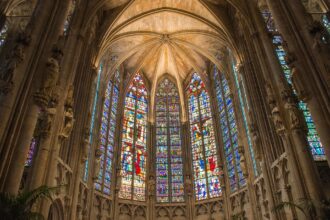
The first thing most visitors notice is its incredible height. The soaring vaulted choir rises to around 41 metres, making it one of the tallest Gothic interiors in the country. As sunlight pours through the enormous stained-glass windows, the vast stone columns and intricate medieval carvings create a truly breathtaking atmosphere.
Take time to admire the beautifully carved choir stalls, impressive chapels and colourful stained glass before stepping outside to appreciate the cathedral’s dramatic exterior. Because construction was halted centuries ago, you’ll notice the unusual unfinished appearance, offering a fascinating insight into one of medieval Europe’s most ambitious building projects.
The cathedral also forms part of the impressive Archbishop’s Palace complex, making it easy to combine several of Narbonne’s finest attractions during the same visit.
Whether you’re interested in architecture, history, religious heritage or simply looking for one of southern France’s most impressive buildings, Narbonne Cathedral is an absolute must-see.
Best for two or three nights. The widest choice of rooms, with filters for free cancellation and included breakfast.
View staysBest for longer stays. Whole apartments and houses, so you are not eating out three times a day.
View rentalsBest as a last check before booking. Compares hotel rates across several sites in one search.
Compare ratesWalk Across the Pont des Marchands
One of Narbonne’s most unique landmarks is the beautiful Pont des Marchands, one of the very few inhabited bridges still standing anywhere in France.
Crossing the Canal de la Robine, the bridge has connected both sides of the city for centuries. Unlike most bridges, however, you’ll barely realise you’re standing on one at first. Historic buildings, shops and cafés have been constructed directly on top of the structure, hiding much of the bridge beneath them and creating one of Narbonne’s most distinctive streets.
Dating largely from the Middle Ages, the bridge once formed part of the city’s main commercial route. Merchants, pilgrims and traders crossed here daily as Narbonne flourished as an important trading centre linking the Mediterranean with inland France.
Today, the surrounding streets remain full of life. Independent boutiques, cafés and restaurants line both sides of the canal, while the gentle flow of the water creates one of the city’s most picturesque settings.
Don’t forget to walk down onto the canal-side paths afterwards. Looking back towards the Pont des Marchands provides one of Narbonne’s classic photographs, particularly when the historic buildings are reflected in the calm waters of the canal.
Stroll Along the Canal de la Robine
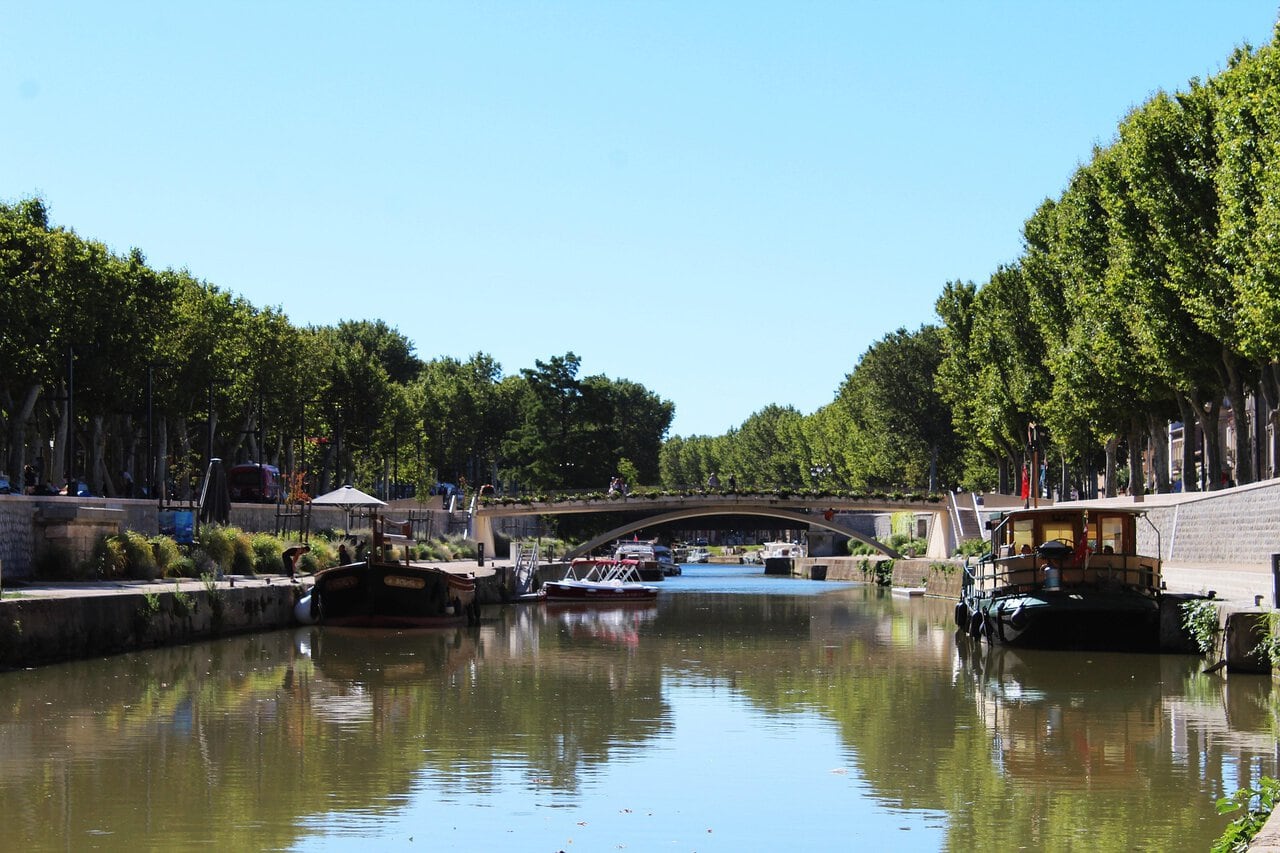
Flowing through the very heart of Narbonne, the beautiful Canal de la Robine gives the city much of its charm. Recognised as part of the UNESCO World Heritage-listed Canal du Midi system, the canal has played an important role in Narbonne’s history for centuries and today provides one of the city’s most enjoyable places for a leisurely walk.
Tree-lined promenades follow both sides of the water, passing elegant bridges, colourful boats, lively cafés and attractive public squares. Throughout the day you’ll see local residents enjoying riverside lunches, cyclists following the towpaths and visitors relaxing while watching pleasure boats glide quietly through the city.
Several companies operate boat cruises along the canal, offering a different perspective of Narbonne while explaining the history of the waterway and its connection to the remarkable engineering achievements of Pierre-Paul Riquet and the Canal du Midi.
The canal is particularly beautiful during the early evening, when cafés fill with diners and the surrounding historic buildings are reflected in the still water. It’s one of the best places in the city to slow down, enjoy the Mediterranean climate and experience the relaxed pace of life that makes Occitanie so appealing.
Whether you’re interested in UNESCO heritage, photography, walking, or simply finding somewhere peaceful to unwind, the Canal de la Robine is one of Narbonne’s defining attractions.
Explore the Remarkable Roman Horreum
Beneath the streets of modern Narbonne lies one of the city’s most fascinating attractions. The Roman Horreum is the only underground Roman warehouse of its kind in France that is open to the public, offering visitors the rare opportunity to walk through passages constructed almost 2,000 years ago.
Built during the first century BC, the Horreum formed part of the thriving Roman city of Narbo Martius, which served as an important commercial centre linking Italy with the Iberian Peninsula. The underground galleries were originally used to store valuable goods including grain, wine, olive oil and other products arriving from across the Roman Empire.
Descending the stone steps feels like travelling back in time. Narrow vaulted corridors stretch beneath the city, while information panels explain how these chambers once formed part of a much larger warehouse complex that has largely disappeared beneath modern Narbonne.
The cool underground temperature provides a welcome escape from the Mediterranean heat during summer, while atmospheric lighting helps visitors appreciate the impressive Roman engineering that has survived for more than two millennia.
Although the visible section is only a small part of the original complex, the Roman Horreum provides an unforgettable insight into daily life in what was once one of the Roman Empire’s most important provincial cities. Opening times and admission are listed on the official Horreum visitor page.

Visit the Outstanding Narbo Via Museum
To truly understand the importance of Roman Narbonne, a visit to the outstanding Narbo Via Museum is essential. Opened in 2021, this award-winning museum has quickly become one of southern France’s leading archaeological attractions, celebrating the history of Narbo Martius, the first Roman colony established outside Italy.
The museum houses thousands of remarkable artefacts uncovered across the region, including mosaics, statues, pottery, jewellery, inscriptions and beautifully preserved everyday objects that paint a vivid picture of life nearly two thousand years ago.
Its most spectacular feature is the enormous Lapidary Wall, displaying hundreds of carved Roman stone fragments arranged dramatically across a towering vertical structure. The sheer scale of the display is breathtaking and immediately demonstrates the wealth and importance of ancient Narbonne.
Interactive exhibits, multimedia presentations and reconstructed Roman scenes make the museum accessible whether you’re a passionate archaeologist or simply curious about the city’s remarkable past. Temporary exhibitions regularly showcase new discoveries, ensuring there’s always something different to see.
Allow at least two to three hours for your visit. For anyone interested in Roman history, archaeology or the origins of southern France, the Narbo Via Museum is one of the finest museums in the country.
Browse Les Halles de Narbonne
No visit to Narbonne is complete without exploring the bustling Les Halles de Narbonne, one of the finest covered food markets in Occitanie.
Dating from the early twentieth century, the market has become the culinary heart of the city. More than seventy independent traders fill the elegant market hall with colourful displays of fresh seafood, artisan cheeses, locally produced wines, cured meats, olives, seasonal fruit and vegetables, freshly baked bread and countless regional specialities.
Walking through the market is a feast for the senses. The aroma of fresh coffee mixes with the smell of warm pastries and Mediterranean herbs, while traders enthusiastically chat with local customers selecting ingredients for lunch or dinner.
Many stalls also serve freshly prepared meals, making Les Halles one of the very best places to enjoy an authentic lunch. Whether you’re sampling freshly shucked oysters, tasting local charcuterie or enjoying a traditional southern French dish with a glass of Languedoc wine, you’ll quickly understand why locals are so proud of this market.
Even if you don’t intend to buy anything, spending time wandering through Les Halles offers a wonderful insight into everyday life in Narbonne and the rich food culture that defines this part of southern France.
Walk Along the Ancient Via Domitia
Hidden in the centre of Narbonne is one of the city’s most extraordinary historic treasures. Preserved beneath a protective glass surface in Place de l’Hôtel de Ville, you can still see a section of the Via Domitia, the first Roman road built in Gaul.
Constructed in 118 BC, the Via Domitia linked Italy with the Iberian Peninsula, passing directly through Narbo Martius. It quickly became one of the Roman Empire’s most important transport routes, carrying soldiers, merchants and travellers across southern Europe for centuries.
Standing beside the original stone paving, it’s remarkable to think that these same slabs were once walked by Roman legionaries, traders transporting goods and officials travelling between Rome and Spain. Few cities allow visitors to stand quite so literally on the remains of the ancient Roman Empire.
Information panels surrounding the site explain the road’s construction, its strategic importance and the development of Narbonne into one of Rome’s wealthiest provincial cities.
Because the Via Domitia sits in the heart of the historic centre, it’s easy to combine with visits to Narbonne Cathedral, the Archbishop’s Palace, the Pont des Marchands and the Canal de la Robine, making it one of the most rewarding stops on a walking tour of the city.
Best for finding routes the airlines do not sell as a single ticket. Combines carriers to bring the fare down.
Search flightsBest for short trips. Install the eSIM at home and arrive with working data, no shop queue.
Browse eSIMsBest if you would rather not work out the transport on arrival. Book it now and forget it.
View transfersExplore the Archbishop’s Palace
Standing beside the magnificent Narbonne Cathedral, the impressive Palais des Archevêques (Archbishop’s Palace) is one of the city’s most important historic landmarks. Built over several centuries, this remarkable complex combines Romanesque, Gothic and Renaissance architecture, reflecting the wealth and influence once enjoyed by the Archbishops of Narbonne.
Rather than being a single building, the palace is made up of several interconnected structures surrounding elegant courtyards and gardens. Today, many of these historic rooms house the Narbonne Town Hall, museums and exhibition spaces, allowing visitors to explore areas that were once reserved for some of the most powerful religious leaders in southern France.
Inside you’ll discover beautifully decorated ceremonial rooms, historic chambers, archaeological collections and fascinating exhibitions explaining Narbonne’s role as both a religious centre and an important Roman city. The architecture alone makes the visit worthwhile, with impressive staircases, vaulted ceilings and medieval stonework throughout the complex.
The palace’s central courtyard frequently hosts cultural events, concerts and exhibitions during the summer months, adding even more life to one of Narbonne’s most beautiful public spaces.
Whether you’re interested in history, architecture or local culture, the Archbishop’s Palace is an essential stop while exploring the historic centre.
Climb the Donjon Gilles Aycelin
Rising high above Narbonne, the imposing Donjon Gilles Aycelin offers one of the finest panoramic views in the whole of Occitanie. Built in the late thirteenth century, this impressive defensive tower formed part of the Archbishop’s Palace and remains one of the city’s most recognisable landmarks.
The climb to the top involves ascending a series of narrow medieval staircases, but the effort is more than rewarded once you reach the viewing platform. From here you’ll enjoy spectacular 360-degree views across the rooftops of Narbonne, the Canal de la Robine, surrounding vineyards, the Narbonnaise Regional Natural Park and, on clear days, even the distant Mediterranean Sea.
Along the way you’ll gain a close appreciation of the tower’s impressive medieval construction, with thick stone walls, defensive features and architectural details that have survived for more than seven centuries.
For photographers, this is undoubtedly one of the best viewpoints in the city. Early morning and late afternoon light are particularly beautiful, bathing Narbonne’s historic centre in warm Mediterranean colours.
If you’re visiting the Archbishop’s Palace, don’t miss the opportunity to climb the Donjon Gilles Aycelin for one of the highlights of any trip to Narbonne.
Visit the Basilica of Saint-Paul Serge
Although often overshadowed by the cathedral, the beautiful Basilica of Saint-Paul Serge is one of Narbonne’s oldest and most historically significant churches.
Built on the site of an early Christian cemetery, the present church dates largely from the twelfth century and is dedicated to Saint Paul Serge, traditionally regarded as the first Bishop of Narbonne. For centuries it welcomed pilgrims travelling through southern France and remains an important place of worship today.
The basilica combines elegant Romanesque and Gothic architectural features, with graceful arches, beautifully carved capitals and impressive stained-glass windows creating a peaceful and welcoming interior. Beneath the church, visitors can also explore the fascinating crypt, where ancient remains and early Christian history provide a unique glimpse into Narbonne’s religious heritage.
Compared with the city’s cathedral, the basilica is often much quieter, allowing visitors to appreciate its architecture and atmosphere without large crowds. It’s a wonderful place to pause during a walking tour of the city and reflect on Narbonne’s remarkable past.
For anyone interested in medieval architecture, early Christianity or discovering lesser-known historic treasures, the Basilica of Saint-Paul Serge is well worth including on your itinerary.
Relax in the Jardin de l’Archevêché
After exploring Narbonne’s historic streets, the peaceful Jardin de l’Archevêché provides the perfect place to slow down and unwind. Situated beside the Archbishop’s Palace and Narbonne Cathedral, these attractive gardens offer a welcome escape from the busy city centre while remaining within easy walking distance of all the main attractions.
Neatly maintained flowerbeds, mature trees, ornamental shrubs and shaded pathways create a relaxing setting that’s popular with both visitors and local residents. Comfortable benches invite you to pause beneath the trees, while colourful planting ensures the gardens remain attractive throughout much of the year.
Because of their location, the gardens also provide excellent views of the towering cathedral, allowing you to admire the remarkable Gothic architecture from a different perspective. It’s a favourite place for photographers, particularly during the early evening when the warm sunlight illuminates the cathedral’s impressive stonework.
The gardens are also an ideal location to enjoy a takeaway lunch purchased from Les Halles de Narbonne, making them a popular stop before continuing to explore the rest of the city.
Whether you’re looking for a quiet place to relax, take photographs or simply enjoy a few peaceful moments surrounded by greenery, the Jardin de l’Archevêché is one of Narbonne’s most pleasant hidden spaces.
Take a Wine Tour Through the Corbières and Minervois Vineyards
Narbonne sits at the crossroads of two of southern France’s finest wine regions, making it an outstanding base for discovering the celebrated vineyards of Corbières and Minervois. Rolling hills covered with vines surround the city in every direction, while centuries-old wineries continue traditions that date back to the Roman Empire.
Joining a guided wine tour is one of the best ways to experience the region. Most tours collect visitors directly from Narbonne before heading into the countryside to visit a selection of family-owned wineries and historic estates. Along the way you’ll drive through picturesque villages, dramatic limestone landscapes and endless vineyards stretching towards the Mediterranean.
At each winery you’ll meet passionate local winemakers who explain how the region’s Mediterranean climate, limestone soils and traditional grape varieties create wines with distinctive flavours and character. Guided tastings typically include elegant Syrah, Grenache, Carignan, Mourvèdre and Cinsault, together with refreshing rosés and increasingly acclaimed white wines.
Many tours also include regional specialities such as artisan cheeses, charcuterie, olive oils and freshly baked bread, allowing visitors to experience the authentic flavours of Occitanie alongside the wines.
Whether you’re a dedicated wine enthusiast or simply looking for a relaxing day exploring beautiful countryside, a Corbières and Minervois wine tour is one of the finest experiences available from Narbonne.
Spend the Day at Narbonne-Plage
Just 20 kilometres from the city centre, Narbonne-Plage offers the perfect opportunity to combine history with a relaxing day beside the Mediterranean Sea. This popular seaside resort is easily reached by car, bus or organised excursion, making it one of the easiest day trips from Narbonne itself.
The resort is famous for its five kilometres of wide golden sand, backed by dunes and clear blue water that consistently attracts visitors throughout the summer months. The gently sloping beach makes it particularly popular with families, while the reliable sea breeze also creates excellent conditions for windsurfing, kitesurfing and sailing.
A lively promenade runs alongside the beach, lined with cafés, restaurants, ice cream parlours and small shops selling everything from beach equipment to locally produced food and wine. Fresh seafood features prominently on many menus, providing the perfect excuse to enjoy a leisurely lunch overlooking the Mediterranean.
Nature lovers will also appreciate the surrounding coastal landscapes, with walking trails leading into protected dunes and nearby nature reserves where numerous bird species can be observed throughout the year.
Whether you’re looking to swim, sunbathe, enjoy watersports or simply relax with spectacular sea views, Narbonne-Plage provides the perfect coastal escape just a short journey from the historic city.
Best if you would rather spend the money on the trip than on the room. Compare hostels by location and rating.
Search hostelsBest arranged before you fly rather than after. Covers claim handling, plus lounge access on eligible delays.
Explore AirHelp+Best if your room is not ready yet. Left luggage booked in advance, so you are not hunting for a locker.
Check storageDiscover the Narbonnaise Regional Natural Park
Stretching between Narbonne, the Mediterranean coastline and the dramatic Corbières hills, the Narbonnaise Regional Natural Park protects one of the most diverse landscapes in southern France.
Covering more than 80,000 hectares, the park is a remarkable mixture of salt lagoons, wetlands, vineyards, limestone hills, pine forests, sand dunes and rugged Mediterranean coastline. This extraordinary variety of habitats supports an impressive range of wildlife, making it one of the best places in France for birdwatching and nature photography.
Visitors may spot elegant pink flamingos, herons, egrets, ospreys and dozens of other bird species throughout the year. The peaceful lagoons also provide important breeding grounds for many migratory birds travelling between Europe and Africa.
Numerous walking and cycling trails cross the reserve, allowing visitors to explore the park at their own pace while enjoying magnificent scenery and spectacular coastal viewpoints. Several picturesque villages are scattered throughout the park, providing excellent opportunities to stop for lunch or sample local wines before continuing your journey.
Whether you’re interested in wildlife, walking, cycling, photography or simply escaping into nature for a few hours, the Narbonnaise Regional Natural Park is one of the region’s greatest natural treasures.
Visit Fontfroide Abbey
Hidden among the hills around 20 minutes from Narbonne, the magnificent Fontfroide Abbey is one of the finest preserved Cistercian monasteries in France.
Founded in the eleventh century, the abbey flourished during the Middle Ages and became one of the most influential religious centres in southern France. Today, its beautifully preserved buildings allow visitors to step back nearly a thousand years while exploring elegant cloisters, peaceful courtyards, impressive churches and historic monastic rooms.
Walking through the abbey reveals a remarkable blend of Romanesque and Gothic architecture, with graceful stone arches, vaulted ceilings and tranquil gardens creating an atmosphere of complete peace. Every part of the complex reflects the simplicity and craftsmanship that defined Cistercian monastic life.
Outside, beautifully landscaped rose gardens, shaded walkways and surrounding vineyards add to the experience. The estate also produces its own wines, giving visitors the opportunity to enjoy a tasting after exploring the historic buildings.
Whether you’re fascinated by medieval history, architecture, gardens or simply looking for one of the most beautiful places in Occitanie, Fontfroide Abbey is an unforgettable excursion and one of the true highlights of the Narbonne area.
Cycle or Walk Around the Bages-Sigean Lagoons
For visitors looking to experience the natural beauty surrounding Narbonne, few places are more rewarding than the spectacular Bages-Sigean Lagoons. Forming part of the Narbonnaise Regional Natural Park, these vast saltwater lagoons create one of the most beautiful and unspoilt landscapes on France’s Mediterranean coast.
The area is a paradise for walkers, cyclists and wildlife enthusiasts. Quiet paths weave between shimmering lagoons, reed beds and salt marshes, with breathtaking views stretching across the water towards distant vineyards and limestone hills. Depending on the season, you’ll have an excellent chance of spotting pink flamingos, herons, egrets, avocets and many other migratory birds that make the lagoons one of the region’s premier birdwatching destinations.
One of the most enjoyable routes links the charming fishing village of Bages with surrounding viewpoints overlooking the lagoons. Traditional fishermen’s houses, colourful boats and waterside cafés give the village an authentic character that’s a world away from the busy Mediterranean resorts.
Cyclists will find several well-maintained routes suitable for all abilities, while photographers are rewarded throughout the day as the changing light reflects across the calm waters. Sunrise and sunset are particularly spectacular, with the lagoons often glowing in shades of gold, pink and orange.
Whether you’re seeking peaceful scenery, wildlife, cycling, walking or simply somewhere to escape into nature, the Bages-Sigean Lagoons provide one of the most memorable outdoor experiences in the Narbonne region.

Visit During Les Barques Festival or the Christmas Market
Narbonne is an enjoyable destination throughout the year, but visiting during one of its major festivals allows you to experience the city at its most vibrant. Seasonal celebrations bring music, markets and local traditions into the historic centre, creating an atmosphere that’s both welcoming and distinctly Mediterranean.
One of the city’s best-loved events is the Les Barques Festival, held during the summer along the picturesque Canal de la Robine. Concerts, street entertainment, food stalls and evening performances transform the canal into a lively gathering place where visitors and local residents celebrate long summer evenings together. The waterfront cafés remain busy late into the night, while illuminated boats and historic buildings create a magical setting.
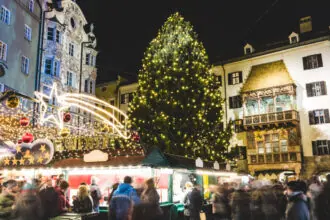
During December, Narbonne takes on a completely different character as the Christmas Market fills the city centre with festive lights, wooden chalets and seasonal entertainment. Place de l’Hôtel de Ville and the surrounding streets become home to artisan gift stalls, traditional food vendors and festive decorations, making it one of the most attractive Christmas markets in Occitanie.
Throughout the year, Narbonne also hosts food festivals, wine events, concerts and cultural celebrations that showcase the region’s rich heritage. Many museums and attractions extend their opening hours during these occasions, making them an excellent time to visit.
If your travel dates are flexible, checking Narbonne’s events calendar before you arrive could add an extra dimension to your visit and allow you to experience the city at its most colourful.

Rupert’s Handy Travel Tips
Narbonne is one of southern France’s hidden gems. Its Roman history, canals and Mediterranean location make it an easy city to explore, especially with a little planning.
- Start your visit at Les Halles: Grab breakfast or lunch in the covered market before exploring the historic centre. It’s one of the best places to experience local life.
- Follow the Roman trail: Combine the Via Domitia, Roman Horreum and Narbo Via Museum to discover how Narbonne became the first Roman colony outside Italy.
- Climb the Donjon: The tower of the Archbishop’s Palace offers one of the finest panoramic views across Narbonne, the surrounding vineyards and, on clear days, towards the Mediterranean.
- Leave time for the coast: Narbonne-Plage is only a short journey away and makes an excellent addition if you’re spending more than one day in the city.
- Explore the wine region: Narbonne sits between the famous Corbières and Minervois wine regions, making a guided vineyard tour one of the best experiences beyond the city centre.
Want to meet the reindeer behind our travel tips? Find out more in our page Who is Rupert?.




Frequently Asked Questions
What is Narbonne famous for?
Narbonne is famous for being France’s first Roman colony, its magnificent Saint-Just-et-Saint-Pasteur Cathedral, the Roman Horreum, the UNESCO-listed Canal de la Robine, excellent food markets and its location between the Mediterranean coast and the famous Corbières and Minervois wine regions.
Is Narbonne worth visiting?
Absolutely. Narbonne combines Roman archaeology, medieval architecture, picturesque canals, outstanding museums, excellent restaurants and easy access to beaches, vineyards and nature reserves. It’s one of the most underrated cities in southern France.
How many days do you need in Narbonne?
You can explore Narbonne’s main attractions in one full day, but two to three days allows time to visit Fontfroide Abbey, Narbonne-Plage, the surrounding vineyards and the Narbonnaise Regional Natural Park.
Can you explore Narbonne on foot?
Yes. The historic centre is compact and easy to explore on foot. Major attractions including Narbonne Cathedral, the Archbishop’s Palace, the Pont des Marchands, the Via Domitia, Les Halles and the Canal de la Robine are all within comfortable walking distance.
What are the best Roman attractions in Narbonne?
The city’s Roman highlights include the Roman Horreum, the preserved section of the Via Domitia in Place de l’Hôtel de Ville, and the outstanding Narbo Via Museum, which houses one of the finest collections of Roman artefacts in France.
Is Narbonne close to the beach?
Yes. Narbonne-Plage is only around 20 kilometres from the city centre and offers wide sandy beaches, clear Mediterranean waters and excellent facilities for families and watersports enthusiasts.
What local food should I try in Narbonne?
Don’t miss fresh Mediterranean seafood, oysters, mussels, Cassoulet, regional cheeses, olives, artisan charcuterie and wines from the nearby Corbières and Minervois vineyards. Les Halles de Narbonne is one of the best places to sample local produce.
When is the best time to visit Narbonne?
Spring and autumn offer warm weather that’s perfect for sightseeing, while summer brings festivals, outdoor dining and beach weather. December is also a wonderful time to visit thanks to Narbonne’s popular Christmas Market.
Further Reading
Continue planning your journey with our guides to Things to Do in Béziers, Things to Do in Montpellier and Day Trips from Montpellier, all of which complement a visit to Narbonne. If you’re exploring more of southern France, don’t miss our guides to Best Things to Do in Carcassonne and Things to Do in Nîmes.
If you’re planning onward rail travel, our Interrail France Pass Guide and Carte Avantage France guide explain how to save money on TGV and TER journeys, helping you make the most of your travels across Occitanie and beyond.