Why Choose the Greek Islands Pass
The Interrail Greek Islands Pass is one of the most unique offerings in the Interrail portfolio. Unlike the traditional country passes that focus on national rail networks, this pass is built for island-hopping by ferry across the Aegean Sea. It allows travellers to link Greece’s most famous islands without buying separate ferry tickets, offering flexibility, convenience, and often substantial savings compared to point-to-point bookings.
For many, the Greek Islands represent the quintessential summer escape: whitewashed villages, turquoise waters, lively tavernas, and unforgettable sunsets. With the pass in hand, you can combine these experiences across multiple destinations — Santorini one day, Mykonos the next, perhaps Crete or Rhodes after that. The pass is also designed to integrate smoothly with Interrail’s wider network. You can travel by train to Athens, then switch seamlessly onto ferries at Piraeus, Greece’s main port.
Another major advantage is cost control. Peak-season ferry tickets on popular routes can be very expensive if purchased individually. The Greek Islands Pass locks in value, giving you a set number of crossings at a fixed price. Youth and senior discounts make it especially appealing to students on summer adventures or retirees exploring at a slower pace.
Finally, the pass brings peace of mind. While ferries can sell out in July and August, Interrail holders often enjoy priority access and simplified booking processes. If you’re dreaming of stitching together multiple islands into one trip — whether that’s five days of back-to-back travel or a month of leisurely exploring — the Interrail Greek Islands Pass is a hassle-free way to do it.
Quick Facts / Pass Overview
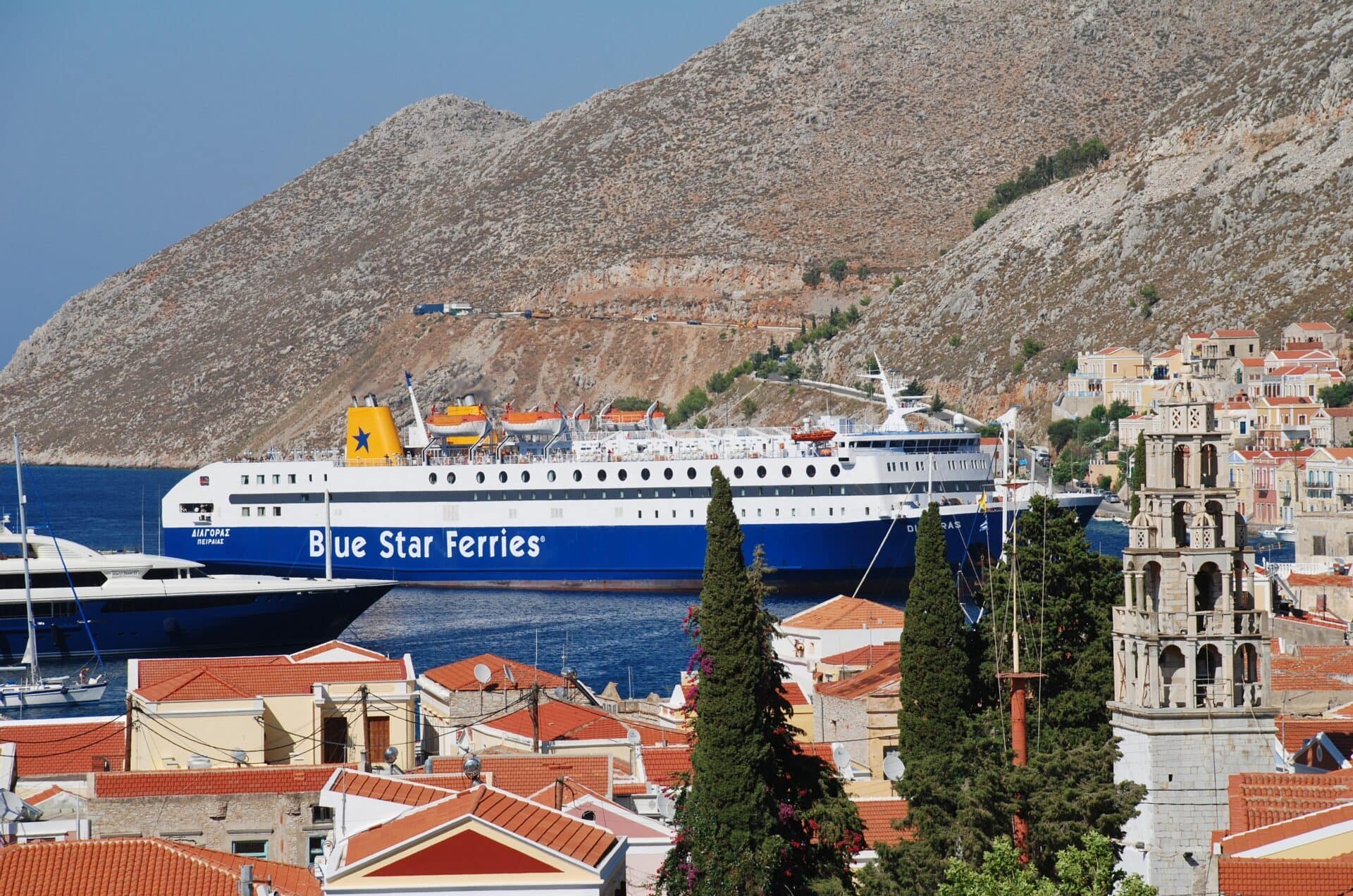
The Greek Islands Interrail Pass works differently from other One Country Passes. Instead of trains, it covers a network of ferry services operated by Blue Star Ferries and Hellenic Seaways, both part of the Attica Group. Together, they connect over 50 destinations across the Aegean, including the Cyclades, Dodecanese, and North Aegean islands.
Travellers can choose between two pass types:
– 4 travel days within 1 month
– 6 travel days within 1 month
Each travel day allows you to board one or more ferry routes, making it possible to link islands efficiently. All passes are Flexi, meaning you don’t need to decide dates in advance — just activate travel days when you board. This flexibility is especially useful if you want to adapt your trip to the weather or local festivals.
The pass includes domestic ferry journeys in Greece but does not cover high-speed catamarans or international routes to Italy. Some premium ferries or cabin upgrades require a supplement, but most standard deck travel is included. Discounts are available for youth travellers (under 28) and seniors (60+), while children under 12 often travel at reduced rates.
Another important detail: the pass is only available as a mobile pass, stored digitally on the Interrail app. This makes it simple to manage reservations, check timetables, and show your ticket when boarding. As with other Interrail products, the pass must be used consecutively within one month of activation.
In short, the Greek Islands Pass is designed to simplify ferry travel, reduce costs, and give travellers the freedom to explore Greece’s most famous archipelagos at their own pace.
Key Operators and Rail Network Size
Unlike traditional Interrail passes, which are based on a national rail operator, the Greek Islands Pass is built entirely around ferry services. The backbone of the pass is provided by the Attica Group, whose two key subsidiaries — Blue Star Ferries and Hellenic Seaways — cover much of the Aegean Sea. Together, they operate dozens of vessels, ranging from large overnight ferries to modern high-speed ships, linking the mainland to Greece’s most iconic island chains.
Blue Star Ferries focus primarily on the Cyclades (Santorini, Mykonos, Paros, Naxos, and Ios) and the Dodecanese (Rhodes, Kos, Patmos, and Karpathos). These routes are heavily used by both locals and tourists, with frequent departures from Athens’ port of Piraeus. They are reliable year-round, though schedules increase in summer to meet demand.
Hellenic Seaways complements this by serving the Saronic Gulf Islands (Aegina, Hydra, Poros, and Spetses) and extending connections to parts of the North Aegean. These shorter routes make it possible to combine a city break in Athens with quick island getaways.
In total, the pass gives access to around 50 destinations. While this is not a “rail network” in the conventional sense, it functions as a maritime web connecting key island groups. This breadth ensures that travellers can build diverse itineraries, whether focused on the cosmopolitan hotspots or the quieter, less-touristed islands.
It’s worth noting that the Greek Islands Pass does not include other operators such as SeaJets or Golden Star Ferries, which dominate some high-speed routes. Still, for most travellers, the coverage offered by Blue Star and Hellenic Seaways is more than enough to unlock classic Greek island-hopping adventures.
Transport Hubs and Major Routes
The central hub for the Greek Islands Pass is the Port of Piraeus, located just a short metro ride from central Athens. Almost all long-distance ferries to the Cyclades, Dodecanese, and Crete depart from here. For Interrail travellers arriving by train into Athens, Piraeus is the logical starting point, making the pass a natural extension of mainland rail journeys.
From Piraeus, several key routes dominate:
– Piraeus to Santorini (Thira): perhaps the most iconic Aegean ferry route, linking Athens to the volcanic jewel of the Cyclades.
– Piraeus to Mykonos: another popular line, serving one of Greece’s most glamorous destinations.
– Piraeus to Rhodes: a longer overnight journey to the Dodecanese, stopping at islands like Kos, Leros, and Patmos along the way.
– Piraeus to Paros and Naxos: routes that often serve as a springboard for deeper exploration of the Cyclades.
Another important hub is Rafina Port, closer to Athens airport, though most Greek Islands Pass routes remain concentrated in Piraeus. For shorter island-hopping experiences, Lavrio Port offers departures to nearby islands such as Kea and Kythnos, but these are less central to the Interrail product.
Beyond Athens, Heraklion (Crete) and Rhodes Town act as secondary hubs, connecting smaller islands and enabling circular itineraries within the southern Aegean. These secondary hubs are especially useful for travellers planning extended trips across multiple archipelagos.
The pass is designed to make use of these major routes, balancing practical transport needs with the classic holiday appeal of Greece’s island landscapes. By anchoring the network in Athens, Interrail ensures the Greek Islands Pass integrates seamlessly with wider European rail journeys, while still catering to the unique geography of the Aegean Sea.
Example Ticket Prices vs Pass Value
One of the most important questions travellers ask is whether the Greek Islands Pass actually saves money compared to buying individual ferry tickets. The answer depends on your route and timing, but in many cases the pass offers strong value, particularly during the high season when one-way fares can skyrocket.
Take the Piraeus–Santorini route as an example. In summer, a standard deck ticket on Blue Star Ferries often costs between €40 and €60 each way. Add a return journey, and you are already spending close to €100–€120 on a single island pair. A 4-day Youth Pass at €82 or an Adult Pass at €110 can cover that journey plus additional island hops, immediately delivering savings.
Similarly, the Piraeus–Mykonos route can range from €36 to €55 per trip. Combining Athens–Mykonos with onward travel to Naxos or Paros quickly adds up to more than the cost of the pass. Longer routes, like the Piraeus–Rhodes overnight ferry, can exceed €70–€90, and if you add a return journey, the pass proves its worth even faster.
The real advantage comes when building multi-island itineraries. A typical summer holiday might include Athens → Mykonos → Paros → Santorini → Athens. Purchased individually, this can cost €150–€200 or more in peak season. The pass reduces that to a predictable, upfront cost while preserving flexibility in planning.
While budget travellers sticking to one or two islands may not need the pass, anyone planning 3 or more ferry trips within a month is likely to find significant value. The added convenience of not juggling multiple ferry bookings also adds intangible savings in time and peace of mind.
Interrail Greek Islands Pass Prices (Flexi Passes)
The Greek Islands Pass is offered only as a Flexi Pass, giving travellers a set number of travel days within a one-month window. Each travel day can include one or more ferry journeys, as long as they fit within that calendar day.
Here are the official 2025 prices:
Youth (12–27)
– 4 Days in 1 Month: €82
– 6 Days in 1 Month: €176
Adult (28–59)
– 4 Days in 1 Month: €110
– 6 Days in 1 Month: €235
Senior (60+)
– 4 Days in 1 Month: €99
– 6 Days in 1 Month: €211
Children under 12 are not eligible for the Interrail Greek Islands Pass, but they often travel with discounted fares if purchased directly from the ferry operators.
The 4-day pass is best suited for short island-hopping trips — for example, Athens plus two or three islands. The 6-day pass is ideal for extended itineraries that include more remote destinations like Rhodes or Crete, where travel times are longer and additional crossings are required.
All passes are mobile-only, managed via the Interrail app. Once activated, they are valid for one month, but travel days can be used flexibly within that period, allowing for rest days or longer stays on particular islands.
How the Greek Islands Pass Works
The Interrail Greek Islands Pass is designed for maximum flexibility. Instead of buying individual ferry tickets, you purchase the pass upfront and then decide when to use your travel days as your trip unfolds. Each day you use the pass counts as one “travel day,” and within that 24-hour period you can take one or more ferry journeys included in the network.
To start, you will need to download the Interrail Rail Planner App, where your pass is stored digitally. From there, you can activate your pass before boarding a ferry, select the journey you plan to take, and show the digital ticket to the ferry staff. This eliminates the need for paper tickets and simplifies the boarding process.
The pass is valid for one month from the first day of use. For example, if you activate it on July 5, you can spread your travel days across the rest of July and into early August. This allows you to mix fast-paced island-hopping with longer stays on your favourite islands.
Most ferries included in the pass cover standard deck class. If you prefer to upgrade to a cabin for overnight journeys or to travel on certain high-speed vessels, you may need to pay a supplement. These upgrades are optional and can be purchased directly from the ferry operator.
Reservations are not always required but are recommended during the peak summer season, when ferries can sell out quickly. Interrail holders can usually make these bookings in advance at the ticket offices in Piraeus or via the operators’ websites.
In short, the Greek Islands Pass works by offering flexibility, convenience, and a predictable budget for travellers wanting to explore multiple islands without the hassle of managing separate ferry bookings.
Where You Can Travel with the Greek Islands Pass
The Greek Islands Interrail Pass covers an extensive network of ferry routes across the Aegean Sea. In total, more than 50 destinations are accessible, giving travellers plenty of options to design an island-hopping adventure that suits their style.
From Piraeus, Athens’ main port, you can reach the Cyclades Islands, including world-famous stops like Santorini, Mykonos, Naxos, Paros, and Ios. These are among the most popular holiday islands, offering everything from nightlife to quiet villages and archaeological sites.
The pass also extends to the Dodecanese Islands, further south and east. Here you can explore Rhodes, Kos, Patmos, and Karpathos. These routes often involve longer journeys, some overnight, but they add a different flavour to your trip, combining beaches with medieval towns and cultural heritage.
Closer to Athens, the Saronic Gulf Islands such as Aegina, Poros, Hydra, and Spetses are also included. These are perfect for shorter trips or day excursions, making them ideal for travellers who don’t want to venture too far from the capital.
Additionally, the pass connects to parts of the North Aegean, including islands like Lesvos and Chios. While less visited than the Cyclades or Dodecanese, they offer a more authentic side of Greek island life, with fewer crowds and strong local traditions.
It is important to note that the pass does not include every operator. Routes run mainly with Blue Star Ferries and Hellenic Seaways, so some smaller or high-speed services (like SeaJets) are excluded. Nevertheless, the coverage is broad enough to link the most iconic destinations and allows travellers to build varied, multi-stop itineraries.
How to Buy the Interrail Greek Islands Pass
Purchasing the Interrail Greek Islands Pass is straightforward, but it’s worth knowing the best places to buy and a few details about how the process works. The pass is sold exclusively as a mobile pass, meaning you won’t receive a paper ticket in the post. Instead, everything is managed through the Interrail Rail Planner App, which makes it easy to carry, activate, and display your pass.
You can buy the pass directly from the official Interrail website, which often runs promotions or seasonal discounts. It is also available through trusted partners such as Rail Europe and Eurail.com, as well as some national railway ticket offices across Europe. For travellers already in Greece, ferry company offices in Athens (Piraeus) can provide information, though most will redirect you to purchase online.
Payment is simple, with major credit and debit cards accepted, and in some cases you can use services like PayPal. After purchase, you’ll receive a code to download the pass into the Rail Planner App. From there, you can manage your journey details, add trips to your “My Trip” tab, and activate travel days when needed.
It is worth buying the pass a little in advance of your trip, especially if you are travelling in July or August. Having the pass ready ensures you can book reservations early, giving you more choice on busy routes. Refund and exchange policies are generally flexible if you buy from the official Interrail site, but always double-check before finalising payment.
In summary, the process of buying the Greek Islands Pass is quick, secure, and entirely digital, making it easy for travellers to set up their ferry adventures before even stepping foot in Greece.
Top Routes and Itineraries with the Greek Islands Pass
The Greek Islands Pass lends itself to a wide variety of itineraries, from short breaks to extended adventures. One of the most popular options is the classic Cyclades loop: starting from Piraeus, you can travel to Mykonos, then onward to Naxos or Paros, before finishing with a few unforgettable days on Santorini. This itinerary gives a mix of nightlife, beaches, and breathtaking scenery, all within a week.
For those with more time, the pass can unlock a journey deeper into the Dodecanese Islands. A typical itinerary might include Athens → Kos → Rhodes, with stops at smaller islands like Patmos or Leros en route. This is a fantastic option if you enjoy longer ferry rides and want to see the less touristy side of Greece.
Another appealing choice is combining Athens with the Saronic Gulf Islands. Travellers pressed for time can use the pass to take short trips to Aegina, Poros, or Hydra, all of which are just an hour or two from Piraeus. These islands are ideal for day trips or long weekends, and the pass makes it easy to visit two or three of them without extra planning.
Ambitious travellers can even design a grand tour covering multiple regions. For example: Athens → Mykonos → Paros → Santorini → Crete → Rhodes. This requires careful timing, as the longer routes take more travel days, but it demonstrates the scope of the pass.
Ultimately, the Greek Islands Pass provides the flexibility to build itineraries to suit your travel style, whether that means chasing sunsets in Santorini, exploring medieval castles in Rhodes, or enjoying quiet tavernas on smaller islands.
Seat Reservations and Supplements
One of the key differences between the Greek Islands Pass and standard Interrail rail passes is the way reservations work. On most included ferries, a seat reservation is not mandatory for deck class, which is the standard level of travel. This means you can often just show up at the port, present your digital pass, and board. For budget-conscious travellers, this makes the pass particularly simple to use.
However, during the peak summer months (July and August), ferries can fill up quickly. It is strongly recommended to make reservations for popular routes such as Piraeus–Santorini or Piraeus–Mykonos, where last-minute availability may be limited. Reservations can usually be made online through Blue Star Ferries or Hellenic Seaways, or in person at port ticket offices. A small booking fee may apply, even when travelling with the pass.
Supplements apply if you want to upgrade beyond standard deck class. Options include airplane-style seating, business lounges, or private cabins on overnight ferries. Prices vary depending on the season and vessel, but typically range from €10–€50 per journey. These upgrades are optional and can be purchased at the time of reservation.
High-speed catamarans operated by SeaJets and other companies are not included in the pass, but if you wish to use them for faster connections, you’ll need to pay separately. Similarly, cabins on long overnight journeys (e.g., Piraeus–Rhodes) are not covered and always require a supplement.
In summary, the Greek Islands Pass is flexible enough that you can travel without reservations in low season, but for smooth summer travel, it is wise to secure seats in advance. Supplements allow you to customise your journey for comfort, especially on longer or overnight crossings.
Benefits of the Greek Islands Pass
The Interrail Greek Islands Pass comes with a number of advantages that make it attractive to a wide range of travellers. The first is cost efficiency. By paying a fixed price upfront, you can avoid the often high costs of buying separate ferry tickets during peak tourist season. If you plan to visit multiple islands, the pass can pay for itself within just two or three trips.
Another major benefit is flexibility. Because the pass is a Flexi product, you are not tied to fixed dates or times. You can choose your travel days as you go, which means you can adjust plans depending on the weather, festivals, or personal preference. This is a significant advantage over individual tickets, which can be restrictive or non-refundable.
The pass also offers broad coverage, giving access to more than 50 destinations across the Cyclades, Dodecanese, Saronic Gulf, and North Aegean. Whether you want the nightlife of Mykonos, the history of Rhodes, or the quiet authenticity of smaller islands, the pass makes it easy to combine them into one trip.
Convenience is another plus. Everything is stored digitally on the Interrail Rail Planner App, so there’s no need to carry multiple tickets or worry about losing them. Showing your digital pass at boarding is usually enough, simplifying logistics.
Finally, the pass provides peace of mind. Knowing you have your transport prepaid helps with budgeting, and in many cases, Interrail pass holders enjoy simplified boarding or access to priority queues.
Overall, the Greek Islands Pass delivers value, choice, and convenience, making it an excellent tool for travellers who want to experience more than one Greek island on their holiday.
Drawbacks and Limitations
While the Greek Islands Interrail Pass offers excellent value and flexibility, there are some drawbacks that travellers should be aware of before purchasing. The first limitation is operator coverage. The pass is valid only on Blue Star Ferries and Hellenic Seaways routes, both part of the Attica Group. While these companies serve a large portion of the Aegean, other operators like SeaJets, Golden Star Ferries, or Aegean Speed Lines are not included. This means some high-speed routes and alternative schedules may be unavailable without purchasing separate tickets.
Another limitation is journey length. Ferry trips in Greece can be long, especially when travelling to the Dodecanese or North Aegean. Journeys of 8–12 hours are not uncommon, and overnight trips often require cabin supplements for comfort. Travellers expecting fast, rail-style journeys may find the slower pace of ferries inconvenient.
Seasonality is another factor. While the pass is valid year-round, the frequency of services drops in winter, and some smaller islands may not be reachable outside summer. This reduces flexibility for those visiting Greece outside peak months.
The pass also excludes international ferry routes to Italy and does not cover on-board amenities such as meals or premium seating. For travellers who want guaranteed comfort or luxury, extra supplements are unavoidable.
Finally, the pass is best suited to multi-island itineraries. If your trip is limited to just one or two islands, it may be cheaper to buy point-to-point ferry tickets. Similarly, the pass does not include flights or other transport within the islands themselves, such as buses or taxis, which should be factored into your budget.
In short, while the Greek Islands Pass is an excellent product, it is not without its limits, and careful planning is required to get the best value.
Who the Pass is Best For
The Greek Islands Interrail Pass is not a one-size-fits-all product, but it does appeal strongly to certain types of travellers. It is particularly well-suited for backpackers and youth travellers under 28, who benefit from discounted fares and often want to see as many destinations as possible within a short timeframe. The flexibility of the pass makes it easy to adapt plans to weather, nightlife, or new friends made along the way.
It is also ideal for couples or groups who want to experience a mix of famous islands and lesser-known gems. Splitting costs across accommodation, food, and ferry tickets can add up, so having transport prepaid helps simplify budgeting. Groups also appreciate the flexibility of being able to adjust itineraries together without the hassle of rebooking multiple tickets.
For retirees and senior travellers, the pass provides a relaxed and affordable way to explore. Seniors enjoy discounted rates, and many prefer the slower pace of ferries, where they can enjoy sea views and onboard amenities while travelling between islands. The option to add supplements for cabins makes longer overnight journeys more comfortable.
The pass is also a strong choice for travellers combining mainland Greece with the islands. Those arriving in Athens by train from elsewhere in Europe can seamlessly switch from rail to ferry, using the pass as an extension of their Interrail adventure.
In short, the Greek Islands Pass is best for anyone planning three or more ferry trips within a month and who values flexibility, convenience, and cost savings. It is less suited to those visiting only one island or those who require high-speed or luxury services on every leg of their journey.
Tips for Using the Greek Islands Pass
Making the most of the Greek Islands Interrail Pass comes down to good planning and smart travel choices. Here are some practical tips to help you get the best value and smoothest experience.
First, plan your route in advance, especially if you’re travelling during July and August. Ferries to Santorini, Mykonos, and Rhodes sell out quickly, so even though the pass gives you flexibility, it’s wise to secure reservations early. Use the Rail Planner App and the ferry companies’ websites to check timetables and availability.
Second, arrive at ports early. Piraeus, in particular, is a busy hub, and ferries are large vessels that may take time to board. Arriving at least 45–60 minutes before departure ensures you have time to find your gate, check in, and settle on board.
Third, mix long and short journeys. While overnight ferries to Rhodes or Crete are exciting, they can be tiring. Balance these with shorter hops to islands like Aegina or Paros to keep your trip enjoyable. If you do take long routes, consider paying a supplement for a seat or cabin to stay comfortable.
Fourth, use your pass flexibly. Because it is a Flexi Pass, you don’t have to use your travel days consecutively. Take time to relax on each island before moving on. This not only maximises the value of your pass but also helps you avoid travel fatigue.
Lastly, pack smart for ferries. Bring snacks, water, sunscreen, and entertainment, especially for longer crossings. While ferries usually have cafes and shops, prices can be higher on board.
By combining smart planning with the flexibility of the pass, you can enjoy a smoother, more memorable island-hopping adventure.
Apps for Train Travel
Even though the Greek Islands Pass is focused on ferries rather than trains, the Interrail system encourages travellers to connect journeys across Europe. Several apps can make planning, booking, and managing your trip much easier.
The most important tool is the Interrail Rail Planner App. This is where your digital Greek Islands Pass is stored, activated, and managed. It also includes ferry timetables for the routes covered, helping you keep track of schedules and plan travel days efficiently.
For ferry-specific travel, apps like Ferryhopper and Direct Ferries can provide live updates, alternative operators, and route comparisons. While they are not covered by the pass, they are helpful if you want to check services outside the Blue Star and Hellenic Seaways network.
Finally, general travel apps such as Google Maps, Rome2Rio, and local transport apps in Athens (for metro and buses) help bridge the gap between train stations, ports, and accommodation.
In short, while the Greek Islands Pass is self-contained within the Rail Planner App, combining it with other apps gives you a full toolkit for managing both your ferry journeys and any onward train travel.
Frequently Asked Questions about the Interrail Greek Islands Pass
Do I need to reserve my seat on ferries?
For most ferries included in the pass, deck class does not require a reservation. However, during peak summer months, it is strongly recommended to reserve in advance, especially for popular routes like Piraeus–Santorini or Piraeus–Mykonos. A small fee may apply.
Are cabins included in the pass?
No. The pass covers standard deck seating only. If you would like a cabin on overnight journeys, you will need to pay a supplement directly to the ferry operator.
Can I use the Greek Islands Pass for international ferries to Italy?
No. The pass only covers domestic ferry routes within Greece. If you want to travel between Greece and Italy, you will need a separate Interrail Greece–Italy Pass or purchase tickets separately.
Is the pass available in paper format?
No. The Greek Islands Pass is only available as a mobile pass. It is stored and managed on the Interrail Rail Planner App, where you activate travel days and show your ticket when boarding.
How many islands can I visit with the pass?
This depends on which version you buy. With a 4-day pass, most travellers visit three or four islands. With a 6-day pass, you can reach more distant destinations like Rhodes or Crete in addition to the Cyclades.
Do ferries run all year round?
Yes, but with reduced frequency in winter. Some smaller islands may have limited services outside the summer season, so always check timetables before travelling.
Further Reading & Related App Guides
Want to plan every leg of your Greek island adventure? These related guides will help you travel smarter across land and sea.
Explore all your options with our main Interrail Pass overview → Interrail Pass Guide
Book your next island crossing with confidence → Ferry Booking & Tracker Apps
Compare train routes and prices across Europe → Train Booking Apps
Stay connected as you hop between islands → eSIM Apps
Keep an eye on flight connections to and from Greece → Flight Tracker & Departure Board Apps
Last Updated
This guide to the Interrail Greek Islands Pass was last updated in October 2025. We review and refresh all Interrail Spotlight Guides regularly to ensure prices, routes, and practical details remain accurate.
Affiliate Disclosure
This page contains affiliate links. If you click through and make a purchase or booking, we may earn a small commission at no extra cost to you. This helps support our work and allows us to continue providing detailed, independent travel advice. We only recommend apps and services we personally use or have verified as high-quality.