
Reviewed by our editorial team Published
Hannover 96 is one of German football’s genuine fallen giants, a club whose history carries far more weight than its current 2. Bundesliga standing might suggest to a first-time visitor. Founded on 12 April 1896 as Hannoverscher Fußball-Club 1896, the club has won the German championship twice, in 1938 and 1954, and became the first second-division side ever to lift the DFB-Pokal when it won the cup in 1992, a feat that still gets mentioned whenever the competition’s history comes up.
That history sits oddly alongside the club’s recent trajectory. Hannover 96 spent 30 consecutive seasons in the Bundesliga between 1964 and 2019 before being relegated, and it has remained in the second tier ever since, finishing fourth in 2025-26 and opening the 2026-27 campaign still chasing a return to the top flight. The club’s oldest and fiercest rivalry, the Lower Saxony derby against Eintracht Braunschweig, remains one of the more heated fixtures anywhere below the Bundesliga.
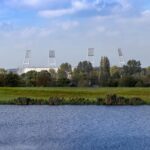
The club’s home ground has worn almost as many names as Hannover 96 has worn shirts. Today it is the Heinz von Heiden Arena, named for the Hannover-based construction company that took over the naming rights in 2022, though most locals still slip into calling it by its older, unsponsored name: the Niedersachsenstadion. It sits in the Sportpark Hannover area a little east of the city centre, close enough to the Maschsee lake to make a pre-match walk genuinely pleasant.
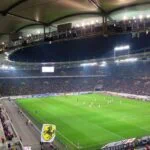
Capacity now stands at 49,000, split between seated blocks and a large standing terrace behind one goal, making it one of the bigger grounds outside the Bundesliga itself. The stadium first opened in 1954, hosted matches at the 1974 and 2006 FIFA World Cups as well as UEFA Euro 1988, and went through a major rebuild between 2002 and 2004 specifically to prepare it for that second World Cup.
What follows is a practical route through everything a Hannover 96 matchday actually involves: the Stadtbahn and bus options that get you from central Hanover to Robert-Enke-Straße or Waterloo, what the crowds around those stops are really like once 49,000 fans converge on a Saturday afternoon, an honest look at driving and parking, and how ticket buying works for a club whose history outstrips its current league position. It also covers the ground’s long run of names, the Nordkurve’s atmosphere, the nearby Maschsee, and accessibility and safety on the day.
| Club | Stadium | Capacity | Nearest Station | League (2026/27) |
|---|---|---|---|---|
| Hannover 96 | Heinz von Heiden Arena | 49,000 | Stadtbahn Waterloo (lines 3, 7) | 2. Bundesliga |
Transport at a Glance: Nearest Stops for the Heinz von Heiden Arena
Before the full breakdown below, here is every nearest stop for the ground in one place, covering the two Stadtbahn stops either side of the arena and the bus stop that sits right outside it.
| Mode | Stop / Station | Line(s) | Walk Time to Stadium |
|---|---|---|---|
| Stadtbahn | Waterloo | 3, 7, 9 | ~10 min (serves the North and East gates) |
| Stadtbahn | Stadionbrücke | 3, 7, 17 | Very short walk (serves the South and West gates) |
| Bus | Robert-Enke-Straße | 100, 200 | ~2 min, stop sits directly outside the ground |
Getting to the Heinz von Heiden Arena by Stadtbahn and Bus
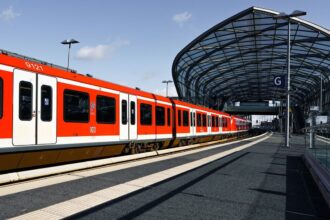
The single practical fact worth knowing before a matchday in Hanover is that the ground is not on a rail line of its own, and the trip involves a short walk at the end regardless of which service gets you closest. Stadtbahn lines 3, 7 and 9, part of Hanover’s light rail network, run from the city centre to the Waterloo stop, from where it is around a 10-minute walk to the stadium along a flat, well-used route on the North and East side of the ground. A second Stadtbahn stop, Stadionbrücke, is served by lines 3, 7 and 17 and sits right by the South and West gates instead.
A genuinely useful alternative sits right at the ground itself. Bus lines 100 and 200 stop directly outside at Robert-Enke-Straße, the halt renamed in 2015 to honour the former Hannover 96 goalkeeper and club captain, and this drops passengers within a couple of minutes’ walk of the main entrances rather than the longer hike from Waterloo.
Both routes run on Hanover’s ordinary city network rather than as football-specific services, and there is a genuine perk built in: a valid Hannover 96 match ticket doubles as a GVH transport ticket, covering the whole journey without buying anything extra. It works from three hours before kickoff until 5am the following day across the GVH’s zones A, B and C, covering buses, trams, S-Bahn and regional trains, so there is no separate fare to queue for at a platform machine.
Checking the GVH journey planner before setting off is worth doing, since it will confirm whether the tram or the bus suits a specific ticket’s entrance best on the day. Waterloo is not actually the closest stop to the ground, despite being the one most guides mention first; the bus stop at Robert-Enke-Straße lands closer to the gates.
Walking from the Hauptbahnhof is also realistic for anyone who would rather skip public transport altogether, since the stadium sits within around 30 to 40 minutes on foot through the Eilenriede’s southern edge and past the Maschsee, a genuinely pleasant route on a dry matchday rather than a chore.
Building both options into your planning, rather than fixating purely on Waterloo, is the simplest way to avoid an unnecessarily long walk on a night when the platforms and pavements are already busy with fellow supporters heading the same way.
Best if you want daily housekeeping and a front desk. Filter by area first, then by price.
Check availabilityBest for longer stays. Whole apartments and houses, so you are not eating out three times a day.
View rentalsBest as a last check before booking. Compares hotel rates across several sites in one search.
Compare ratesHow Busy Waterloo and Robert-Enke-Straße Actually Get on Matchday
A stadium holding 49,000 fans can fill a modest suburban stop well beyond its everyday capacity, and both the Waterloo tram platform and the Robert-Enke-Straße bus stop feel genuinely busy for twenty to thirty minutes either side of kickoff on a well-attended fixture. Hannover 96’s history as a former Bundesliga club with a large membership base means crowds here can feel heavier than the club’s current league position might suggest.
Extra trams and buses are the standard response to a full house rather than any separate shuttle network, since Hanover’s everyday Stadtbahn and bus services are considered adequate for a ground of this size. Stewards and transport staff are a routine sight around both approaches on any well-attended fixture, particularly the Lower Saxony derby against Eintracht Braunschweig.
The Nordkurve, Hannover 96’s standing home end, adds its own texture to the crowd flow. A large standing section empties more slowly and less predictably than rows of numbered seats, so anyone waiting to meet friends outside should expect the exit to take rather longer than the walk in.
Leaving right on the final whistle expecting an immediate tram or bus home rarely works out. The smarter move is either lingering inside the concourse for ten minutes while the first surge clears, or simply accepting a fuller-than-usual service back into the centre as part of the experience.
Arriving at least 45 to 60 minutes before kickoff is the simplest way to avoid both the inbound crush and any last-minute queue at the turnstiles. Fixtures against Eintracht Braunschweig, or any side with a large away following, tend to draw noticeably heavier crowds through both Waterloo and Robert-Enke-Straße than a routine midweek match.
Building real time either side of the match into your plans, rather than treating a 49,000-capacity crowd as an abstract number, remains the single biggest factor in a stress-free visit to the Heinz von Heiden Arena.
Should You Drive? What Parking at the Heinz von Heiden Arena Really Costs
Driving to the Heinz von Heiden Arena is entirely possible, with the ground reachable from both the A2 and A7 motorways that ring Hanover, from where matchday signage directs traffic towards the Stadion and Sportpark area rather than leaving visitors to work out local junctions themselves.
Parking itself splits into a paid and a free tier. The Schützenplatz fairground, a short walk from the stadium, offers around 5,000 spaces at roughly €8-10 (£6.88-8.60/$9.36-11.70) a car, with the neighbouring Messegelände and Expo-Parkplatz sites available as further paid alternatives on busier fixtures.
For anyone coming from further out, the city also runs a network of Park and Ride sites at Stadtbahn stops outside the centre, including Mühlenberger Markt and Wettbergen on lines 3 and 7, the same lines that serve Waterloo. These are completely free, operate around the clock, and generally leave passengers around a seven-minute walk from the platform.
Unless travelling from well outside Hanover’s Stadtbahn network with genuinely no alternative, the free Park and Ride sites on lines 3 or 7 will get you there, and more importantly get you home again, with far less hassle than hunting for a paid space near Schützenplatz once matchday traffic builds.
The paid lots close to the ground routinely fill more than an hour before a popular fixture, so anyone assuming a late arrival will still find a space is likely to be disappointed. Booking is not generally required at Schützenplatz, but arriving early is the only reliable way to guarantee a space there.
Anyone driving specifically for accessibility reasons should contact the club in advance of a visit, since designated disabled parking exists close to the ground but allocations are limited on the club’s busiest fixtures and are best confirmed ahead of matchday rather than on arrival.
Getting Hold of a Hannover 96 Ticket When the Second Tier Still Sells Out
Buying a ticket for a Hannover 96 match is not quite the free-for-all that a mid-table second-division fixture might suggest to a first-time visitor. The club’s official ticket shop at hannover96.de is the only sensible place to start, and it is worth checking well before matchday given how much of the ground’s capacity is already committed to season-ticket holders.
Season-ticket holders and club members get first claim on every home league fixture, with whatever remains then opening to general sale. Hannover 96’s status as a former Bundesliga club with a genuinely large fanbase means the ground regularly posts one of the higher average attendances anywhere in the 2. Bundesliga, so popular fixtures can sell through before general sale even opens.
Prices vary by category and fixture, with standing terrace tickets in the Nordkurve among the more affordable options in the ground, while seated tickets for a big derby against Eintracht Braunschweig, or a match against one of the division’s other well-supported clubs, tend to move through the pre-sale tiers considerably faster.
International visitors are not locked out of this system, but it is worth checking the official shop as soon as a fixture list is confirmed rather than assuming tickets will still be available close to matchday, especially for the club’s biggest home fixtures.
German match tickets are also routinely checked against identification at the turnstile, which is the practical reason buying outside official channels carries real risk rather than a theoretical one. A ticket bought from an unrecognised source can simply be refused entry if the name does not match.
The plain advice here is to start with the official shop the moment a fixture is confirmed, rather than assuming a club playing in the second tier will always have plentiful spare seats going right up to matchday. Hannover 96’s fanbase regularly proves otherwise.
What You Can’t Bring: Stadium Rules and Prohibited Items at the Heinz von Heiden Arena
The Heinz von Heiden Arena caps bags and backpacks at DIN A4 format, and unusually for a German ground also bans powerbanks and other charging devices from being brought in at all. Anything larger than a slim A4 bag, or anything with a battery meant to top up a phone, should stay at the hotel.
Laser pointers and anything designed to conceal someone’s identity, including masks, are refused at the gate on security grounds. Objects that could be used as weapons are banned outright, in line with the standard rule at every German stadium. Tickets bought or sold without the club’s authorisation are also invalid, along with tickets for the away end used to access home sections.
Pyrotechnics of any kind are banned, covering fireworks, flares, magnesium torches, smoke candles and Bengal fire specifically named in the club’s own rules. Alcoholic drinks are banned entirely, and even non-alcoholic drinks are capped at 0.5 litres and must come in a container that isn’t rigid or breakable.
Flag and banner poles are limited to 2 metres in length and 3cm in diameter, and any banner large enough to obstruct sightlines or conceal what’s happening behind it is refused. Professional or semi-professional cameras, SLR bodies, telephoto lenses and video equipment all need the club’s prior permission to bring in.
Mechanical noise instruments such as air horns are banned, along with unauthorised commercial, political or religious material. Staff carry out routine bag checks at every gate, and refusal is at the steward’s discretion even for something not explicitly listed. The full, current regulations are published on Hannover 96’s own Stadionordnung, worth a quick check before travelling.
From Niedersachsenstadion to Heinz von Heiden Arena: History and Naming Rights
The ground’s story stretches back to the early 1950s, when it was built between 1952 and 1954 on the same site it still occupies today, opening on 26 September 1954 under the name it kept unsponsored for nearly half a century: the Niedersachsenstadion, literally the Lower Saxony Stadium.
That original stadium hosted matches at both the 1974 FIFA World Cup and UEFA Euro 1988, cementing its place as one of the country’s established international venues long before sponsorship names entered German football grounds at all.
Everything changed once Germany was awarded the 2006 World Cup. A major redevelopment between 2002 and 2004, costing around €65 million (£55.90 million/$76.05 million) and led by Schulitz & Partner Architects, rebuilt much of the ground, added a new roof and converted standing areas into seating for the tournament itself, during which the venue carried the temporary FIFA designation of World Cup Stadium, Hanover.
Sponsorship arrived soon after. The ground became the AWD-Arena from 2002 to 2013, then the HDI-Arena from 2013 to 2022, before construction company Heinz von Heiden took over the naming rights and the ground became the Heinz von Heiden Arena, the name it carries today. It is worth knowing before a trip, since older maps and some local signage can still reference an earlier name.
The stadium’s official bus stop also carries its own piece of club history. Robert-Enke-Straße, renamed in 2015, honours the former Hannover 96 goalkeeper and club captain, one of German football’s most poignant modern stories, and the street name is a quiet but permanent presence for anyone arriving by bus.
That layered history is a genuine reason to see the ground even beyond a matchday. Hannover 96 runs its own stadium tour programme, bookable through the club, typically covering the changing rooms, the players’ tunnel and the pitchside technical areas, a route that gives a real sense of the scale of the 2002 to 2004 rebuild.
The Nordkurve and Hannover 96’s Matchday Atmosphere
The Nordkurve, Hannover 96’s standing home end, is where the club’s matchday atmosphere is genuinely made. It is the cheapest category in the ground and consistently the loudest, and it fills early for any fixture with real stakes attached, from the Lower Saxony derby against Eintracht Braunschweig to a visit from one of the 2. Bundesliga’s other traditionally larger clubs.
Hannover 96’s fanbase carries a genuine weight that goes beyond the club’s current league position. As a former Bundesliga mainstay for 30 consecutive seasons between 1964 and 2019, the support here reflects a club that still measures itself against the top flight, and that scale shows up clearly in how the Nordkurve sounds on a big night.
The club’s recent history has only sharpened that intensity. Two world championship titles from decades past, a first DFB-Pokal win as a second-division side in 1992, and years spent chasing a return to the Bundesliga have given the current squad and its supporters a genuinely restless recent story, rather than the quiet comfort a club of this size might otherwise settle into.
Away fixtures at the Heinz von Heiden Arena are treated seriously by visiting clubs and local police alike, and travelling support arriving for the Lower Saxony derby or another big 2. Bundesliga fixture should expect a noticeably fuller, louder stadium than a routine mid-table match elsewhere in the division would generate.
First-time visitors often assume a club playing outside the Bundesliga will feel like a quiet afternoon out. The Nordkurve on a full house says otherwise, and it is precisely that gap between Hannover 96’s current league position and its genuinely large historical fanbase that gives the ground its edge.
Best if you can move a day either way. Shows how the fare changes across the month.
Compare flightsBest if you want maps and messaging working the moment you switch your phone on.
See eSIM plansBest when public transport has stopped, or when you are travelling with children and bags.
Book a transferIn and Around the Heinz von Heiden Arena on Matchday
The Hannover 96 Fanshop sits at Robert-Enke-Straße 1, right beside the ground itself, and is the reliable place for club merchandise on any day of the week, not just before kickoff. On matchdays extra mobile fanshop points open around the stadium too, with the main one by the North entrance and further fanmobiles covering the South and West sections, typically opening around two hours before kickoff and closing about half an hour after the final whistle.
One detail catches plenty of first-time visitors out: every sales point inside the Heinz von Heiden Arena, from the fanshop stands to the food and drink kiosks on the concourse, takes cashless payment only, by card, phone or smartwatch. Anyone used to carrying coins or notes for stadium snacks elsewhere in Germany should plan around that rather than arrive expecting a cash kiosk.
Hospitality is a real, bookable option here rather than a token gesture toward corporate guests. Hannover 96 sells business and hospitality packages for home league matches through its own business department, working with agency Sportfive, alongside official VIP packages bookable through the club’s ticketing partner. The arena itself has several dedicated hospitality spaces, including private loge boxes and lounge areas with pitch views, so a hospitality ticket buys considerably more than a padded seat.
None of this changes the basic matchday for an ordinary ticket holder, but knowing the fanshop’s exact address and that cash is no good anywhere inside the ground are the two details most likely to trip up a first-time visitor to the Heinz von Heiden Arena.
Eating, Drinking and a Maschsee Walk Around a Hannover 96 Matchday
The Heinz von Heiden Arena sits only around 500 metres from the Maschsee, Hanover’s large artificial lake, which makes a lakeside walk before or after a match a genuinely easy addition rather than a separate trip. The promenade around the Maschsee is popular with locals on any weekend, matchday or otherwise.
The wider Sportpark area and neighbouring List district offer a solid spread of everyday Gaststätten and bars within easy walking distance of the ground, generally quieter and less tourist-priced than anything closer to central Hanover’s Georgstraße shopping strip.
Hanover’s own food culture is worth sampling around a matchday too. Grünkohl mit Bregenwurst, a slow-cooked kale dish served with a smoked sausage, is the region’s closest thing to a signature meal through autumn and winter, and the city’s traditional Lüttje Lage, a small beer paired with a shot of schnapps drunk together in one motion, remains a genuinely local tradition worth trying at least once.
Inside the ground itself, standard stadium catering covers Bregenwurst, regional Bratwurst, currywurst and pretzels at the concourse kiosks, alongside local Herrenhäuser beer, priced in line with other German second-tier grounds, with queues at their longest in the fifteen minutes either side of half time.
Eating either well before arriving or waiting until after full time avoids the worst of the half-time queue, and building a short Maschsee walk into the trip either side of kickoff is one of the easiest, no-planning-required additions to a Hanover matchday anywhere in the city.
Wheelchair Access and Accessible Travel to the Heinz von Heiden Arena
Getting to the Heinz von Heiden Arena as a wheelchair user or with reduced mobility is broadly manageable, though it takes a little more advance planning than some of Germany’s newer, purpose-built grounds, given how much of the stadium’s current form dates back to the 2002 to 2004 rebuild rather than a more recent renovation.
On the driving side, disabled parking is available close to the stadium, though spaces are limited on the club’s busier fixtures, and contacting the club ahead of a visit removes one common source of matchday stress for visiting fans rather than discovering a full lot on arrival.
By public transport, both the Stadtbahn to Waterloo and the bus to Robert-Enke-Straße run step-accessible services, and the walking routes from either stop to the ground are flat, though the busiest twenty minutes either side of kickoff can still mean a crowded platform or pavement for anyone needing extra space or time.
Wheelchair spaces and accompanying-carer seating are available inside the ground itself, and the club’s official ticket shop and fan service team are the right first point of contact for booking these, since accessible allocations are limited and best arranged well ahead of a specific fixture rather than on arrival.
Leaving accessibility arrangements until matchday itself is the single easiest mistake to avoid here. Contacting Hannover 96’s service team in advance, whether for parking, seating or general guidance around the ground, remains the simplest way to avoid any last-minute uncertainty on the day.
Safety and Crowd Behaviour on a Hannover 96 Matchday
German football grounds are, on the whole, well organised and safe for visiting fans, and the Heinz von Heiden Arena is no exception. Bag checks and ticket scans are routine at the turnstiles, and stewards are a constant, visible presence around both the Waterloo and Robert-Enke-Straße approaches on any matchday.
Standing sections such as the Nordkurve involve genuine crowd movement during goals and big moments, which is a normal part of the experience for regular attendees but worth being mentally prepared for if you have never stood in a large German ultras section before.
Neutral fans and away supporters attending the Lower Saxony derby or another big 2. Bundesliga fixture should expect a noticeably more intense atmosphere than a routine weekend out, reflecting Hannover 96’s genuinely large and committed fanbase, but organised trouble is rare and heavily policed when it does occur.
As with any large stand, being aware of your nearest exit, keeping valuables secure in a zipped inner pocket rather than a back pocket, and following steward instructions during the post-match crush are the same basic precautions worth taking here as at any large German ground.
The plain advice is to treat a Hannover 96 matchday with the same common sense as any major German fixture: arrive early, follow the crowd rather than fighting it, and keep an eye on official Hannover 96 and GVH channels for any last-minute changes around transport or entry on the day itself.

Rupert’s Handy Travel Tips
Heading to a Hannover 96 matchday? Rupert has a few tips that can save both time and a lot of standing around:
- Take the bus to Robert-Enke-Straße, not just the tram to Waterloo: lines 100 and 200 stop right outside the ground, while the Stadtbahn to Waterloo still leaves a 10-minute walk.
- Buy your GVH ticket before you set off: a single fare covers the whole journey on tram or bus at around €3.70, with no special matchday supplement.
- Check the official ticket shop early for a big fixture: Hannover 96’s large fanbase means popular matches, especially the Braunschweig derby, can sell through before general sale even opens.
- If you drive, head for the free Park and Ride stops on lines 3 or 7: Mühlenberger Markt and Wettbergen cost nothing and connect straight in, rather than hunting for a paid space near Schützenplatz.
- Build in a Maschsee walk either side of kickoff: the lake sits only around 500 metres from the ground and makes an easy, no-planning-required addition to the day.
Want to meet the reindeer behind our travel tips? Find out more in our page Who is Rupert?.



Frequently Asked Questions About Getting to the Heinz von Heiden Arena
How do I get to the Heinz von Heiden Arena from central Hanover?
Take Stadtbahn line 3 or 7 to the Waterloo stop, then walk around 10 minutes to the ground, or take bus line 100 or 200 directly to the Robert-Enke-Straße stop right outside the stadium.
Is there a bus stop closer to the stadium than the tram?
Yes. Bus lines 100 and 200 stop at Robert-Enke-Straße, a couple of minutes’ walk from the main entrances, whereas the Stadtbahn stop at Waterloo leaves a longer 10-minute walk.
Should I drive to a Hannover 96 match?
It is possible, with paid parking at Schützenplatz and free Park and Ride sites on Stadtbahn lines 3 and 7, but the free P&R stops generally offer the easiest, least stressful route in and out.
Do I need to be a club member to buy Hannover 96 tickets?
Not strictly, but season-ticket holders and members are given priority for most home league fixtures, and popular matches can sell through before general sale opens given the club’s large fanbase.
Can I buy Hannover 96 tickets from resale websites?
This is not recommended. German match tickets are personalised and checked against identification at the turnstile, so a ticket bought outside official channels can be refused entry if the name does not match.
What is the capacity of the Heinz von Heiden Arena?
The stadium holds 49,000 spectators, split between seated blocks and the standing Nordkurve terrace behind one goal.
What was the Heinz von Heiden Arena called before 2022?
It was the HDI-Arena from 2013 to 2022, and before that the AWD-Arena from 2002 to 2013 and the unsponsored Niedersachsenstadion from 1954 to 2002.
What league does Hannover 96 play in?
Hannover 96 compete in the 2. Bundesliga, Germany’s second tier, for the 2026/27 season, having spent 30 consecutive seasons in the Bundesliga between 1964 and 2019.
Further Reading & Related Guides
Landing in the city before a match? Our Hanover Airport Transfers guide covers every realistic way of reaching the centre from HAJ, while our Things to Do in Hanover guide rounds up the sights worth prioritising around a matchday visit.
If a match falls on a free day, our Best Day Trips from Hanover guide covers Hildesheim, Hameln, Celle and Goslar for the rest of your stay. For getting around the wider region by rail, our German Rail Tickets Explained and Interrail Germany Pass Guide both break down the ticket options worth comparing before a longer trip around Lower Saxony.