Reviewed by our editorial team Updated
Discover the Very Best of Yorkshire from Leeds
Leeds is one of the best bases in northern England for exploring without a car. Historic cities, spa towns, castles, UNESCO World Heritage Sites, Brontë country and the Yorkshire Dales can all be reached on a day out, with many destinations connected directly by train.
The biggest advantage is the strength of the rail network. You can leave Leeds after breakfast and be walking the medieval streets of York, exploring a ruined castle above the River Nidd or wandering beside the canal at Saltaire before much of the morning has passed. Several of the easiest trips take less than 40 minutes by direct train.
Other destinations require more planning. Haworth involves an onward connection from Keighley, while places such as Fountains Abbey and parts of the Yorkshire Dales are much easier by car or organised tour. Throughout this guide, we explain how to make each journey, where to arrive and whether public transport is genuinely practical.
From effortless rail trips to full days in the Yorkshire countryside, these are the places worth leaving Leeds to explore.
Walk Through Two Thousand Years of History in York
If you only have time for one day trip from Leeds, York is the obvious place to start. Few cities in Britain pack so much history into such a compact centre, and the fast rail connection makes it exceptionally easy to visit without a car.
Direct trains run from Leeds railway station to York throughout the day, with the fastest services completing the journey in around 22 minutes. Several train operators use the route, so frequencies are high, although journey times vary depending on the service. Check the calling pattern before boarding if you want the fastest option.
York railway station is immediately beside the historic centre. Leave the station and walk towards the city walls, with the route to the main attractions clearly signposted. York Minster is around 15 minutes away on foot, while the National Railway Museum is even closer to the station.
A good first visit should include York Minster, the Shambles and a walk along at least part of the medieval city walls. The narrow streets around the Minster are best explored without a rigid route, while the Shambles is most enjoyable earlier in the day before the largest crowds arrive.
The National Railway Museum is another major attraction and is free to enter, although checking current admission and booking arrangements before travelling is sensible. Rail enthusiasts could easily spend several hours here, so think carefully before trying to combine a long museum visit with every historic attraction in the city.
For a different view of York, walk beside the River Ouse or climb onto the city walls. The walls form the longest surviving medieval town walls in England and provide elevated views across rooftops, gardens and historic buildings.
You can comfortably see the highlights in a day, but do not try to visit every museum and attraction. Choose two or three priorities and leave time to enjoy the streets themselves.
For the return journey, walk back to York station and take a direct train to Leeds. Services continue into the evening, but check your intended return before setting out, particularly on Sundays or when engineering work is taking place.
York deserves far more than a brief introduction. If you’re planning a visit, read our complete Things to Do in York guide for detailed attraction information, practical tips and suggested itineraries.
Compare hotels and other places to stay in Leeds.
Check availabilityBrowse apartments, holiday homes and self-catering stays in Leeds.
View rentalsCompare prices for Leeds hotels across multiple booking sites.
Check dealsEnjoy the Elegant Streets and Gardens of Harrogate
For a gentler day away from the city, head to Harrogate, a historic spa town known for its gardens, grand architecture and relaxed centre.
Direct trains connect Leeds with Harrogate, with typical journey times of around 35 minutes. The railway station is right in the centre, so you can begin exploring almost immediately after arrival.
Start by walking towards the Montpellier Quarter, where independent shops, cafés and historic buildings line the streets around the former spa district. This is also where you will find some of the town’s most recognisable architecture.
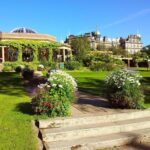
Nearby, the Valley Gardens provide 17 acres of parkland, flower gardens and walking paths. Entry is free, and the gardens are an easy place to spend an hour or two, particularly in good weather.
Harrogate’s identity is closely connected with its spa history. The Turkish Baths Harrogate occupy a spectacular Moorish-style interior and remain a working spa rather than simply a historic attraction. If you want to use the facilities, book in advance, as sessions can sell out.
No first visit would be complete without at least considering a stop at Bettys Café Tea Rooms. The original Harrogate branch is one of the town’s best-known institutions, but queues can be long at popular times. If afternoon tea is a priority, plan around it rather than assuming you can walk straight in.
For a longer day, RHS Garden Harlow Carr lies outside the town centre. Reaching it adds extra travel time, so it is better to choose between a relaxed day in central Harrogate and a visit that includes the garden rather than rushing between both.
Harrogate works particularly well for visitors who want a low-effort day trip with no complicated transfers. The centre is compact, the railway station is convenient and there is enough to see without following a packed itinerary.
Our dedicated Things to Do in Harrogate guide explores the town’s elegant spa heritage, Turkish Baths, beautiful gardens, independent shops and everything you need to plan the perfect visit.
Discover Art and Industrial Heritage in Saltaire
Few day trips from Leeds are as easy or as distinctive as Saltaire. The Victorian model village is a UNESCO World Heritage Site, yet direct trains can get you there in around 15 minutes.
The journey begins at Leeds railway station. Take a direct train towards Saltaire and get off at Saltaire railway station, which sits in the heart of the historic village. There is no onward bus or taxi journey to organise.
Saltaire was created in the 19th century by industrialist Sir Titus Salt, who built a vast textile mill alongside housing and facilities for his workers. The result is an unusually complete planned industrial community, with stone terraces, civic buildings, a church and the enormous Salts Mill surviving together.
Start at Salts Mill, the dominant building in the village. The former textile mill now contains art, independent businesses, places to eat and displays of work by David Hockney, who was born in nearby Bradford.
Allow time to explore the village itself rather than spending the entire visit inside the mill. Walking through the orderly streets helps explain why Saltaire is internationally significant and how differently it was planned from the crowded industrial districts found in many Victorian cities.
Continue towards the Leeds and Liverpool Canal and cross into Roberts Park. The combination of the mill, canal, park and surrounding hills makes this one of the most attractive industrial heritage sites in Britain.
A half-day is enough for a quick visit, but Saltaire comfortably fills a full day if you explore Salts Mill properly, stop for lunch and walk along the canal.
The return journey is particularly simple. Walk back to Saltaire station and take a direct train to Leeds.
Follow the Brontës into the Yorkshire Moors at Haworth
Haworth is one of the most atmospheric day trips from Leeds. The steep cobbled streets, stone buildings and surrounding moorland are closely associated with Charlotte, Emily and Anne Brontë, but the village is worth visiting even if you have never read one of their novels.
Unlike York, Harrogate and Saltaire, Haworth does not have a National Rail station. The journey therefore requires a connection, but it is still perfectly practical without a car.
Take a direct train from Leeds railway station to Keighley. The fastest journeys take around 25 minutes, although stopping services can take longer. From Keighley, continue to Haworth by local bus. The onward journey typically takes around 20 to 30 minutes, depending on the service and traffic.
Another option is the Keighley & Worth Valley Railway, a preserved heritage railway running between Keighley and Oxenhope. Trains call at Haworth, but this should be treated as part of the day out rather than simply the quickest form of transport. Services do not necessarily run every day, and the timetable varies throughout the year.
If you arrive at Haworth railway station, be prepared for an uphill walk into the historic village. Main Street is steep and partly cobbled, so comfortable footwear is important.
The main attraction is the Brontë Parsonage Museum, the former family home where the sisters wrote some of the most famous novels in English literature. The neighbouring churchyard and St Michael and All Angels’ Church are also closely connected with the family.
Main Street is an attraction in its own right. Independent shops, cafés and traditional pubs occupy the stone buildings that climb steeply through the centre of the village.
For a longer visit, head onto the moors. Walking routes lead towards places associated with the Brontës, including Top Withens, traditionally linked with the setting of Wuthering Heights. These are proper countryside walks rather than quick extensions to a museum visit. Check the weather, carry water and allow enough time to return before dark.
For most first-time visitors, a combination of the Brontë Parsonage Museum, Main Street and a shorter moorland walk makes a more realistic day than attempting the longest routes.
Before leaving Leeds, check both your outward and return connections. If you are using the heritage railway, build your day around its timetable. If you are travelling by regular train and bus, check the final practical connection back to Keighley rather than relying on guesswork.
Explore a Castle and Canal in Skipton
Skipton provides an easy introduction to the Yorkshire Dales without requiring a car or a complicated rural bus journey. Direct trains from Leeds bring you into a lively market town with a medieval castle, canal basin and countryside atmosphere.
Direct trains run from Leeds to Skipton throughout the day. The journey typically takes around 40 to 50 minutes, depending on the service.
From Skipton railway station, the town centre is around a 10-minute walk. Follow signs towards the High Street, where you will find shops, cafés and the market on trading days.
At the top of the High Street stands Skipton Castle, one of the best-preserved medieval castles in England. Unlike many ruined castles, much of the structure remains intact, allowing visitors to explore rooms, courtyards and defensive features.
Allow around 90 minutes to two hours for the castle if you want to explore properly. The entrance sits close to the top of the High Street, so there is no need for a bus or taxi from the town centre.
Afterwards, head towards the Leeds and Liverpool Canal. Skipton’s canal basin is only a short walk from the main shopping streets and is one of the best places to slow the pace of the day.
Boat trips operate from Skipton, with options ranging from shorter cruises to longer journeys with food or commentary. Book ahead if a canal trip is an important part of your visit, particularly during weekends and school holidays.
You can also walk along the towpath without taking a boat. The canal quickly leaves the busiest part of the town behind, providing an easy and largely level walk.
Skipton works particularly well because the day can be adapted to the weather. In good conditions, combine the castle with a canal walk or cruise. If the weather turns, spend longer exploring the castle, shops and places to eat.
For the return journey, walk back to Skipton railway station and take a direct train to Leeds. Check the evening timetable before setting out if you plan to stay for dinner.
Skipton is one of the easiest ways to add a castle and a taste of the Yorkshire Dales to a Leeds city break without hiring a car.
See the Viaduct and Riverside at Knaresborough
Few day trips from Leeds deliver a better first impression than Knaresborough. The town rises above the River Nidd, with stone houses, castle ruins and a dramatic railway viaduct creating one of the most recognisable views in Yorkshire.
Direct trains connect Leeds with Knaresborough, with the journey typically taking around 45 minutes. The route continues through Harrogate, but Knaresborough has a very different character and easily deserves its own day.
Knaresborough railway station is close to the historic centre. From the station, walk towards Knaresborough Castle, where the grounds provide the famous view across the river towards the viaduct.
The castle itself is partly ruined, but the setting is the main attraction. From the elevated grounds, paths descend towards the River Nidd. Be aware that Knaresborough is hilly, and a day exploring both the upper town and riverside involves steep slopes and steps.
At river level, you can walk beside the water, stop at cafés or hire a rowing boat when seasonal operations and conditions allow. Seeing the viaduct from the river provides a completely different perspective from the castle viewpoint above.
Another major attraction is Mother Shipton’s Cave, associated with the legendary Yorkshire prophetess. The site also contains the Petrifying Well, where mineral-rich water gradually coats objects with stone-like deposits.
The attraction lies beside the river, but check the entrance location carefully rather than assuming you can simply follow any riverside path. Opening arrangements can be seasonal, and advance booking may be sensible during busy periods.
A good day in Knaresborough combines the castle viewpoint, riverside and historic streets without trying to rush. If you add Mother Shipton’s Cave or spend time rowing on the river, allow most of the day.
Return to Leeds by direct train from Knaresborough station. The steep terrain means you should leave more time to reach the station than the distance on a map might suggest.
Escape to the Moorland Above Ilkley
For a day trip that combines a pleasant Yorkshire town with open countryside, head to Ilkley. Direct trains make the journey simple, while the moor rises immediately above the town.
Trains run directly from Leeds to Ilkley, with typical journey times of around 30 minutes. Ilkley is the end of the line, making the journey particularly straightforward for first-time visitors.
The railway station is in the centre of town. From here, you can explore the shops, cafés and streets around The Grove before deciding how much of the day you want to spend walking.
The main attraction for many visitors is Ilkley Moor. The best-known landmark is the Cow and Calf Rocks, a dramatic group of millstone grit formations overlooking the town and surrounding countryside.
Reaching the moor requires more effort than simply arriving in Ilkley. You can walk uphill from the town, but the climb is significant and takes you away from the level streets around the station. Local buses and taxis may reduce some of the approach, depending on your chosen route.
Once on the moor, the terrain becomes more exposed. Wear proper footwear and carry a waterproof layer, even if conditions look reasonable when you leave Leeds. Moorland weather can change quickly, and mist can reduce visibility.
Do not treat the Cow and Calf as the only possible walk. There are routes of different lengths across the surrounding landscape, but choose one that matches your experience and the available daylight.
For a gentler visit, stay closer to town. Walk beside the River Wharfe, explore the centre and enjoy the atmosphere without committing to a long moorland hike.
Ilkley is particularly good because you can decide how ambitious to be after seeing the weather. A clear day can become a proper countryside walk, while poor conditions still leave you with an attractive town and riverside to explore.
Compare routes and fares for your journey to Leeds.
Compare flightsChoose an Airalo eSIM and arrange mobile data before you arrive.
Browse eSIMsArrange a private airport pickup for your trip to Leeds.
Check transfersWander the Canals and Independent Streets of Hebden Bridge
Hebden Bridge feels very different from Leeds. Set in the steep-sided Calder Valley, the town is known for its independent shops, creative community, canal walks and dramatic surrounding landscape.
It is also remarkably easy to reach. Direct trains run from Leeds railway station to Hebden Bridge, with the fastest journeys taking around 40 minutes. The railway station sits slightly outside the main shopping streets, but the walk into the centre takes only around 10 minutes.
The station itself is worth a moment before you leave. Its restored historic features provide an attractive introduction to a town where the railway, canal and industrial past are still very visible.
From the station, walk towards the centre and explore the streets around St George’s Square and the Rochdale Canal. Hebden Bridge has a strong independent character, with small shops, bookshops, cafés and businesses occupying stone buildings throughout the compact centre.
The Rochdale Canal provides the easiest walking option. Join the towpath and you can quickly leave the busiest streets behind, following the water past locks, old mills and wooded hillsides. The route is largely level beside the canal, making it a useful alternative to the much steeper walks surrounding the town.
For a more ambitious day, consider Hardcastle Crags, a wooded valley managed by the National Trust. The landscape includes woodland paths, streams and Gibson Mill, a former cotton mill deep in the valley.
Reaching Hardcastle Crags requires more planning than exploring central Hebden Bridge. You can walk from the town, but the full outing adds several miles to the day. Local transport may help with part of the journey, depending on current services, but this is best treated as a proper countryside excursion rather than a quick attraction beside the town centre.
Hebden Bridge is built into a steep valley, so some streets and walking routes involve significant climbs. If you want an easier day, concentrate on the town and canal. If you are heading into the surrounding hills or woodland, wear suitable footwear and check the weather before leaving Leeds.
Allow a full day if you plan to combine the town with Hardcastle Crags. For a more relaxed visit focused on independent shops, cafés and the canal, half a day can be enough.
The direct train back to Leeds makes the return journey simple, but check the evening timetable before committing to a longer countryside walk.
Discover Bradford’s Culture, Architecture and Food
Bradford is so close to Leeds that it is easy to overlook as a day trip, but the two cities feel completely different. Major museums, Victorian architecture and one of Britain’s strongest food scenes make it worth exploring in its own right.
Trains run from Leeds to both Bradford Interchange and Bradford Forster Square, and the station you choose matters. The two stations are on opposite sides of the centre and serve different rail routes.
For most visitors exploring central Bradford, either can work, but check which station is closest to the attractions you have chosen before buying your ticket. The fastest rail journeys from Leeds take around 20 minutes.
One of the city’s major attractions is the National Science and Media Museum, which explores photography, film, television, gaming and the technology behind moving images. It is an obvious choice for families, film enthusiasts and anyone looking for an indoor attraction.
Bradford’s architecture is another reason to visit. Walk through Little Germany, where grand 19th-century warehouses and commercial buildings reflect the wealth generated by the city’s textile industry.
The area around City Hall and Centenary Square shows another side of Bradford’s Victorian heritage. Rather than rushing directly between attractions, leave time to look at the buildings around the centre.
Further out, Cartwright Hall Art Gallery stands in Lister Park and houses collections of British art alongside exhibitions connected with Bradford’s communities and cultural history. Reaching it requires an onward journey from the central stations, so allow additional time if you want to include it.
Food should also be part of the day. Bradford is particularly famous for its South Asian restaurants and curry houses, and a meal here can be as important to the experience as visiting a museum.
Do not automatically combine Bradford with Saltaire simply because they are close. You can do both, but each is strong enough to fill a day. Bradford works best if you want museums, architecture and food, while Saltaire is the better choice for industrial heritage, art and canal walks.
With frequent trains and such a short journey, Bradford is one of the easiest day trips from Leeds. It is also one of the most different from the city you have left behind.
Spend a Day at Castle Howard
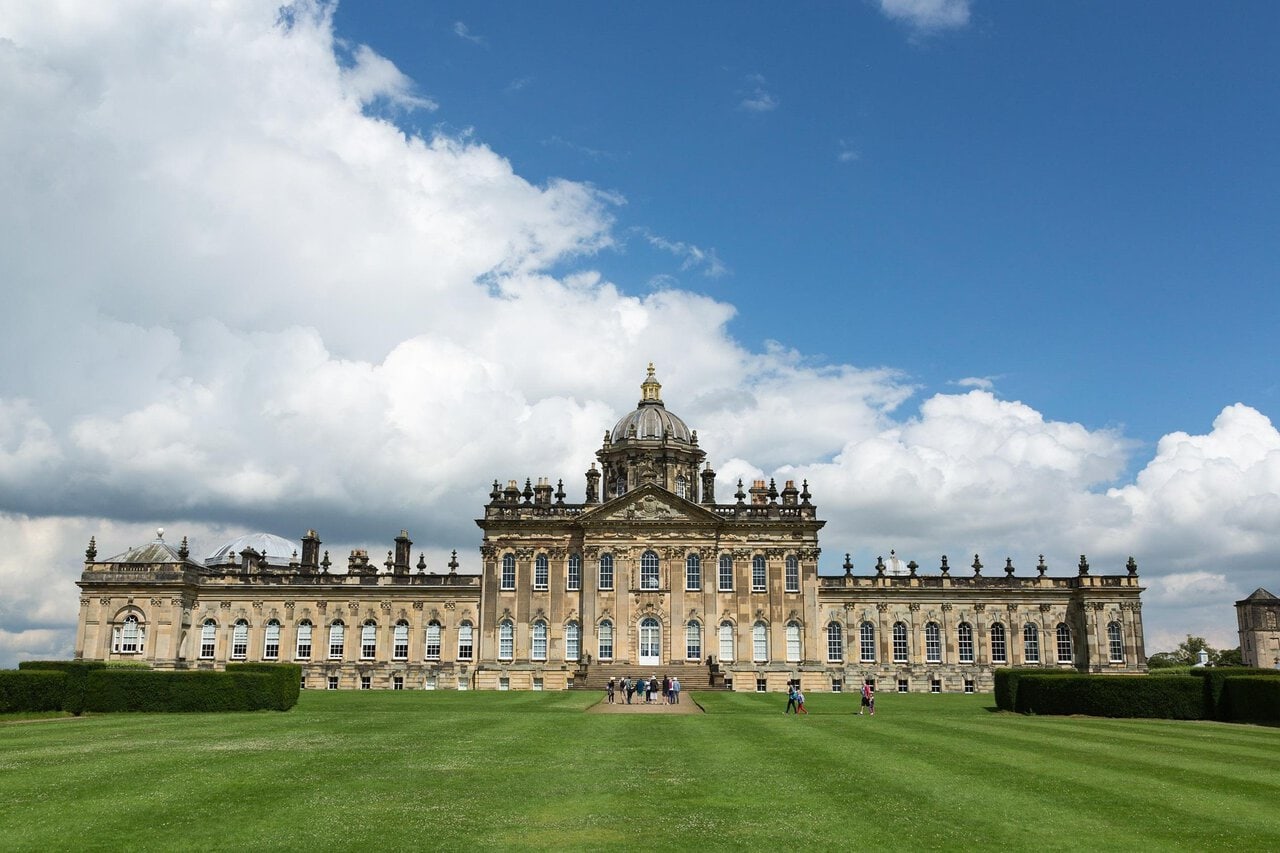
For grand architecture, landscaped grounds and a full change of pace from central Leeds, Castle Howard is one of the most impressive possibilities. The vast country house is surrounded by gardens, woodland, lakes and parkland, making this a destination that can easily occupy most of the day.
Despite its name, Castle Howard is not a medieval castle. It is an enormous stately home begun at the end of the 17th century and developed over generations by the Howard family.
Inside, visitors can explore lavish rooms filled with paintings, sculpture, furniture and decorative art. Outside, the estate includes formal gardens, fountains, monuments, woodland and long walks through the grounds.
The scale matters when planning your visit. This is not somewhere to arrive for an hour, photograph the exterior and leave. Allow at least four hours, and considerably longer if you want to explore both the house and the wider estate properly.
Castle Howard is also one of the destinations on this page where public transport requires more thought. There is no railway station at the estate, so you cannot simply take a direct train from Leeds and walk from the platform.
A public transport journey generally involves travelling towards York or Malton and making an onward connection. Bus services serving the estate can be seasonal or limited, so check the complete outward and return journey before leaving Leeds.
Do not look only at how you will arrive. Check the final practical bus away from Castle Howard as well, as rural services can finish much earlier than trains between major cities.
Driving is considerably simpler. The estate is around an hour from Leeds in good traffic, although journey times can vary. Parking is available for visitors.
An organised excursion may also be worth considering if you do not have a car and the public transport timetable does not work well on the day of your visit.
Castle Howard is best chosen as the main event of the day. Trying to combine it with several other major attractions usually means spending too much time travelling and too little time exploring.

Explore the Ruins and Water Gardens of Fountains Abbey
Few places within day-trip distance of Leeds are as impressive as Fountains Abbey and Studley Royal Water Garden. The combination of enormous monastic ruins and an 18th-century designed landscape has earned the estate UNESCO World Heritage status.
The centrepiece is Fountains Abbey, founded in the 12th century and now one of the most extensive monastic ruins in Britain. Visitors can walk among the remains of the church, cloisters and other buildings, with enough of the structure surviving to appreciate the original scale of the monastery.
The experience continues beyond the abbey itself. Paths lead through the Studley Royal Water Garden, where ornamental lakes, temples, statues and carefully designed viewpoints create a completely different landscape.
This is a large site, and distances are easy to underestimate. Wear comfortable shoes and expect to spend a significant part of the visit outdoors. Allow at least four hours, although a relaxed visit can occupy most of the day.
Reaching Fountains Abbey from Leeds without a car is possible, but it requires much more planning than travelling to York, Harrogate or Skipton. There is no railway station at the estate, and the final part of the journey depends on onward road transport.
The nearest useful transport connections generally involve travelling towards Harrogate or Ripon, followed by a bus, taxi or other onward connection. Services reaching the estate can vary by day and season, so this is not a journey to improvise after arriving in the area.
If you are relying on public transport, plan the journey in reverse first. Find the final workable connection away from Fountains Abbey, then build the rest of your day around it. A missed rural bus can leave you with an expensive taxi journey.
Travelling by car is much easier and gives you greater control over how long you stay. The drive from Leeds typically takes around an hour, depending on traffic and your starting point.
Organised tours can also be a sensible option for visitors without a car, particularly when they combine Fountains Abbey with other carefully chosen stops without requiring you to coordinate several rural connections.
Fountains Abbey deserves the extra effort. For visitors interested in history, architecture, photography or landscaped gardens, this is one of the finest day trips from Leeds.
Escape into the Yorkshire Dales
The Yorkshire Dales cover a vast area, so simply saying you can take a day trip there from Leeds is not particularly helpful. Some parts are easy to reach without a car, while others require several connections or a carefully planned tour.
The first decision is what kind of day you actually want. If you are looking for a market town with countryside on the doorstep, Skipton is the simplest choice and has already earned its own section in this guide. For villages, waterfalls and deeper Dales scenery, you will need to travel further.
Settle is one of the easiest options by rail. Direct trains from Leeds follow the scenic route towards the Yorkshire Dales, bringing you into a traditional market town surrounded by limestone countryside. From the centre, you can explore local walks or simply use the journey itself as part of the experience.
The railway continues beyond Settle through some of the finest scenery in northern England. Stations further along the line can provide access to walking country, but this requires proper planning. A remote station is not automatically a useful day-trip destination, particularly if you have not checked walking routes, weather conditions and the time of the return train.
Grassington is another popular choice. The stone-built village sits in Wharfedale and provides access to riverside and countryside walks, but there is no railway station. Public transport journeys generally require a combination of train and bus, often involving a connection in Skipton.
For many visitors, Grassington is easier as part of an organised tour. This is particularly true if you want to see several villages and viewpoints in one day rather than spending a large part of the trip waiting for connections.
Malham is famous for Malham Cove, Gordale Scar and Janet’s Foss. The scenery is spectacular, but reaching the village from Leeds without a car takes considerably more planning. The main attractions also involve walking, so this is not a destination where you can simply arrive, look around for an hour and return.
If Malham is your priority, treat it as a full countryside day. Check the complete transport journey before leaving Leeds, wear proper footwear and carry waterproof clothing. Mobile coverage can be unreliable in rural areas, so save any maps and journey information you may need.
A car gives you far more freedom in the Yorkshire Dales, but it also brings narrow roads, limited parking and busy conditions at popular places during summer weekends. Leaving early is sensible.
For visitors without a car, an organised Yorkshire Dales tour from Leeds is often the most efficient way to see villages and landscapes that would otherwise require several separate bus journeys.
The key is not to treat the Yorkshire Dales as a single attraction. Choose one area, understand how you will get there and know how you will get back before setting out.
Ride into the North York Moors and Visit Goathland
For one of the most ambitious day trips from Leeds, head east towards the North York Moors and the village of Goathland.
Goathland is known for two very different screen connections. The village became Aidensfield in the long-running television series Heartbeat, while its heritage railway station appeared as Hogsmeade station in the first Harry Potter film.
The real attraction, however, is the setting. Stone buildings, open moorland and the heritage railway give Goathland a completely different atmosphere from the cities and towns closer to Leeds.
This is not one of the easy rail trips on the page. Goathland is not connected to the National Rail network, and reaching it independently from Leeds requires considerably more planning.
The most memorable way to arrive is aboard the North Yorkshire Moors Railway, which operates heritage trains through the national park. Depending on the timetable and your chosen route, this can turn the journey itself into the main experience of the day.
However, heritage railway services are not identical throughout the year. Operating days, departure times and routes can change seasonally, so you must build the day around the railway timetable rather than arriving and hoping a train will appear.
Another approach is to travel towards the eastern side of Yorkshire and continue by bus or road, but the number of connections can make this a long day from Leeds.
Once in Goathland, explore the village, see the railway station and leave time for the surrounding landscape. There are walking opportunities in the area, but adding a long countryside hike to an already complicated transport day requires careful timing.
For independent travellers, the first thing to check is not the outward journey. Find the last practical route back towards Leeds and work backwards from there. Missing a connection in a rural area can turn an enjoyable day into an expensive problem.
Driving makes Goathland considerably easier to reach, although the journey from Leeds is long enough that you should allow most of the day. Roads through the moors can also be slower than expected.
An organised tour is often the best option for visitors without a car, particularly if it combines Goathland, the North York Moors and other carefully chosen stops.
This is the furthest-reaching destination in our guide, and it is not the right choice for everyone. If you want a simple day trip, choose York, Saltaire or Harrogate. If you want moorland scenery, heritage railways and a full day of exploration, the extra effort can be worthwhile.
Browse hostels and budget-friendly stays around Leeds.
See hostelsGet help with compensation, eligible lounge access and disruption support.
Explore AirHelp+Leave your luggage somewhere convenient and enjoy Leeds hands-free.
View storageJoin an Organised Day Tour from Leeds
Some of the best places around Leeds are surprisingly difficult to visit by public transport. An organised tour can make far more sense when the alternative involves several buses, long waits and a constant need to watch the clock.
The strongest tour option is usually the Yorkshire Dales. A well-planned day can take you through villages, valleys and scenic areas that would be difficult to combine independently without a car.
This is particularly useful if you want to see several places in one day. Public transport may get you to an individual town or village, but it rarely allows you to move efficiently between multiple rural locations.
Tours into Brontë country can also be worthwhile, particularly when they include Haworth alongside moorland scenery and other places connected with the Brontë family. Independent travel to Haworth is perfectly possible, but a tour can provide more context and remove the need to coordinate train and bus connections.
The North York Moors are another strong candidate for an organised excursion. The distance from Leeds and the limited transport options within the national park make tours particularly useful for visitors who want to see several locations in a single day.
Before booking, look carefully at the itinerary. A tour that advertises six or seven destinations may provide little more than a few minutes and a photograph at each stop. Fewer stops with meaningful time to explore are often better.
Check the departure point as well. “From Leeds” does not always mean a hotel pickup, and some tours leave from a fixed city-centre location at a specific time. Make sure you know exactly where to meet and how early you need to arrive.
Also check what is included in the price. Attraction admission, meals and optional activities may cost extra, even when the destination appears prominently in the tour description.
Organised tours are not necessary for easy destinations such as York, Harrogate, Saltaire or Skipton. Direct trains are usually simpler and give you complete control over the day.
Their real value comes when they unlock places that are awkward to reach independently. For the Yorkshire Dales, North York Moors and more remote historic attractions, paying for a tour can mean spending your day exploring rather than waiting for connections.
Which Day Trip from Leeds Should You Choose?
The best day trip depends on whether you want history, countryside, art, literature or the simplest possible journey. Several destinations are so easy by train that they require almost no advance planning, while others need a car, a tour or a carefully coordinated public transport itinerary.
| Destination | Best For | Travel Style | Typical Journey |
|---|---|---|---|
| York | Major sights and history | Direct train | Around 22 minutes |
| Harrogate | Spa-town atmosphere and gardens | Direct train | Around 35 minutes |
| Saltaire | Art and industrial heritage | Direct train | Around 15 minutes |
| Haworth | Brontë history and moorland | Train and bus or heritage railway | Around 1 to 1½ hours |
| Skipton | Castle and canals | Direct train | Around 40 to 50 minutes |
| Knaresborough | Riverside scenery and views | Direct train | Around 45 minutes |
| Ilkley | Moorland walking | Direct train | Around 30 minutes |
| Hebden Bridge | Independent shops and canals | Direct train | Around 40 minutes |
| Bradford | Museums, architecture and food | Direct train | Around 20 minutes |
| Castle Howard | Stately home and gardens | Car, tour or public transport connections | Around 1 hour by car |
| Fountains Abbey | Abbey ruins and landscaped gardens | Car, tour or public transport connections | Around 1 hour by car |
| Yorkshire Dales | Villages and countryside | Varies by destination | Full-day trip |
| Goathland | Heritage railway and moorland | Car, tour or multiple connections | Full-day trip |
For the easiest first day trip, choose York. The journey is exceptionally quick, the station is beside the historic centre and there is enough to fill several visits.
For something quieter, choose Saltaire or Knaresborough. Saltaire is best for art, architecture and industrial heritage, while Knaresborough offers the stronger scenery.
For literature, there is no real competition with Haworth. For walking, choose Ilkley for an easy rail journey or head deeper into the Yorkshire Dales for a more ambitious day.
If you are travelling without a car and want to see rural Yorkshire, do not automatically choose the destination that looks most impressive in photographs. The best day trip is the one where the transport leaves you enough time to enjoy being there.
Plan Your Day Trip from Leeds
The easiest day trips begin at Leeds railway station, which has direct services to many of the destinations in this guide. York, Harrogate, Saltaire, Skipton, Knaresborough, Ilkley, Hebden Bridge and Bradford can all be reached without changing trains.
The station is large and can be extremely busy, particularly during the morning and evening peaks. If you are unfamiliar with it, arrive at least 15 minutes before your train rather than assuming you can walk straight from the street to the correct platform.
Several train operators serve Leeds, and the fastest service is not always the next one to depart. This is particularly important on routes such as Leeds to York, where some trains make few or no intermediate stops while others take considerably longer.
For shorter journeys, buying a flexible return ticket can be more useful than committing to a specific train. It gives you the freedom to stay longer if the weather is good or return early if your plans change. However, ticket restrictions vary, so check which services your ticket is valid on before boarding.
Longer journeys may be cheaper when booked in advance, but the lowest fares often restrict you to specific trains. Consider whether the saving is worth losing flexibility on a day trip.
If you are travelling with other people, check whether a Railcard or group ticket could reduce the cost. Families should also look carefully at child fares and regional offers before buying separate full-price tickets for everyone.
Leeds Bus Station is the main starting point for many regional and longer-distance bus journeys. It is on the eastern side of the city centre, close to Leeds Playhouse and Kirkgate Market. It is not beside the railway station, so allow around 15 to 20 minutes to walk between the two if your journey involves a transfer.
For destinations requiring a train and bus connection, do not plan around unrealistically tight transfers. A cheap itinerary is of little use if a five-minute delay leaves you waiting an hour for the next rural bus.
Sunday travel requires particular care. Train frequencies may be reduced, bus services can be much less frequent and engineering work is more common at weekends. Always check the complete journey again shortly before travelling.
For rural destinations, work backwards from the return journey. Find the last practical bus, train or tour departure that will get you back to Leeds, then decide how much time you actually have at the destination.
The weather should also influence your choice. York, Bradford and Harrogate have plenty of indoor attractions for wet days. Ilkley Moor, Malham, Hardcastle Crags and the wider Yorkshire Dales are much better when conditions are suitable.
If you are driving, remember that a car does not automatically make every trip faster. Parking and traffic can make rail the easier choice for York, Harrogate and Saltaire. Save the car for places where it genuinely improves access, such as Castle Howard, Fountains Abbey and more remote parts of the Yorkshire Dales.
Most importantly, do not try to fit too much into one day. A successful day trip should give you time to explore, eat and occasionally stop without watching the clock every few minutes.
Compare Trains and Buses with Omio
Choosing between trains and buses is not always obvious. Some routes are faster by train, while others are cheaper or easier by bus. Omio helps you compare routes, journey times, prices, and tickets in one place.
It is useful for city-to-city travel, cross-border journeys, and trips where flexibility matters. You can quickly see which option works best for your route, budget, and schedule before booking.

Rupert’s Handy Travel Tips
Heading out on a day trip from Leeds? Here are a few useful tips to make your journey smoother:
- Use the train for the easy trips: York, Harrogate, Saltaire, Skipton, Knaresborough, Ilkley and Hebden Bridge all have direct rail connections from Leeds, so there is little advantage in driving.
- Plan rural journeys backwards: Check the last practical bus or train back before deciding when to leave Leeds. Rural services can finish much earlier than city transport.
- Choose the right day for the weather: Save Ilkley Moor, Malham and the Yorkshire Dales for suitable conditions, and keep museum-rich destinations such as York and Bradford in mind for wetter days.
- Do not overfill the itinerary: Yorkshire may look compact on a map, but rural journeys can be slow. One well-chosen destination usually makes a better day than rushing between several places.
Want to meet the reindeer behind our travel tips? Find out more in our page Who is Rupert?.
Frequently Asked Questions
What is the easiest day trip from Leeds?
York is one of the easiest and most rewarding day trips from Leeds. The fastest direct trains take around 22 minutes, and York railway station is within walking distance of the historic centre, city walls and major attractions.
Can you visit the Yorkshire Dales from Leeds without a car?
Yes, but you need to choose the destination carefully. Skipton and Settle are among the easier options by train, while places such as Grassington and Malham require more planning. An organised tour can be the most practical way to see several rural locations in one day.
Is York a good day trip from Leeds?
Yes. York is one of the best day trips from Leeds because the rail journey is fast and frequent. You can easily spend a full day exploring York Minster, the Shambles, the city walls and the National Railway Museum before returning to Leeds in the evening.
Can you visit Haworth from Leeds by public transport?
Yes. Take a train from Leeds to Keighley, then continue to Haworth by local bus. On operating days, the Keighley & Worth Valley Railway provides a more memorable alternative for part of the journey.
Which day trips from Leeds are best by train?
York, Harrogate, Saltaire, Skipton, Knaresborough, Ilkley, Hebden Bridge and Bradford are all particularly easy by direct train. These are the best choices if you want to avoid driving and complicated connections.
What is the best countryside day trip from Leeds?
Ilkley is one of the easiest countryside trips because direct trains run from Leeds and the moor rises above the town. For more dramatic rural scenery, consider the Yorkshire Dales, although destinations such as Malham and Grassington require more transport planning.
Further Reading
Staying in the city before or after your trip? Our Things to Do in Leeds guide covers the historic arcades, Kirkgate Market, the Royal Armouries, brewery tastings and the best places to explore across the city.
Travelling across northern England by rail? Our TransPennine Route Guide explains the major routes and connections linking Leeds with cities and destinations across the north.
Flying into Yorkshire? Our Leeds Bradford Airport Transfers guide explains how to travel between the airport and Leeds, including public transport, taxis and private transfers.
Planning more journeys by rail? Our Best Train Booking Apps guide compares useful apps for checking routes, buying tickets and organising train travel.
Visiting from overseas? Our Best eSIM Apps guide compares ways to stay connected in the UK without relying on expensive international roaming.