Reviewed by our editorial team Updated
Discover Yorkshire’s Elegant Spa Town
Harrogate has spent centuries perfecting the art of taking life slowly. This elegant Yorkshire town first became fashionable for its mineral springs, drawing wealthy visitors who came to drink the waters, take the treatments and escape into a world of grand hotels, landscaped gardens and handsome spa buildings.
The treatments may have changed, but much of that atmosphere remains. You can still bathe beneath spectacular Moorish arches, wander through acres of gardens, follow woodland paths to one of Britain’s finest horticultural attractions and sit down for afternoon tea in a Harrogate institution.
The town is also remarkably easy to explore. Most of central Harrogate is walkable, with the historic spa quarter, Valley Gardens, shops, museums and restaurants clustered within a relatively compact area. Venture a little further and you can reach RHS Garden Harlow Carr, the countryside around Nidderdale and some of North Yorkshire’s most attractive towns and villages.
Harrogate is not a place that needs a frantic sightseeing schedule. Its best experiences come from combining a few major attractions with time to explore the streets, gardens and cafés in between.
Walk Through the Heart of Harrogate’s Spa Heritage
The best introduction to Harrogate is a walk through the streets that made it famous. Begin around the Montpellier Quarter, where grand stone buildings, independent shops and historic spa landmarks reveal a town shaped by generations of fashionable visitors.
Harrogate’s rise began with the discovery of mineral springs, but it was during the 18th and 19th centuries that the town developed into one of Britain’s leading spa resorts. Visitors arrived to drink sulphur water, take treatments and socialise, and the buildings around the old spa quarter still reflect that period of prosperity.
Montpellier itself is one of the most attractive areas to explore on foot. Its streets and passages are home to independent shops, galleries, cafés and restaurants, with enough architectural detail to reward visitors who take their time rather than simply walking from one attraction to the next.
Continue towards Crescent Gardens, where several important buildings are grouped around an elegant green space. The Royal Pump Room stands nearby, while the former Royal Baths and other historic structures provide a sense of how important the spa industry once was to the town.
This is also where Harrogate’s layout begins to make sense. Valley Gardens stretch away to the west, the main shopping streets are only a short walk east, and many of the town’s major attractions can be reached without using public transport.
From Harrogate railway station, allow around 10 to 15 minutes to walk to the Montpellier Quarter. The route passes through the centre, so there is no need to take a bus or taxi unless mobility is an issue or you are carrying heavy luggage.
Allow at least an hour for a relaxed walk around the spa quarter, although it is easy to spend much longer if you stop in the shops, visit the Royal Pump Room Museum or sit down for coffee.
The important thing is not to treat this as a route between attractions. The historic streets are part of the Harrogate experience, and they provide the context for almost everything that follows.
Compare hotels and other places to stay in Harrogate.
Check availabilityExplore holiday homes and apartments around Harrogate.
See holiday homesCompare prices for Harrogate hotels across multiple booking sites.
Check dealsBathe Beneath the Moorish Arches of the Turkish Baths
Few attractions capture Harrogate’s spa heritage as dramatically as the Turkish Baths Harrogate. Behind the historic exterior is an extraordinary sequence of richly decorated rooms filled with glazed tiles, painted ceilings, Islamic-inspired arches and intricate patterns.
The baths opened during Harrogate’s great period as a fashionable health resort. While many historic spa buildings around Britain have disappeared or been converted to other uses, the Turkish Baths remain a working spa experience.
A typical visit is built around a sequence of heated rooms, cooling areas and relaxation spaces. The idea is to move gradually through different temperatures rather than treating the experience like a conventional swimming pool.
The surroundings are a major part of the appeal. Even visitors who are more interested in architecture than spa treatments may find the interiors fascinating, but it is important to understand that access to the main bathing areas is generally tied to the spa experience rather than operating as an ordinary walk-in museum.
Book ahead if the Turkish Baths are one of the main reasons for your visit to Harrogate. Sessions have fixed capacities, and popular times can fill up, particularly at weekends and during busy periods.
Allow enough time to arrive before your booked session. The baths are in the centre of Harrogate, close to the Montpellier Quarter and within walking distance of the railway station, so reaching them is straightforward for most visitors.
You should also check the current guidance on what to bring, arrival times and any age restrictions before your visit. Spa arrangements can differ from those at a standard leisure centre, and turning up late may reduce the time you have inside.
The Turkish Baths work particularly well as part of a slower day in Harrogate. Spend the morning exploring the spa quarter and Royal Pump Room Museum, enjoy lunch nearby, then make the baths the main experience of the afternoon.
For a town built on the reputation of its waters, this is the closest you can come to experiencing Harrogate as generations of spa visitors did before you.
Taste the Story of Harrogate at the Royal Pump Room Museum
To understand why Harrogate became famous, visit the Royal Pump Room Museum. The small historic building stands over one of the town’s most important mineral springs and tells the story of the visitors who once travelled here in search of health and fashionable society.
The Royal Pump Room was built in the 19th century to serve the growing number of people arriving to drink Harrogate’s sulphur water. At its peak, thousands of visitors came each season, following prescribed routines that could involve drinking the waters, bathing and taking other treatments.
The museum explores how the spa industry transformed Harrogate from a collection of small settlements into an internationally known resort. Exhibits cover the mineral springs, historic treatments, famous visitors and the social rituals that developed around taking the waters.
One of the most memorable parts of the story is the sulphur water itself. Harrogate’s strongest spring became famous for its unmistakable smell and taste, and the experience of the waters was very different from the relaxing image many people now associate with a spa break.
The museum is not enormous, so you do not need to reserve half a day. For most visitors, around 45 minutes to an hour is enough to explore the displays properly.
Its location makes it particularly easy to include. The museum sits beside the Montpellier Quarter and close to the entrance to Valley Gardens, so it fits naturally into a walking route through the historic centre.
A good sequence is to explore the spa quarter first, visit the museum for the history, then continue into Valley Gardens. That way, the buildings and landscape around you have much more meaning.
Harrogate is full of attractive places, but the Royal Pump Room explains why the town exists in the form you see today.
Wander Through the Colour and Calm of Valley Gardens
Just beyond Harrogate’s historic spa quarter, Valley Gardens provide 17 acres of parkland, flower displays and woodland walks. Entry is free, and the gardens are one of the easiest places to spend an hour or two without leaving the centre of town.
The location is closely connected with Harrogate’s spa history. The gardens and surrounding area contain numerous mineral springs, helping to explain why this part of the town became such an important destination for visitors seeking the famous Harrogate waters.
Today, the experience is considerably more relaxing. Paths wind between seasonal flower beds, lawns, mature trees and ornamental features, with plenty of benches for visitors who want to stop rather than follow a fixed route.
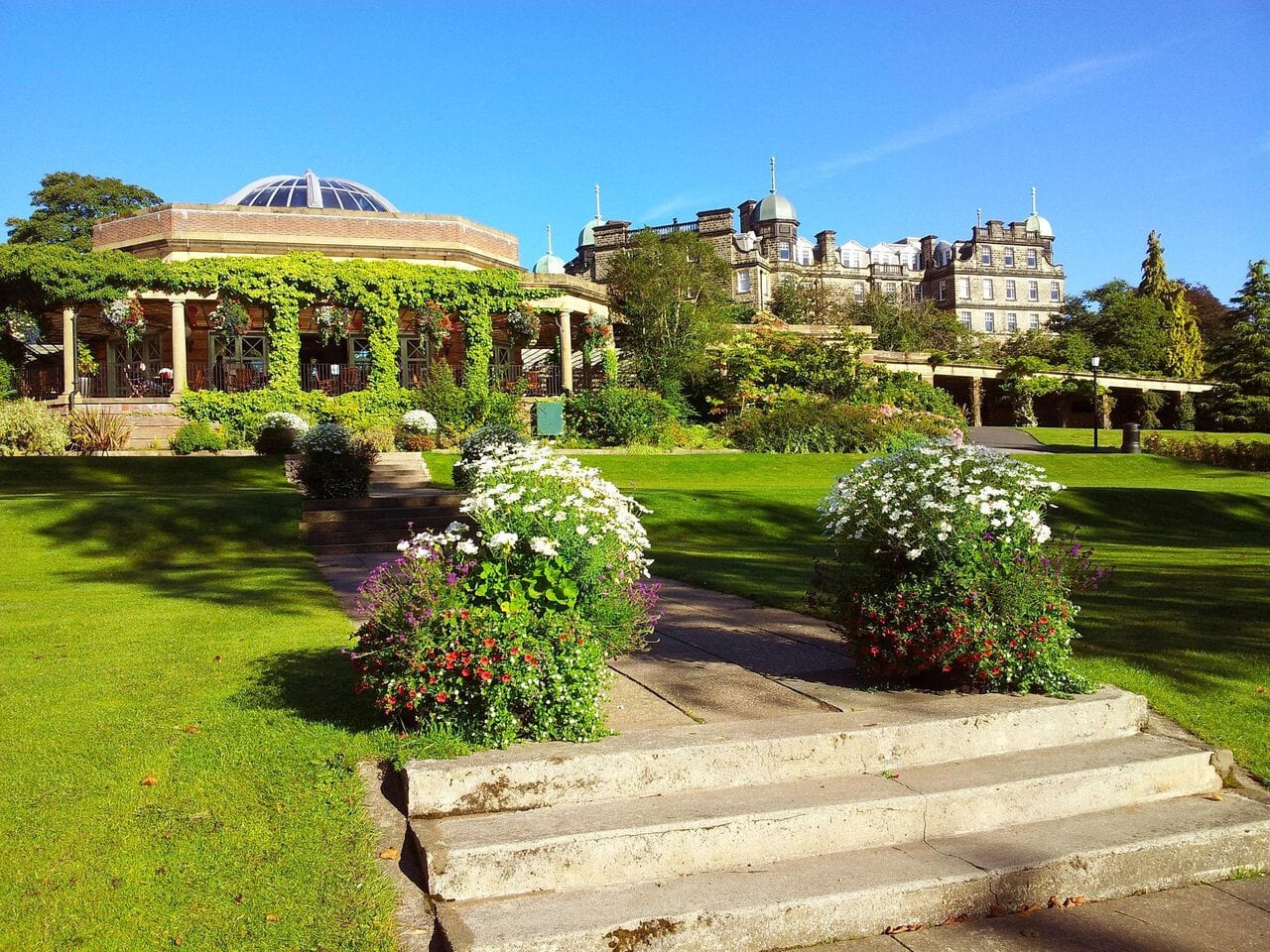
One of the main landmarks is the Sun Pavilion and Colonnade, an elegant 1930s building overlooking the gardens. Its architecture provides a reminder that Harrogate continued developing as a fashionable resort long after the height of the Victorian spa era.
Families will find play areas and open space, while other facilities and seasonal attractions can add more to a longer visit. The exact experience changes throughout the year, with spring flowers, summer planting and autumn colours giving the gardens a different character from one season to the next.
Valley Gardens are particularly easy to reach. The main entrances are only a few minutes on foot from the Royal Pump Room Museum and Montpellier Quarter, so there is no need to treat the gardens as a separate excursion.
For a short visit, allow around 45 minutes to an hour. If the weather is good, you could easily stay longer, bring a picnic or use the gardens as the beginning of a much more ambitious walk.
That longer route is one of Harrogate’s best. Continue west through the upper part of the gardens and into the Pinewoods, where the formal landscaping gradually gives way to woodland. From there, you can walk all the way to RHS Garden Harlow Carr.

Follow the Woodland Trail to RHS Garden Harlow Carr
One of the best things about visiting RHS Garden Harlow Carr is that the journey can become part of the experience. Rather than taking a taxi directly from central Harrogate, keen walkers can begin in Valley Gardens and continue through the Pinewoods towards the garden.
The route creates a gradual transition from the formal landscapes of central Harrogate into woodland before arriving at one of the Royal Horticultural Society’s major gardens. From the centre of town, allow roughly 45 minutes to an hour for the walk, depending on your starting point, pace and conditions.
The route is not the same as walking along ordinary town-centre pavements. Woodland paths can be muddy, uneven or slippery after rain, so wear suitable footwear and do not rely solely on a quick estimate from an online map.
If you do not want to walk, Harlow Carr can also be reached by local bus, taxi or car. Check the current bus route and timetable before travelling, particularly on Sundays and public holidays. A taxi is the simplest option for visitors with limited time or mobility.
Once inside, allow at least three hours to explore properly. The garden covers a substantial area, with landscapes including woodland, streams, formal planting, kitchen gardens and areas designed to demonstrate what can thrive in Yorkshire’s climate.
The experience changes considerably with the seasons. Spring brings bulbs and blossom, summer fills the borders with colour, while autumn transforms the woodland. Even winter visits can be rewarding for visitors interested in structure, bark and seasonal planting.
Families should allow extra time for the areas designed for younger visitors, while serious gardeners could easily spend most of the day examining the planting.
There is also a Bettys Café Tea Rooms at Harlow Carr, which provides an alternative to visiting the better-known branch in central Harrogate. It can still become busy, but combining the garden with lunch or afternoon tea works particularly well.
If you walked from the town centre and do not want to repeat the route, you can return by bus or taxi. Alternatively, walk back through the Pinewoods and Valley Gardens for a full day that combines some of Harrogate’s finest green spaces without needing a car.
Make Time for Afternoon Tea at Bettys
Few names are more closely associated with Harrogate than Bettys. The original tea room opened in the town in 1919, beginning a Yorkshire institution that has become famous for afternoon tea, cakes and traditional service.
The central Harrogate branch occupies a prominent position overlooking Montpellier and is easy to combine with the spa quarter, Royal Pump Room Museum and Valley Gardens.
Inside, the experience is more formal than an ordinary café but does not require you to book a full afternoon tea. You can stop for tea, coffee, cakes, breakfast or a meal, depending on the time of day and how much of the experience you want.
If a traditional afternoon tea is a priority, check the current booking arrangements before your visit. Some experiences may be reservable, while other areas operate with walk-in queues.
Those queues are worth taking seriously. Bettys can become extremely busy at weekends, during school holidays and around Christmas. Do not build a tight sightseeing itinerary around walking straight in at a specific time unless you have a confirmed reservation.
Visiting earlier in the day or outside peak lunch and afternoon periods can improve your chances of a shorter wait. Alternatively, the Harlow Carr branch provides another opportunity to visit Bettys while exploring the gardens.
The appeal is partly about the food, but also about the setting and tradition. For many visitors, sitting down for tea in Harrogate feels like a natural continuation of the town’s history as a place built around leisure, hospitality and taking time over the experience.
You do not need to order the largest afternoon tea on the menu to say you have been. A pot of tea and something from the bakery can be enough, particularly if you have already spent the day eating your way around town.
Stretch Out Across The Stray
Harrogate has no shortage of green space, but The Stray is unlike a conventional town park. Around 200 acres of open grassland wrap around the southern and western edges of the centre, creating broad green spaces where you might expect to find dense streets and buildings.
The land is protected for public use and has become one of the defining features of Harrogate. Its open character gives the town an unusually spacious feel, particularly around areas where long stretches of grass separate residential streets.
There is no admission fee, gate or single main entrance. You simply encounter different parts of The Stray as you explore the town.
The best-known time to visit is spring, when areas become covered with thousands of crocuses. The display has become one of Harrogate’s most recognisable seasonal sights, although the exact timing naturally depends on the weather.
During warmer months, The Stray is used for walking, running, picnics and informal recreation. It is particularly useful if you want some outdoor space without committing to a longer visit to Valley Gardens or Harlow Carr.
Because the land stretches around a large part of Harrogate, choose the section that fits naturally with your plans rather than trying to walk the entire boundary. The areas closest to the centre are easy to reach from the railway station and main shopping streets.
The Stray also helps explain why Harrogate feels different from many towns of a similar size. Large areas of open land sit remarkably close to the centre, giving you room to slow down even when you only have a short time to explore.
Search routes and flight options for your trip to Harrogate.
Search flightsUse an eSIM to get online without hunting for a local SIM after arrival.
See eSIM optionsCheck private pickup options and plan your onward journey before arrival.
View transfersBrowse Harrogate’s Independent Shops
Harrogate is a good place to shop without spending the entire day inside a conventional shopping centre. Beyond the main high-street names, the town has independent boutiques, food shops, galleries, antiques and specialist businesses spread across several distinct areas.
The Montpellier Quarter is the obvious place to begin. Its historic streets and passages contain a mixture of independent shops and galleries, with the grand surroundings making browsing part of the experience.
Do not stop there. The streets around the centre reward wandering, particularly if you are looking for local food, gifts, interiors, books or smaller fashion businesses. Harrogate is compact enough that you can explore without following a rigid shopping route.
For a different atmosphere, head towards Cold Bath Road. This part of Harrogate has developed a strong independent identity, with cafés, food businesses and local shops extending away from the busiest visitor areas.
The walk from the town centre takes around 10 to 15 minutes, depending on where you start. Cold Bath Road also sits close to Valley Gardens, making it easy to combine the two rather than making a separate journey.
Shopping in Harrogate works best when it fills the gaps between the larger attractions. Spend an hour browsing after breakfast, stop somewhere that catches your attention and then continue towards the gardens or spa quarter.
Allow yourself to explore rather than searching only for famous names. The independent businesses are part of what prevents central Harrogate from feeling like an interchangeable British high street.
Discover Yorkshire Art at the Mercer Art Gallery
Close to the Royal Pump Room and Valley Gardens, the Mercer Art Gallery provides an easy cultural stop in the heart of Harrogate’s historic quarter.
The gallery holds Harrogate’s fine art collection, with works spanning several centuries. Its displays include paintings, works on paper and pieces connected with artists from Yorkshire and beyond, alongside a changing programme of temporary exhibitions.
Because exhibitions change, it is worth checking what is on during your visit. A temporary show may become one of the highlights of your day, particularly if you have an interest in a specific artist, period or style.
The gallery is much smaller than a major national museum, which is part of its appeal. You can explore it without sacrificing half a day, making it particularly easy to combine with nearby attractions.
Allow around 45 minutes to an hour for a typical visit. Art enthusiasts may want longer, while other visitors can comfortably see the main displays before continuing into Valley Gardens or the Montpellier Quarter.
The location is exceptionally convenient. The Royal Pump Room Museum is nearby, and the main entrance to Valley Gardens is only a short walk away. This makes the gallery a useful option when the weather changes unexpectedly.
Check current opening days and admission arrangements before travelling. Smaller museums and galleries do not always open every day, and temporary exhibitions can occasionally affect access to parts of the building.
The Mercer Art Gallery adds something important to a Harrogate itinerary. The town is best known for spas, gardens and afternoon tea, but its cultural side deserves time too.
Spend an Evening at the Royal Hall
Harrogate’s elegant architecture does not disappear when the shops and museums close. The Royal Hall is one of the town’s most impressive historic interiors and a strong reason to check the events calendar before your visit.
Opened in the early 20th century, the hall was designed as a major entertainment venue for the wealthy visitors who came to Harrogate during its years as a fashionable spa resort. Its ornate interior still provides a dramatic setting for concerts, comedy, performances and special events.
The programme changes throughout the year, so this is not an attraction where you simply arrive during the day and expect a tour. Check what is scheduled before your trip and book ahead if a particular performance interests you.
Nearby, Harrogate Theatre offers another option for an evening out. Its programme can include drama, comedy, music and touring productions, giving visitors more choice than might be expected from a town of Harrogate’s size.
The venues are centrally located, so there is little need to arrange transport if you are staying in the centre. You can easily combine dinner with a performance and walk back to many central hotels afterwards.
If you are visiting Harrogate as a day trip from Leeds or York, check the final practical train home before booking an evening performance. A show that finishes late may leave little time to reach the station, particularly if services become less frequent later in the evening.
For overnight visitors, a performance provides a natural way to extend the day. After gardens, museums and afternoon tea, an evening inside one of Harrogate’s historic venues feels entirely in keeping with the character of the town.

Taste Harrogate’s Food and Drink Scene
Bettys may be Harrogate’s most famous name, but the town’s food and drink scene extends well beyond afternoon tea.
The compact centre has a broad mixture of independent restaurants, traditional pubs, cocktail bars and cafés, making it easy to build an evening around food without travelling far.
The Montpellier Quarter is a natural place to begin. Its restaurants and bars sit among some of Harrogate’s most attractive streets, and the area works particularly well for a drink before dinner or a relaxed evening.
Cold Bath Road offers a more neighbourhood-focused atmosphere, with independent businesses away from the most obvious visitor trail. It is worth considering if you prefer exploring somewhere that feels more local than the main spa quarter.
Yorkshire produce also features strongly across the town. Look for menus built around local meat, cheese, seasonal ingredients and regional beer, rather than assuming the best Harrogate experience has to involve a formal restaurant.
Traditional pubs provide another side of the town. Harrogate’s elegant reputation can make it sound overly polished, but there are plenty of places for a straightforward pint alongside the smarter cocktail and wine venues.
If you have a specific restaurant in mind, book ahead for Friday and Saturday evenings. Harrogate attracts weekend visitors throughout the year, and popular places can fill quickly.
The town is compact enough to explore on foot, but think about the walk back if you are staying outside the centre. Public transport becomes less frequent later in the evening, while taxi demand can increase after major events finish.
Harrogate is better suited to a long dinner, good local beer and a relaxed evening than a frantic night out. That slower pace fits the town perfectly.
See the Viaduct and Riverside at Knaresborough
Just a few miles from Harrogate, Knaresborough is one of the easiest and most rewarding short trips you can make from the town. Its castle ruins, steep streets, riverside walks and dramatic railway viaduct create a completely different atmosphere, despite the journey taking only a few minutes.
Direct trains run from Harrogate to Knaresborough throughout the day, with the journey typically taking around eight minutes. Knaresborough railway station is close to the historic centre, so there is no need for an onward bus or taxi.
Start by walking towards Knaresborough Castle. The surviving ruins are interesting, but the real highlight is the view from the castle grounds across the River Nidd and the great stone railway viaduct. This is one of the most recognisable views in Yorkshire.
From the upper town, paths and steps descend towards the river. Knaresborough is much hillier than Harrogate, so comfortable footwear is important and visitors with limited mobility should check the most suitable routes before setting out.
At river level, you can walk beside the water, stop at one of the cafés or hire a rowing boat when seasonal operations and conditions allow. The view of the viaduct from the river is particularly impressive, especially when a train crosses high above the water.
Another major attraction is Mother Shipton’s Cave, associated with the legendary Yorkshire prophetess. The site also contains the Petrifying Well, where mineral-rich water gradually covers objects with a stone-like deposit.
A half-day is enough to see the castle viewpoint, explore the centre and walk beside the river. Allow longer if you want to visit Mother Shipton’s Cave, hire a boat or stop for a leisurely meal.
For the easiest visit, take the train rather than driving. The journey is extremely short, both stations are conveniently located and you avoid having to find parking.
Knaresborough works particularly well for visitors spending more than one day in Harrogate. You can enjoy the spa town in the morning, take a short train ride after lunch and be standing above one of Yorkshire’s finest views before the afternoon is over.
Explore Ripley Castle and its Historic Village
For a glimpse of the countryside beyond Harrogate, head north to Ripley, a small estate village dominated by its historic castle.
Ripley Castle has been associated with the Ingilby family for centuries, and the estate combines a historic house with gardens, parkland and a carefully preserved village.
The village itself is part of the experience. Stone buildings, a historic church and the castle estate create an attractive setting that feels far removed from central Harrogate, despite being only a few miles away.
Visitor access to the castle can depend on opening dates, tours, private events and seasonal arrangements, so this is one destination where checking before travelling is particularly important. Do not assume that every part of the estate will be open simply because the village itself is accessible.
When the castle and grounds are open to visitors, allow enough time to explore properly. The combination of historic interiors, gardens and parkland makes this more than a quick photograph stop.
Ripley is around four miles north of Harrogate. Public transport can be practical, with buses using the main route between Harrogate and destinations further north, but service frequency and stopping arrangements should be checked for the day of your visit.
The bus is likely to be the simplest option for visitors without a car. The journey is short, but rural and regional services may be less frequent than buses within Harrogate itself.
Cycling is another possibility for experienced riders, although you should choose your route carefully rather than assuming the main road will provide the most pleasant journey.
If you are driving, the journey from Harrogate is straightforward, but check the latest parking arrangements connected with your intended visit.
Ripley works best for visitors who want to add a village, historic estate and a taste of the Yorkshire countryside to a longer stay in Harrogate. It is less suitable for a tightly timed first visit when the main attractions in the town centre are still waiting to be explored.
Compare hostels and budget-friendly accommodation around Harrogate.
Browse hostelsFlying to Harrogate? Get fast compensation payouts, eligible lounge benefits and expert help when flights go wrong.
See AirHelp+ benefitsLeave your luggage somewhere convenient and enjoy Harrogate hands-free.
View storagePlan Your Visit to Harrogate
Harrogate is one of the easiest Yorkshire destinations to explore without a car. The railway station is in the heart of the town, and most of the main central attractions are within comfortable walking distance.
Direct trains connect Harrogate with Leeds and York. From Leeds, the journey typically takes around 35 minutes, while York can also be reached directly. This makes Harrogate particularly easy to visit as a day trip or as part of a longer rail journey through Yorkshire.
From Harrogate railway station, allow around 10 to 15 minutes on foot to reach the Montpellier Quarter, Royal Pump Room Museum and Valley Gardens. The town centre is compact, although some routes become steeper as you move towards the gardens and surrounding residential areas.
For a first visit, one full day is enough to see the main highlights, but two days provide a much better experience. With an overnight stay, you can explore the spa quarter and gardens without rushing, visit Harlow Carr and still have time for the Turkish Baths, theatre or a short trip to Knaresborough.
RHS Garden Harlow Carr requires the most planning. Keen walkers can reach it from Valley Gardens through the Pinewoods, while buses, taxis and cars provide alternatives. If you intend to walk, allow roughly 45 minutes to an hour each way and wear suitable footwear.
Local buses are useful for destinations outside the centre, including the wider Harrogate area and some nearby villages. Check current routes and timetables before travelling, especially on Sundays and public holidays.
If you are arriving by car, think carefully about whether you will actually need it during your stay. Central Harrogate is highly walkable, and driving between attractions in the centre is usually unnecessary. Parking can be busy during weekends, major events and the Christmas period.
The weather should influence your plans. Valley Gardens, The Stray, the Pinewoods and Harlow Carr are at their best when conditions are suitable, while the Turkish Baths, Royal Pump Room Museum, Mercer Art Gallery and Bettys provide strong alternatives when it rains.
Harrogate can become busy during festivals, conferences and major events. Book accommodation early if your dates coincide with a large event, and reserve any must-do experiences rather than assuming spaces will remain available.
For most visitors, the best approach is simple: explore the centre on foot, use the train for Knaresborough, and only arrange additional transport when heading to Harlow Carr or places beyond the town.

Rupert’s Handy Travel Tips
Heading to Harrogate? Here are a few useful tips to make your visit smoother:
- Explore the centre on foot: The Montpellier Quarter, Royal Pump Room Museum, Valley Gardens, Mercer Art Gallery and Bettys are all within easy walking distance of each other.
- Book the Turkish Baths ahead: Sessions have limited capacity and popular times can fill quickly, particularly at weekends and during busy periods.
- Turn the journey to Harlow Carr into part of the day: If the weather is good, walk from Valley Gardens through the Pinewoods. Allow around 45 minutes to an hour each way and wear suitable shoes.
- Use the train for Knaresborough: The direct journey takes only a few minutes, and the station is close to the castle, historic centre and riverside.
Want to meet the reindeer behind our travel tips? Find out more in our page Who is Rupert?.
Frequently Asked Questions
Is Harrogate worth visiting?
Yes. Harrogate is particularly worth visiting for its historic spa heritage, Turkish Baths, beautiful gardens, elegant architecture and independent shops. The compact centre is easy to explore on foot, while RHS Garden Harlow Carr and nearby Knaresborough add plenty for a longer stay.
How many days do you need in Harrogate?
One full day is enough to see many of the main attractions, but two days is ideal. This gives you time to explore the spa quarter and Valley Gardens, enjoy the Turkish Baths or Bettys without rushing, and visit Harlow Carr or nearby Knaresborough.
What is Harrogate famous for?
Harrogate is best known as a historic spa town. Its mineral springs attracted visitors for centuries and helped create the grand hotels, bath buildings and gardens seen today. The town is also famous for Bettys, the Turkish Baths and RHS Garden Harlow Carr.
Can you visit Harrogate without a car?
Yes. Harrogate is very easy to visit without a car. Direct trains connect the town with Leeds and York, the railway station is in the centre, and most of the main attractions can be reached on foot. Buses and taxis are useful for places further out.
Can you walk from Harrogate to RHS Garden Harlow Carr?
Yes. One of the best routes begins in Valley Gardens and continues through the Pinewoods to Harlow Carr. Allow around 45 minutes to an hour each way, depending on your pace and starting point. The woodland paths can become muddy after rain, so suitable footwear is recommended.
What can you do in Harrogate for free?
You can explore Valley Gardens, The Stray, the Montpellier Quarter and Harrogate’s historic streets without paying admission. The Mercer Art Gallery can also provide a free cultural stop, subject to current opening and admission arrangements.
Further Reading
Visiting Harrogate from Yorkshire’s largest city? Our Day Trips from Leeds guide explains the easiest places to reach by train, including York, Saltaire, Knaresborough, Haworth and the Yorkshire Dales.
Spending time in the city itself? Our Things to Do in Leeds guide covers the historic arcades, Kirkgate Market, the Royal Armouries, brewery tastings and attractions beyond the city centre.
Flying into the region? Our Leeds Bradford Airport Transfers guide explains how to travel between the airport, Leeds and the surrounding area by public transport, taxi and private transfer.
Travelling further across northern England? Our TransPennine Route Guide explains the major rail routes and connections linking cities and destinations across the north.
Visiting from overseas? Our Best eSIM Apps guide compares ways to stay connected in the UK without relying on expensive international roaming.