Reviewed by our editorial team Updated
Welcome to the Games
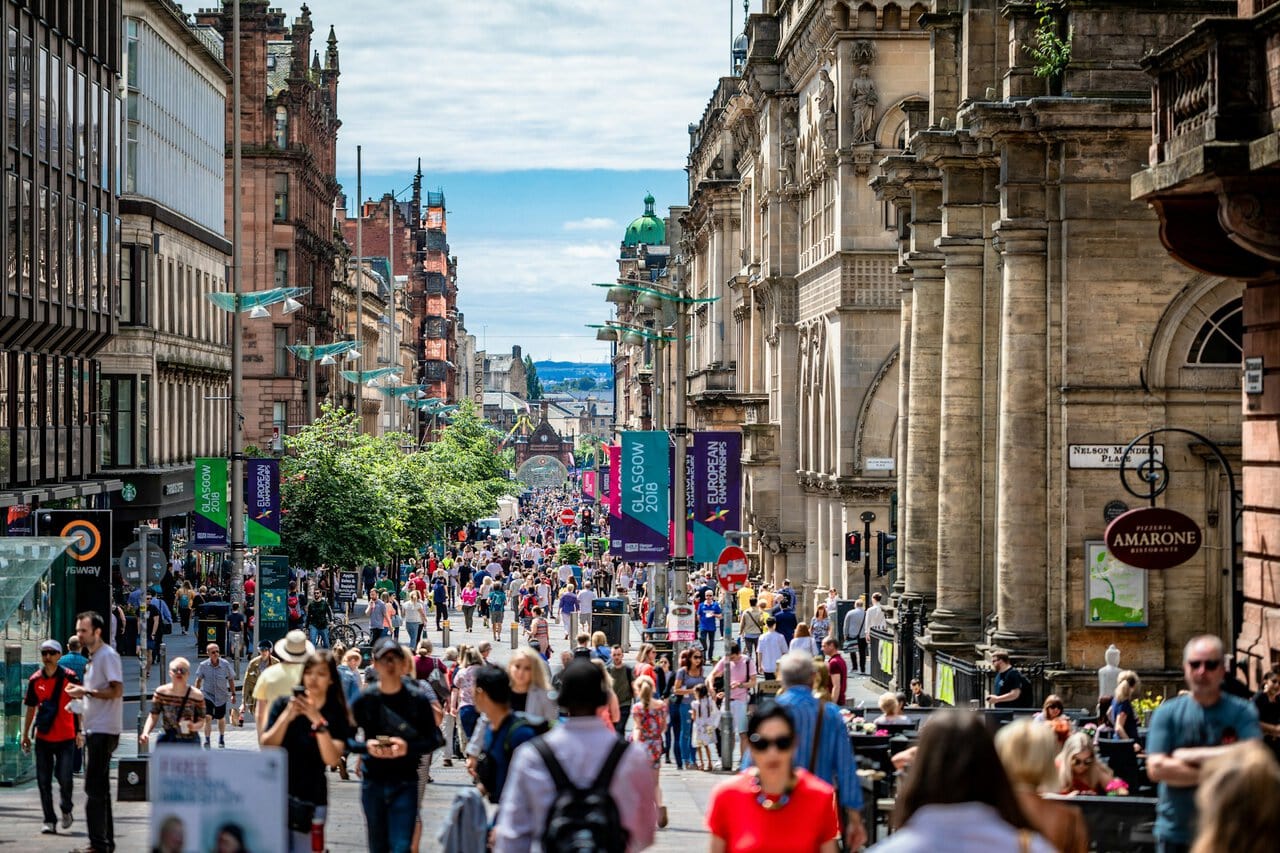
Glasgow is once again a host city for the Commonwealth Games, welcoming the world back for an 11-day event running from 23 July to 2 August 2026. Unlike the sprawling 2014 edition, this Games has been deliberately scaled back to a tighter, more focused format.
All the action takes place across just four venues, set within an eight-mile corridor of the city, making this one of the most compact and walkable major sporting events Glasgow has ever hosted.
Around 3,000 athletes from 74 nations are taking part, competing across ten sports in a Games that looks noticeably different from the one Glasgow staged in 2014, both in scale and in the story behind how the city came to host it a second time. Around 3,000 volunteers are also involved in delivering the event, part of the genuinely large-scale community effort behind a Games of this size.
This guide covers everything you need to plan a visit, from the sports on offer and where to watch them, to tickets, transport, and where to stay. For getting around the city day to day, our Glasgow Public Transport Guide is essential reading alongside this one.
Understanding the Games
Glasgow’s route to hosting these Games was genuinely last-minute. The 2026 edition was originally awarded to the Australian state of Victoria, which withdrew in July 2023, citing spiralling projected costs, reportedly paying around AUS$380 million, roughly £199 million, simply to exit the hosting agreement rather than risk losses running into the billions. That withdrawal left the entire future of the Commonwealth Games movement genuinely in doubt, and organisers spent over a year searching for a replacement before Glasgow was confirmed as host on 17 September 2024, with the decision officially approved the following month.
Rather than attempting to replicate the scale of 2014, organisers responded with a deliberately leaner, more sustainable model built around existing venues Glasgow already had, with no new-build stadiums and no dedicated athletes’ village constructed for the event. Commonwealth Sport has described this as a “reset” intended to make future editions of the Games more achievable for a wider range of cities, after costs had made hosting increasingly unattractive to potential candidates.
The opening ceremony took place on 23 July 2026 at The Hydro, officially opened by The King and Queen, and marking the first time a Commonwealth Games opening ceremony has been staged inside an arena rather than an outdoor stadium. The ceremony reunited all 74 specially created batons carried across every Commonwealth nation and territory as part of the reimagined King’s Baton Relay, which travelled through Scotland from 1 to 23 July before converging on Glasgow. The closing ceremony on 2 August, at the same venue, includes performances from Scottish rock band Simple Minds and Australian singer Delta Goodrem, a fitting pairing given the Australian connection to how this edition of the Games came about in the first place.
The scaled-back format means Hampden Park, the athletics venue in 2014, is not in use for these Games. Athletics has instead moved to a redeveloped Scotstoun Stadium, which held only training sessions rather than actual competition back in 2014 and now holds just 11,000 spectators, making it one of the smallest athletics venues used at a Commonwealth Games in recent memory.
Our Commonwealth Games Glasgow Venues Guide covers every venue location and transport link in complete detail.
Browse hotels and accommodation for your visit to Glasgow.
View staysBrowse apartments, homes and self-catering accommodation in Glasgow.
Browse rentalsSee hotel prices from multiple booking sites in one search.
Compare ratesSports Programme
Glasgow 2026 features ten sports, down from the 17 sports staged when the city last hosted in 2014, alongside the largest Para Sport medal event programme in Commonwealth Games history, with six sports offering Para competition categories.
The full programme covers 3×3 Basketball and 3×3 Wheelchair Basketball, Artistic Gymnastics, Athletics and Para Athletics, Bowls and Para Bowls, Boxing, Judo, Netball, Swimming and Para Swimming, Track Cycling and Para Track Cycling, and Weightlifting and Para Powerlifting.
This is a noticeably smaller sports programme than 2014, reflecting the deliberately condensed nature of this edition, but it concentrates some of the Games’ most popular events, including swimming, athletics, and gymnastics, into a compact schedule that organisers hope proves this leaner model can still deliver a genuine sporting spectacle. World Athletics has also championed the return of the mile race to the athletics programme, reviving a classic event that has not always featured at recent Games.
The full day-by-day schedule is published on the official Glasgow 2026 website, and is worth checking closer to your visit since exact session times are confirmed in the lead-up to the Games.
Every Competition Venue
All action takes place across four venues. Scotstoun Stadium hosts athletics and para athletics on a newly redeveloped track. The Sir Chris Hoy Velodrome and Arena, renamed in honour of Scotland’s six-time Olympic cycling champion, hosts track cycling, para track cycling, and artistic gymnastics.
Tollcross International Swimming Centre hosts swimming and para swimming, while the Scottish Event Campus hosts the widest range of sports across its three halls: weightlifting and para powerlifting at the SEC Armadillo, boxing, bowls, para bowls, judo, and 3×3 basketball at the SEC Centre, and netball at The Hydro.
Our full Commonwealth Games Glasgow Venues Guide breaks down transport links, nearest stations, and accessibility for each of these venues individually.
Because every venue sits within the same eight-mile corridor, attending multiple sports across a single day is genuinely practical, unlike editions of the Games spread across a wider city or region, and it is one of the clearest advantages of this smaller, more concentrated format.
Buying Tickets
Tickets range from £12 for concessions up to £150 for premium seats, with adult non-medal sessions starting from £17 and medal sessions from £26. Pricing varies by sport, with high-demand events like artistic gymnastics commanding higher medal-session prices. Tickets first went on sale in October 2025, sold on a first-come, first-served basis directly through the official event website.
Concession pricing is available for seniors (66+), children aged 18 months to 16 years, and accessible tickets. Seats are sold by price category rather than specific location, with exact seat assignments confirmed closer to the Games.
Purchase limits apply: a maximum of four tickets per session for the highest-demand sports, including athletics, swimming, track cycling, and gymnastics, and up to ten for other sports. No booking fees are charged, and all major cards are accepted except American Express, Diners, and Laser.
Tickets are sold directly through the official Glasgow 2026 website, and booking early is strongly recommended for popular sessions, particularly the opening ceremony and swimming finals.
Travelling During the Games
With all four venues concentrated in one corridor of the city, Glasgow’s Subway and rail network are the easiest way to move between sessions. Organisers are actively encouraging public transport and active travel over driving, and several venues, including Scotstoun Stadium, have no general spectator parking at all beyond pre-booked accessible bays, so checking your venue’s specific guidance before assuming you can drive and park is genuinely worth doing.
Expect noticeably busier stations and services around session start and end times, particularly near the Scottish Event Campus and Sir Chris Hoy Velodrome and Arena. Building in extra time and travelling just before or after the main crowd surge makes for a smoother journey.
A significant policing operation is in place across the city for the duration of the Games, with Police Scotland and the British Transport Police deploying additional officers, including mounted units, plain clothes officers, and search dogs, at venues and across the transport network. This is standard practice for a major event of this scale rather than a response to any specific concern, and organisers are keen to stress that the visible security presence, along with friendly volunteers and stewards at every venue, is there to help rather than to alarm. Anyone who sees anything that concerns them is encouraged to speak to a steward, staff member, or police officer, report online at gov.uk/ACT, or text British Transport Police on 61016 for anything happening on the rail network specifically.
Every venue operates mandatory bag checks and searches on entry, and ticket holders who refuse to be searched will be refused entry without a refund, so building this into your timing on arrival is sensible. Water bottles larger than 750ml are not permitted through security, and a full list of restricted and prohibited items is published on the official Glasgow 2026 website ahead of each specific venue, which is worth checking the evening before your session rather than discovering an issue at the gate.
Our Glasgow Subway Guide and Glasgow Public Transport Guide cover fares, tickets, and station-by-station detail for the full network.
If you are flying in for the Games, our Glasgow Airport Transfers guide covers every route from the airport into the city centre.
Best Place to Stay
Given all four venues sit within a compact corridor, a city centre base works well for most visitors, offering fast Subway and rail connections to every venue without needing to change base for different sports. The voco Grand Central, connected directly to Glasgow Central station, is a genuinely strong option for this, with the added appeal of a hotel that has its own remarkable history, from John Logie Baird’s first long-distance television broadcast in 1927 to stays by The Beatles and John F Kennedy.
Finnieston is worth particular consideration for its proximity to the Scottish Event Campus, home to three of the Games’ venues (weightlifting, boxing, bowls, judo, 3×3 basketball, and netball across its three halls), while also offering some of the city’s best dining options for evenings between sessions. The Crowne Plaza Glasgow, directly across from the campus on the riverfront, is the standout hotel choice here, with direct trains from the neighbouring Exhibition Centre station reaching Glasgow Central in just five minutes.
If athletics or track cycling are the main draw, staying in the West End puts you closer to Scotstoun Stadium and the Sir Chris Hoy Velodrome without sacrificing much in the way of restaurants or atmosphere. Hotel du Vin at One Devonshire Gardens, a five-star boutique hotel across five converted Victorian townhouses, is the area’s signature stay, with the more central Hilton Glasgow Grosvenor also within easy reach of Hillhead and Kelvinbridge Subway stations.
Our full Where to Stay in Glasgow guide covers every neighbourhood in detail, including which areas offer the best access to Scotstoun Stadium and the Sir Chris Hoy Velodrome.
Hotel prices and availability tighten considerably during the Games, so booking as early as possible is strongly recommended, particularly for the opening ceremony period.
Fan Zones and Free Things to See
You do not need a ticket to be part of Glasgow 2026. The main Game On Live Site in Kelvingrove Park, backed by £1 million from the Scottish Government’s Summer of Sport programme alongside funding from Commonwealth Sport, is open every day of the Games from 23 July to 2 August, free to enter, and genuinely family-friendly. Three giant screens show up to 12 hours of live Games coverage a day, and the site also runs a full programme of free activities, from trying out different sports and creative workshops to live performances and mass participation events. It is one of the easiest and most enjoyable ways to soak up the atmosphere of a home Games without spending a penny on a ticket.
A second Live Site operates at SWG3, giving visitors another free option for catching the action on a big screen depending on which part of the city you find yourself in on a given day. Both sites are worth checking for capacity and opening times before you travel, since they can fill up quickly during particularly popular sessions such as evening finals.
Running alongside the sport, the Glasgow 2026 Festival brings a wider programme of arts and culture to venues across the city, giving visitors without tickets to a specific session, or simply looking for something different to do between events, a genuine reason to explore beyond the sporting venues themselves.
Kelvingrove Park’s Live Site pairs particularly well with a visit to the nearby Kelvingrove Art Gallery and Museum, covered in full in our Things to Do in Glasgow guide, making it easy to combine a free afternoon of Games atmosphere with one of the city’s best free attractions in the same trip.
Compare routes and fares for your journey to Glasgow.
Compare flightsUse an eSIM to get online without hunting for a local SIM after arrival.
See eSIM optionsArrange a private airport pickup for your trip to Glasgow.
Check transfersExploring Between Events
With sessions often spread across a day, there is plenty of opportunity to explore the city between events. The West End’s Kelvingrove Art Gallery and Museum makes an easy addition to a day that includes swimming at nearby Tollcross, while the city centre’s shops and restaurants suit a break between SEC sessions. If your route takes you past Kelvingrove Park in any case, folding in an hour at the Game On Live Site, covered above, costs nothing and adds genuine atmosphere to a day that might otherwise just be about getting from one venue to the next.
Visitors with a longer gap between sessions, or a full rest day built into their trip, are well placed to explore further afield. Merchant City and George Square sit an easy Subway ride from any of the four venues, and the Riverside Museum and Tall Ship Glenlee make a natural pairing with anything happening at the nearby SEC or Sir Chris Hoy Velodrome.
Our full Things to Do in Glasgow guide covers the city’s museums, parks, and neighbourhoods in detail, all easily combined with a day at the Games, and our Glasgow Subway Guide makes it straightforward to work out which station puts you closest to wherever you want to go next.
If your trip extends beyond the Games themselves, our Day Trips from Glasgow guide covers Loch Lomond, Stirling, and other destinations reachable by train.
Expect the city’s usual attractions to be busier than normal throughout the Games period, so booking ahead for popular museums and restaurants is a sensible precaution.
What to Pack and Bring
Given the mandatory bag checks covered above, it is worth thinking carefully about what you actually need to bring to a session rather than packing as you would for a normal day out. A small, clear or easily searchable bag will pass through security far faster than a large rucksack, and anything on the restricted list will simply be confiscated at the gate rather than held for collection, so it is not worth risking items you would mind losing.
An empty or near-empty water bottle under 750ml is the safest option, since anything larger will not be permitted through security regardless of what it contains. Most venues have refill points or concessions inside once you are through the gates.
Scotland’s summer weather is genuinely unpredictable, and late July into early August is no exception. A light waterproof layer is worth carrying even on a day that starts sunny, particularly for outdoor sessions at Scotstoun Stadium, where there is considerably less shelter than inside the SEC’s three halls or the covered stands at Tollcross and the Velodrome.
Comfortable shoes matter more than they might for a typical city sightseeing day, given how much walking is involved between Subway or rail stations and venue entrances, and how long you may end up standing in a security queue before a popular session.

Search Luggage Storage Options in Glasgow
If your travel times do not line up neatly with your accommodation in Glasgow, luggage storage can help you make better use of the extra time.
Check both Stasher and Radical Storage for nearby locations and compare prices, opening hours and convenience before booking.
Planning Your Daily Itinerary
Because all four venues sit close together, it is realistic to combine two sports in a single day, for example a morning swimming session at Tollcross followed by an afternoon at the Sir Chris Hoy Velodrome, without an exhausting cross-city journey in between.
Checking the official schedule ahead of time to group sessions by venue and travel time helps avoid unnecessary backtracking across the city on a single day, and it is worth building in a visit to one of the free Live Sites, covered earlier in this guide, on any day where your sessions leave a genuine gap rather than trying to fill the time with a longer trip across town.
Building in buffer time around session start times is worthwhile, particularly for popular sports like swimming and gymnastics, where queues for the mandatory bag checks and security screening at the gate can take considerably longer than expected during peak arrival periods.
A sensible rule of thumb is to arrive at least 45 minutes before your session for the busiest venues, and to have tickets ready to scan on your phone or printed before you reach the entrance, since fumbling for a ticket at the front of a long queue slows everyone behind you as well as yourself.
Our Commonwealth Games Glasgow Venues Guide has the transport details you need to plan realistic journey times between each venue.

Rupert’s Handy Travel Tips
Heading to the Commonwealth Games? Here are a few useful tips before you go:
- Book tickets early: Popular sessions like swimming and the opening ceremony sell out fastest.
- All four venues are close together: Combining two sports in one day is realistic thanks to the compact eight-mile corridor.
- Take the Subway, not a car: Several venues, including Scotstoun, have no general spectator parking at all.
- Check the bag policy before you leave: Water bottles over 750ml and various other items will not get past security, so travel light.
- The Live Sites are free: Kelvingrove Park and SWG3 both show the Games on big screens with no ticket needed.
Want to meet the reindeer behind our travel tips? Find out more in our page Who is Rupert?.


Frequently Asked Questions
When is the Glasgow 2026 Commonwealth Games?
The Games run for 11 days, from 23 July to 2 August 2026, with the opening ceremony held at The Hydro.
Why is Glasgow hosting the Games again so soon after 2014?
Glasgow stepped in as a late replacement after the original host, the Australian state of Victoria, withdrew in 2023 over rising costs, with Glasgow confirmed as host in September 2024.
How many venues are used for Glasgow 2026?
Just four: Scotstoun Stadium, the Sir Chris Hoy Velodrome and Arena, Tollcross International Swimming Centre, and the Scottish Event Campus.
Is Hampden Park being used for the 2026 Games?
No, this scaled-back edition does not use Hampden Park. Athletics has moved to a redeveloped Scotstoun Stadium instead.
How much do tickets cost?
Prices range from £12 for concessions up to £150 for premium seats, with adult non-medal sessions starting from £17.
Can I watch the Games for free without a ticket?
Yes, the Game On Live Site in Kelvingrove Park and a second Live Site at SWG3 both show the Games on big screens free of charge, with additional free activities running throughout the Games.
What can I bring into the venues?
All venues carry out mandatory bag checks, and water bottles larger than 750ml are not permitted. A full list of restricted and prohibited items is published on the official Glasgow 2026 website.
What sports are included in Glasgow 2026?
Ten sports feature, including athletics, swimming, track cycling, gymnastics, boxing, judo, netball, weightlifting, and 3×3 basketball, alongside six Para sports.
Further Reading
For full venue-by-venue transport details, see our Commonwealth Games Glasgow Venues Guide, and for getting around the city generally, our Glasgow Public Transport Guide and Glasgow Subway Guide cover every route and fare.
Our Where to Stay in Glasgow guide helps you choose a base, and our Things to Do in Glasgow guide fills any gaps between sessions.
Arriving by air? Our Glasgow Airport Transfers guide covers every route from the airport into the city.