Reviewed by our editorial team Published
Brussels does not try to out-Vienna Vienna or out-Strasbourg Strasbourg, and that is exactly why its Christmas season is worth planning around. The city’s official market, Winter Wonders (Plaisirs d’Hiver in French, Winterpret in Dutch), spreads across six linked squares in the historic centre rather than filling one grand plaza, so the walk between them becomes part of the experience rather than a detour from it. At its heart sits the Grand Place, where a free nightly sound and light show turns the guild houses into a five-minute projection screen, arguably one of the single most striking backdrops any Christmas market on this site covers.
What sets Brussels apart from its German and Austrian neighbours is less about scale and more about identity. This is a bilingual, genuinely multicultural EU capital, and its market reflects that: alongside the usual mulled wine you will find Belgian waffles in two distinct regional styles, oysters served with champagne, jenever instead of schnapps, and in 2026 a themed Basque-Béarnese village taking over Place de la Bourse. It is a market with a Belgian accent rather than a German one borrowed for the season.
This guide covers where Winter Wonders actually spans, what you can do beyond browsing stalls, what is genuinely Belgian about the food, the entertainment programme, the practicalities of shopping and public transport over the holidays, and an honest answer to a question most competing guides get wrong: where does Brussels’ New Year’s Eve fireworks display actually happen. It also covers realistic December weather, so you can pack properly rather than guess.
Brussels rewards a visitor who treats the market as a spine rather than the whole trip. Fold in Bruges or Ghent as a day trip, an evening at Belgian Beer World, or simply an extra hour wandering the Sainte-Catherine seafood stalls, and a single weekend here holds up well against any of the bigger-name markets further east.
Winter Wonders at a Glance
| Zone | Character | Best For |
|---|---|---|
| Grand-Place | UNESCO-listed square, Christmas tree, nightly light show | The essential first stop, especially after dark |
| Place de la Bourse / Beurs | Themed regional village (Basque-Béarnese for 2026) | A different guest region’s food and crafts each year |
| Place Sainte-Catherine / Vismet | Former fish market, seafood-leaning stalls and restaurants | Oysters, seafood and a quieter, more local feel |
| Place de Brouckère & Monnaie | Ferris wheel, carousels, curling rink | Rides and activities rather than browsing |
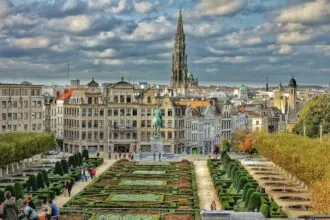
| Mont des Arts & Place Poelaert | Elevated viewpoints, quieter fringe stalls | Photos over the rooftops away from the crowds |
The market runs roughly two kilometres end to end, so treat it as a walking route rather than one static site. Most first-time visitors start at Grand-Place, work through Bourse and Sainte-Catherine, then loop back via Brouckère for the rides.
Where Winter Wonders Actually Spans
Brussels’ Christmas market has no single home square. The official Winter Wonders event covers Grand-Place, Place de la Monnaie, Place de la Bourse, Place Sainte-Catherine, the Vismet fish market, Place de Brouckère, the Tour Noire, rue de la Madeleine and Place Poelaert, with around 238 wooden chalets strung between them for the 2026-2027 season. That is a genuinely different shape from a single-square market like Vienna’s Rathausplatz or Strasbourg’s Place Broglie.
Each zone has its own character rather than repeating the same stalls. Grand-Place itself carries only light decoration and the tree, since the square is kept clear for the evening projection show. The heaviest concentration of chalets sits around Bourse and Sainte-Catherine, where food and craft stalls dominate.
Sainte-Catherine deserves particular attention because it is easy to miss on a quick visit. The square sits on the site of Brussels’ old fish market, and the surrounding streets still carry that identity with seafood restaurants and oyster stalls clustered more densely here than anywhere else on the route.
Place de la Bourse changes character every season through a themed regional village, an idea unique to Brussels among the markets covered on this site. For 2026 that theme is Basque-Béarnese, bringing food, crafts and cultural programming from that region of France into the heart of the market rather than a generic international food court.
Practically, this spread means budgeting more walking time than a single-square market, and dressing for it. Allow at least two to three hours to cover the full route at a comfortable pace with stops, longer if you plan to eat, skate or ride the wheel along the way.
Compare hotels and other places to stay for your trip.
Check availabilityExplore holiday homes and apartments for your trip.
See holiday homesCompare hotel prices across multiple booking sites.
Compare ratesThe Grand-Place Sound and Light Show
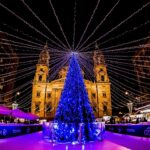
The single biggest reason to build an evening around Brussels rather than an afternoon is the Grand-Place sound and light show. A five-minute video-mapping projection is beamed onto the Town Hall’s Gothic tower and the surrounding guild houses, turning one of Europe’s most ornate squares into a genuinely different spectacle after dark.
In the most recently confirmed season the show ran every 30 minutes between 5pm and 10pm, daily throughout the market’s run, with no performances on 24 and 31 December. Each city season carries its own theme; the most recent confirmed edition was titled Echoes of Colors, built around a colour-saturated visual palette rather than a narrative story.
The 2026-2027 season’s specific theme had not been announced at the time of writing, so treat the title as likely to change while the format itself, a short, frequent, free projection show on the Town Hall, is the established and reliable pattern. Check the City of Brussels’ own Winter Wonders pages closer to your travel date for the confirmed 2026 theme.
Because it repeats every half hour rather than running once nightly, there is no need to fight for a single showing. Arrive on the square a few minutes early, find a spot with a clear view of the Town Hall tower, and you can comfortably see it twice if the first viewing is crowded.
This is also the reason Grand-Place itself carries relatively light market decoration compared with the surrounding squares. Keeping the square’s sightlines clear is deliberate, so the tree and lighting take a back seat to the projection rather than competing with it.
Rides, Ice and Curling: What You Can Actually Do
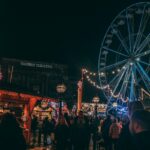
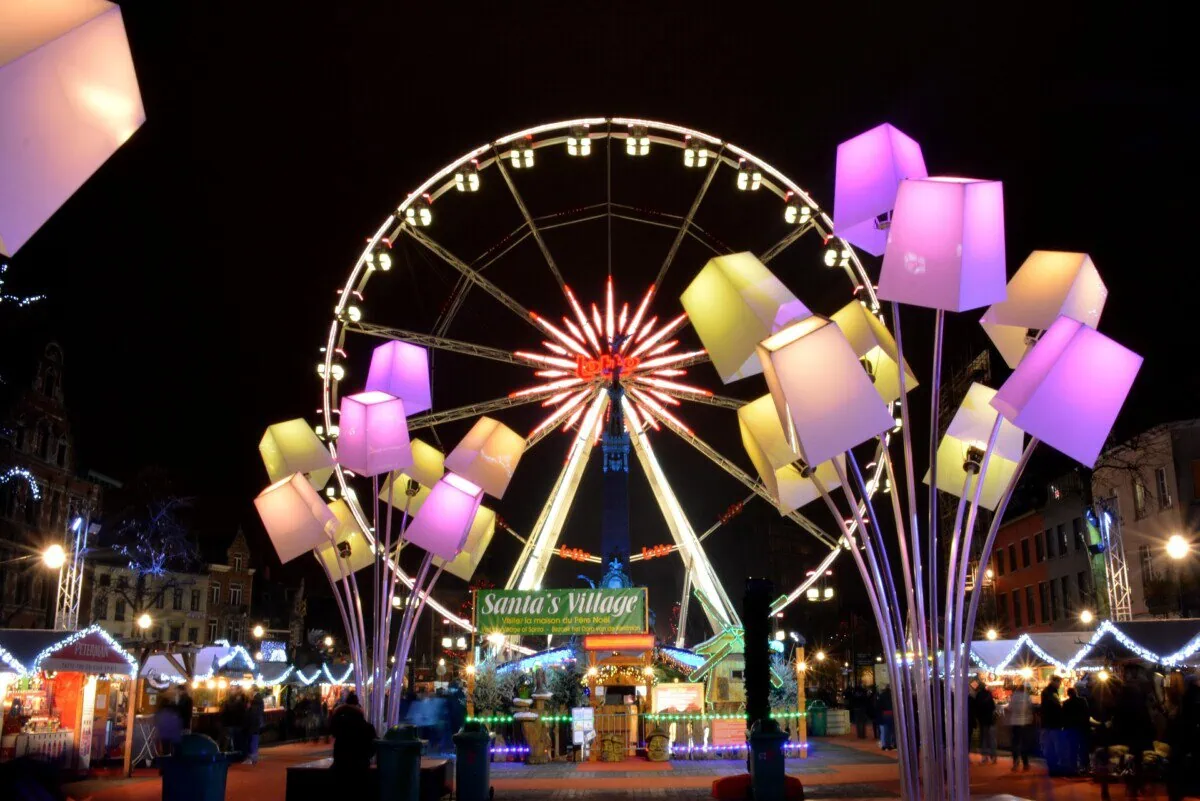
Winter Wonders is not just stalls to browse. Around Place de Brouckère and Place de la Monnaie you will find a Ferris wheel, several carousels including a steampunk-styled ride, and an ice rink, giving the market a genuine activity layer beyond eating and shopping.
The ice rink on Grand-Place covers around 800 square metres, making it one of the larger city-centre rinks among the markets covered on this site. Entry is generally free, with skate hire charged separately; exact 2026 rental pricing was not confirmed at the time of writing, so check the on-site kiosk or the official Winter Wonders map before you go.
A curling rink also runs as part of the Brouckère cluster, an activity that few other European Christmas markets on this site offer, and one worth trying even without prior experience since sessions are typically short and instructor-led.
Families with younger children should look out for the enchanted house, a walk-through festive installation that rotates each season, and the Ferris wheel, which gives a genuinely useful elevated view back over the rooftops towards Grand-Place on a clear evening.
Most of these activities are paid extras layered onto a free market rather than the market’s core draw, so it is worth deciding in advance which one or two you actually want to do. Trying to fit the wheel, the rink and curling into one visit alongside the food stalls and the light show usually means rushing all of them.
Belgian Food and Drink, Not German or French
The clearest way Brussels’ market differs from its neighbours is what is actually on sale. Expect Belgian waffles in two distinct regional forms, the light, rectangular Brussels waffle and the denser, caramelised Liège version, sold side by side rather than as a single generic option.
Beyond waffles, stalls sell frites, smoutebollen (a Belgian fried dough treat closer to a doughnut than a churro), boudin (Belgian blood sausage) and mitraillette, a baguette stuffed with meat, fries and sauce that counts as one of the country’s genuine street-food specialities rather than a tourist invention.
Drink-wise, this is one of the few major European Christmas markets where craft beer is as central to the stalls as mulled wine. Expect a genuine range of Belgian styles rather than a single generic glühwein-style mug, alongside jenever, the juniper-flavoured Belgian spirit that predates and differs from Dutch genever in style and strength.
Sainte-Catherine’s seafood identity carries through to the market too, with oysters served alongside champagne at several stalls, an unusually upmarket pairing for a Christmas market and one that reflects the square’s history as Brussels’ old fish market rather than a modern gimmick.
Speculoos biscuits, Belgian chocolate and craft goods round out the shopping side. If chocolate is a priority, the market stalls are a reasonable starting point, but the city’s specialist chocolatiers around the Sablon are worth a dedicated stop if you have any spare time beyond the market itself.

Live Music, Choirs and Entertainment
Beyond the Grand-Place light show, Winter Wonders runs a rotating entertainment programme across the market’s run rather than a single fixed schedule. Past seasons have included choir performances, after-ski-style DJ sets around the ice rink, and pop-up music acts spread across the different squares.
Children’s shows and family-oriented performances also feature regularly, typically scheduled for weekend afternoons rather than evenings, making the market genuinely workable as a family day out rather than only an after-dark event for adults.
Because the exact line-up and dates change season to season and had not been fully published for 2026-2027 at the time of writing, treat the general shape, choirs, ice-rink DJ sets, weekend family shows, as reliable, but check the official Winter Wonders agenda closer to your trip for specific acts and times.
Santa appearances are also part of the programme on selected days rather than a daily fixture, so families hoping for a Santa visit specifically should check the published calendar before building a day trip around it.
The entertainment programme is genuinely spread across the market’s zones rather than concentrated only on Grand-Place, so it is worth walking the full route more than once during a stay if your schedule allows, since what is happening at Bourse in the afternoon may be quite different from Brouckère in the evening.
Christmas Beyond the Market: Windows, Lights and the EU Quarter
Brussels’ festive season is not confined to the Winter Wonders footprint. The market’s opening evening, the last Friday of November, traditionally doubles as the illumination switch-on for the season’s decorations and the first performance of the Grand-Place light show, rather than a separate standalone event elsewhere in the city.
Away from the market itself, department stores and shopping streets including rue Neuve put on their own seasonal window displays through December, a tradition that runs in parallel with the market rather than being organised by it, and one worth a slow walk-past if you enjoy that kind of seasonal theatre.
Brussels’ role as a genuine EU capital also shapes the wider festive backdrop. The European Quarter around Schuman runs its own more understated seasonal lighting and events programme, a useful contrast if you want an hour away from the market crowds without leaving the city.
The Sablon, Brussels’ antiques and chocolate quarter, is worth a specific mention here too. Its own more low-key Christmas market runs alongside Winter Wonders most seasons, with a strong focus on antiques, crafts and chocolate rather than food and rides, giving a quieter, more upmarket contrast within a short walk of Grand-Place.
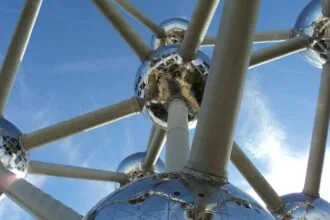
Beyond Winter Wonders itself, Mini-Europe, the miniature park at the foot of the Atomium in Bruparck, runs its own separate Christmas edition each winter. The park’s scaled-down European landmarks and gardens are lit up after dark and set inside festive miniature scenes, including Christmas markets and winter sports, alongside full-size touches like reindeer figures. It typically opens daily from 10am to 5pm through the season, closing earlier on 24 and 31 December, and sits at the Heysel/Heizel Metro stop, the same stop used for the Atomium’s own New Year’s Eve fireworks, making it a realistic add-on to a Brussels festive trip beyond the main market route.
None of this is a substitute for Winter Wonders itself, but together it means a multi-day Brussels trip has genuine festive variety beyond repeating the same market route each evening.
Shopping Hours During the Christmas Period
Belgium’s ordinary retail rules matter for anyone planning shopping around the market. Standard opening hours for most Brussels shops run Monday to Saturday, roughly 10am to 6pm, with some larger stores and shopping centres extending to 7pm or 8pm on the busiest streets.
Belgium follows a general Sunday closing rule for most shops, and Brussels’ city centre is noticeably quieter on Sundays than on Saturdays as a result. Some independent shops still open, particularly around the Marolles flea-market district, but do not assume a normal Sunday shopping trip around the Grand-Place area will look like a Saturday.
The market itself is unaffected by this rule since food and craft chalets run to their own daily noon-to-10pm schedule throughout the season, seven days a week, regardless of standard retail hours elsewhere in the city.
On 24 and 31 December, both the market and the wider retail sector close early, with Winter Wonders itself typically closing by 6pm on both dates rather than running its normal evening hours, and most conventional shops shutting during the afternoon.
If souvenir or gift shopping beyond the market stalls is part of your plan, build it into a weekday or Saturday rather than assuming Sunday or a late Christmas Eve run will work the same way it might at home.
Search flights and useful route combinations in one place.
View flightsBrowse Airalo eSIM options for convenient travel data.
Check eSIMsCheck private airport pickup options and plan the first part of your journey in advance.
View transfersOpening Hours on Christmas Day, 26 December and New Year’s Day
Christmas Day and New Year’s Day are official public holidays in Belgium, and the city behaves accordingly. On 25 December, ordinary shops, banks, post offices and public services close, and public transport typically runs on a reduced Sunday-style schedule rather than its normal weekday timetable.
The market itself is a genuine exception. Winter Wonders stays open on Christmas Day, generally on shortened hours around midday to 6pm rather than its usual noon-to-10pm run, so it remains a realistic thing to do even if you are spending the day itself in Brussels.
A genuinely useful fact for anyone used to a British Boxing Day: 26 December is not a public holiday in Belgium. Shops, supermarkets and services return to their normal opening hours that day, and public transport resumes its usual schedule, so do not plan around 26 December being a quiet, closed-down day the way it typically is in the UK.
New Year’s Day, 1 January, follows the same public-holiday pattern as Christmas Day: expect shops closed, a Sunday-style public transport timetable, and most conventional attractions shut, though the tail end of Winter Wonders itself, which runs until 3 January in the 2026-2027 season, typically continues on its holiday hours.
Pharmacies maintain an on-duty emergency rota on both public holidays if you need one, and museums generally follow their normal weekly closing day (commonly Monday) on top of the public holiday closures, so check the specific attraction rather than assuming every museum in the city follows an identical pattern.
New Year’s Eve in Brussels: Where the Fireworks Really Happen
This is the point where popular assumption and reality diverge, and it is worth being direct about it. Many visitors assume Brussels’ big New Year’s Eve firework display happens on Grand-Place, given how central the square is to the whole Christmas season. It does not.
In the most recently confirmed edition, Brussels’ official New Year’s Eve fireworks and light show ran at the Atomium esplanade in the north of the city, not the historic centre. The evening opened with a DJ set from around 9pm, moved into 3D laser mapping projected onto the Atomium’s structure from around 11:40pm, and closed with a fireworks display at midnight.
The event is free and organised by the City of Brussels, with food trucks and bars operating in designated zones around the esplanade and several viewing areas managed through marked entrance points. Public transport (STIB-MIVB) has historically run free from midnight to help the crowd disperse safely.
Grand-Place itself is not left dark on New Year’s Eve; expect a lively atmosphere, crowds and the market’s own reduced hours on 31 December, but the headline fireworks moment happens across the city at the Atomium, not above the guild houses. The specific 2026-2027 New Year’s Eve programme had not been formally announced at the time of writing, so treat the format above as the reliable recent pattern rather than a locked-in schedule, and check the City of Brussels’ events calendar closer to the date.
If seeing fireworks specifically is a priority, plan your evening around getting to Heysel/Heizel, the Atomium’s Metro stop, well before midnight rather than assuming Grand-Place is the place to be when the clock strikes twelve.
Brussels Weather in December: What to Pack
Brussels in December sits firmly in typical northern European winter territory rather than anything extreme. Average daytime highs run from around 7°C (45°F) at the start of the month down to around 6°C (43°F) by the end, with overnight lows dropping from roughly 3°C (37°F) to 2°C (35°F).
Rain is a bigger practical concern than cold. Brussels sees roughly a 33% chance of rain on any given December day, fairly constant across the month, and around 72% average cloud cover, so grey, damp evenings are more likely than crisp, clear ones.
Snow, despite the postcard imagery associated with Christmas markets generally, is genuinely uncommon in Brussels itself. The typical December snow chance sits around just 1%, so pack for cold rain rather than count on a white Grand-Place for your photos.
Given the market involves a lot of standing and slow walking outdoors between stalls, waterproof footwear matters more than a heavy coat alone. Layer up with a warm base layer, a genuinely waterproof outer layer, gloves and a hat, and you will be comfortable for several hours on the market route even on a damp evening.
The upside of the mild, wet-leaning climate is that severe winter disruption to travel is rare compared with more continental Christmas market cities further east or south into the Alps, making Brussels a comparatively low-risk choice for a short winter city break.
Getting to Winter Wonders and Around the Market
Brussels is one of the easiest European capitals to reach for a Christmas market weekend, whether by air or by rail. If you are flying in, Brussels Airport (BRU) at Zaventem has a railway station directly beneath the terminal, with direct trains reaching Brussels-Central, the closest station to Grand-Place, in around 18 minutes. Our Brussels Airport Transfers guide covers the train, Bus 12 and taxi options in detail.
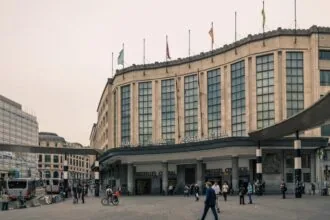
Brussels-Central is genuinely the station to aim for if the market is your priority; it sits within easy walking distance of Grand-Place, avoiding the need for a Metro connection that Brussels-Midi or Brussels-North would require. If you are arriving by international train instead, including from other Christmas market cities, Brussels-Midi is the main hub, with a short local train or Metro hop needed into the centre.
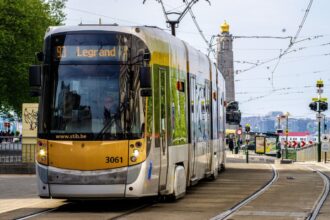
Once you are in the city, the historic centre and the full Winter Wonders footprint are genuinely walkable, and most visitors will not need public transport to move between the market’s zones. For getting to accommodation further out, or for reaching the Atomium on New Year’s Eve, our Brussels Public Transport Guide explains the Metro, tram and contactless fare system.
December is one of the busiest periods on Brussels’ rail network for both domestic and international travellers, so book train tickets, especially any Eurostar or other cross-border journey, well in advance rather than assuming last-minute availability at a reasonable price.
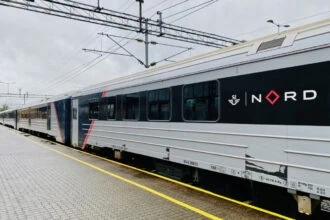
If your Brussels trip is one stop on a wider Christmas market tour, the city’s position as a genuine European rail hub is a real asset. Our Night Trains from Brussels guide covers direct overnight services onward to Prague, Berlin, Vienna and beyond, several of which also have their own established Christmas markets.
Where to Stay and Extending Your Trip
For a Christmas market trip specifically, staying centrally around the Grand-Place, Sainte-Catherine or Dansaert area makes the most practical difference. You can walk back to a hotel to warm up between market zones, and you avoid a late-evening Metro journey after the light show finishes.
The Sablon area is also worth considering for a quieter base with genuine chocolate and antiques character, still within easy walking distance of the main market route, while areas around Brussels-Midi suit travellers prioritising an easy onward Eurostar or international rail connection over proximity to the market itself.
Book accommodation for a Brussels Christmas market trip well ahead of the season. December is one of the busiest periods for hotels across the whole European Christmas-market circuit, and central Brussels rooms can sell out or rise sharply in price closer to the market’s opening weekend.
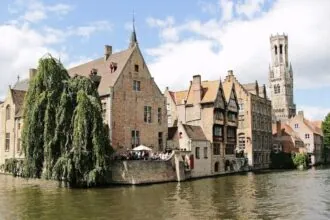
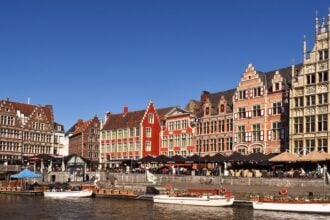
If you have more than a weekend, Brussels’ position makes an easy Belgian day trip realistic without touching the car. Our Day Trips from Brussels guide covers Bruges, Ghent and Antwerp, all of which run their own festive decorations and markets through December, and all reachable by direct train in under an hour.
A Christmas-season pairing of Brussels with Bruges or Ghent works particularly well, since both cities’ own historic squares take on their own festive character without the scale or crowds of Brussels’ market, giving a genuinely different atmosphere across a short multi-city break.

Rupert’s Handy Travel Tips
Brussels’ market spreads further than people expect, so a little planning goes a long way here. These are the things I’d sort out before you go.
- Catch the light show more than once: Since it repeats every 30 minutes from 5pm to 10pm, don’t stress about missing the first showing. Grab food, then come back for a quieter second viewing.
- Head to Sainte-Catherine for oysters, not just waffles: The old fish market’s seafood stalls are genuinely good and far less crowded than the Grand-Place food queues.
- Don’t plan your New Year’s Eve around Grand-Place: If fireworks are the priority, get yourself to the Atomium esplanade well before midnight instead.
- Remember 26 December is a normal shopping day here: Unlike the UK’s Boxing Day, Belgian shops reopen as usual, which is useful if you need something specific.
- Pack for rain, not snow: A proper waterproof layer and decent shoes will serve you far better on this market than a coat built for snow that rarely comes.
Want to meet the reindeer behind our travel tips? Find out more in our page Who is Rupert?.




Frequently Asked Questions
What is Brussels’ Christmas market actually called?
Officially it is Winter Wonders, known as Plaisirs d’Hiver in French and Winterpret in Dutch. It spans several linked squares in the historic centre rather than a single market site.
When does the Brussels Christmas market run in 2026?
The confirmed 2026-2027 season runs from Friday 27 November 2026 to Sunday 3 January 2027, with daily hours of noon to 10pm, shortened to around 6pm on 24 and 31 December.
Is entry to the Brussels Christmas market free?
Yes. Entry to Winter Wonders and the Grand-Place light show is free. The Ferris wheel, ice-skate hire and curling are paid extras layered on top of the free market.
Where do Brussels’ New Year’s Eve fireworks actually happen?
At the Atomium esplanade in the north of the city, not on Grand-Place. In the most recently confirmed edition the display ran from a DJ set around 9pm through to fireworks at midnight, with the specific 2026 programme not yet announced at the time of writing.
Are shops open in Brussels on 26 December?
Yes. Unlike the UK, 26 December is not a public holiday in Belgium, so shops and services return to their normal opening hours that day.
Does it snow in Brussels at Christmas?
Rarely. The typical December snow chance is around just 1%, with rain, at roughly a 33% daily chance, a far more realistic thing to pack for.
Which Brussels station should I use for the Christmas market?
Brussels-Central is normally best, since it sits within easy walking distance of Grand-Place. Brussels-Midi is better if you are connecting onward by Eurostar or another international train.
Further Reading
If Brussels is one stop on a wider European Christmas market trip, our European Christmas Markets Guide compares it against Vienna, Prague, Budapest, Strasbourg and other major cities, and is a useful starting point for building a multi-city winter itinerary around Belgium’s genuinely central rail position.
For the practical side of arriving, our Brussels Airport Transfers guide covers the train, Bus 12 and taxi options from Zaventem, while our Brussels Public Transport Guide explains the Metro, tram and contactless fare system you will use once you are in the city, including for a late New Year’s Eve journey home from the Atomium.
Beyond the market itself, our Things to Do in Brussels guide covers the Grand-Place, Atomium, museums and free attractions worth building into a longer stay, and pairs naturally with a festive-season visit once you have exhausted the market’s own stalls and rides.
If you have time for more than Brussels alone, our Day Trips from Brussels guide covers Bruges, Ghent and Antwerp, all of which carry their own festive character in December, while our Night Trains from Brussels guide is worth a look if you plan to continue the Christmas market trail overnight towards Prague, Vienna or Berlin.
For up-to-date 2026-2027 dates, opening hours and the Grand-Place light show schedule, the City of Brussels’ own Winter Wonders page is the official source to check before you go.