Reviewed by our editorial team Published
Kiel is Germany’s northernmost major city, and cruise passengers arriving here find something genuinely different from the shopping-centre polish of Hamburg’s newest terminal or the emigration-port history of Bremerhaven. This is a working naval base and the self-declared sailing capital of the Baltic, built almost entirely around the long, sheltered inlet of the Kieler Förde, and the cruise operation that has grown up alongside its ferry routes and shipyards is a serious one in its own right rather than an afterthought.
The scale is real. PORT OF KIEL recorded 187 cruise ship calls during its 2025 season, up slightly from 184 the year before, and carried around 1.11 million cruise passengers through its terminals, a five percent rise on 2024 driven largely by larger ships rather than a big jump in call numbers. That places Kiel firmly among Germany’s leading cruise ports alongside Hamburg, Rostock and Bremerhaven, even though it rarely gets the same attention in general travel coverage.
Part of what makes Kiel distinctive is how the port markets itself. Rather than positioning purely as a scenic port of call, PORT OF KIEL promotes the city as a genuine home port for seven-day Baltic and Norwegian fjord itineraries, and AIDA Cruises is among the operators using Kiel on this basis, alongside a wider roster of lines running both turnaround sailings and simple calls through the season.
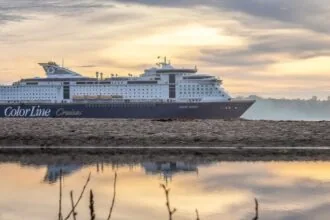
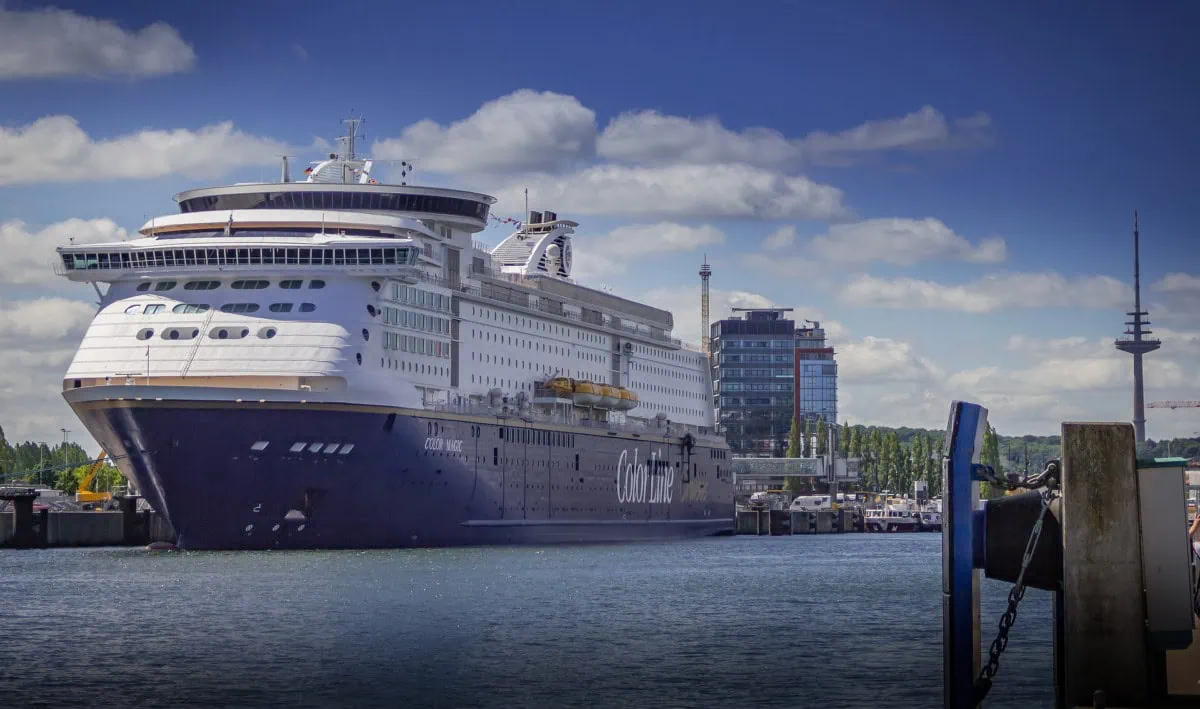
Crucially, not every quay in Kiel’s harbour handles cruise ships. The city runs three passenger terminals along the eastern shore of the fjord, and only one of them, Ostseekai, is built and used for ocean-going cruise vessels. The other two, Norwegenkai and Schwedenkai, are dedicated scheduled ferry terminals for Color Line’s Oslo route and Stena Line’s Gothenburg route respectively, and knowing that distinction before arrival avoids a genuinely wasted taxi ride.
This guide covers Ostseekai in full: which cruise lines call, how to reach Kiel from Hamburg and beyond, parking and transfer options at the terminal, what to see in the city before or after a sailing, and the practical realities of luggage, check-in and embarkation day.
Kiel’s Cruise Port at a Glance
The table below summarises the essentials of Kiel’s cruise operation before the detailed sections that follow cover each part in full. Ostseekai is the city’s single dedicated cruise facility, distinct from the two ferry-only terminals that share the same stretch of waterfront.
| Category | Detail |
|---|---|
| Cruise terminal | Ostseekai (Berths 27/28), plus Ostuferhafen Berth 1 |
| Operator | PORT OF KIEL |
| 2025 season | 187 ship calls, around 1.11 million cruise passengers |
| Cruise lines | AIDA Cruises, TUI Cruises, Costa Cruises, MSC Cruises, Cunard, Hapag-Lloyd Cruises, Holland America Line, Ponant and Plantours |
| From Hamburg | Direct train, roughly 1h10 to 1h30 |
| Ferry-only terminals | Norwegenkai (Color Line to Oslo) and Schwedenkai (Stena Line to Gothenburg) |
Ostseekai: Kiel’s Purpose-Built Cruise Terminal
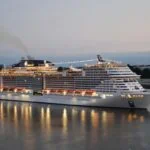
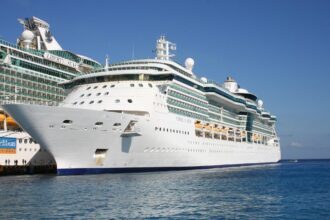
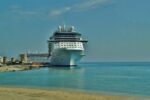
Ostseekai is Kiel’s dedicated cruise terminal, sitting on the eastern shore of the fjord at Berths 27 and 28, with a further berth, Ostuferhafen Berth 1, handling additional large cruise vessels when more than one ship needs space on a busy day. Together the two facilities give Kiel genuine capacity to handle multiple ocean-going ships without one sailing crowding out another.
The location is a real practical advantage for passengers. Ostseekai sits only around 300 metres from downtown Kiel, considerably closer to the city centre than the port districts serving Hamburg’s Steinwerder and Altona terminals, and the walk into town on a clear day is genuinely manageable for anyone travelling light.
Infrastructure at the terminal has been expanding steadily. A second shore power connection at Ostseekai became operational at the end of the 2025 season, meaning the port can now supply clean electricity to three ocean-going cruise vessels simultaneously rather than forcing ships to keep auxiliary engines running in port. PORT OF KIEL has set a target of 75 percent shore power utilisation across its ferry and cruise traffic during 2026, a genuinely ambitious figure that reflects wider pressure across the Baltic cruise industry to cut emissions at berth.
Combined capacity across the terminal is built to handle serious passenger volumes on a single embarkation day, with Ostseekai’s two berths together rated to handle up to 11,000 passengers per day, and Ostuferhafen Berth 1 adding further capacity of around 6,000 passengers for the largest ships now calling, detailed further in the facilities section below. For anyone wanting current scheduled arrivals before travelling, PORT OF KIEL’s official website publishes ship call information directly, and it is worth checking against a specific booking confirmation before finalising any transport plan.
Best if you want daily housekeeping and a front desk. Filter by area first, then by price.
Check availabilityBest for groups who want one address and separate bedrooms rather than three hotel rooms.
See holiday homesBest for double-checking. Runs the same search across several booking sites so you are not leaving money behind.
Compare pricesFacilities at the Terminal
Ostseekai’s two berths run as genuinely separate check-in buildings rather than one shared hall, and PORT OF KIEL describes both as bright, modern facilities with comfortable waiting zones and terraces looking out over the Kiel Fjord rather than a windowless departure lounge. Berth 27’s terminal gives over 2,500 square metres to passenger waiting space and a further 2,500 square metres to luggage handling, while Berth 28’s newer building spreads 3,300 square metres across two floors, with its own waiting area, a luggage zone of around 1,800 square metres, and a dedicated security screening area built into the terminal itself.
Two boarding bridges connect the terminal buildings directly to the ships, so passengers walk from check-in to gangway under cover rather than crossing open quay space. Ostuferhafen Berth 1, the port’s additional cruise facility a short distance along the fjord, adds capacity for a further 6,000 passengers over its own 395 metre quay, with a modern terminal building of its own for the largest ships that need it.
Because both Ostseekai buildings sit only around 300 metres from downtown Kiel, PORT OF KIEL notes that the Hauptbahnhof is within walking distance and that cafes and restaurants are just around the corner in the city centre itself, rather than built into the terminal as a standalone retail offer the way a larger airport-style cruise terminal sometimes is. Passengers wanting a coffee or a proper meal before boarding are generally better served walking the short distance into town than hunting for an on-site cafe, and it is worth building a few extra minutes into an early arrival for exactly that reason.
PORT OF KIEL’s own published information does not go into detail on WiFi availability or the exact toilet and seating provision within each waiting area, so anyone with a specific requirement, whether that is mobility equipment, a particular connectivity need, or a tight connection to a train or flight, is better off confirming directly with the port or the cruise line ahead of a sailing rather than assuming a facility is available on the day. Wheelchair assistance and accessible facilities are provided at the terminal, covered in more detail in the check-in section further down this guide.
Which Cruise Lines Call at Kiel
AIDA Cruises, Germany’s largest cruise brand, is among the most prominent names using Kiel, and the port positions itself explicitly as a home port for seven-day Baltic and Norwegian fjord itineraries, the kind of turnaround programme that brings repeat embarkations through Ostseekai across a season rather than a single one-off call.
TUI Cruises, headquartered further south in Hamburg, also includes Kiel within its Mein Schiff network of German ports, while Costa Cruises and MSC Cruises bring their own Baltic itineraries through on a regular seasonal basis. Between them, these operators account for a large share of the family and mainstream market sailings using Ostseekai each year.
At the more premium end, Cunard and Holland America Line both feature among the lines calling at Kiel, typically as part of longer Northern European or Baltic capitals itineraries rather than a dedicated turnaround programme, giving the port a genuinely international passenger mix rather than one dominated purely by the German domestic market.
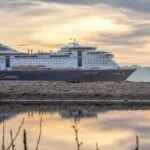
Smaller and more specialised operators round out the picture. Ponant, the French expedition and luxury line, and Plantours, a German operator running smaller ships and river-style sea voyages, both appear among the lines using Kiel’s facilities, reflecting how the port serves everything from mass-market family sailings through to boutique expedition-style cruising on the same stretch of quay.
As with any German cruise port, the exact ships and sailing dates shift from season to season, and Hapag-Lloyd Cruises also appears within Kiel’s roster of operators on selected itineraries. The genuinely useful takeaway for any traveller is to confirm a specific sailing’s terminal, ship and check-in time against the booking confirmation from the cruise line itself, cross-checked against PORT OF KIEL’s own published schedule, rather than relying on a general guide like this one for exact dates.
Getting to Kiel from Hamburg by Train
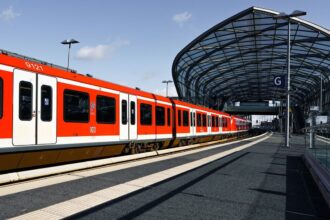
For the large majority of international cruise passengers, Hamburg is the natural gateway before continuing on to Kiel, and the rail link between the two cities is direct and genuinely straightforward. Trains run along the roughly 109 kilometre line connecting Hamburg Hauptbahnhof and Kiel Hauptbahnhof, with regional and InterCity services combining to give departures at least once an hour throughout the day.
Journey times vary a little depending on the specific service and how many intermediate stops it makes, but a realistic range for planning purposes is somewhere between one hour ten minutes and one hour thirty minutes each way, with no change of train required on the core route. That is a short enough hop that it barely needs planning around, though anyone travelling with cruise-sized luggage on embarkation morning should still allow a comfortable buffer before a booked departure.
Ticketing follows the same general German regional structure covered in more depth elsewhere on this site. Standard flexible fares are available for booking on the day, while advance Sparpreis tickets through Deutsche Bahn’s own app or website can bring the one-way cost down meaningfully for anyone able to fix a departure time ahead. Travellers who already hold, or plan to buy, a Deutschland-Ticket for a longer German trip will also find it covers this route on regional services, since the ticket applies nationwide on local and regional trains rather than being restricted to a single state.
From Kiel Hauptbahnhof, the city centre and the Kiellinie waterfront are an easy walk, but Ostseekai itself sits a little further out along the fjord, so a connecting bus, taxi or short transfer is generally the better plan on embarkation day rather than attempting the walk with full luggage, covered in the taxi and transfer section further down this guide.
Getting to Kiel by Air, Road and Beyond
Kiel has its own small airport, but it carries very limited scheduled commercial traffic, and the large majority of international cruise passengers flying in for a sailing should plan around Hamburg Airport (HAM) instead. From there, the standard route into the city is the S-Bahn or express bus into Hamburg Hauptbahnhof, followed by the direct regional or InterCity train described above, an interchange that adds roughly thirty to forty-five minutes to the overall journey on top of the Hamburg to Kiel leg itself.
Travellers arriving from further afield sometimes route through Lübeck Airport instead, a smaller regional field served mainly by budget carriers on a more limited set of European routes, connecting onward to Kiel by regional bus or a change via Lübeck Hauptbahnhof. It is a genuinely useful backup option for anyone whose flight schedule suits it better than Hamburg, though it is worth checking current onward connections carefully before booking, since regional bus timetables change more often than the main rail network’s.
Driving is also entirely realistic for anyone hiring a car or arriving by road, with the A7 motorway running directly between Hamburg and Kiel and continuing north toward the Danish border, a journey of a little over an hour outside peak traffic periods. For most cruise passengers without their own vehicle, though, the train remains simpler and cheaper, and it removes any concern about parking near the terminal on a busy embarkation morning, covered in the next section for anyone who does choose to drive.
Anyone connecting onward into Scandinavia after a Kiel cruise should also note the city’s own international ferry routes to Oslo and Gothenburg, a genuinely useful option for a longer, multi-leg Baltic trip built around more than one form of transport, though these depart from separate terminals entirely from Ostseekai, covered in full later in this guide.
Parking at Ostseekai
Drivers heading directly to the ship have dedicated parking options close to Ostseekai itself, run through PORT OF KIEL’s own facilities rather than a purely third-party arrangement. Both short-stay drop-off space and longer, cruise-length parking are available within walking distance of the terminal building, which suits anyone bringing a lot of luggage or travelling with reduced mobility.
Because Ostseekai can host more than one ship at once, particularly during peak turnaround weeks in summer, parking capacity can genuinely fill on the busiest embarkation days, and booking a space in advance through the port’s official channels, rather than arriving and hoping for a spot, is the sensible approach for anyone planning to leave a car for the length of a cruise. Current rates and booking details are best confirmed directly with PORT OF KIEL ahead of a specific sailing date, since pricing and availability shift with the season.
A short window of free or low-cost drop-off parking is generally available close to the terminal entrance for anyone simply delivering a passenger and luggage before continuing on, rather than leaving a vehicle for the full length of the cruise. This is the easiest option for a local family seeing off a relative or friend without needing a formal long-stay booking.
For anyone without a car, or arriving via Hamburg and preferring not to drive the final leg, the taxi and shuttle options covered in the next section generally work out simpler than a long-stay parking booking, particularly for a solo traveller or couple without a great deal of luggage. Drivers with an especially early or late sailing time should also factor in that some long-stay areas operate with reduced staffing outside standard daytime hours, so confirming access arrangements ahead of an unusual arrival time is worth the extra few minutes it takes.
Taxis, Shuttles and Transfers at the Terminal
For anyone arriving by train rather than car, the short hop between Kiel Hauptbahnhof and Ostseekai is easily covered by taxi, with a rank operating at the station and a journey time of only a few minutes given how compact central Kiel is compared with somewhere like Hamburg. This is the simplest option for a traveller arriving outside any scheduled shuttle window, or for a group preferring a direct door-to-door journey over a shared service.
Local bus services operated by KVG, Kiel’s city transport authority, also connect the Hauptbahnhof area with stops close to Ostseekai, and standard local fares apply, making this a genuinely budget-friendly option for anyone travelling light and happy to walk the final stretch from the nearest stop to the terminal gate.
On confirmed ship days, cruise lines and their local handling agents frequently arrange coach transfers directly between Kiel Hauptbahnhof or Hamburg Airport and Ostseekai for passengers who have booked a transfer package as part of their cruise fare, timed around scheduled embarkation and disembarkation windows rather than a fixed all-day public timetable. Checking whether a specific booking already includes this service is worth doing before arranging separate transport, since it can remove the need for a taxi or bus entirely.
Pre-booked private transfers through regional operators are also available for families or anyone wanting a guaranteed pickup rather than relying on a shuttle’s ship-day schedule, particularly useful for a very early morning embarkation or a late-night disembarkation after a longer itinerary. As with parking, confirming a transfer booking a few days ahead rather than on arrival avoids any risk of a longer wait on a busy turnaround morning, especially when more than one ship is working Ostseekai at once.
Best for long or awkward journeys. Builds one itinerary out of separate flights.
View flightsBest for short trips. Install the eSIM at home and arrive with working data, no shop queue.
Browse eSIMsBest after a long flight or a late landing. Price agreed before you travel, and no taxi queue.
Check transfersBefore or After Your Cruise: The Kiellinie, Kieler Woche and Laboe
Cruise passengers with a spare morning or afternoon either side of a sailing are genuinely well placed in Kiel, since Ostseekai’s location close to downtown puts the city’s best free attraction within easy reach. The Kiellinie, a broad waterfront promenade running for around three and a half kilometres along the fjord, is the natural first stop, with container ships, ferries and sailing dinghies all sharing the same stretch of water that a passenger’s own cruise ship will shortly join.
Anyone timing a Kiel sailing around the final week of June should build in extra planning time, since that is when Kieler Woche, the largest sailing event in the world, fills the fjord with around two thousand boats and draws an estimated three million visitors to the wider festival. It is a genuinely spectacular backdrop for an embarkation or disembarkation day, but hotel prices in Kiel rise sharply during the week, and both accommodation and transfers are worth booking well ahead if a cruise date happens to fall within it.
For anyone with a longer stopover, a trip out to Laboe, around twenty minutes from central Kiel, adds the striking Naval Memorial tower and the preserved U-995 submarine, genuinely worthwhile stops for anyone with an interest in maritime or wartime history. A seasonal passenger ferry across the fjord makes for a pleasant alternative to the bus in summer, arriving close to the memorial itself.
Passengers squeezing a city visit into a turnaround morning, or filling a few hours before an evening sailing, get more out of a dedicated page than this cruise-focused guide has room for. A separate Things to Do in Kiel guide on this site covers the Kiellinie, Kieler Woche, Laboe and the rest of the city in proper depth, and it is the better starting point for anyone planning to build a full day or two around their sailing rather than a quick walk from the ship.
Norwegenkai and Schwedenkai: Kiel’s Ferry-Only Terminals
It is worth being genuinely clear about a point that causes real confusion for first-time visitors to Kiel’s waterfront: not every terminal along the fjord handles cruise ships. Alongside Ostseekai, the port runs two further passenger terminals, and both of these are dedicated to scheduled international ferry routes rather than cruise calls of any kind.
Norwegenkai, on the eastern bank of the fjord a short distance north of the centre, is the departure point for Color Line’s overnight crossing to Oslo, a genuinely long-established route running close to daily through most of the year. Schwedenkai, sitting closer to the city centre and within walking distance of Kiel Hauptbahnhof, handles Stena Line’s daily overnight sailing to Gothenburg in Sweden.
Neither of these terminals appears on a cruise line’s booking confirmation, and a taxi driver or transfer company given the wrong terminal name can genuinely end up at the wrong quay entirely, since all three facilities sit along the same general stretch of eastern shoreline that the Kiellinie promenade follows. Double-checking that a booking specifically names Ostseekai, rather than Norwegenkai or Schwedenkai, before arranging any transport is a simple step that avoids a genuinely stressful embarkation morning.
For travellers curious about the ferry side of Kiel’s harbour, whether as part of a wider Scandinavian trip or simply out of interest while walking the Kiellinie, a separate Ferry Routes from Kiel guide on this site covers the Oslo and Gothenburg crossings in full, including journey times, onboard facilities and how each route compares with flying.
Luggage, Check-In and Embarkation Practicalities
Check-in at Ostseekai follows the standard pattern of any international cruise turnaround terminal, with passengers passing through luggage drop-off, document checks and security screening before boarding. Cruise lines generally open check-in several hours ahead of the ship’s scheduled departure, and arriving within the specific window given on a boarding pass, rather than either far too early or uncomfortably late, keeps the process moving smoothly for everyone in the queue.
Anyone extending a stay in Kiel before boarding, or with hours to fill after disembarking, should plan around Kiel Hauptbahnhof for luggage storage, since the station offers standard lockers available regardless of which cruise line or terminal a passenger is using. Independent luggage storage apps, which partner with local shops and cafes across the city centre, offer a further flexible option for anyone without a hotel room to fall back on for the day.
Wheelchair assistance and accessible facilities are available at Ostseekai, and it is worth confirming any specific accessibility requirement directly with the cruise line or the port ahead of travel rather than assuming on the day. Passengers with reduced mobility travelling by car benefit particularly from the terminal’s compact layout and its short distance from the dedicated parking areas covered earlier in this guide.
Non-Schengen travellers, including those from the UK and the US, should expect a passport check on both embarkation and disembarkation, standard practice at any German cruise terminal handling international sailings. Building this reality into arrival timing, rather than assuming a purely walk-on process, avoids any unwelcome surprise on an already busy first morning of a cruise.
Practical Tips: Money, Passports and Weather
Germany uses the euro (EUR), and card and contactless payments are near-universal across Kiel, including at Ostseekai, ticket machines and the city’s shops and cafes, so carrying large amounts of cash before embarkation is rarely necessary. A single contactless card or phone payment covers taxis, buses and most purchases without much friction.
Passengers arriving from outside the Schengen area should expect a passport check on embarkation and disembarkation even though Germany itself has no internal border controls for EU travellers, as noted in the previous section. Building extra time into a first morning at the terminal for this reality remains the single most useful piece of advance planning for a non-European traveller sailing from Kiel.
Kiel’s position right on the Baltic coast means the weather can turn quickly regardless of season, and a light rain layer is a sensible addition to any daypack whatever the month, particularly for anyone planning a longer walk along the Kiellinie or a seasonal ferry crossing to Laboe. Wind off the fjord can also make an early embarkation morning feel noticeably cooler than the daytime forecast suggests.
Finally, the single most important practical reality of any cruise call is the ship’s all-aboard time, and Kiel is no exception to the rule that missing it is a genuinely serious problem. Building in a buffer of at least 45 to 60 minutes before that deadline, particularly for anyone returning from Laboe or a longer city walk by bus or ferry, is worth the lost sightseeing time it costs.

Rupert’s Handy Travel Tips
Sailing from Ostseekai? Rupert has a few tips worth knowing before you go:
- Double-check your terminal name: your booking should say Ostseekai, not Norwegenkai or Schwedenkai, since those two handle ferries only.
- Take the direct train from Hamburg Hauptbahnhof: it reaches Kiel Hauptbahnhof in around 1h10 to 1h30, running roughly hourly all day.
- Book parking ahead if you’re driving: Ostseekai’s car parks can fill on the busiest turnaround days when more than one ship is in port.
- Avoid Kieler Woche week unless you’re planning for it: the last week of June brings huge crowds and much higher hotel prices to the whole city.
- Pack a passport for embarkation day: non-Schengen travellers go through a border check even on an all-European sailing.
- Set a return alarm for your all-aboard time: build in 45 to 60 minutes of buffer if you’re coming back from Laboe or a longer city walk.
Want to meet the reindeer behind our travel tips? Find out more in our page Who is Rupert?.




Frequently Asked Questions About Kiel’s Cruise Port
Which terminal does my Kiel cruise use?
All ocean-going cruise ships at Kiel use Ostseekai, or occasionally the adjoining Ostuferhafen Berth 1. Your booking confirmation should state the exact terminal and check-in time for your sailing.
Is Ostseekai the same as Norwegenkai or Schwedenkai?
No. Norwegenkai and Schwedenkai are separate, dedicated ferry terminals for Color Line’s Oslo route and Stena Line’s Gothenburg route. Neither handles cruise ships.
How do I get from Hamburg to Kiel for a cruise?
Direct regional and InterCity trains connect Hamburg Hauptbahnhof and Kiel Hauptbahnhof roughly hourly, with a journey time of around 1 hour 10 minutes to 1 hour 30 minutes and no change required.
Which cruise lines call at Kiel?
AIDA Cruises, TUI Cruises, Costa Cruises, MSC Cruises, Cunard, Hapag-Lloyd Cruises, Holland America Line, Ponant and Plantours are among the operators using Ostseekai, with the exact ships and dates changing by season.
Does AIDA Cruises use Kiel as a home port?
PORT OF KIEL markets the city as a home port for seven-day Baltic and Norwegian fjord itineraries, and AIDA Cruises is among the lines using Kiel on this basis, alongside calls from a wider roster of operators.
How many cruise passengers does Kiel handle each year?
Kiel recorded 187 cruise ship calls and around 1.11 million cruise passengers during its 2025 season, a five percent rise on the previous year according to figures published by PORT OF KIEL.
Is there parking at Ostseekai?
Yes. Both short-stay drop-off space and longer cruise-length parking are available close to the terminal, bookable in advance through PORT OF KIEL’s own channels, which is worth doing ahead of the busiest turnaround days.
Do I need a passport for a Kiel cruise call?
Yes, especially for travellers from outside the Schengen area, who should expect a passport check on embarkation and disembarkation even on an all-European itinerary.
Further Reading
If you’re extending your stay before or after your cruise, our Things to Do in Kiel guide covers the Kiellinie, Kieler Woche, the Kiel Canal and the Laboe naval memorial in full depth.
Travellers curious about Kiel’s ferry side, or planning a longer Scandinavian trip around their cruise dates, should also read our Ferry Routes from Kiel guide, which covers the Oslo and Gothenburg crossings from Norwegenkai and Schwedenkai in detail.
Comparing Germany’s other cruise ports? Our Hamburg Cruise Port Guide and Bremerhaven Cruise Port Guide cover the country’s two other major cruise hubs in similar detail.
If your trip involves onward rail travel within Germany, our German Rail Tickets Explained guide breaks down the Deutschland-Ticket and regional alternatives to a standard fare, while our Interrail Germany Pass Guide explains when a country-specific pass beats buying tickets individually for a longer trip.