Reviewed by our editorial team Published
Discover the Best Things to Do in Liverpool
Liverpool is one of England’s most rewarding city breaks, a place where maritime history, world-famous music and genuine northern warmth all sit within walking distance of each other. Its waterfront held UNESCO World Heritage status for over a decade, and that history is still written into the Three Graces, the red-brick warehouses of the Royal Albert Dock and the wide sweep of the Mersey. This is also the city that gave the world The Beatles, and their story runs from a purpose-built museum on the dockside to a genuinely still-working venue on Mathew Street.
Beyond the obvious highlights, Liverpool rewards a longer look. Two cathedrals bookend Hope Street with wildly different visions, two Premier League clubs run their own stadium tours, and a trio of free national museums cover everything from Liver Birds to modern art. Our full Liverpool Travel Guide covers the wider practicalities of visiting, and if you’re flying in, our guide to Liverpool Airport Transfers is worth reading first. This page pulls together the attractions that genuinely earn a place on a visit, with cost and timing built into every section.
Liverpool Attractions at a Glance
Liverpool’s biggest draws sit within a compact, walkable city centre, so it’s worth knowing roughly how long each one deserves before planning your days. This table is a quick-reference starting point, with full detail on cost, access and booking following in the sections below.
| Attraction | Time to Allow | Best For |
|---|---|---|
| Royal Albert Dock | Half a day | Waterfront wandering, dining, first-time visitors |
| Royal Liver Building 360 | 75 minutes to 1.5 hours | Panoramic views, architecture, the Liver Birds up close |
| The Beatles Story | 1.5 to 2 hours | Beatles fans, families, music history |
| Liverpool’s Two Cathedrals | 2 to 3 hours for both | Architecture, panoramic views, quiet reflection |
| Mersey Ferry Crossing | 50 minutes to half a day | Skyline views, a relaxed break from walking |
| Splash Tours and Albert Dock Cruise | 30 minutes to 1 hour | Families, amphibious fun, dock history |
| Anfield Stadium Tour | 1.5 to 2 hours | Liverpool FC fans, football history |
| Hill Dickinson Stadium Tour | 1.5 to 2 hours | Everton FC fans, modern stadium design |
| Museum of Liverpool | 2 to 3 hours | Local history, families, free entry |
| Tate Liverpool and Walker Art Gallery | 1.5 to 2 hours each | Art lovers, free entry, rainy days |
| Cavern Quarter and Mathew Street | 1 to 2 hours | Live music, Beatles nostalgia, evenings out |
| Liverpool Christmas Markets | 2 to 3 hours | Festive atmosphere, food and drink, gifts |
| Shopping in Liverpool | 1 to 2 hours | Liverpool ONE, Bold Street, independent shops |
| Liverpool’s Food Halls and Food Scene | 1 to 2 hours | Baltic Market, Duke Street Market, casual dining |
| Shows and Theatres in Liverpool | 2 to 3 hours | Liverpool Empire, Everyman, Playhouse |
| Major Annual Events in Liverpool | Varies by event | Grand National, Sound City, Africa Oyé, Pride |
| Things to Do in Liverpool When It Rains | Half a day | FACT, food halls, free museums |
Best if you want daily housekeeping and a front desk. Filter by area first, then by price.
Check availabilityBest for groups who want one address and separate bedrooms rather than three hotel rooms.
See holiday homesBest for double-checking. Runs the same Liverpool search across several booking sites so you are not leaving money behind.
Compare pricesRoyal Albert Dock: Where Every Liverpool Visit Begins
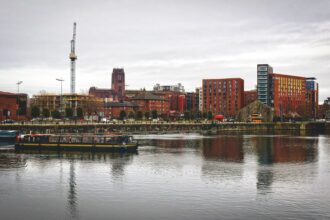
The Royal Albert Dock is where most visits to Liverpool begin. Opened in 1846 as the first dock system in Britain built entirely from cast iron, brick and stone with no wood at all, it was designed to be fireproof, and its warehouses once held one of the largest concentrations of valuable cargo anywhere in the world. Today the same red-brick buildings house museums, restaurants, bars and shops, wrapped around a working harbour where the water still rises and falls with the Mersey tide.
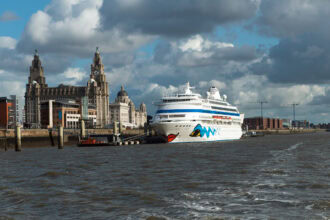
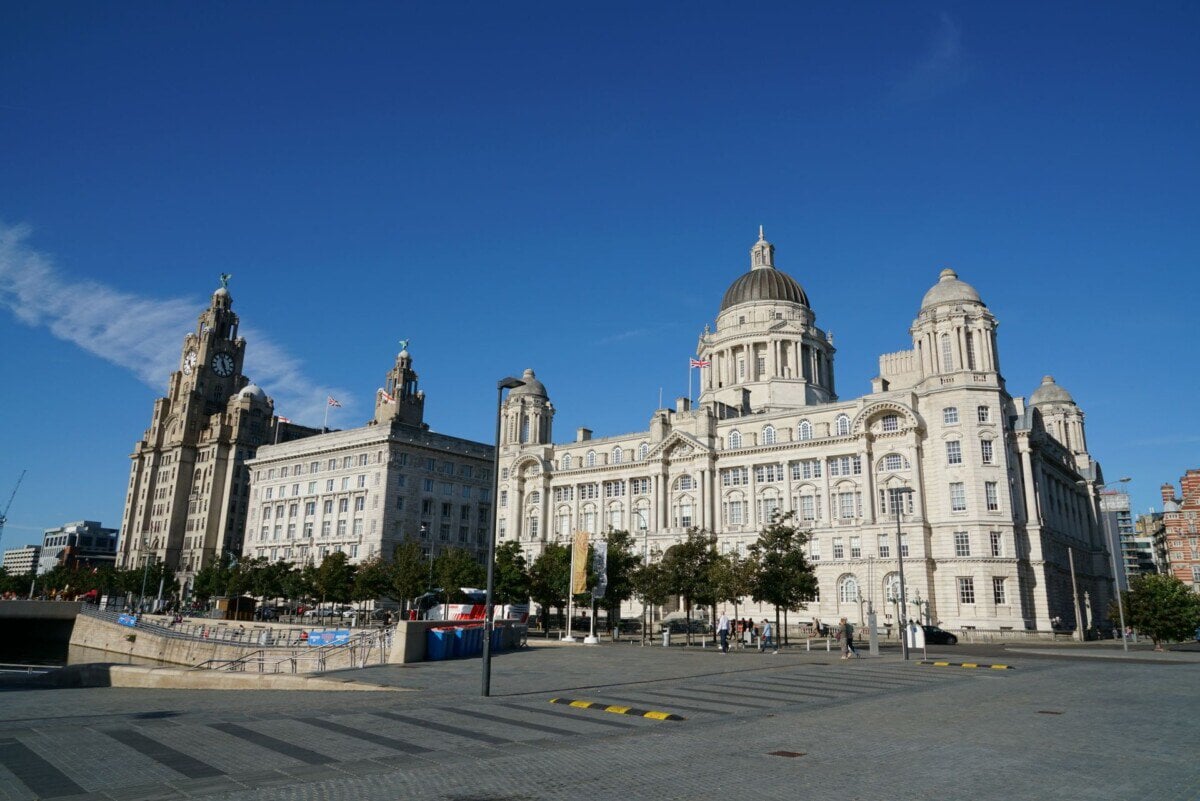
Walking the dock costs nothing, and it’s the best way to get your bearings in Liverpool. The Three Graces, the Royal Liver Building, the Cunard Building and the Port of Liverpool Building, sit just north along the Pier Head and are visible from almost anywhere on the dock’s cobbled quaysides. The whole waterfront lights up after dark, and the dock’s covered walkways make it a good choice even when Liverpool’s weather turns.
The dock is also the practical hub for several other entries on this list. The Beatles Story, the Merseyside Maritime Museum and a branch of Tate Liverpool all sit within its warehouses, and Mersey Ferries depart from the nearby Pier Head terminal. If you’d rather see the highlights from a seat than on foot, the Liverpool Hop-On Hop-Off Bus loops past the dock and most of the city’s other major sights.
Cruise ships calling at Liverpool typically dock close by, and if you’re arriving that way, our dedicated Liverpool Cruise Port Guide is worth reading before you disembark. The dock gets busy on weekends and school holidays, so an early start rewards you with quieter photographs and shorter queues.
The Beatles Story and Beatles Heritage
Housed inside the Royal Albert Dock’s Britannia Vaults, The Beatles Story is the city’s most complete telling of the band’s journey, from Hamburg’s Reeperbahn clubs and the sweaty basement of the Cavern to global fame and eventual split. Life-size reconstructions of the Casbah Coffee Club, Abbey Road studios and John Lennon’s white piano room sit alongside genuine instruments and memorabilia, narrated by an audio guide included in the ticket.
An adult ticket typically costs around £20 (€23/$25), with children usually around £11 (€13/$14) and reduced rates for students and seniors. Booking online in advance is worth it in peak summer months, and the visit takes most people around 90 minutes to two hours. Our full The Beatles Story Liverpool guide covers the exhibits in more depth.
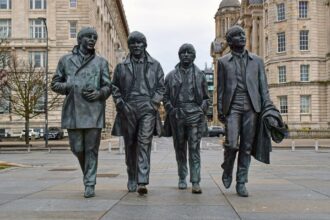
The museum is only one stop on a much bigger heritage trail. Beatles-themed tours run daily to Penny Lane, Strawberry Field and the childhood homes of John Lennon and Paul McCartney, both now cared for by the National Trust, and the Liverpool Beatles Tour Bus is the easiest way to see them all without working out bus routes yourself.
For genuine fans, allow a full half-day to see The Beatles Story properly and take in at least one wider heritage site, since the two experiences complement each other rather than repeat the same ground. Combined River Cruise and Beatles Story tickets are sometimes available directly through Mersey Ferries, which can work out cheaper than booking separately.
Liverpool’s Two Cathedrals: Anglican and Metropolitan
Liverpool is the only city in Britain with two full cathedrals, and the contrast between them is one of the best free sights anywhere in the country. At one end of Hope Street stands the Anglican Cathedral, designed by a 22-year-old Giles Gilbert Scott and built in stages between 1904 and 1978. At 189 metres long, it’s the longest cathedral in the world and the largest religious building in Britain, with a 101-metre tower offering one of the best views in the North West.
Entry is free, with a suggested donation of around £5 (€6/$7) towards its upkeep. The separate tower tour and Great Space experience, including lift access to the bell chamber and a short film on the building’s construction, carries its own modest fee and is well worth the extra time. Allow around an hour for the cathedral itself, longer if you’re climbing the tower.
At the opposite end of Hope Street sits the Metropolitan Cathedral, known locally as Paddy’s Wigwam for its distinctive conical shape. Consecrated in 1967 to a design by Sir Frederick Gibberd, its circular nave is topped by a 16-sided lantern tower nicknamed the Crown of Glass, filled with vivid stained glass by John Piper. Beneath it, the vast brick and granite crypt, the only completed part of an earlier, grander Edwin Lutyens design, now hosts exhibitions and events.
Like its Anglican neighbour, the Metropolitan Cathedral is free to enter, with donations welcomed. The two buildings are a pleasant 15 to 20 minute walk apart along Hope Street, past independent cafes and the Liverpool Institute of Performing Arts, and visiting both back to back makes for one of the most rewarding free afternoons in the city.
A Mersey Ferry Crossing
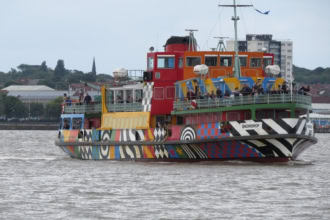
No visit to Liverpool feels complete without seeing the city from the water, and the classic way to do that is a Mersey Ferry crossing. The ferries have carried passengers across the river since long before the city’s tunnels and bridges existed, immortalised in Gerry and the Pacemakers’ “Ferry Cross the Mersey,” still played as boats leave the terminal.
The most popular option is the River Explorer Cruise, a 50-minute round trip with live commentary on the history of the docks, departing from the Pier Head terminal with a second stop at Seacombe on the Wirral side. Adult tickets are typically around £14 (€16/$18), with children usually around £9 (€10/$11). Our dedicated Mersey Ferries Liverpool guide covers timetables in full.
If you’d rather see the waterfront from a different angle, our Liverpool Sightseeing Cruises guide runs through other operators offering river tours from the city. Either way, a river crossing works equally well as a five-minute practicality or a leisurely hour of sightseeing.
Anfield: Liverpool FC Stadium Tour
For football fans, Anfield is close to a pilgrimage. Home to Liverpool FC since 1892, the stadium’s Kop end is one of the most famous stands in world football, and walking the tunnel past the “This Is Anfield” sign is a genuinely emotional moment even for visitors with no allegiance to the club. The tour takes in the dressing rooms, the players’ tunnel and pitch-side seating, finishing inside the LFC Story museum, which traces the club’s history through 19 league titles and multiple European Cups.
A combined tour and museum ticket typically costs around £26 (€30/$33) for adults and around £17 (€20/$22) for children under 16, with a small saving for booking online in advance. The museum alone, without the guided tour, costs less. Tours run most days outside match weeks but are suspended on match days and the day before a home fixture, so check the schedule first.
Anfield sits around two miles north of the city centre, and most visitors take a taxi, the stadium shuttle bus, or a short bus ride rather than walk. Our Liverpool FC Stadium Tour guide covers getting there and ticket options in full detail.
Allow around 90 minutes to two hours in total, and bring a coat even in summer, as parts of the tour move through open-air seating. It pairs well with the Cavern Quarter or the waterfront museums.
Hill Dickinson Stadium: Everton FC Stadium Tour
Everton’s move away from Goodison Park after well over a century is one of the biggest changes to Liverpool’s football landscape in living memory. The club now plays at the purpose-built Hill Dickinson Stadium, on the site of the former Bramley-Moore Dock, which opened in February 2025 with a capacity of around 52,700, one of the largest new stadiums built in England in decades. Its dockside setting, incorporating the dock’s original hydraulic tower into the design, gives it a genuinely striking presence a couple of miles north of the city centre.
Guided tours run on non-match days, taking in the dressing rooms, tunnel and pitch-side areas, for a ticketed fee that’s best checked directly with the club given how new the venue is. Booking ahead is strongly recommended, as slots are limited and demand has stayed high since the stadium opened.
Because the stadium sits away from the usual city centre walking routes, getting there takes a little more planning than a trip to Anfield. Our How to Get to Everton Stadium guide covers public transport, parking and the waterfront walking route from the Royal Albert Dock.
Whichever club you follow, seeing both grounds on the same trip is entirely possible with a little planning, and offers a fascinating contrast between more than a century of history at Anfield and Liverpool’s newest piece of sporting architecture.
Best for long or awkward journeys. Builds one itinerary out of separate flights.
View flightsBest for anyone whose home plan charges by the megabyte abroad. Pay a fixed price up front.
Check eSIMsBest if you would rather not work out the transport on arrival. Book it now and forget it.
View transfersMuseum of Liverpool and the Waterfront Museums
The striking, angular Museum of Liverpool sits right on the Pier Head, its white stone exterior deliberately contrasting with the historic Three Graces beside it. Inside, free permanent galleries cover the city’s social history, its role in the transatlantic slave trade, the story of Liverpool FC and Everton, and a genuinely moving section on the Hillsborough disaster, alongside lighter exhibits on the city’s music and people.
Admission is free, as with all National Museums Liverpool sites, and the building itself, with its wide glass windows framing the river, is worth the visit alone. Allow around two to three hours for the main galleries, longer with children who’ll want time in the interactive sections.
A short walk along the dock brings you to the Merseyside Maritime Museum, covering the port’s transatlantic trading history, the Titanic, and the thousands of emigrants who passed through Liverpool on their way to new lives abroad. Next door, the smaller International Slavery Museum tackles the city’s central role in the transatlantic slave trade with real honesty, and is an important stop rather than an optional extra. Both museums are free to enter, like every National Museums Liverpool site.
Between the three sites, a full free day of museum-going is easily possible, making the Pier Head and Royal Albert Dock one of the best-value stretches of any UK city for a family visit.
Tate Liverpool and Walker Art Gallery
Liverpool has punched well above its weight in the art world for decades, largely thanks to Tate Liverpool, which opened inside a converted Albert Dock warehouse in 1988 as the first Tate gallery outside London. The gallery closed in October 2023 for a major redevelopment and, though the project has run behind schedule, is now expected to reopen in 2027. In the meantime, a smaller selection from the collection is on show at RIBA North on nearby Mann Island.
Across town, the Walker Art Gallery on William Brown Street has none of that disruption and remains one of the best free galleries outside London. Its collection runs from medieval and Renaissance works through Rembrandt, Turner and the Pre-Raphaelites to contemporary British art, and it hosts the John Moores Painting Prize every two years.
Entry to the Walker is free, with occasional ticketed special exhibitions. Allow around 90 minutes to two hours for the permanent collection, and combine it with the neighbouring World Museum and Central Library, both also free, for a culture-focused afternoon.
Art lovers with a full day to spare should pair the Walker with the waterfront museums for a comprehensive sweep of Liverpool’s collections, almost all without paying a single admission fee.
The Cavern Quarter and Mathew Street
Just off Liverpool’s main shopping streets, Mathew Street and the surrounding Cavern Quarter are where the city’s music heritage feels most alive rather than preserved behind glass. The original Cavern Club opened here in a converted fruit warehouse cellar on 16 January 1957, first as a jazz venue, before The Beatles played there almost 300 times between 1961 and 1963, launching the Merseybeat sound that went on to conquer the world.
The original club closed in 1973, but the Cavern Club reopened nearby in the 1980s using bricks salvaged from the demolished original, and remains a genuinely working live music venue today, with free entry to daytime sets and a small cover charge for bigger evening shows. Walking down its narrow, arched brick tunnel, past decades of gig posters and star-shaped plaques honouring Liverpool musicians, is one of the most atmospheric things to do after dark.
Mathew Street itself is lined with pubs, a life-size statue of John Lennon, and the famous Cavern Wall of Fame, a permanent tribute to every band that ever played the original club. It’s compact enough to cover on foot in an hour, but rewards lingering with a drink and some live music rather than rushing through for photographs.
The street sits a short walk from Liverpool Central station and the shopping district around Church Street, making it easy to fold into an afternoon or an evening out without a separate trip.
Shows and Theatres in Liverpool
Liverpool’s theatre scene runs from grand Edwardian showmanship to some of the most respected new writing in the country, a genuine gap in most first-time itineraries. The biggest stage is the Liverpool Empire, a 2,348-seat theatre on Lime Street that opened in 1925 and holds the largest two-tier auditorium in the UK.
Touring musicals, opera, comedians and pop concerts all pass through its ornate auditorium, and the sheer scale makes even a mid-week show feel like an occasion. Tickets typically start from around £13 (€15/$16) for restricted-view or matinee seats.
For something more intimate, Hope Street is home to the Everyman Theatre, a short walk from the Anglican Cathedral, while its sister venue the Playhouse sits ten to fifteen minutes away at Williamson Square. Both are run by the same charitable trust.
Programming covers everything from classic drama and new plays to family pantomime over the festive period, and many performances offer audio-described, captioned or relaxed showings. It’s worth checking a specific show’s access options when booking.
Prices vary enormously by production, from studio shows to major touring musicals, so booking ahead and checking each theatre’s own listings is more useful than any single average figure. Popular touring shows at the Empire can sell out weeks in advance.
All three venues sit within easy walking distance of Liverpool Central and Lime Street stations. An evening at the theatre folds neatly onto the end of a day spent around the Cavern Quarter or the waterfront museums.
First-time visitors chasing spectacle should pick the Empire’s biggest touring show; anyone after something more distinctive is better served by the Everyman‘s new writing than another big commercial musical.
Christmas Markets in Liverpool
If you’re visiting in the run-up to Christmas, Liverpool puts on one of the North West’s biggest festive programmes. Recent years have seen a full winter takeover of the city centre, with an outdoor ice rink at St George’s Hall, a covered rink and rides at the Pier Head, and traditional wooden market stalls selling gifts, decorations and street food, typically drawing well over half a million visitors across the season.
The exact stalls and locations shift a little year to year, but the atmosphere along Church Street and around St George’s Hall in the run-up to Christmas is genuinely one of the best times to be in the city, with mulled wine, bratwurst and carols by lantern light all part of the mix most seasons. Our full Liverpool Christmas Markets guide has the latest confirmed dates and stall locations for the current season.
If you’re in the city over winter more generally, it’s also worth looking at River of Light Liverpool, a separate winter light festival along the waterfront that runs on its own schedule rather than alongside the Christmas markets. The two events aren’t the same thing, but between them they make a strong case for a winter city break.
Major Annual Events in Liverpool
Away from its permanent attractions, Liverpool’s calendar is dotted with events worth planning a visit around. The best known is the Grand National, the world’s most famous steeplechase, run at Aintree Racecourse a few miles north of the centre every April.
Spring turns into a music city by May, when Liverpool Sound City takes over multiple venues across the centre for a weekend of new and breaking bands, running in 2026 on the 2nd and 3rd of May. It has grown into one of the UK’s most respected showcases for artists on the way up.
June belongs to Africa Oyé, held in Sefton Park and billed as the largest celebration of African music and culture anywhere in the UK. Entry is completely free, and past editions have drawn crowds estimated at 50,000 or more across the weekend.
Alongside the music stages, Oyé’s village of stalls sells food, fashion and crafts drawn from across the African diaspora. It has been a fixture of Liverpool’s summer since it began as small city-centre gigs back in 1992.
Liverpool Pride follows in late July, with the 2026 march scheduled for Saturday the 25th, setting off from Clayton Square along a pedestrianised route through the city centre. Wider celebrations continue across the surrounding venues and bars afterwards.
Winter brings its own events, covered separately elsewhere on this page, but between the Grand National, Sound City, Africa Oyé and Pride, Liverpool now runs a genuinely packed events calendar from spring right through midsummer.
Of the four, Africa Oyé is the one worth building a free weekend around: it costs nothing to attend and still draws crowds the size of a ticketed festival.
Best for a short stop where being central matters more than the room. Dorms and private rooms both listed.
See hostelsBest for anyone flying more than once or twice a year. Handles the compensation claim so you are not chasing the airline.
See AirHelp+Best if your room is not ready yet. Left luggage booked in advance, so you are not hunting for a locker.
Check storageRoyal Liver Building 360
For decades the closest most visitors got to the Royal Liver Building was a photograph from across the water, but the northernmost of the Three Graces is now open to the public. The Royal Liver Building 360 tour takes small guided groups up through the building that has anchored Liverpool’s skyline since 1911, home to the two Liver Birds and the Great George clocks, whose faces are larger than Big Ben’s.
The tour starts in a small visitor centre covering the building’s construction, then heads to the tenth floor’s open-air platform directly beneath the clock faces, with views out towards the Mersey and the Welsh hills. Higher up, a nine-minute, 270-degree audio-visual show uses light, sound and even a wind machine to tell Liverpool’s story, before the tour finishes at the fifteenth-floor summit, where the two Liver Birds sit at eye level and the view opens out across the whole city.
Allow around 75 minutes to an hour and a half, and expect 124 steps above the tenth floor, taken in stages with lifts between sections; the tour isn’t wheelchair accessible and isn’t recommended for vertigo or photosensitive epilepsy, and children must be at least five. Tours generally run Thursday to Sunday, hourly between 9am and 4.30pm, with adult tickets from around £18 (€21/$22). Group sizes are limited, so book ahead rather than turning up on the day.
Splash Tours and the Albert Dock Sightseeing Cruise
Beyond the classic Mersey Ferry crossing, two more ways to see Liverpool from the water are worth knowing about. Splash Tours Liverpool, the successor to the much-loved Yellow Duckmarine that sank in the docks back in 2013, runs bright amphibious vehicles on an hour-long trip that spends its first half touring the streets past the cathedrals and the Royal Liver Building, before splashing down into the Royal Albert Dock for the finale. It’s less about detailed sightseeing than a genuinely memorable outing, and usually the biggest hit with children of anything on this list.
The Albert Dock Sightseeing Cruise takes a quieter route around the same waterfront, a thirty-minute trip departing from outside Tate Liverpool that loops through the historic dock system out to Liverpool Marina, with live commentary on the docks’ Victorian engineering and warehouses along the way. It’s also one of the few dog-friendly cruises in the city. Our dedicated Liverpool Sightseeing Cruises guide compares both of these in full alongside the Mersey River Cruise, including prices, accessibility and booking advice.
Shopping in Liverpool
Liverpool’s retail heart is Liverpool ONE, a 42-acre open-air quarter that opened in 2008 and is widely regarded as the largest development of its kind in the UK. Around 170 stores line its pedestrianised streets, anchored by John Lewis and Marks and Spencer.
Its setting right in the middle of the city, a short walk from the Royal Albert Dock and the Cathedral Quarter, is what makes it work as a destination. Because the streets sit open to the sky, browsing here feels closer to wandering a normal city block than queuing for an escalator.
For more personality, head to Bold Street, a sloping strip of independent shops, record stores and vintage clothing racks that has become one of the city’s most distinctive streets to browse. It sits just off the main Liverpool ONE footprint, close to FACT.
Church Street, running between Liverpool ONE and the Bold Street end of town, carries most of the mainstream chains and is usually the busiest stretch of pavement in the city on a Saturday. Street performers are a regular fixture here.
Opening hours generally run from around 9am or 10am to 6pm or later, with shorter Sunday hours typical of UK retail. None of this costs anything beyond what you choose to spend, since there’s no admission charge to wander any of it.
Liverpool ONE has its own bus station on site, and both Liverpool Central and James Street stations are a few minutes’ walk away. An hour or two of shopping folds easily into a wider day around the waterfront.
If it’s genuine character you’re after rather than the usual chains, head straight to Bold Street and treat Liverpool ONE as the wet-weather backup rather than the main event.

Liverpool’s Food Halls and Food Scene
Liverpool’s food hall scene has grown fast over the last decade, turning old warehouses into some of the best casual eating in the city. The flagship is Baltic Market, inside Cains Brewery Village on Stanhope Street in the Baltic Triangle, where eleven independent traders share one open, industrial space.
The line-up usually spans Italian pasta and wood-fired pizza, Mexican and Latin American street food, Nashville-style fried chicken and Thai dishes, designed for sharing across a table. Regular DJs and live music keep the atmosphere going into the evening, and both dogs and children are genuinely welcome.
Opening hours run roughly Wednesday to Sunday, from midday until 9pm on Sundays and as late as 11pm on Friday and Saturday nights. There’s no cover charge to get in; you simply pay for whatever you order at each kitchen.
Closer to the shops, Duke Street Market brings the same format into the city centre, with six kitchens and one standalone restaurant under one roof. Spanish small plates, a dedicated steakhouse, Latin American and Asian rice bowls cover a similarly broad spread of cuisines.
Both venues work well as a lunch stop or a full evening out, and make a more relaxed alternative to the sit-down restaurants inside the Royal Albert Dock. Neither requires booking for a casual visit, though larger groups should call ahead on weekend nights.
Duke Street Market sits a short walk from Bold Street, while Baltic Market is about fifteen minutes on foot from Liverpool Central station. Both fold easily into an afternoon around the Baltic Triangle‘s wider creative quarter.
For a lively evening out, Baltic Market’s DJs and bigger crowd win; for a quick, quieter lunch between sights, Duke Street Market is the better call, since it sits right in the city centre rather than a fifteen-minute walk away.
Free and Budget Things to Do in Liverpool
Liverpool is unusually generous with free attractions for a city of its size. The Museum of Liverpool, Merseyside Maritime Museum, International Slavery Museum, Walker Art Gallery and World Museum are all free year-round, covering history, art, science and social history without a single admission ticket between them. Both cathedrals are free to enter, and walking the Royal Albert Dock, Pier Head and wider waterfront costs nothing at all.
Beyond the free museums, a walk along Hope Street between the two cathedrals, a browse through the independent shops of the Baltic Triangle, or an afternoon watching street performers around Church Street all make for a genuinely full day out on a tight budget. Daytime sets at the Cavern Club are usually free to walk in and see.
For paid attractions, booking online in advance is almost always cheaper than paying on the day, and combining tickets, such as a joint Mersey Ferry crossing and Beatles Story ticket, brings the overall cost down further. A single day pass on the buses or trains is usually better value than several single tickets if you’re covering ground between Anfield, the Hill Dickinson Stadium and the centre.
Things to Do in Liverpool When It Rains
Liverpool’s weather can turn without much warning, but the city is well stocked with things to do that don’t depend on blue skies. Topping the list is FACT, short for Film, Art and Creative Technology, on Wood Street just off Bold Street, where free galleries sit alongside a full Picturehouse cinema.
FACT’s galleries are open Wednesday to Sunday, from 11am to 6pm, with no charge to walk around whatever exhibition is showing and no need to book. The building itself stays open later, from around 9am or 10am through to 10pm.
Cinema tickets at the attached Picturehouse run from around £3 (€3/$4) for weekday matinee and discounted Monday screenings, rising to roughly £15 (€17/$19) for a standard evening ticket. There’s a bakery and bar on site for a coffee between films.
Liverpool’s growing collection of food halls, among them Duke Street Market and Baltic Market, work just as well on a wet afternoon as a sunny one. Both are fully covered and built around long, communal seating rather than outdoor tables.
The city’s free national museums are an obvious fallback too: the Museum of Liverpool, Walker Art Gallery and Merseyside Maritime Museum are all step-free, fully indoors and won’t cost a penny. A rained-off afternoon can easily turn into a full day of culture instead.
For something more retail-focused, the covered walkways and enclosed units of Liverpool ONE mean a serious downpour barely interrupts a shopping trip. Its restaurants and cinema make it easy to fill an entire wet evening without stepping outside for long.
If the rain sets in for the whole day, the free museums beat every other option here: the Museum of Liverpool alone can fill an entire afternoon without costing a penny.

How Long Do You Need in Liverpool?
A single full day is enough to see Liverpool’s absolute highlights, the Royal Albert Dock, one waterfront museum and a walk around the Cathedral Quarter, but it will feel rushed and leave no time for a stadium tour or the Cavern Quarter. Most visitors are better served by a two to three day stay, allowing a proper half-day at the dock and its museums, an afternoon with the cathedrals, an evening in the Cavern Quarter, and a half-day at a football stadium or on a wider Beatles tour.
A longer weekend or a full week gives room to add a Mersey Ferry crossing, both stadium tours, a proper look at the Walker Art Gallery and World Museum, and day trips further along the coast. Liverpool also works well as a base for exploring the wider Merseyside region.
Accessibility and Children
Liverpool’s main visitor areas are generally well set up for accessibility. The Royal Albert Dock, Pier Head and surrounding museums are largely flat and step-free, with lifts at the Museum of Liverpool, Merseyside Maritime Museum and Walker Art Gallery, and accessible toilets at every major National Museums Liverpool site. Both cathedrals offer step-free access to the main worship space, though the Anglican Cathedral’s tower tour involves lifts followed by a short flight of stairs, so it’s worth checking access arrangements before booking.
Cobbled areas around the older parts of the dock and Mathew Street can be trickier for wheelchairs and buggies than the smoother modern paving elsewhere, so allow a little extra time. Mersey Ferries and both football stadiums have dedicated accessible facilities and can usually arrange assistance with advance notice.
Liverpool is a genuinely strong destination for families. The Museum of Liverpool and Merseyside Maritime Museum both have hands-on sections aimed at children, The Beatles Story runs a family-friendly audio guide, and a Mersey Ferry crossing is usually a hit with younger visitors regardless of whether they’ve heard a Beatles song. Both stadium tours welcome children too, though the amount of walking involved is worth bearing in mind for very young visitors.

Rupert’s Handy Travel Tips
I’ve trotted around the Royal Albert Dock enough times to know a few things that make a Liverpool trip run smoother, so here’s my honest advice before you set off.
- Book stadium tours ahead of time: Anfield and the Hill Dickinson Stadium both suspend tours around match days, so check fixture dates before you plan around one.
- Pack for four seasons in one day: the Mersey waterfront is exposed and Liverpool’s weather changes quickly, so a layer and a light waterproof are worth carrying even in summer.
- Do the free museums first: the Museum of Liverpool, Maritime Museum and Walker Art Gallery cost nothing, so seeing them early frees up your budget for the paid attractions that matter most to you.
- Combine tickets where you can: a joint Mersey Ferry and Beatles Story ticket often works out cheaper than booking each one separately.
- Check Tate Liverpool’s status before travelling: the gallery is closed for redevelopment, so confirm current opening arrangements at Mann Island if seeing Tate’s collection matters to your trip.
Want to meet the reindeer behind our travel tips? Find out more in our page Who is Rupert?.



Frequently Asked Questions
How many days do you need in Liverpool?
Most visitors get a good sense of the city in two to three days, covering the Royal Albert Dock, one waterfront museum, the two cathedrals and either a stadium tour or the Cavern Quarter. A single day is enough for the absolute highlights but will feel rushed.
Is Liverpool good for a Beatles-themed trip?
Yes, it’s one of the best places in the world for it. The Beatles Story museum, the Cavern Club on Mathew Street, and heritage tours out to Penny Lane, Strawberry Field and the band members’ childhood homes can easily fill a full day on their own.
Can you visit both Liverpool FC and Everton’s stadiums?
Yes. Anfield and the Hill Dickinson Stadium are a short taxi or bus ride apart, and both run guided tours on non-match days, so seeing both grounds on the same trip is entirely possible with a little planning around fixture dates.
What can you do in Liverpool for free?
A great deal. The Museum of Liverpool, Merseyside Maritime Museum, International Slavery Museum, Walker Art Gallery and World Museum are all free year-round, both cathedrals welcome visitors without charge, and walking the Royal Albert Dock and waterfront costs nothing at all.
Is Tate Liverpool open?
Not currently. Tate Liverpool closed in October 2023 for a major redevelopment and is expected to reopen in 2027, though a smaller selection of the collection is on display at RIBA North on nearby Mann Island in the meantime.
Further Reading
If this is your first visit, start with our full Liverpool Travel Guide, which covers the wider practicalities of getting around, where to stay and how the city fits together, alongside our Liverpool Airport Transfers guide for the journey in from John Lennon Airport.
For Beatles fans, our dedicated The Beatles Story Liverpool guide and the Liverpool Beatles Tour Bus page both go into far more depth than fits into this round-up, covering exhibits, tour routes and the wider heritage sites in full.
Football fans should read our full Liverpool FC Stadium Tour guide and our How to Get to Everton Stadium guide before booking either tour, since both cover ticket options and getting there in more detail than fits here.
For the waterfront itself, our Mersey Ferries Liverpool guide, Liverpool Sightseeing Cruises guide and Liverpool Cruise Port Guide cover every way of seeing Liverpool from the Mersey, and our Liverpool Hop-On Hop-Off Bus and Liverpool Christmas Markets guides round out the practical side of planning a visit at any time of year.