Reviewed by our editorial team Published
Prague’s Old Town and Castle District could easily fill a week on their own, but some of Bohemia’s best stories live outside the city limits entirely. Within roughly two hours of Praha hlavní nádraží sits a scattering of castles, spa towns and villages that most first-time visitors never see, and that is genuinely a shame, because several of them are every bit as photogenic as the capital itself. This guide rounds up six of the most rewarding day trips from Prague, each one reachable without a hire car and covered here with real journey times, real ticket prices, and the actual operator running each service.
Kutná Hora gets the deepest treatment on this page, because it is consistently the single most popular day trip from Prague and the one readers ask about most often, home to the extraordinary Sedlec Ossuary and the UNESCO-listed old silver-mining town around St Barbara’s Cathedral. Karlštejn Castle is the easiest half-day escape for anyone short on time, a genuine hilltop Gothic fortress barely forty minutes from the city.
Karlovy Vary brings the grand spa-town tradition of hot springs and colonnades, Český Krumlov delivers a genuinely fairytale UNESCO old town at the cost of a longer journey, Terezín preserves one of the most sobering and important WWII memorial sites in Central Europe, and Plzeň is where Pilsner-style lager was actually invented, with a brewery tour to match.
Every section below covers how to actually get there, what it costs in CZK with sterling, euro and dollar equivalents, and whether it genuinely works as a single day out or deserves an overnight stay instead. There is also an overview table for quick comparison and a rundown of the most common planning mistakes worth avoiding before you set off.
Prague Day Trips at a Glance
| Destination | Journey Time | Typical Transport Cost | Car Needed? | Time Needed | Best For |
|---|---|---|---|---|---|
| Kutná Hora | Around 50 minutes direct | About 100-200 CZK one way | No | Half or full day | Sedlec Ossuary and medieval old town |
| Karlštejn Castle | Around 40 minutes, plus 30-40 minute uphill walk | About 80-90 CZK one way | No | Half day | The easiest castle escape |
| Karlovy Vary | 1h35-2h15 by bus | About 150-350 CZK one way by bus | No | Full day | Spa colonnades and hot springs |
| Český Krumlov | Around 2.5-3 hours each way | About 220-430 CZK one way by bus | No | Very long day or overnight | UNESCO old town and castle |
| Terezín | Around 45 minutes by bus | Public bus plus memorial admission | No | Half to full day | WWII history and memorial sites |
| Plzeň | Around 1h15-1h30 | From about 100 CZK one way | No | Half or full day | Pilsner Urquell brewery and old town |
Kutná Hora and the Sedlec Ossuary: Prague’s Most Popular Day Trip
If only one day trip makes it onto the itinerary, Kutná Hora is genuinely the one worth choosing first. This former silver-mining town roughly 70 kilometres east of Prague once minted the coins that funded much of medieval Bohemia, and it now draws more day-trippers than any other destination on this list.
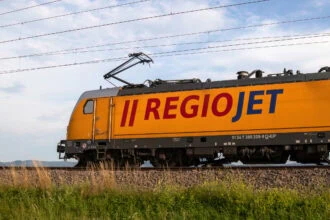
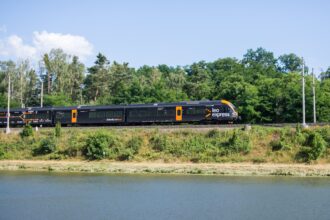
Trains leave Praha hlavní nádraží roughly every hour, run by both Leo Express and Czech Railways (České dráhy), with the fastest direct services covering the journey in around 50 minutes. A one-way ticket typically costs somewhere between 100 CZK and 200 CZK (£3-7 / €4-8 / $5-9) depending on how far ahead it is booked, and our Leo Express guide covers the operator’s other Czech routes if this is a taste of things to come on a longer trip.
The main station, Kutná Hora hlavní nádraží, actually sits in the Sedlec suburb about 2km from the historic centre, which works in visitors’ favour since the Sedlec Ossuary is only a 10-minute walk away. Alternatively, a request-stop local train continues one stop further to Kutná Hora-Sedlec, directly opposite the ossuary itself, though passengers do need to press the call button for the train to actually stop there.
The Sedlec Ossuary itself, known locally as the Kostnice, is one of the strangest and most memorable sights in the Czech Republic. Somewhere between 40,000 and 70,000 human skeletons were arranged, first by a half-blind monk and later by a local woodcarver, into chandeliers, garlands and coats of arms lining the small Gothic chapel, a sight that manages to feel solemn rather than macabre once inside.
A combined ticket covering the ossuary and the neighbouring Cathedral of Our Lady of Assumption costs around 160 CZK (£5.50 / €6.50 / $7.50) for an adult, with reduced rates for students and children. Tickets cannot be bought at the chapel door itself, so they need to be booked online in advance or picked up at the tourist information centre in the town centre before setting off.
From the ossuary, the genuine old town and St Barbara’s Cathedral lie a further 2km away, and a small tourist bus shuttles between the two whenever three or more passengers are waiting, with an hourly local train covering the same short hop as a backup. St Barbara’s Cathedral is one of the great Gothic cathedrals of Central Europe, built by the same guild of masons responsible for St Vitus’s Cathedral in Prague, funded almost entirely by the silver wealth that once made Kutná Hora one of the richest towns in the kingdom.
The old town around the cathedral rewards an unhurried wander, with the Italian Court where medieval coins were once struck, a scattering of Gothic and Baroque townhouses, and enough cafes and lunch spots to make a full day of it comfortable rather than rushed. Most visitors comfortably fill four to five hours between the ossuary and the old town, which makes Kutná Hora one of the few destinations on this page that works equally well as a half-day dash or a properly relaxed full day out.
Because our Things to Do in Prague guide only introduces Kutná Hora in passing as the city’s best-known day trip, this page is the place for the full practical detail on getting there, buying tickets, and actually planning the day around both the ossuary and the old town.
See hotel options and places to stay for your trip.
Browse hotelsExplore holiday homes and apartments for your trip.
See holiday homesCompare prices from multiple hotel booking sites.
Check dealsKarlštejn Castle: The Easiest Half-Day Escape from Prague
For anyone with only half a day to spare, Karlštejn Castle is the easiest genuine castle escape from Prague. Perched dramatically on a wooded hilltop above the Berounka River, it was built in the 14th century by Emperor Charles IV to safeguard the Bohemian crown jewels and holy relics.
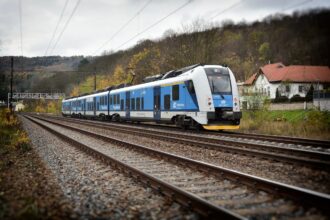
Trains run on the Prague to Beroun commuter line operated by Czech Railways (České dráhy), departing roughly every 30 minutes from Praha hlavní nádraží and taking around 40 minutes to reach Karlštejn station. A one-way ticket costs around 80-90 CZK (£3 / €3.50 / $4), and the PID Litacka app covers the fare alongside Prague’s own public transport network.
From the station, it is a scenic 30 to 40 minute walk uphill through the village and along the main road to the castle gates, so comfortable shoes are worth packing. The walk itself is part of the appeal, with the castle silhouette appearing and disappearing through the trees as the path climbs.
The interior is only accessible on a guided tour, and in peak season, especially summer weekends, tours regularly sell out by mid-morning. Booking a timed entry slot through the castle’s official website in advance is genuinely the safest way to guarantee a place rather than risk turning up and being turned away.
Because the castle sits so close to Prague, it also pairs naturally with a stop in Beroun or a longer day continuing further along the same rail line. Most visitors find that half a day, including the round trip, is enough time to see the castle properly and still be back in Prague for dinner.
Karlovy Vary: Bohemia’s Grand Spa Town of Hot Springs and Colonnades
Karlovy Vary is the grandest of Bohemia’s spa towns, its pastel colonnades and elegant hotels built up around a cluster of naturally hot mineral springs. The town has drawn the likes of Goethe, Peter the Great and generations of European aristocracy to drink the waters, and it remains the country’s best-known destination for that specific brand of old-world spa tourism.
The bus is genuinely the better option for a day trip, run by both RegioJet and FlixBus, with hourly departures from as early as 5am and a journey time of roughly 1 hour 35 minutes from Hradčanská in Prague, stretching to around 2 hours 15 minutes from Florenc bus station. Fares typically run from 150 CZK to 350 CZK (£5-12 / €6-14 / $7-16), and our RegioJet guide covers what to expect on board, including the complimentary hot drinks the operator is known for.
The train covers the same route in around 3 hours 20 minutes on the scenically named Krušnohor line, run by Czech Railways, with departures roughly every 2 hours starting at 5:30am and fares from around 250 CZK (£9 / €10 / $12). It is a genuinely pretty ride through the Ore Mountains, but it eats into the day badly enough that the bus is worth choosing instead whenever a full day in the town actually matters.
Once there, the highlights are the Mill Colonnade and Market Colonnade, where free public taps let visitors sample the mineral waters, plus the chance to try Becherovka, the herbal liqueur distilled in the town since the early 1800s. A distillery visit or a slow wander through the colonnades comfortably fills an afternoon.
Because the round trip alone can consume 3 to 4 hours even by bus, Karlovy Vary works best as an early-start day trip or, for a more relaxed pace, an overnight stay taking in one of the town’s thermal spa hotels.
Český Krumlov: A Fairytale Old Town Worth the Long Journey
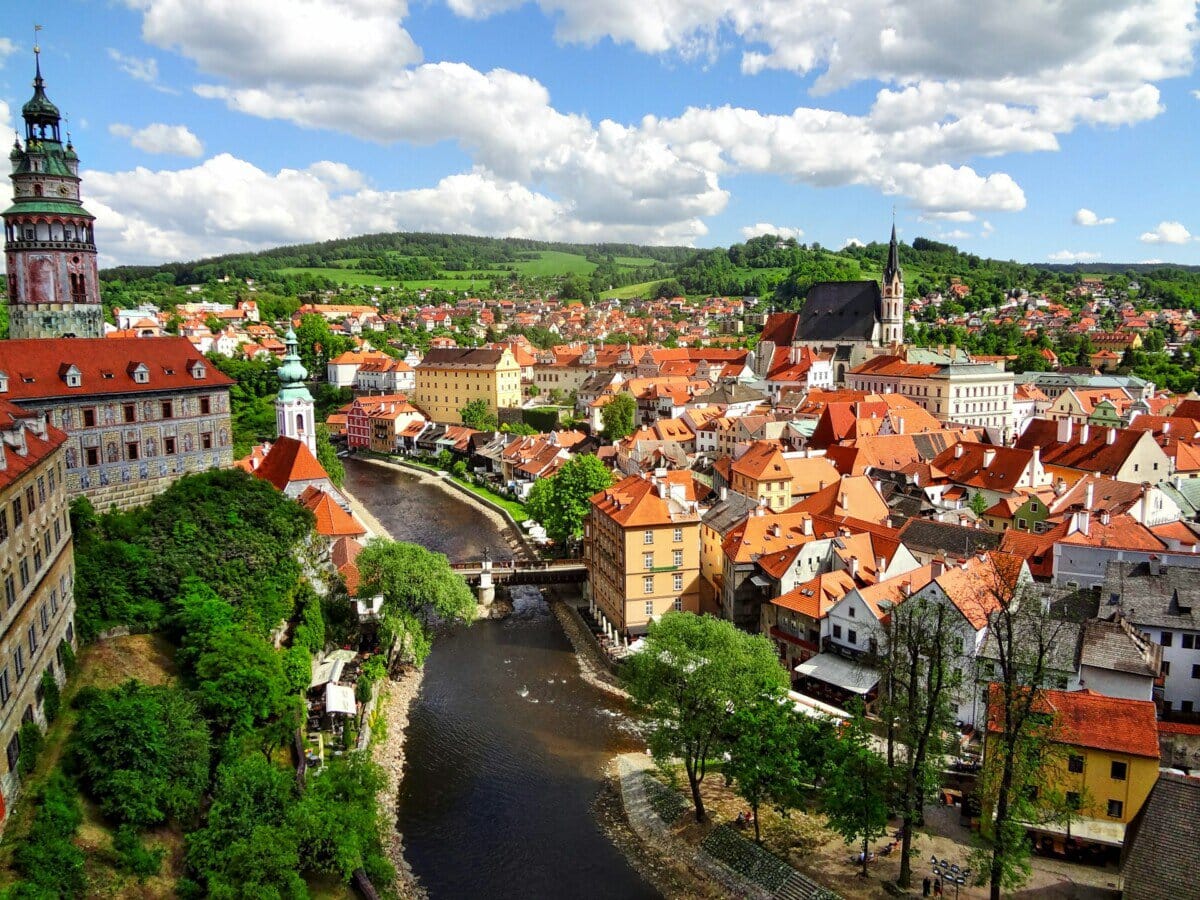
Český Krumlov is the fairytale one, a UNESCO-listed old town wrapped around a bend in the Vltava River in South Bohemia, crowned by a hilltop castle nearly as impressive as Prague’s own. It is consistently rated one of the most beautiful towns in Central Europe, and the photographs rarely exaggerate.
The honest problem is distance. Both the bus and the train take around 2.5 to 3 hours each way, meaning a visitor is realistically looking at 5 to 6 hours of travel alone on top of however long is spent actually exploring the town.
RegioJet buses depart from Na Knížecí with services from 6am, 8am, 9am and 10am and then roughly every 2 hours, while FlixBus runs from Florenc, with one-way fares typically between 220 CZK and 430 CZK (£8-15 / €9-17 / $10-19). The train, run by Czech Railways, departs roughly every 2 hours from 6:21am, with one direct morning connection and most other services requiring a change at České Budějovice, for a similar fare of around 265-314 CZK (£9-11 / €11-13 / $12-14).
Taking the earliest possible departure genuinely makes this workable as a long day trip, leaving around 4 to 6 hours to explore the castle grounds, the winding old town lanes and the riverside beer gardens before the last realistic connection back, typically departing by around 8pm. Anyone travelling later in the day, or hoping for a relaxed pace rather than a race against the clock, is better off booking a night in one of the old town’s guesthouses instead.
Either way, this is not a spontaneous half-day add-on the way Karlštejn is, and it deserves to be planned as its own dedicated day from the start rather than squeezed in alongside anything else.
Terezín (Theresienstadt): A Sobering WWII Memorial Near Prague
Terezín is one of the most important and difficult places to visit near Prague, a former garrison town the Nazis converted into the Theresienstadt ghetto and transit camp during the Second World War. Tens of thousands of Jewish prisoners passed through on their way to extermination camps further east, and the site today is preserved as a memorial rather than a conventional tourist attraction.
The most direct route is bus line 413, departing from Praha Letňany metro station on line C, platform L, with a journey time of around 45 minutes. There is no direct rail service; the nearest stations, Bohušovice nad Ohří and Litoměřice, each require a further bus ride or a roughly 40-minute walk to actually reach the memorial itself.
Visitors can explore two main sites: the Small Fortress, where prisoners were held and interrogated under brutal conditions, and the Ghetto Museum in the town itself, which documents daily life inside the ghetto through original artefacts, artwork and testimony. A combined ticket covering both costs around 310 CZK for an adult (£11 / €12 / $15), with a reduced rate of 240 CZK for students and seniors and a family ticket around 630 CZK.
Most visitors need a minimum of three to four hours to see both sites properly, and many organised tours combine the Small Fortress and Ghetto Museum with transport in a single half-day or full-day package for anyone who would rather not manage the public bus connection independently.
This is not a destination to rush or treat lightly, and visitors should expect the experience to be genuinely sobering rather than a typical day-trip highlight reel. It remains, all the same, one of the most historically important sites within reach of Prague, and one that rewards the time it asks for.
Plzeň: The Birthplace of Pilsner-Style Lager
Plzeň is where the modern pale lager was born, the city that gave its name to Pilsner-style beer worldwide. It sits around 90km southwest of Prague and makes an easy, low-effort day trip built almost entirely around one outstanding brewery tour.
Trains run frequently from Prague, with more than 30 direct services daily operated by both Czech Railways and RegioJet, roughly every 30 to 40 minutes across the day. Journey time is around 1 hour 15 minutes to 1 hour 30 minutes, with one-way fares typically starting from around 100 CZK (£3.50 / €4 / $5).
The Pilsner Urquell brewery sits about a 10-minute walk from Plzeň hlavní nádraží at U Prazdroje, and the official 110-minute tour takes visitors through the historic brewhouse, the ingredients used in the original 1842 recipe, and down into the atmospheric cellars, where beer tapped straight from oak lagering casks is included in the tasting. Tickets cost around 430 CZK (£15 / €17 / $20) for an adult, and the tasting element is restricted to over-18s.
Beyond the brewery, Plzeň’s own compact old town has a handsome main square and the Gothic Cathedral of St Bartholomew, worth an hour or two either side of the tour itself. This ties naturally into Prague’s own beer culture, already well covered elsewhere on this site, and gives visitors the chance to see where the style actually started rather than just where it is drunk.
Because the brewery tour genuinely benefits from a booked time slot, particularly at weekends, reserving online a few days ahead is worth doing rather than relying on walk-up availability.
Getting to the Right Station: hlavní nádraží, Florenc and Na Knížecí
Every day trip above starts from one of three points in Prague, and knowing which one before setting off saves a wasted metro ride. Praha hlavní nádraží, Florenc bus station and Na Knížecí each serve a different mix of destinations and operators, and all three sit directly on the metro network.
Praha hlavní nádraží, the main train station used for Czech Railways services to Kutná Hora, Karlštejn and Plzeň, sits directly on Metro Line C, with the station entrance a short walk from the platform.
Florenc bus station has its own metro stop, where lines B and C cross, making it one of the easiest interchanges in the city to reach. The station itself is split into two halls: Hall 1 handles RegioJet’s distinctive yellow buses along with ticket sales, while Hall 2 is mainly used for arrivals. Between the two halls there are roughly 25 departure platforms and stands, so it is worth checking the departure board for the exact stand rather than assuming, especially with a coach to catch.
Na Knížecí, the departure point for some RegioJet coaches including the Český Krumlov service above, sits right next to Anděl metro station on Line B. Most exits from the metro lead directly out to the bus station, making it a straightforward walk from the platform.
Buying the ticket itself depends on the operator. Czech Railways (České dráhy) tickets can be bought through its app or website, or in person at the ticket counters and machines inside hlavní nádraží. RegioJet tickets are bought through its own app or website, where a mobile ticket on the phone is the standard way to travel. FlixBus works the same way, through its own app or website. For popular weekend routes such as Český Krumlov or Karlovy Vary, buying a few days ahead is genuinely worth it rather than risking a sold-out departure.
Search flights and useful route combinations in one place.
View flightsUse an eSIM to get online without hunting for a local SIM after arrival.
See eSIM optionsBook a private airport transfer in advance and have your ride planned before you arrive.
Check transfersChoosing a Day Trip by Interest
With six destinations on this page, deciding where to go can be harder than actually getting there. Matching the trip to what actually interests you is the simplest way to narrow it down.
- History and WWII: Terezín, for the Small Fortress and Ghetto Museum.
- Castles: Karlštejn, for the easiest half-day hilltop fortress.
- Spa towns and relaxation: Karlovy Vary, for the colonnades and hot springs.
- Fairytale old towns: Český Krumlov, for the UNESCO-listed riverside old town.
- Beer heritage: Plzeň, for the Pilsner Urquell brewery tour.
- The ossuary and a silver-mining town: Kutná Hora, for the Sedlec Ossuary and St Barbara’s Cathedral.
Short on time and torn between two? Karlštejn and Kutná Hora are both comfortably doable as half or full days without an early start, while Karlovy Vary, Český Krumlov and Terezín all reward setting off earlier in the morning.
Day Trip or Guided Tour?
Every destination on this page can be reached independently by train or bus, but that is not always the right call for every traveller. It comes down to a trade-off between cost and flexibility on one side, and convenience on the other.
Going it alone on public transport is almost always the cheaper route, and it leaves the day open to change plans, linger somewhere longer, or skip a stop that turns out uninteresting. The trade-off is that it puts the planning, the ticket-buying and the timing of the last connection back squarely on you.
A guided tour removes that planning entirely. Transport, entry tickets and a guide are bundled together, and someone else is watching the clock, which matters most on a destination like Terezín, where context genuinely adds to the visit, or Český Krumlov, where the journey itself eats up a large part of the day. The trade-off is a fixed schedule, less flexibility once the day is underway, and a higher cost than buying tickets independently.
As a rough guide, first-time visitors who are short on time or less confident navigating Czech transport tend to get more out of a guided tour, while anyone comfortable buying a ticket and reading a departure board usually finds the independent route both cheaper and more flexible.
What to Pack for a Prague Day Trip
None of these trips need much preparation, but a few small things make the day noticeably smoother.
- Comfortable shoes, ideally already worn in. Cobbled old towns and uphill walks like the one to Karlštejn are unforgiving on new shoes.
- Water, since not every station or small town has an obvious place to buy a bottle before boarding.
- A printed or downloaded ticket, so a patchy signal in a rural station or on a train doesn’t leave you unable to show a digital ticket when it’s checked.
- Layers for the weather, since conditions outside Prague, particularly up at Karlštejn or around the Ore Mountains near Karlovy Vary, can differ noticeably from the city centre.
None of this needs a dedicated bag. A day trip from Prague is still a day trip, not an expedition, and packing light keeps the whole thing easier.

Common Mistakes to Avoid
The single most common mistake is underestimating how long Český Krumlov actually takes. Treating it like a quick add-on to a Prague day, rather than a dedicated 2.5 to 3 hour journey each way, is the fastest way to end up rushing through one of the country’s best towns.
Turning up at Karlštejn Castle without a booked tour slot is another regular frustration, especially between May and September when weekend tours sell out by late morning. Booking a timed entry online before travelling costs nothing extra and removes the risk entirely.
Assuming every destination is reachable by a single direct train is another trap. Terezín has no direct rail service at all, and Český Krumlov’s train usually requires a change at České Budějovice, so it is worth checking the actual route rather than assuming one operator’s app shows every leg automatically.
Buying Sedlec Ossuary tickets at the door is not possible, and turning up without one booked in advance, or picked up from the town’s tourist information centre, means a wasted trip to the chapel door and back. The same discipline applies to Terezín’s combined ticket and Plzeň’s brewery tour, both of which run smoother with a ticket bought ahead of time.
Finally, mixing up train operators can catch out anyone assuming Czech Railways covers every route. Leo Express and RegioJet both run competing services on several of these lines, sometimes faster or cheaper than the state operator, so it is worth comparing before defaulting to the first result a booking site shows, or checking our Czech Rail Tickets Explained guide for how the discount fares stack up.

Rupert’s Handy Travel Tips
I’ve done all six of these day trips myself, and a little planning saves a lot of hassle on each one.
- Book Karlštejn and the ossuary tickets before you leave: both sell out or simply can’t be bought on the door, so sort them from your phone the night before.
- Take the earliest train or bus for Český Krumlov: the 6am or 8am departure buys you hours of extra time in the old town and takes the pressure off the return journey.
- Choose the bus over the train for Karlovy Vary: it’s genuinely quicker door to door, and RegioJet’s free hot drinks make the journey pleasant rather than just fast.
- Wear proper shoes for Karlštejn: the walk up from the station is steep in places, and flip-flops make the climb far harder than it needs to be.
- Give Terezín the time it deserves: rushing the Small Fortress and Ghetto Museum in under two hours does the site a disservice, so build in a proper half day.
- Compare Leo Express, RegioJet and Czech Railways before booking: fares and journey times can differ noticeably for the same route, so it’s worth a quick check rather than booking the first option you see.
Want to meet the reindeer behind our travel tips? Find out more in our page Who is Rupert?.




Frequently Asked Questions
Which day trip from Prague is the most popular?
Kutná Hora, home to the Sedlec Ossuary and St Barbara’s Cathedral, is consistently the most visited day trip from Prague, helped by its short train journey of around 50 minutes.
Can Český Krumlov realistically be done in a single day?
Yes, but only with an early start. Both the bus and train take around 2.5 to 3 hours each way, so catching one of the first departures is essential to have a proper few hours in the town before the last realistic connection back.
Do I need to book Karlštejn Castle tickets in advance?
It is strongly recommended, especially at weekends and during the summer months, since the castle interior is guided-tour-only and slots regularly sell out by mid-morning.
How do I get to Terezín without a car?
Bus line 413 runs directly from Praha Letňany metro station, taking around 45 minutes. There is no direct train service, so the bus is the simplest option for most visitors.
Is the train or bus better for Karlovy Vary?
The bus, run by RegioJet or FlixBus, is faster at around 1 hour 35 minutes to 2 hours 15 minutes, compared with roughly 3 hours 20 minutes by train, making it the better choice for a day trip.
Which operator runs trains to Plzeň?
Both Czech Railways (České dráhy) and RegioJet run frequent direct services from Prague, with more than 30 trains a day covering the route in around 1 hour 15 to 1 hour 30 minutes.
Further Reading
This guide sits alongside our wider Things to Do in Prague guide, which introduces Kutná Hora briefly as the city’s best-known day trip and points readers here for the full detail on tickets, timings and the old town beyond the ossuary.
Getting around once you are back in the city is covered in our Prague Public Transport guide, and if train tickets and passes across the wider country interest you, our Czech Rail Tickets Explained guide breaks down the All-Day Ticket, the Group Weekend Ticket and other Czech Railways fares that can stretch further than buying single tickets for each leg above.
For more on the private operators running several of these routes, our RegioJet guide and Leo Express guide both cover what to expect on board and how their pricing compares with Czech Railways. And if you are arriving into Prague for the first time, our Prague Airport Transfers guide covers the best way into the city before any of these day trips even begin.