Reviewed by our editorial team Published
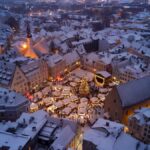
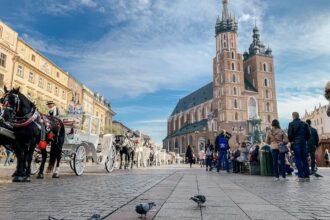
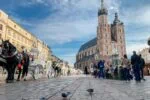
Kraków’s Christmas market fills Rynek Główny, the largest medieval market square in Europe, with the Gothic towers of St Mary’s Basilica and the Renaissance arcades of the Cloth Hall standing watch over rows of wooden stalls. It’s one of the continent’s genuinely great market settings, and yet it remains noticeably less crowded and less expensive in December than Prague or Budapest, two cities it’s constantly compared to. That gap between how good it is and how well known it is among UK travellers is the whole reason this page exists.
According to Kraków’s official tourism board, the market typically opens on the last weekend of November or the first weekend of December, whichever falls closer to the first of the month, and runs through Boxing Day. Official 2026 dates had not yet been confirmed at the time of writing, so this guide uses that confirmed pattern rather than inventing a specific date. Two smaller markets round out the city’s festive offering: one outside the Galeria Krakowska shopping centre near the main train station, and another on Plac Wolnica in the historic Kazimierz district.
What genuinely sets Kraków apart, beyond the setting itself, is its food culture. This is a market built around oscypek, Poland’s smoked sheep’s cheese, grilled to order and served with tart cranberry sauce, alongside proper mulled wine, pierogi and kiełbasa from stalls that mostly serve locals year-round rather than existing purely for tourists. This guide covers the main square, the smaller markets worth knowing about, what to actually eat and drink, and why Kraków still deserves a place alongside the continent’s bigger-name Christmas market cities.
Kraków’s Christmas Markets at a Glance
| Market | Location | Known For | Best For |
|---|---|---|---|
| Rynek Główny Christmas Market | Main Market Square, Old Town, beside the Cloth Hall | Roughly a quarter of Europe’s largest medieval square, food and craft stalls, St Mary’s Basilica backdrop | First-time visitors, food, atmosphere, photography |
| Galeria Krakowska Market | Outside the shopping centre, beside Kraków Główny station | Convenience for arrivals by train, smaller crowds | A quick stop straight off the train, last-minute shopping |
| Plac Wolnica Market | Kazimierz district, roughly 15 minutes’ walk south of the Old Town | A quieter, more local, less touristy atmosphere | Escaping the Rynek Główny crowds, exploring Kazimierz |
Rynek Główny: Kraków’s Main Christmas Market
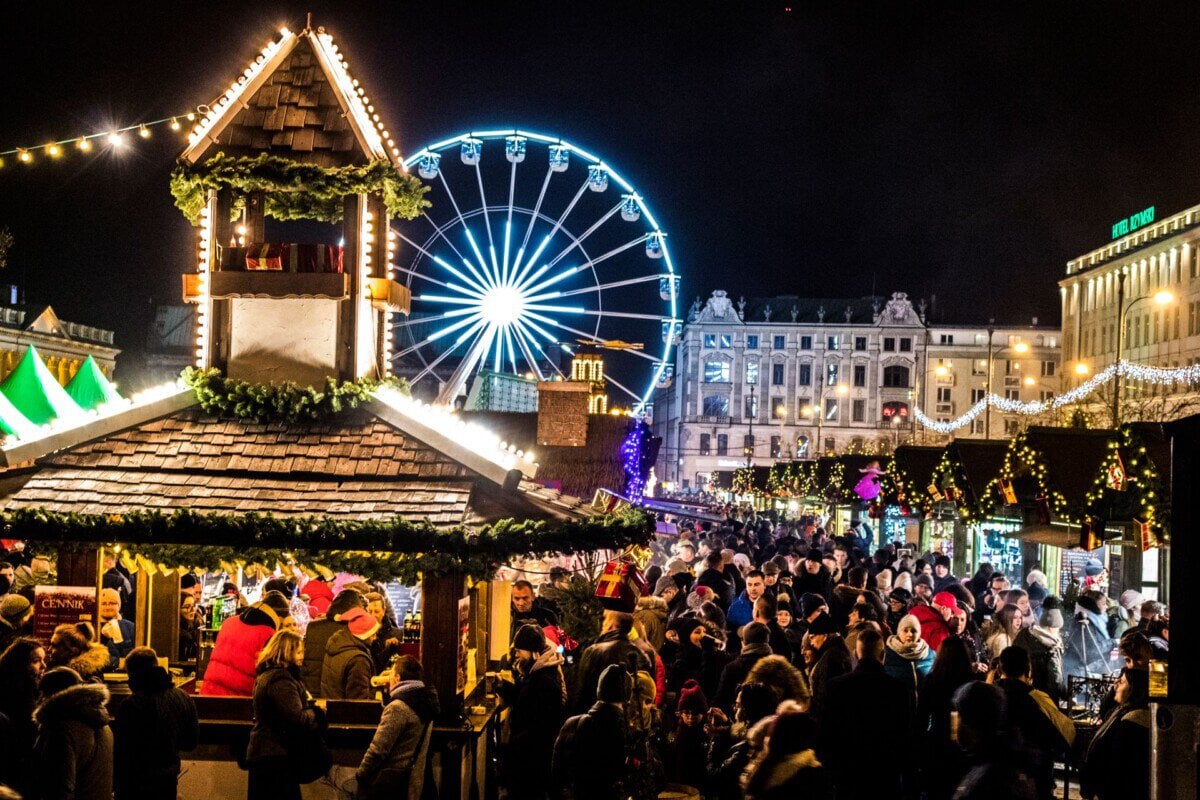
Rynek Główny is, at roughly 40,000 square metres, the largest medieval town square in Europe, and the Christmas market occupies around a quarter of it, arranged in neat rows radiating out from beside the Cloth Hall. The square’s Gothic St Mary’s Basilica, with its two mismatched towers, provides one of the most photographed festive backdrops anywhere in Central Europe, particularly once the square’s lighting comes on at dusk.
Officially, stalls run from around 10am until 8pm, though in practice traders come and go on their own schedule and food stalls in particular tend to keep serving until at least 10pm on busier evenings. Entry is free, as it is at every market in the city, with costs applying only to food, drink and purchases. Expect wooden toys, hand-painted glass baubles, amber jewellery and traditional Polish pottery from Bolesławiec, priced from around 20 to 100 PLN (about £4 to £20 / €4.70 to €23 / $5.10 to $26) depending on the item.
The nearest useful landmark is the Cloth Hall itself, a Renaissance trading hall that splits the square in two and now houses souvenir stalls and a small gallery upstairs. Most first-time visitors approach from Floriańska street, the main pedestrian route from the Old Town’s northern gate, which is worth walking slowly given how well preserved the surrounding facades are.
Weekday mornings are noticeably quieter than weekend evenings, when the square fills with both locals and visitors. Anyone building a longer city visit around the market should also look at our guide to the best things to do in Kraków, since several of the Old Town’s major sights sit within a five-minute walk of the square itself.
Compare hotels and other places to stay in Kraków.
Check availabilityBrowse apartments, holiday homes and self-catering stays in Kraków.
View rentalsSee hotel prices from multiple booking sites in one search.
Compare ratesThe Smaller Markets: Galeria Krakowska and Kazimierz
Rynek Główny gets nearly all the attention, but Kraków actually runs two further, smaller Christmas markets worth knowing about. The market outside Galeria Krakowska shopping centre sits directly beside Kraków Główny railway station, which makes it a genuinely useful first stop for anyone arriving in the city by train, since it’s visible within a couple of minutes of stepping off the platform.
It’s a compact market, mostly food and drink stalls rather than crafts, and works best as a quick warm-up or a last stop before catching a train onward rather than a destination in its own right. Prices here run broadly in line with the main square, though the crowd is a noticeably higher proportion of commuters and day-trippers than tourists.
The second, and more interesting, alternative sits on Plac Wolnica in Kazimierz, Kraków’s historic Jewish quarter roughly 15 minutes’ walk south of the Old Town. This market is smaller again, with a genuinely local, unhurried atmosphere that contrasts sharply with the Rynek Główny crowds, and it sits within a district worth exploring for its own atmospheric bars, synagogues and street art regardless of the market itself.
For visitors with only one evening in the city, Rynek Główny remains the right choice, it’s simply the more complete experience. But anyone spending two or more nights in Kraków, or anyone who finds the main square’s December crowds overwhelming, should genuinely consider an evening in Kazimierz instead, treating Plac Wolnica as a quieter second act rather than a lesser version of the same thing.
Oscypek, Mulled Wine and Kraków’s Food Culture
The single dish worth crossing the square for is oscypek, a smoked cheese made from salted sheep’s milk in the Tatra Mountains region and traditionally sold in a distinctive spindle shape. At the market, it’s grilled to order over an open flame until the outside caramelises, then served on a stick with a generous spoon of tart cranberry sauce. A portion typically costs around 15 to 20 PLN (about £3 to £4 / €3.50 to €4.60 / $3.80 to $5.10), and the smell of it grilling is one of the market’s genuine signature experiences.
Grzaniec, Polish mulled wine, is the standard drink order, typically served warm with cinnamon and cloves and priced from around 12 to 18 PLN a cup (about £2.40 to £3.60 / €2.80 to €4.10 / $3 to $4.60). A honey-and-spice variant made with mead, called grzane miody, is worth seeking out for something a little different from the standard wine-based version found across most European markets.
Beyond the two signature items, the market is full of proper Polish comfort food: pierogi filled with potato, cheese or cabbage and mushroom, kiełbasa grilled and served in fresh bread, and żurek, a sour rye soup traditionally served in a hollowed-out bread bowl. A generous plate of pierogi typically runs from around 20 to 30 PLN (about £4 to £6 / €4.60 to €6.90 / $5 to $7.60), which is noticeably cheaper than comparable food at markets in Germany or Austria.
Most stalls accept contactless card payments, and Poland’s Polish złoty (PLN) is the only currency accepted on-site, so it’s worth declining any on-screen currency conversion offer and letting your own bank handle the exchange rate instead. Cash still moves fastest at the busiest food stalls during peak evening hours, so carrying a modest amount of złoty is sensible.
What You Can Actually Do at Kraków’s Christmas Markets
Kraków’s markets aren’t just for browsing stalls. A small ice rink operates beside the Galeria Krakowska market near the main train station from late November, giving visitors a genuine activity to build an evening around rather than just food and shopping. It’s a modest rink rather than a destination in its own right, but it’s a welcome extra for anyone passing through the station area.
Both Rynek Główny and the Plac Wolnica market in Kazimierz run their own festival stages, with folk and classical music, carol concerts and dancing performed several times a week through December. Children’s carol concerts are a regular fixture on the main square, and the schedule tends to build toward weekend afternoons and evenings.
Horse-drawn carriage rides circle Rynek Główny for anyone who wants to see the Cloth Hall and St Mary’s Basilica lit up from a different vantage point. It’s a classic, slightly touristy addition to the market, but a genuinely pleasant one once the temperature drops after dark.
Kraków’s most distinctive festive tradition is its szopki, elaborate architectural nativity cribs built by local artists in a style found nowhere else in Poland. Entries are judged at the Adam Mickiewicz monument on the first Thursday of December, then move to Krzysztofory Palace, where they stay on display for the rest of the winter.
None of this costs anything beyond what you choose to spend on food and drink, since entry to the markets, the stages and the szopki display are all free. Between the ice rink, the music and the nativity displays, it’s genuinely possible to fill a full evening in Kraków without repeating yourself.
Christmas Lights and Other Festive Events in Kraków
Kraków doesn’t run a single publicised lights switch-on ceremony the way some UK and Western European cities do. Instead, the Old Town’s festive lighting comes on progressively as the market stalls go up in late November, and the full display is in place by the market’s opening weekend.
The best of it stretches well beyond the square itself. Floriańska and Grodzka streets, the two main pedestrian routes into and out of Rynek Główny, are strung with decorative lighting for the whole season, and with December’s short days, they’re genuinely atmospheric from as early as mid-afternoon.
In Kazimierz, the city’s Ethnographic Museum runs a seasonal exhibition on Polish Christmas traditions and decorations, a good pairing with an evening at the Plac Wolnica market a short walk away. It’s a low-key but genuinely informative stop for anyone curious about the customs behind what they’re seeing on the square.
A small cinema on Rynek Główny also hosts an annual silent film festival during the festive period, a quirky addition that most first-time visitors never know to look out for. It’s a reminder that Kraków’s Christmas programme runs deeper than the market stalls alone.
Beyond the Old Town, Kraków also runs a separate light attraction each winter: Ogród Świateł (Garden of Lights), a walk-through illuminated exhibition at the Ogród Doświadczeń science park on Aleja Pokoju, a short tram ride from Rynek Główny. It runs from autumn through into early spring, closed on 24 and 31 December, and is built around a themed sequence of lit scenes rather than a single tree or facade, giving visitors travelling to Kraków a genuine reason to leave the main square’s crowds for an evening. Exact 2026/27 dates were not confirmed at the time of writing, so treat this season’s pattern as the best current guide.
Taken together, the city’s Christmas programme leans mainly on its own Old Town, with Ogród Świateł as the one notable exception a short tram ride away, which suits Kraków’s otherwise compact, walkable centre.
Kraków vs Prague and Budapest: Still Underrated
Kraków rarely makes the same shortlists as Prague and Budapest when British travellers plan a Christmas market break, despite offering a comparably stunning medieval square, genuinely good food, and prices that undercut both cities on almost everything from beer to hotel rooms. Part of the reason is simple geography: Poland gets marketed less aggressively for winter breaks than Czechia or Hungary, even though flight times from the UK are broadly similar.
Where Prague’s Old Town Square can feel genuinely overwhelmed by December crowds, and Budapest’s markets, while excellent, draw heavily on cruise and coach tourism, Rynek Główny in Kraków still has room to breathe most evenings outside the very busiest weekends. A mid-range hotel room in Kraków’s Old Town in December typically costs around 20 to 30 percent less than an equivalent room in central Prague, and food and drink prices run noticeably lower across the board.
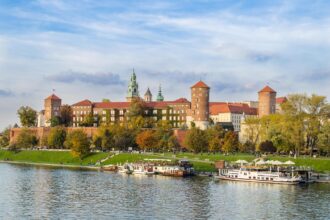
Kraków also has the advantage of being a genuinely walkable, compact city with a UNESCO-listed Old Town, meaning a first-time visitor can see the market, the Wawel Royal Castle and the Cloth Hall’s interior gallery without needing public transport at all. That combination of scale, price and preservation is difficult to match anywhere else in the region.
None of this is to say Kraków is a secret. It’s a well-established, popular destination in its own right. But against the specific yardstick of Prague and Budapest, it remains the market that delivers comparable atmosphere for meaningfully less money and meaningfully fewer crowds, which is a genuinely useful thing for a British traveller weighing up where to spend a December weekend.
Getting There and Where to Stay
Most UK travellers fly into Kraków John Paul II Airport, roughly 15km west of the city centre, with a direct rail link into the Old Town taking around 20 minutes and costing from around 12 PLN (about £2.40 / €2.80 / $3.10). Taxis and pre-booked transfers take a similar amount of time and are worth arranging in advance during the busiest December weekends, when demand at the taxi rank can mean a longer wait than usual.
Travellers arriving overland have a genuinely comfortable option too: our guide to Kraków night trains covers sleeper services from several other European cities that arrive directly at Kraków Główny station, a short walk from both the Galeria Krakowska market and the main square. Kraków Główny is also the natural hub for exploring further afield, with regular connections to Warsaw, Wrocław and Zakopane.
For accommodation, staying inside or just outside the Old Town’s ring road puts the main market within a 10 to 15 minute walk of most hotels, with mid-range December rates typically running from around £55 to £90 a night (€64 to €105 / $70 to $115), meaningfully below equivalent central hotels in Prague or Vienna. Kazimierz is a good alternative base for travellers who want a slightly quieter, more local neighbourhood feel while still being within easy walking distance of the main square.
For anyone planning to extend a Kraków trip further afield, our guide to the best day trips from Kraków covers options including the Wieliczka Salt Mine and the Tatra Mountains town of Zakopane. See below for a full breakdown of Kraków’s December weather and what to pack.
Compare routes and fares for your journey to Kraków.
Compare flightsBrowse Airalo eSIM options for convenient travel data.
Check eSIMsArrange a private airport pickup for your trip to Kraków.
Check transfersShop and Transport Opening Hours Over Christmas and New Year in Kraków
Poland restricts most large shops from opening on Sundays, with a handful of exceptions each year around major shopping periods. In December 2026, the confirmed trading Sundays are the 6th, 13th and 20th, when supermarkets and shopping centres open as normal; on every other Sunday that month, big retailers stay shut and only small, owner-run shops and petrol stations trade.
On an ordinary December weekday, shops and malls generally run from around 9am or 10am until 8pm or 9pm, sometimes a little later in the final run-up to Christmas. That pattern holds right up until Christmas Eve, when things change sharply.
On 24 December, most supermarkets, shopping centres and ordinary shops close from around 2pm, though some petrol stations, pharmacies and independent convenience shops may stay open later. 25 and 26 December are both public holidays in Poland, and almost all shops, malls and supermarkets stay closed on both days, with only occasional exceptions running limited hours.
That doesn’t mean Kraków shuts down entirely. The city centre is genuinely lively again on Christmas Day itself, public transport keeps running, and a number of Old Town restaurants and hotel dining rooms open for visitors, though advance booking is strongly advised for both the 24th and 25th.
1 January is also a public holiday, so shops and banks stay closed, though museums generally open with reduced hours and public transport runs a limited service. Normal shop hours resume from 27 December, and fully return once 2 January has passed.
New Year’s Eve (Sylwester) in Kraków
Kraków’s biggest New Year’s Eve event, known locally as Sylwester, happens right back on Rynek Główny, where a large stage goes up in front of the Cloth Hall for a free public concert. It’s the natural finale to a season that’s already been centred on the same square.
The concert typically starts around 8:30pm with big-name Polish performers, and occasionally international acts, playing through to midnight. Crowds build from the afternoon onward, so arriving early is worth it for a decent view if you want to be close to the stage.
At midnight, the countdown is followed by a light and laser show over the square rather than a traditional fireworks display, and the party generally continues until around 2am. The market’s own decorations are usually still up at this point, so the square keeps its festive backdrop right through the celebration.
Away from the main square, smaller neighbourhood events run in Kazimierz, Podgórze and Nowa Huta, typically from around 9pm to 1am, though the exact programme varies year to year. Restaurants across the city also put on set-menu dinners with live music, usually including a glass of something sparkling at midnight.
1 January is a public holiday, so plan around reduced shop and transport hours the following day. It’s also worth booking Sylwester dinner reservations well ahead, since the more popular Old Town restaurants sell out their festive menus weeks in advance.
Kraków’s December Weather
Kraków is genuinely cold in December, with an average daily high of around 2°C (36°F) and an average low of around minus 3°C (27°F). It’s a drier cold than Western Europe tends to see, but it’s sharper too, and it catches out visitors who pack for a milder climate.
The city sees around 27mm of precipitation over roughly 14 days during the month, and at these temperatures most of that falls as snow rather than rain. A dusting of snow across Rynek Główny is genuinely common, and it makes the market look exactly like the postcard version most visitors imagine.
Daylight is short, with the sun setting mid-afternoon and only around an hour of genuine sunshine on an average day, so the market’s lighting does a lot of the visual work. There’s roughly a coin-flip chance of some rain, snow or fog on any given day, so it’s worth being prepared rather than hoping for a clear evening.
Pack a proper insulated coat, a hat and gloves, and waterproof boots with decent grip, since the square’s cobbles get genuinely slippery once ice sets in. Layering matters too, given how much the temperature swings between the open square and the heated interiors of nearby cafes and restaurants.
Evenings are colder than afternoons by a wide enough margin to notice, so if you’re planning to linger over mulled wine and oscypek at the market, a warmer layer for after dark is worth carrying even if the day started out mild. Kraków’s continental climate means conditions can shift quickly compared with the UK.

Rupert’s Handy Travel Tips
Kraków is genuinely one of my favourite December markets precisely because it doesn’t feel like everyone else already knows about it. A few things I’d pass on before you go.
- Order the oscypek before anything else: it sells out at the more popular stalls on busy evenings, and it’s the one dish here you genuinely can’t get the same way anywhere else.
- Try Kazimierz on your second evening: Plac Wolnica gives you a quieter, more local version of the same market without the Rynek Główny crowds.
- Wrap up properly: Kraków’s December cold is drier but sharper than Western Europe’s, and it catches out visitors who pack for a milder climate.
- Book accommodation in the Old Town or Kazimierz: both keep you within easy walking distance of the market, so you’re not relying on taxis late at night.
- Carry some złoty alongside your card: most stalls take contactless, but cash moves faster at the busiest food counters during peak evening hours.
Want to meet the reindeer behind our travel tips? Find out more in our page Who is Rupert?.




Frequently Asked Questions
When does the Kraków Christmas market open in 2026?
Kraków’s official tourism board had not confirmed exact 2026 dates at the time of writing. The confirmed pattern in recent years has the market opening on the last weekend of November or the first weekend of December, whichever falls closer to the first of the month, and running through Boxing Day (26 December). Check visitkrakow.com closer to the time for confirmed dates.
Is the Kraków Christmas market free to visit?
Yes. All three of Kraków’s Christmas markets, at Rynek Główny, Galeria Krakowska and Plac Wolnica, are free to enter, with costs only applying to food, drink and purchases.
Is Kraków’s Christmas market better than Prague’s or Budapest’s?
It’s a genuinely fair alternative rather than an objectively better choice. Kraków offers a comparably beautiful medieval square, strong food culture and noticeably lower prices, but Prague and Budapest each have their own distinct strengths, so the right choice depends on budget, crowd tolerance and personal taste.
What food should I try at Kraków’s Christmas market?
Grilled oscypek smoked cheese with cranberry sauce is the market’s signature dish, alongside grzaniec mulled wine, pierogi and żurek sour rye soup served in a bread bowl. All are reasonably priced and widely available across the main square.
Which Kraków Christmas market should I visit if I only have one evening?
Rynek Główny, the main square, is the right choice for a single evening, since it offers the most complete combination of atmosphere, food and craft stalls, plus the backdrop of St Mary’s Basilica and the Cloth Hall.
Do I need cash for Kraków’s Christmas markets?
Not really, most stalls accept contactless card payments, though carrying a modest amount of Polish złoty is sensible for the busiest food counters during peak evening hours, since cash still moves faster at the till when queues build up.
Is there an ice rink at Kraków’s Christmas market?
Yes, a small ice rink operates beside the Galeria Krakowska market near the main train station from late November, alongside live music and carol concerts on stages at both Rynek Główny and Plac Wolnica.
What happens in Kraków on New Year’s Eve?
Kraków’s main Sylwester celebration is a free public concert on Rynek Główny, with a stage in front of the Cloth Hall, big-name Polish performers from around 8:30pm, and a midnight light and laser show over the square rather than fireworks.
Further Reading
For a fuller view of what else the city offers beyond the market, our Best Things to Do in Kraków guide covers the Old Town’s major sights in detail, including Wawel Castle and the Cloth Hall’s gallery, both within easy walking distance of Rynek Główny. For planning the wider trip, our Kraków travel guide pulls together transport, accommodation and practical tips into one place, and is a useful starting point before booking anything.
Travellers who’d rather arrive by train than fly should read our guide to Kraków night trains, which covers sleeper routes arriving directly into Kraków Główny station, a short walk from two of the three markets covered on this page. If you’re staying more than a couple of days, our Best Day Trips from Kraków guide covers options including the Wieliczka Salt Mine and Zakopane in the Tatra Mountains, both realistic additions to a longer winter trip.
Finally, if Kraków is one stop on a wider European winter itinerary, our European Christmas Markets Guide compares market cities across the continent, including how Kraków stacks up against Prague, Vienna and Budapest on cost, crowds and atmosphere, and is a useful next stop for planning where else to go.
For more on the Old Town’s protected status itself, UNESCO’s official listing for the Historic Centre of Kraków covers the site’s history and preservation in detail.