
Reviewed by our editorial team Updated
Kandy to Ella Train: What Travellers Need to Know
The Kandy to Ella train is widely considered one of the most spectacular railway journeys anywhere in the world. Travelling through the mountainous heart of Sri Lanka, the route passes through dramatic tea plantations, mist covered valleys, dense jungle, waterfalls, and highland towns surrounded by some of the country’s most famous scenery.
For many travellers, the railway journey itself becomes the highlight of visiting Sri Lanka rather than simply a way of travelling between destinations. The route has become internationally famous through travel photography and social media, particularly because of the open train doors, panoramic mountain views, and winding railway curves through the central highlands.
Unlike many scenic railways designed primarily for tourists, the Kandy to Ella railway remains a genuine working transport route used daily by local passengers, commuters, students, backpackers, and international travellers.
The journey normally takes around 6 to 8 hours depending on the specific service, delays, and operational conditions. While this may initially sound long for the relatively short distance involved, most travellers quickly realise the railway experience is about scenery and atmosphere rather than speed.
The route is especially popular with backpackers, railway enthusiasts, photographers, slow travellers, and travellers exploring Sri Lanka independently without hiring private drivers.
Why the Kandy to Ella Railway Is So Famous
The Kandy to Ella train became globally famous because it combines extraordinary mountain scenery with one of the most atmospheric railway experiences anywhere in Asia.
The line climbs through the central highlands of Sri Lanka, passing endless rolling tea estates, cloud forests, mountain ridges, colonial era railway stations, and dramatic valleys that constantly change throughout the journey.
One of the most famous parts of the experience is the ability to stand near open train doors while the train winds through the mountains. The cool hill country air, combined with uninterrupted views across Sri Lanka’s highlands, creates a travel experience that feels very different from modern high speed railways elsewhere in the world.
The route is also famous because of how visually dramatic the scenery becomes after leaving Kandy. As the train climbs higher into the mountains, the landscape transforms completely from busy urban areas into mist covered tea country.
The sections around Nanu Oya, Haputale, and Ella are especially celebrated because of the deep valleys, mountain forests, tea plantations, and constantly shifting weather conditions.
Social media has amplified the railway’s popularity enormously over the past decade. Images of travellers sitting in open carriage doorways surrounded by lush green mountains have become one of the defining visual symbols of Sri Lanka tourism.
Despite this global attention, however, the route still retains a surprisingly authentic atmosphere because it remains part of Sri Lanka’s everyday railway network rather than functioning purely as a tourist attraction.
See hotel options and places to stay for your trip.
Browse hotelsExplore holiday homes and apartments for your trip.
See holiday homesCompare hotel prices across multiple booking sites.
Compare ratesKandy to Ella Route Overview
The Kandy to Ella railway forms part of Sri Lanka’s historic Main Line, one of the country’s most important rail corridors. The route connects the cultural city of Kandy with the hill country town of Ella through some of the most scenic landscapes in Sri Lanka.
The journey passes through a series of important mountain towns and railway stations including:
Nawalapitiya, Hatton, Nanu Oya, Haputale, and Demodara before reaching Ella.
One of the most important stops along the route is Nanu Oya, which acts as the railway gateway for Nuwara Eliya, Sri Lanka’s famous tea plantation town often referred to as “Little England”.
The railway continuously climbs through Sri Lanka’s central highlands for much of the journey, meaning the scenery changes dramatically as the train gains altitude. Dense jungle gradually gives way to cooler mountain landscapes dominated by tea estates and misty valleys.
The final approach towards Ella is considered one of the most spectacular parts of the route. Deep valleys, steep hillsides, cloud forests, and famous railway curves create some of the most photographed scenery anywhere in Sri Lanka.
Many travellers also combine the railway journey with wider hill country itineraries including hiking around Ella Rock, visiting Nine Arches Bridge, exploring tea plantations, or continuing onwards towards Sri Lanka’s southern beaches.
Kandy Railway Station Guide
Nearly all Kandy to Ella train journeys begin at Kandy Railway Station, one of the busiest and most important railway hubs in central Sri Lanka.
Located close to central Kandy, the station acts as the gateway to Sri Lanka’s famous hill country railway routes and connects travellers towards destinations such as Ella, Nuwara Eliya, Badulla, and Colombo.
The station can feel extremely busy, especially during morning departures and peak tourism periods when large numbers of travellers compete for reserved seats on the scenic hill country trains.
Travellers should ideally arrive at least 45 to 60 minutes before departure because platform information occasionally changes and boarding can become crowded, particularly in second class carriages.
The station area contains small food stalls, ticket counters, waiting areas, and basic railway facilities. Many travellers purchase water, snacks, and tea before boarding because onboard catering quality varies substantially between services.
Outside the station, tuk tuks and taxis wait constantly for arriving passengers. Apps such as PickMe are particularly useful around Kandy because they reduce the need to negotiate prices directly with drivers.
Travellers staying in Kandy before the train journey often combine the railway with visits to Kandy Lake, the Temple of the Tooth, and the surrounding hill country viewpoints before continuing onwards towards Ella.
Kandy to Ella Train Classes Explained
Choosing the right class on the Kandy to Ella train can completely change the overall experience. The railway is famous partly because travellers can experience Sri Lanka’s mountains in a far more open and immersive way than on modern sealed high speed trains.
The route normally offers a mixture of first class observation cars, first class reserved seating, second class reserved seating, second class unreserved, and third class compartments depending on the specific train service.
For many travellers, the most popular option is second class reserved seating because it combines guaranteed seats with open windows and a more atmospheric travel experience.
Open windows are important because they allow travellers to feel the cool mountain air and take unobstructed photographs across the tea plantations and valleys surrounding the railway.
By contrast, first class observation cars usually provide air conditioning and larger panoramic windows. These are more comfortable for some travellers, particularly during crowded periods, but many experienced visitors still prefer second class because the atmosphere feels more authentic and social.
Unreserved carriages are significantly cheaper but can become extremely crowded, especially during weekends, public holidays, and peak tourism periods. Standing for several hours through Sri Lanka’s mountains can quickly become exhausting.
Third class is generally used more heavily by local passengers and budget travellers. While it can provide an interesting local experience, comfort levels vary substantially depending on crowding and the specific service.

First Class vs Second Class on the Ella Train
One of the biggest decisions travellers face on the Kandy to Ella train is whether to choose first class or second class seating.
First class provides greater comfort, quieter carriages, reserved seating, and often air conditioning depending on the train type. Observation cars are particularly popular because of their large panoramic windows designed specifically for sightseeing through the mountains.
However, many experienced travellers still recommend second class reserved seating as the best overall experience on the route.
The reason is atmosphere. Open windows, fresh mountain air, conversations with other travellers, and easier access to open train doors all make second class feel far more immersive than the sealed environment of some first class carriages.
Photography is another important consideration. Reflections from air conditioned windows in first class observation cars can make photography more difficult compared with open window second class seating.
Second class also tends to feel much more social. Backpackers, local passengers, photographers, and independent travellers often interact throughout the journey, creating a lively and memorable atmosphere.
That said, first class can still be the better option for travellers prioritising comfort, quieter surroundings, or protection from crowded conditions during busy tourism periods.
For many visitors, however, the ideal balance between comfort, scenery, and atmosphere remains second class reserved seating.
How to Buy Kandy to Ella Train Tickets
Buying Kandy to Ella train tickets can be surprisingly competitive, especially during Sri Lanka’s peak tourism season when reserved seats regularly sell out well in advance.
Travellers can normally buy tickets through Sri Lanka Railways, hotels, local travel agencies, and transport booking platforms serving Sri Lanka’s railway network.
Reserved seating is strongly recommended because unreserved carriages can become extremely crowded, particularly during weekends and holiday periods.
One of the biggest mistakes travellers make is assuming tickets will always be available on the day of travel. During busy months, especially between December and April, popular departures can sell out rapidly.
Many hotels and guesthouses in Kandy, Ella, and Nuwara Eliya also assist travellers with railway reservations, although additional service fees may apply.
Travellers should also understand that different trains offer different carriage configurations. Some services include observation cars, while others may only provide standard reserved seating and unreserved compartments.
Because of the route’s international popularity, some travellers even choose to split the journey into smaller sections rather than attempting the entire route on the busiest services.
Booking early is particularly important for travellers wanting window seats, observation cars, or second class reserved seating during peak tourism periods.
Best Side of the Train from Kandy to Ella
One of the most common questions about the Kandy to Ella train is which side provides the best scenery.
For much of the journey, the right hand side travelling from Kandy towards Ella is generally considered better for mountain views and valley scenery, especially during some of the higher elevation sections.
However, the reality is that spectacular scenery appears on both sides throughout the route. Tea plantations, forests, mountain villages, bridges, and valleys constantly shift as the railway curves through the highlands.
Many travellers therefore move around the carriage frequently, especially in second class where passengers often gather near open doors and windows during the most scenic sections.
The famous doorway photographs associated with Sri Lanka’s railways are usually taken while standing carefully near carriage entrances rather than from fixed seats.
Travellers should still be extremely cautious around open doors because the railway passes close to tunnels, poles, vegetation, and steep drops in some areas.
Weather and lighting conditions also change dramatically throughout the day. Mist, rain, cloud, and sunlight can completely transform the appearance of the mountains during the journey.
For most travellers, the best strategy is simply remaining flexible, enjoying the atmosphere, and moving around when possible rather than focusing obsessively on securing one specific seat position.
Compare routes and fares for your next trip.
Compare flightsChoose an Airalo eSIM and arrange mobile data before you arrive.
Browse eSIMsArrange a private pickup before travel instead of sorting transport after landing.
Book a transferBest Time to Take the Kandy to Ella Train
The best time to experience the Kandy to Ella train depends heavily on weather conditions, visibility, tourism levels, and the kind of scenery travellers hope to experience while crossing the mountains of Sri Lanka.
For many travellers, the most popular period is between December and April, when conditions across much of Sri Lanka’s hill country are generally drier and visibility is often better across the tea plantations and mountain valleys.
During these months, travellers are more likely to experience clear panoramic views around:
Nanu Oya, Haputale, Ella, and the surrounding highlands.
However, the weather in Sri Lanka’s mountains changes rapidly throughout the day. Bright sunshine can quickly become heavy mist, cloud, or tropical rain, particularly at higher elevations. The Sri Lankan Department of Meteorology publishes daily forecasts and severe weather advisories covering the hill country districts the railway crosses.
Ironically, some of the most atmospheric moments on the railway actually occur during misty conditions when the train disappears into cloud forests and rolling mountain fog.
Peak tourism season also dramatically affects ticket availability. Reserved seats in first class observation cars and second class reserved seating can sell out very quickly during Christmas, Easter, and major international holiday periods.
Travellers hoping to avoid large crowds may actually prefer shoulder season travel when the landscapes are especially green after rainfall and the trains feel slightly less crowded.
The route remains visually impressive throughout most of the year because the constantly changing weather conditions are part of what makes Sri Lanka’s hill country feel so dramatic.
Scenic Highlights on the Kandy to Ella Railway
The Kandy to Ella railway is famous because the scenery changes constantly throughout the journey. Travellers move through some of the most visually dramatic landscapes anywhere in Sri Lanka.
Soon after leaving Kandy, the train begins climbing deeper into Sri Lanka’s central highlands. Dense jungle gradually gives way to cooler mountain landscapes filled with rolling tea plantations, steep valleys, waterfalls, and cloud forests.
One of the most important sections of the route is around Nanu Oya, the station serving Nuwara Eliya. This region is famous for its cooler climate, colonial tea plantation heritage, and endless green hills covered in tea estates.
As the train continues south towards Haputale and Ella, the scenery becomes even more dramatic. Deep valleys, mountain ridges, mist covered forests, and sweeping railway curves dominate the landscape.
The final approach into Ella is particularly spectacular because of the steep hillsides and panoramic mountain views surrounding the town.
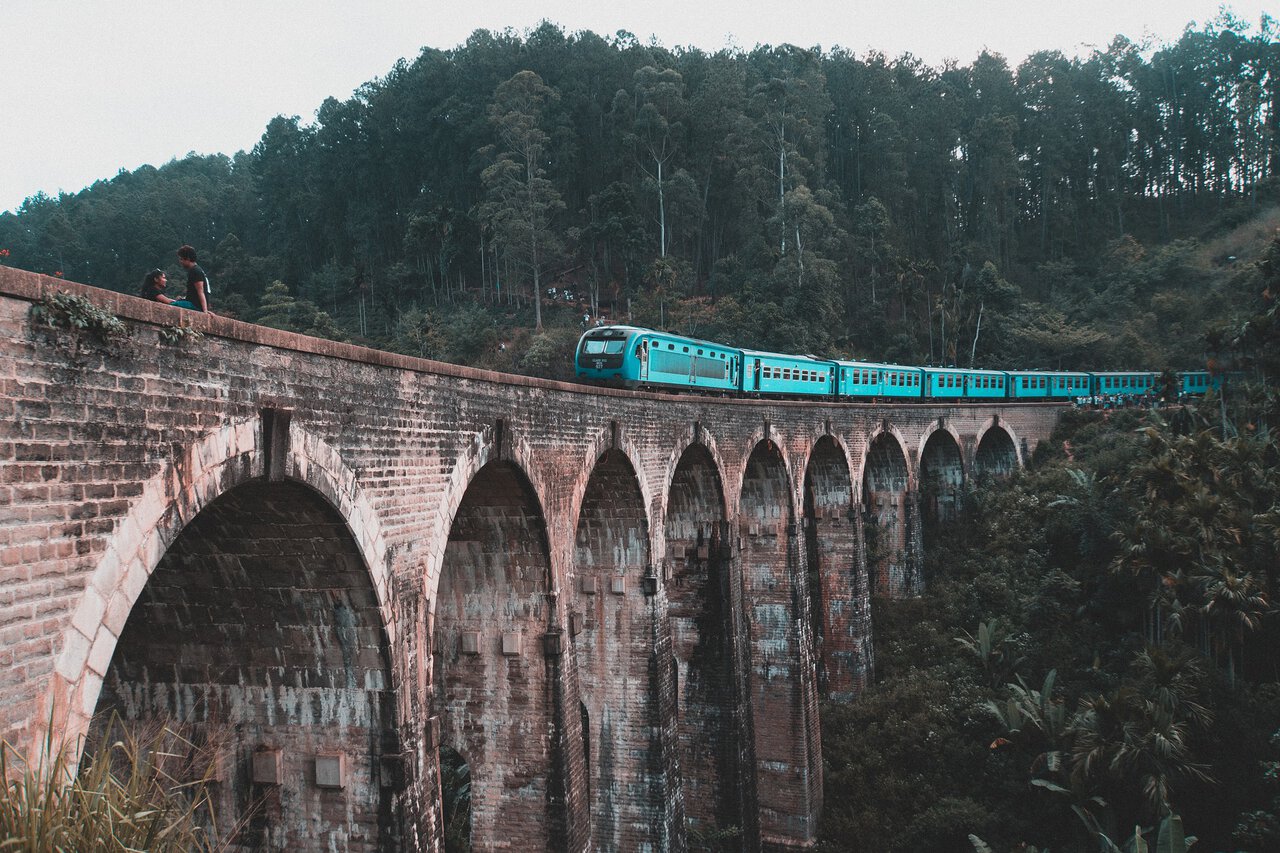
Many travellers also visit the famous Nine Arches Bridge after arriving in Ella. The bridge has become internationally famous through travel photography and social media because trains curve across the viaduct surrounded by dense tropical greenery.
One of the most memorable parts of the journey is simply standing near the open carriage doors while the cool mountain air rushes through the train and Sri Lanka’s highlands unfold in every direction.
Food and Drinks on the Kandy to Ella Train
Food becomes surprisingly important on the Kandy to Ella train because the journey can last most of the day depending on delays and operational conditions.
Sri Lankan trains usually have vendors moving through the carriages selling tea, snacks, rice dishes, fruit, and bottled drinks during parts of the journey. However, the quality and availability vary significantly depending on the train service and carriage type.
Many experienced travellers therefore buy food before departure from Kandy Railway Station rather than relying entirely on onboard catering.
The station area around Kandy contains small cafés, bakeries, supermarkets, and local food stalls where travellers can buy snacks and drinks before boarding.
One of the most enjoyable aspects of Sri Lankan railway travel is actually the station food culture itself. Vendors often appear briefly at smaller mountain stations selling local snacks, fresh fruit, tea, and street food directly through train windows during stops.
Travellers should also carry plenty of water, especially when travelling in:
second class, where open windows and warmer daytime temperatures can make long journeys dehydrating.
Portable snacks become especially useful for backpackers and photographers spending large amounts of time standing near carriage doors or moving between different viewpoints during the journey.
Kandy to Ella Train Delays and Realistic Expectations
One of the most important things travellers should understand about the Kandy to Ella train is that delays are completely normal.
Sri Lanka’s railway network is scenic and memorable, but it does not operate with the strict punctuality associated with high speed rail systems in countries such as Japan or Switzerland.
Journey times can fluctuate significantly because of track conditions, signalling systems, weather, railway congestion, and operational delays across the network.
A train officially scheduled for around 6 hours may sometimes take substantially longer depending on conditions.
For many travellers, however, this unpredictability becomes part of the experience rather than a serious inconvenience. The atmosphere onboard is usually relaxed, and passengers quickly adapt to the slower rhythm of Sri Lankan rail travel.
Travellers with extremely tight itineraries should still plan carefully. Booking immediate onward buses, tours, or long distance transfers immediately after arriving in Ella can become risky if delays occur in the mountains.
The trains themselves can also feel older and more basic than some international visitors initially expect. This is not a luxury railway product. Open windows, older interiors, crowded stations, and changing onboard conditions are all part of the authentic atmosphere of the route.
Travellers who embrace the slower pace and treat the railway as an experience rather than simply transportation generally enjoy the journey substantially more.
Kandy to Ella Train for Backpackers
The Kandy to Ella train has become one of the defining backpacker experiences in Sri Lanka. For many travellers, the railway journey becomes just as memorable as the destinations themselves.
Backpackers are especially attracted to the route because it combines spectacular scenery, cheap fares, social atmosphere, and easy access to Sri Lanka’s famous hill country towns.
The train is often filled with travellers from around the world sharing food, taking photographs, talking about onward journeys, and moving between different carriages throughout the trip.
One of the biggest advantages for backpackers is flexibility. Many travellers break the route into smaller sections by stopping in places such as Nuwara Eliya, Haputale, or Ella before continuing deeper into Sri Lanka later.
The route also connects naturally with wider Sri Lankan backpacking itineraries including southern beaches, surfing towns, national parks, UNESCO sites, and sleeper trains across the island.
However, travellers should still prepare for the realities of Sri Lankan rail travel. Crowded carriages, delays, limited luggage space, and long travel days are all part of the experience.
For many backpackers, though, these imperfections are exactly what make the railway memorable. The atmosphere feels authentic, unpredictable, and very different from polished tourism experiences elsewhere in the world.
Some of the best moments actually happen between the famous viewpoints. Conversations with local passengers, chai vendors at stations, mountain mist rolling across the tracks, and standing near open train doors often become the strongest memories of the journey.
Using the Kandy to Ella Train with Luggage
Luggage management is one of the most overlooked parts of planning the Kandy to Ella train journey.
Because the railway can become crowded, especially during peak tourism periods, oversized suitcases quickly become frustrating both onboard and at busy stations.
Travellers carrying compact backpacks usually have a much easier experience than those travelling with multiple large suitcases. Smaller bags are easier to store above seats, beneath benches, or beside passengers during crowded sections of the journey.
This becomes particularly important in second class reserved seating and unreserved carriages where space can become limited very quickly.
Backpackers staying in Ella often travel with smaller overnight bags while leaving larger luggage elsewhere in Sri Lanka before exploring the hill country.
This approach works especially well for travellers planning hiking trips, tea plantation visits, and walking routes around Ella Rock or Little Adam’s Peak.
Travellers should also remember that many Sri Lankan railway stations involve stairs, uneven platforms, narrow carriage entrances, and crowded boarding areas.
Large rigid suitcases can therefore become awkward during transfers, especially when trains are busy.
For most travellers, lightweight and flexible luggage makes the entire railway experience substantially easier and more enjoyable.
Compare hostels and budget-friendly places to stay.
Browse hostelsGet fast compensation payouts, eligible lounge benefits and expert help when flights go wrong.
See AirHelp+ benefitsUse convenient luggage storage between arrival, check-in and departure.
Check storageIs the Kandy to Ella Train Worth It?
For the overwhelming majority of travellers, the answer is yes. The Kandy to Ella train remains one of the greatest railway journeys in Asia and one of the most memorable travel experiences in Sri Lanka.
The route succeeds because it offers far more than scenery alone. The constantly changing landscapes, cool mountain air, social atmosphere, tea plantations, station culture, and slower pace of travel all combine into something that feels genuinely distinctive.
Many travellers actually describe the railway as the highlight of their entire Sri Lanka trip, even above famous attractions such as Sigiriya, Galle Fort, or Sri Lanka’s beaches.
The train is particularly rewarding for travellers who enjoy slow travel, railways, photography, and immersive transport experiences.
Travellers expecting luxury tourism infrastructure may initially find the trains rougher and more chaotic than expected. However, this authenticity is also exactly why so many visitors love the route.
For many people, the railway becomes symbolic of Sri Lanka itself. Beautiful scenery, organised chaos, warmth, unpredictability, and unforgettable travel moments all combine throughout the journey across the mountains.

Rupert’s Handy Travel Tips
Rupert recommends booking the Kandy to Ella train as early as possible, especially if you want second class reserved seating or seats inside the famous observation car. Popular departures regularly sell out during peak tourism periods.
- Sit on the right hand side travelling from Kandy for many of the best valley and mountain views.
- Carry water, snacks, tissues, and a portable charger because the journey is longer than many travellers initially expect.
- Be extremely careful near open train doors because tunnels, poles, and vegetation pass very close to the carriages.
- Allow flexibility in your itinerary because delays on Sri Lanka’s railways are common.
- Spend at least a few nights in Ella rather than rushing onwards immediately after the train journey.
Want to meet the reindeer behind our travel tips? Find out more in our page Who is Rupert?.


Frequently Asked Questions About the Kandy to Ella Train
How long does the Kandy to Ella train take?
The Kandy to Ella train usually takes around 6 to 8 hours depending on delays and operational conditions.
What is the best class on the Kandy to Ella train?
Many travellers consider second class reserved seating the best balance between scenery, atmosphere, and comfort.
Which side of the train is best from Kandy to Ella?
The right hand side travelling from Kandy towards Ella is generally considered best for many mountain views.
Do Kandy to Ella train tickets sell out?
Yes. Reserved seating can sell out quickly, especially during Sri Lanka’s peak tourism season.
Can you stand in the train doorway?
Yes, although travellers should be extremely careful because tunnels, poles, and vegetation pass close to the train.
Is the Kandy to Ella railway safe?
Yes. The route is generally safe, although travellers should still use normal caution around crowded stations and open carriage doors.
Further Reading & Related Guides
If you are planning a wider railway journey across Sri Lanka, our related transport and travel guides can help you continue beyond the hill country railway itself.
Travellers arriving internationally should also read our SriLankan Airlines Guide, covering baggage rules, onboard experience, routes, and what to expect when flying into Sri Lanka before continuing towards Kandy and the central highlands.
For longer rail journeys across the island, our Sri Lanka Sleeper Trains Guide explains overnight train routes towards Jaffna, Batticaloa, and other major destinations connected through Sri Lanka’s railway network.
Travellers continuing deeper into the hill country may also find our Colombo to Ella Train Guide useful, particularly if combining multiple scenic rail journeys across Sri Lanka.
Reliable internet access is also extremely useful while travelling through the mountains, so our Sri Lanka eSIM Guide explains the best mobile data options for maps, railway tickets, tuk tuk apps, and hotel communication throughout the trip.
Once arriving in Ella, many travellers combine the railway journey with hiking routes, tea plantation visits, waterfalls, and the famous Nine Arches Bridge, one of Sri Lanka’s most photographed railway landmarks.











