Reviewed by our editorial team Published
Amsterdam doesn’t do Christmas the way most of Europe does, and that’s worth knowing before comparing it to the huge market squares of Germany or Austria. There’s no single, centuries-old market square here, instead the city spreads its festive season across canal-side lighting, several smaller markets, and a genuinely distinct Dutch calendar that puts its main gift-giving night more than two weeks before Christmas Day itself.
The Amsterdam Light Festival is the city’s real centrepiece, a boat-tour-based trail of large-scale light art strung along the UNESCO-listed canal ring rather than a single square full of stalls. Layered on top is Sinterklaas, the 5 December tradition where Dutch families exchange gifts, weeks before Christmas Day arrives as a quieter, more low-key affair, a genuinely useful distinction for international visitors who assume the two are the same thing.
This guide covers where Amsterdam’s Christmas markets actually are and how they compare, what’s genuinely on the stalls, ice skating and other things to do, food and drink with honest euro pricing, entertainment, the Light Festival in full, the Sinterklaas versus Christmas Day distinction, the city’s other Christmas events, what stays open over the holiday period, the genuinely surprising story behind Amsterdam’s New Year’s Eve, and realistic December weather. Prices are shown in euros throughout, since that’s the currency Amsterdam’s markets and attractions are genuinely priced in, with pound and dollar conversions alongside.
Amsterdam’s Christmas Markets and Winter Events at a Glance
| Event | Location | Character |
|---|---|---|
| Amsterdam Christmas Market | Museumplein | Free entry, wooden chalets, ice rink, Rijksmuseum backdrop |
| Winter Paradise | RAI Amsterdam (Europaplein) | Ticketed indoor/outdoor winter village, multiple rinks, carousels |
| Amsterdam Light Festival | City-wide canals | Large-scale light art, viewed by boat or on foot |
None of these sit in the same spot, so a full Amsterdam Christmas visit genuinely means moving around the city rather than staying in one square. The sections below cover each in turn, along with everything else worth building into an Amsterdam winter trip.
Where Amsterdam’s Christmas Markets Actually Are
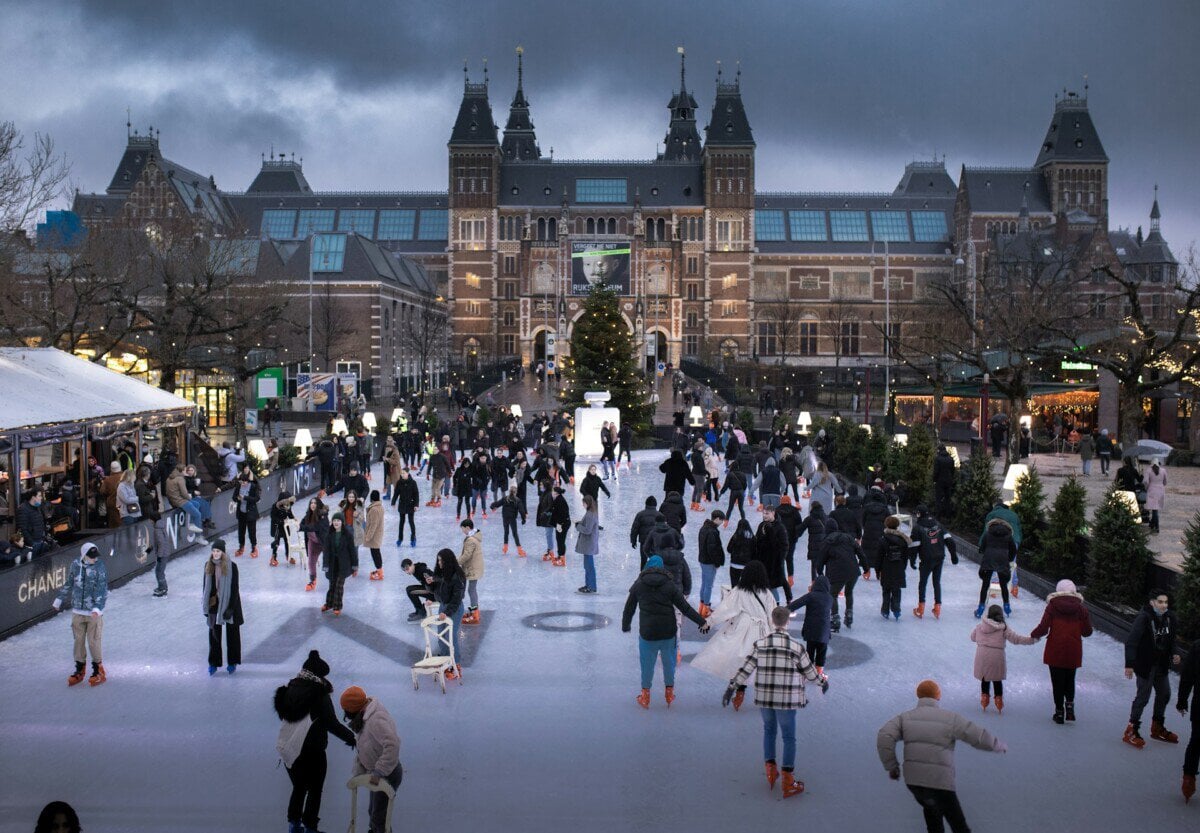
The Amsterdam Christmas Market at Museumplein, directly in front of the Rijksmuseum, is the closest thing the city has to a traditional market square. Based on the confirmed 2026 season, it runs from 3 to 27 December 2026, daily from midday to 9pm, with shorter hours on 25, 26 and 27 December, and around 45 wooden chalets selling gifts, mulled wine and Dutch winter food, all free to enter.
A genuinely different option sits well outside the historic centre: Winter Paradise at the RAI Amsterdam exhibition centre near Europaplein. Based on its confirmed 2026 season, it runs from 12 December 2026 to 2 January 2027, 9am to 11pm, and unlike Museumplein it’s a ticketed event, with timed-entry prices starting from around €22.50 (£20/$24), covering an indoor winter village with multiple ice rinks, a ski simulator and carousels.
Smaller, more independent markets add further variety: Funky Xmas Market at Westergasfabriek in Westerpark runs across a few weekends in December with a €5 entry fee, featuring independent designers, vintage clothing and craft beer rather than festive chalets, and the Sunday Market at Westergas runs a special mid-December edition of its regular Dutch craft and food market.
What this means practically is that Amsterdam rewards picking based on what a visitor actually wants: Museumplein for a free, classic market experience by the Rijksmuseum, Winter Paradise for a bigger ticketed family day out, and Westergas for a more independent, less commercial alternative. None of the three are more than a tram ride apart, so combining two in one visit is entirely realistic.
Browse hotels and accommodation for your visit to Amsterdam.
View staysBrowse apartments, homes and self-catering accommodation in Amsterdam.
Browse rentalsSee hotel prices from multiple booking sites in one search.
Compare ratesIce Skating and Other Things to Do Beyond Browsing
Amsterdam takes ice skating seriously in winter, and there’s genuine choice depending on setting and budget. Ice*Amsterdam at Museumplein, running roughly mid-November to mid-February, is the most central rink, sitting right beside the Christmas market with entry around €16 (£14/$17) including skate hire.
A smaller, more atmospheric option is the seasonal rink at Rembrandtplein, typically running for around €10 to €13 (£9 to £11/$11 to $14), set among the square’s bars and restaurants rather than beside a museum. Leidseplein also gets a pop-up rink through December, and Jaap Eden Ijsbaan out in Oost is Amsterdam’s permanent, professional-standard rink for visitors wanting proper laps rather than a festive novelty.
Beyond skating, Winter Paradise at the RAI adds a ski simulator and carousels genuinely aimed at a full family day out rather than a browse-and-drink stop, which is worth knowing if travelling with children who’ll want more than stalls to look at. The Amsterdam Light Festival, covered in full later in this guide, is arguably the single best activity in the city’s December calendar, since it’s something to actively do (a boat trip or a walking route) rather than something to simply look at from the street.
For a quieter alternative, Amsterdam’s flat, compact centre also makes December genuinely good cycling weather for confident visitors, with several rental operators offering evening lights-themed routes along the canals. Whichever activity is chosen, Amsterdam’s small scale means most of these sit within a twenty-minute tram ride of each other.
What’s Actually on the Stalls
Dutch Christmas markets lean less towards the wood-carved ornaments and glühwein steins familiar from Germany, and more towards a mix of genuine local craft and general festive gifting. At Museumplein, expect handmade jewellery, candles, winter clothing and Dutch specialities like stroopwafels and cheese, alongside the standard mulled-wine and gift stalls.
Funky Xmas Market at Westergasfabriek is the strongest pick for genuinely different shopping, built around independent designers, vintage clothing and vinyl records rather than typical festive merchandise, alongside craft beer and DJ sets that give it a noticeably younger, less traditional atmosphere than Museumplein.
Winter Paradise at the RAI takes a different approach again, its indoor winter village leans towards experience over shopping, though gift stalls are still present alongside the rinks and rides. For anyone specifically hunting Dutch-made gifts over imported festive stock, Museumplein and the Sunday Market’s December edition (Dutch craftspeople and designers) are the stronger picks over Winter Paradise.
Budgeting €10 to €30 (£9 to £26/$11 to $32) for a smaller handmade gift or festive item is a realistic range across most of Amsterdam’s markets, though Funky Xmas Market’s vintage and designer stalls can run higher depending on what’s on offer.
Entertainment: DJ Sets, Carousels and Canal-Side Music
Amsterdam’s Christmas entertainment leans distinctly more contemporary than the choirs and brass bands typical of Central European markets. Funky Xmas Market runs its own DJ sets alongside the stalls, a genuinely different entertainment offer that fits Amsterdam’s younger, creative-district reputation.
At Winter Paradise, the RAI’s indoor setting supports a fuller events programme through the season, including live music tied to the winter village’s carousel and ice rink areas, worth checking the venue’s own listings for specific dates closer to a visit. Museumplein’s market itself runs on more ambient atmosphere, its live entertainment is lighter, with the real draw being the setting beside the Rijksmuseum and Ice*Amsterdam’s rink.
The genuinely standout entertainment of the season, though, isn’t at any market at all: the Amsterdam Light Festival’s canal cruises run with an audio guide explaining each installation as the boat passes, turning a simple canal trip into a proper guided evening out. Several operators also run themed cruises with onboard drinks or live commentary, worth booking ahead given how popular the festival has become.
For a more traditional evening, Amsterdam’s churches and concert venues, including the Concertgebouw just off Museumplein, run their own December classical and choral programmes, a quieter alternative to the markets for visitors wanting something more formal.
Food and Drink: Oliebollen, Poffertjes and Dutch Herring
Oliebollen, deep-fried Dutch doughnuts dusted with powdered sugar, are the single most essential Amsterdam winter food, sold from dedicated stalls across the city from November through New Year rather than only at the Christmas markets themselves. Poffertjes (small fluffy pancakes) and roasted chestnuts round out the classic Dutch winter street-food line-up alongside the expected glühwein and hot chocolate.
Museumplein’s market stalls also sell Dutch cheese, stroopwafels and speculaas (spiced Christmas biscuits), genuinely local alternatives to the sausages and pretzels that dominate further east in Europe. A realistic budget for a snack, a drink and a small treat runs around €15 to €30 (£13 to £26/$16 to $32) per person, broadly typical for Amsterdam’s general cost of living.
Beyond the markets, Amsterdam’s herring stands, selling fresh Dutch herring the traditional way (held by the tail, eaten in a few bites), are a genuinely local winter tradition worth seeking out separately from the festive stalls. Vegetarian and vegan options are widely available across the city generally, reflecting Amsterdam’s strong plant-based food scene, though the markets themselves lean more traditional.
Funky Xmas Market’s food offer leans towards craft beer and food-truck style options rather than classic Dutch treats, a genuinely different eating experience from Museumplein’s more traditional stalls. Combining a Museumplein snack with a Westergas dinner makes for a good contrast across one evening.
Sinterklaas vs Christmas Day: The Distinction Most Visitors Miss
This is the single most useful thing an international visitor can know before an Amsterdam Christmas trip: the Netherlands’ main gift-giving occasion isn’t Christmas Day at all, it’s Sinterklaas, on the evening of 5 December. Sint arrives in the country with great fanfare in mid-November and spends weeks touring before children traditionally leave a shoe out, tracked in Sint’s book of good and bad behaviour, for presents on the night itself.
That means a visitor arriving in Amsterdam expecting Christmas Day itself to be the big family celebration, the way it is in the UK or US, will find something genuinely quieter. Christmas Day (25 December) in the Netherlands is a proper public holiday with family meals and church services, but it doesn’t carry the same gift-exchange weight Sinterklaas does, many Dutch families have already done their present-giving nearly three weeks earlier.
Practically, this has real consequences for trip timing. Visitors specifically wanting to see Sinterklaas-related events (parades, themed markets, shop displays) need to be in Amsterdam in mid-November to early December, well before the Christmas markets themselves reach full swing, while visitors coming purely for Christmas markets and lights can safely plan for mid-December onward without missing anything Sinterklaas-specific.
For anyone whose trip genuinely spans both, seeing Sinterklaas traditions wind down just as the Christmas markets and Light Festival ramp up is a distinctly Dutch overlap worth building an itinerary around, rather than assuming (as many first-time visitors do) that Sinterklaas is simply the Dutch name for Santa Claus arriving on the same night as everywhere else.
The Amsterdam Light Festival: Canals, Not a Square
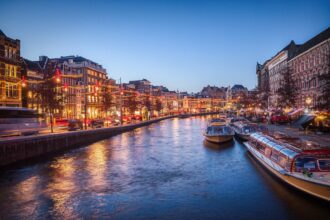
The Amsterdam Light Festival is genuinely the city’s signature winter event, and it’s built around a completely different format to a market square: 25 to 30 large-scale light installations by international artists, strung along the UNESCO-listed canal ring and lit nightly from 5pm to 11pm. Based on the confirmed 2026 season, it runs from 26 November 2026 to 17 January 2027. Our dedicated Amsterdam Light Festival guide covers the full route, cruise operators and ticket options in more depth than this section alone.
There’s a genuinely free option: a walking route of roughly 4 to 5km, taking around two hours, which passes a good number of the installations without needing a boat. For the full experience, a canal cruise is the recommended way to see the festival properly, prices typically start from around €22.75 (£20/$24), rising to €25 to €40 (£22 to £35/$26 to $42) depending on the operator and boat type.
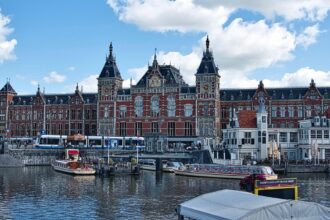
Several operators run heated indoor cruises for colder evenings, alongside open electric boats for a more immersive (if colder) experience, both typically lasting around 75 minutes with an audio guide included. Departure points cluster near Central Station, making it an easy add-on straight after arriving in the city or before heading back to the airport.
The exact route and specific artworks for the 2026-2027 edition hadn’t been announced by the festival’s own organisers at time of writing, an honest gap rather than an invented detail, though the festival’s format (a curated trail voted on partly by public poll in past editions) has stayed consistent year to year. Booking a cruise in advance is genuinely worth doing, since the festival has become popular enough that peak December evenings sell out.
Search flights and useful route combinations for your trip.
View flightsUse an eSIM to get online without hunting for a local SIM after arrival.
See eSIM optionsCheck private pickup options and plan your onward journey before arrival.
View transfersBeyond the Markets: Other Christmas Things to Do in Amsterdam
Amsterdam’s museums stay genuinely accessible through December, and several run seasonal programming worth building into a Christmas trip. The Rijksmuseum and Van Gogh Museum, both a short walk from Museumplein’s Christmas market, are obvious pairings, and neither typically requires Christmas-specific planning beyond booking tickets ahead as usual.
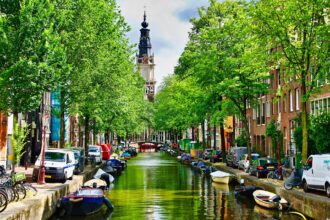
The city’s canal-side Christmas lighting extends well beyond the Light Festival’s dedicated installations, with shop windows and residential canal houses along Prinsengracht, Herengracht and Keizersgracht decorated through December, a genuinely lovely free wander even without booking a Light Festival cruise specifically.
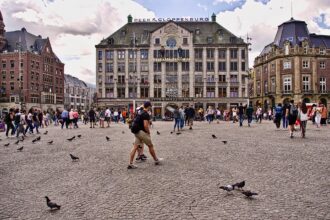
Unlike Helsinki’s Aleksanterinkatu tradition dating back to 1948, or the single switch-on evenings run by many UK high streets, Amsterdam has no single, official Christmas lights switch-on ceremony for its city centre, an honest gap rather than an oversight in this guide. The closest the city ever had to one was de Bijenkorf’s “Turn on the Lights”, an annual light-and-fireworks spectacle at the department store’s flagship on Dam Square that ran from 2008 to 2019, illuminating the building’s facade with around 600,000 LED lights alongside a fireworks display, free to attend and genuinely popular enough to draw thousands of spectators each year.
De Bijenkorf discontinued the event after its 2019 edition, having failed to apply for the event permit the show had by then grown large enough to require, and the company chose not to revive it afterwards, saying it preferred investing in customer experience across all its stores rather than a single Amsterdam spectacle. It hasn’t returned since, including for the 2025 and 2026 seasons. In practice, Amsterdam’s shopping streets, Kalverstraat, Leidsestraat and P.C. Hooftstraat among them, simply have their festive lighting installed and switched on gradually through November without any public launch event or advertised date to plan a visit around. Visitors wanting a genuine, scheduled lights spectacle are better served booking an early Amsterdam Light Festival cruise instead, since its nightly lighting from 5pm each evening is the closest thing the city offers to a bookable switch-on moment.
For families, Winter Paradise’s carousels and ski simulator, already covered earlier, offer a genuine full-day alternative to museum-hopping, while Amsterdam’s numerous canal cruise operators run standard sightseeing routes through December alongside their Light Festival-specific cruises, worth checking which one is being booked.
Beyond the city itself, several nearby towns (Utrecht, Haarlem and the traditional windmill village of Zaanse Schans among them) run their own smaller Christmas events, genuinely easy day trips by train for visitors staying more than a couple of nights in Amsterdam.
Shop and Attraction Hours Over Christmas and New Year
Amsterdam shops generally extend their hours through the run-up to Christmas, with central retailers typically staying open until 9pm on the last two Sundays before Christmas Eve, a genuine departure from normal Sunday hours elsewhere in the year. On 24 December, shops typically close by 6pm, and on 25 December almost everything closes entirely, since Christmas Day is a full public holiday in the Netherlands.
26 December, by contrast, sees most shops and effectively all tourist attractions reopen with standard Sunday-style hours, a genuinely useful day for sightseeing if 25 December itself is spent quietly. Between 27 and 30 December, shops typically extend hours again (often until 9pm on the 27th and 28th) before reverting to normal, and 31 December sees an earlier 6pm close ahead of New Year’s Eve.
1 January is closed for most shops, mirroring Christmas Day, with normal hours resuming from 2 January. Major museums including the Rijksmuseum and Van Gogh Museum typically stay open on 26 December and reduce hours rather than close entirely on 24 and 31 December, though checking each venue’s own listings before visiting over the holiday period is worth doing given some genuine year-to-year variation.
Amsterdam’s GVB trams, metro and ferries keep running throughout the holiday period on adjusted, typically Sunday-style timetables on 25 December and 1 January, with New Year’s Eve itself seeing free ferries and enhanced night service to help move the city’s biggest crowds of the year safely.
New Year’s Eve in Amsterdam: From Chaos to a Ban and an Official Show
Amsterdam’s New Year’s Eve reputation, decades of genuinely uncontrolled private street fireworks, tonnes of consumer rockets and firecrackers set off across the city from around 6pm to 2am, is honest but increasingly out of date, and worth correcting for anyone planning around the old assumption. Private consumer fireworks are now banned across most of central Amsterdam, part of a wider Dutch move toward restriction that culminated in a nationwide ban approved to take effect after New Year’s Eve 2025.
In place of the old chaos, the city has shifted toward an organised, official celebration. From the 2026/27 season, Amsterdam runs a sanctioned “Electric Fireworks” light-and-laser show centred on Museumplein, free to attend, typically opening around 6:30pm with a children’s show at 7pm, a main programme from 10pm, and the midnight countdown itself building to the show’s climax.
That said, the ban is not absolute everywhere: even with central restrictions in place, informal fireworks in residential and outer neighbourhoods genuinely still happen, and alternative organised events, including a “sustainable fireworks” show at Sloterplas, have emerged as legal, safer alternatives to the traditional street display. Dam Square, Rembrandtplein and Leidseplein remain popular informal gathering points for midnight itself, though none run an official fireworks display of their own.
For anyone visiting specifically to see Amsterdam’s New Year’s Eve, the honest advice has genuinely flipped from a decade ago: arrive expecting an organised light show at Museumplein rather than a lawless firework free-for-all, though staying alert for stray informal fireworks in outer neighbourhoods, avoiding the canal edges, and being mindful of large, tightly packed crowds is still sensible safety advice regardless.
Amsterdam’s December Weather: Grey, Damp and Milder Than the Nordic Capitals
Amsterdam’s December is genuinely mild compared with the Nordic and Central European cities covered elsewhere on this site, with daytime highs running from around 7°C (45°F) in early December down to about 6°C (42°F) by month’s end, and overnight lows dropping from roughly 3°C (37°F) to 2°C (35°F). Frost is possible but not a given most days.
Rain, not snow, is the defining weather feature of an Amsterdam December, with the chance of a wet day rising from around 33% to 37% across the month. Snow, by contrast, is genuinely rare in the city itself, sitting close to 0% average chance on any given day, meaning a white Christmas in Amsterdam specifically is a real long shot rather than a realistic expectation.
Cloud cover sits at a persistent 67% through the month, similar to several other northern European cities covered on this site, so genuinely bright, clear December days are the exception. Daylight is noticeably better than the Nordic capitals though, Amsterdam doesn’t suffer the extreme darkness of Helsinki or Oslo at this latitude, making it a genuinely more forgiving December city break for visitors put off by Scandinavia’s shorter days.
Practically, a proper waterproof coat matters more in Amsterdam than heavy insulation, since the cold itself is manageable but the near-constant risk of rain and the damp canal-side wind chill catch out visitors who pack for a colder, drier city instead. Waterproof, comfortable footwear is genuinely more useful here than thick winter boots, given how much of an Amsterdam Christmas trip happens on foot or by bike.
Getting to Amsterdam and Where to Stay
Amsterdam Schiphol Airport sits around 15km south-west of the city centre, and is one of Europe’s best-connected airports by train, with direct services into Amsterdam Centraal taking around 15 to 20 minutes. Once in the city, Amsterdam’s trams, metro and ferries cover every Christmas market and the Light Festival’s canal-side route comfortably, and our Getting Around Amsterdam guide covers every option in detail.
Amsterdam’s compact, largely flat centre means most of what’s covered in this guide, Museumplein, the canal ring and Dam Square, sits within a genuinely easy walk or short tram ride of each other. A car is actively unhelpful in central Amsterdam given restricted access and expensive parking, and isn’t needed for anything covered in this guide.
Accommodation in central Amsterdam during December typically runs from around €120 to €250 (£104 to £217/$127 to $265) a night for a central double room, reflecting Amsterdam’s position as one of Europe’s pricier city-break destinations even outside peak summer season. Staying near Museumplein or the canal ring keeps the Christmas market, Ice*Amsterdam and the Light Festival’s walking route all within easy reach.
A single day covers Museumplein’s market and a Light Festival walk comfortably, but visitors wanting to properly add Winter Paradise, a canal cruise, and a day trip to Zaanse Schans or Utrecht are better served staying three or four nights. Our Best Day Trips from Amsterdam guide covers the easiest add-ons for a longer winter stay.

Rupert’s Handy Travel Tips
Amsterdam’s Christmas season spreads across the whole city, here’s how I’d plan around that.
- Book a Light Festival cruise ahead of time: it’s genuinely Amsterdam’s best Christmas activity, and popular evening slots sell out well before December.
- Don’t confuse Sinterklaas with Christmas Day: if you’re after Sinterklaas traditions specifically, you need to be in Amsterdam by early December, not the week of Christmas itself.
- Pack a proper waterproof, not just a warm coat: rain, not snow or extreme cold, is what actually catches visitors out here.
- Try Winter Paradise if you’re travelling with kids: Museumplein’s market is lovely but Winter Paradise’s rides and rinks are the better full-day family option.
- Don’t expect a firework free-for-all on New Year’s Eve anymore: the city has shifted to an organised light show at Museumplein, plan around that instead.
- Combine Museumplein with a Rijksmuseum or Van Gogh Museum visit: both sit right beside the Christmas market, so book tickets for one alongside the other.
Want to meet the reindeer behind our travel tips? Find out more in our page Who is Rupert?.




Frequently Asked Questions About Amsterdam Christmas Markets
Where is Amsterdam’s Christmas market?
The main market is at Museumplein, in front of the Rijksmuseum, with a second, larger ticketed event called Winter Paradise running at the RAI Amsterdam exhibition centre further from the centre.
Is Sinterklaas the same as Santa Claus?
Not quite. Sinterklaas is the Dutch gift-giving tradition celebrated on the evening of 5 December, weeks before Christmas Day, and it’s a genuinely separate occasion in the Dutch calendar rather than simply a local name for Santa arriving on 25 December.
What is the Amsterdam Light Festival?
It’s a trail of large-scale light art installed along Amsterdam’s canal ring, viewed by canal cruise or on a free walking route, running from late November through mid-January each season.
Are there fireworks in Amsterdam on New Year’s Eve?
Private consumer fireworks are now banned across most of central Amsterdam, and the city has replaced the old street free-for-all with an organised, free light-and-laser show at Museumplein.
Is Amsterdam a good Christmas market destination if I want snow?
Not especially. Amsterdam’s December is mild and rainy rather than snowy, with snow chance close to 0% on any given day, so visitors specifically wanting a snowy Christmas market should look further north or east in Europe instead.
What shops and attractions are open on 25 and 26 December in Amsterdam?
Most shops close entirely on 25 December, since it’s a full public holiday, but reopen with standard Sunday-style hours on 26 December, alongside most major museums and tourist attractions.
Is there ice skating at Amsterdam’s Christmas markets?
Yes. Ice*Amsterdam sits right beside the Museumplein Christmas market, with further rinks at Rembrandtplein, a pop-up at Leidseplein, and the permanent Jaap Eden Ijsbaan in Oost for year-round skating.
Browse hostels and budget-friendly stays around Amsterdam.
See hostelsFlying to Amsterdam? Get fast compensation payouts, eligible lounge benefits and expert help when flights go wrong.
See AirHelp+ benefitsArriving before check-in or leaving later? Store your luggage and make more of your time in Amsterdam.
Store your bagsFurther Reading & Related Guides
Amsterdam’s markets sit within a much wider European Christmas market scene, and anyone comparing the city against the bigger German and Austrian markets should read our European Christmas Markets Guide, which covers dates, atmosphere and what sets each city’s approach apart.
For a fuller explanation of the distinction, I amsterdam’s own Sinterklaas v Santa Claus explainer is worth a read before a December trip.
The Amsterdam Light Festival is genuinely worth its own deeper look beyond this guide’s summary, and our dedicated Amsterdam Light Festival guide covers routes, cruise operators and ticket options in full. For getting around the city itself, our Getting Around Amsterdam guide covers trams, metro and ferries in detail.
Beyond the festive season, our Best Things to Do in Amsterdam guide covers the city’s museums, canals and neighbourhoods year-round, while our Amsterdam Canal Cruises guide is a useful companion for comparing standard sightseeing cruises against the Light Festival’s dedicated evening routes.
For visitors staying longer, our Best Day Trips from Amsterdam guide covers easy add-ons like Zaanse Schans and Utrecht, and our Free Things to Do in Amsterdam guide is worth reading alongside this one for anyone keeping a close eye on budget over the festive season.