Reviewed by our editorial team Published
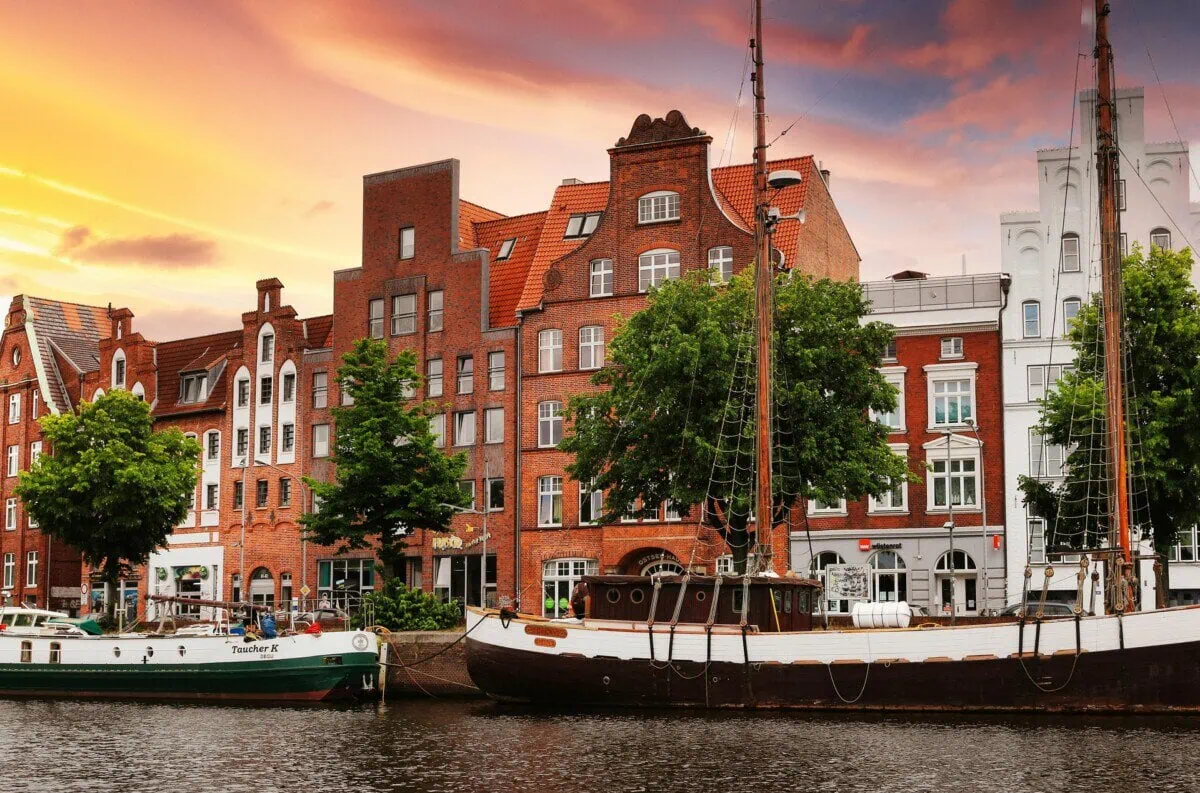
Lübeck is the kind of city that makes the word “medieval” feel like an understatement rather than a marketing label. The entire old town sits on a small island encircled by the Trave and the Wakenitz, its skyline still bristling with the same red brick church towers that guided merchant ships home eight centuries ago, and in 1987 UNESCO recognised the whole district as a World Heritage Site, describing it as Germany’s most extensive listing of its kind. Walk in from the Holstentor and the street plan, the gabled facades and the narrow courtyard alleys all still trace the same lines they did when this was one of northern Europe’s most powerful cities.
That power had a name: the Hanseatic League, the trading confederation of merchant guilds that dominated Baltic and North Sea commerce from the 13th century onward, and Lübeck was its undisputed capital. Historians and locals alike still call it the “Queen of the Hanseatic League,” a title earned by centuries as the meeting place for League assemblies and the source of the Lübeck Law, a legal code eventually adopted by around a hundred other Baltic cities. The city kept its own independent status inside the Holy Roman Empire and, later, the German Empire, right up until 1937, a genuinely unusual run of self-governance for a place its size.
Much of what makes Lübeck special today survived a genuinely close call. On Palm Sunday, 28 to 29 March 1942, an RAF bombing raid and the firestorm it triggered destroyed close to a fifth of the old town and badly damaged three of its great churches. What was rebuilt afterwards was, for the most part, rebuilt faithfully, and the result is a historic centre that still reads as authentically medieval rather than as a careful modern reconstruction pretending otherwise, with a handful of scars, like the Marienkirche’s shattered bells, left deliberately visible as memorials rather than tidied away.
This guide works through the sights that make up a proper visit to Lübeck, from the iconic gatehouse and the great brick churches to the marzipan tradition, the Hanseatic history and the food, shopping and family options that round out a trip. Lübeck sits an easy rail journey from Hamburg, and separate guides on this site cover that city and the wider region in detail for anyone building a longer northern Germany itinerary around this stop.
| Section | What you’ll find |
| The Holstentor | The tilted 15th-century gatehouse that is the symbol of the city, plus the small museum inside. |
| Marienkirche | The great brick Gothic church, home to the fallen bells left as a 1942 war memorial. |
| The Historic Rathaus | Lübeck’s black-brick town hall on the Markt, with its wind holes and Renaissance arcades. |
| The Splash Bus | A road-and-water sightseeing tour on a vehicle that drives straight into the Trave. |
| Buddenbrookhaus | The Thomas Mann family home behind Buddenbrooks, currently showing at a temporary site. |
| Lübeck Marzipan and Café Niederegger | The city’s marzipan tradition and its most famous maker, opposite the Rathaus. |
| The Lübeck Day Pass | A combined ticket covering same-day entry to the Holstentor, St. Annen and other city museums. |
| The Trave River and Lübeck’s Harbour | The river that built Lübeck, its waterside promenades, salt storehouses and river cruises. |
| European Hansemuseum | The largest Hanseatic League museum anywhere, built around a former Dominican monastery. |
| St. Annen Museum | Northern Germany’s key collection of medieval altarpieces, in a quiet former convent. |
| Food and Drink Beyond Marzipan | Local fish dishes, Rotspon wine and where to eat around the Markt and harbour. |
| Shopping in the Old Town | Where to shop for marzipan, crafts and antiques around Breite Strasse and the Gänge. |
| Family-Friendly Lübeck and Rainy Day Options | Which sights work best with children and as indoor backups on a wet day. |
The Holstentor: Lübeck’s Leaning Medieval Gatehouse
No building represents Lübeck quite like the Holstentor, the twin-towered brick gatehouse that has stood guard over the western approach to the old town since the 15th century. Built between 1464 and 1478 under city architect Hinrich Helmstede, and funded in part by a bequest from councilman John Broling, it was one of several gates that once ringed the medieval city, and it is now essentially the only one left standing in anything like its original form, since the Burgtor at the northern end survives too but never achieved quite the same fame.
The gate’s slightly lopsided, faintly comical silhouette is not an accident of design but a genuine structural quirk. Builders raised the Holstentor on soft, marshy ground at the edge of the Trave, and the south tower began sinking almost immediately, a problem engineers tried and failed to fully correct even during construction. Centuries of gradual settling followed, and today the lowest loopholes on the south side sit noticeably below where they were originally cut, a detail worth pointing out to anyone walking past who assumes the tilt is a trick of the eye.
Inside, the Holstentor houses a compact city history museum, covering Lübeck’s rise as a Hanseatic power, its shipping and trade, and the gate’s own construction and near-demolition in the 19th century, when city planners briefly considered tearing it down before a public campaign saved it. That 1863 preservation decision turned the gate into a genuine national symbol: it later appeared on the old 50 Deutsche Mark note and still features on the German two euro coin minted in 2006, and Niederegger, the city’s famous marzipan maker, has used its silhouette in branding for generations.
Admission to the museum requires a ticket, sold at the gate itself or through the city’s combined museum pass, and it is worth checking current opening hours and pricing before a visit since these are revised periodically. Even for visitors who skip the exhibition entirely, the exterior view from the Puppenbrücke bridge on the western side, framed by the twin towers and the old salt storehouses beside them, is one of the most photographed spots in northern Germany for good reason.
Marienkirche: Brick Gothic Grandeur and the Bells Left Where They Fell
Rising directly beside the Rathaus, St. Mary’s Church, or the Marienkirche, is Lübeck’s great civic church and one of the defining buildings of the Brick Gothic style found right across the Baltic region. Built mainly between 1265 and 1351 by the city’s wealthy merchant class rather than a bishop or monastery, it was explicitly designed to outdo the cathedral and signal Lübeck’s commercial confidence, and it succeeded: its nave vault, at 38.5 metres, is the tallest brick vault anywhere in the world, and the church as a whole ranks as the second tallest brick building in Europe. Its twin towers reach roughly 125 metres, and the Marienkirche went on to serve as the architectural model for dozens of other Hanseatic churches around the Baltic.
The church’s most affecting feature today, though, is not its scale but a deliberate act of memory. During the same Palm Sunday raid of 28 to 29 March 1942 that devastated much of the old town, incendiary bombs set the Marienkirche’s roof ablaze, and the fire eventually brought down the eleven historic bells hanging in the south tower’s bell loft, sixty metres up. Accounts describe the bells ringing wildly in the heat of the updraft before crashing to the stone floor below. Rather than being cleared away during the postwar restoration, two of the shattered bells, including the oldest, cast by Heinrich von Kampen, and a large tenor bell cast by Albert Benningk in 1668, were left exactly where they landed, preserved in the former Schinkel Chapel at the base of the south tower as a permanent war memorial.
Reconstruction of the church itself began in 1947 and was largely complete by 1959, with the original wooden roof replaced by lightweight concrete under a copper covering specifically to guard against another fire. The church marked its 700th anniversary in 1951 under the newly rebuilt roof, and Chancellor Konrad Adenauer donated a new tenor bell to replace part of what had been lost. Today the Marienkirche functions as a working Lutheran church as well as a landmark, and entry to see both the soaring nave and the fallen bells is generally free, though donations toward its upkeep are welcomed.
Best for a short trip. Compare rooms by neighbourhood, price and guest rating before you book.
Compare hotelsBest for groups who want one address and separate bedrooms rather than three hotel rooms.
See holiday homesBest if you have already picked a hotel. Checks the big booking sites for the same room and shows who is cheapest.
Check dealsThe Historic Rathaus: Black Glazed Brick on the Market Square
Standing directly on the Markt and pressed up against the Marienkirche’s flank, Lübeck’s Rathaus, or town hall, is one of the oldest and most architecturally significant civic buildings in Germany. Construction began in the 13th century, not long after the city secured its status as a free imperial city, and successive generations of councillors added to it in phases over the following centuries, which is why the finished complex reads less like a single unified design and more like a layered record of Lübeck’s changing fortunes and tastes.
The building’s most distinctive feature is its black glazed brick facade, a Baltic Brick Gothic hallmark achieved by firing the bricks at high temperatures to give them a dark, almost enamelled sheen quite different from the warm red brick used elsewhere in the old town. Large circular openings, sometimes called wind holes, are cut through the tall decorative screen walls above the roofline, a practical medieval solution that reduced wind resistance on the oversized facades without weakening them structurally, and they remain one of the building’s most photographed quirks.
A later Renaissance-era wing along Breite Strasse added graceful stone arcades at street level, a noticeably lighter architectural touch than the fortress-like brick sections nearby, and this arcaded stretch is where much of the building’s public-facing charm sits today, sheltering pedestrians much as it always has. The Rathaus remains a fully working seat of city government, home to Lübeck’s council and senate, so interior access is generally limited to guided tours run on a fixed schedule rather than free wandering, and it is worth checking current tour times locally before planning a visit around the interior specifically.
Even without going inside, the Rathaus rewards a slow circuit on foot, since its character changes completely depending on which side is viewed, from the severe black brick facing the Markt to the airier arcades along Breite Strasse. The adjoining market square itself hosts a produce and flower market on regular weekdays, adding a genuinely everyday layer of local life to one of the city’s grandest medieval backdrops.
The Splash Bus: Lübeck’s Amphibious Bus-Boat Tour
The Splash Bus, known locally as the Splashtour, is a specially engineered vehicle that spends half of its hour-long circuit driving through Lübeck’s streets and the other half floating on the Trave. It was developed in Rotterdam as one of the few fully road-legal amphibious buses anywhere, and the Lübeck version seats up to 43 passengers per trip.
Departures leave from a jetty at An der Untertrave, on the harbour side of the old town, and the tour begins like an ordinary sightseeing bus, rolling past the Holstentor and the gabled facades of the historic centre while a guide narrates the route. Without slowing down, the vehicle then drives straight off a ramp and into the river, throwing up a genuine splash as its wheels give way to propulsion in the water.
From the Trave, the same bus continues as a boat along the old town’s waterways, giving passengers a view of the brick church towers and the back of the Holstentor that is impossible to get on foot. This water level perspective, moving between the harbour and the moat that still rings the medieval island, is a big part of why the tour has built such a loyal following among visiting families.
Tickets run at roughly €30 for an adult and €20 for a child (about $35/£26 and $23/£17 at current rates), with several departures a day between spring and autumn and no service over winter. Given the tour’s popularity and its relatively small capacity, booking a specific departure time in advance is the safer option during the busy summer months.
Buddenbrookhaus: The Mann Family, a Nobel Prize and a Century-Defining Novel
On Mengstrasse, a short walk from the Markt, the Buddenbrookhaus commemorates Lübeck’s most famous literary family. The house itself dates back to 1289 and was rebuilt in its present form in 1758 before being remodelled again in the 1820s by the Danish architect Joseph Christian Lillie, and in 1841 it was bought by the grandparents of a young Thomas Mann, whose family lived and worked there as grain merchants until 1891. That house, and the Lübeck merchant world it represented, became the direct model for the fictional Buddenbrook family home in Mann’s 1901 novel Buddenbrooks, the multi-generational saga of a declining trading dynasty that made him internationally famous before he had turned thirty.
Thomas Mann went on to win the Nobel Prize in Literature in 1929, cited specifically for Buddenbrooks, and his older brother Heinrich Mann became a significant novelist in his own right, author of Professor Unrat, the source material for the film The Blue Angel. The house was formally opened as the Heinrich und Thomas Mann Zentrum on 6 May 1993 during Lübeck’s 850th anniversary celebrations, with Federal President Richard von Weizsäcker in attendance, and from 2000 it held two permanent exhibitions covering the wider Mann family’s lives and work alongside recreated rooms inspired directly by the novel.
Visitors planning a trip should know that the historic Mengstrasse building itself has been closed for major renovation since late 2019, with the extensive rebuild and a completely new permanent exhibition not expected to be finished until around 2029. In the meantime, the museum operates a temporary space called Buddenbrooks am Markt, tucked between the Marienkirche and the Rathaus, which opened a new exhibition room called Manns am Markt in March 2025 and continues to sell Mann-related books and souvenirs alongside it. It is the right place to check for anyone hoping to see Mann family material during the closure, rather than heading straight to the shuttered Mengstrasse address.
Lübeck Marzipan and Café Niederegger
Lübeck’s other great export is considerably sweeter than Hanseatic law codes: this is one of the two or three cities most closely associated with marzipan anywhere in the world. Local legend, of the kind every historic confectionery town seems to carry, holds that the sweet was first improvised during a medieval siege or famine, when bakers stretched scarce grain supplies by grinding stored almonds with sugar instead. Whatever the exact truth of that story, the tradition of working almond paste on the site can genuinely be traced back centuries in the city’s records, and Lübeck marzipan is protected today as a distinct regional product, made with a notably lower sugar ratio than many other versions found elsewhere in Europe.
The name most associated with that tradition is Niederegger, founded on 1 March 1806 by confectioner Johann Georg Niederegger after he trained under an earlier Lübeck marzipan maker. The company’s reputation grew quickly enough that its marzipan was reportedly sought out by European royalty within a generation, and even Thomas Mann himself, writing from Munich decades later, is known to have ordered supplies sent from his hometown maker. That reputation for quality, built on a comparatively low sugar content and careful almond sourcing, has carried the brand for well over two centuries with the same family name still above the door.
Café Niederegger’s flagship shop and café sits directly opposite the Rathaus on Breite Strasse, and it is genuinely one of the busiest single addresses in the old town, particularly in the run-up to Christmas when marzipan figures and seasonal packaging fill the windows. The ground floor sells marzipan by weight and in individually wrapped pieces, while the upper floor holds both a sit-down café and a small marzipan museum, with historical moulds, figures and packaging tracing the craft’s development over two centuries. Anyone short on time is better off buying from the ground floor counter, since the café tables upstairs regularly carry a genuine wait during peak hours.
The Lübeck Day Pass: One Ticket for the City’s Museums
The Lübeck Day Pass is a single ticket that covers same-day entry to every museum in the Lübecker Museumsverbund, the association that runs most of the city’s museums. That list includes the Museum Holstentor and the St. Annen-Museum covered elsewhere in this guide, alongside the Günter Grass-Haus, Museum Behnhaus Drägerhaus, Katharinenkirche, Kunsthalle St. Annen and several smaller collections.
The pass allows unlimited visits to any participating site on the chosen day, so a genuinely committed museum-goer can move between two or three collections without buying separate tickets at each door. It is personal and cannot be shared between travellers, and visitors under 18 already receive free entry to every one of these museums regardless of whether an adult in their group buys the pass.
A step-up version called the Day Pass Plus adds access to the viewing platform in St. Petri‘s tower, which gives one of the best panoramic views over the old town’s roofline and church spires. Standard passes are priced from around €14 per adult (about $16/£12), while the Plus option runs to roughly €18 (about $21/£15), and both are sold online or at any participating museum’s ticket desk.
Buying the pass makes the most sense for visitors planning a proper museum day, particularly anyone hoping to combine the Holstentor‘s city history exhibition with a slower look at the St. Annen Museum‘s altarpieces on the same afternoon. For a single museum visit, though, a standard entry ticket at that one site works out cheaper than the combined pass.
The Trave River and Lübeck’s Harbour
The river that made Lübeck matter for eight centuries is easy to lose sight of once inside the dense grid of the old town, but the Trave is the reason the city exists exactly where it does. The historic centre occupies an island formed where the Trave meets a smaller tributary, the Wakenitz, and that natural, easily defended position, combined with a navigable route down to the Baltic, is what allowed Lübeck to become the dominant trading hub of the entire Hanseatic network in the first place.
Walking the riverside promenades along the western and southern edges of the old town gives a very different view of Lübeck than the church-and-Rathaus circuit further inland: working boatyards, houseboats, waterside restaurants and the old salt storehouses beside the Holstentor, originally used to store the salt that formed one of the city’s most lucrative medieval trades, brought overland from Lüneburg and shipped onward across the Baltic. Short river cruises run from moorings near the Holstentor through the warmer months, offering a relaxed way to see the old town’s skyline of church towers from the water rather than the street.
Downstream, the Trave widens out toward the Baltic at Travemünde, Lübeck’s own seaside harbour district and one of Germany’s genuinely major ferry ports, handling regular crossings to Scandinavia and the Baltic states and making the wider port, combined with Travemünde, the second largest on Germany’s Baltic coast. Travemünde has enough going on in its own right, from its beach promenade to its ferry terminals, that it merits its own separate guide on this site rather than a short mention here, so this section deliberately keeps its focus on the river as it runs through the historic centre itself.
Best for long or awkward journeys. Builds one itinerary out of separate flights.
View flightsBest for short trips. Install the eSIM at home and arrive with working data, no shop queue.
Browse eSIMsBest when public transport has stopped, or when you are travelling with children and bags.
Book a transferEuropean Hansemuseum: Inside the Story of the Queen of the Hanseatic League
Opened on 27 May 2015 after more than a decade of planning delayed further by archaeological excavations on the site, the European Hansemuseum is, at over 7,400 square metres, the largest museum anywhere dedicated specifically to the Hanseatic League. Chancellor Angela Merkel formally inaugurated the building, and it opened to the public a few days later, immediately establishing itself as one of the essential stops for understanding exactly why Lübeck earned its old title as the Queen of the Hanseatic League rather than simply one trading city among many.
The permanent exhibition is built around recreated scenes from five major Hanseatic trading posts, including Novgorod, Bruges, Bergen and London alongside Lübeck itself, using a mix of original artefacts, interactive displays and full-scale reconstructions to trace how the League formed, how it grew rich on trade routes stretching from Russia to England, and eventually how it declined. Among the genuine highlights are pieces from the Lübeck Hoard, a trove of medieval gold and silver coins, alongside documents and paintings that trace the daily mechanics of Hanseatic commerce rather than only its grand political history.
Crucially, the museum was built directly onto and around the Burgkloster, a former Dominican monastery dating to the 13th century that already stood on the site, and a single visit typically covers both the modern Hanseatic exhibition and the atmospheric medieval monastery buildings themselves, including cloisters and vaulted halls that predate the museum by centuries. The Hansemuseum is generally open daily from 10am to 6pm, and given the combined scale of the exhibition and the monastery, it is worth allowing at least two hours rather than treating it as a quick stop between other sights. Full current details on tickets and the exhibition programme are published by the European Hansemuseum’s official site.
St. Annen Museum: Medieval Art in a Former Convent
Tucked into the southern part of the old town, the St. Annen Museum occupies the surviving buildings of a former Augustinian convent, itself founded in the late 15th century and later secularised, and the setting alone gives the collection inside a genuinely fitting home. Vaulted brick halls and a quiet cloistered garden house what is generally regarded as one of the most important collections of medieval religious art in northern Germany, much of it created specifically for Lübeck’s own churches before the Reformation changed how such work was used and displayed.
The museum’s centrepiece is its collection of carved wooden altarpieces, elaborate multi-panel works produced by Lübeck’s own medieval workshops during the city’s peak as a centre of religious art production for churches right across the Baltic region, alongside panel paintings, sculpture and liturgical objects that together trace the visual culture of the Hanseatic city at its height. A separate wing extends the collection forward into more recent centuries, giving the museum a broader sweep than its medieval reputation alone might suggest.
Because it sits a little further from the Markt and the main tourist thoroughfare than the Holstentor or the Hansemuseum, the St. Annen Museum tends to see noticeably fewer crowds, making it a genuinely relaxed stop for anyone who wants to look closely at individual works rather than move through a busy hall. It is generally closed on Mondays in line with most municipal museums in the city, and it is worth checking current hours and admission through Lübeck’s combined museum ticketing before a visit, since several of the city’s museums, including this one, can be covered together on a single multi-site pass.
Food and Drink Beyond Marzipan
Marzipan understandably dominates Lübeck’s food reputation, but the city’s everyday cooking leans on its position between the Baltic and the North German plain just as heavily. Fish, particularly herring and plaice, appears constantly on menus close to the harbour, often served simply pan-fried with potatoes, while heartier regional dishes drawing on pork, cabbage and root vegetables show up on traditional restaurant menus further into the old town, reflecting a food culture built for genuinely cold Baltic winters rather than culinary trends.
Beyond Niederegger, a handful of smaller, independent marzipan and confectionery makers operate around the old town, and trying more than one is a genuinely worthwhile way to taste the differences in texture and sweetness between producers rather than assuming Niederegger is the only option worth a visit. Rotspon, a red wine historically shipped to Lübeck in barrels from Bordeaux and aged further in the city’s cellars during the long sea voyage north, is a distinctive local specialty worth seeking out at a traditional wine merchant or restaurant, a genuine curiosity born directly from the city’s centuries as a shipping hub.
The streets immediately around the Markt and down toward the harbour hold the highest concentration of traditional restaurants, while the narrow courtyard alleys, known locally as Gänge, hide small cafes and bars that rarely appear on a first pass through the old town. As in most German cities, booking ahead for dinner at a well-known traditional restaurant is sensible on weekends, though the compact size of the old town means walking between several options in search of a table rarely takes more than a few minutes.
Shopping in the Old Town
Lübeck’s main shopping streets radiate out from the Markt and the Rathaus, particularly along Breite Strasse and Königstrasse, where high street chains sit alongside a genuine density of independent shops that many German city centres have lost over the past few decades. Marzipan inevitably dominates the souvenir trade, from Niederegger’s flagship store to smaller confectioners tucked into side streets, but it is far from the only thing worth carrying home.
The narrow Gänge, the courtyard alleys that riddle the old town behind its main streets, are worth a dedicated wander for shopping as much as for their history, since a number of small ateliers, ceramicists and independent bookshops have set up in the quiet former merchant courtyards rather than on the busier main thoroughfares. Antique and secondhand shops around the quieter southern half of the old town, closer to the St. Annen Museum, are also worth a look for anyone after something with genuine local character rather than a standard souvenir.
Saturday remains the busiest shopping day, in keeping with the rest of Germany, and the large majority of shops close entirely on Sundays, so a dedicated shopping morning is best built into a weekday or Saturday itinerary rather than assumed to be available every day of a stay. The regular market on the Markt square itself, running on set weekdays, adds fresh produce and flowers into the mix for anyone self-catering or simply wanting to see the square used the way it has been for centuries.
Family-Friendly Lübeck and Rainy Day Options
Lübeck’s compact, walkable old town works well for a family visit largely because its biggest sights sit close enough together that a day rarely involves much tired trudging between stops. The Holstentor‘s uneven, sinking floors and twin towers tend to fascinate children in a way a purely flat museum sometimes struggles to, and the short walk across the Puppenbrücke bridge to reach it makes a natural, easy first stop after arriving in the city.
The European Hansemuseum‘s reconstructed trading post scenes give children something physical and visual to explore rather than static glass cases, and its combination with the atmospheric Burgkloster monastery adds an extra layer that tends to hold attention through a longer indoor visit, making it one of the more reliable rainy day options in the city. A stop at Café Niederegger‘s marzipan museum works well for the same reason, and watching or trying to shape marzipan figures is a genuinely popular activity for younger visitors during school holiday periods.
For a wet afternoon, the Marienkirche and the St. Annen Museum both work as unhurried indoor visits regardless of the weather, and the covered stretch of arcades along the Rathaus on Breite Strasse offers a genuinely practical dry walking route between shops without getting properly soaked. Between the harbour, the museums clustered around the old town and the marzipan tradition running through so much of the city, a family trip or a rainy day in Lübeck rarely needs to be a wasted one.

Rupert’s Handy Travel Tips
Planning a visit to Lübeck? Rupert has a few tips worth knowing before you go:
- Head to Buddenbrooks am Markt, not Mengstrasse: the original Buddenbrookhaus is closed for renovation until around 2029, so the temporary exhibition space between the Marienkirche and the Rathaus is currently the place to see the Mann family displays.
- Look for the fallen bells in the Marienkirche’s south tower: the shattered bells from the 1942 bombing raid were left exactly where they landed as a war memorial, and seeing them in person is far more powerful than any photograph.
- Buy marzipan from the ground floor counter at Niederegger: the upstairs café and museum regularly get a genuine queue, so skip it if you just want to try or buy a piece to take away.
- Visit the Holstentor early in the day: its small rooms and sinking, uneven floors get crowded quickly once tour groups arrive, and they are far easier to explore in the first hour after opening.
- Allow real time for the Hansemuseum: the ticket typically covers both the Hanseatic League exhibition and the medieval Burgkloster monastery it is built around, so treat it as a two hour stop rather than a quick one.
- Wear comfortable shoes for the old town: Lübeck’s Altstadt sits on an island ringed by the Trave, and its cobbled lanes and church-to-church walking add up faster than the compact map suggests.
Want to meet the reindeer behind our travel tips? Find out more in our page Who is Rupert?.


Frequently Asked Questions About Things to Do in Lübeck
When was Lübeck’s old town added to the UNESCO World Heritage list?
Lübeck’s historic Altstadt was inscribed in 1987, and it is generally described as Germany’s most extensive UNESCO World Heritage listing.
Is the Buddenbrookhaus open to visitors right now?
No. The historic Mengstrasse building is closed for renovation until around 2029, though a temporary exhibition space called Buddenbrooks am Markt operates nearby between the Marienkirche and the Rathaus.
What happened to the bells of the Marienkirche?
The church’s bells crashed down during the 1942 bombing raid that devastated much of the old town, and two of them were deliberately left where they fell, preserved as a war memorial in the south tower.
Is the Holstentor free to visit?
The exterior can be viewed and photographed at any time for free, but the city history museum inside requires a paid ticket, so it is worth checking current admission before visiting.
Where can I try Lübeck marzipan?
Café Niederegger, opposite the Rathaus, is the most famous producer, founded in 1806, though several smaller independent confectioners around the old town are worth comparing too.
Why is Lübeck called the Queen of the Hanseatic League?
Lübeck was the effective capital of the Hanseatic League, hosting its assemblies and giving its name to the Lübeck Law adopted by around a hundred other Baltic trading cities.
Is Lübeck good for a family trip or a rainy day?
Yes. The European Hansemuseum, the Marienkirche, the St. Annen Museum and Café Niederegger’s marzipan museum all work well as indoor stops regardless of the weather.
How do I get to Lübeck from Hamburg?
Regional trains connect Hamburg Hauptbahnhof to Lübeck in around 45 minutes, making it an easy day trip or short stop for anyone already exploring northern Germany from Hamburg.
Best for solo travellers and anyone watching the budget. Dorm beds and private rooms in the same search.
Browse hostelsBest for anyone flying more than once or twice a year. Handles the compensation claim so you are not chasing the airline.
See AirHelp+Best for a day with a suitcase and nowhere to put it. Find a storage point near where you already are.
View storageFurther Reading & Related Guides
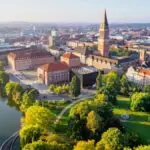
Anyone building a wider northern Germany itinerary will find our Best Things to Do in Hamburg guide a natural companion, since Lübeck sits an easy rail hop from the city. Our Hamburg Airport Transfers guide is also worth a read for anyone flying into the region, since Lübeck’s own small airport functions largely as a budget-airline hub for the wider Hamburg area rather than a major gateway in its own right. Our Things to Do in Kiel guide covers another Baltic-facing Schleswig-Holstein city worth pairing with a Lübeck visit.
If onward rail travel is part of the plan, our German Rail Tickets Explained guide breaks down the Deutschland-Ticket and regional fares that cover journeys between Lübeck, Hamburg and Kiel, while our Interrail Germany Pass Guide explains when a country-specific pass beats buying tickets individually for a longer trip around the wider region.