
West Highland Line Overview
The West Highland Line is widely considered one of the most scenic railway journeys in Scotland and one of the most beautiful train journeys in the world. Running from Glasgow into the Scottish Highlands, the railway travels through lochs, mountains, remote moorland and coastal scenery before reaching Fort William and the fishing port of Mallaig on the west coast.
What makes this railway special is how quickly the scenery changes. The journey begins in Scotland’s largest city, but within an hour the train is travelling along Loch Lomond, through Highland glens and across wild open moorland where there are very few roads and almost no buildings. Parts of the route, especially across Rannoch Moor, feel extremely remote and are only accessible by train.
The West Highland Line actually splits into two routes. One branch runs from Glasgow to Fort William, while the other continues from Fort William to Mallaig on the west coast. Many travellers take the full route to Mallaig because this includes the famous Glenfinnan Viaduct, which is one of the most photographed railway locations in Scotland.
The railway is popular with tourists, photographers, walkers and rail enthusiasts, but it is also an important transport link for Highland communities. This is not just a tourist railway – it is a working railway that connects remote parts of Scotland to the rest of the country.
For visitors to Scotland, the West Highland Line is often described as a must-do journey, especially for those interested in scenic railways, Highland landscapes and slow travel through some of the most dramatic scenery in the UK.
West Highland Line Route and Stations
The West Highland Line runs from Glasgow Queen Street station into the Highlands, travelling north and west through some of the most remote landscapes in Scotland. The route is single track for long sections, which adds to the feeling that the train is travelling through wilderness rather than busy transport corridors.
The main stations along the West Highland Line include Helensburgh Upper, Crianlarich, Bridge of Orchy, Rannoch, Corrour, Tulloch, Fort William, Glenfinnan and Mallaig. Some of these stations are very small and serve remote areas with only a few houses nearby.
One important part of the route is Crianlarich, where the railway splits. One train continues north to Fort William, while another branch heads towards Oban. Passengers travelling on the West Highland Line to Fort William or Mallaig remain on the Fort William portion of the train.
After Crianlarich, the railway climbs into the Highlands and crosses Rannoch Moor, one of the most remote and wild landscapes in Scotland. The station at Corrour is famous for being one of the most remote railway stations in the UK, with no public road access.
From Fort William, the line continues west towards the coast, passing Glenfinnan, Loch Eilt and the famous Glenfinnan Viaduct before reaching Mallaig. At Mallaig, ferries connect to the Isle of Skye, making this railway an important connection between mainland Scotland and the islands.
The full Glasgow to Mallaig journey takes around 5 hours, but many travellers choose to stop at Fort William or Glenfinnan along the way.
Glasgow to Fort William Train Journey
The journey from Glasgow to Fort William is often considered the most dramatic inland section of the West Highland Line. Shortly after leaving Glasgow, the train runs along the upper reaches of the River Clyde before heading towards Loch Lomond and the southern Highlands.
As the train travels north, towns become smaller and the landscape becomes more mountainous. The section between Crianlarich and Bridge of Orchy is particularly scenic, with wide glens, rivers and mountains visible from the train windows.
One of the highlights of the journey is the crossing of Rannoch Moor, a huge area of bog, lochans and open moorland with very few roads or buildings. This is one of the most remote parts of the UK rail network, and the scenery here feels wild and untouched compared to most train routes in Britain.
After Rannoch Moor, the train passes Corrour station, which is famous for its remote location and for appearing in the film Trainspotting. There is no public road to Corrour, and the station mainly serves walkers and visitors to the remote Corrour Estate.
As the train approaches Fort William, Ben Nevis, the highest mountain in the UK, can often be seen on clear days. Fort William is a popular stop for visitors because it is close to Ben Nevis, Glen Nevis and the start of the route to Mallaig.
This section of the West Highland Line is known for mountain scenery, remote landscapes and classic Highland views, and many travellers consider it one of the best rail journeys in Europe.
Fort William to Mallaig Section
The Fort William to Mallaig section of the West Highland Line is often considered the most famous part of the route because it includes the Glenfinnan Viaduct, which is known around the world from the Harry Potter films.
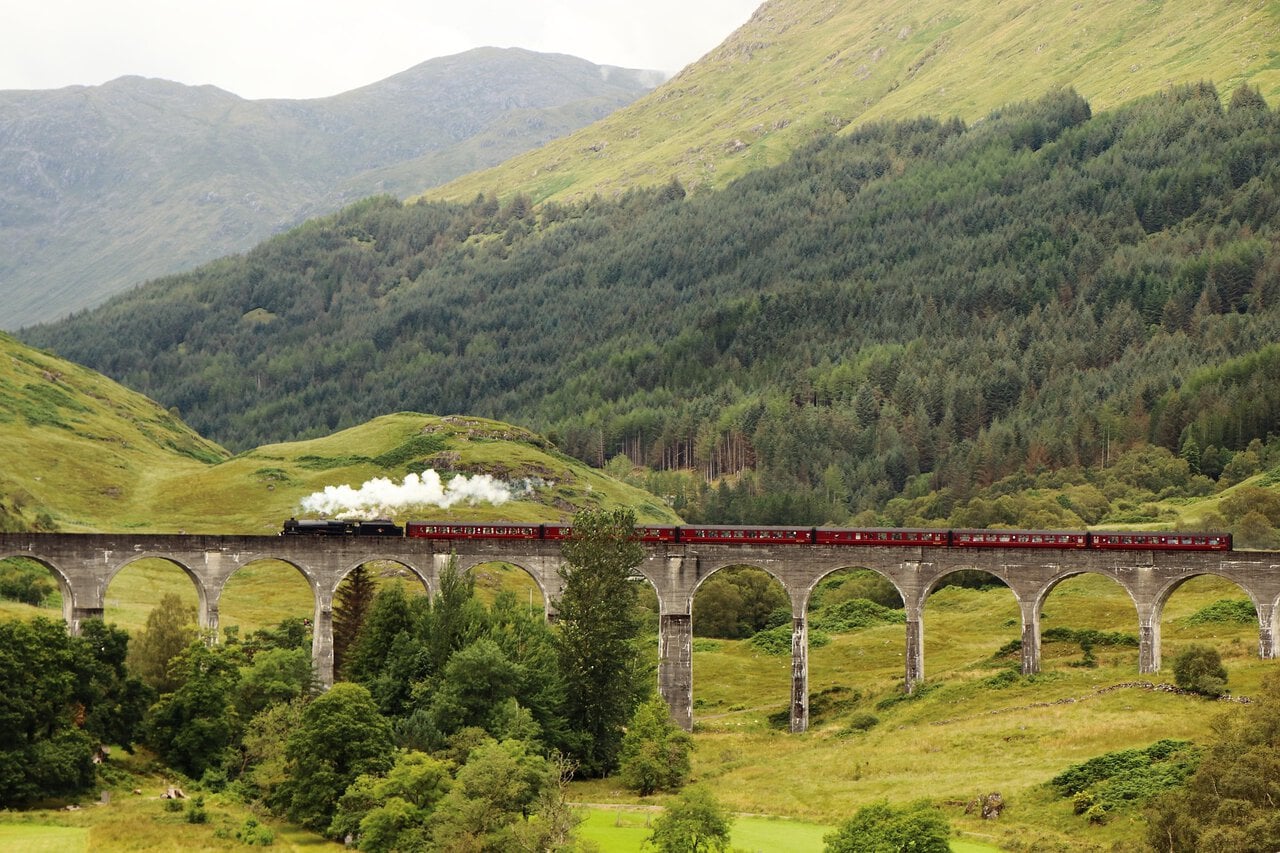
Shortly after leaving Fort William, the train travels past Loch Eil and then towards Glenfinnan, where the railway crosses the famous viaduct overlooking Loch Shiel. This is one of the most iconic railway views in Scotland and one of the main reasons many visitors choose to travel this route.
After Glenfinnan, the railway continues west past lochs, mountains and small villages before reaching the coast. The scenery changes again here, with sea views, small islands and fishing villages appearing as the train approaches Mallaig.
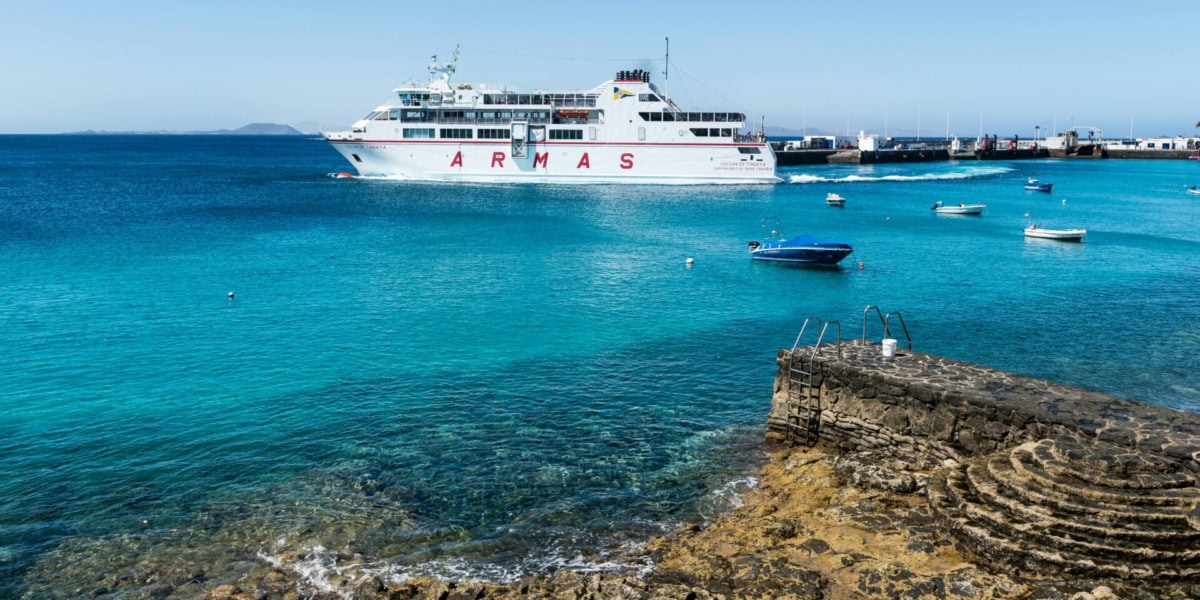
Mallaig is a small fishing port but an important transport connection. Ferries run from Mallaig to Armadale on the Isle of Skye, which makes this railway route a popular way to reach Skye without driving. Many travellers take the train from Glasgow to Mallaig and then continue to Skye by ferry.
This section of the West Highland Line is shorter than the Glasgow to Fort William section, but it is often considered the most scenic because of the viaduct, coastal scenery and views towards the islands of the west coast.
For many travellers, the full journey from Glasgow to Mallaig is one of the greatest railway journeys in Scotland and a highlight of any trip to the Highlands.
Glenfinnan Viaduct and the Harry Potter Train
One of the most famous landmarks on the West Highland Line is the Glenfinnan Viaduct, a curved railway bridge overlooking Loch Shiel and the Glenfinnan Monument. This viaduct became world famous after appearing in the Harry Potter films, where the Hogwarts Express steam train crosses the bridge on the way to Hogwarts.
Today, a steam train called The Jacobite runs between Fort William and Mallaig, and this is the train most people associate with the Harry Potter railway scenes. The Jacobite is a tourist train rather than a normal ScotRail service, and tickets are usually much more expensive than standard train tickets, but it is a very popular experience.
Even if you do not take the steam train, normal ScotRail trains also cross the Glenfinnan Viaduct, and you still get the same views across Loch Shiel and the surrounding mountains. Many travellers choose to take the regular train one way and then visit the Glenfinnan viewpoint on foot to watch the steam train cross the viaduct.
There is a visitor centre and walking path near Glenfinnan where you can walk up the hill and look down over the viaduct. This viewpoint is one of the most photographed locations in Scotland, especially when the steam train crosses the bridge.
If you are planning a trip on the West Highland Line, Glenfinnan is one of the highlights of the journey and is often considered one of the most scenic railway locations in the UK.
Tickets, Rail Passes and Reservations
Tickets for the West Highland Line are operated by ScotRail, and prices vary depending on how early you book and whether you buy flexible or advance tickets. In general, booking in advance can save a significant amount of money, especially on longer journeys such as Glasgow to Fort William or Glasgow to Mallaig.
There are usually three main ticket types available: Advance, Off-Peak and Anytime. Advance tickets are usually the cheapest but are only valid on a specific train, while Off-Peak and Anytime tickets offer more flexibility but are more expensive.
Rail passes are also valid on the West Highland Line. Interrail Passes and BritRail Passes can both be used on this route, which can make the journey much cheaper if you are travelling around Scotland by train rather than making just one trip.
Railcards can also reduce ticket prices by around one third, and these include Senior Railcards, Two Together Railcards, Family & Friends Railcards and 16–25 Railcards. If you are travelling more than once by train in Scotland, a railcard can often pay for itself very quickly.
For official timetables, ticket information and rail travel updates, you can check the official ScotRail website, which is the main operator for this route.
This is usually the best place to check train times, engineering works and ticket options before travelling.
Best Seats for Scenic Views
One of the most common questions about the West Highland Line is which side of the train has the best views. The answer depends on which direction you are travelling, but in general both sides of the train have good scenery at different points along the route.
When travelling from Glasgow to Fort William, many of the best views of lochs and mountains are on the left-hand side of the train, especially in the earlier part of the journey and across Rannoch Moor. However, there are also good views on the right-hand side in certain sections, particularly near rivers and glens.
On the Fort William to Mallaig section, the left-hand side again usually has the best views, especially when crossing the Glenfinnan Viaduct and travelling along the coast towards Mallaig. If possible, try to sit on the left-hand side when travelling west towards Mallaig and the right-hand side when travelling back towards Glasgow.
If the train is not very busy, it is often possible to move seats during the journey, especially after major stops like Crianlarich or Fort William. Many people move around the train to get better views or photographs.
The most important thing is simply to choose a window seat, because this is a journey where you will spend most of the time looking out of the window rather than using your phone or reading a book.
West Highland Line Day Trips and Travel Ideas
The West Highland Line can be used not only for long journeys but also for day trips from Glasgow or Fort William. Several parts of the route are suitable for day trips if you do not want to travel the full length of the railway.
A popular option is Glasgow to Fort William as a long day trip, returning later the same day. This is a long journey but very scenic, and it allows you to see much of the Highland scenery without needing a car.
Another popular option is Fort William to Mallaig and back in one day, which includes the Glenfinnan Viaduct, Loch Eilt and coastal scenery near Mallaig. This is one of the most scenic day trips in Scotland and is much shorter than the full Glasgow to Mallaig journey.
Some travellers also take the train to Glenfinnan, walk to the viaduct viewpoint, and then return later the same day. This is a good option if you want to see the viaduct and the steam train without travelling the full route.
The railway can also be combined with ferries and buses to create longer travel routes, such as Glasgow → Mallaig → Isle of Skye → Inverness, which is one of the classic Scotland travel routes using public transport.
Connecting Travel Routes and Ferry Links
One of the reasons the West Highland Line is such an important railway is that it connects with ferries, buses and other rail routes across the Scottish Highlands and islands. This makes it possible to travel across large parts of Scotland without a car.
At Mallaig, ferries operate to Armadale on the Isle of Skye, and this is one of the most popular ways to reach Skye using public transport. Many travellers take the train from Glasgow to Mallaig, the ferry to Skye, then continue by bus across Skye and return to the mainland via Kyle of Lochalsh and Inverness. This creates a circular Highland travel route using trains and ferries.
At Fort William, bus connections run to Glencoe, Oban, Inverness and the Isle of Skye. Fort William is also a popular base for walking and outdoor activities, including Ben Nevis and Glen Nevis.
The West Highland Line also connects with other rail routes. From Glasgow, trains run to Edinburgh, Inverness, Aberdeen and the south of Scotland, while in Inverness you can connect to scenic railway lines such as the Kyle of Lochalsh Line and the Far North Line to Thurso and Wick.
This means you can create longer rail journeys such as:
Glasgow → Fort William → Mallaig → Isle of Skye → Kyle of Lochalsh → Inverness
This is one of the most scenic public transport travel routes in Scotland and is often recommended for visitors who want to explore the Highlands without driving.

Rupert’s Handy Travel Tips
Planning a trip on the West Highland Line? Here are a few useful tips to make the journey smoother:
- Book early in summer: Trains on the West Highland Line can be very busy during peak tourist season, especially services to Mallaig.
- Choose a window seat: This is one of the most scenic rail journeys in Scotland, so a window seat makes a big difference.
- Consider splitting the journey: Staying overnight in Fort William or Mallaig makes the trip more relaxed.
- Combine train and ferry: You can travel Glasgow → Mallaig → Isle of Skye → Inverness using public transport.
Want to meet the reindeer behind our travel tips? Find out more in our page Who is Rupert?.
Frequently Asked Questions About the West Highland Line
How long is the West Highland Line journey?
The full journey from Glasgow to Mallaig takes around five hours, while the journey from Glasgow to Fort William takes around four hours depending on the service.
Is the West Highland Line the most scenic train in Scotland?
Many people consider it one of the most scenic railway journeys in Scotland, along with the Kyle of Lochalsh line and the Far North Line.
Do you need to reserve seats on the West Highland Line?
Seat reservations are recommended, especially during summer and on trains to Mallaig, but they are not always compulsory on ScotRail services.
Can you do the West Highland Line as a day trip?
Yes, but the best day trip is usually Fort William to Mallaig and back. Glasgow to Mallaig in one day is possible but very long.
Is the Jacobite Steam Train the same as the normal train?
No, the Jacobite is a tourist steam train between Fort William and Mallaig, while ScotRail runs normal passenger trains on the same route.
Further Reading & Related Scotland Travel Guides
If you are planning to travel around Scotland by train, ferry or public transport, these guides will help you plan routes, tickets and travel across the Highlands and islands.
Our ScotRail Guide explains train routes across Scotland, rail passes and scenic railway journeys including the West Highland Line and Kyle Line.
If you are travelling overnight between London and Scotland, see our Caledonian Sleeper Guide, which covers routes, cabins and booking tips.
For island travel from Mallaig and other ferry ports, our CalMac Ferry Guide explains ferry routes to the Scottish islands and how to travel with a car.
Many Highland rail journeys connect through the Highlands capital, so our Inverness Travel Guide covers transport, accommodation and travel planning in the region.
If your journey includes the islands, our Isle of Skye Travel Guide includes scenic drives, villages, castles and places to visit on Skye.
Last Updated
This guide was last updated in April 2026. Train timetables, ticket prices and ferry connections may change, so always check official transport websites before travelling.
Affiliate Disclosure
This page contains affiliate links. If you click through and make a booking or purchase, we may earn a small commission at no extra cost to you. This helps support our work and allows us to continue providing detailed travel guides and transport information. We only recommend services and travel tools that we have researched and believe provide good value for travellers.