Reviewed by our editorial team Updated
Discover One of Europe’s Most Extraordinary Destinations
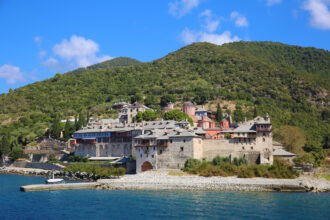
Unlike anywhere else in Europe, Mount Athos is not simply a tourist attraction or a historic site. It’s a self-governing monastic republic, home to 20 Eastern Orthodox monasteries, around 1,600 monks, and more than 1,000 years of uninterrupted religious tradition. Designated a UNESCO World Heritage Site, the peninsula has remained largely unchanged for centuries, preserving ancient customs, Byzantine treasures and a unique way of life that continues to this day.
Located on the easternmost finger of the Halkidiki Peninsula in northern Greece, Mount Athos is often known as the Holy Mountain. Although it forms part of Greece, it enjoys a remarkable degree of autonomy, with its own administrative capital, strict entry regulations and centuries-old traditions that are carefully protected.
Visiting Mount Athos is unlike visiting any other destination. Entry is limited to a small number of visitors each day, advance permits are essential, and only men are permitted to enter the peninsula itself. Once inside, visitors travel between monasteries by ferry, speedboat, shared minibus, sea taxi and ancient walking paths, staying overnight as guests of the monasteries rather than in conventional hotels.
This guide explains everything you need to know before you go, from obtaining your Diamonitirion visitor permit and reaching Ouranoupoli, to understanding the ferry network, travelling around the peninsula and preparing for one of the world’s most unique travel experiences.
Getting to Mount Athos
For almost every visitor, the journey to Mount Athos begins in Ouranoupoli, the small coastal town that acts as the main gateway to the Holy Mountain.
There is no public road entrance for ordinary visitors, no railway station on the peninsula and no airport nearby. That means the normal route is to travel first to Thessaloniki, continue by road to Ouranoupoli, collect your Diamonitirion permit, and then board a ferry or speedboat.
Thessaloniki is by far the easiest starting point. It has the nearest international airport, the nearest major railway station and the best long-distance bus connections. From central Thessaloniki, Ouranoupoli is around 130 kilometres away, with the road journey usually taking between two and two-and-a-half hours.
The most affordable option is usually a KTEL coach, although visitors should check the current departure point and timetable carefully before travelling. Services may not always align conveniently with the early morning ferries, which is why many pilgrims choose to arrive in Ouranoupoli the previous afternoon or evening.
Hiring a car gives you more flexibility, particularly if you’re combining Mount Athos with a wider trip around Halkidiki. Cars cannot be taken into the monastic republic by ordinary visitors, so you’ll need to leave the vehicle in one of the car parks around Ouranoupoli while you’re away.
A taxi or private transfer is the simplest option for travellers arriving at Thessaloniki Airport, especially if travelling in a group or carrying heavy luggage. It costs considerably more than the coach, but removes the need to travel into Thessaloniki before continuing south.
| Starting Point | Typical Route | Approximate Time |
|---|---|---|
| Thessaloniki Airport | Private transfer, taxi or hire car | 2–2½ hours |
| Thessaloniki city centre | KTEL coach | Around 2½ hours |
| Thessaloniki city centre | Hire car or taxi | Around 2 hours |
| Athens | Flight to Thessaloniki, then road transfer | Around 4–5 hours overall |
| Athens | Train to Thessaloniki, then KTEL coach | Around 7–8 hours overall |
| Athens | Drive directly to Ouranoupoli | 6½–7½ hours |
Travelling from Athens is perfectly possible, but it requires more planning. The quickest route is normally to fly to Thessaloniki and continue by road. Travelling by train is slower but works well if you’re already touring Greece by rail, while driving gives maximum flexibility but involves a long journey of more than 600 kilometres.
For most visitors, the best plan is to stay overnight in Ouranoupoli. This gives you time to check into your hotel, confirm your ferry arrangements, collect supplies and avoid the stress of trying to reach an early departure from Thessaloniki on the same morning.

An Easier Arrival in your destination
For travellers who prefer to have their onward transport sorted before flying, Welcome Pickups provides pre-booked private transfers in your destination.
This gives you a door-to-door alternative to navigating local transport or joining a taxi queue immediately after your flight.
Want to compare transfer options in your destination? You can also check another transfer provider before booking.
See hotel options and places to stay for your trip.
Browse hotelsBrowse apartments, homes and self-catering accommodation.
Browse rentalsCompare hotel deals from multiple booking sites in one search.
Compare pricesCan Anyone Visit Mount Athos?
This is the most important question to understand before planning your trip.
No. Entry to Mount Athos is strictly controlled, and the rules have remained largely unchanged for centuries.
Only a limited number of visitors are permitted to enter each day, and every male visitor must obtain an official permit, known as a Diamonitirion, before arriving. Applications should be made well in advance, particularly during the busy pilgrimage season, as permits are limited and demand can be high.
Under the long-standing Avaton tradition, women are not permitted to enter Mount Athos. This rule has existed for more than a thousand years and continues to be observed today. In addition, vessels are generally required to remain at least 500 metres from the shoreline, protecting the privacy of the monasteries and those who live there.
Although these restrictions may seem unusual, they are central to preserving Mount Athos as one of the world’s oldest continuously inhabited monastic communities.
For visitors who cannot enter, or simply prefer not to undertake the pilgrimage, sightseeing cruises from Ouranoupoli provide an excellent alternative, allowing everyone to admire the spectacular monasteries and coastline from the sea while learning about their remarkable history.
What Is a Diamonitirion?
A Diamonitirion is the official visitor permit required to enter Mount Athos.
Issued by the Pilgrims’ Bureau, this document acts as both your entry permit and identification while you’re on the peninsula. You’ll need to carry it with you throughout your stay, as it may be checked when boarding ferries, arriving at Dafni or checking into monasteries.
The permit is normally valid for up to four days, although extensions may sometimes be granted under certain circumstances.
Applications should be submitted well before your intended travel date, especially during spring, summer and major Orthodox religious festivals, when the daily visitor allocation is often becomes fully booked.
Once your application has been approved, you’ll collect your Diamonitirion from the Pilgrims’ Office in Ouranoupoli before boarding the ferry to Mount Athos. When collecting your permit, you’ll also need to pay the permit fee in person. This is normally paid in cash, so it’s important to bring sufficient euros with you, as card payments may not always be available. It’s a good idea to arrive in Ouranoupoli with plenty of time before your ferry departs to complete the collection and payment process without feeling rushed.
Without this permit, you will not be allowed to board the ferry or enter the autonomous monastic republic, making it the single most important document you’ll need for your visit.
How to Apply for a Mount Athos Permit
Before you can visit Mount Athos, you’ll need to obtain a Diamonitirion, the official visitor permit issued by the Mount Athos Pilgrims’ Bureau. Think of it as a visa for the Holy Mountain. Without one, you won’t be allowed to board the ferry from Ouranoupoli or enter the autonomous monastic republic.
Because visitor numbers are tightly controlled, it’s important to apply as early as possible. During quieter periods you may occasionally secure a permit with only a few weeks’ notice, but this shouldn’t be relied upon. If you’re travelling between April and October, or around major Orthodox feast days, applications should ideally be submitted three to six months before your planned visit. Many experienced pilgrims begin planning even earlier to maximise their chances of obtaining their preferred dates.
Applications are normally made by email to the Pilgrims’ Bureau. You’ll need to provide your full name exactly as it appears in your passport, your nationality, passport number, date of birth, religion, intended dates of entry and contact details. A scanned copy of your passport is usually requested as part of the application.
Once your request has been reviewed, you’ll receive confirmation if your permit has been approved. Processing times vary depending on demand, but during quieter periods decisions can often be returned within a few working days, while applications for peak dates may take longer because of the high volume of requests and the limited daily allocation.
Your permit isn’t posted to you. Instead, you’ll collect the original Diamonitirion from the Pilgrims’ Office in Ouranoupoli on the morning of your departure. You’ll need to present the same passport you used when applying and pay the permit fee before travelling to the harbour.
The permit fee must be paid in cash — cards are not accepted at the Pilgrims’ Office. As a guide, expect to pay around €25 for Orthodox pilgrims, €30 for non-Orthodox visitors, and €10 for students with valid ID or Orthodox clergy. Large families (four or more children) are usually issued the permit free of charge. It’s sensible to bring the exact amount in euros, as change isn’t always readily available during busy periods. These fees are periodically revised, so it’s worth confirming the current amount when you apply.
| Quick Facts | |
|---|---|
| Recommended application time | 3–6 months before travel |
| Shortest practical lead time | A few weeks in quiet periods (subject to availability) |
| Daily General Permits | 120 per day |
| Orthodox allocation | 110 permits |
| Non-Orthodox allocation | 10 permits |
| Permit validity | Up to 3 nights (4 days) |
| Collection point | Pilgrims’ Office, Ouranoupoli |
One important point is often overlooked. Obtaining a Diamonitirion does not automatically guarantee accommodation. You’ll still need to contact the monasteries individually to arrange overnight stays, as each monastery manages its own guest rooms and availability independently.

Before You Board: What Happens in Ouranoupoli
Everything you need before entering Mount Athos is concentrated within a few minutes’ walk of the Ouranoupoli Municipal Car Park, making it surprisingly straightforward once you know where everything is.
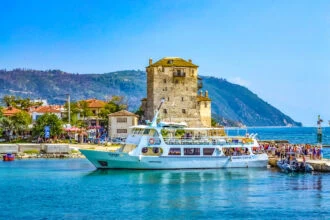
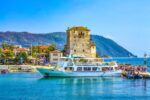
If you’re arriving by car, the Municipal Car Park is the most convenient place to leave your vehicle while you’re on the Holy Mountain. During busy summer periods it can fill early, but there is a second large car park called Parking Kivitos Ouranoupolis just a little further along the road. If you’re standing by the Byzantine Tower, simply turn left and continue for a short distance.
The KTEL bus stop is also beside the Byzantine Tower, making it easy to arrive from or return to Thessaloniki without needing a taxi. At the time of writing, buses to Thessaloniki normally depart at 8:00am, 1:00pm, 3:00pm and 6:00pm. Local buses also serve Aristotelis, Camping Ouranoupoli, Theoxenia Hotel, Akti Ouranoupoli, Eagles Palace and Alexander Hotel at approximately 8:00am, 9:30am, 1:00pm, 3:00pm and 6:00pm. As timetables can change, it’s always worth confirming departure times locally.
Immediately beside the Municipal Car Park you’ll find the Microathos Shipping Company ticket office, where tickets can be purchased for the company’s ferries and speedboats serving Mount Athos.
From there, walk down the narrow road running alongside the Municipal Car Park towards the harbour. A short distance along you’ll reach the Pilgrims’ Office, where everyone collecting a Diamonitirion must report before travelling. The office is normally open from 6:00am until 12:30pm. Passports are checked outside before you enter the building. Inside, staff will confirm your details, ask your religion, collect the permit fee and issue your official Diamonitirion, which you’ll need throughout your stay on Mount Athos.
Continue a little further and you’ll pass Pick & Go, a well-stocked supermarket that is ideal for buying drinks, snacks and other supplies before boarding your ferry. Once you enter Mount Athos there are very few opportunities to shop, so this is the last convenient place to stock up.
At the bottom of the road, just around the corner near the waterfront, you’ll find the Agioreitikes Grammes ticket office. If you’re travelling on one of their ferries or speedboats, this is where you’ll collect or purchase your ticket before walking to the harbour.
From the ticket office it’s only a five to six minute walk along the waterfront, past the restaurants and cafés, to reach the ferry departure point. All of the Mount Athos boats depart from this same area, making it easy to find your vessel even if it’s your first visit.
| Location | Why it’s important |
|---|---|
| Ouranoupoli Municipal Car Park | Main parking area for pilgrims |
| Parking Kivitos Ouranoupolis | Overflow parking during busy periods |
| Byzantine Tower | Main landmark and KTEL bus stop |
| Pilgrims’ Office | Collect your Diamonitirion permit |
| Microathos Shipping Company | Tickets for Microathos ferries and speedboats |
| Agioreitikes Grammes Ticket Office | Tickets for Axion Estin and Hodegetria services |
| Pick & Go Supermarket | Last chance to buy food, drinks and supplies |
| Harbour | Departure point for all Mount Athos ferries and sightseeing cruises |
Crossing from Ouranoupoli to Mount Athos
Every pilgrimage to Mount Athos begins at the small harbour of Ouranoupoli. Once you’ve collected your Diamonitirion permit, you’ll make the crossing by ferry or speedboat, with your choice of service determining exactly where you end up and what happens next.
Unlike most destinations, Mount Athos has very few roads, making the ferry network an essential part of everyday life. Pilgrims, monks, residents, supplies and vehicles all arrive by sea, with several departures operating each morning throughout the year. Sailings normally run every day, although severe winter weather can occasionally cause delays or cancellations.
Three main services depart from Ouranoupoli, each covering different ground:
The Odigitria speedboat is the quickest option, completing the crossing to Dafni in around 45 to 50 minutes. It normally departs twice each morning, at approximately 08:45 and 11:00, with a one-way fare of around €18. As a passenger-only vessel, it’s ideal for visitors heading directly to Dafni or Karyes, but Dafni is its final stop, so anyone continuing further will need to change onto another boat.
The Axion Estin main ferry provides a slower but more economical crossing, and it doesn’t run straight to Dafni. Departing at around 09:45 each morning, it calls at several west-coast monastery piers on the way, including Hilandar, Zografou, Konstamonitou, Docheiariou, Xenophontos and St Panteleimon, before finishing at Dafni around two hours after leaving Ouranoupoli, with a typical fare of around €11. As well as passengers, it carries supplies, cargo and authorised vehicles, making it the workhorse of the Mount Athos transport network.
The Agia Anna ferry, along with its faster counterpart the Mikra Agia Anna speedboat, takes the opposite approach. Both depart Ouranoupoli early (the ferry around 06:30 on weekdays), travel directly to Dafni, and then keep going south along the coast rather than stopping there. This makes them the right choice if your monastery lies south of Dafni, since you can often stay on the same boat the whole way rather than changing.
Outbound from Ouranoupoli (Monday–Friday)
| Agia Anna | Mikra Agia Anna | Hodegetria | Axion Estin | Hodegetria | Mikra Agia Anna | |
|---|---|---|---|---|---|---|
| Company | Microathos | Microathos | Agioreitikes Grammes | Agioreitikes Grammes | Agioreitikes Grammes | Microathos |
| Type | Ferry | Speedboat | Speedboat | Ferry | Speedboat | Speedboat |
| Ouranoupoli | 06:30 | 08:00 | 08:45 | 09:45 | 10:40 | 11:45 |
| Hilandar Pier | — | — | on request | ~10:45 | on request | — |
| Zografou Pier | — | — | on request – 09:05 | ~10:55 | on request | — |
| Konstamonitou Pier | — | — | on request – 09:10 | ~11:05 | on request | — |
| Docheiariou Pier | — | — | on request -09:15 | ~11:15 | on request | — |
| Xenophontos Pier | — | — | on request – 09:20 | ~11:25 | on request | — |
| St Panteleimon Pier | — | — | on request – 09:25 | ~11:35 | on request | — |
| Dafni | ~08:05 | ~08:40 | 09:35 | 11:45 | 11:30 | ~12:45 |
| Simonopetra Pier | 08:15 | en route | — | — | — | 12:55 |
| Gregoriou Pier | 08:25 | en route | — | — | — | 13:05 |
| Dionysiou Pier | 08:35 | en route | — | — | — | 13:15 |
| Agiou Pavlou Pier | 08:45 | en route | — | — | — | 13:25 |
| New Skete | 08:55 | en route | — | — | — | 13:35 |
| Agia Anna Skete | 09:05 | en route | — | — | — | 13:45 |
| Karoulia | 09:15 | en route | — | — | — | 14:00 |
| Kerasia | 09:25 | en route | — | — | — | 14:10 |
| Kafsokalyvia | ~09:35 | ~09:15 | — | — | — | 14:20 |
*Fares, departure times and stop order may vary slightly depending on the season and are always worth reconfirming before you travel.
Saturday: Agia Anna departs 07:00 instead of 06:30. Southern piers only run as far as St Anne’s Skete, not Kafsokalyvia.
Sunday: Agia Anna departs 10:30 only. Again, only as far as St Anne’s Skete.
Cost (one-way, approx.): Hodegetria €18 · Axion Estin €11.10 · Agia Anna ~€12 to final stop · Mikra Agia Anna ~€27.60 to final stop (reservation required, at least 10 days ahead).
Whichever service you choose, it’s important to tell the ticket office which monastery you’re visiting when purchasing your ticket. Some vessels only call at smaller monastery piers if passengers have requested to disembark there, and choosing the right boat from the outset can save you a long wait at Dafni later in the day.
Search routes and flight options for your journey.
Search flightsUse an eSIM to get online without hunting for a local SIM after arrival.
See eSIM optionsBook a private airport transfer in advance and have your ride planned before you arrive.
Check transfersReturn to Ouranoupoli (Monday–Friday)
| Agia Anna | Mikra Agia Anna | Hodegetria | Axion Estin | Hodegetria | Mikra Agia Anna | Agia Anna | |
|---|---|---|---|---|---|---|---|
| Company | Microathos | Microathos | Agioreitikes Grammes | Agioreitikes Grammes | Agioreitikes Grammes | Microathos | Microathos |
| Type | Ferry | Speedboat | Speedboat | Ferry | Speedboat | Speedboat | Ferry |
| Kafsokalyvia | 09:35 | 09:15 | — | — | — | 13:00 | 14:20 |
| Karoulia | 09:55 | en route | — | — | — | en route | |
| Agia Anna Skete | 10:05 | en route | — | — | — | en route | |
| New Skete | 10:15 | en route | — | — | — | en route | |
| Agiou Pavlou Pier | 10:25 | en route | — | — | — | en route | |
| Dionysiou Pier | 10:35 | en route | — | — | — | en route | |
| Gregoriou Pier | 10:45 | en route | — | — | — | en route | |
| Simonopetra Pier | 10:55 | en route | — | — | — | en route | |
| Dafni | 11:05 | (continues) | 09:35 | 12:10 | 12:15 | 13:45 | 15:45 |
| St Panteleimon Pier | — | — | ~12:20 | ~12:20 | ~12:20 | — | — |
| Xenophontos Pier | — | — | on request | ~12:30 | on request | — | — |
| Docheiariou Pier | — | — | on request | ~12:40 | on request | — | — |
| Konstamonitou Pier | — | — | on request | ~12:50 | on request | — | — |
| Zografou Pier | — | — | on request | ~13:00 | on request | — | — |
| Hilandar Pier | — | — | on request | ~13:10 | on request | — | — |
| Ouranoupoli | — | 11:40 | 10:25 | 14:10 | 13:05 | 15:30 | 17:10 |
Saturday: Southern departures start from St Anne’s Skete rather than Kafsokalyvia. Agia Anna: Dafni→Ouranoupoli departs 14:45. Mikra Agia Anna: Dafni→Ouranoupoli departs 11:00 / 14:45.
Sunday: Agia Anna: Dafni→Ouranoupoli departs 14:30. Mikra Agia Anna: Dafni→Ouranoupoli departs 10:15 / 13:15.
A connecting bus to Thessaloniki meets the Agia Anna ferry’s arrival in Ouranoupoli most days at around 18:00 (Mikra Agia Anna connects at 13:00 / 15:00).
Continuing Beyond Dafni
Dafni is the principal port of Mount Athos, but for many pilgrims it isn’t the final destination, and what happens next depends entirely on which boat you arrived on.
If you travelled on the Agia Anna ferry or Mikra Agia Anna speedboat, you don’t need to do anything at all. Both continue straight past Dafni, following the coastline south to Simonopetra, Gregoriou, Dionysiou, Agiou Pavlou, New Skete, Agia Anna Skete, Karoulia, Kerasia and finally Kafsokalyvia, the closest pier for reaching Great Lavra. On weekends, the route sometimes terminates a little earlier at Agia Anna Skete rather than continuing all the way, so it’s worth checking the day’s schedule if you’re travelling on a Saturday or Sunday.
If you arrived on the Odigitria speedboat or the Axion Estin main ferry, both of which end their journey at Dafni, you’ll need to change onto a different service to continue south. In practice, this usually means waiting for the next Agia Anna ferry or Mikra Agia Anna speedboat departure, so it’s worth checking the timetable in advance rather than assuming a connection will be waiting for you.
Two ferry operators between them cover almost the entire peninsula:
Agioreitikes Grammes operates the western network linking Ouranoupoli with Dafni, using the Odigitria speedboat and Axion Estin ferry. The company also runs the Panagia speedboat, a completely separate service departing from Ierissos rather than Ouranoupoli, serving the eastern coastline: Hilandar, Esphigmenou, Vatopedi, Pantokratoros, Stavronikita, Iviron, Philotheou and Karakallou, before finishing at Morfonou, the nearest pier for Great Lavra from this side of the peninsula.
Microathos Shipping Company operates the southern network beyond Dafni, using the Agia Anna ferry and Mikra Agia Anna speedboat described above.
Rather than competing with one another, these operators provide a coordinated transport network covering almost the entire peninsula. Knowing which operator, and which specific boat, serves your monastery before you travel can save real time and help you choose the most convenient sailing from Ouranoupoli.
For onward travel by land, the majority of pilgrims arriving at Dafni continue by bus to Karyes, the administrative capital of Mount Athos. Bus departures are generally timed to meet the arrival of the morning ferries, with the journey typically taking around 30 to 40 minutes. From Karyes, pilgrims can transfer to shared taxi minibuses, continue on foot using the ancient pilgrim paths, or reach Koutloumousiou Monastery, just a 10-minute walk away.
A Second Sailing You Can Only Join at Dafni
Not every service starts in Ouranoupoli. Agia Anna does a second full round trip to Kafsokalyvia each day, using the same boat once it’s already back at Dafni from the morning run, useful if you’re at Dafni midday and want to head south again, but it doesn’t appear on the main outbound table since nobody boards it from Ouranoupoli.
| Agia Anna (2nd round trip) | |
|---|---|
| Company | Microathos |
| Type | Ferry |
| Dafni (departs) | 12:45 |
| Simonopetra to Kerasia | en route |
| Kafsokalyvia (arrives) | ~14:00 |
This is the same boat that carried the morning’s passengers — which is why anyone who took the 08:05 Dafni departure and is still waiting at Dafni for the 15:45 sailing home has, in effect, watched their own boat leave without them for a second job in between.
From Ierissos to Mount Athos
The east coast works very differently, one company, one boat, one round trip a day. If Vatopedi, Pantokrator, Stavronikita, Iviron or the other east-coast monasteries are on the itinerary, this is the only sailing available, so there’s no fallback if it’s missed.
Company: Agioreitikes Grammes · Boat: Panagia · Type: Speedboat · Cost: approx. €15 for the full journey
| Port | Outbound | Return |
|---|---|---|
| Ierissos | 08:35 | 13:00 |
| Hilandar Pier (Ag. Vasileos) | 09:05 | 12:20 |
| Vatopedi Pier | 09:20 | 12:00 |
| Pantokrator Pier | 09:35 | 11:45 |
| Stavronikita Pier | 09:45 | 11:30 |
| Iviron Pier | 09:55 | 11:15 |
| Philotheou Pier | 10:10 | 11:00 |
| Karakallou Pier | 10:20 | 10:50 |
| Morfonou | 10:30 | 10:40 |
Every stop past Ierissos is booking-only, the same as the southern route from Ouranoupoli — mention the specific monastery when reserving, or the boat won’t call there. There’s no sea connection at all between this side and Ouranoupoli or Dafni; Ierissos is a separate town, about 15km away by road.
Ferry & Speedboat Ticket Prices
Travelling around Mount Athos is relatively inexpensive, with fares depending on the operator, the distance travelled and whether you choose a conventional ferry or a speedboat. As a general guide, expect to pay between €10 and €20 for a single journey, with the faster speedboats costing slightly more than the larger ferries.
The Main Ferry between Ouranoupoli and Dafni costs €9.50 for the full journey, while the Odigitria Speedboat costs approximately €15 for the same route. Shorter journeys to monastery piers such as Dochiariou, Xenophontos and Saint Panteleimon are charged according to distance, and the Agia Anna Ferry also uses distance-based pricing, with the longest journeys costing around €12.
Tickets for the Main Ferry can be purchased from the Agioreitikes Grammes ticket office in Ouranoupoli before departure, while passengers boarding at intermediate monastery piers can usually buy their tickets onboard. Odigitria Speedboat tickets should be reserved in advance, particularly if you’re boarding or leaving at one of the monastery piers, as the speedboat only calls where passengers have booked. Tickets for the Agia Anna Ferry are normally purchased directly onboard and reservations are generally not required.
Although some ticket offices may accept payment cards, the ferry operators do not clearly state that card payments are accepted onboard. For that reason, it’s sensible to carry sufficient cash in euros to cover all ferry and speedboat tickets, together with any food, drinks or small purchases you may make during your visit. Carrying €30 to €40 per person is usually more than enough for a typical day trip.
Which Pier Serves Which Monastery
Each pier on Mount Athos takes its name directly from the monastery it serves, so once you know your route, working out where to get off is straightforward.
Travelling on the Axion Estin main ferry from Ouranoupoli, you’ll pass several west-coast piers before the boat reaches its final stop at Dafni. The first is Hilandar, the Serbian monastery whose pier here is known as Giovanitsa, one of the oldest and most historically significant houses on the mountain and a centre of Serbian Orthodox tradition for over 800 years.
Next comes Zografou, founded by Bulgarian monks and still home to a Bulgarian community today, its main church decorated with frescoes and a library holding medieval manuscripts. Konstamonitou follows, one of the smaller and quieter monasteries on this stretch of coast. Docheiariou is known for its striking architecture and richly frescoed main church, alongside a treasury of relics, icons and manuscripts.
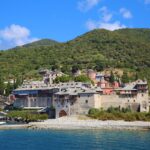
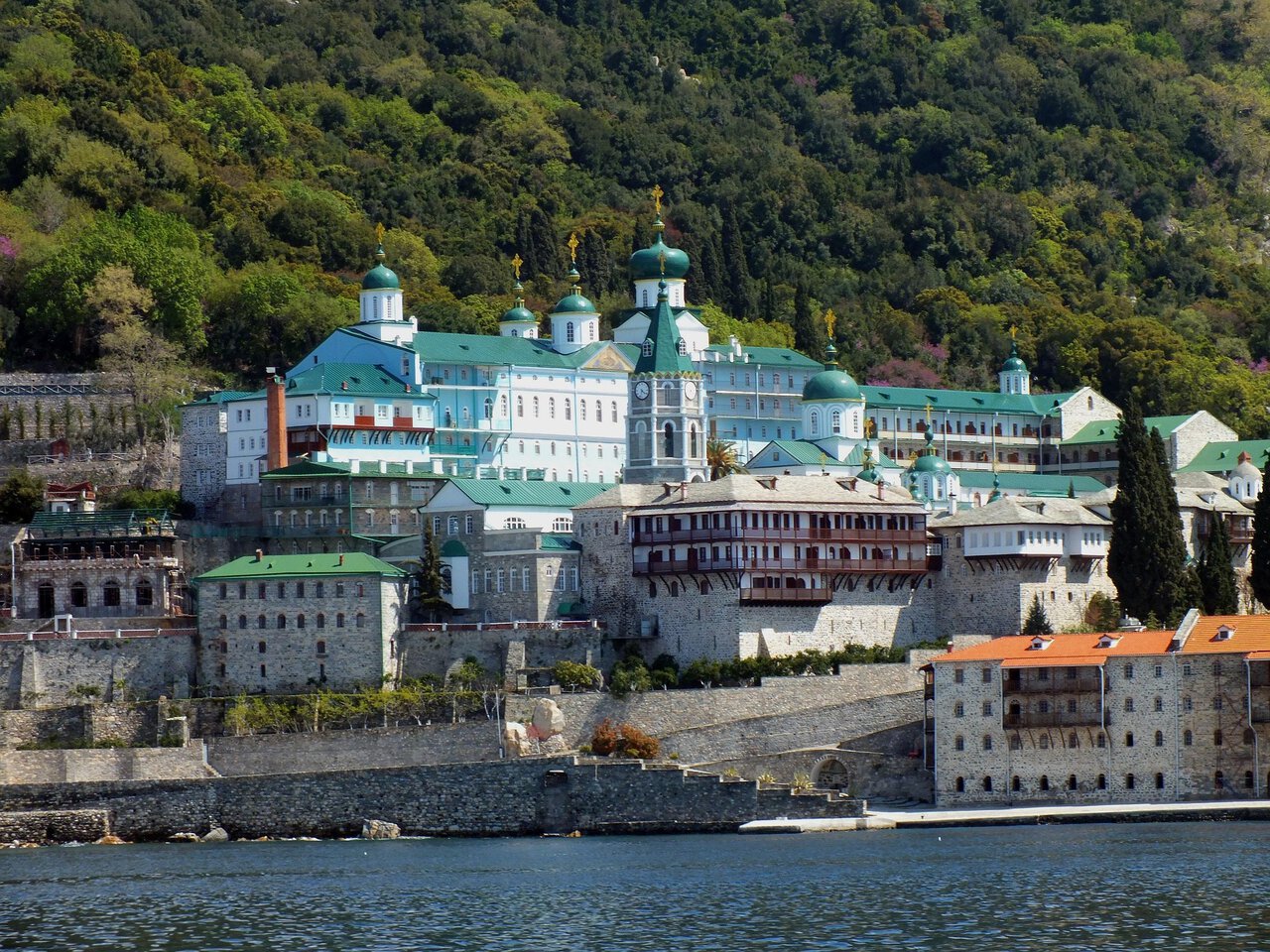
Xenophontos, founded in the 10th century, has an equally impressive collection of manuscripts and rare books housed within its library. The final stop before Dafni is St Panteleimon, instantly recognisable from the water thanks to its distinctive green domes and large waterfront setting, reflecting the monastery’s long-standing links with Russia and the wider Orthodox world.
South of Dafni, reached by the Agia Anna ferry or Mikra Agia Anna speedboat, the coastline becomes considerably more dramatic. Simonopetra is the first and most famous stop, its seven-storey buildings appearing to cling impossibly to a sheer cliff above the Aegean, and one of the most photographed monasteries on the mountain. Gregoriou and Dionysiou both occupy similarly breathtaking cliff-top positions a little further along, making the journey between them one of the most memorable stretches of coastline anywhere on the peninsula.
Agiou Pavlou is well known as a traditional starting point for pilgrims climbing the summit of Mount Athos itself. Beyond it, New Skete and Agia Anna Skete mark the beginning of a quieter, more remote stretch of coast associated with the hesychast tradition of solitary prayer, followed by the tiny hermit communities of Karoulia and Kerasia, both built into the cliffs and reachable only by boat or a demanding coastal path. The route terminates at Kafsokalyvia, the closest pier for reaching Great Lavra, the oldest monastery on the mountain and the traditional starting point for pilgrims climbing to the summit.
The eastern coast is served entirely separately, by the Panagia speedboat departing from Ierissos rather than Ouranoupoli. Hilandar has a second pier on this side too, known as Ag. Vasileos, making it one of the only monasteries reachable from either coast. Esphigmenou follows, one of the most traditionally conservative communities on the mountain, with a fortress-like waterfront setting. Vatopedi is next, one of the largest and wealthiest monasteries on Mount Athos, renowned for its magnificent churches, ancient manuscripts and its collection of Byzantine icons.
Pantokrator enjoys a beautiful coastal setting and houses notable Byzantine artwork, while neighbouring Stavronikita, the smallest of the twenty ruling monasteries, is prized for its 16th-century frescoes by the Cretan painter Theophanes and its miraculous icon of St Nicholas, known as “Streidas”. Iviron, founded by Georgian monks in the 10th century, is home to the revered Portaitissa Icon of the Virgin Mary and remains one of the most important pilgrimage stops on the mountain.
Philotheou, surrounded by woodland, is known for its peaceful atmosphere, and the route concludes at Karakallou, a historic monastery whose library holds several hundred manuscripts, before the boat reaches Morfonou, the nearest pier for continuing on to Great Lavra from this side of the peninsula.
Inland, rather than by sea, a bus from Dafni runs to Karyes, the administrative capital of Mount Athos, from where Koutloumousiou Monastery is just a ten-minute walk away, making it one of the easiest of the twenty ruling monasteries to reach without a long boat journey. From Karyes, onward minibus connections continue to other inland monasteries and sketes not directly served by any pier.
Compare hostels and lower-cost accommodation for your trip.
Search hostelsGet help with compensation, eligible lounge access and disruption support.
Explore AirHelp+Arriving before check-in or leaving later? Store your luggage and enjoy the extra time hands-free.
Store your bagsWhat Happens After You Arrive at Dafni?
For most visitors, Dafni is their first introduction to life on Mount Athos. Although it’s often described as the peninsula’s main port, don’t expect a bustling harbour. Instead, you’ll find a small waterfront settlement where ferries unload pilgrims, supplies and vehicles before continuing their journey along the coast.
As you disembark, you’ll quickly notice that Dafni is a transport hub rather than a destination. Most visitors spend only a short time here before travelling onwards to their monastery.
Your Diamonitirion may be checked again after arrival, so it’s important to keep both your permit and passport readily accessible. From the harbour, several transport options become available depending on where you’re staying.
The majority of pilgrims continue by bus to Karyes, the administrative capital of Mount Athos. Bus departures are generally timed to meet the arrival of the morning ferries, making onward travel straightforward. The journey typically takes around 30 to 40 minutes, climbing from the coast through the forested hills to the peninsula’s administrative centre. From Karyes, pilgrims can transfer to shared taxi minibuses, continue on foot using the ancient pilgrim paths or travel onwards to monasteries across the Holy Mountain.
If your monastery lies elsewhere on the peninsula, you may instead continue by speedboat, shared taxi minibus, licensed sea taxi or, for more adventurous visitors, on foot using the centuries-old network of pilgrim paths that link many of the monasteries.
Although the harbour itself is relatively small, it’s surprisingly well organised. Within a short time of arriving you’ll usually be heading inland towards Karyes or continuing your journey along the coast to your chosen monastery.
Travelling Around Mount Athos
One of the most fascinating aspects of visiting Mount Athos is that getting around feels very different from travelling anywhere else in Greece.
There are no public bus routes covering the entire peninsula, very few roads by modern standards and no private hire cars for tourists. Instead, transport has evolved to meet the needs of the monasteries, with a combination of boats, shared minibuses, sea taxis and ancient footpaths connecting communities that have existed for centuries.
For many visitors, walking becomes an important part of the pilgrimage. Historic stone paths wind through forests, olive groves and mountain valleys, linking monasteries that have welcomed pilgrims for generations. Some routes take less than an hour, while others require several hours of walking across steep terrain.
For longer journeys, shared taxi minibuses provide flexible transport between Dafni, Karyes and many of the larger monasteries. These vehicles operate throughout the day, often adjusting their schedules to meet arriving ferries and the needs of pilgrims.
Where roads don’t exist, boats remain essential. Scheduled ferries and speedboats continue along the coastline, while licensed sea taxis provide direct transfers to monasteries and sketes that are difficult to reach by land.
The result is a transport network unlike anywhere else in Europe. Rather than relying on one method of travel, most visitors combine ferries, buses, walking and occasionally sea taxis during their stay.
Planning to Walk Between the Monasteries?
While many visitors travel around Mount Athos by ferry and shared minibus, some of the Holy Mountain’s greatest experiences can only be discovered on foot. Ancient pilgrim paths link monasteries, sketes and hermitages through forests, across mountain passes and along spectacular stretches of coastline, offering a completely different perspective on this remarkable UNESCO World Heritage Site.
If you’re planning to include any walking during your visit, be sure to read our What to Do on Mount Athos Guide. It covers the best hiking routes, the climb to the 2,033-metre summit of Mount Athos, walking between monasteries, historic pilgrim paths, what to pack, fitness levels and practical advice to help you plan your route safely. Whether you’re looking for a gentle walk between neighbouring monasteries or a challenging multi-day trek across the peninsula, the guide will help you get the very best from your time on the Holy Mountain.

Sea Taxis and Speedboats
Although the scheduled ferry network serves most visitors well, there are times when a sea taxi becomes the quickest and most practical option, reaching a pier late in the day, visiting somewhere the timetabled boats don’t stop, or simply not wanting to plan a day around someone else’s departure times.
Two licensed operators run sea taxis on Mount Athos, both on a private-charter basis rather than a fixed schedule: Agia Marina, run by Agioreitikes Grammes (the same company behind the main Ouranoupoli–Dafni ferries), covering the western coast, and Archangelos, run independently, offering a similarly personalised service across the peninsula.
Pricing depends on distance and where you start from. As a guide, expect somewhere around €100 to €150 for shorter hops between nearby piers, rising to roughly €200 to €250 for a full Ouranoupoli–Dafni crossing, and up to €350–€400 for the longest journeys down to Kafsokalyvia or Great Lavra. Both operators work during daylight hours as standard, with night journeys available at roughly double the daytime rate.
Sea taxis will stop wherever you ask, including piers the scheduled ferries only serve on request, and tend to make the most financial sense for two or more people sharing a fare, or anyone whose schedule simply doesn’t line up with the ferry timetable.
Which Ferry Serves Your Monastery?
Choosing the correct boat is one of the most confusing parts of planning a visit, particularly for first-time pilgrims. Fortunately, the network is easier to understand once you know which operator serves your destination.
| Monastery or Area | Typical Route | Recommended Service |
|---|---|---|
| Dafni | Direct from Ouranoupoli | Main ferry or speedboat |
| Karyes | Ferry to Dafni, then bus | Main ferry + bus |
| Simonopetra | Western coast | Agia Anna ferry or Mikra Agia Anna |
| Gregoriou | Western coast | Agia Anna ferry or Mikra Agia Anna |
| Dionysiou | Western coast | Agia Anna ferry or Mikra Agia Anna |
| Agiou Pavlou | Western coast | Agia Anna ferry |
| Agia Anna Skete | Southern western coast | Agia Anna ferry or speedboat |
| Kafsokalyvia | Southern peninsula | Agia Anna ferry |
| Vatopedi | Eastern coast | Panagia speedboat from Ierissos |
| Iviron | Eastern coast | Panagia speedboat from Ierissos |
| Pantokrator | Eastern coast | Panagia speedboat from Ierissos |
| Philotheou | Eastern coast | Panagia speedboat from Ierissos |
| Karakallou | Eastern coast | Panagia speedboat from Ierissos |
While these are the most common routes, sailing schedules can change throughout the year. It’s always worth confirming departure times before travelling, particularly if you’re planning to transfer between several monasteries during your stay.
Understanding the transport network before you arrive makes the pilgrimage far less intimidating and allows you to spend more time appreciating the unique atmosphere of Mount Athos rather than worrying about logistics.
Staying Overnight in a Monastery
One of the most memorable parts of visiting Mount Athos is the opportunity to stay inside a working monastery. Unlike a conventional holiday, there are no hotels, resorts or holiday apartments anywhere on the peninsula. Instead, visitors are welcomed as pilgrims and guests, continuing a tradition of hospitality that has existed for more than a thousand years.
Each monastery manages its own guest accommodation, known as the archontariki, and places are limited. Obtaining a Diamonitirion allows you to enter Mount Athos, but it does not reserve you a room. You’ll need to contact the monasteries you wish to stay in separately, usually by telephone or email, to request accommodation before you travel.
Accommodation is simple but comfortable. Most rooms contain basic beds, shared bathroom facilities and little else. The emphasis is very much on the spiritual experience rather than luxury, although visitors are often surprised by the warmth of the welcome they receive.
Meals are normally taken with the monastic community and are included with your stay. Food is traditional, wholesome and usually vegetarian, reflecting the dietary customs of Orthodox monastic life. On feast days, fish may also be served.
There is generally no accommodation charge, although guests are encouraged to leave a voluntary donation to help support the monastery.

Visiting the Monasteries
The twenty ruling monasteries are the heart of Mount Athos, and visiting them is the main reason most pilgrims make the journey. Unlike museums or historic buildings elsewhere in Europe, these aren’t preserved monuments. They’re living monasteries, home to around 1,600 monks who continue to follow traditions that have remained largely unchanged for more than a thousand years.
The good news is that yes, visitors can enter most monasteries, provided they have a valid Diamonitirion permit and have arranged accommodation or received permission to visit. You’re not simply viewing the buildings from outside. In most cases, you’ll be able to walk through the monastery gates, explore the courtyards, visit the main church, attend religious services, eat alongside the monks and, if you’re staying overnight, experience daily monastic life first hand.
Every monastery has its own character. Great Lavra, founded in 963 AD, is the oldest monastery on Mount Athos and is often regarded as the birthplace of organised monasticism on the Holy Mountain. Many first-time visitors include it in their itinerary because of its remarkable history, extensive library and priceless Byzantine treasures. It’s also the traditional starting point for pilgrims climbing the summit of Mount Athos.
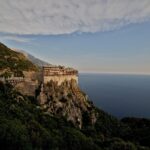
Perhaps the most famous monastery is Simonopetra, whose seven-storey buildings appear to cling impossibly to a sheer cliff high above the Aegean Sea. It’s one of the most photographed locations on Mount Athos and offers spectacular views across the coastline. Visitors who stay overnight often describe it as one of the highlights of their pilgrimage, not only because of its dramatic setting but also because of the warm hospitality offered by the resident monks.
Vatopedi is one of the largest and wealthiest monasteries on the peninsula. It’s renowned for its magnificent churches, ancient manuscripts, sacred relics and impressive collection of Byzantine icons. Iviron, founded by Georgian monks during the tenth century, is home to the revered Portaitissa Icon of the Virgin Mary, making it one of the most important pilgrimage destinations on Mount Athos.
Visitors are also drawn to St Panteleimon, often known as the Russian Monastery. Its distinctive green domes make it immediately recognisable from the sea, while its large waterfront setting reflects the monastery’s historic links with Russia and the wider Orthodox world. Nearby monasteries including Dionysiou, Gregoriou and Simonopetra all occupy breathtaking cliff-top positions overlooking the Aegean, making the journey between them one of the most memorable parts of any visit.
Other monasteries provide a quieter experience. Philotheou, surrounded by woodland, is renowned for its peaceful atmosphere and welcoming community. Pantokrator enjoys a beautiful coastal location and contains impressive Byzantine artwork, while Xenophontos combines elegant architecture with one of the finest waterfront settings on the peninsula. Dochiariou attracts pilgrims wishing to venerate its famous Gorgoepikoos Icon, and Agiou Pavlou is well known as the starting point for many pilgrims climbing the summit of Mount Athos.
Some monasteries are easier to visit than others. Koutloumousiou, located close to Karyes, is one of the most accessible after arriving by bus from Dafni, while more remote communities such as Konstamonitou, Karakallou and Zografou require additional planning and, in some cases, longer walks or extra boat journeys. Hilandar, the spiritual centre of the Serbian Orthodox Church, continues to welcome pilgrims following extensive restoration work after the devastating fire of 2004.
It’s important to remember that opening arrangements vary between monasteries. While visitors staying overnight are normally able to experience far more of monastery life, those making shorter visits may find access to certain churches, chapels, libraries or treasury collections restricted. Photography inside churches is usually prohibited, and visitors are expected to dress modestly, speak quietly and respect the daily rhythm of prayer.
Rather than trying to visit as many monasteries as possible, most experienced pilgrims recommend choosing three or four monasteries and spending time getting to know each one. Mount Athos isn’t a destination where success is measured by the number of places you’ve seen. The most rewarding experiences usually come from slowing down, joining the daily services, sharing meals with the monks and appreciating the extraordinary history and tranquillity that make each monastery unique.
What to Pack for Mount Athos
Packing for Mount Athos is very different from preparing for a typical holiday in Greece. Life on the peninsula is deliberately simple, and you’ll often find yourself walking between monasteries or spending long periods outdoors.
Comfortable walking boots or sturdy shoes are among the most important items you’ll bring. Even if you don’t intend to undertake long hikes, many monastery paths are uneven, steep or paved with centuries-old stone.
You’ll also need modest clothing throughout your visit. Long trousers are expected, while sleeveless tops, shorts and revealing clothing should be avoided. Even during the height of summer, lightweight clothing that covers your shoulders and knees is the most appropriate choice.
Don’t forget your passport and Diamonitirion, as both may be checked several times during your stay. Carrying some cash in euros is also advisable, as card facilities are extremely limited and there are very few opportunities to withdraw money once you’ve entered the peninsula.
A power bank, refillable water bottle, basic first aid kit and any prescription medication should also be packed before leaving Ouranoupoli. Although some monasteries have limited facilities, it’s best to assume that you’ll need to be self-sufficient for several days.
Perhaps the most important thing to pack, however, is time. Mount Athos is not a place to rush. The slower pace is very much part of the experience.
Visit the Shops and Cafés in Karyes
While the monasteries are the main attraction, it’s worth setting aside some time to explore Karyes, the administrative capital of Mount Athos. This small settlement is one of the few places on the peninsula where you’ll find a selection of traditional cafés, bakeries and small shops, making it an ideal place to pause during your pilgrimage.
The cafés provide a welcome opportunity to enjoy a Greek coffee, light refreshments or a simple meal while watching daily life unfold. Pilgrims, monks and local workers all pass through Karyes, creating a relaxed atmosphere that’s very different from the quiet solitude of the monasteries.
The shops specialise in items that reflect the spiritual heritage of Mount Athos. You’ll find Byzantine icons, prayer ropes, religious books, incense, olive oil, honey, herbal products and other goods produced by the monasteries themselves. These make meaningful souvenirs and are an excellent way to support the monastic communities.
Karyes is also the best place on Mount Athos to pick up snacks, bottled water and a few everyday essentials if needed. However, facilities remain limited compared with the mainland, so visitors should still arrive well prepared and not rely on shopping once they reach the Holy Mountain.
For many pilgrims, spending an hour wandering around Karyes provides an enjoyable contrast to monastery life and offers a fascinating glimpse into the small community that keeps Mount Athos running behind the scenes.

Rules and Etiquette Every Visitor Should Know
Visiting Mount Athos is both a privilege and a responsibility. The monasteries are first and foremost places of worship and daily monastic life, not tourist attractions, and visitors are expected to behave accordingly.
Modest dress is expected at all times, both inside and outside the monasteries. Speaking quietly, respecting periods of prayer and avoiding unnecessary noise helps preserve the peaceful atmosphere that has defined the Holy Mountain for centuries.
Photography rules vary between monasteries. Exterior photographs are often permitted, but many churches, chapels, museums and interior spaces prohibit photography altogether. Always ask for permission before taking photographs, particularly if monks or other pilgrims are present.
Mobile phone coverage is available in many areas, but visitors are encouraged to use their phones discreetly. Loud conversations, music and video calls are considered inappropriate in monastery grounds.
Smoking is generally discouraged, while alcohol is only consumed in limited circumstances and should never be brought into monasteries without permission.
Above all, remember that you are entering a living religious community. Showing courtesy, patience and genuine respect will usually be met with remarkable kindness and hospitality from the monks.
Suggested Mount Athos Itineraries
How long you spend on Mount Athos depends on your interests, fitness and the number of monasteries you hope to visit. While some pilgrims arrive for a single overnight stay, others spend almost a week exploring different parts of the peninsula.
| Length of Stay | What You’ll Experience |
|---|---|
| 1 Night | Visit one monastery, attend services and experience traditional monastic hospitality. |
| 2 Nights | Stay at two monasteries, explore Karyes and enjoy short walks between nearby communities. |
| 3–4 Nights | Visit several monasteries, travel by ferry and bus, and experience different parts of the peninsula. |
| 5+ Nights | Ideal for experienced pilgrims wishing to walk longer routes, climb Mount Athos or spend extended time in prayer and reflection. |
If this is your first visit, two or three nights offers an excellent introduction. It provides enough time to experience monastery life, travel beyond Dafni and appreciate the peaceful rhythm of Mount Athos without feeling rushed.
Visitors interested in hiking may wish to allow additional time, particularly if planning the rewarding climb to the 2,033-metre summit of Mount Athos, one of the most memorable experiences on the peninsula.
Returning to Ouranoupoli
When planning your visit, don’t just think about getting to Mount Athos. Make sure you know how you’ll get back.
Several ferries and speedboats return to Ouranoupoli throughout the day, giving pilgrims flexibility depending on where they’re staying and how much time they want to spend on the Holy Mountain.
The fastest return services are the speedboats, which can complete the crossing in around 30 to 40 minutes, while the traditional ferries take longer but may be more convenient if you’re travelling from monasteries further along the western coast.
The last scheduled weekday sailing from Dafni is typically the 15:45 Agia Anna ferry, arriving back in Ouranoupoli at around 17:10. Missing this service could mean staying an additional night on Mount Athos, so it’s essential to check the latest timetable before travelling.

Can You Do a Day Trip to Mount Athos?
Although most pilgrims spend at least one night on Mount Athos, it is perfectly possible to enjoy a rewarding day visit if you plan your ferry carefully. The western coast is ideal for this, with several monasteries connected by easy coastal paths, allowing you to visit multiple monasteries before returning to Ouranoupoli on the afternoon ferry.
Here are three itineraries that work particularly well.
Option One: Three Monasteries and the Official Pilgrims’ Route to Dafni (Recommended)
This itinerary is designed for visitors who want to experience the traditional footpaths of Mount Athos as well as its monasteries. By taking the 08:45 Odigitria speedboat from Ouranoupoli, you’ll arrive at Dochiariou at 09:20, giving you over six hours before the 15:45 Agia Anna ferry departs from Dafni. That provides enough time to visit three monasteries, follow the official Friends of Mount Athos walking routes and still enjoy a short break in Dafni before returning to Ouranoupoli.
| Start Point | Friends of Mount Athos Walking Time | Destination | Suggested Visit Time |
|---|---|---|---|
| Arrive Dochiariou (09:20) | 25 mins | Xenophontos | 45 mins |
| Xenophontos | 1 hour | Saint Panteleimon | 45–60 mins |
| Saint Panteleimon | 1 hr 45 mins | Dafni (via Xeropotamou) | 45 mins |
| Arrive Dafni | — | 15:45 Agia Anna ferry | 20–30 mins |
Total official walking time: 3 hours 10 minutes.
Total suggested monastery visits: 2 hours 15 to 2 hours 30 minutes.
This gives a total day of around 5 hours 40 minutes, leaving approximately 45–50 minutes of spare time before the 15:45 ferry from Dafni.
What you’ll see
Your day begins with the 08:45 Odigitria speedboat from Ouranoupoli, arriving at the small harbour below Dochiariou Monastery at approximately 09:20. This gives you just over six hours before boarding the 15:45 Agia Anna ferry from Dafni, making it possible to visit four monasteries while following the official Friends of Mount Athos walking routes.
The journey starts at the attractive harbour below Dochiariou Monastery, where a short climb brings you to one of the oldest monasteries on the Holy Mountain. Surrounded by peaceful courtyards and overlooking the Aegean, it’s a memorable introduction to Mount Athos and an excellent place to begin your pilgrimage.
From Dochiariou, the walk to Xenophontos Monastery takes around 25 minutes and is one of the easiest sections of the day. The route follows well-established monastery tracks with very little climbing, passing olive trees, woodland and occasional views across the sea. Xenophontos is considerably larger than Dochiariou, with spacious courtyards and an attractive waterfront setting that encourages visitors to slow down before continuing.
The next stage to Saint Panteleimon Monastery takes approximately one hour. The route begins with a steady uphill climb before becoming an easier downhill approach as the vast Russian monastery comes into view. Instantly recognisable by its distinctive green domes, Saint Panteleimon is one of the largest monastery complexes on Mount Athos and feels almost like a small village rather than a single monastery. Visitors will also find toilets behind the main monastery buildings, making it a sensible place to take a short break before tackling the longest walk of the day.
Leaving Saint Panteleimon, you’ll join the official Friends of Mount Athos walking route towards Xeropotamou Monastery. This section takes around 1 hour and 45 minutes and is the most demanding part of the itinerary. The path climbs steadily for much of the route and, particularly during warm weather, the ascent can feel relentless. Eventually the trail enters a peaceful single-file forest path, where you’ll cross two small streams beneath the trees before emerging onto a road. Here you’ll find a small shelter, providing a welcome place to sit down, recover and enjoy sweeping views across the western coastline before continuing to Xeropotamou Monastery.
After visiting Xeropotamou, the final stage is a steep downhill descent to Dafni, the main harbour and transport hub of Mount Athos. Unlike the peaceful monasteries you’ve visited throughout the day, Dafni is a busy arrival and departure point where ferries, buses, shared taxis and supply vehicles all converge. You’ll find indoor and outdoor waiting areas, the customs office, and a small harbour shop selling water, soft drinks, beer and toasted sandwiches, making it an ideal place to relax before boarding the 15:45 Agia Anna ferry back to Ouranoupoli.
Tickets and practical information
For this itinerary, book the 08:45 Odigitria speedboat in advance. Unlike the larger ferries, it only calls at intermediate monastery piers where passengers have booked, so reservations are strongly recommended. Tickets can be booked through the Agioreitikes Grammes office in Ouranoupoli or by phone, although passengers boarding or alighting at intermediate monastery piers can also buy tickets onboard if space is available.
For the 15:45 Agia Anna ferry back to Ouranoupoli, tickets can be purchased directly onboard.
Option Two: A Relaxed Two-Monastery Walk
If you’d prefer to spend longer exploring the monasteries rather than covering long distances on foot, this is the ideal itinerary. By taking the 08:45 Odigitria speedboat from Ouranoupoli, you’ll arrive at Xenophontos Monastery at around 09:20, giving you most of the day to enjoy two of Mount Athos’s finest monasteries at a relaxed pace.
| Start Point | Friends of Mount Athos Walking Time | Destination | Suggested Visit Time |
|---|---|---|---|
| Arrive Xenophontos (09:20) | 1 hour | Saint Panteleimon | 1 hour 15 mins |
| Saint Panteleimon | 10–15 mins (to the pier) | Saint Panteleimon Pier | — |
| Option A | Ferry 12:20 | Ouranoupoli | Arrive approximately 14:10 |
| Option B | Main Ferry 11:35 to Dafni, then 15:45 Agia Anna | Ouranoupoli | Arrive 17:10 |
Begin your visit at Xenophontos Monastery, one of the largest and most attractive monasteries on the western coast. Its peaceful waterfront location, spacious courtyards and impressive churches make it an excellent place to slow down and experience the atmosphere of Mount Athos rather than simply passing through. Allow around one hour to one hour and fifteen minutes to explore the monastery before setting off on foot.
The official Friends of Mount Athos route to Saint Panteleimon Monastery takes around one hour, following well-maintained monastery tracks and traditional footpaths through woodland and olive groves with very little difficult climbing. It is one of the easier walks on the Holy Mountain and offers frequent views across the Aegean.
Saint Panteleimon Monastery is one of Mount Athos’s most distinctive monasteries. Its striking green domes and grand nineteenth-century Russian architecture contrast dramatically with the older Greek monasteries, while its fascinating history reflects the period when thousands of Russian monks lived here. Allow at least an hour to explore the grounds, admire the architecture and, if you’re fortunate, experience the monastery’s traditional hospitality.
From here, you have two excellent options.
Option A is to make the short walk down to Saint Panteleimon Pier and board the 12:20 Main Ferry directly back to Ouranoupoli. This is the simplest choice if you’re looking for a relaxed half-day visit without committing to a longer walk.
Option B is to board the 11:35 Main Ferry for the short journey to Dafni, where you can enjoy lunch or a coffee overlooking the harbour before catching the 15:45 Agia Anna ferry back to Ouranoupoli, arriving at approximately 17:10. This option allows you to experience Mount Athos’s main port without undertaking the official 1 hour 45 minute walk from Saint Panteleimon to Dafni.
For visitors interested in photography, history or simply enjoying the atmosphere of the monasteries, this is arguably the most relaxed and rewarding day trip available. By concentrating on two exceptional monasteries instead of trying to cover as much ground as possible, you’ll have time to appreciate the architecture, speak with monks if the opportunity arises and experience the quieter rhythm of life on the Holy Mountain.
Option Three: Simonopetra or Gregoriou
If walking isn’t a priority, another excellent option is to travel further down the western coast and visit one of Mount Athos’s most spectacular monasteries directly from the ferry.
Simonopetra is perhaps the most famous monastery on the entire peninsula. Its remarkable seven-storey buildings cling dramatically to a sheer rock face high above the sea, creating one of the most iconic views anywhere in Greece. The climb from the landing stage takes around 30 to 45 minutes, but the reward is extraordinary architecture and breathtaking panoramic views across the Aegean.
A little further south, Gregoriou Monastery offers a completely different experience. Located much closer to sea level, it requires very little climbing and provides a longer, more relaxed visit. Founded in the early fourteenth century and dedicated to Saint Nicholas, it is known for its impressive katholikon, historic manuscripts and peaceful atmosphere. Visitors with spare time can even follow the short path to the nearby cave traditionally associated with the monastery’s founder.
Both monasteries are served by the same ferry, allowing visitors simply to disembark, explore and reboard when the boat returns later in the morning, making this the simplest itinerary for anyone who prefers to focus on one exceptional monastery rather than walking between several.
Anything to Do at Dafni Itself?
Not really, and it’s worth knowing that going in. Dafni is a settlement of well under 40 people, existing almost entirely to serve the port, a customs and police post, a couple of small shops selling religious souvenirs, snacks and phone cards, and one small inn with a taverna.
The one genuine thing to do here is walk up to Xeropotamou Monastery, which sits directly above the port. It’s a real option if you have time to spare between connections, though it’s known as one of the stricter communities on the mountain when it comes to non-Orthodox visitors, so it’s less of a casual drop-in than some other stops.
For most visitors, Dafni is where you get a coffee and wait for a connecting boat or bus, not somewhere to plan time around.

Rupert’s Handy Travel Tips
Visiting Mount Athos is unlike any other trip in Europe. A little preparation will make your pilgrimage much smoother and allow you to focus on the experience rather than the logistics.
- Apply for your permit early: Daily visitor numbers are strictly limited and permits can sell out months in advance during the busiest periods.
- Stay in Ouranoupoli the night before: Early morning ferry departures are much less stressful if you’re already in town and have collected your Diamonitirion.
- Book your monastery accommodation separately: Your permit allows you to enter Mount Athos, but you’ll still need to arrange overnight stays directly with each monastery.
- Carry cash: Card payments and cash machines are extremely limited once you’re inside the Holy Mountain, so bring enough euros for your entire visit.
Want to meet the reindeer behind our travel tips? Find out more in our page Who is Rupert?.
Frequently Asked Questions
Can anyone visit Mount Athos?
No. Entry is restricted to men who have obtained a valid Diamonitirion visitor permit. Women are not permitted to enter the peninsula, although they can enjoy a Mount Athos sightseeing cruise from Ouranoupoli.
How many visitors are allowed each day?
Mount Athos generally issues 120 visitor permits each day, comprising 110 permits for Orthodox pilgrims and 10 permits for non-Orthodox visitors. Because numbers are limited, applying several months in advance is strongly recommended.
How much does a Diamonitirion cost?
Permit fees vary depending on your status and may change over time. You’ll normally pay the fee when collecting your permit from the Pilgrims’ Office in Ouranoupoli before boarding your ferry.
Can I visit Mount Athos as a day trip?
Although technically possible, most visitors stay at least one night in a monastery. This allows time to experience daily monastic life and travel beyond the port of Dafni.
Can I bring luggage?
Yes. Ferries and speedboats carry luggage, although it’s sensible to pack light as you may need to walk between transport connections and monasteries.
Are there hotels on Mount Athos?
No. Visitors stay in monastery guest accommodation, known as the archontariki, rather than hotels or guesthouses.
Can I use my mobile phone?
Mobile reception is available in many areas, although coverage varies across the peninsula. Visitors are expected to use phones discreetly and respectfully.
Is Mount Athos suitable for people with limited mobility?
Some monasteries can be reached by vehicle or sea taxi, but many involve steep paths, steps and uneven terrain. Visitors should carefully consider the physical demands before travelling.
Further Reading
Planning your pilgrimage to the Holy Mountain? These guides will help you organise every stage of your journey.
Before travelling, read our Ouranoupoli Travel Guide to discover where to stay, where to eat and what to see in the town that serves as the gateway to Mount Athos. If you’re unable to enter the peninsula, our Mount Athos Sightseeing Cruise Guide explains how to admire the monasteries from the sea on one of the region’s most popular excursions.
Once you’ve arrived, our What to Do on Mount Athos Guide explores the monasteries, walking routes, Byzantine treasures and unforgettable experiences waiting inside the Holy Mountain.
Travelling from northern Greece? Our Thessaloniki Things To Do Guide and Thessaloniki Airport Transfers Guide will get your started after your visit to Ouranoupoli, while our Interrail Greece Guide and Best eSIM Apps Guide will help you plan the rest of your adventure.