Reviewed by our editorial team Updated
Discover the Experiences That Make Mount Athos Unique
There are no theme parks, no nightlife, no luxury hotels and no shopping districts on Mount Athos. People don’t travel here to tick attractions off a list or rush between sightseeing stops. Instead, they come to experience something that has remained remarkably unchanged for more than 1,000 years.
Known as the Holy Mountain, Mount Athos is one of the world’s oldest continuously inhabited monastic communities and a UNESCO World Heritage Site. Life here follows a rhythm shaped by prayer, tradition and nature rather than tourism. Every monastery has its own history, treasures and customs, while ancient paths connect communities that have welcomed pilgrims for centuries.
Whether you’re interested in Byzantine history, Orthodox Christianity, spectacular hiking, photography or simply escaping modern life for a few days, Mount Athos offers an experience unlike anywhere else in Europe.
This guide explores the very best things to do during your visit, from discovering centuries-old monasteries and attending unforgettable religious services to climbing the summit of Mount Athos and walking some of Greece’s oldest pilgrimage routes.
Planning a Visit to Mount Athos
Before deciding which monasteries to visit, it’s worth understanding how access to Mount Athos works. Unlike most attractions in Greece, the Holy Mountain isn’t open for casual sightseeing. Visitor numbers are strictly limited, every male visitor requires a Diamonitirion permit, and you’ll need to travel by ferry from Ouranoupoli to reach the peninsula.
Planning ahead makes the experience far more enjoyable. Our complete Visiting Mount Athos guide explains everything you need to know, including how to apply for your permit, ferry timetables, where to stay before departure, transport from Thessaloniki, what to pack, accommodation inside the monasteries and practical advice for first-time pilgrims.
Whether you’re visiting for a single overnight stay or spending several days walking between monasteries, reading the guide before you travel will help you avoid common mistakes and ensure your pilgrimage runs smoothly.
→ Read our complete Visiting Mount Athos guide
Browse hotels and accommodation for your journey.
View staysBrowse apartments, homes and self-catering accommodation.
Browse rentalsCompare hotel deals from multiple booking sites in one search.
Compare pricesVisit the Twenty Monasteries
The twenty ruling monasteries are the heart and soul of Mount Athos. Together they form one of the world’s most important centres of Eastern Orthodox Christianity, with each monastery operating independently while sharing responsibility for governing the Holy Mountain.
Although they’re often referred to collectively, no two monasteries are quite the same. Some cling dramatically to towering cliffs above the Aegean Sea, while others are hidden within forests or surrounded by fertile valleys. Each has developed its own traditions, architecture and collections of religious treasures over hundreds of years.
Most visitors won’t have time to see all twenty monasteries during a single trip. Instead, pilgrims usually choose two to six monasteries, depending on how long they’re staying and whether they intend to travel mainly by ferry, minibus or on foot.
Several monasteries are famous for their spectacular settings, others for their remarkable libraries and priceless icons, while some are known for offering particularly warm hospitality to visitors.
Rather than trying to see everything, it’s worth slowing down and spending time appreciating the unique atmosphere of each monastery you visit. The experience isn’t about collecting landmarks. It’s about understanding the rhythm of monastic life and discovering a place where history continues to shape everyday living.
The Twenty Monasteries at a Glance
| Monastery | Founded | Known For |
|---|---|---|
| Great Lavra | 963 | The oldest and largest monastery on Mount Athos. |
| Vatopedi | 10th century | Rich treasury, important relics and renowned library. |
| Iviron | 980 | Georgian origins and the famous Portaitissa Icon. |
| Hilandar | 1198 | Spiritual centre of the Serbian Orthodox Church. |
| Dionysiou | 14th century | Dramatic cliff-top setting overlooking the Aegean. |
| Simonopetra | 13th century | Perhaps the most photographed monastery on Mount Athos. |
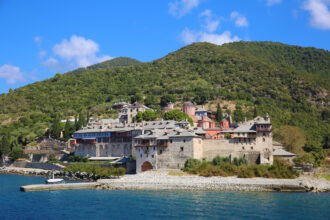
| Xenophontos | 10th century | Beautiful seafront location and impressive katholikon. |
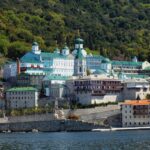
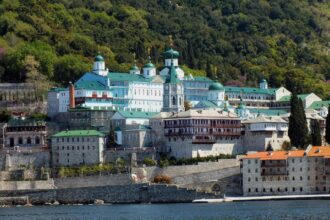
| St Panteleimon | 18th century | The famous Russian monastery with striking green domes. |
| Dochiariou | 10th century | Home of the revered Gorgoepikoos icon. |
| Philotheou | 992 | Peaceful forest surroundings and traditional hospitality. |
| Karakallou | 11th century | Strong links with Saints Peter and Paul. |
| Pantokrator | 14th century | Magnificent coastal position and Byzantine frescoes. |
| Stavronikita | 16th century | The smallest of the ruling monasteries. |
| Konstamonitou | 11th century | Quiet woodland setting away from the main routes. |
| Zografou | 10th century | Historic Bulgarian Orthodox monastery. |
| Koutloumousiou | 12th century | Located close to Karyes and easy to reach. |
| Esphigmenou | 10th century | One of the most historically significant monasteries. |
| Grigoriou | 14th century | Beautiful architecture overlooking the sea. |
| Agiou Pavlou | 10th century | Starting point for many pilgrims climbing Mount Athos. |
| Xeropotamou | 10th century | One of the oldest monasteries with important relics. |
Explore Great Lavra
Founded in 963 AD, Great Lavra is the oldest monastery on Mount Athos and is widely regarded as the birthplace of organised monastic life on the peninsula. Established by Saint Athanasius the Athonite, it became the model upon which many of the other monasteries were later developed.
Walking through its fortified entrance feels like stepping back into the Byzantine Empire. Massive stone walls protect beautiful courtyards, ancient churches and one of the Holy Mountain’s most important collections of manuscripts, icons and religious relics.
Great Lavra is also an important starting point for pilgrims intending to climb Mount Athos, with walking routes leading towards the summit via the southern monasteries and sketes.
Whether you’re interested in history, architecture or Orthodox spirituality, Great Lavra is considered an essential stop during any first visit to Mount Athos.

Admire the Spectacular Simonopetra Monastery
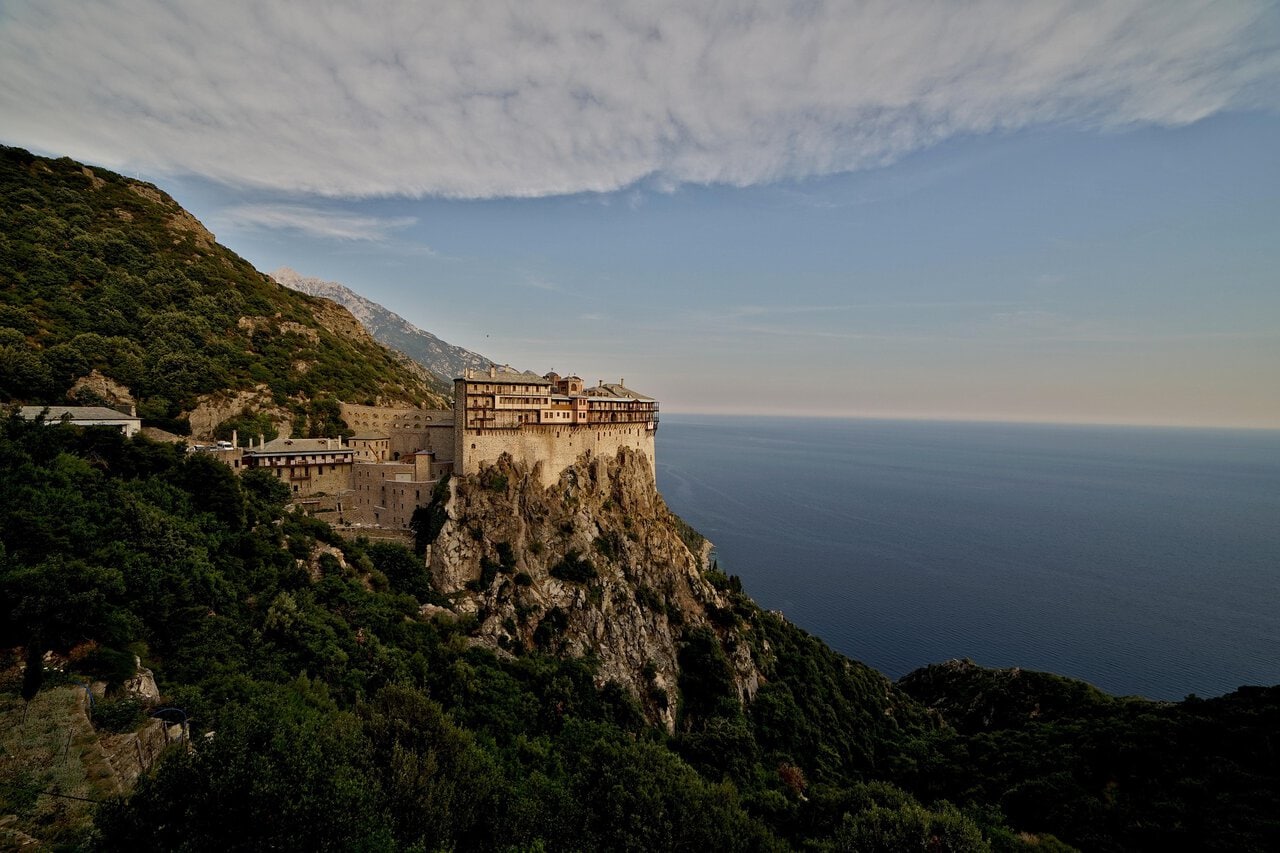
If there’s one monastery that appears on almost every postcard of Mount Athos, it’s Simonopetra.
Perched dramatically on a towering rock high above the Aegean Sea, the monastery seems almost impossible to build, let alone inhabit. Its seven-storey structure clings to the cliff face, creating one of the most spectacular views anywhere in Greece.
Founded during the 13th century by Saint Simon the Myrrh-Gusher, Simonopetra has survived fires, rebuilding projects and centuries of history to become one of Mount Athos’ most recognisable landmarks.
Visitors are rewarded not only with breathtaking views across the coastline but also with beautiful chapels, peaceful courtyards and a warm welcome from the resident monks. Many pilgrims consider an overnight stay here to be one of the highlights of their entire journey to the Holy Mountain.
For photographers, historians and first-time visitors alike, Simonopetra is one of the absolute must-see monasteries on Mount Athos.
Visit Karyes, the Capital of Mount Athos
Although the monasteries are the main focus of most pilgrimages, every visitor should try to spend some time in Karyes, the administrative capital of Mount Athos.
Unlike the fortified monasteries scattered around the peninsula, Karyes feels more like a traditional mountain village. It’s the administrative heart of the Holy Mountain, where representatives from all 20 ruling monasteries meet to oversee the governance of this unique autonomous republic.
One of the town’s greatest treasures is the Church of Protaton, the oldest church on Mount Athos. Dating back to the 10th century, it houses some of the finest surviving Byzantine frescoes, including masterpieces created by the renowned painter Manuel Panselinos. For many visitors, it’s one of the artistic highlights of the entire peninsula.
Karyes is also one of the few places where you’ll find small shops selling religious books, Byzantine icons, incense, rosary beads and locally produced goods. There are also a handful of cafés and bakeries where pilgrims can pause for coffee before continuing their journey.
As the main transport hub on Mount Athos, Karyes is where many visitors change between buses, shared taxi minibuses and walking routes to reach monasteries throughout the peninsula. Even if you’re only passing through, it’s well worth allowing time to explore this fascinating settlement.
Attend Orthodox Services
For many pilgrims, attending the daily services is the most memorable part of visiting Mount Athos.
Life on the Holy Mountain revolves around worship, with the rhythm of each day shaped by prayer rather than the clock. Depending on the monastery and the religious calendar, services may begin long before sunrise and continue late into the evening, creating an atmosphere unlike anywhere else in Europe.
Visitors are welcome to attend these services, provided they dress respectfully and follow the guidance of the monks. Even those with no previous experience of Eastern Orthodox Christianity often describe the chanting, candlelit churches and centuries-old traditions as deeply moving.
The churches themselves add to the experience. Illuminated by oil lamps and candles, surrounded by ancient icons and fragrant with incense, they provide a powerful glimpse into a style of worship that has remained remarkably unchanged for more than a thousand years.
You don’t need to understand every word being spoken to appreciate the experience. Simply sitting quietly and observing the ceremony offers a unique insight into the spiritual life that continues to define Mount Athos today.
Search routes and flight options for your journey.
Search flightsUse an eSIM to get online without hunting for a local SIM after arrival.
See eSIM optionsBook a private airport transfer in advance and have your ride planned before you arrive.
Check transfersExperience Traditional Monastery Hospitality
Hospitality has always been an important part of life on Mount Athos, and visitors are often surprised by the warmth of the welcome they receive.
After arriving at a monastery, guests are traditionally welcomed in the archontariki, the monastery’s guest house, where they’re often offered Greek coffee, cold water, Turkish delight or another small refreshment before being shown to their accommodation.
This centuries-old tradition reflects the Orthodox belief that visitors should be treated with generosity and respect. Although life on Mount Athos is simple, monasteries take great pride in welcoming pilgrims from around the world.
Meals are usually shared with the monastic community in the trapeza (refectory). Food is wholesome, traditional and generally vegetarian, prepared according to the fasting traditions of the Orthodox Church. Conversation is usually kept to a minimum during meals, allowing visitors to experience another important aspect of monastic life.
For many travellers, these shared meals become some of the most memorable moments of the entire journey. Rather than feeling like hotel guests, visitors are welcomed into a living community that has practised the same traditions for generations.
Walk the Ancient Pilgrim Paths
Long before roads reached Mount Athos, the monasteries were connected by a remarkable network of stone footpaths, many of which are still used today.
Walking these ancient routes is one of the most rewarding experiences on the Holy Mountain. The paths wind through dense forests, olive groves, mountain streams and dramatic coastal scenery, linking monasteries that have welcomed pilgrims for centuries.
Some walks take less than an hour, making them ideal for first-time visitors, while others require several hours of steady hiking across rugged terrain. Along the way you’ll pass stone bridges, secluded chapels, natural springs and breathtaking viewpoints overlooking the Aegean Sea.
Unlike modern hiking trails, these routes were created for practical purposes, allowing monks and pilgrims to travel between monasteries long before roads or motor vehicles existed. Walking them today offers a genuine connection with the history of Mount Athos and provides a welcome opportunity to slow down and appreciate the extraordinary natural beauty of the peninsula.
If you enjoy hiking, don’t simply rely on ferries and minibuses. Spending at least part of your visit on foot is one of the best ways to experience the true spirit of the Holy Mountain.
The Best Hiking Routes on Mount Athos
While simply walking between monasteries is an unforgettable experience, Mount Athos also offers some of the finest pilgrimage hikes in Europe. A remarkable network of ancient stone footpaths, many dating back hundreds of years, links monasteries, sketes, hermitages and remote viewpoints across the peninsula. Long before roads and minibuses arrived, these were the only way for monks and pilgrims to travel, and many remain in regular use today.
Whether you’re looking for a gentle one-hour walk through pine forests or a challenging climb to the 2,033-metre summit of Mount Athos, there’s a route to suit almost every level of fitness. Some trails follow dramatic coastal cliffs overlooking the Aegean Sea, while others wind through chestnut forests, cross traditional stone bridges or climb steadily into the mountains, passing tiny chapels and isolated hermitages that have changed little for centuries.
Unlike many hiking destinations, these paths aren’t simply recreational trails. They’re an important part of everyday life on the Holy Mountain and continue to be used by monks travelling between monasteries. Walking them offers a rare opportunity to experience Mount Athos much as pilgrims have for over 1,000 years, away from the ferry routes and vehicle tracks used by most visitors.
If you’re planning to spend more than one night on the peninsula, we’d strongly recommend including at least one walk in your itinerary. Even a relatively short hike between neighbouring monasteries provides a completely different perspective on the Holy Mountain, allowing you to appreciate its extraordinary landscapes, peaceful atmosphere and remarkable sense of history.
Some of the Best Hiking Routes on Mount Athos
| Walking Route | Approx. Time | Difficulty | Highlights |
|---|---|---|---|
| Dafni → Karyes | 2–2½ hours | Moderate | Forest trails, traditional pilgrimage route and the administrative capital. |
| Karyes → Iviron Monastery | 2½–3 hours | Moderate | Woodland paths, historic monasteries and beautiful scenery. |
| Simonopetra → Dionysiou | 45–60 minutes | Easy | Spectacular coastal views between two of Mount Athos’ most famous monasteries. |
| Great Lavra → Agia Anna | Around 2 hours | Moderate | Historic footpaths, mountain scenery and access to important sketes. |
| Agia Anna → Mount Athos Summit | 6–8 hours | Challenging | Greece’s most iconic pilgrimage hike, usually including an overnight stay at Panagia Hut. |
| Vatopedi → Pantokrator | Around 2 hours | Moderate | Quiet woodland paths linking two historic monasteries. |
Walking times are approximate and can vary depending on your fitness, weather conditions and the condition of the trails. Before setting out, always check the latest route information and ensure you have enough daylight, water and suitable footwear.
Walking Between the Monasteries
One of the greatest joys of visiting Mount Athos is that you don’t have to rely entirely on ferries or minibuses. Many of the peninsula’s twenty ruling monasteries are linked by a remarkable network of ancient footpaths, allowing pilgrims to travel through forests, across mountain ridges and along dramatic stretches of coastline much as they have done for centuries.
Walking between monasteries transforms your visit from a sightseeing trip into a genuine pilgrimage. Rather than simply arriving, taking photographs and moving on, you’ll experience the changing landscapes, encounter remote chapels hidden among the trees and enjoy long periods of silence broken only by birdsong or the sound of church bells echoing across the valleys.
Some monastery-to-monastery walks take less than an hour and are suitable for most reasonably fit visitors, while others involve several hours of hiking across more rugged terrain. It’s worth planning your accommodation in advance so that each day’s walk ends at a monastery where you’ve already secured an overnight stay. Even if you only include one or two walks during your visit, they’re likely to become some of your most memorable experiences on the Holy Mountain.
Planning Your Route with the Friends of Mount Athos Footpaths Guide
Although the historic paths are generally well established, Mount Athos isn’t somewhere to rely solely on online maps or satellite navigation. Trail conditions can change because of fallen trees, erosion, maintenance work or weather, and some routes are considerably more demanding than they first appear.
Before setting out, it’s worth consulting the excellent Friends of Mount Athos Footpaths Guide, one of the most comprehensive resources available for walkers on the peninsula. The guide provides detailed route descriptions, estimated walking times, GPS tracks, maps and updates on the condition of individual paths, helping you plan realistic daily itineraries before you arrive.
Whether you’re simply walking between two neighbouring monasteries or planning a challenging multi-day trek across the peninsula, checking the latest route information beforehand can save time, improve safety and help you choose walks that match your fitness level and available time.
Compare hostels and budget-friendly places to stay.
Browse hostelsGet help with compensation, eligible lounge access and disruption support.
Explore AirHelp+Arriving before check-in or leaving later? Store your luggage and enjoy the extra time hands-free.
Store your bagsWhat to Pack for Hiking on Mount Athos
Even relatively short walks on Mount Athos require a little preparation. The weather can change quickly, mobile phone coverage isn’t available everywhere and many routes pass through remote areas with very few facilities between monasteries.
Comfortable walking boots or trail shoes are highly recommended, particularly if you’re planning to tackle uneven stone paths or the ascent to the summit. Carrying a refillable water bottle, lightweight waterproof jacket, sun protection, snacks, power bank and a small first aid kit will make longer walks much more enjoyable. Walking poles can also be helpful on some of the steeper descents.
Because opportunities to buy supplies are limited outside Karyes, it’s sensible to begin each day’s walk with enough water and food for the journey. Travelling with a comfortable backpack rather than a heavy suitcase also makes moving between monasteries significantly easier.
Hiking Safely on the Holy Mountain
Although many of the walking routes on Mount Athos have been used for centuries, they shouldn’t be underestimated. Some trails involve steep climbs, uneven stone surfaces and exposed mountain terrain, particularly on the route towards the summit. Setting off early in the day, allowing plenty of time before dark and avoiding unnecessary risks are all part of responsible trip planning.
It’s equally important to remember that these are working pilgrimage routes, not simply hiking trails. Monks continue to use them every day, linking monasteries, sketes and remote hermitages across the peninsula. Walk quietly, respect private areas, avoid disturbing religious services and always leave gates, chapels and natural surroundings exactly as you found them.
By combining sensible preparation with respect for the traditions of the Holy Mountain, you’ll discover that hiking is one of the most rewarding ways to experience Mount Athos. Rather than simply travelling between destinations, the walk itself becomes an important part of the pilgrimage, offering moments of reflection, spectacular scenery and a deeper appreciation of one of Europe’s most remarkable spiritual landscapes.
Climb Mount Athos
For many experienced pilgrims, climbing the summit of Mount Athos is the ultimate goal of their visit. Rising to 2,033 metres (6,670 feet) above the Aegean Sea, the Holy Mountain dominates the peninsula and rewards those who reach the top with some of the most spectacular views in Greece.
This is not a casual walk, however. The climb is physically demanding and should only be attempted by visitors with a good level of fitness and suitable hiking equipment. Most pilgrims begin the ascent from Agia Anna Skete or Agiou Pavlou Monastery, spending the night at the Panagia Hut before making the final ascent before dawn.
Watching the sunrise from the summit is considered one of the defining experiences of Mount Athos. As daylight spreads across the Aegean Sea, it’s possible to see all three Halkidiki peninsulas, the surrounding islands and, on exceptionally clear days, mountain ranges stretching far across northern Greece.
Although the climb requires effort, it perfectly captures the spirit of Mount Athos. The journey is as important as the destination, with every step encouraging reflection, patience and appreciation of the remarkable landscape that surrounds you.

Discover Byzantine Treasures
Mount Athos isn’t simply a collection of monasteries. It’s also one of the world’s greatest repositories of Byzantine art, history and religious heritage.
For more than a thousand years, the monasteries have safeguarded an extraordinary collection of icons, frescoes, illuminated manuscripts, imperial documents, gold and silver reliquaries, and sacred objects that have survived wars, invasions and political upheaval across Europe.
Many of the churches contain breathtaking Byzantine frescoes, while monastery libraries preserve thousands of ancient manuscripts, some dating back more than a millennium. Together they provide an unparalleled record of Orthodox Christianity, Byzantine civilisation and medieval scholarship.
Although access to certain treasures is naturally restricted, visitors are often able to admire remarkable architecture, historic churches and beautifully decorated courtyards during their stay.
For anyone interested in history, religious art or Byzantine culture, Mount Athos is one of the most important destinations anywhere in the world.
Enjoy the Peace and Natural Beauty
While the monasteries attract most visitors, the landscape itself is every bit as remarkable.
Much of Mount Athos remains covered by ancient forests, with chestnut, oak, pine and cypress trees stretching across the mountainsides. Wildflowers bloom throughout spring, mountain streams flow through deep valleys and dramatic cliffs plunge into the crystal-clear waters of the Aegean Sea.
Unlike many parts of the Mediterranean, development has been almost non-existent. There are no large hotels, apartment complexes or busy coastal roads, allowing nature to flourish much as it has for centuries.
Wildlife is also abundant. Visitors may encounter birds of prey circling above the cliffs, colourful butterflies along woodland paths and the occasional mountain goat navigating seemingly impossible slopes.
Even those with little religious interest often describe the overwhelming sense of peace and silence as one of Mount Athos’ greatest attractions. Simply sitting quietly outside a monastery, listening to the distant church bells and watching the changing light across the sea becomes an unforgettable experience.
Shops, Supplies and Money on Mount Athos
Although Mount Athos is far from the modern world, you won’t be completely cut off once you arrive. However, facilities are extremely limited, so it’s important to arrive well prepared.
The main place to buy supplies is Karyes, the administrative capital of Mount Athos. Here you’ll find a small selection of general stores, bakeries, cafés and shops selling everyday essentials, as well as religious books, icons, incense and locally produced goods. It’s also the easiest place on the peninsula to pick up snacks, bottled water and a few basic travel items if you’ve forgotten something.
Away from Karyes, facilities become much more limited. A handful of the larger monasteries have small shops where visitors can purchase icons, books, olive oil, wine, honey, herbal products, religious souvenirs and occasionally simple refreshments, but these shouldn’t be relied upon for everyday supplies.
There are no supermarkets, pharmacies or convenience stores spread across the peninsula in the way most travellers would expect. If you have specific dietary requirements, need prescription medication or rely on particular toiletries, it’s best to bring everything with you from Ouranoupoli before boarding the ferry.
It’s also worth carrying cash. While some larger monasteries or shops in Karyes may accept card payments, this shouldn’t be assumed. Cash remains the most reliable payment method throughout Mount Athos, and there are very few opportunities to withdraw money once you’ve entered the Holy Mountain.
For most visitors, the best approach is simple: arrive with everything you need, and treat any shops you encounter as a useful convenience rather than something to depend on.

Suggested Mount Athos Itineraries
Whether you’re visiting for one day or spending almost a week exploring the Holy Mountain, having a rough itinerary will help you make the most of your time.
| Length of Visit | Suggested Experience |
|---|---|
| Day Trip | Travel from Ouranoupoli to Dafni, visit a nearby monastery, attend a church service if possible and return on the afternoon ferry. Ideal for visitors with limited time. |
| 1 Night | Stay in one monastery, experience traditional hospitality, share meals with the monks and attend evening and morning services before returning to the mainland. |
| 2–3 Nights | Visit several monasteries, explore Karyes, walk between communities using the ancient pilgrim paths and experience different parts of the peninsula. |
| 4–5 Nights | A more immersive pilgrimage combining ferries, hiking and monastery stays, with time to discover lesser-visited monasteries and remote sketes. |
| 6+ Nights | Perfect for experienced pilgrims wishing to explore much of Mount Athos, climb the summit and fully immerse themselves in monastic life. |
If you’re visiting Mount Athos for the first time, two or three nights is often the ideal balance. It provides enough time to travel beyond the main ferry route, experience the unique hospitality of several monasteries and appreciate the slower pace of life that makes the Holy Mountain so special.
Rather than trying to visit as many monasteries as possible, focus on enjoying the experience. Mount Athos is one of those rare destinations where slowing down is often far more rewarding than trying to see everything.

Rupert’s Handy Travel Tips
Mount Athos is very different from anywhere else in Greece. A little preparation will help you enjoy one of Europe’s most unique travel experiences.
- Don’t try to visit too many monasteries: Spending quality time in a few monasteries is far more rewarding than rushing around the peninsula trying to see them all.
- Take time to walk: The ancient pilgrim paths are one of Mount Athos’ greatest experiences and often become visitors’ favourite memories.
- Join the monastery services: Even if you’re not Orthodox, attending the evening or morning services offers a fascinating insight into over 1,000 years of monastic tradition.
- Pack light: You’ll probably combine ferries, buses and walking during your visit, so a comfortable backpack is much easier than a heavy suitcase.
Want to meet the reindeer behind our travel tips? Find out more in our page Who is Rupert?.
Frequently Asked Questions
How many monasteries can you visit on Mount Athos?
Most visitors have time to visit between two and six monasteries, depending on how long they stay and how much walking they’re prepared to do. Although there are 20 ruling monasteries, trying to visit all of them during a single trip isn’t realistic.
Which monastery should first-time visitors prioritise?
Many pilgrims choose to visit Great Lavra, Simonopetra, Vatopedi or St Panteleimon, as each offers a very different experience and showcases a different side of Mount Athos’ history and architecture.
Can you climb Mount Athos?
Yes. Reaching the 2,033-metre summit is one of the Holy Mountain’s greatest experiences, although it requires a good level of fitness. Most climbers spend the night at the Panagia Hut before making the final ascent before sunrise.
Can you walk between the monasteries?
Yes. A network of ancient stone pilgrim paths links many of the monasteries, sketes and settlements across the peninsula. Some walks take under an hour, while others can take several hours through mountainous terrain.
Is Mount Athos only for religious pilgrims?
No. While many visitors travel for spiritual reasons, others come because of the peninsula’s UNESCO World Heritage status, Byzantine history, remarkable architecture, hiking opportunities and spectacular scenery.
What is the most beautiful monastery on Mount Athos?
Many people consider Simonopetra to be the most spectacular because of its dramatic cliff-top location, while Great Lavra is often regarded as the most historically important.
Can you buy food on Mount Athos?
Meals are normally provided by the monasteries where you stay. Karyes also has a small number of cafés, bakeries and shops, but visitors shouldn’t expect conventional restaurants throughout the peninsula.
Is Mount Athos worth visiting?
Absolutely. Whether you’re interested in history, architecture, hiking or spirituality, Mount Athos offers one of the most unique travel experiences in Europe and a rare opportunity to experience a way of life that has remained largely unchanged for over a millennium.
Further Reading
Planning your journey to the Holy Mountain? These guides will help you organise every stage of your visit.
Before setting off, read our Visiting Mount Athos Guide, which explains everything you need to know about Diamonitirion permits, ferry services, accommodation and travelling around the peninsula. If you’re staying in the area before your pilgrimage, our Ouranoupoli Travel Guide covers where to stay, where to eat and what to see in the gateway town.
If you’re unable to enter Mount Athos, or you’re travelling with family, our Mount Athos Sightseeing Cruise Guide explains how to admire the monasteries from the sea on one of northern Greece’s most memorable boat trips.
Travelling from elsewhere in Greece? Our Thessaloniki Things To Do Guide and Thessaloniki Airport Transfers Guide explain more about the closest city to Mount Athos, while our Interrail Greece Guide and Best eSIM Apps Guide will help you plan the rest of your adventure.