
Reviewed by our editorial team Published
Torremolinos is one of the original Costa del Sol resort towns, the place where package holidays to the Spanish coast effectively began in the 1960s. Sitting directly on the coastline in Málaga province, immediately south of Málaga city itself, it grew from a quiet fishing village into one of Europe’s best known seaside destinations almost overnight once the first charter flights started landing at the nearby airport.
What makes Torremolinos worth visiting today is not nostalgia alone. The town still has a genuinely long, uninterrupted stretch of beach split into several named sections, each with its own character, and a historic fishing quarter called La Carihuela that survived the high-rise development largely intact. It also sits on Málaga’s Cercanías commuter line, meaning the airport, the city centre and neighbouring resort towns are all a short, cheap train ride away.
Torremolinos carries a reputation for lively, inclusive nightlife too, with the La Nogalera district widely regarded as the Costa del Sol’s main LGBTQ+-friendly hub. Beyond the beach and bars, there are family-friendly water parks, a wildlife attraction, a genuinely interesting botanical garden and a scattering of historic buildings that reward a short detour from the seafront.
This guide covers the beaches, neighbourhoods, attractions and practicalities that make up a visit to Torremolinos, along with a suggested one day itinerary for anyone basing themselves here or stopping off from Málaga.
Torremolinos at a Glance
Before the detail, here is a quick snapshot of the town’s main draws, how long each one tends to take and roughly what it costs.
| Highlight | Why Visit | Suggested Time | Approx. Cost |
|---|---|---|---|
| Playamar & El Bajondillo Beaches | Classic resort sunbathing close to the centre | 2-4 hours | Free |
| La Carihuela | Old fishing quarter and seafood dining | Half a day | Free (dining extra) |
| Parque de la Batería | Lake, gardens and historic gun batteries | 1-2 hours | Free |
| Jardín Botánico Molino de Inca | Botanical garden with a Japanese section | 1 hour | from €3 (£3/$3) |
| Casa de los Navajas | Neo-Mudéjar seafront palace | 30-45 mins | Free (when open) |
| Aqualand Torremolinos | Costa del Sol’s biggest water park | Full day | from €37 (£32/$40) |
| Crocodile Park Costa del Sol | Around 300 crocodiles and alligators | 1.5-2 hours | from €17 (£15/$18) |
| La Nogalera | Bars, clubs and LGBTQ+-friendly nightlife | Evening | Free to enter the area |
Torremolinos earned its place on this list thanks to a dramatic change of fortune: in 1959 the glamorous Hotel Pez Espada opened on the seafront and lured Frank Sinatra, Brigitte Bardot and Ava Gardner to a coastline that had been a quiet fishing community barely a decade before. How that transformation happened, and what came before it, is covered in more detail in the history section further down this guide.
Playamar Beach
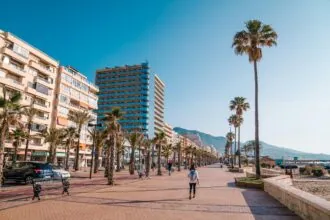
Playamar sits on the eastern edge of Torremolinos, closest to Málaga, and is where much of the overflow from the busier central beaches ends up on a packed summer day. It is a wide, sandy stretch backed by a long line of hotels and apartment blocks, with a paved promenade running the full length for an easy walk or jog away from the sand itself.
The beach is popular with families thanks to its gentle slope into the water and the string of chiringuitos (beach bars) serving grilled sardines, paella and cold drinks right at the water’s edge. It connects directly into El Bajondillo without a break, so sunbathers often wander between the two without really noticing where one ends and the other begins.
Playamar holds Blue Flag status for its water quality and facilities, one of several beaches in Torremolinos to earn the award each year. Like all the beaches along this coast, its sand carries a distinctive grey tint, the result of slate and mica washed down from the mountains behind the town rather than any lack of cleaning.
Best for two or three nights. The widest choice of rooms, with filters for free cancellation and included breakfast.
View staysBest for longer stays. Whole apartments and houses, so you are not eating out three times a day.
View rentalsBest for double-checking. Runs the same search across several booking sites so you are not leaving money behind.
Compare pricesEl Bajondillo Beach
El Bajondillo is the beach most visitors picture when they think of Torremolinos: a broad swathe of golden sand squeezed between the Mediterranean and a dense wall of high-rise hotels. It sits right below the town centre, which makes it the most convenient beach for anyone staying near Calle San Miguel or Plaza Costa del Sol.
Expect it busy in July and August, when sunbeds and parasols fill most of the available space by mid-morning. The payoff is convenience, since the beach is directly below a huge concentration of bars, restaurants and ice cream shops, and the seafront Casa de los Navajas palace sits just a short stroll along the promenade for anyone who fancies a break from the sand.
El Bajondillo is another of the town’s Blue Flag beaches, and Torremolinos as a whole has picked up special recognition for the accessibility of its beaches, with ramps and adapted walkways making it one of the easier stretches of the Costa del Sol to reach for visitors with reduced mobility. That combination of convenience and flat, easy access is part of why it fills up so quickly once the summer crowds arrive.
La Carihuela: Torremolinos’ Old Fishing Quarter
La Carihuela is the neighbourhood that best preserves what Torremolinos looked like before the 1960s tourism boom. Low, whitewashed fishermen’s cottages line a network of narrow lanes behind its own long beach, and fishing boats are still occasionally pulled up onto the sand, a visible reminder of the area’s working past.
This is widely regarded as the best place in Torremolinos for fresh seafood, with dozens of family-run chiringuitos and restaurants along the seafront serving espetos (skewered sardines grilled over open coals), fried fish and paella. The pace here is noticeably slower than the high-rise stretch nearer the centre, which is exactly why many repeat visitors base themselves in La Carihuela instead.
The quarter also marks the western end of the connected beach promenade, with a small lighthouse area and views back along the coast towards Benalmádena, making it a natural spot to watch the sunset after dinner.
La Carihuela’s own stretch of sand runs for around 2,100 metres and carries Blue Flag status, backing up its reputation as one of the better beaches on this part of the coast. The espetos served along it are still cooked the traditional way, threaded onto split sugarcane skewers and propped over an open fire in a half-buried boat, a method fishing families here have used for generations.
The Full Beach Promenade: Montemar to Los Álamos
What sets Torremolinos apart from many smaller resort towns is simply how much beach it has. The sand runs almost continuously for several kilometres, split into named sections including Montemar, La Carihuela, El Bajondillo, Playamar and, further east towards Málaga, the quieter Los Álamos. A paved promenade links the whole run, making it entirely possible to walk from one end of town to the other without leaving the seafront.
Montemar, at the western end near the border with Benalmádena, tends to be less crowded and is known for its own cluster of good seafood restaurants. Los Álamos, at the opposite end, has a similarly relaxed, slightly more local feel. Walking even a short section of the promenade in the early morning or evening, away from the midday heat, is one of the simplest and most rewarding things to do in Torremolinos.
Four of the promenade’s named sections, Montemar, La Carihuela, El Bajondillo and Los Álamos, have all held Blue Flag status in recent years, an unusually consistent run for a single stretch of coastline. Walking the full length end to end, at a relaxed pace, takes most people the best part of two hours, which is roughly the time it takes the sun to drop from late afternoon into golden hour.

Calle San Miguel and the Town Centre
Calle San Miguel is Torremolinos’ main pedestrian artery, running from Plaza Costa del Sol down towards the clifftop above El Bajondillo. It is lined with shops, ice cream parlours, tapas bars and souvenir stalls, and functions as the social spine of the town for both residents and visitors throughout the day and well into the evening.
At its seaward end, El Calvario Park and a scenic lookout give sweeping views over El Bajondillo beach and the Mediterranean beyond, a popular spot for photos just before the street drops down towards the sand. For visitors who prefer shopping and people watching to sunbathing, Calle San Miguel is an easy way to spend a couple of hours without needing a plan.
The street takes its name from the parish Church of San Miguel, which still stands near its upper end and gives the whole thoroughfare its character as much as the shops lining it. Its own name, Calvario, simply means Calvary, a reminder that the lookout at its seaward end began life with a more solemn purpose than photographs of the coastline.
La Nogalera and Torremolinos Nightlife
La Nogalera, a shopping and apartment complex just off Calle Casablanca near the town centre, has developed into the Costa del Sol’s best known LGBTQ+-friendly nightlife district, a reputation that stretches back decades to Torremolinos’ earliest days as an international resort. By day it looks like an unremarkable 1970s arcade of shops and bars; by night it fills with rainbow flags, outdoor terraces and a mix of bars and clubs that draws visitors from across the region.
Torremolinos hosts its own Pride celebrations each year, and the welcoming atmosphere extends well beyond La Nogalera itself into many of the town’s bars, restaurants and hotels. Beyond this district, Torremolinos’ nightlife more broadly covers everything from quiet beachfront cocktail bars to late-night clubs around the centre, giving visitors of all ages and tastes somewhere to go after dark.
Music spills from open doorways most evenings, ranging from Spanish pop to international chart hits, and the crowd skews notably international, with visitors from across Northern Europe mixing with locals from along the coast. By day, the same arcade swaps its nightlife persona for something far calmer, a shift covered in more detail in the shopping section of this guide.
Shopping and Markets in Torremolinos
Calle San Miguel carries most of Torremolinos’ clothing, footwear and accessory shops, but look past the beach towels and sun hats and there is a steady run of leather goods, belts, bags and jackets among them, alongside stalls of hand-painted Andalusian ceramics. It rewards a slower browse than most visitors give it on the way to the beach.
By day, La Nogalera and the surrounding streets around Cauce and Casablanca switch roles entirely, filling with fashion outlets, footwear shops and international brands rather than the bars that take over after dark. A seasonal market also sets up in La Nogalera’s square between June and September, adding handmade crafts and souvenirs to the daytime mix.
Torremolinos also holds proper outdoor markets at the Recinto Ferial fairground, with a produce and clothing market on Thursdays and a larger combined market, including antiques and flea-market stalls, every Sunday. Between the stalls selling fresh fruit, vegetables and flowers and those dealing in secondhand books and curios, it is a world away from the souvenir shops closer to the seafront, and locals shop here just as much as visitors do.
La Carihuela adds its own smaller seasonal market, selling crafts and souvenirs within a short stroll of its seafront restaurants. Taken together, Torremolinos’ shopping runs from high-street fashion to genuinely local produce, rarely more than a short walk from wherever you happen to be staying.
Best if you can move a day either way. Shows how the fare changes across the month.
Compare flightsBest for short trips. Install the eSIM at home and arrive with working data, no shop queue.
Browse eSIMsBest after a long flight or a late landing. Price agreed before you travel, and no taxi queue.
Check transfersFood Scene in Torremolinos
Torremolinos’ signature dish is the espeto, and the sugarcane-skewer method described above in the La Carihuela section turns up at chiringuitos the length of the seafront, not only there. Decades as an international resort also shaped the wider menu, and alongside Spanish classics it is easy to find British, German and Scandinavian cafés within a few streets of the centre.
Chiringuitos, the informal beach bars that line the promenade from Montemar to Los Álamos, are where most of that fish ends up, usually served with little more than bread, a squeeze of lemon and a glass of local white wine. Eating at one with sand still underfoot is as close to the town’s fishing-village roots as a modern visitor gets.
Beyond the espeto, Málaga province’s wider repertoire of fried fish, known locally as pescaito frito, and the small, vinegar-cured anchovies called boquerones both turn up regularly on menus around the town centre. Tapas culture runs throughout, with small plates traditionally ordered to share rather than as a starter before a main course.
Fresh produce for all of this arrives at the Thursday and Sunday markets at the Recinto Ferial, where fruit, vegetables and flowers sit alongside the clothing and craft stalls covered in the shopping section above. It is a reminder that, for all its nightlife and water parks, Torremolinos still runs on the same Andalusian rhythms as towns with far less tourism.
LGBTQ+ Torremolinos
Long before La Nogalera became known internationally, Torremolinos already had a place in Spain’s LGBTQ+ history. Toni’s Bar, which opened in the town’s Pasaje Begoña alley in 1962, is widely credited as the first gay bar in Spain, opening even while homosexuality remained illegal under the Franco regime.
That tolerance ended abruptly in June 1971, when police raided the bars of Pasaje Begoña, arresting well over a hundred people. The episode is remembered as the Great Raid of Pasaje Begoña, often called Spain’s own Stonewall, with the street’s original name formally restored in 2019.
La Nogalera, which also opened Spain’s first lesbian bar, Pourquoi Pas?, back in 1968, is now often described as the oldest continuously operating gay commercial complex in the country. Torremolinos co-hosted World Pride with Madrid in 2017 and holds its own Pride every year, with the 2026 edition running from 26 May to 6 June.
Accommodation with a specifically LGBTQ+-oriented history is easy to find too, notably the adults-only Hotel Ritual, which in 2018 became the first hotel in Spain to sign an employment agreement with the Andalusian Transsexual Association.
Spain’s postal service marked the raid’s anniversary with a rainbow-patterned stamp in 2020, and the following year survivor Sandra Montiel received the Torremolinos medal of honour at a fiftieth anniversary ceremony formally acknowledging what happened in the alley. It is a rare case of a single street corner carrying this much weight in a country’s LGBTQ+ history.
Which Area of Torremolinos Is Best for You?
With several kilometres of connected beach and a handful of distinct neighbourhoods, deciding where to base a stay in Torremolinos matters more than in a smaller resort. The choice usually comes down to a trade-off between quiet and convenience rather than one area being objectively better.
Travellers wanting a slower pace and the best seafood on this stretch of coast should look at La Carihuela, the old fishing quarter described earlier in this guide. It sits furthest from the nightlife and shopping, suiting couples and long dinners over a packed evening calendar.
El Bajondillo and the adjoining Playamar beach put visitors as close as possible to Calle San Miguel’s shops and the gently sloping, family-friendly sand covered earlier in this guide. This suits anyone who wants to walk everywhere, at the cost of a busier beach in peak summer.
Staying around the town centre and La Nogalera suits visitors whose priority is nightlife, keeping the walk home short after a late evening in the bars covered in the section above. It is usually the liveliest option after dark.
At the opposite end of the seafront, Los Álamos and Montemar offer a more local, residential feel with fewer hotels and a slower rhythm. None of these areas sits more than a short walk or bus ride apart, so the real decision is simply what suits your evenings best.
In practice, the whole town stretches along only a few kilometres of coastline, so even areas that feel worlds apart after dark, such as La Carihuela and La Nogalera, are rarely more than a twenty-minute walk from each other. That makes switching between a quiet dinner and a livelier evening easy, whichever end of Torremolinos you choose to sleep in.

Parque de la Batería
Parque de la Batería, just north of La Carihuela, is one of Torremolinos’ main green spaces and takes its name from an old military artillery battery that once stood on the site, with original cannons and two underground bunkers still visible today. The park covers more than 74,000 square metres and holds over 1,000 trees across 25 species, built around an artificial lake exceeding 9,000 square metres where visitors can rent rowing boats.
Beyond the lake, there is a 15-metre observation tower, walking paths, a cycling lane, outdoor exercise equipment, a children’s play area and a Venetian-style carousel. It is a popular spot for an early morning run or a late afternoon stroll away from the beach crowds, and entry is free, though pets are not permitted inside.
The cannons on display are not purely decorative: coastal batteries like this one were built from 1763 onward specifically to guard against the Barbary pirate raids that had plagued this stretch of coast for centuries, part of the same defensive effort that produced Torremolinos’ old watchtower. That history is explored in more depth in the history section of this guide.
Jardín Botánico-Histórico Molino de Inca
Tucked into the Los Manantiales area a little outside the centre, the Molino de Inca botanical garden is built around the remains of a historic grist mill once used for sugar processing. The 15,500 square metre site was redeveloped in 2003 and now holds more than a thousand plant species, including around 150 varieties of palm, roughly 300 trees and a dedicated 500 square metre Japanese garden.
Shaded paths wind past natural springs, fountains and a working replica of the original mill, with small bird and owl enclosures adding another reason for families to linger. Entry costs from €3 (£3/$3) per person, genuinely good value, though there is no café or kiosk on site, so it is worth bringing water, and a taxi or car is the easiest way to reach it from the town centre.
The mill at the heart of the garden is a direct link to the town’s own name: Torremolinos literally means tower of the mills, after the water-powered mills that once lined these springs and the watchtower the Moors built in the fourteenth century to protect them. Wandering the shaded paths today, it is easy to forget that this quiet corner once powered the local economy.
Casa de los Navajas
Casa de los Navajas is a striking Neo-Mudéjar palace facing the sea close to El Bajondillo beach, built in the early twentieth century when wealthy Málaga families developed a taste for Moorish-inspired architecture. Exposed brick, artisan ceramics and Nasrid-style ornamentation make it one of the town’s most photographed buildings from the outside alone.
Inside, when open, visitors can see a decorated main hall with Andalusian tiles and carved wooden ceilings, plus an upper balcony with panoramic Mediterranean views. Admission is generally free, but opening hours vary by season and scheduled events, so it is worth checking locally before planning a visit around it. The Torremolinos Centro train station is under 600 metres away, making it an easy add-on to a walk through the town centre.
Casa de los Navajas was built in 1925, the same decade that saw Torremolinos open Spain’s oldest mainland golf club and its first proper hotel, a brief flourish of development that stalled once the Spanish Civil War disrupted the town through the 1930s. The palace survived that quiet period largely intact, which is part of why it still looks much as it did when it was built.
Best if you would rather spend the money on the trip than on the room. Compare hostels by location and rating.
Search hostelsBest arranged before you fly rather than after. Covers claim handling, plus lounge access on eligible delays.
Explore AirHelp+Best for the gap between checking out and your train. Drop bags at a shop or hotel nearby and carry on.
Store your bagsTorremolinos for History Lovers
Long before Torremolinos became a byword for package holidays, the coastline already had a long human story. Phoenician traders are said to have founded a colony called Saduce here, and a Roman necropolis of 23 tombs uncovered at Plaza de Cantabria confirmed a settled community dating back roughly two thousand years.
The town’s name itself is Moorish in origin: Nasrid rulers built a defensive watchtower, Torre de los Molinos, in the fourteenth century to guard the water mills along the local springs, and the tower was later renamed Torre Pimentel after the nobleman honoured for his role in the Christian reconquest of Málaga. For centuries afterwards, Barbary pirate raids kept the coast sparsely settled, with attacks recorded as late as the 1520s.
By the eighteenth century, Torremolinos had settled into life as a modest fishing and farming hamlet, home to barely a hundred people in 1769. Financial struggles led the town to be absorbed into Málaga in the early 1920s, and it would not regain its own town hall until 27 September 1988, a date still marked locally each year.
Everything changed from the 1950s onward, when the Hotel Pez Espada opened and brought Frank Sinatra, Ava Gardner and Brigitte Bardot to a coastline that charter flights would soon make accessible to millions more. La Carihuela’s whitewashed lanes, Casa de los Navajas and the Molino de Inca gardens, all covered elsewhere in this guide, are the physical survivors of the different chapters in that story, from fishing village to mass-tourism resort.
Aqualand Torremolinos
Aqualand Torremolinos is the largest water park on the Costa del Sol, with a long run of slides, a wave pool and dedicated children’s areas spread across extensive grounds just outside the town centre. It typically operates from April to September, although it does not open every day during April and May, so checking the calendar before travelling out is worthwhile.
Adult tickets start from around €37 (£32/$40) when booked online, with discounted rates of roughly €29 (£25/$31) for children aged five to ten and seniors, and under-threes going free. It is a genuine full-day outing, so most visitors arrive early to make the most of the entry price, and sun cream, water shoes and a locker are all worth planning for in advance.
Aqualand Torremolinos opened in 1984, only the second park of its kind in Europe at the time, and has been expanding and renovating its slides ever since to keep pace with newer rivals. Recent seasons have added faster, taller attractions alongside the classics, so even repeat visitors tend to find something that wasn’t there on their last trip.
Crocodile Park Costa del Sol
Crocodile Park sits near Aqualand on the edge of Torremolinos and is home to around 300 crocodiles and alligators representing multiple species, including the New Guinea crocodile, the Philippine crocodile and the gharial. Its best known resident, Paco, is reportedly the largest crocodile in Europe at over five metres long, and daily feeding shows give a closer look at how keepers handle the animals.
Beyond the crocodiles, the park also keeps turtles, emus, peacocks and wild ducks, and offers photo opportunities with baby crocodiles for those who want a souvenir picture. Adult admission runs from roughly €17 (£15/$18), with children aged five to ten from about €12 (£10/$13), and a visit comfortably fills an hour and a half to two hours.
The park runs an active breeding programme, with each female crocodile capable of laying thirty to fifty eggs a year, and the resulting nursery is rarely quiet. It is this steady supply of hatchlings that keeps the photo opportunities with baby crocodiles running throughout the season rather than only at certain times of year.
Torremolinos with Children
Torremolinos is one of the more straightforward Costa del Sol resorts to visit with children, largely because so much of it was built with families already in mind.
The beaches do much of the work, since Playamar and El Bajondillo both shelve gently into the water, as described earlier in this guide, making them easy to supervise even with toddlers. Chiringuitos along the promenade mean parents rarely need to pack a full picnic.
For a dedicated day out, Aqualand Torremolinos is the obvious choice, with its wave pool and children’s areas suiting a wide age range. Under-threes go free and discounted tickets are available for children aged five to ten, though it is worth treating it as a full day.
Crocodile Park, just along from Aqualand, tends to suit slightly older children particularly well, since the daily feeding shows and photo opportunities with baby crocodiles can overwhelm younger toddlers. At an hour and a half to two hours, it is a far easier half-day option.
Parque de la Batería offers a gentler, free alternative, with its lake, rowing boats, children’s play area and carousel covered in detail earlier in this guide. Spacing the busier attractions across more than one day generally makes for a more relaxed trip for younger visitors.
Lifeguards patrol the main beaches throughout the summer season, and the standard red, yellow and green flag system gives parents an easy, language-free way to judge conditions before letting children into the water. Free play areas dotted along the promenade, including the one inside Parque de la Batería, mean a day on the sand does not have to mean constant spending.
What to Do in Torremolinos When It Rains
Torremolinos is built around its beaches and promenades, so genuinely wet weather narrows the options more than it would in a larger city. That said, a handful of indoor attractions make a rainy day workable rather than wasted.
The Pablo Ruiz Picasso Cultural Centre, housed in a municipal building dating to 1935, is the best single option, with rotating art exhibitions, two small cinema screens and a library café all under cover, and entry to the galleries is generally free. A full afternoon can disappear here without ever stepping back outside.
Casa de los Navajas offers another sheltered option when it happens to be open, its tiled main hall and carved ceilings just as striking without direct sunlight streaming through the windows. Its opening hours vary by season, so it is worth confirming locally before building a rainy afternoon around it specifically.
Covered shopping along Calle San Miguel and the arcades of La Nogalera offers a third fallback, since most of the shops stay open regardless of weather even if the outdoor markets do not. Anyone wanting a full day of proper museums is generally better off taking the Cercanías train into Málaga itself, where the indoor options run far deeper than anything Torremolinos offers on its own.
Getting Around Torremolinos by Train
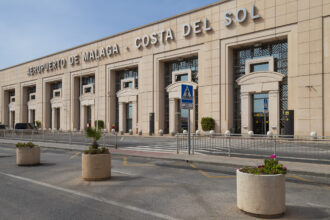
Torremolinos’ single biggest practical advantage over many other Costa del Sol resorts is that it sits directly on Málaga’s Cercanías C1 line, the commuter rail route that also serves Málaga Airport and the city centre. Trains run roughly every 20 minutes for most of the day, with the journey from the airport to Torremolinos taking around ten minutes and costing from about €1.80 (£2/$2) for a single zone 1-2 fare.
That makes it entirely practical to arrive without pre-booking any transfer at all, since the train station sits close to the town centre and several buses and taxis also connect it to the beaches. Anyone planning to use the train more than once or twice, or to combine Torremolinos with day trips into Málaga or along the coast, should also look at the Tarjeta de Consorcio, the rechargeable card that gives discounted fares across the region’s buses and trains. For a full comparison of every way to reach Torremolinos from the airport, including buses, taxis and a pre-booked private transfer, see our Malaga Airport Transfers guide.
The line itself dates back to 1975, when the original Málaga to Fuengirola railway was rebuilt and re-routed through the airport under its current Cercanías branding. Frequency has improved since, with trains now running every twenty minutes rather than the half-hourly service of the line’s earlier years.

A Day Trip to the Caminito del Rey from Torremolinos
The Caminito del Rey is a dramatic walkway bolted to the cliffs of the El Chorro gorge, roughly 65 kilometres and about an hour’s drive from Torremolinos. Built between 1901 and 1905 to let workers reach a hydroelectric plant, the path takes its name from King Alfonso XIII, who walked it in 1921 for the dam’s opening.
Decades of neglect earned it a reputation as one of the world’s most dangerous paths, with several fatal accidents recorded before much of it was closed in the early 2000s. A full restoration completed in 2015 replaced the crumbling boardwalks with secure wooden walkways, reopening the route to a wave of new visitors.
The full route now runs around 7.7 kilometres end to end, including roughly three kilometres of boardwalk fixed directly to the gorge wall, in places more than 100 metres above the river below. A hanging bridge near the far end is usually the highlight, with views back along the gorge that explain why the walk has become one of the most photographed in Andalusia.
Standard entry tickets cost from around €10 (£9/$11), though booking well ahead is essential in peak season since daily numbers are capped. Given the drive, the connecting shuttle buses and the timed entry slots, most visitors based in Torremolinos find it easier to book a guided day trip that handles the transport and tickets together, which is exactly what the tour below offers.
A Day Trip to Gibraltar from Torremolinos
Gibraltar sits roughly two hours’ drive from Torremolinos along the AP-7 motorway, making it a realistic, if long, day trip rather than an overnight excursion. Most visitors park across the border in La Línea de la Concepción and walk or taxi the short distance into Gibraltar itself.
The main draw is the Rock of Gibraltar, reached by cable car up to the Upper Rock Nature Reserve nearly 430 metres above sea level, with views stretching across the strait towards Africa on a clear day. Inside the reserve, St Michael’s Cave’s stalactite-filled chambers and the Barbary macaques of the Apes’ Den, Europe’s only wild monkey population, are the two most popular stops.
A valid passport is required to cross the border, since Gibraltar sits outside the Schengen area despite being reachable by road from Spain, and queues can build at busy times, particularly weekends. The territory uses the Gibraltar pound, though British pounds are accepted everywhere and card payments are widely available.
For a fuller breakdown of routes and timings, our dedicated Gibraltar day trip guide covers the journey from Málaga in more detail. Anyone based in Torremolinos who would rather skip the driving and border queues can instead book a guided sightseeing tour, like the one below, which handles transport and timings in one go.
One Day in Torremolinos
A single day in Torremolinos works well starting in La Carihuela for a morning coffee and a wander through the old fishing quarter’s narrow lanes, before walking the promenade east towards El Bajondillo. Break up the walk with a swim at whichever beach looks least crowded, since the sand runs continuously and there is no need to commit to one spot in advance.
By early afternoon, head up into the town centre for lunch around Calle San Miguel, then detour to Casa de los Navajas if it happens to be open, or climb to the Calvario Park lookout for the view instead. Families with an extra day to spare should set aside a full separate day for Aqualand or Crocodile Park rather than squeezing either into this itinerary.
As evening falls, a sunset walk back towards La Carihuela followed by fresh seafood at one of its chiringuitos makes a natural way to close the day, with La Nogalera on hand afterwards for anyone wanting to carry the evening on into the night.
Timing lunch matters here: most chiringuitos along the seafront stop serving by around four in the afternoon, in keeping with typical Spanish dining hours, so arriving much later than two o’clock risks a limited menu. Building in a little slack for this before heading up to Calle San Miguel avoids rushing the rest of the day’s plan.

Two or Three Days in Torremolinos
The one day itinerary above covers Torremolinos’ beaches and town centre comfortably, but deliberately leaves out anything needing a full day of its own. A second or third day is the place to pick up whichever attraction it set aside.
Aqualand Torremolinos or Crocodile Park, both covered earlier in this guide, are the obvious candidates for a dedicated day, since combining either with the beaches and old town in one day leaves too little time for both. Treat Aqualand especially as its own full day.
The Jardín Botánico-Histórico Molino de Inca rewards a slower visit than most one-day itineraries allow, with time to actually wander its Japanese garden and spring-fed paths. At from €3 (£3/$3) entry, it remains one of the better value half-days on this stretch of coast.
A second or third day also opens up day trips further afield. Ronda, the dramatic clifftop town, is a popular choice, reached by a regional train that takes under two hours from Málaga with a change at María Zambrano station, fares from around €13 (£11/$14) one-way, the journey itself part of the attraction.
Closer to home, the whitewashed hill village of Mijas Pueblo is reachable by a short bus ride inland, while Benalmádena and Fuengirola sit a few minutes further down the same Cercanías line, making either an easy half-day add-on without committing to a longer trip.
A spare day is also the natural point to consider the two longer excursions covered later in this guide: the dramatic cliffside walkway at Caminito del Rey and a full day trip across the border to Gibraltar. Both need the best part of a day away from Torremolinos, which is exactly what a second or third night buys you.
Torremolinos vs Benalmádena vs Fuengirola
Torremolinos sits on the same stretch of Cercanías railway as Benalmádena and Fuengirola, making comparing all three a genuinely useful exercise for anyone deciding where to base a Costa del Sol stay.
Torremolinos itself, covered throughout this guide, offers the longest connected beach of the three towns, the historic La Carihuela quarter and the coast’s best known LGBTQ+-friendly nightlife, making it the strongest all-round choice for beach time combined with an active evening scene.
Benalmádena, immediately west along the coastline, trades some of that beach length for standalone attractions, including the Teleférico cable car up to Monte Calamorro, the upmarket Puerto Marina development and the Moorish-style Castillo de Bil-Bil. It suits visitors wanting a day of sightseeing built around one or two attractions.
Fuengirola, a little further along the line, is built around its own seven kilometre promenade and the well regarded Bioparc zoo, covered in our dedicated Fuengirola guide. Families who have already done Torremolinos’ water park sometimes add a day here for the zoo.
All three towns sit a few minutes apart on the same C1 line, so a single ticket often separates a day trip from a change of base. Torremolinos leans towards nightlife, Benalmádena towards paid attractions, and Fuengirola towards a calmer, more family-oriented rhythm.
Benalmádena’s cable car climbs to 800 metres above sea level, high enough that on a clear day the view stretches to Gibraltar and the North African coast, while Fuengirola’s Bioparc swaps bars and cages for immersive, walk-through habitats modelled on Madagascar, equatorial Africa and the jungles of Southeast Asia. Either makes a genuinely different day out from anything Torremolinos itself offers.

Rupert’s Handy Travel Tips
Planning a trip to Torremolinos? Here are a few things that will make your visit go a little more smoothly.
- Take the train from the airport: The Cercanías C1 line reaches Torremolinos in around ten minutes and is far cheaper than a taxi for most arrivals.
- Base yourself by preference: La Carihuela suits a quieter stay near good seafood, while the centre near El Bajondillo puts you closest to shops, bars and nightlife.
- Check Casa de los Navajas before you go: Its opening hours change with the season, so confirm locally rather than assuming it will be open.
- Visit the water parks early: Aqualand and Crocodile Park both get busy by late morning in July and August, so an early start pays off.
- Carry small change for chiringuitos: Many beach bars along the promenade still prefer cash for smaller orders.
- Walk the promenade at golden hour: The stretch between La Carihuela and El Bajondillo is at its best in the hour before sunset.
Want to meet the reindeer behind our travel tips? Find out more in our page Who is Rupert?.




Frequently Asked Questions about Torremolinos
What is Torremolinos best known for?
Torremolinos is known as one of the original Costa del Sol package-holiday resorts, with a long connected beach, the historic La Carihuela fishing quarter and a well established LGBTQ+-friendly nightlife scene centred on La Nogalera.
How do I get from Malaga Airport to Torremolinos?
The easiest option is the Cercanías C1 train, which takes around ten minutes and costs from about €1.80 (£2/$2). Buses, taxis and a pre-booked private transfer are also available for those who prefer not to use the train.
Which Torremolinos beach is best for families?
El Bajondillo and Playamar are the most convenient for families thanks to their gentle slope into the water and proximity to the town centre, while La Carihuela suits those who prefer a quieter beach with good seafood nearby.
Is Torremolinos good for nightlife?
Yes. The town has a wide range of nightlife, from quiet beachfront bars to the busy clubs and terraces of La Nogalera, one of the Costa del Sol’s best known nightlife districts.
Is Torremolinos LGBTQ+ friendly?
Yes. Torremolinos has a long-standing reputation as one of Spain’s most LGBTQ+-friendly resort towns, centred on the La Nogalera district, and hosts its own Pride celebrations each year.
How long do I need in Torremolinos?
A single day is enough to cover the beaches, La Carihuela and the town centre, but two or three days allow time to add a water park, the botanical garden and a more relaxed pace overall.
Is Aqualand Torremolinos worth visiting?
For families or anyone looking for a break from the beach, yes. It is the largest water park on the Costa del Sol, though it is best treated as a full separate day rather than an add-on to other sightseeing.
What is La Carihuela known for?
La Carihuela is Torremolinos’ old fishing quarter, known for its whitewashed cottages, slower pace and some of the best fresh seafood restaurants on this stretch of coast.
Can I walk between Torremolinos’ beaches?
Yes. A paved promenade connects Montemar, La Carihuela, El Bajondillo, Playamar and Los Álamos almost continuously, making it easy to walk the whole seafront in one go.
Further Reading
If Torremolinos is part of a wider Costa del Sol trip, a handful of other guides are worth reading alongside this one. Our Malaga Airport Transfers guide covers every option for reaching Torremolinos and the surrounding resorts from the airport, from the Cercanías train to taxis and car hire, while the Tarjeta de Consorcio guide explains how to save money on fares if you plan to move between Torremolinos, Málaga and neighbouring towns more than once or twice.
Travellers comparing transfer options more broadly may also find our Terravision Review useful, since the operator runs direct coach routes between Málaga Airport and several Costa del Sol resorts including Torremolinos itself. For those planning a side trip further along the coast, our Gibraltar day trips from Málaga guide explains how to combine a Costa del Sol stay with a visit to the Rock.
Anyone planning to travel further around Spain by train afterwards should also look at our Interrail Spain Pass guide, which covers regional rail and AVE reservations beyond the Cercanías network. Finally, staying connected throughout a Costa del Sol trip is easier with a travel eSIM, and our eSIM Apps guide compares the best providers for affordable data in Spain.