
Reviewed by our editorial team Published
Marbella sits on Spain’s Costa del Sol in Málaga province, close enough to Málaga Airport for a straightforward transfer and within an hour or so of the Rock of Gibraltar along the same coastline. Its name has become shorthand for Spanish glamour, a reputation built on superyachts, five-star hotels and a jet-set crowd that first discovered the town in the 1950s.
That reputation only tells half the story. Marbella’s walled Casco Antiguo, the genuinely old town, predates the glitz by centuries, built around narrow lanes and a central square that has stood since the fifteenth century, long before anyone had heard of Puerto Banús.
This contrast is what makes Marbella worth understanding properly rather than dismissing as a playground for the wealthy. A morning spent wandering whitewashed lanes feels closer to a quiet Andalusian village than to the marina scene just a few kilometres along the coast, and both experiences are entirely genuine.
The Golden Mile physically links the two worlds, a strip of coastal road lined with grand hotels, private villas and manicured landscaping that explains Marbella’s postcard image. Visitors who only see one side, old town charm or marina glamour, miss what actually makes the town distinctive as a destination.
This guide works through Marbella’s old town, its beaches, Puerto Banús, the Golden Mile, golf culture, a nearby Roman villa and the practical choices that shape a visit, from modest budget days out to properly indulgent ones, so you can decide which version of Marbella suits your trip.
Marbella at a Glance
| Region | Costa del Sol, Málaga province, Andalusia |
| Known for | Puerto Banús marina, the Golden Mile, a genuinely historic old town |
| Nearest airport | Málaga Airport (AGP), around 50 minutes by road |
| Nearby highlight | Gibraltar, roughly an hour away along the coast |
| Best for | Beaches, old town wandering, golf, upscale dining and shopping |
| Suggested stay | 1 to 2 days as a stop, longer for a full resort break |
Casco Antiguo: Marbella’s Old Town and Plaza de los Naranjos
Marbella’s old town is a genuinely historic quarter, still partly enclosed by fragments of its medieval walls and built around a tight grid of pedestrian streets. Balconies dripping with geraniums and whitewashed facades give the Casco Antiguo an atmosphere that feels closer to an inland Andalusian village than to a coastal resort, and it rewards slow walking rather than a quick pass-through.
At its heart is the Plaza de los Naranjos, or Orange Square, laid out in 1485 and still ringed by its namesake orange trees. The square is framed by the Renaissance-style Ayuntamiento, Marbella’s town hall, and by the small sixteenth-century Ermita del Santo Cristo chapel, making it one of the most photographed corners of the town.
A short walk away stands the Iglesia de la Encarnación, the town’s main parish church, with a baroque facade that took shape over several centuries of rebuilding. According to the Costa del Sol’s official tourism board, the old town’s layout still reflects its Moorish-era origins, which is part of why it holds up so well against the marina scene elsewhere in town.
Tapas bars and small family-run restaurants cluster around the square and its side streets, offering a far more affordable introduction to Marbella than anything near Puerto Banús. Evenings here are unhurried, with locals as visible as tourists.
The square’s orange trees look as old as the plaza itself, but they were only planted in 1941, more than four centuries after the square was first laid out in 1485. It’s a reminder that even Marbella’s most historic-feeling corners have kept quietly changing long after the Moorish-era street plan was fixed.
Best if you want daily housekeeping and a front desk. Filter by area first, then by price.
Check availabilityBest for longer stays. Whole apartments and houses, so you are not eating out three times a day.
View rentalsBest as a last check before booking. Compares hotel rates across several sites in one search.
Compare ratesPuerto Banús Marina
Puerto Banús is the marina development that built Marbella’s international reputation, founded in 1970 by developer José Banús on a stretch of coastline a few kilometres west of the old town. It opened as a purpose-built luxury port and has stayed one ever since, with berths that routinely host superyachts well over thirty metres long.
The marina promenade is lined with designer boutiques, waterfront restaurants and bars that double as prime people-watching spots, since much of the appeal here is simply observing the boats and the crowd rather than buying anything. Walking the full length of the harbour front costs nothing and remains the most popular free activity in Marbella.
Beyond the water, Puerto Banús has a livelier nightlife scene than the old town, with clubs and late-opening bars that draw a younger crowd through the summer months. It gets genuinely busy in peak season, so an early evening visit tends to be more comfortable than a midsummer afternoon.
A small bullring, the Plaza de Toros, sits just inland from the marina and occasionally hosts events, though it is no longer in regular use for bullfighting. It’s a useful landmark for orienting yourself if you arrive by bus from central Marbella.
The marina’s whitewashed, village-style look was a deliberate choice. Architect Noldi Schreck rejected the modernist tower blocks first proposed for the site in favour of low, Andalusian-style buildings inspired by Port Pierre-Canto in Cannes, and the complex opened to the public on 2 August 1970 with a party attended by Prince Rainier of Monaco and the Aga Khan, where a young Julio Iglesias performed.
Several operators now run sunset catamaran trips directly from the marina, drifting along the coastline with onboard drinks and music while the sky turns pink behind the old town’s rooftops. It’s one of the simplest ways to see Marbella’s skyline from the water without chartering a boat of your own.
Smaller sailing yachts also leave from Puerto Banús for half-day trips that search for wild dolphins further offshore, with a swimming stop and a local skipper on hand to point out marine life along the way. Onboard drinks and paddleboards are usually included, making it a popular alternative to the catamaran for smaller groups.
Marbella vs Puerto Banús
Puerto Banús often gets treated as a separate resort town, but it’s actually a marina development that sits entirely within Marbella’s own municipality. The confusion is understandable given how different the two feel, yet they share the same town hall, postcode region and local administration.
Marbella’s old town has existed since at least the fifteenth century, while Puerto Banús only broke ground in 1970 as a purpose-built luxury harbour. That gap in age explains why one has winding medieval lanes and the other has a marina promenade lined with designer boutiques.
Geographically, Puerto Banús sits a few kilometres west of the old town along the same stretch of coastline, connected by the Golden Mile and a short, regular bus ride. Visitors staying in one rarely need more than twenty minutes to reach the other.
Accommodation listings sometimes blur this further, since a hotel or apartment described as being in Puerto Banús is still technically a Marbella address, just a different neighbourhood of it. It’s worth checking exactly which part of town a listing sits in before assuming it means old town charm.
The practical distinction matters most for expectations. Puerto Banús delivers marina glamour, designer shopping and nightlife, while the old town offers history, tapas bars and a slower pace, and neither one substitutes for the other.
Treating them as two sides of the same town, rather than two separate destinations, is the most useful way to plan a visit. A single well-organised itinerary can comfortably take in both without feeling like you’ve left Marbella at all.
The scale of the gap shows up in the numbers. Puerto Banús packs 915 berths into just fifteen hectares of water, with room for yachts up to fifty metres, while the old town’s entire Plaza de los Naranjos could sit comfortably inside a corner of the marina‘s car park.
The Golden Mile
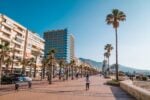
The Golden Mile is the stretch of coastal road running roughly between Marbella’s old town and Puerto Banús, lined with some of the most expensive real estate on the Costa del Sol. It takes its name from the sheer concentration of wealth along this short section of coastline, including grand hotels and gated villa estates.
Several of Marbella’s best-known hotels sit along this stretch, including long-established beachfront properties that have hosted European royalty and international celebrities since the 1950s and 1960s. A large mosque, built in the 1980s with Gulf state funding, also stands along the Golden Mile and remains a notable landmark even for visitors who never go inside.
For most visitors, the Golden Mile is best experienced as a scenic walk or drive rather than a destination with specific stops, since much of the frontage is private villas and hotel grounds rather than public attractions. Beach access points are dotted along its length, giving a quieter alternative to the beaches right in Marbella town.
Walking the full Golden Mile takes around an hour at an easy pace, and it works well as a link between an old town morning and a Puerto Banús evening.
The mosque along this stretch, completed in 1981 and financed by the Saudi government, was designed by Córdoban architect Juan Mora in an Andalusian-influenced style and holds over 800 worshippers. It was commissioned by Prince Salman in honour of King Fahd, a frequent visitor to Marbella in that era.

Parque de la Alameda
Parque de la Alameda is Marbella’s best-known central park, a shaded square right at the edge of the old town that predates most of the resort’s modern development. Its most distinctive feature is a series of hand-painted ceramic benches, a local craft tradition that gives the park a character unlike any generic municipal garden.
Mature trees provide genuine shade through the hottest part of the day, making the Alameda a sensible midday stop between old town sightseeing and the walk down toward the seafront. It’s a free, low-key spot that locals use just as much as tourists.
From the Alameda, the Avenida del Mar leads down toward the beach promenade and passes a small outdoor sculpture display, including pieces attributed to Salvador Dalí, that adds an unexpected cultural stop along an otherwise straightforward walking route. It’s an easy five to ten minute stroll downhill.
This connecting route between the Alameda and the seafront is one of the more pleasant short walks in Marbella, and it costs nothing beyond the time it takes.
The park itself dates to the eighteenth century, and its ceramic-tiled benches ring a fountain, the Fuente de la Virgen del Rocío, that has stood since 1792. A 1930s renovation added the marble paths visitors walk today, so the shade and the tiles are considerably older than most of the town around them.
Marbella’s Beaches
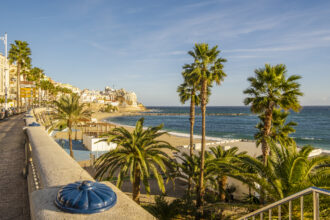
Marbella’s municipality has one of the longest stretches of coastline on the Costa del Sol, with a long run of named beaches rather than a single town beach. Playa de Venus and Playa El Faro sit closest to the old town, both reasonably lively and well served by beachside bars.
La Fontanilla, just west of the centre, tends to be calmer and popular with families, while Casablanca beach further along offers more space to spread out without the density of the central stretch. Several of Marbella’s beaches hold Blue Flag status in a typical season, reflecting consistent water quality and facilities.
Beaches along the Golden Mile and toward Puerto Banús, including Nagüeles and the stretch near Río Verde, sit in front of the area’s grand hotels but remain public like all Spanish beaches, so a beach towel costs nothing even in front of a five-star resort.
Sunbeds and parasols at the organised beach clubs are rented separately and vary widely in price depending on how upscale the club is, so budget-conscious visitors can simply bring their own setup to any public stretch.
Marbella holds eight Blue Flag beaches in a typical season, more than any other municipality in Málaga province, with separate Blue Flag recognition for both the Puerto Banús and Virgen del Carmen marinas as well. That consistency is a large part of why so many visitors return to the same handful of beaches year after year.
Best Beaches by Area
Marbella’s beaches are easiest to choose between once you think of them by area rather than by name alone, since which stretch suits you depends heavily on where you’re already based. Matching a beach to your location saves a long walk back in the midday heat.
For anyone staying in or near the old town, Playa de Venus and Playa El Faro sit within a short walk of the Casco Antiguo and the seafront promenade, making them the obvious choice if you don’t want to travel far.
Heading west toward Puerto Banús, La Fontanilla and Casablanca beach sit roughly along the route, with La Fontanilla the calmer, more family-leaning option and Casablanca offering more open space to spread out.
Visitors based on the Golden Mile are best served by the beaches directly in front of it, around Nagüeles and the Río Verde stretch, which sit right outside the grand hotels without needing a bus or taxi at all.
Anyone splitting time between the old town and Puerto Banús can treat the beaches in between as natural stopping points, breaking up the Golden Mile walk with a swim rather than doing it in one unbroken stretch.
Thought of this way, Marbella’s beaches stop being an overwhelming list and become a simple matter of picking the stretch nearest wherever your day already has you, old town, Golden Mile or Puerto Banús end.
At the far eastern edge of the municipality, past Cabopino, the protected Dunas de Artola add a genuinely different stretch to the list, a twenty-hectare run of living sand dunes declared a Natural Monument in 2001. Wooden walkways let visitors cross the dunes without disturbing the native junipers and nesting birds.
Best if you can move a day either way. Shows how the fare changes across the month.
Compare flightsBest if you want maps and messaging working the moment you switch your phone on.
See eSIM plansBest after a long flight or a late landing. Price agreed before you travel, and no taxi queue.
Check transfersThe Bonsai Museum
Marbella’s Museo del Bonsai sits inside the Arroyo de la Represa park, a short walk from the old town, and holds a collection of several hundred bonsai specimens, some reportedly well over a century old. It’s an unusual, genuinely niche attraction that most visitors to Marbella never expect to find alongside beaches and marinas.
The collection includes both native Mediterranean species and imported trees, among them a wild olive estimated at some three hundred years old and specimens displayed on sculpted stone brought from the El Torcal nature reserve, rather than a conventional indoor gallery setup. The museum has been closed to the public in recent years while its building and collection await a new home, so it’s worth checking current status with the tourist office rather than assuming it’s open.
When it is open, visits usually take under an hour, making it an easy add-on to a morning in the old town rather than a half-day commitment. Even dormant, it remains one of the more genuinely unusual attractions anyone ever expects to find in central Marbella.
Marbella with Children
Marbella works well as a family destination without needing a single theme park, largely because its beaches shelve gently and are patrolled by lifeguards through the main season. That makes the public stretches near the old town a genuinely safe choice for younger children.
Playa de Venus and Playa El Faro, both close to the old town, are flat, sandy and backed by beachside bars serving simple food, which makes them easy for a family to settle into for a full morning. Parasols and a bucket and spade are really all you need.
Parque de la Alameda gives families a shaded break from the sun, with its ceramic benches and mature trees offering a natural spot to rest between the beach and the old town. It’s free, it’s central and it rarely feels crowded.
The Bonsai Museum would be a genuine novelty for most children, who don’t expect to find a collection of miniature century-old trees tucked into a town known for beaches and marinas, though it has been closed in recent years pending a new home, so it’s worth checking before building a day around it. Three of Marbella’s beaches are also officially adapted for visitors with reduced mobility, each equipped with an amphibious bathing chair, a detail families travelling with a wheelchair or pushchair often appreciate as much as the lifeguard cover.
Puerto Banús itself is less naturally suited to young children, given the crowds, the heat reflecting off the marina stone and the evening-leaning nightlife, though an early walk along the promenade to see the boats still works as a short outing.
Pairing a relaxed beach morning with an Alameda break and an occasional Bonsai Museum stop covers most of what makes Marbella genuinely workable with children, without needing to build a day around a single big attraction.
Villa Romana de Río Verde
Marbella’s Roman history is easy to overlook, but the Villa Romana de Río Verde, a first-century Roman villa and bath complex near the mouth of the Río Verde, confirms the area was settled long before the Moorish period that shaped the old town. Its best-known feature is a well-preserved mosaic floor depicting marine motifs.
The site sits within a residential area west of the centre, roughly between the old town and Puerto Banús, and access has historically been limited to scheduled guided visits organised through the regional tourism authority rather than open daily hours. It’s worth confirming current visiting arrangements before planning a trip specifically around it, since access policies have shifted over the years.
For visitors interested in Andalusia’s layered history, the villa is a genuine curiosity that most Marbella itineraries skip entirely in favour of the beaches and marinas nearby. It adds real depth to a town too often reduced to its glamour.
Archaeologists have worked the site since excavations began in 1960, and its standout mosaic is unusually specific, a culinary scene tied to the villa’s own fish-salting operation rather than a generic decorative motif. That focus on garum production makes it a rare window into how a wealthy Roman household on this coast actually made its money.

Golf on the Costa del Golf
Marbella and its surrounding municipalities are sometimes nicknamed the Costa del Golf, reflecting one of the densest concentrations of golf courses anywhere in Europe. Real Club de Golf Guadalmina, dating to the late 1950s, is one of the oldest courses in the area and helped establish Marbella’s golf reputation early.
Courses such as Los Naranjos, Aloha Golf Club and Río Real sit within or close to Marbella’s boundaries, each with its own character, from parkland-style layouts to courses with sea views along the coast. Green fees vary considerably by course, season and tee time, generally running from around €50 up to €200 or more.
In rough terms that’s roughly £43 to £174, or $54 to $216, for adult green fees, with junior and off-peak rates sometimes available at individual clubs. Many courses also offer club and buggy rental for visitors who haven’t brought their own equipment.
Golf tourism brings a steady, often older crowd to Marbella outside the peak summer beach season, which helps explain why the area supports so many courses year round rather than just a handful aimed purely at holidaymakers.
Guadalmina’s own history traces back to 1934, when Basque agronomist Norberto Goizueta bought the estate as sugar cane farmland and only later turned twenty-five years of harvests into a golf course, opening what’s now considered Marbella’s founding club in 1959. It has since hosted King Juan Carlos and Sean Connery among its more famous visitors.
San Pedro de Alcántara and Nueva Andalucía
San Pedro de Alcántara is a district of Marbella municipality a few kilometres west of Puerto Banús, with its own beachfront promenade and a pedestrianised main street, Calle Marqués del Duero, that feels noticeably more local than the marina. It’s worth a brief stop if you’re exploring west along the coast.
Nueva Andalucía, inland from Puerto Banús, is best known among visitors for its concentration of golf courses, including Los Naranjos and Aloha, alongside a quieter residential feel than the marina itself. It makes a sensible base for a golf-focused stay without paying beachfront premiums.
Neither area has the standalone draw of the old town or Puerto Banús, but both round out a fuller picture of how Marbella’s municipality actually functions beyond its most photographed corners.
San Pedro itself began in the mid-nineteenth century as an agricultural colony founded by General Manuel Gutiérrez de la Concha, the Marqués del Duero, its namesake still visible in the main street running through town. It grew from just 35 residents before 1860 to over 500 within two years, almost all of them sugar cane workers.
Which Part of Marbella Should You Stay In?
Deciding where to base yourself shapes the whole trip more than almost any other choice, since Marbella’s municipality covers a genuinely broad stretch of coastline with very different characters. The right base depends on what kind of holiday you actually want.
The old town suits travellers who want walkable charm, lower prices and an evening scene built around tapas bars rather than clubs. It’s the best base for anyone prioritising the Casco Antiguo’s lanes and the Alameda park over beachfront views.
The Golden Mile works well for visitors who want five-star comfort and direct beach access without committing to either extreme, since it sits conveniently between the old town and Puerto Banús. Expect to pay a premium for that location, reflected in the hotel rates along this stretch.
One Golden Mile hotel, the Puente Romano, takes its name from a genuine first-century Roman bridge still standing in its gardens, a small stone arch that once carried a coastal road between Cádiz and Cartagena. It’s a reminder that even the most modern-feeling stretch of the Mile sits on considerably older ground.
Puerto Banús is the obvious choice for anyone whose trip centres on nightlife, marina views and designer shopping, and staying there puts the late-opening bars and clubs within walking distance. It’s a noticeably less practical base for day trips into the old town, given the extra journey time.
San Pedro de Alcántara suits budget-conscious visitors and golfers who want a genuinely local, less touristy base with its own beach and main street, while remaining a short bus ride from Puerto Banús. It trades some polish for noticeably lower accommodation costs.
Many visitors end up splitting the difference, basing themselves on the Golden Mile or in San Pedro and treating the old town and Puerto Banús as day visits rather than home bases. That approach captures most of what each area offers without fully committing to one side.
Best for short city stops where being central matters more than the room. Dorms and private rooms both listed.
See hostelsBest arranged before you fly rather than after. Covers claim handling, plus lounge access on eligible delays.
Explore AirHelp+Best for the gap between checking out and your train. Drop bags at a shop or hotel nearby and carry on.
Store your bagsNightlife in Marbella and Puerto Banús
Marbella’s nightlife splits cleanly into two very different scenes, and knowing which one you want before you set out saves a wasted taxi ride. The old town and Puerto Banús operate almost like separate worlds after dark.
In the old town, evenings centre on tapas bars and small plazas around the Casco Antiguo, with locals and visitors mixing over wine and olives rather than queuing for a club. It stays lively but rarely loud much past midnight.
Puerto Banús is the opposite end of the spectrum, with late-opening bars along the marina front leading into clubs that keep going well into the early hours through peak season. Venues here lean toward house music, bottle service and a dressed-up crowd.
The marina’s bars and lounges tend to fill from early evening onward, well before the clubs proper get going, so a Puerto Banús night often starts with dinner and drinks on the promenade. Dress codes at the busier venues can be stricter than visitors expect.
Between the two, the Golden Mile’s hotel bars offer a quieter middle ground, suited to a relaxed late drink without either the old town’s tapas-bar pace or Puerto Banús’s club intensity.
Choosing between them really comes down to mood rather than logistics, since a short bus ride or taxi connects all three areas easily enough. An old town evening and a Puerto Banús night out don’t have to be rival choices on the same trip.
One of the marina’s longest-running clubs, built in a purpose-made Moorish style in just seventy-two days, opened in 1997 and spent the better part of three decades on the guest lists of visiting musicians and film stars before changing hands in the past couple of years. That kind of longevity is unusual even by Puerto Banús standards.
Shopping in Marbella
Puerto Banús is Marbella’s main shopping draw, a marina-front strip of designer boutiques that reads like a highlight reel of European fashion, with Gucci, Versace and Dior among the names facing the yachts across the promenade. Window-shopping along the water costs nothing, and it remains one of the better free things to do once the midday heat has passed.
The old town offers a completely different kind of shopping, built around Calle Ancha and Calle Nueva and the smaller lanes running off them, where independent boutiques sell resort wear, handmade leather sandals and hand-painted ceramics rather than international labels. Calle Ortiz de Molinillo in particular has a small cluster of goldsmiths producing bespoke jewellery.
Away from both extremes, inland centres such as La Cañada handle the everyday shopping, supermarkets, pharmacies and chain stores, that neither the old town nor Puerto Banús is really set up for. It’s a useful fallback for anything practical rather than decorative.
Spanish shopping hours still shape the day in both the old town and Puerto Banús, with many independent shops closing for a couple of hours in the early afternoon before reopening into the evening. Puerto Banús’s boutiques tend to keep more continuous hours through peak season, largely because their customers shop later into the night.
Food Scene in Marbella
Marbella’s old town is the best place to eat Andalusian food properly, with tapas bars clustered around the Plaza de los Naranjos serving classics like boquerones, croquetas and salmorejo alongside the house wine. Prices here run noticeably lower than anything near the marina.
The Mercado Municipal on Calle San Francisco, just off the main square, has operated as the old town’s provisioning hub for decades, open daily from eight until two with stalls selling fresh fish, Iberian ham and local cheese. It’s as much a place to watch Marbella shop for its own dinner as it is to pick up ingredients for a picnic.
Along the beach, chiringuitos grill espetos, sardines skewered on bamboo canes and cooked over open olive-wood fires directly on the sand, a tradition said to trace back to Phoenician fishermen and later popularised after King Alfonso XII reportedly ate them with his hands at a beach bar in 1884. They’re traditionally eaten between May and August, the months without an r in their Spanish name.
Puerto Banús flips the price scale entirely, with waterfront restaurants charging a premium for the view as much as the food, sushi, Mediterranean fusion and steakhouses dominate the marina-front menus. Reservations matter here far more than in the old town, especially for a table with a direct view of the boats.
Marbella on a Budget vs Marbella’s Luxury Side
Marbella genuinely works as a budget destination if you choose carefully, since the old town, the Alameda park, the public beaches and the Golden Mile walk are all free, and a simple menu del día lunch away from the marina runs noticeably cheaper than anything near Puerto Banús.
Public buses connect the old town, Puerto Banús and San Pedro de Alcántara for a few euros a journey, making a car or taxi entirely optional for a budget-focused visit. Staying slightly inland or in San Pedro rather than directly on the Golden Mile also cuts accommodation costs considerably.
The luxury side is just as real, from beach clubs charging a premium for a sunbed and bottle service to designer boutiques in Puerto Banús and five-star hotels along the Golden Mile that can run several hundred euros a night in peak season.
Most visitors end up somewhere in between, spending modestly on the old town and beaches while treating themselves to one upscale dinner or a Puerto Banús evening out, and that mix arguably captures Marbella more honestly than committing fully to either extreme.
The luxury side effectively started in 1954, when Prince Alfonso von Hohenlohe converted his private estate into the Marbella Club, the Costa del Sol’s first five-star hotel, after car trouble on the coast road eight years earlier led him to buy land nearby in the first place. Early guests reportedly included Grace Kelly, Ava Gardner and Audrey Hepburn.
Marbella in One Day or Two
A single day works best with the old town first, before the midday heat sets in. Start at the Plaza de los Naranjos and the Ayuntamiento, lose an hour in the surrounding lanes, then cut through the Alameda park and down the Avenida del Mar to the seafront, a walk of under fifteen minutes that drops you straight onto the promenade.
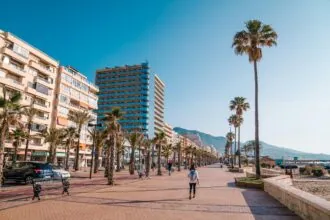
From there, the full Paseo Marítimo runs roughly seven kilometres west to Puerto Banús, passing the Puente Romano hotel’s genuine Roman bridge, the long Río Verde pedestrian walkway and a scattering of chiringuitos that have barely changed since the 1970s. Walking the whole stretch takes well over two hours each way, so most visitors treat it as a route to dip into rather than finish in one go.
A more realistic one-day version covers it in sections instead: beach time at Playa de Venus or La Fontanilla through the early afternoon, then a bus or taxi the rest of the way to Puerto Banús for the early evening, when the marina is at its most pleasant and least crowded. Dinner on the harbour front rounds off the day without needing to walk the promenade back in the dark.
With a second day, reverse the pace and make the Golden Mile itself the main event, walking or driving its length in the morning past the grand hotels and the mosque before the sun gets too high. Use the afternoon for whichever detour suits you, a round of golf in Nueva Andalucía, a slower look at San Pedro de Alcántara’s own beachfront, or the Roman villa at Río Verde if access allows.
The second evening is really a choice between repeating Puerto Banús or doing the opposite and heading back into the old town for a quieter tapas crawl around the Casco Antiguo’s side streets. Splitting the two days by energy rather than by geography, loud one evening and calm the next, tends to suit Marbella’s split personality better than trying to see everything at once.
Getting To and Around Marbella
Marbella is the most populous municipality in Spain without a railway station of its own, a gap regional and national governments have talked about closing since the 1990s without ever finishing the job. The nearest station is Fuengirola, the southern end of the Cercanías C1 line from Málaga, and covering the rest of the distance means a bus, a taxi or a transfer rather than staying on rail.
From Fuengirola, the M-220 bus covers the final stretch to Marbella in a little over an hour, running roughly every half hour from around 6:30am to 11pm. It’s a workable route for anyone arriving by train from elsewhere on the coast, though it’s rarely quicker than heading to Marbella by road straight from Málaga.
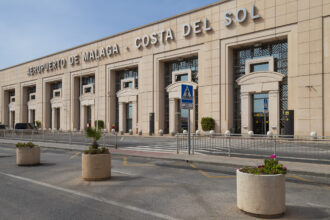
Most visitors skip the train question entirely and fly into Málaga Airport, around 50 minutes away by road. Avanza runs a direct coach from the airport’s Terminal 3 roughly every hour between 6:20am and 9:20pm, taking 35 to 45 minutes for around €8 to €11 (£7 to £10/$9 to $12), with no need to book ahead.
A taxi from the airport costs somewhere around €60 to €80 (£52 to £70/$65 to $86) depending on traffic and time of day, and it stays a popular choice for anyone arriving late or travelling with golf clubs and beach gear. Drivers have a choice between the tolled AP-7, usually quicker and quieter, or the free coastal A-7, which gets properly congested through summer.
Once in Marbella, the same Avanza network continues along the coast to San Pedro de Alcántara, Estepona and back toward Fuengirola and Málaga, so day trips further along the Costa del Sol rarely need a hire car. Locally, the operator CTSA-Portillo runs the town’s own urban lines, numbered L-1 through L-7 plus a summer night service, with L-1 covering the busiest run between the centre and Puerto Banús.
Within the old town itself, walking is the only sensible option, since the Casco Antiguo’s lanes are narrow, largely pedestrianised and genuinely awkward for a car to navigate. For the longer hop out to the Golden Mile or Puerto Banús, the urban buses or a short taxi ride cover the distance in well under half an hour, leaving a hire car entirely optional for anyone staying centrally.
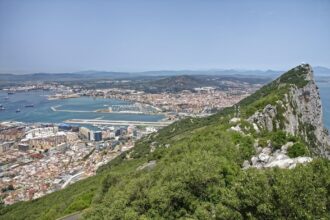
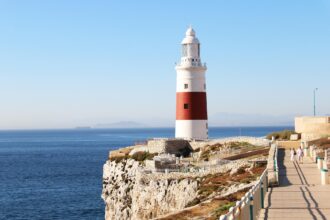
Marbella also makes a workable base for exploring further along the coast, since Gibraltar sits roughly an hour away by road, close enough for a full day trip without an overnight stay away from your hotel.

Marbella Without a Car
Marbella is genuinely workable as a car-free destination, since its most visited areas, old town, Puerto Banús, San Pedro de Alcántara and the Golden Mile, are all linked by a frequent local bus network. Renting a car buys convenience rather than necessity here.
Local urban buses run throughout the day, generally from early morning until around 11pm with later services in summer, connecting the old town to Puerto Banús and on to San Pedro de Alcántara in well under half an hour each way.
A single urban fare runs to around €1.20 (£1.04/$1.30), paid directly to the driver, while multi-journey and day passes bring the cost down further for anyone planning to hop between areas more than once a day.
For journeys further along the coast, including to Málaga Airport, interurban coaches depart from Marbella’s main bus station, with fares for the airport run typically in the €8 to €9 range (roughly £7 to £8, or $8.60 to $9.70), depending on the exact route and provider. Tickets are usually bought from the driver or at the station counter rather than online in advance.
The Tarjeta de Consorcio transport card covers many of these interurban routes across the wider Costa del Sol, and it’s worth having if you’re combining Marbella with day trips elsewhere along the coast rather than sticking to local buses alone.
Between the urban routes and the interurban coaches, a full day that starts in the old town, takes in a Puerto Banús evening and finishes back at your hotel is easily done without ever needing to book a hire car.
The same operator, CTSA-Portillo, also runs a summer-only night line connecting the old town, the Golden Mile and Puerto Banús into the small hours, handy for anyone who would rather not pay for a taxi after a late evening on the marina front. It runs a reduced timetable outside the summer months, so it’s worth checking current times before relying on it for an off-season night out.

Rupert’s Handy Travel Tips
Marbella rewards a bit of planning, since its two sides, old town and marina glamour, sit far enough apart that you’ll want a clear idea of how to move between them.
- Visit the old town early: the Plaza de los Naranjos and surrounding lanes get warm and crowded by midday, so a morning visit is far more comfortable.
- Puerto Banús is better at dusk: the marina’s lighting and atmosphere improve noticeably in the early evening, and it’s less intense than during the midday heat.
- Buses beat driving in the centre: parking near the old town and Puerto Banús can be genuinely frustrating in peak season, so local buses are usually the easier option.
- Bring your own beach gear: any public stretch of Marbella’s beaches is free to use, so a towel and parasol can save a surprising amount versus a beach club sunbed.
- Check the Roman villa’s access before relying on it: visiting arrangements at Río Verde have changed over the years, so confirm current opening days rather than building a day around it.
- Pack for two different evenings: something smart for Puerto Banús and something relaxed for the old town means you’re ready for either side of Marbella.
Want to meet the reindeer behind our travel tips? Find out more in our page Who is Rupert?.




Frequently Asked Questions
What is Marbella best known for?
Marbella is best known for Puerto Banús marina and its upscale Golden Mile, though its walled old town, the Casco Antiguo, is a genuinely historic district that predates the resort’s glamorous reputation by centuries.
Is Marbella worth visiting on a modest budget?
Yes, the old town, Alameda park, public beaches and the Golden Mile walk cost nothing, and local buses make it easy to see most of Marbella without a car or taxi fares.
How far is Marbella from Málaga Airport?
Marbella is around 50 minutes from Málaga Airport by road, with hire car, bus, taxi and pre-booked private transfer all common options for the journey.
Is Puerto Banús free to visit?
Walking the marina promenade and watching the boats costs nothing, though shopping, dining and beach club sunbeds in Puerto Banús are priced at the upscale end of the market.
What exactly is the Golden Mile?
The Golden Mile is the stretch of coastal road between Marbella’s old town and Puerto Banús, lined with grand hotels, private villas and some of the most valuable real estate on the Costa del Sol.
Are Marbella’s beaches sandy and clean?
Marbella has a long run of named beaches, several holding Blue Flag status in a typical season, ranging from busy central stretches to quieter spots further along the Golden Mile.
Can I visit the Roman villa at Río Verde?
Access to the Villa Romana de Río Verde has historically been limited to scheduled guided visits, so it’s worth confirming current arrangements through the regional tourism board before planning around it.
Is Marbella a good destination for golf?
Yes, Marbella and its surrounding area are sometimes nicknamed the Costa del Golf, with long-established courses like Guadalmina, Los Naranjos and Aloha all within easy reach.
How many days do I need in Marbella?
One day covers the old town, a beach and an evening in Puerto Banús, while two days allows time for the Golden Mile, golf, the Bonsai Museum or San Pedro de Alcántara as well.
Further Reading
Marbella works well as part of a wider Costa del Sol itinerary rather than as an isolated stop, and most visitors arrive through the same gateway. Our guide to Málaga Airport transfers covers every realistic way to get from arrivals to Marbella, whether that’s a hire car, a bus connection or a pre-booked private transfer straight to your hotel.
Marbella’s position on the coast also puts it within easy striking distance of Gibraltar, which many visitors treat as a natural day trip during a longer Costa del Sol stay. Our Gibraltar travel guide covers the territory’s own highlights in full, while our dedicated Malaga to Gibraltar day trip guide walks through routes, pickup points and border timing if you’re planning that leg from the Marbella area.
If a single day in Gibraltar is all your itinerary allows, our Gibraltar in a Day guide lays out a realistic schedule for seeing the territory’s key sights without an overnight stay. And for getting around the wider Costa del Sol by public transport rather than taxis, our guide to the Tarjeta de Consorcio transport card explains how to save money on buses and trains across the region, Marbella included.
Together, these guides round out a fuller Costa del Sol trip built around Marbella, whether you’re splitting time between the old town and Puerto Banús or using the town as a comfortable base for days out along the coast.