
Reviewed by our editorial team Published
Welcome to Fuengirola
Fuengirola sits on the Costa del Sol in Málaga province, roughly 25 kilometres southwest of Málaga city and directly on the coastal railway line. It has grown from a small fishing village into one of the coast’s most popular resort towns, without losing an old town that still feels distinctly Andalusian.
What makes Fuengirola worth a dedicated visit, rather than a quick stop on the way to Marbella, is the sheer range packed into a compact area. A seven kilometre seafront promenade, a widely admired zoo, a Moorish castle, a sprawling weekly market and a genuinely walkable old town all sit within easy reach of one another, most of them a short stroll apart.
The town owes much of its appeal to its position on the Málaga Cercanías railway, which makes it one of the easiest Costa del Sol resorts to visit without a car. Trains run roughly every twenty minutes from Málaga Airport and the city centre, arriving directly into the heart of town at Fuengirola’s own station.
Families tend to be particularly well served here. Bioparc Fuengirola‘s cageless enclosures, gently shelving beaches and a flat, traffic-free promenade all appeal to visitors travelling with children, while the old town’s tapas bars and the castle’s hilltop views give adults plenty to enjoy on their own terms too.
This guide works through Fuengirola’s main attractions one by one, covering what each offers, roughly how much time to set aside, and what it costs to visit, along with practical advice on getting around using the town’s train line and a short one day itinerary to tie it all together.
Fuengirola at a Glance
Before working through each attraction in detail, here is a quick snapshot of who Fuengirola suits best, how long to plan for and how to get there.
| Category | Details |
|---|---|
| Best for | Beaches, family attractions and a genuinely walkable old town rather than big nightlife |
| Ideal stay | 3 to 5 nights, enough to cover the main sights at an easy pace |
| Nearest airport | Málaga Airport (AGP), around 25km away |
| Train access | Direct on the Cercanías C1 line, about 30 minutes from the airport |
| Car needed | No, most attractions sit within walking distance or a short train ride apart |
| Attraction | Type | Typical Visit | Price |
|---|---|---|---|
| Paseo Marítimo | Seafront promenade | 1–2 hours | Free |
| Fuengirola’s Beaches | Beaches | Half day | Free |
| Bioparc Fuengirola | Zoo | 3–4 hours | From €23 (£20/$25) |
| Sohail Castle | Historic castle | 45–60 mins | Free |
| Old Town & Plaza de la Constitución | Historic centre | 1–2 hours | Free |
| Tuesday Market | Street market | 1–2 hours | Free to browse |
| Fuengirola Marina | Marina & boat trips | 1–3 hours | Free to visit, trips from €20 (£17/$22) |
| Paseo de los Murales | Street art walk | 30–45 mins | Free |
| Salon Varietes Theatre | Theatre | 2–3 hours | Varies by show |
| Fuengirola Bullring | Cultural centre | 30 mins–2 hours | Varies by event |
| Finca del Secretario | Roman ruins | 30–45 mins | Free |
Best if you want daily housekeeping and a front desk. Filter by area first, then by price.
Check availabilityBest for groups who want one address and separate bedrooms rather than three hotel rooms.
See holiday homesBest as a last check before booking. Compares hotel rates across several sites in one search.
Compare ratesWalking the Paseo Marítimo Rey de España
Fuengirola’s seafront promenade stretches for around seven kilometres along the coastline, making it one of the longest continuous stretches of beachfront walkway on the Costa del Sol. It runs from the mouth of the Fuengirola river near Sohail Castle past Los Boliches and on towards Carvajal, with palm trees, public art and open-air gyms lining much of the route.
The promenade is flat, wide and entirely traffic-free, which makes it just as popular with joggers and cyclists at dawn as it is with families strolling after dinner. Benches, showers and playgrounds are dotted along its length, and chiringuitos (beach bars) serving fresh seafood appear at regular intervals for anyone who wants to break up the walk.
Most visitors only need an hour or two to cover the central section near the old town, though cyclists and more energetic walkers sometimes follow it the full length towards Benalmádena. Bike hire points can be found near the marina for anyone who would rather cover the distance on wheels.
There is no cost to use the promenade, and it stays busy well into the evening during summer, when temperatures ease and the paseo becomes something of a local ritual. Arriving an hour or so before sunset is a reliable way to see it at its liveliest.
Fuengirola’s Beaches
Fuengirola’s coastline is divided into several named beaches rather than one uniform strip, each with a slightly different character. Playa de Fuengirola, also referred to locally as Santa Amalia or San Francisco depending on which stretch you’re on, runs along the town centre and tends to be the busiest of all of them.
Further along towards Málaga, Playa de Los Boliches and the adjoining Playa de Las Gaviotas offer a quieter, more residential feel, backed by apartment blocks rather than hotels. Both are gently shelving and sheltered, which makes them a reliable choice for families with younger children.
On the opposite side of town towards Benalmádena, Playa de Carvajal is smaller and generally calmer again, popular with locals wanting to avoid the busiest central sections during peak summer weeks. Several of Fuengirola’s beaches have held Blue Flag status in recent years, reflecting consistently clean water and good facilities.
All of the main beaches offer sun loungers and parasols for hire, along with lifeguard cover during the main season, showers and accessible walkways down to the sand. None of them charge for access, so the only real cost is whatever you choose to spend on a lounger or lunch along the promenade.
Which Beach Should You Choose?
Fuengirola’s coastline covers four different moods, and the right choice mostly comes down to how busy you want things and how far you’ll walk from the centre. This section weighs them against each other, building on the fuller descriptions given earlier in this guide.
Fuengirola Beach, the long central stretch also known locally as Santa Amalia or San Francisco, is the obvious pick if you want everything on your doorstep. It sits right below the old town, so loungers, showers and lunch are steps away, at the cost of being the most crowded sand in town during peak weeks.
Los Boliches, towards the Málaga end of the promenade, trades some of that convenience for a quieter, more residential setting backed by apartments rather than hotel towers. It suits visitors wanting a proper neighbourhood feel with its own shops and restaurants, and families often prefer its gently shelving water.
Carvajal, towards Benalmádena, is smaller and calmer again, popular with locals avoiding the busiest central sections. Its own train stop on the Cercanías line makes it an easy half day trip even if you’re staying elsewhere in town.
Torreblanca sits furthest out, right on the Benalmádena border, and is the quietest of the four by a clear margin. Its kilometre of sand draws more windsurfers and anglers than sunbathers, and its own Torreblanca station keeps it easy to reach despite feeling a world away from the central crowds.
As a general rule of thumb, pick the central beach for convenience, Los Boliches for a quieter residential feel, Carvajal for a calmer half day trip, and Torreblanca for space over company. None charge for access, so switching between them costs nothing more than a short train ride or walk.

Los Boliches
Los Boliches often gets mentioned only as a beach name, but it’s actually one of Fuengirola’s oldest neighbourhoods, with roots in Phoenician and Roman settlement long before the modern resort existed. It operated as its own fishing community, originally Santa Fe de Los Boliches, until merging formally with Fuengirola in the 1960s.
That heritage still shapes the neighbourhood today, with fresh seafood served in small family run bars rather than the larger tourist restaurants nearer the centre. The area has largely escaped the high rise development seen elsewhere along the coast, giving it a noticeably more residential feel than central Fuengirola.
The Parish Church of Carmen y Santa Fé anchors the community’s social life, and each July its Virgin del Carmen festival brings processions down to the seafront. Away from the beach, independent shops and cafés along the main streets give Los Boliches a genuinely local character easy to miss from the promenade.
Los Boliches has its own stop on the Málaga Cercanías line, on an elevated section of track with stairs, ramps and lifts to street level, making it just as easy to reach as Fuengirola’s main station. That independent access makes it a good quieter base, with everything else in this guide only a short train ride away.
The neighbourhood’s Roman past shows too, with the Finca del Secretario site, covered elsewhere in this guide, sitting within easy walking distance of the beach. Between its own beach, church and station, Los Boliches functions almost like a self-contained town within Fuengirola rather than a simple extension of the seafront.
Bioparc Fuengirola
Bioparc Fuengirola is one of the most highly rated zoos in Spain, built into the old town itself rather than on the outskirts, which makes it unusually easy to combine with a morning of sightseeing. Its cageless, immersive habitats recreate ecosystems from Madagascar, Equatorial Africa and Southeast Asia using water and dense planting instead of bars.
The park is home to several hundred animals across more than 100 species, including gorillas, Komodo dragons, Malayan tigers and one of the larger colonies of Madagascan lemurs in Europe. Walkways wind through dense tropical planting that feels more like a botanical garden than a conventional zoo enclosure.
Adult admission costs around €29.50 (£26/$32), with children aged three to nine and seniors generally paying about €23 (£20/$25); tickets booked online in advance are typically a little cheaper than paying on the gate. Most visitors need at least three to four hours to see the park properly, longer if travelling with children who want to linger at the play areas.
During the hottest summer months the park sometimes opens for evening visits, when cooler temperatures bring out more animal activity and a different atmosphere after dark. Checking current opening times before visiting is worthwhile, since hours shift noticeably between winter and peak summer.
Sohail Castle
Sohail Castle sits on a low hill at the mouth of the Fuengirola river, about 38 metres above sea level, with layers of history running from Phoenician and Roman settlement through to a Moorish fortress rebuilt after the Christian reconquest of 1485. Its current walls date largely from that later period, though excavation has uncovered much older foundations beneath them.
Entry has been free since the local council reopened the site as a cultural venue, having previously charged a small admission fee, and the castle is now used throughout the year for concerts, exhibitions and the annual Marenostrum Festival. It opens from 10am to 2pm, Tuesday to Sunday, and is closed on Mondays.
Inside, there is relatively little in the way of furnished rooms or museum displays, and the appeal is mostly the walk around the ramparts and the views over the river mouth, the marina and the beaches stretching away in both directions. Most visits take somewhere between 45 minutes and an hour.
The castle is a short walk from the Miramar shopping centre and the southern end of the promenade, making it easy to combine with a morning on the beach. Checking the town’s official tourism site before visiting is worth doing, since occasional evening events can affect daytime opening.
Best if you can move a day either way. Shows how the fare changes across the month.
Compare flightsBest if you want maps and messaging working the moment you switch your phone on.
See eSIM plansBest when public transport has stopped, or when you are travelling with children and bags.
Book a transferFuengirola’s Old Town and Plaza de la Constitución
For a resort town of its size, Fuengirola has an unusually large and walkable old town, with narrow pedestrian streets fanning out from the central Plaza de la Constitución. This square has functioned as the town’s social hub for generations, surrounded by cafés, tapas bars and the kind of small independent shops that have mostly disappeared from the seafront.
A short walk away stands the Church of Nuestra Señora del Rosario, Fuengirola’s main parish church, worth a brief look inside for anyone exploring the surrounding streets. The wider old town is largely traffic-free and easy to navigate on foot, with most of its restaurants clustering within a few blocks of the main square.
Evenings here have a noticeably different rhythm to the beachfront, with locals outnumbering tourists at many of the smaller bars once the sun goes down. An hour or two spent wandering the side streets, ideally timed around lunch or early evening, gives a much better sense of Fuengirola beyond its beaches.
There is no cost to explore the old town itself, and it rewards unhurried wandering more than any fixed itinerary. Combining it with the Tuesday market or an evening meal is an easy way to make the most of the area.
Tuesday Market at the Recinto Ferial
Every Tuesday morning, Fuengirola’s Recinto Ferial fairground transforms into one of the largest street markets on the Costa del Sol, with hundreds of stalls selling everything from leather goods and clothing to fresh produce, spices and souvenirs. It draws shoppers from well beyond the town itself, including coachloads of visitors from neighbouring resorts.
The market typically runs from around 9am until early afternoon, and arriving earlier in the morning generally means better stock and noticeably fewer crowds, particularly during the busy summer season. Bargaining is common practice at many clothing and accessory stalls, though food stalls tend to have fixed prices.
Beyond the shopping itself, the market is worth seeing simply as a slice of local life, with the same mix of residents and holidaymakers that has visited for decades. Comfortable shoes are worth wearing, since the fairground site is large and mostly uncovered.
There is no entry fee to browse the market, and most visitors spend between one and two hours walking its length, longer if stopping to eat at one of the food stalls along the way. It sits a short walk from the town centre and is well signposted from the main road.
Fuengirola Marina and Boat Trips
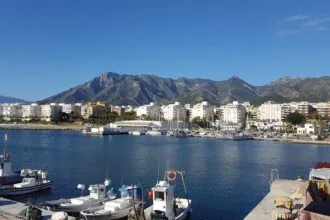
Puerto Deportivo de Fuengirola, the town’s marina, sits at the southern end of the promenade close to Sohail Castle, lined with restaurants and ice cream parlours rather than the commercial fishing fleet of earlier decades. It makes a pleasant stop for an early evening drink while watching leisure boats come and go.
Several operators run boat trips from the marina, ranging from short dolphin watching excursions to sunset catamaran cruises along the coast towards Benalmádena and Málaga. Most of these trips last between one and two hours and operate mainly between spring and autumn, with reduced schedules over winter.
Prices for boat trips vary considerably depending on the operator and type of excursion, with short group outings typically starting from around €20 to €25 (£17–22/$22–27) per person and private charters costing substantially more. Checking current departure times before planning your day is worthwhile, since schedules can change with the weather.
Even without booking a trip, the marina is worth a visit on its own terms, particularly in the early evening when the light along the waterfront is at its best. It connects directly onto the promenade, making it easy to combine with a longer walk.

Paseo de los Murales Street Art Walk
Tucked away in the El Boquetillo neighbourhood, about ten minutes’ walk from the old town, the Paseo de los Murales is an open-air gallery of large-scale murals painted across two residential streets, Calle La Paz and Calle Valladolid. It is one of the Costa del Sol’s more unexpected attractions, and one that few visitors stumble across by accident.
The original project brought together around twenty murals, most of them celebrating Fuengirola’s fishing heritage and Mediterranean identity through vivid depictions of boats, nets and coastal life. One piece, Kato’s “The Magic of Dreams,” was nominated for a prize recognising the best urban murals in the world, giving some sense of the standard on display.
Because the murals sit on ordinary residential buildings rather than in a dedicated gallery space, it is worth checking a map before setting out, since the two streets are easy to miss if you aren’t specifically looking for them. The whole walk takes well under an hour at a relaxed pace.
Access is completely free and the murals can be viewed at any time, making this an easy add-on to a morning in the old town for anyone with a bit of extra time. It works particularly well as a quieter alternative to the busier seafront.
Salon Varietes Theatre
The Salon Varietes Theatre is an English-language theatre in the heart of Fuengirola, long established as a cultural fixture for the Costa del Sol’s British community and visiting holidaymakers alike. It stages a regular programme of plays, comedies and musical productions performed by local amateur and semi-professional companies throughout the year.
Productions typically run for a week or two at a time, with performances most evenings and occasional matinees, making it realistic to catch a show even on a shorter holiday. Tickets are generally inexpensive compared with equivalent theatre in the UK, and the intimate size of the venue means there’s rarely a bad seat in the house.
It’s a good option for an evening that doesn’t revolve around the beach or a restaurant, particularly for English-speaking visitors who want a taste of local cultural life without a language barrier. Booking ahead is sensible for popular shows, since seating is limited.
A typical visit, including the performance itself, takes around two to three hours, and the theatre sits within easy walking distance of the old town’s restaurants for a meal either side of the show. Current programmes and ticket prices are best checked directly with the venue before travelling.
Fuengirola Bullring
Fuengirola’s Plaza de Toros opened in 1962 and spent decades as a conventional bullring before changing hands in 2023, when a Swedish-led investment group bought the venue for several million euros. Following extensive renovation, it reopened in May 2025 as a broader cultural centre rather than a dedicated bullfighting arena.
The reworked venue now combines a theatre, restaurant, art gallery and flexible event spaces within the same circular structure, hosting concerts and exhibitions throughout the year. A local bullfighting school still trains at the venue on a limited basis, though regular bullfights are no longer part of its core programme.
What’s on at any given time varies considerably, so it’s worth checking the venue’s own listings before planning a visit around a specific event rather than simply turning up. The building itself, with its distinctive circular form, is also worth a look from the outside even without attending anything.
A visit built around a specific show or exhibition typically takes a couple of hours including the event itself, while simply viewing the exterior takes closer to thirty minutes. It sits a short walk from the town centre, making it easy to combine with other sightseeing.
Best if you would rather spend the money on the trip than on the room. Compare hostels by location and rating.
Search hostelsBest if you have ever given up on a claim. AirHelp checks whether the flight qualifies and pursues it for you.
See the benefitsBest if your room is not ready yet. Left luggage booked in advance, so you are not hunting for a locker.
Check storageFinca del Secretario Roman Ruins
In the Los Boliches neighbourhood, close to the beach, Finca del Secretario preserves the remains of a Roman industrial and residential complex dating to around the 1st century AD. Excavations have uncovered fish-salting tanks, pottery kilns and a bathing complex, giving a surprisingly detailed picture of coastal life under Roman rule.
One of the most notable finds here, a marble statue known as the Venus of Fuengirola, was uncovered during excavation and is now displayed in the site’s small interpretation centre alongside other artefacts. The outdoor archaeological park itself is freely accessible, with the interpretation centre keeping its own, more limited hours.
Opening times shift between seasons, with the outdoor park generally open from mid-morning until late evening in summer and closing earlier in winter, while the interpretation centre closes on Mondays and keeps shorter hours on weekdays than at weekends. Checking current times locally before planning a visit around the centre specifically is worthwhile.
Admission to both the park and the interpretation centre is free, and most visitors need around thirty to forty-five minutes to see everything on display. It makes a logical stop for anyone already spending time around Los Boliches beach.
Day Trip to Ronda and Setenil de las Bodegas
Two of Andalusia’s most photographed white villages sit within reach of Fuengirola as a full day excursion inland, well away from the coast. Ronda perches on a cliff split by the deep El Tajo gorge, while Setenil de las Bodegas is built directly into the rock a short drive further on.
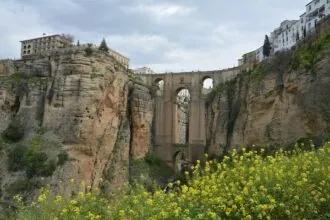
Ronda’s Puente Nuevo bridge spans the gorge in dramatic fashion, with the old town’s narrow streets and one of Spain’s oldest bullrings sitting a short walk from the viewpoints on either side. Most organised trips build in some free time here to wander independently once the main sights are covered.
Setenil de las Bodegas takes its name from the wine cellars, or bodegas, once carved into the rock, and its streets, Calle Cuevas de la Sombra in particular, run directly beneath huge overhanging boulders with houses built into the stone itself. It is a small village, and most visits last an hour or two rather than a full day.
Organised day trips from Fuengirola typically run to around ten hours door to door, with return coach transport and a guide included, making the logistics of reaching two inland villages in a single day straightforward. Booking a seat in advance is worth doing in peak season, since places on the more popular departures fill up quickly.
Fuengirola Fair and Local Festivals
Fuengirola’s biggest annual event is its October fair, usually held over several days in the first half of the month at the Recinto Ferial, combining fairground rides, flamenco performances, horse displays and late-night dancing in traditional casetas (marquees). It ranks among the larger fair celebrations on this stretch of coast.
Alongside the October fair, the town hosts a calendar of smaller events throughout the year, including the Marenostrum Festival at Sohail Castle, which brings live music to the castle’s historic setting during the summer months. Religious processions around Easter and midsummer celebrations on San Juan’s night in June also draw large local crowds.
Most of these events are free to attend, with the main cost being food, drink and any fairground rides during the October fair itself. Exact dates shift slightly from year to year, so checking the town hall’s events calendar before travelling is sensible if a festival is a specific reason for your visit.
Even visitors who aren’t specifically chasing a festival often stumble into some version of local celebration during a stay, since Fuengirola’s calendar stays busy for most of the year. Asking at the tourist office on the Paseo Marítimo is a reliable way to find out what’s on during your visit.
Getting Around Fuengirola: The Cercanías C1 Train
Fuengirola sits at the southern terminus of the Málaga Cercanías C1 line, which makes it one of the easiest Costa del Sol resorts to visit without a car. The line runs the full length of the coast from Fuengirola through Benalmádena, Torremolinos and Málaga Airport before reaching Málaga Centro-Alameda and María Zambrano stations.
Trains run roughly every twenty minutes throughout the day, with services starting around 5:20am and continuing until approximately 11:30pm. The full journey from Fuengirola to central Málaga takes about 45 minutes, while reaching Málaga Airport from Fuengirola takes somewhere around 30 to 35 minutes depending on the exact service.
A single one-way ticket for the full journey costs around €3.60, with slightly lower fares for shorter distances along the line, such as travelling only as far as Torremolinos or the airport. Paying with a contactless bank card can unlock an automatic discount after several journeys within the same month, which is worth knowing if you’re staying for a week or more.
Fuengirola’s own station sits close to the town centre, within easy walking distance of the old town, the marina and the southern end of the promenade. For anyone staying in Fuengirola and planning day trips, the train is almost always a quicker and cheaper option than driving into central Málaga.
One Day in Fuengirola
Start the morning at Bioparc Fuengirola, ideally arriving close to opening time before the heat and crowds build, and plan on spending three to four hours exploring its habitats. From there, it’s a short walk into the old town for a late lunch around Plaza de la Constitución.
Spend the early afternoon wandering the old town’s side streets, then head down to the promenade for a walk towards Sohail Castle, timing your arrival to fit within its 10am to 2pm opening hours if a castle visit is part of the plan, or simply enjoying the river mouth and marina views from outside if you arrive later.
As the day cools into evening, the marina and the southern stretch of the Paseo Marítimo come into their own, with plenty of restaurants for dinner and, in season, boat trips departing for sunset cruises along the coast. Rounding off the day with a stroll back along the promenade as the lights come on is a reliable way to finish.
If you have an extra half day to spare, regular buses run inland to Mijas Pueblo, the whitewashed hill village around eight kilometres away, in well under thirty minutes, making it an easy add-on rather than a full day trip in its own right.
Fuengirola with Children
Fuengirola packs family friendly ingredients within easy walking distance of one another, making a trip with children simple to plan. Bioparc Fuengirola, the gently shelving beaches, Sohail Castle and the marina all sit close enough that a family day rarely needs more than a short walk or quick train ride between them.
Bioparc’s cageless habitats hold children’s attention far longer than a conventional zoo, and its play areas make it easy to let a morning run long without anyone getting restless. Arriving close to opening time avoids both the heat and the midday crowds, leaving the afternoon free for something calmer.
The beaches are well suited to younger children, with several stretches shelving gently into the water, lifeguard cover in season, and accessible walkways down to the sand. Los Boliches and Carvajal are calmer choices than the central beach if you want a little more space with young kids.
Sohail Castle’s ramparts give children room to run around a real historic site without museum formality, and its limited 10am to 2pm hours suit a late morning stop before lunch. The short walk up rewards even the youngest with views over the river mouth and marina.
The marina rounds off an evening with children nicely, with ice cream, outdoor seating and boats to watch coming and going, plus a short dolphin watching trip in season for those wanting something extra. It connects straight onto the promenade, leaving plenty of room to walk off energy either side of dinner.
Put together, a family day here can realistically cover a zoo, a beach, a castle and a marina without ever needing a car, a rare combination on this stretch of coast. Pairing an active Bioparc morning with a calmer afternoon on the beach or around the castle works better than rushing everything into one itinerary.

Fuengirola vs Torremolinos vs Benalmádena
Many visitors choosing a Costa del Sol base aren’t deciding on Fuengirola alone, but weighing it against its neighbours, Torremolinos and Benalmádena, both reachable on the same Cercanías line in well under fifteen minutes. All three share the same coast, but each has settled into a different identity over the decades.
Fuengirola leans towards beaches, family attractions and a genuinely lived in old town, with Bioparc, Sohail Castle and a seven kilometre promenade giving it a broader spread than a typical resort strip. It also has a reputation as a more year-round town, with a sizeable resident population rather than a purely seasonal economy.
Torremolinos carries the deeper nightlife scene of the three, built around La Nogalera’s bars and clubs, alongside its own long beach and the well preserved La Carihuela fishing quarter. It suits visitors prioritising nightlife and seafood over family attractions, though its beaches work just as well for a straightforward beach holiday.
Benalmádena takes a different shape again, spread across a coastal strip, a hillside village and a marina rather than one centre, which makes it less walkable but gives it more varied sightseeing. A cable car climbs to Mount Calamorro for coastal views, while Puerto Marina and the hilltop Benalmádena Pueblo add a Sea Life aquarium and the eccentric Castillo Colomares to the mix.
Where Fuengirola’s beaches run almost continuously along one promenade, Benalmádena’s are more scattered and sometimes need a short taxi or bus ride from the centre, a trade-off for the extra sights. Admission to places like the cable car or Sea Life typically starts from around €18 (£16/$19) per adult, more than most of Fuengirola’s free attractions.
As a broad guide, Fuengirola suits families wanting beaches and sights within walking distance, Torremolinos suits those chasing nightlife and a longer beach, and Benalmádena suits visitors after standalone attractions across a more scattered town. Many base themselves in one and treat the other two as easy half day trips, since all three sit within fifteen minutes of each other by train.
Food Scene in Fuengirola
Fuengirola’s menus still trace back to its roots as a fishing village, and fresh seafood sits at the centre of the local food scene. Espetos, sardines skewered on cane and grilled over open fires, are a Costa del Sol staple and turn up at chiringuitos along the beach through the warmer months.
Alongside the espetos, fritura malagueña, a mixed plate of fried fish and seafood, appears on menus from simple freidurías to sit-down restaurants near the marina and old town. Prices vary considerably between the two, with a freiduría plate usually costing a fraction of the same dish at a seafront restaurant.
Away from the coast, the old town’s streets around Plaza de la Constitución carry Fuengirola’s tapas culture, with small bars serving a round of plates alongside a glass of wine or beer. It remains a sociable way to eat, with locals often moving between two or three bars across an evening rather than settling into one sitting.
The Tuesday market at the Recinto Ferial adds another layer, with food stalls selling fresh produce, cured meats and olives alongside the clothing and leather stands covered earlier in this guide. Between the market, the chiringuitos and the old town’s bars, eating well in Fuengirola rarely means paying resort prices.
Nightlife in Fuengirola
Fuengirola is not trying to out-party Torremolinos or Benidorm, and the town leans on its beaches and family attractions far more than on late nights, but the streets still carry a genuine after-dark scene. Bars cluster along the seafront and around Calle Martínez Catena in the centre, where British-run pubs sit alongside Spanish-style bars.
Much of the scene leans towards music bars, sports pubs and a handful of small discos rather than the superclubs found further along the coast. Live bands and DJ nights are a regular feature through summer, with venues typically open from mid-afternoon into the small hours.
The old town offers a calmer alternative, with tapas bars around Plaza de la Constitución staying lively well past midnight without tipping into club territory. This side of Fuengirola suits visitors who want a late drink and some noise without an all-night crowd.
Compared with Torremolinos’s La Nogalera strip or Benidorm’s Levante Beach, Fuengirola’s nightlife is noticeably more relaxed and skews a little older, with a strong contingent of long-term British residents among the regulars. It makes a reasonable base for an evening out, just not the main draw if clubbing until dawn is the priority.

Rupert’s Handy Travel Tips
Heading to Fuengirola? These tips will help you make the most of the town’s beaches, train line and busiest attractions.
- Travel early in the day: Fuengirola’s C1 station and Bioparc both get busy by mid-morning in summer, so travelling early avoids the worst of the crowds.
- Visit the castle in the morning: Sohail Castle only opens from 10am to 2pm, so build it into the first half of your day rather than leaving it for later.
- Time the Tuesday market for the morning: Stock and shade both run low by early afternoon, so arriving soon after it opens makes for a better visit.
- Wear comfortable shoes: Much of Fuengirola’s best wandering happens on foot, from the old town’s side streets to the Recinto Ferial’s open fairground site.
- Check listings before visiting the bullring or castle: Both venues now host concerts and exhibitions that can affect daytime opening, so a quick check avoids a wasted trip.
- Keep sun protection topped up: There’s very little shade along much of the seven kilometre Paseo Marítimo, particularly around midday in summer.
Want to meet the reindeer behind our travel tips? Find out more in our page Who is Rupert?.




Frequently Asked Questions
How do I get to Fuengirola from Málaga Airport?
By the C1 Cercanías train, which takes around 30 to 35 minutes with departures roughly every 20 minutes throughout the day.
Is Fuengirola good for families?
Yes. Gently shelving beaches, a flat, traffic-free promenade and Bioparc Fuengirola are all particularly well suited to visiting with children.
How much does Bioparc Fuengirola cost?
Adult tickets cost around €29.50 (£26/$32), with children aged three to nine and seniors generally paying about €23 (£20/$25); online tickets booked in advance are usually a little cheaper.
Is Sohail Castle free to visit?
Yes. Entry has been free since the local council reopened it as a cultural venue, though it only opens from 10am to 2pm, Tuesday to Sunday.
What day is the Fuengirola market?
The main street market takes place every Tuesday morning at the Recinto Ferial fairground, running from around 9am into the early afternoon.
How long do I need to see Fuengirola’s old town?
Most visitors need one to two hours to explore the old town’s streets and Plaza de la Constitución properly, longer if stopping for a meal.
Can I visit Mijas from Fuengirola as a day trip?
Yes. Regular buses connect Fuengirola to Mijas Pueblo, around eight kilometres inland, in well under thirty minutes each way.
Are Fuengirola’s beaches Blue Flag certified?
Several of Fuengirola’s beaches have held Blue Flag status in recent years, reflecting clean water and good facilities, though this can vary slightly from year to year.
Is Fuengirola walkable without a car?
Largely yes. The old town, promenade, marina and train station all sit within easy walking distance of each other, though Sohail Castle and Bioparc may need a slightly longer walk or short bus ride depending on where you’re staying.
Further Reading
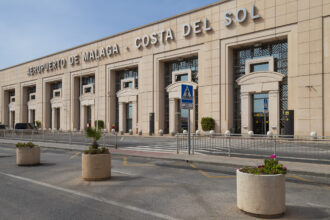
Getting to Fuengirola is usually the easiest part of a Costa del Sol trip. Our Malaga Airport Transfers Guide walks through every option from the airport, including the C1 Cercanías train that runs straight down the coast into town, alongside buses, taxis and private transfers for anyone who would rather skip the railway.
If you’re planning to use buses or the Metro elsewhere around Málaga during the same trip, it’s worth reading our Tarjeta de Consorcio Guide, which explains how the rechargeable Green Card works across the wider public transport network, including the C1 line that serves Fuengirola. Visitors making several journeys a day often find it pays for itself quickly.
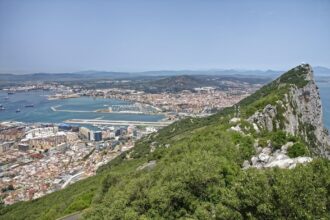
Fancy adding an international border crossing to your trip? Our Organised Gibraltar Tours from Malaga Guide compares the leading day trips to Gibraltar, while anyone comparing coach options for reaching Fuengirola directly from the airport should also look at our Terravision Review, which covers the operator’s Costa del Sol routes and fares in detail.
Planning to see more of Spain by rail during the same trip? Our Interrail Spain Guide explains how the pass works and whether it’s worth buying for a longer itinerary beyond Málaga province. Between these guides, you should have everything needed to plan transport before and after your time in Fuengirola.