
Reviewed by our editorial team Published
Perched dramatically on either side of a yawning limestone gorge in the mountains of Málaga province, Ronda is one of Andalusia’s most photographed towns and one of the most rewarding day trips in southern Spain. The town’s signature view is the Puente Nuevo, an 18th-century stone bridge that leaps across the El Tajo gorge with the Guadalevín River running far below, a sight so striking it has become shorthand for dramatic, white-washed inland Andalusia.
Ronda is also, less visibly but just as significantly, the historic birthplace of modern bullfighting. The town is home to one of Spain’s oldest surviving bullrings and to the Romero family of 18th-century matadors, widely credited with shaping many of the rules and techniques the sport still follows today.
Unlike its coastal neighbours further down the Costa del Sol, Ronda sits well inland in the Serranía de Ronda mountains, around 100 kilometres from Málaga, and is reached either by a genuinely scenic train line or a winding mountain road. The town splits into two distinct halves either side of the gorge: the old Moorish La Ciudad to the south, and the newer El Mercadillo quarter to the north, where most shops, bars and the bullring are concentrated.
Most visitors see Ronda as a single, well-packed day trip from Málaga, Marbella or Seville, and the town rewards that approach well. Its best sights, the bridge, the old town, the bullring and a cluster of Moorish-era buildings, all sit within easy walking distance of each other, and this guide covers what to see, how to get there, and how to fit it into one satisfying day.
Ronda at a Glance
Ronda’s name is traditionally traced back to the Roman-era settlement of Arunda, and under Moorish rule the town was known as Hisn al-Rundah, the “Castle of Rundah”, a name that eventually settled into its present form. Today it is home to around 33,000 people at an elevation of roughly 739 metres, one of the highest towns in Málaga province.
| At a Glance | Details |
|---|---|
| Location | Serranía de Ronda, Málaga province, Andalusia |
| Nearest major airport | Málaga Airport (around 100km / 1.5 hours by road) |
| Getting there | Train from Málaga, Algeciras or Granada; road via the Costa del Sol mountain routes |
| Signature sight | Puente Nuevo bridge over the El Tajo gorge |
| Historic significance | Birthplace of modern bullfighting; home of the Plaza de Toros de Ronda (1785) |
| Typical visit length | Full day trip (4-6 hours), or an overnight for a quieter pace |
| Best time to visit | Spring (April-June) and autumn (September-October) |
| Best For | A mix of dramatic gorge scenery, Moorish-era architecture and compact, walkable sightseeing |
| Do You Need a Car? | Not essential for the town itself; trains and coaches cover it well, though a car adds real value for the nearby pueblos blancos and wider countryside |
Puente Nuevo and the El Tajo Gorge
The Puente Nuevo (“New Bridge”) is Ronda’s defining landmark, a three-arched stone structure that spans the El Tajo gorge roughly 100 metres above the Guadalevín River. Despite its name, it is the youngest of Ronda’s three bridges, built to replace an earlier structure that stood at the same crossing point.
Construction ran from 1759 to 1793, a project so demanding that it reportedly took more than three decades and cost the lives of around fifty workers when an earlier attempt at the bridge collapsed. The architect, José Martín de Aldehuela, later also designed Ronda’s bullring, giving the town’s two most famous landmarks a shared creator.
An earlier bridge on the same spot, designed by José García and Juan Camacho in 1735, used a single ambitious arch rather than the current three. It stood for only six years before collapsing in 1741, the disaster that eventually led the town council to commission Aldehuela’s sturdier three-arched replacement decades later.
Inside the bridge’s central pier sits a hidden chamber known as La Mina, once used as a prison and now a small interpretation centre reached by a steep internal staircase. It is the only way to get genuinely close to the structure itself, and the admission charge is modest, around €2.50 (£2.20 / $2.70) for adults.
The classic photograph of the bridge is taken from below, either from the Jardines de Cuenca viewpoint or the path that drops down into the gorge itself, both of which give a genuine sense of the structure’s scale. From the bridge deck, the view instead looks straight down the sheer gorge walls to the river below, which is not an experience for anyone with a fear of heights.
Best if you want daily housekeeping and a front desk. Filter by area first, then by price.
Check availabilityBest for longer stays. Whole apartments and houses, so you are not eating out three times a day.
View rentalsBest as a last check before booking. Compares hotel rates across several sites in one search.
Compare ratesBest Viewpoints of Puente Nuevo
Beyond the view from the bridge deck itself, several distinct spots around Ronda let visitors see the Puente Nuevo from genuinely different angles. Each involves a different amount of walking, so between them they cover everything from an easy stroll to a proper descent into the gorge.
The Jardines de Cuenca, a terraced hanging garden on the La Ciudad side of the gorge, gives one of the best side-on views of the bridge without any climbing involved. It is free to enter and noticeably quieter than the viewpoints down at gorge level, making it a good first stop for photographs.
For a proper look from below, the Camino del Desfiladero del Tajo is a purpose-built walkway running from Plaza María Auxiliadora down into the gorge and on to the Arab Baths. Since its second phase opened in September 2026 the full route covers close to a kilometre and costs around €12 (£10.44 / $12.96) per person, taking in the base of the bridge and the river itself.
Those who would rather not pay can still reach a free viewpoint further down the same hillside near the old Arco del Cristo, a Moorish-era arch that frames its own view back up at the gorge walls. It takes a bit more legwork than the paved walkway but costs nothing to visit.
Back up at street level, the Mirador de Aldehuela sits right beside the bridge in El Mercadillo and needs no walking at all. It is covered in more detail alongside Ronda’s other free miradors in the Alameda del Tajo section later in this guide.
Early morning or early evening light generally works best at every one of these spots, since the gorge walls cast heavy shadow once the sun is high overhead. Weekday mornings also tend to be quieter than weekend afternoons, when coach groups and the gorge walkway both get busiest.
From inside the gorge itself, the scale of the bridge is as much acoustic as visual, the Guadalevín River below echoing off limestone walls that rise more than ninety metres on either side. Crag martins and swifts nest in the cliff face year-round, with lesser kestrels and the occasional chough wheeling past the walkway in a way no photograph quite captures.
La Ciudad: Ronda’s Old Moorish Quarter
South of the gorge lies La Ciudad, the old walled town that formed Ronda’s Moorish-era core before the Christian reconquest of 1485. Its narrow, cobbled streets and whitewashed houses have changed little in layout since then, and walking them remains the simplest way to understand the town’s defensive, hilltop origins.
Sections of the old Arab walls survive, along with fortified gates including the Puerta de Almocábar, a thick horseshoe-arched gateway that once controlled access to the town from the south. Several of La Ciudad’s grander houses, built for the nobility after the reconquest, still stand along its main streets.
The 1485 siege that ended Moorish rule here was won less by force than by thirst: Christian forces seized the water-mine staircase below the town, cutting off its river access and leaving the besieged Ronda without a water supply within days. The same staircase survives today beneath the Casa del Rey Moro gardens, covered later in this guide.
La Ciudad is noticeably quieter than the Mercadillo side of the bridge, with far less traffic and fewer shops, which makes it a pleasant contrast after busier sightseeing. Several of Ronda’s individually notable sights, the Palacio de Mondragón, the Arab Baths and the main church, all sit within this same old quarter.
Because the streets are steep and uneven in places, comfortable walking shoes matter more here than almost anywhere else in Ronda. Most of La Ciudad can comfortably be covered on foot in an hour or two, making it easy to combine with the specific sights covered individually below.
El Mercadillo and Plaza de España
North of the gorge sits El Mercadillo, the newer part of Ronda that grew up after 1485 once the town was no longer under siege and could expand beyond its old walls. It is now where most of Ronda’s hotels, restaurants and shops are concentrated, and where almost every visitor begins and ends their day.
Plaza de España, the main square, sits right at the northern end of the Puente Nuevo and functions as the town’s natural meeting point. The adjoining Paseo de Blas Infante runs along the gorge’s edge and houses Ronda’s municipal tourist office, a useful first stop for maps and up to date opening hours.
The pedestrianised Calle la Bola and the shopping street Calle Espinel, known locally as “La Bola”, run through the heart of El Mercadillo and are lined with tapas bars, bakeries and independent shops. Ronda’s famous bullring and bullfighting museum, covered in detail below, also sit on this side of town.
Calle Espinel takes its name from Vicente Espinel, a Ronda-born poet and musician who counted Cervantes and Lope de Vega among his friends and gave his name to the décima, a ten-line Spanish verse form still used by poets and songwriters today. It is a quieter claim to fame than the bullring, but a genuinely Ronda one.
For most day-trippers, El Mercadillo is the natural place to stop for lunch between sightseeing on the La Ciudad side and an afternoon visit to the bullring. Parking for drivers arriving by road is also concentrated here, close to the main square, which makes the area a convenient base for the rest of the day.

Plaza de Toros de Ronda and Its Bullfighting Museum
Completed in 1785 to the same architect’s design as the Puente Nuevo, the Plaza de Toros de Ronda is one of Spain’s oldest and most historically significant bullrings. It belongs to the Real Maestranza de Caballería de Ronda, an aristocratic equestrian order founded in the 18th century that still owns and manages the building today.
The attached museum traces the history of bullfighting and horsemanship in Ronda through costumes, paintings and equipment, with particular focus on the Romero family of matadors. Pedro Romero, born in Ronda in 1754, is widely credited as a founding figure of modern bullfighting’s codified style and technique.
Romero reportedly fought more than 5,500 bulls across his career without serious injury, before retiring in 1799 and later heading a bullfighting school in Seville. He is said to have come out of retirement once more at the age of eighty to fight in Madrid, a detail still repeated by guides in the museum today.
Each September, the ring hosts the Corrida Goyesca, a festival in which bullfighters and attendees dress in 18th-century costume inspired by Francisco Goya’s paintings of the era. Whatever one’s view of the sport itself, the building and its museum are treated locally as significant cultural and architectural heritage rather than a working venue alone.
Entry to the ring and museum costs approximately €9 (£7.80 / $9.70) for adults and around €4 (£3.50 / $4.30) for children, with further details and current times on the official Real Maestranza de Caballería de Ronda website. Booking ahead is sensible during the busier spring and autumn months, when queues at the ticket window can build quickly.
The Arab Baths (Baños Árabes)
Tucked at the foot of the gorge near the old Arab bridge, Ronda’s Baños Árabes date from the 13th and 14th centuries and rank among the best preserved Islamic-era bathhouses in Spain. They are a genuinely quiet, atmospheric stop that most day-trippers walk straight past on their way to busier sights.
The baths follow the traditional Roman-influenced layout of cold, warm and hot rooms, built with horseshoe arches and star-shaped skylights cut directly into barrel-vaulted brick ceilings. Much of the original structure, including the underfloor heating channels, remains clearly visible today.
Specialists in Islamic-era architecture regularly single these baths out as the best preserved of their kind anywhere on the Iberian Peninsula, ahead of comparable sites in Granada and Jaén. Part of the original hydraulic system, including the waterwheel that once drew river water into the hot room, survives in place.
Reaching the baths involves a short, steep walk down from La Ciudad, following the Río Guadalevín toward the old Puente Árabe, one of Ronda’s two older bridges. The walk itself, through greenery below the gorge walls, is part of the appeal.
Admission is inexpensive, typically around €3.50 (£3.05 / $3.80) for adults with reduced rates for children, and a visit rarely takes more than twenty to thirty minutes. It pairs naturally with a walk along the river before climbing back up into the old town above.
Palacio de Mondragón
One of La Ciudad’s grandest buildings, the Palacio de Mondragón is thought to have originated as a Moorish-era residence before being substantially rebuilt after the Christian reconquest. Local tradition links it to the Moorish rulers of Ronda, though the building visible today is largely a 16th-century renovation.
The palace’s last Moorish owner is traditionally identified as Hamet el Zegri, Ronda’s final Islamic-era governor, and the Catholic Monarchs Isabel and Fernando are themselves said to have stayed here in the 1490s shortly after the reconquest. Few buildings in La Ciudad carry quite that direct a link to the handover of the town.
Its two internal courtyards are the highlight, featuring delicate Mudéjar plasterwork, tiled walls and horseshoe arches that blend Islamic and Christian architectural styles in a single building. The palace now houses Ronda’s municipal museum, covering the town’s history from prehistory through to the modern era.
Beyond the courtyards and exhibition rooms, the palace’s terraced gardens are reason enough to visit on their own, opening onto a genuinely spectacular view over the gorge and the surrounding countryside. Several benches along the terraces make it a natural spot to pause.
Admission costs around €3 (£2.60 / $3.25) for adults, with reduced rates for children, and the museum typically takes 45 minutes to an hour to see properly. It sits a short walk from both the main church and the Arab Baths, making it easy to combine with either.
Best for finding routes the airlines do not sell as a single ticket. Combines carriers to bring the fare down.
Search flightsBest if you want maps and messaging working the moment you switch your phone on.
See eSIM plansBest if you would rather not work out the transport on arrival. Book it now and forget it.
View transfersCasa del Rey Moro and La Mina Gardens
Despite its name, the Casa del Rey Moro (“House of the Moorish King”) is actually an 18th-century house, built long after Ronda’s Moorish rulers were gone, though it sits on a site with genuine Islamic-era origins below ground. Its real draw is the garden and the staircase cut into the cliff beneath it.
The terraced gardens were laid out in the early 20th century by French landscape architect Jean-Claude Nicolas Forestier, known for his work on several major Spanish and Moroccan gardens of the period. They descend in stages toward the gorge, framing repeated views of the Puente Nuevo from below.
Forestier went on to design some of Spain’s best known public gardens, including Seville’s Parque de María Luisa, which makes this comparatively little-visited corner of Ronda an easy stop for anyone interested in his work. The staged descent toward the river was deliberately designed to frame the gorge rather than simply cross it.
Beneath the gardens, a steep staircase known as La Mina (not to be confused with the chamber inside the Puente Nuevo of the same name) was originally cut during the Islamic period to give defenders access to water at the river during a siege. It descends through more than two hundred rock-cut steps, and it was this same staircase that Christian forces seized in 1485 to cut off the town’s water and force its surrender, as noted in the La Ciudad section above.
Access to the staircase itself has been restricted at times for safety and restoration work, so it is worth checking current opening status locally before planning a visit around it specifically. The gardens above remain open as a standalone attraction regardless of the staircase’s status.
Iglesia de Santa María la Mayor
Ronda’s main church sits on the old town’s central square, built directly on the site of a former mosque following the Christian reconquest. The result is an unusual architectural layering, with Gothic, Renaissance and Baroque elements added to the building over several centuries.
Building work began soon after 1485 in Gothic style, with three naves divided by pointed arches, but a severe earthquake in 1580 destroyed the original chancel entirely. Its Renaissance replacement, raised higher than the Gothic nave and finished with Corinthian-capped columns, took until around 1720 to complete.
The church’s bell tower began life as the mosque’s minaret, and a horseshoe-arched mihrab, the niche that once indicated the direction of prayer toward Mecca, survives intact near the entrance. Few buildings in Ronda show the town’s layered religious history as clearly in one single place.
The original minaret-turned-tower was destroyed by a lightning strike and rebuilt in 1523 with an octagonal upper section decorated in Gothic tracery, and a triple viewing gallery was added early in the 17th century. Townspeople once used that gallery to watch events unfold in the square below without leaving the church itself.
Inside, an ornate Baroque retablo (altarpiece) and a carved choir stall are the main features, alongside several side chapels added by local noble families over the centuries. The church remains an active place of worship as well as a visitor attraction.
A modest entry fee applies for visitors wanting to see the interior outside of service times, and the surrounding square, Plaza Duquesa de Parcent, is a pleasant spot to pause with several cafés nearby. The church sits a short walk from the Palacio de Mondragón.
Alameda del Tajo and Ronda’s Viewpoints
On the Mercadillo side of town, the Alameda del Tajo is a tree-lined public park that has served as Ronda’s main green space since the 19th century. Its shaded, gravelled paths make for an easy walk after a morning spent on cobbled streets elsewhere in town.
The park was laid out in the early 1800s and takes its open-air theatre, the Teatro Vicente Espinel, from the same Ronda-born poet remembered on Calle Espinel in El Mercadillo. Mature plane and horse chestnut trees now shade paths that were originally planted not long after the park’s creation.
The park ends in a series of iron-railed balconies that project out over the gorge, giving sweeping views across the Serranía de Ronda countryside toward the mountains beyond. These miradors are genuinely free to visit and rarely as crowded as the bridge itself.
Further along the gorge’s edge, additional viewpoints including the Mirador de Aldehuela offer different angles on the Puente Nuevo and the cliffs it spans, each worth a short detour for photographs. Early morning or late afternoon light generally gives the clearest views.
None of these viewpoints require tickets or opening hours to plan around, which makes them an easy addition to any itinerary regardless of what else is open on a given day. Benches throughout the park make it a natural rest stop between the morning and afternoon sights.

Where to Stay in Ronda
Ronda’s accommodation breaks down naturally into three very different settings, and which one suits a visitor best depends on how much walking and driving they are willing to do. Staying in La Ciudad, El Mercadillo or out in the surrounding countryside each gives a noticeably different few days in Ronda.
Hotels in La Ciudad, the old Moorish quarter south of the gorge, tend to be smaller and more atmospheric, often set in converted townhouses along the same cobbled streets covered earlier in this guide. Staying here suits visitors who want to step straight out into the quiet old town each morning before the day-trip crowds arrive from the Mercadillo side.
The trade-off is practical rather than aesthetic: parking is limited and awkward, and the steep, uneven streets make arriving with heavy luggage genuinely hard work. It is the right choice for a romantic or history-focused stay rather than a convenience-first one.
El Mercadillo, the newer quarter north of the gorge, holds the great majority of Ronda’s hotels, restaurants and shops, and is where most first-time visitors end up staying. Everything from the bullring to Plaza de España sits within easy walking distance, and parking for drivers is far more straightforward here than across the bridge.
This is the practical, well-connected choice for anyone arriving by train, coach or car who wants to minimise walking between their hotel and the main sights. It is also the busiest and least atmospheric of Ronda’s three areas, particularly around the main square in peak season.
Out beyond the town itself, the surrounding Serranía de Ronda countryside holds a scattering of rural hotels, converted olive mills and small vineyard estates, several of them looking straight across open country toward the gorge. These properties suit travellers with a hire car who want a quieter base and are happy to drive in for sightseeing rather than walk out of their hotel door.
Rooms here tend to come with genuinely wide mountain views and a slower pace than anything available in town, though a car is effectively essential to make the stay work. It is the right pick for a longer, more relaxed visit rather than a quick overnight between sightseeing days.
Whichever side of the gorge a visitor chooses, Ronda after dark has a genuinely different character to its daytime version, with the cobbled lanes of La Ciudad emptying out and church bells marking the hours across largely silent streets. Staying overnight on either side is the only way to experience that quieter version of the town.
Getting to Ronda by Train and Road
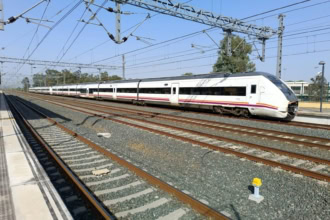
Ronda’s railway station sits on the historic Bobadilla-Algeciras line, which climbs through the Serranía de Ronda between the Costa del Sol and the Bay of Algeciras. Only the Algeciras direction is genuinely direct; reaching Ronda from Málaga, Granada or Seville usually means one change along the way, most often at Antequera-Santa Ana.
The route from Algeciras is widely considered the most dramatic of all, winding through the Serranía de Ronda’s cork oak forests and narrow mountain passes for around one hour forty-five minutes. Renfe runs these as Media Distancia regional services, with bike spaces and powered seating, and travellers using a rail pass across the country, such as the Interrail Spain Pass, can generally use it on these regional services without a separate ticket.
| Route | Journey Time | Direct or Change | Frequency |
|---|---|---|---|
| Algeciras to Ronda | Around 1h45 | Direct, no change | Around 4 Media Distancia services a day |
| Málaga to Ronda | 2-3 hours | One early morning direct service via the historic El Chorro line; other services change at Antequera-Santa Ana | Around 4 services a day |
| Granada to Ronda | Around 3 hours | Change at Antequera-Santa Ana (fast Avant/AVE leg, then regional) | 2-3 services a day |
| Seville to Ronda | Around 3.5 hours | Change at Córdoba or Antequera-Santa Ana | 2-3 services a day |
Onboard, Renfe’s Media Distancia trains are simple but comfortable, CAF-built regional units with bicycle space, power sockets and reading lights at most seats, and occasional Preferente carriages on longer services. Adif has been carrying out a multi-year renovation of the Bobadilla-Algeciras line through 2026, so it is worth checking Renfe’s own site close to travel dates in case of timetable changes.
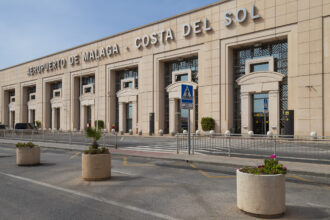
By road, Ronda is reached from the Costa del Sol via the A-397 mountain road from San Pedro de Alcántara near Marbella, a winding but well-surfaced drive of around an hour, or via the A-357 and A-367 from Málaga in around ninety minutes. Many visitors arriving by air connect onward from Málaga Airport, covered in full in our Malaga Airport Transfers guide.
Organised coach day trips also run regularly from Málaga, Marbella and Seville, which suit travellers who would rather not navigate the mountain roads themselves. Whichever method is chosen, arriving reasonably early in the day gives the best chance of seeing the main sights before the midday coach groups arrive.
Ronda with a Car vs Without a Car
Ronda is easy to visit without a car, and the train line through the Serranía de Ronda is reason enough on its own to leave the driving to someone else. Trains from Málaga, Algeciras or Granada drop visitors close to the town centre, and coach day trips cover the same ground for anyone who would rather not deal with timetables.
The main limitation of arriving without a car is reach beyond Ronda itself. The nearby pueblos blancos and the wider Serranía de Ronda countryside are reachable by local bus, as covered in the Two Days in Ronda section below, but services run only a handful of times a day, which is manageable for one side trip but makes stringing several together in a single day difficult.
A hire car removes that constraint entirely, opening up villages like Grazalema and Setenil de las Bodegas, plus the wider Sierra de Grazalema natural park, on a schedule that suits the traveller rather than a bus timetable. It also makes the rural hotels and converted mills outside Ronda a realistic place to base a stay, which public transport alone does not.
A car also reaches parts of the Sierra de Grazalema natural park that buses never touch, including pockets of pinsapo, a rare relict Spanish fir that survives almost nowhere else in the world outside a handful of Andalusian mountain ranges. Walking trails through these forests are only realistically reachable with your own transport.
For a straightforward day trip focused on Ronda’s own sights, the train is arguably the better choice and part of the experience in its own right. For a longer stay built around the wider Serranía de Ronda, a car earns its cost back quickly in flexibility.
Best if you would rather spend the money on the trip than on the room. Compare hostels by location and rating.
Search hostelsBest for anyone flying more than once or twice a year. Handles the compensation claim so you are not chasing the airline.
See AirHelp+Best for the gap between checking out and your train. Drop bags at a shop or hotel nearby and carry on.
Store your bagsOne Day in Ronda
Ronda is compact enough to see thoroughly in a single, well-planned day, which is exactly how most visitors experience it. Starting early at the Puente Nuevo and its viewpoints avoids both the midday heat in summer and the busiest crowds around the bridge itself.
Those first few hours have a particular quality of their own, with mist occasionally pooling in the gorge below the bridge before the sun burns it off and the day’s first coach parties begin arriving. It is the closest most visitors get to having Ronda’s signature view entirely to themselves.
From there, a natural route crosses into La Ciudad to take in the Palacio de Mondragón, the main church and, for those with time, the Arab Baths down by the old Arab bridge. This half of the day covers Ronda’s oldest and quietest streets.
Lunch in El Mercadillo breaks the day naturally, with Calle Espinel and the streets around Plaza de España offering plenty of tapas bars within walking distance of the bridge. An afternoon visit to the Plaza de Toros and its museum fits well after food, before the light starts to fade.
A final stroll through the Alameda del Tajo to catch the late afternoon light on the gorge is a fitting way to end before heading back to Málaga, Marbella or Seville. Travellers with more time may prefer an overnight stay to see the town without the day-trip time pressure.
Two Days in Ronda
A second day in Ronda works best when it adds genuinely new ground rather than repeating the first day’s sights at a slower pace. It gives time for anything skipped under time pressure and for venturing beyond the town into the surrounding Serranía de Ronda.
The obvious starting point is anything rushed or missed on day one, most often the Casa del Rey Moro gardens and, where it is open, the La Mina staircase cut into the cliff beneath them. The Palacio de Mondragón’s courtyards and gardens are an easy addition here too, for anyone who only managed a quick pass through La Ciudad the day before.
For walkers, a morning spent on the paths running out from the Alameda del Tajo into the wider countryside gives a proper sense of the mountains surrounding Ronda, rather than just the view of them from a mirador. These routes vary in length and difficulty, so it is worth checking current trail conditions locally before setting out.
The most realistic day-trip addition without a car is Setenil de las Bodegas, the cave-house village built into an overhanging rock face around fourteen kilometres from Ronda. Regular local buses connect the two towns in around forty to forty-five minutes, making it a genuinely easy half-day trip rather than one that needs its own transport. What to actually do once there is covered in its own section later in this guide.
Grazalema, the whitewashed village at the heart of its namesake natural park, is reachable the same way, with a daily bus covering the roughly eighteen kilometres in around forty-five minutes. Services run only once or twice a day, so it suits travellers happy to build their second day around the timetable rather than a flexible car-based trip.
Grazalema’s abundant rainfall once made it one of Spain’s most important wool-weaving towns, and a single working mill, Artesanía Textil de Grazalema, still produces the thick striped Grazalema blanket by traditional methods today. It is reason enough on its own for anyone interested in the region’s crafts, rain or no rain.
Either pueblo blanco works well as a full second day on its own, while a shorter morning visit leaves the afternoon free for whatever was missed in Ronda itself. Travellers with a hire car have an easier time combining both villages in one day, but neither requires one to be genuinely worthwhile.
Visiting Setenil de las Bodegas from Ronda
Of the pueblos blancos reachable from Ronda, Setenil de las Bodegas is the one that genuinely looks like nowhere else in Andalusia. Entire rows of houses are built directly beneath and into a huge rock overhang above the Río Guadalporcún, with the cliff itself forming the roof of streets like Calle Cuevas del Sol.
Local tradition traces the name to the Latin septem nihil, “seven times nothing”, said to recall seven failed Christian sieges before the Moorish town finally fell to gunpowder artillery in 1484. The “bodegas” half of the name arrived later still, when Christian settlers planted vineyards that mostly disappeared when phylloxera swept through European vines in the 1860s.
Autocares Sierra de las Nieves runs around five buses a day on the roughly fourteen-kilometre route from Ronda, with the journey itself taking forty to forty-five minutes. That frequency, confirmed on current timetables, makes Setenil easily the more flexible of Ronda’s two main bus-accessible pueblos blancos, alongside the less frequent service to Grazalema covered earlier in this guide.
Once there, the main draw is simply walking the cave-covered streets themselves, particularly Calle Cuevas del Sol and Calle Cuevas de la Sombra, before climbing to the ruined Almohad-era castle that overlooks the whole village from its rocky bluff. Several small bars built directly into the rock make a natural stop for a coffee or a glass of local wine before the bus back to Ronda.
Food Scene in Ronda
Ronda’s food leans noticeably heartier than the seafood-led cooking of the nearby coast, shaped by its mountain setting and centuries of hunting and pig-rearing in the Serranía de Ronda. Menus here lean on slow-cooked meat, cured pork and mountain produce rather than the grilled fish typical of Málaga or Marbella.
The signature dish is rabo de toro, a rich oxtail stew slow-cooked for hours, a direct culinary echo of the town’s bullfighting history. Alongside it, the chacinas serranas, cured chorizo, salchichón and morcilla made using traditional mountain methods, appear on nearly every tapas menu in town.
Queso payoyo, a cheese made from the milk of the local payoya goat breed, ranges from soft and mild to firm and nutty depending on how long it has aged, and pairs naturally with the region’s cured meats. Migas rondeñas, pan-fried breadcrumbs seasoned with garlic and paprika, trace back to shepherd cooking in these same mountains.
Wine growing around Ronda is older than the town’s visible monuments, with documented production at the nearby Roman site of Acinipo, though today’s Vinos de Ronda wine scene is a genuinely modern revival built on limestone soils and a mix of Spanish and international grape varieties. Several bodegas around the Serranía now welcome visitors for tastings as part of a day or two in the area.
Shopping in Ronda
Beyond the tapas bars and bakeries already covered on Calle Espinel and Calle la Bola, El Mercadillo holds the bulk of Ronda’s independent shops, many of them trading in genuinely local crafts rather than generic souvenirs. Leather goods are the standout, reflecting the town’s long equestrian and bullfighting heritage.
Saddles, bridles and other harness pieces made from local Ronda leather are still produced by a handful of saddlers in and around town, a craft that supplied the Real Maestranza’s riders long before it became a shop-window curiosity. Finished leather goods, from belts to bags, are the most practical souvenir to come out of that same tradition.
Wrought-iron work, visible on balconies and window grilles throughout La Ciudad, and simple white glazed ceramics are the other crafts most associated with the town, both sold in small workshops rather than large stores. Woodcarving in chestnut and walnut, taught locally since the late 19th century, rounds out Ronda’s small but genuine craft scene.
For something less curated, Ronda’s weekly market sets up every Sunday from 9am to 3pm along the Carretera de Circunvalación ring road, with around forty stalls selling clothing, footwear, leather goods and handicrafts. It is a genuine local market rather than a tourist one, and worth timing a Sunday visit around if the dates line up.
What to Do in Ronda When It Rains
Most of Ronda’s sightseeing is outdoors or involves at least some walking between sights, but enough of the town’s best attractions sit fully under cover to rescue a wet day without much compromise. The bullring and its museum, the Palacio de Mondragón’s municipal museum, and the main church are all genuinely indoor stops already covered in detail earlier in this guide, and together they can easily fill a rainy morning or afternoon on their own.
One attraction worth flagging honestly: Ronda’s long-running Museo del Bandolero, covering the region’s historic bandoleros, closed its Calle Armiñán premises in 2020 and its collection was later sold to a new bandit museum in El Borge, well outside Ronda. It no longer exists here, whatever older guidebooks or listings may still say, so it is worth not building a wet-day plan around finding it in town.
For something more low-key, Ronda’s municipal Mercado de Abastos, the covered food market on Calle Jaén, makes an easy indoor wander between fishmongers, butchers and fruit stalls even if nothing is bought. Several of the Serranía’s wine bodegas also run indoor tasting rooms that work just as well on a wet afternoon as a sunny one.

Nightlife in Ronda
It is worth being honest about this one: Ronda is a small, historic mountain town rather than a nightlife destination, and visitors expecting anything resembling the coast’s late-night scene will be disappointed. Most evenings here wind down naturally rather than build toward anything.
What does exist is concentrated around a small cluster of bars near Plaza Socorro, a few of which stay open later than the rest of town and occasionally host live flamenco or bands on weekend nights. It amounts to a handful of options rather than anything like a proper night out.
For most visitors, the realistic evening plan is a long, late dinner in El Mercadillo followed by a drink or two on a terrace rather than any kind of bar-hopping. That slower pace suits a town built around gorge views and old churches far better than it would a livelier resort.
Travellers specifically after late bars and clubs are better served basing themselves on the Costa del Sol instead and treating Ronda as the day trip or overnight stop it genuinely is. There is no shame in an early night here, and most locals would say the same.

Rupert’s Handy Travel Tips
Rupert has climbed Ronda’s cobbled streets a few times now, and here is what he’d tell a first-time visitor.
- Wear proper walking shoes: La Ciudad’s cobbles and the steps down to the Arab Baths are uneven, and sandals are a bad idea here.
- See the bridge from both angles: the view from the bridge deck and the view from the gorge floor below are completely different experiences, and both are worth the time.
- Book the bullring museum ahead in peak months: spring and autumn weekends get busy, and a pre-booked ticket avoids queuing in the sun.
- Take the train at least one way: the railway line through the Serranía de Ronda is one of the most scenic in Andalusia, so it is worth building into the journey if time allows.
- Arrive early if visiting in summer: Ronda’s inland location means summer afternoons get genuinely hot, and the gorge viewpoints are far more comfortable before midday.
- Keep a close eye on children at the miradors: several of Ronda’s best viewpoints have low or no barriers right at the gorge edge.
Want to meet the reindeer behind our travel tips? Find out more in our page Who is Rupert?.




Frequently Asked Questions About Ronda
How do I get to Ronda from Málaga?
By train, usually with one change at Antequera-Santa Ana, or by road via the A-357 and A-367 in around ninety minutes.
Is Ronda a day trip or worth an overnight stay?
Most visitors see it comfortably as a day trip, though an overnight stay allows a quieter, slower pace without the pressure of a return journey.
How high is the Puente Nuevo above the gorge?
The bridge stands roughly 100 metres above the Guadalevín River at the bottom of the El Tajo gorge, though sources vary slightly on the exact figure.
Can you walk down into the El Tajo gorge?
Yes, a path leads down from near the Jardines de Cuenca to the gorge floor, giving a dramatic view looking back up at the bridge from below.
Is the Plaza de Toros de Ronda still used for bullfighting?
It hosts a small number of events each year, including the Corrida Goyesca festival in September, though most visitors see it as a historic site and museum rather than a working venue.
What are the Arab Baths in Ronda?
They are 13th and 14th century Islamic-era bathhouses near the old Arab bridge, among the best preserved examples of their kind in Spain.
How much time do you need to see Ronda properly?
A full day covers the main sights comfortably, while two days allow a more relaxed pace and time to see the Casa del Rey Moro gardens and surrounding countryside.
Is Ronda suitable for visitors with limited mobility?
Parts of El Mercadillo are reasonably flat, but La Ciudad’s cobbled streets, steps and the paths down to the baths and gorge floor are challenging for anyone with limited mobility.
Is the Museo del Bandolero still open in Ronda?
No, it closed in 2020 and its collection moved to a new bandit museum in El Borge, outside Ronda.
What’s the best time of year to visit Ronda?
Spring and autumn offer the most comfortable temperatures for walking the old town, while summer afternoons can get uncomfortably hot for extended sightseeing.
Further Reading
Most visitors reach Ronda by starting from Málaga, whether flying in directly or connecting onward from the coast, so it is worth planning that first leg properly. Our Malaga Airport Transfers guide covers every option from the airport into the city and onward transport links, while the Tarjeta de Consorcio guide explains the regional transport card that covers buses and trains across Málaga province.
Travellers covering more of the country by rail, rather than basing themselves solely on the Costa del Sol, may find it useful to read our guide to the Interrail Spain Pass, which explains how regional lines like the one through the Serranía de Ronda fit into a wider pass-based itinerary across Spain.
Ronda also sits within reach of several other popular Andalusian and southern Spain excursions. For travellers combining a Costa del Sol base with a trip across the Strait, our Gibraltar in a Day itinerary makes a natural companion piece, covering another distinctive day trip from the same part of southern Spain.
Together, these guides help build a fuller picture of how Ronda fits into a wider Andalusian or Costa del Sol itinerary, whether travelling by rail, by road, or combining several day trips from a single coastal base.