Reviewed by our editorial team Published
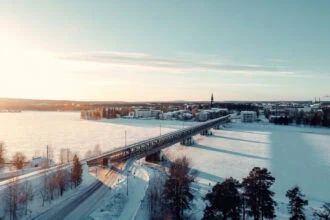
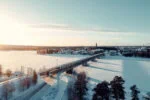
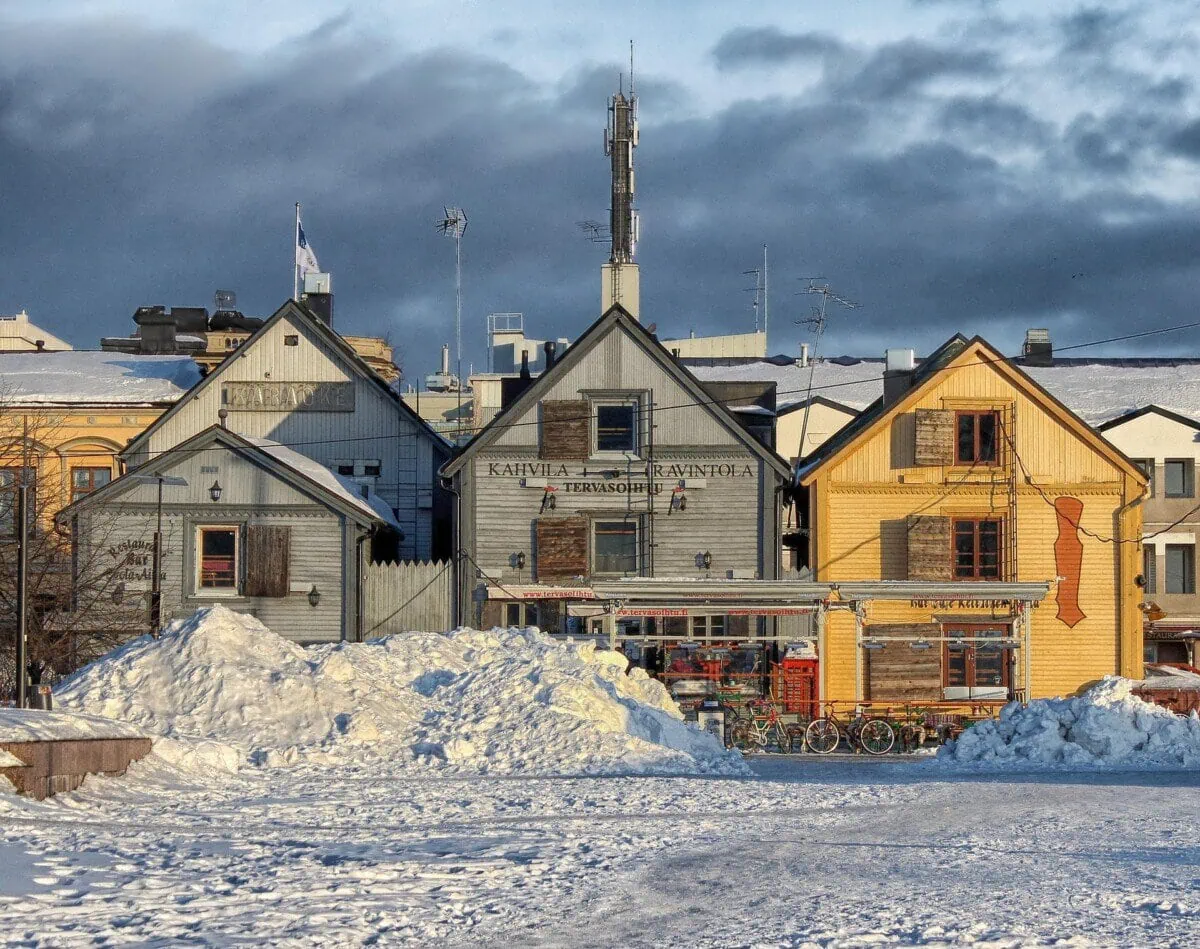
Oulu sits on the Gulf of Bothnia at roughly 65 degrees north, making it the largest city in northern Finland and a genuine mid-point between Helsinki and the Arctic. It has a reputation as a technology and university city first, but that overlooks a compact, walkable centre with a working market square, a wooded river delta, and a handful of proper day-trip attractions within an hour’s drive.
Most visitors pass through Oulu on the way to or from Lapland, often without stopping at all. That is a missed opportunity, because the city offers a genuinely different flavour of northern Finland: fewer reindeer and huskies, more rapids, islands, and Nordic city life, with the added draw of aurora potential on clear winter nights without the crowds of Rovaniemi.
This guide starts with the practical question of how to actually get to Oulu itself, covering the overnight sleeper train from Helsinki, the flight option, and where the Interrail Finland Pass fits in. It then works through the attractions themselves, from the market square at the heart of the city to a genuine Stone Age site a short drive away.
Some of what follows is seasonal, and Oulu’s climate is a real factor in what is actually open and worth doing. A handful of the entries below, including the open-air museum and the rapids area, work best in the summer months, while others, like the northern lights and the winter beach village, only make sense once the snow arrives.
Oulu Attractions at a Glance
The sections below cover each attraction in full, but this table is a quick way to see what Oulu actually offers before diving into the detail. Use it to work out roughly how long a stop deserves before building the rest of an itinerary around it.
| Attraction | What It’s For / Why Visit | Time to Spend |
|---|---|---|
| Oulu Market Square and Market Hall | Waterfront square watched over by the Toripolliisi statue, with a sheltered market hall for food and browsing | 20 to 30 minutes, longer for lunch |
| The Rotuaari Pedestrian Street | Central shopping street with cafes, heated winter paving and much of the city’s street life | About an hour |
| Science Centre Tietomaa | Hands-on exhibits covering physics, technology and the human body, moving into the new Tiima venue | Half a day |
| The Northern Ostrobothnia Museum | Regional history, including Oulu’s role in the historic tar trade | About an hour |
| Oulu Cathedral | Neoclassical church designed by Carl Ludvig Engel in the heart of the city | 15 to 20 minutes |
| Hupisaaret Park and Its Historic Mills | River-delta islands linked by footbridges, with preserved historic mill buildings | About an hour |
| Nallikari Beach and Its Public Sauna | A kilometre-long beach with sauna facilities and winter ice-swimming sessions | Half a day |
| Turkansaari Open-Air Museum | Relocated historic wooden buildings showing rural life before industrialisation, summer only | 1 to 1.5 hours |
| Koitelinkoski Rapids | Roaring river rapids crossed by suspension bridges, worth visiting year-round | Half a day with travel time |
| Kierikki Stone Age Centre | A genuine Stone Age settlement and reconstructed village around 60 kilometres from the city | Half a day or more |
| Northern Lights Over Oulu | Aurora viewing on clear, dark nights roughly between September and March | An evening, weather permitting |
How to Get There
Oulu is roughly 600 kilometres north of Helsinki, and the two most realistic options for getting there are the overnight sleeper train and a short domestic flight. Which one makes sense depends mostly on how much time you have and whether you would rather spend a night travelling or a night in a hotel.
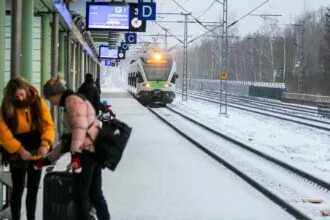
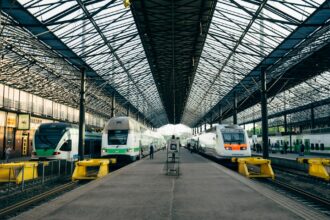
The sleeper train is the more atmospheric option and one of the better-known ways to head north through Finland. Services are run by VR, the national rail operator, and the Helsinki to Oulu overnight leg takes around 8 to 9 hours, arriving early in the morning after a night in a couchette or private cabin. We cover the sleeper carriages, cabin types, and what the journey is actually like in detail in our guide to Finland’s sleeper trains, so we won’t repeat all of that here.
If you already hold, or are considering, an Interrail Finland Pass, Oulu sits directly on the main Helsinki to Rovaniemi line, so a pass day covers the base fare for this leg without a separate ticket purchase. You still need to book a seat reservation for daytime trains, or pay a cabin supplement for the sleeper, and our full Interrail Finland Pass guide breaks down exactly what those supplements cost and how the pass works in practice.
Flying is the faster route if a full night on a train does not appeal. Oulu Airport is Finland’s third busiest by passenger numbers after Helsinki and Rovaniemi, handling around ten Finnair flights a day to and from Helsinki alone, alongside seasonal and international services. The airport sits about 10 kilometres southwest of the city centre, close enough that a taxi or airport bus gets you into town in well under half an hour. Getting between the airport and the city is its own topic with enough detail to deserve a dedicated guide, and our Oulu Airport Transfers guide covers the bus, taxi and car hire options in full rather than repeating the breakdown here.
For the official word on routes, terminals, and live flight information, Finavia’s Oulu Airport page is the most reliable source, since schedules and airline routes do shift between seasons. Driving is also an option if you are already touring Finland by car, with the E75/Highway 4 running the full length of the country and Oulu sitting roughly six to seven hours north of Helsinki by road.
Best if you want daily housekeeping and a front desk. Filter by area first, then by price.
Check availabilityBest for groups who want one address and separate bedrooms rather than three hotel rooms.
See holiday homesBest as a last check before booking. Compares hotel rates across several sites in one search.
Compare ratesOulu Market Square and Market Hall
Kauppatori, Oulu’s market square, is the natural starting point for almost any visit and sits right on the waterfront in the city centre. It is watched over by the Toripolliisi statue, a bronze police officer that has become an unofficial mascot of the city, and stallholders sell everything from fresh fish to local handicrafts depending on the season.
Next to the square sits Kauppahalli, Oulu’s market hall, a smaller and more sheltered alternative for browsing on a cold or wet day. Inside you will find delis, bakeries, and small cafes selling Finnish staples like cinnamon buns and salmon soup, making it a reliable spot for a quick, inexpensive lunch.
The square is busiest through the summer months, when outdoor seating spreads across the waterfront and evening light lingers well past 10pm thanks to Oulu’s northern latitude. In winter it thins out considerably, though the hall itself stays open and warm, and the square is still a useful landmark for orienting yourself in the city centre.
There is no admission charge to visit either the square or the hall, and most people pass through more than once during a stay simply because it sits on the route between the harbour, the old town, and Rotuaari. Give it 20 to 30 minutes on a first pass, longer if you plan to eat there.
The Rotuaari Pedestrian Street
Rotuaari is Oulu’s main pedestrian shopping street, running through the heart of the city centre a short walk from the market square. It was one of Finland’s earlier pedestrianised streets when it was created, and it has since been extended further south along Kirkkokatu as the city centre has grown.
The street is lined with a mix of independent shops, chain retailers, and cafes, with outdoor seating that fills up on any half-decent day. It is also the venue for much of Oulu’s street life, including summer markets, buskers, and occasional public events, which makes it a good barometer of the city’s mood at any given time of year.
There is genuinely heated pavement along parts of Rotuaari, a small but useful detail for winter visitors, since it keeps the main walking route largely free of ice even when the rest of the city is thoroughly frozen. That alone makes it a comfortable base for orienting a first walk around the centre.
It is not a headline attraction in its own right, but it connects most of the other central sights on this list and is worth allowing time to wander rather than rushing through. An hour is enough to see the street properly, with a coffee stop factored in.
Science Centre Tietomaa
Tietomaa has long been one of Oulu’s best-known family attractions, a hands-on science centre with more than 150 exhibits covering physics, technology, and the human body. It was among the first science centres to open in Finland, and it has built a loyal following well beyond the city itself.
Exhibits are built to be touched, climbed on, and experimented with rather than viewed from behind glass, which makes it a genuinely good rainy-day option for families with children of most ages. Expect to spend a half day here if you have children in tow, since most exhibits invite lingering rather than a quick walk-through.
There is an important change worth knowing about before you plan a visit. Tietomaa is moving into a new joint venue called Tiima, a combined museum and science centre at Myllytulli that also absorbs the Northern Ostrobothnia Museum, opening on 9 October 2026. If you are visiting around that date, check current opening arrangements in advance, since the move may affect access to the existing site in the short term.
Once Tiima opens, a single ticket is expected to cover admission to Tietomaa, the Northern Ostrobothnia Museum, and the other exhibits under the same roof, priced at around €22 (£19/$24) for adults and €14 (£12/$15) for children aged 6 to 17, with family tickets from roughly €58 (£50/$63). Treat these figures as indicative rather than fixed, since pricing for a brand-new venue can still shift before and after opening.

The Northern Ostrobothnia Museum
The Northern Ostrobothnia Museum covers the history and culture of the wider region around Oulu, from early settlement through to the city’s growth as an industrial and trading centre. It is a smaller, more traditional counterpart to Tietomaa’s hands-on approach, better suited to visitors who want context rather than exhibits to climb on.
Displays typically trace the region’s timeline, including its role in the historic tar trade that once made Oulu one of the world’s largest tar-exporting ports, alongside folk artefacts and changing temporary exhibitions. It is a useful stop for understanding why the city looks and feels the way it does today.
Like Tietomaa, this museum is being folded into the new Tiima museum and science centre at Myllytulli, due to open on 9 October 2026 under a shared ticket with Tietomaa and the other attractions housed there. Anyone visiting close to that date should confirm current arrangements before travelling across the city specifically for it.
Allow roughly an hour for a proper look through the collection, more if a temporary exhibition is running. It pairs naturally with a Tietomaa visit given the shared site and ticket once Tiima is up and running.
Oulu Cathedral and Its Engel-Designed Spire
Oulu Cathedral stands in the city centre and is the most recognisable historic building in a city that lost much of its older architecture to fire in the 19th century. It was designed by Carl Ludvig Engel, the same architect responsible for much of neoclassical central Helsinki, and completed in 1832, with its distinctive spire added in 1844.
The building’s clean, pale neoclassical lines are a useful visual anchor in the city centre and a reminder of Oulu’s wealth during its 19th-century tar-trading boom. Inside, the interior is simple rather than ornate, in keeping with Lutheran church design across Finland.
Entry is normally free, and opening hours are limited outside of services, so it is worth treating a visit as opportunistic rather than building a whole afternoon around it. The surrounding churchyard and park are pleasant for a short walk regardless of whether the doors happen to be open.
Fifteen to twenty minutes is enough for most visitors, and it sits close enough to the market square and Rotuaari that it fits naturally into a walking loop of the centre rather than needing a special trip.
Hupisaaret Park and Its Historic Mills
Hupisaaret is a chain of small islands and green space threaded through the Oulu River delta, a short walk from the city centre and one of the most pleasant stretches of the whole city on a fine day. Wooden footbridges link the islands together, making it easy to wander between them without much planning.
Scattered through the park are several historic mill buildings, remnants of the industry that once ran along this stretch of the river, now preserved as part of the park’s character rather than working sites. They give the walk a genuine sense of history rather than just being ornamental green space.
The park sits next to the Oulu Museum of Art and is home to a large illuminated OULU sign, a popular photo spot in the evenings. There is a small café for a coffee stop partway round, and the paths are flat and generally accessible, making it a good option for families or anyone short on time.
Admission is free, and an hour is enough to walk the full loop at a relaxed pace. It is one of the easiest attractions on this list to combine with the market square and Rotuaari on the same afternoon.
Best for long or awkward journeys. Builds one itinerary out of separate flights.
View flightsBest for anyone whose home plan charges by the megabyte abroad. Pay a fixed price up front.
Check eSIMsBest when public transport has stopped, or when you are travelling with children and bags.
Book a transferNallikari Beach and Its Public Sauna
Nallikari is Oulu’s main beach, a genuine kilometre-long stretch of sand on the Gulf of Bothnia, roughly a 20-minute walk or short bus ride from the city centre. It is a proper summer destination in its own right, with a holiday village, restaurants, and a small amusement park drawing local families through the warmer months.
The area also has genuine public sauna facilities, including saunas attached to the beachside restaurant with an outdoor jacuzzi, and a separate sauna building available for booking. In winter this shifts into ice-swimming and Arctic sauna territory, with organised sessions available for anyone brave enough to combine a hot sauna with a dip through the ice.
Winter brings its own version of Nallikari, with a small snow and ice village typically built on the beach in the colder months, giving the area a completely different character to its summer self. It is worth checking ahead if a specific feature like the ice village or a particular sauna session is the reason for the trip, since these are seasonal and vary year to year.
Beach access itself is free, while sauna sessions and any organised ice-swimming experience carry their own cost depending on the operator and package. Allow at least half a day if sauna or ice-swimming is part of the plan, since these tend to be booked as a proper session rather than a quick stop.
Turkansaari Open-Air Museum
Turkansaari is an open-air museum spread across a small island in the Oulujoki river, roughly 15 kilometres from the city centre. It gathers historic wooden buildings, including a striking 17th-century church, relocated here to preserve traditional rural life from the wider Oulu region.
Walking between the buildings gives a real sense of how farming, fishing, and church life worked in northern Finland before industrialisation reshaped the region. Costumed guides and craft demonstrations sometimes run during peak summer weeks, though this varies year to year and is worth checking ahead if it is the main draw.
This is a genuinely seasonal attraction, generally open only through the summer months, roughly June to August, with the on-site café keeping slightly longer hours than the buildings themselves. Outside that window the site is effectively closed, so it is not a reliable option for a winter itinerary.
There is no public transport link directly to the island, so a car or taxi is the practical way to get there. Budget an hour to ninety minutes on site, and check current opening dates before making the trip, since exact season length can shift slightly from one year to the next.
Koitelinkoski Rapids
Koitelinkoski, often shortened to Koiteli, is a set of roaring river rapids around 20 minutes’ drive from central Oulu near the town of Kiiminki. Four small islands are linked by suspension bridges over the rushing water, making it one of the more dramatic short trips out of the city.
The site has marked hiking trails through mostly natural forest, along with picnic spots and firepits dotted around the islands. It draws around 40,000 visitors a year, respectable for a natural site with no admission charge and no real infrastructure beyond the trails and bridges themselves.
It is genuinely worth the trip year-round rather than just in summer. The rapids rarely freeze solid even in the depths of winter, which makes for a striking contrast against snow-covered banks, while summer brings canoeing and fishing alongside the walking trails.
There is a small café on site serving pancakes and other snacks in the warmer months, though it is not guaranteed to be open on any given visit outside peak season. Firewood is generally provided from May to October, but bringing your own is a sensible backup. A car is the practical way to get there, since public transport does not run directly to the site.

Kierikki Stone Age Centre
Kierikki is a genuine Stone Age archaeological site and museum on the banks of the Iijoki river, built around a settlement that dates back thousands of years. A reconstructed Stone Age village sits alongside the exhibition building, giving a hands-on sense of how people actually lived in this part of Finland long before recorded history.
It is worth being honest about the distance here, since this is the one entry on this list that takes real commitment to reach. Kierikki sits roughly 60 kilometres from central Oulu, and the centre itself states the drive takes under an hour by car. There is no public transport route out to the site, so this only really works for visitors with a hire car or their own vehicle.
For anyone with a genuine interest in archaeology or prehistory, the trip is worthwhile rather than a padded-out add-on, since sites of this kind are rare this far north. It is best treated as a half-day or full-day excursion rather than squeezed in alongside several other stops on the same day.
Opening hours and admission pricing shift between seasons, so it is worth checking the centre’s own website shortly before travelling to confirm both. Given the distance, this is best suited to visitors staying in Oulu for two or more days rather than a short stopover on the way to Lapland.
Northern Lights Over Oulu
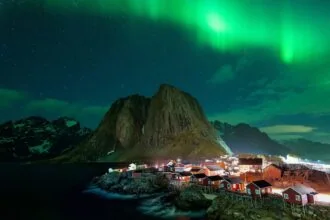
Oulu sits at roughly 65 degrees north, well within the belt of Finland where the aurora is genuinely visible on a clear, dark night, though it is not quite as far north or as reliable a viewing spot as Rovaniemi or the deeper reaches of Lapland. It is a realistic bonus for a winter visit rather than the main reason to come.
The best window is roughly September to March, when nights are dark enough for the lights to be visible, with the deepest, longest darkness around the winter solstice giving the best odds. Summer is a non-starter for aurora hunting here, since Oulu’s near-midnight sun means the sky barely gets dark at all.
Getting away from the city’s own light pollution improves your chances considerably, and spots like Nallikari beach or the Koitelinkoski rapids area both work well as informal viewing points if the forecast looks promising. An aurora forecast app is worth having on your phone, since activity is genuinely unpredictable night to night even within the right season.
It is only fair to be upfront that there are no guarantees. Even in peak season, a run of cloudy nights can mean seeing nothing at all, and Oulu’s odds are meaningfully lower than a dedicated Lapland base further north. Treat any sighting here as a genuine bonus rather than something to plan an entire trip around.
Things to Do in Oulu in the Rain
Oulu’s weather does not always cooperate, and a genuine wet or sleety day is common enough outside the height of summer that it is worth planning around rather than hoping to avoid entirely. The good news is that several of the city’s best attractions were never really weather-dependent in the first place.
Tietomaa, soon relocating into the new Tiima venue at Myllytulli, is the obvious anchor for a rainy day, since its hands-on exhibits are built to be climbed on and experimented with rather than viewed through glass. A half day spent there with children barely notices the weather outside at all.
Oulu Cathedral and Kauppahalli, the market hall beside the main square, both work as shorter indoor stops when the rain sets in. Neither takes long to see properly, but together with a coffee break they make a comfortable hour or two without ever stepping back outside.
The Valkea shopping centre downtown is another genuinely useful option, since its covered, heated public street was specifically designed to stay warm and dry year round. It is a practical fallback for browsing shops or grabbing lunch when the forecast has turned against you.
It is only fair to be honest about what does not translate well to a rainy itinerary. Nallikari beach, the Koitelinkoski rapids and the Turkansaari open-air museum are all genuinely outdoor experiences, and heavy rain strips much of the appeal from a walk between islands or an afternoon on the sand.
The practical answer is to build a wet day around the indoor options above and save the outdoor trips for a clearer forecast, since none of them are going anywhere. Oulu’s weather can turn within a few hours, so a flexible itinerary tends to work better than a rigid one.
Best for short city stops where being central matters more than the room. Dorms and private rooms both listed.
See hostelsBest arranged before you fly rather than after. Covers claim handling, plus lounge access on eligible delays.
Explore AirHelp+Best if your room is not ready yet. Left luggage booked in advance, so you are not hunting for a locker.
Check storageFood Scene and Food Halls
Beyond Kauppahalli’s stalls and soup counters, Oulu has built a genuinely varied restaurant scene that blends northern ingredients with international influences and a relaxed, unpretentious atmosphere. It is worth treating the city as a proper food stop rather than just a lunch break on the way further north.
Northern Finnish cooking leans heavily on local, foraged and seasonal ingredients, and several Oulu kitchens make a point of it. Expect to see smoked or dried reindeer worked into pizzas and lasagne, alongside leipäjuusto, Finland’s distinctive squeaky cheese, and nettle risotto built around whatever the foragers bring in.
Pikisaari, a small island a short footbridge walk from the centre, has quietly become one of the more atmospheric places to eat and drink in the city. Its old wool factory now houses Wine Bar Kurkela, and the island’s mix of wooden houses and workshops gives dinner there a different feel to the main square.
Back in the centre, longer-running names like Ravintola Pannu have served Italian-Nordic fusion and charcoal-grilled dishes for more than three decades, while Ravintola Puistola pairs an in-house bakery with artisan pizzas. Newer arrivals such as Il Puro take the fusion further, pairing reindeer with proper Italian pasta.
Down by the water, Ravintola Nallikari and the harbourside Hietasaaren Seelari make the most of Oulu’s coastal setting with seasonal, sea-facing dining that suits a long summer evening. Both sit close enough to the beach that a meal there fits naturally onto a Nallikari afternoon.
Prices sit in fairly typical Nordic territory rather than anything shocking, with a main course at a mid-range central restaurant generally landing around €15 to €25 (£13-£22/$16-$27). Booking ahead is sensible on a Friday or Saturday evening, since the better-known names fill up quickly with locals rather than tourists.
Nightlife and After Dark
Oulu is a genuine university city rather than one that merely hosts a college, and that shapes the atmosphere across the whole centre after dark. The University of Oulu alone enrols close to 14,800 students, and together with the city’s applied sciences college that keeps a youthful, informal energy running through the bars long after the shops on Rotuaari have closed.
Most of what matters is packed into a small cluster of streets around Kauppurienkatu, Kirkkokatu and Hallituskatu, all within easy walking distance of the market square. It is a genuinely compact scene, so a night out rarely involves more than a short stroll between one bar and the next.
Craft beer culture runs deep here, with cellar pubs like Mallaskellari pouring a rotating list at around €8 to €12 (£7-£10/$9-$13) a glass, and terrace-friendly spots such as Leskinen keeping a similar focus. Cocktail and wine drinkers are equally well served, from the more upscale Cocktail Company to the smaller Viinibaari Vox.
For something distinctly Finnish rather than generically Nordic, Restaurant Mallassauna on Pikisaari pairs dinner with a genuine sauna session, priced roughly €25 to €40 (£22-£35/$27-$44) depending on the package. It is a proper evening out in its own right, not a quick add-on to a meal elsewhere.
Oulu’s best-known claim to after-dark fame is stranger than any bar crawl. The Air Guitar World Championships began right here in 1996 as part of the Oulu Music Video Festival, and the city still hosts the world final most years, typically in late August, drawing a genuinely festival-like atmosphere into the bars around it.
This is a particularly good year to be out after dark in Oulu, since the city is one of Europe’s Capitals of Culture for 2026, with a packed calendar of concerts, exhibitions and events running well beyond the usual bar scene. It is worth checking what is actually on before a visit, since the programme runs right through the year.
Shopping and Markets
Rotuaari and Kauppahalli cover the obvious central shopping, but Oulu has two further options worth knowing about, one right in the city and one a short trip outside it. Between them they cover most of what a longer stay or a proper shopping trip would need.
Valkea, the city’s main indoor shopping centre, sits right in the downtown area and packs around 60 shops into a striking covered street that stays warm through the depths of winter. Sokos, Marimekko and Flying Tiger Copenhagen anchor the mix, alongside a hotel built into the same complex.
It opened in 2016 and runs on geothermal heating, which is part of why its covered street stays genuinely comfortable regardless of the weather outside. That makes it a sensible fallback on a wet or bitterly cold day as much as a shopping destination in its own right.
For something closer to a conventional out-of-town retail trip, Zeppelin in Kempele sits around 12 kilometres south of the centre on Highway 4 and has been running since 1992. It spreads roughly 100 stores across a single floor with plenty of parking, anchored by a large Prisma hypermarket rather than fashion retail.
Zeppelin suits a bigger shop, such as stocking up before heading further north, more than a browsing afternoon, and it needs a car or a local bus rather than a walk from the centre. Valkea, by contrast, sits close enough to everything else in the city to fold naturally into a normal day out.

Rupert’s Handy Travel Tips
Oulu rewards a bit of planning more than most Finnish cities, mostly because so much of what is genuinely worth seeing sits outside the compact centre. Here are a few things Rupert would want you to know before heading up.
- Hire a car for a day if you can: Kierikki, Turkansaari and Koitelinkoski are all much easier with your own wheels than relying on buses.
- Check the Tiima opening before visiting Tietomaa: the science centre and museum are moving into a joint new venue on 9 October 2026, so confirm current arrangements first.
- Turkansaari is summer-only: don’t plan a winter trip around the open-air museum, it is effectively closed outside June to August.
- Layer up even in “mild” weather: Oulu’s coastal position makes the wind chill sharper than the thermometer suggests, especially near the beach and the rapids.
- Book sleeper cabins early if travelling by train: the Helsinki to Oulu overnight service gets busy in winter, particularly around school holidays.
- Don’t write off the northern lights just because you’re not in Lapland: Oulu is far enough north for a genuine chance on a clear, dark winter night.
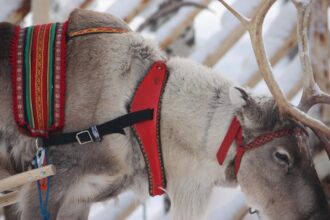
Want to meet the reindeer behind our travel tips? Find out more in our page Who is Rupert?.





Frequently Asked Questions about Things to Do in Oulu
How many days do you need in Oulu?
Two full days covers the city centre attractions and one further-flung site like Koitelinkoski or Kierikki comfortably, with three days allowing a more relaxed pace across everything on this list.
Is Oulu worth visiting if I’m already going to Rovaniemi?
Yes, particularly if you’re travelling overland, since Oulu sits directly on the Helsinki to Rovaniemi rail line and offers a genuinely different city-and-nature mix rather than duplicating what Rovaniemi does.
Can you see the northern lights in Oulu?
It’s possible on a clear, dark night roughly between September and March, though Oulu’s odds are lower than further north in Lapland, so treat it as a bonus rather than a guarantee.
Do I need a car to see everything in Oulu?
Not for the city centre attractions, which are all walkable, but a car makes Turkansaari, Koitelinkoski and especially Kierikki considerably easier, since none of them have a direct public transport link.
What is Tiima, and does it affect Tietomaa?
Tiima is a new joint museum and science centre opening in Oulu on 9 October 2026 that combines Tietomaa, the Northern Ostrobothnia Museum and other exhibits under one roof and one ticket, so check current arrangements if visiting close to that date.
Is Turkansaari open all year?
No, it’s a seasonal open-air museum that generally operates through the summer months only, roughly June to August, and is effectively closed the rest of the year.
Further Reading
If the overnight leg north is part of your plan, our full guide to Finland’s sleeper trains covers the Helsinki to Oulu route in detail alongside the longer services further into Lapland, including cabin types and what to actually expect on board. Travelling on a pass rather than single tickets, our Interrail Finland Pass guide breaks down pricing, reservations and how the pass works across the whole VR network.
Continuing north after Oulu, our guide to things to do in Rovaniemi covers Finland’s Lapland capital beyond Santa Claus Village, and our wider Northern Lights Travel Guide explains where and when the aurora is most reliable across the whole Nordic region. Flying rather than taking the train the whole way? Our Finnair Airline Guide covers Finland’s national carrier, its routes and what to expect on board.