
Reviewed by our editorial team Updated
Why the Interrail Poland Pass Is One of Europe’s Best-Value Rail Passes
The Interrail Poland Pass is one of the strongest-value One Country Passes in Europe, giving travellers access to a large, varied, and affordable rail network that stretches from the Baltic coast to the Tatra Mountains. Poland is a big country by European standards, so trains are often the most practical way to move between major cities without relying on domestic flights or long bus journeys.
One of the biggest reasons to choose the pass is value for money. Polish train fares are generally cheaper than in Western Europe, but longer routes still add up quickly, especially if you are travelling between Warsaw, Kraków, Gdańsk, Wrocław, Poznań, and Zakopane. The pass gives you a fixed cost upfront, which makes budgeting easier and removes the stress of fluctuating fares.
Poland’s rail network also gives you a strong mix of speed and regional depth. Fast EIP Pendolino services connect the major cities, while slower InterCity, TLK, and regional trains open up smaller towns, mountain gateways, historic regions, and coastal areas. This means you can combine efficient long-distance travel with more local exploration.
The pass is especially useful for travellers who want a varied itinerary. You could start in Warsaw, continue to Kraków, head into the Tatra Mountains, travel west to Wrocław, and finish on the Baltic coast in Gdańsk, all with one rail pass. That kind of route would be awkward and expensive to manage with last-minute tickets.
Poland is also a natural gateway into wider Central and Eastern Europe. The country borders Germany, Czechia, Slovakia, Lithuania, Ukraine, Belarus, and Russia’s Kaliningrad region, making it useful for travellers building a broader overland journey.
Overall, the Interrail Poland Pass is best for travellers who want affordable long-distance rail travel, strong city connections, scenic variety, and the flexibility to explore more than one region.
Interrail Poland Pass Overview and Key Facts
The Interrail Poland Pass is a One Country Pass that gives flexible rail travel across Poland for a set number of travel days within a one-month period. It is designed for travellers who want to move between multiple Polish cities and regions without buying separate tickets for each journey.
The pass is available as a mobile-only pass, managed through the Rail Planner app. This means your ticket is stored digitally, your journeys are added through the app, and conductors scan a QR code during inspections. There is no paper version to carry, which makes the pass easier to manage than older Interrail formats.
Coverage is broad. The pass is valid on the PKP Intercity network, including EIP Pendolino, EIC, IC, and TLK services, as well as many regional operators covered under Interrail agreements. This gives access to major routes between Warsaw, Kraków, Gdańsk, Wrocław, Poznań, Katowice, Lublin, Białystok, and Zakopane.
Reservations are an important part of using the pass, but they are not needed as widely as travellers often assume. A reservation is compulsory only on EIP Pendolino services, where Interrail lists a fee of €10 (£9 / $12). On EIC and TLK trains a reservation is recommended rather than required, and on IC trains it is recommended but compulsory on selected departures, at a fee of just €0.70 (£0.60 / $0.80). Regional trains are more flexible again and generally do not require reservations.
The pass does not include city transport systems, so metros, trams, and buses in places like Warsaw, Kraków, Gdańsk, and Wrocław must be paid for separately. However, Poland’s local transport is generally inexpensive and easy to add onto your journey.
The pass is particularly strong for travellers planning three or more long-distance journeys, or those combining high-speed routes with regional exploration. It is less useful for a short trip involving only one or two train rides.
Interrail Poland Pass Prices by Travel Days
| Travel Days | Youth (12–27) | Adult (28–59) | Senior (60+) |
|---|---|---|---|
| 3 days | €52 (£45 / $60) | €69 (£60 / $79) | €62 (£54 / $71) |
| 4 days | €65 (£57 / $75) | €86 (£75 / $99) | €78 (£68 / $90) |
| 5 days | €77 (£67 / $89) | €103 (£90 / $118) | €94 (£82 / $108) |
| 6 days | €91 (£79 / $105) | €121 (£105 / $139) | €110 (£96 / $127) |
| 8 days | €116 (£101 / $133) | €154 (£134 / $177) | €139 (£121 / $160) |
Prices are approximate and shown for guidance only. Youth fares run at roughly three quarters of the adult price, and senior fares at around ninety per cent of it. Interrail pricing can shift by season, exchange rate, and promotion, so it is always worth confirming the exact fare at checkout before booking.
Compare hotels and other places to stay in Poland.
Check availabilityBrowse apartments, holiday homes and self-catering stays in Poland.
View rentalsCompare prices for Poland hotels across multiple booking sites.
Check dealsKey Operators and Rail Network Size in Poland
Poland has one of the largest rail networks in Europe, with around 19,000 kilometres of track. This makes the Interrail Poland Pass unusually powerful for a single-country pass, as it gives access to a network that covers major cities, regional centres, mountain areas, coastal routes, and important border corridors.
The main long-distance operator is PKP Intercity, which runs Poland’s national express and intercity services. These include EIP Pendolino trains, the fastest premium services in the country, along with EIC, IC, and TLK trains. Together, these services connect nearly every major Polish city and form the backbone of long-distance rail travel.
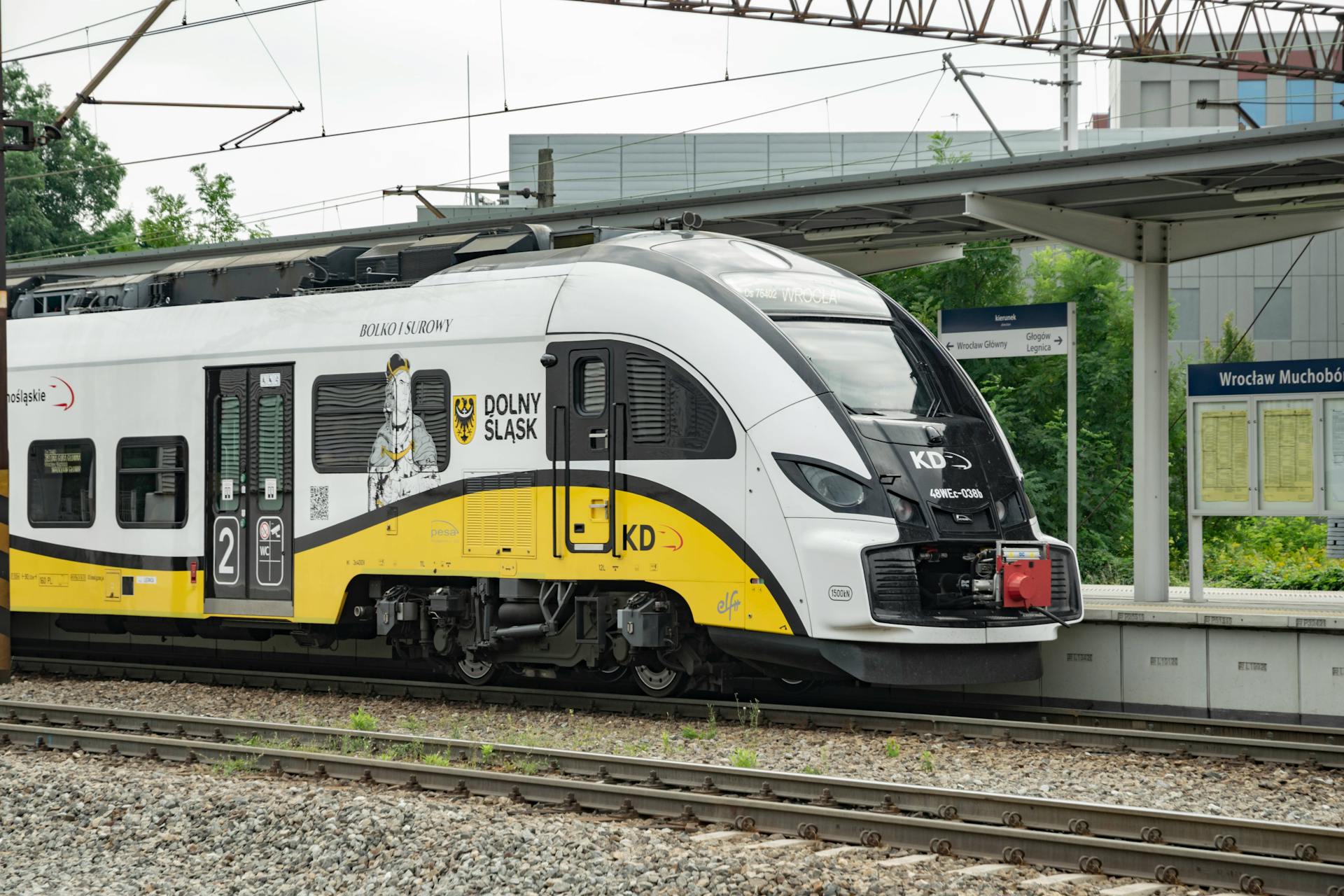
Beyond PKP Intercity, Poland has several important regional operators. Polregio is the largest regional carrier and serves many towns and rural areas not covered by long-distance trains. Other regional operators include Koleje Mazowieckie around Warsaw, Koleje Dolnośląskie in Lower Silesia, and Koleje Śląskie in Upper Silesia. These operators are useful for reaching smaller destinations and making local connections.
The network stretches from Gdańsk and Gdynia on the Baltic coast to Zakopane in the Tatra Mountains, and from Poznań and Wrocław in the west to Lublin, Białystok, and Przemyśl in the east. This gives travellers an unusually broad range of route options within one country.
Poland has also invested heavily in modernising its rail infrastructure. Many long-distance trains are now comfortable and reliable, with reserved seating, Wi-Fi on selected services, catering options, and upgraded rolling stock. Regional train quality varies, but many areas have seen major improvements.
For Interrail users, the key benefit is that the Poland Pass gives access to both fast intercity travel and slower regional routes, making it useful for both major itineraries and more adventurous side trips.
Main Transport Hubs and Key Rail Routes in Poland
Poland’s rail network is built around several major hubs, with Warsaw Central Station at the heart of the system. From Warszawa Centralna, travellers can reach almost every major part of the country, including Kraków, Gdańsk, Wrocław, Poznań, Lublin, Katowice, and Białystok. For most visitors, Warsaw is the natural starting point for a Poland rail itinerary.
Kraków Główny is the main gateway to southern Poland and one of the most important stations for travellers. It connects easily with Warsaw, Wrocław, Katowice, and Zakopane, making it ideal for combining historic city travel with access to the Tatra Mountains.
On the Baltic coast, Gdańsk Główny and Gdynia are key stations. These routes are especially useful for travellers combining Polish city breaks with coastal scenery, maritime history, and ferry connections. The route between Warsaw and Gdańsk is one of the most important in the country, with fast services taking around three hours.
In western Poland, Poznań and Wrocław serve as major hubs for both domestic and international travel. Poznań is useful for routes towards Berlin, while Wrocław connects well with Czechia and southern Poland. Katowice is another important hub, especially for routes towards Prague, Vienna, Bratislava, and the industrial region of Upper Silesia.
The most useful routes for pass holders include Warsaw to Kraków, Warsaw to Gdańsk, Kraków to Zakopane, Warsaw to Wrocław, Wrocław to Poznań, and Warsaw to Lublin. These routes allow travellers to combine historic cities, mountain escapes, Baltic coast journeys, and regional exploration in one trip.
Together, Poland’s hubs and routes make the pass highly flexible, especially for travellers who want to see more than one side of the country.
Example Ticket Prices vs Pass Value in Poland
The Interrail Poland Pass can deliver strong value once you start combining several long-distance journeys. Polish train tickets are usually cheaper than equivalents in Western Europe, but routes between major cities still add up quickly, especially if you are booking close to departure.
A one-way Warsaw to Gdańsk EIP Pendolino ticket can cost around €40 to €50 (£35-44 / $46-58) when bought near departure, while Warsaw to Kraków often sits around €35 to €45 (£30-39 / $40-52) on fast services. Other major routes, such as Warsaw to Wrocław, Warsaw to Poznań, or Gdańsk to Kraków, can also become expensive once you start building a multi-city itinerary.
A trip that combines Warsaw, Kraków, Wrocław, Poznań, Gdańsk, and Zakopane could easily exceed the price of a pass if booked as individual tickets. This is especially true if you want flexibility rather than locking yourself into advance fares.
The pass becomes most useful when you plan three or more long-distance journeys, particularly on routes served by PKP Intercity. Reservation fees still apply on many long-distance services, but they are usually modest compared with countries such as France, Italy, or Spain.
The biggest advantage is not only price, but freedom. With the pass, you can adjust your route, add a stop, or change your travel day without constantly checking ticket prices. That makes it especially useful for travellers who want to combine city breaks, mountain routes, Baltic coast travel, and regional detours.
If your trip involves only Warsaw to Kraków and back, individual tickets may be cheaper. But if you are building a wider Poland itinerary, the pass quickly becomes a practical and flexible option.

Interrail Poland Pass Prices Explained
The Interrail Poland Pass is sold as a Flexi Pass, giving you a set number of travel days within a one-month period. On each active day, you can take unlimited eligible train journeys across Poland, which makes the pass especially useful for multi-stop itineraries.
For Youth travellers aged 12 to 27, prices start at around €52 (£45 / $60) for 3 travel days and rise to roughly €116 (£101 / $133) for 8 travel days. Adult passes, for travellers aged 28 to 59, start at about €69 (£60 / $79) for 3 days and reach approximately €154 (£134 / $177) for 8 days. Senior travellers aged 60 and over receive a discount off the adult fare rather than youth parity, starting at around €62 (£54 / $71) for 3 days and rising to roughly €139 (£121 / $160) for 8 days.
The 3-day pass is best for travellers making a compact route, such as Warsaw, Kraków, and Gdańsk. The 4 or 5-day options work well for classic itineraries that add Wrocław, Poznań, or Zakopane. The 6 or 8-day passes are better for travellers who want to explore Poland more deeply, including Lublin, Białystok, Szczecin, or regional routes.
Children aged 4 to 11 can often travel free when accompanied by an adult pass holder, which improves the value for families planning a multi-city trip.
Because Poland is large and its major cities are spread out, the pass is usually easier to justify than in smaller countries. It delivers the best value when used for longer intercity journeys and routes where flexibility matters.
How the Poland Pass Works in Practice
The Interrail Poland Pass is a mobile-only pass, managed through the Rail Planner app. After purchase, you receive an activation code, load the pass onto your phone, and use the app to manage your travel days and journeys.
The pass works on a Flexi travel system, meaning you choose a fixed number of travel days to use within one month. On each active travel day, you can take unlimited trains across the covered Polish network, from fast long-distance services to slower regional trains.
Before boarding, you add your chosen journey to the app. The app then generates a QR code, which conductors scan during ticket checks. Once your journey is saved, the app can usually work offline, which is useful on rural lines or in areas with weaker mobile signal.
The most important detail is that reservations are not included. On EIP Pendolino services a reservation is compulsory and must be arranged before travel. On EIC, IC, and TLK services it is recommended rather than required, although selected IC departures do make it compulsory. Either way, the fees are small.
Regional trains are more flexible. Many services operated by Polregio and regional railway companies do not require reservations, making them useful for spontaneous day trips and slower exploration.
In practice, the best way to use the Poland Pass is to reserve key long-distance journeys in advance, then use regional trains more flexibly. This gives you a strong balance of structure, affordability, and freedom.
Where You Can Travel with the Poland Pass
The Interrail Poland Pass covers a huge range of destinations, making it one of the most versatile One Country Passes in Europe. It gives access to both major intercity routes and regional services, allowing you to build a varied itinerary across the country.
From Warsaw, you can reach almost every major Polish city. Fast services connect the capital with Kraków, Gdańsk, Wrocław, Poznań, Katowice, Lublin, and Białystok, making Warsaw the natural hub for most journeys.
The pass is particularly useful for the classic city circuit of Warsaw, Kraków, Wrocław, Poznań, and Gdańsk. This route combines capital-city history, medieval squares, riverside architecture, cultural districts, and Baltic coast access.
For scenic travel, the route from Kraków to Zakopane is one of the strongest options, taking you towards the Tatra Mountains. Although slower than the distance suggests, it is a valuable route for travellers interested in hiking, skiing, or mountain scenery.
The pass also supports journeys towards eastern Poland, including Lublin, Białystok, and Przemyśl, which offer a quieter and less tourist-heavy experience. Western routes to Poznań and Wrocław also create useful connections towards Germany and Czechia.
International routes are partly useful even with a Poland-only pass. The pass covers the domestic Polish section of journeys towards border stations, but onward travel into another country requires a separate ticket or a Global Pass.
Overall, the Poland Pass allows you to combine big cities, mountain routes, Baltic coast journeys, eastern regions, and border connections in one flexible rail itinerary.
Search routes and flight options for your trip to Poland.
Search flightsBrowse Airalo eSIM options for convenient travel data.
Check eSIMsHave a private airport pickup arranged before you travel.
Book a transferHow to Buy the Interrail Poland Pass
Buying the Interrail Poland Pass is straightforward, but getting it set up correctly before your trip will save you time and hassle once you arrive.
The easiest option is to purchase directly from the Interrail website. This ensures you get the most up-to-date pricing, full flexibility on refunds or exchanges before activation, and direct support if anything goes wrong. You can also buy through authorised partners such as Rail Europe or Omio, although their refund policies can sometimes be more restrictive.
The Poland Pass is mobile-only, so once you complete your purchase, you’ll receive an activation code. This is loaded into the Interrail Rail Planner App, which becomes your ticket for the entire trip. There is no paper version, so everything is managed digitally.
When buying, you’ll choose your number of travel days, your class of travel, and your age category. You do not need to fix your exact travel dates immediately. The pass can usually be activated at any point within 11 months of purchase, which gives you flexibility if your plans are still evolving.
Payment is simple, with most major cards and digital wallets accepted. It’s worth checking currency conversion fees if you’re paying in pounds or dollars, as prices are listed in euros.
Although it is technically possible to buy the pass while already in Poland, it is strongly recommended to purchase it in advance. Local stations do not always promote Interrail products clearly, and setting everything up ahead of time means you can start travelling immediately.
In short, buy online, load it into the app, and arrive ready to travel.

Explore Europe by Train with Rail Passes
Travelling by train in Europe can quickly become expensive if you book individual tickets. Rail passes offer a flexible way to travel across one or multiple countries with a single ticket, making it easier to plan your journey.
Rail Europe allows you to compare and buy a wide range of rail passes, including Interrail-style options, helping you choose the best pass for your route and travel style.
Top Routes and Itineraries with the Poland Pass
The Interrail Poland Pass is at its best when you use it to build a multi-city route, combining fast intercity travel with scenic detours.
The classic itinerary is a loop linking Warsaw, Kraków, Wrocław, Poznań, and Gdańsk. This gives you a mix of history, culture, architecture, and coastal scenery, with efficient rail connections between each city. Travel times are short enough that you can move between destinations in a few hours, leaving plenty of time for exploration.
A strong variation includes heading south from Kraków to Zakopane, which opens up the Tatra Mountains. This adds a completely different dimension to the trip, moving from historic cities into alpine-style landscapes.
For travellers who want to go deeper, eastern routes towards Lublin and Białystok offer a quieter, more authentic side of Poland. These areas are less visited but rich in culture, history, and regional character.
The Baltic coast is another highlight. Travelling from Warsaw to Gdańsk and Gdynia gives you access to beaches, maritime history, and ferry links towards Scandinavia. This works well as either a standalone destination or part of a wider loop.
A typical one-week route might look like Warsaw to Kraków, Kraków to Zakopane, back to Kraków, then to Wrocław, on to Poznań, up to Gdańsk, and back to Warsaw. With a longer stay, you can expand this to include eastern or border regions.
The key strength of the pass is that you are not locked into any of these routes. You can adjust your itinerary based on weather, events, or personal preference, which is where the real value lies.
Seat Reservations and Supplements in Poland
Understanding reservations is essential to using the Interrail Poland Pass properly, as Poland sits somewhere between the fully flexible systems of Eastern Europe and the more structured systems of Western Europe.
Reservations are compulsory only on EIP Pendolino services, the fastest trains between the major cities. On EIC and TLK trains Interrail lists reservations as recommended, and on IC trains as recommended but compulsory on selected departures. Booking one anyway is sensible on busy corridors, since the pass alone does not guarantee you a seat.
The good news is that reservations are cheap. A seat on an EIC, IC, or TLK service costs just €0.70 (£0.60 / $0.80), while the compulsory EIP Pendolino reservation and supplement costs €10 (£9 / $12). These can be booked through the PKP Intercity website, in the operator’s app, or at station ticket offices.
Regional trains are much simpler. Services operated by companies such as Polregio usually do not require reservations, which makes them perfect for spontaneous travel. You can simply add the journey to your pass and board.
There are very few additional supplements beyond reservations, which keeps the pass genuinely predictable in terms of overall cost. Poland does not have the kind of scenic surcharges seen in Switzerland, and domestic night trains are limited, so sleeper or couchette upgrades, where they do exist, are modest compared with Western Europe.
One practical point is that popular routes, particularly Warsaw to Kraków and Warsaw to Gdańsk, can fill up during weekends and holidays. Booking reservations in advance for these routes is strongly recommended.
Overall, the system is manageable if you plan ahead for key long-distance journeys, then use regional trains to keep the rest of your trip flexible.
Benefits of the Interrail Poland Pass
The Interrail Poland Pass stands out because it combines low cost, wide coverage, and genuine flexibility in a way that few other country passes manage.
The first major benefit is value for money. Even though Polish train tickets are relatively affordable, the pass quickly becomes worthwhile if you are travelling between multiple cities. A few long-distance trips can easily match or exceed the cost of the pass.
The second benefit is flexibility. You are not tied to specific trains or rigid advance bookings. This means you can change plans easily, whether that’s staying longer in Kraków, heading to the coast, or adding a mountain stop in Zakopane.
Another strength is network size and coverage. Poland’s rail system is extensive, giving you access to major cities, regional centres, coastal towns, and mountain gateways. This makes it possible to build a varied itinerary without needing alternative transport for most journeys.
There is also the advantage of international positioning. Poland’s location in Central Europe means you are never far from another country. Even with a Poland-only pass, you can travel to border cities and continue your journey onwards.
Finally, there is the comfort factor. Long-distance trains are modern, reliable, and often equipped with Wi-Fi and catering. Compared with buses or driving, train travel is generally smoother and less stressful.
Taken together, these benefits make the Poland Pass one of the most practical and rewarding ways to explore a large European country by rail.
Drawbacks and Limitations of the Poland Pass
The Interrail Poland Pass is excellent value, but it is not completely frictionless. Understanding where it falls short will help you use it properly.
One limitation is the reservation system on long-distance trains. A paid seat reservation is compulsory on EIP Pendolino services and on selected IC departures, and is worth buying anyway on other PKP Intercity trains. While the cost is low, it does remove some spontaneity, especially on busy routes where trains can sell out.
Another drawback is the variation in journey speeds. High-speed services between major cities are efficient, but regional routes can be slow. A good example is the journey from Kraków to Zakopane, which takes around 3.5 hours despite the relatively short distance. If you are trying to move quickly, these slower segments can affect your itinerary.
The network is large, but not complete. Some popular areas, particularly in rural regions or lake districts, are not directly served by rail. You may need to combine trains with buses, which adds an extra step to your journey.
There is also the issue of ongoing infrastructure upgrades. Poland has been investing heavily in its railways, which is positive long term, but can lead to temporary timetable changes, engineering works, or delays on certain routes.
Finally, the pass is not ideal for short trips. If you are only planning one or two journeys, such as Warsaw to Kraków and back, buying individual tickets is often cheaper and simpler.
In short, the Poland Pass works best when you are travelling widely. It is less effective for short, simple itineraries.
Who the Poland Pass Is Best For
The Interrail Poland Pass is particularly well suited to travellers who want to cover multiple regions without committing to fixed tickets.
It is a strong choice for backpackers and younger travellers, especially those aged 12 to 27, who benefit from discounted pricing and flexible travel. The ability to change plans without penalty makes it ideal for longer, more open-ended trips.
It also works very well for first-time visitors to Poland who want to see more than one city. Travelling between Warsaw, Kraków, Gdańsk, Wrocław, and Poznań becomes straightforward, and the pass removes the need to juggle multiple bookings.
For history and culture travellers, the pass is particularly useful. Poland has a dense concentration of historic cities, UNESCO-listed sites, and regional centres, and the rail network connects them efficiently. This makes it easy to build an itinerary focused on heritage, architecture, and museums.
Families can also benefit, especially as children aged 4 to 11 often travel free with an adult pass holder. Train travel is generally more comfortable than long-distance buses, which makes it easier when travelling with luggage.
The pass is also a good fit for travellers building a wider Central or Eastern Europe itinerary. Poland’s position means you can easily extend your journey into neighbouring countries once you reach border cities.
However, it is less suitable for travellers planning to stay in one place or take only one or two train journeys. In those cases, individual tickets are usually better value.
Browse hostels and budget-friendly stays around Poland.
See hostelsAccess compensation support, eligible lounge benefits and faster payouts when flights go wrong.
See the benefitsLeave your luggage somewhere convenient and enjoy Poland hands-free.
View storageTips for Using the Poland Pass Effectively
Getting the most out of the Interrail Poland Pass comes down to a few practical decisions.
The first is to book key reservations early, especially for high-speed Pendolino services. Routes like Warsaw to Kraków and Warsaw to Gdańsk are very popular, and seats can sell out during weekends and holidays.
It also helps to mix train types. Use fast InterCity trains for long distances, then switch to regional services when you want flexibility. Regional trains are often reservation-free, which makes them ideal for spontaneous trips.
Another important tip is to group journeys on the same travel day. Because the pass gives unlimited travel on each active day, you can combine routes. For example, you might travel from Warsaw to Kraków and then continue to Zakopane on the same day, maximising the value of a single travel day.
You should also check timetables in advance, especially on less frequent routes. While main lines are well served, some regional services run only a few times per day.
It is worth planning for comfort too, since not all trains have catering, so bringing snacks and water makes longer journeys easier. Arriving early at major stations like Warsaw Central can also help reduce stress, as platforms are sometimes announced late.
Finally, think of Poland as part of a bigger journey. Using the pass to reach border cities makes it easy to continue into other countries with either a new ticket or a broader pass.
Apps for Train Travel in Poland
Using the right apps will make a noticeable difference when travelling with the Interrail Poland Pass.
The most important tool is the Interrail Rail Planner App. This is where your pass is stored, where you activate travel days, and where your QR code is generated for inspections. It also includes timetables and route planning features, and it works offline once journeys are saved.
For real-time updates and reservations, the PKP Intercity App is essential. It provides live departure information, platform numbers, delay updates, and booking options for seat reservations. It is the best source of up-to-date information when you are already travelling.
Regional operators also have their own systems. Polregio is the largest, and its services are useful for reaching smaller towns. Their tools are helpful for checking timetables that may not always appear clearly in international apps.
For getting around cities, apps like Jakdojade are widely used in Poland. They cover buses, trams, and metro systems, which are not included in the Interrail pass but are essential for completing your journey.
General tools such as Google Maps remain useful for navigation, station layouts, and planning connections between rail and local transport.
Using a combination of these apps ensures you can check schedules, manage reservations, navigate cities, and adapt your journey in real time, which is exactly how the Poland Pass is designed to be used.


App availability and prices vary by country. Some of these may not appear in your local App Store or Google Play.

Rupert’s Handy Travel Tips
I’ve ridden the length of Poland a few times now, from the Baltic coast down to the Tatras, and here’s what I’d want you to know before you set off.
- Book Pendolino reservations early: the fastest EIP services between Warsaw, Kraków, and Gdańsk sell out on weekends and holidays, so lock in your seat reservation as soon as your dates are fixed.
- Mix InterCity with regional trains: use the fast long-distance services for the big hops between cities, then switch to reservation-free regional trains for slower, spontaneous side trips.
- Use Warsaw as your base: Warszawa Centralna has fast, frequent connections to almost every major city, so it makes a sensible hub to start and finish a loop from.
- Don’t underestimate Zakopane: the trip from Kraków only covers a modest distance, but it takes around 3.5 hours, so build extra time into your day rather than treating it as a quick side trip.
- Budget separately for city transport: trams, buses, and metros in Warsaw, Kraków, and Gdańsk aren’t covered by the pass, so download a local app like Jakdojade before you arrive.
Want to meet the reindeer behind our travel tips? Find out more in our page Who is Rupert?.


Frequently Asked Questions about the Interrail Poland Pass
Do I need reservations on Polish trains?
Only on EIP Pendolino services, where a reservation and supplement of €10 (£9 / $12) is compulsory, and on selected IC departures. On EIC, IC, and TLK trains a reservation is recommended rather than required and costs just €0.70 (£0.60 / $0.80). Regional trains usually don’t require them.
Can I use the pass on all trains in Poland?
The pass is valid on all PKP Intercity services and most regional operators such as Polregio, Koleje Mazowieckie, and Koleje Dolnośląskie. It does not cover city trams, buses, or metro systems.
Does the pass cover international routes?
The pass covers the Polish section of international routes up to border stations. Beyond that, you need either a Global Interrail Pass or a separate onward ticket.
Is it cheaper to buy tickets individually?
For one or two trips, yes. But if you plan three or more long-distance journeys, the pass quickly becomes better value, especially if you use high-speed trains.
Are trains in Poland modern?
Yes. PKP Intercity services are modern, with comfortable seating, Wi-Fi, and catering. Regional trains vary, with some older sets still in service, but many lines have been upgraded with new rolling stock.
Further Reading & Related App Guides
Want to prepare for every part of your journey? These related guides will help you stay informed, connected, and ready to travel with confidence.
If Poland is one stop on a longer trip, our Interrail Main Guide is the best place to start, covering how the wider pass system works and linking out to every country guide across the network. Before you travel, it’s also worth sorting out how you’ll stay connected and where you’ll sleep. Our eSIM Apps Guide covers the best ways to get mobile data across Europe without hunting for a local SIM card, while our Hotel Booking Apps Guide rounds up the most reliable apps for finding a place to stay in each city on your route.
Once you’re on the ground, our Train Booking Apps Guide can help you manage reservations, check timetables, and plan smarter journeys alongside the PKP Intercity app. If your Poland trip extends into Central Europe, it’s also worth reading our RegioJet Trains Guide – Routes, Tickets & Comfort Explained. RegioJet is one of Central Europe’s best private train operators, running comfortable and often cheaper services between Prague, Vienna, Budapest, Bratislava and beyond. It can sometimes be cheaper to buy a RegioJet ticket instead of using an Interrail travel day, especially on shorter routes.











