What Are GO Trains in Toronto?
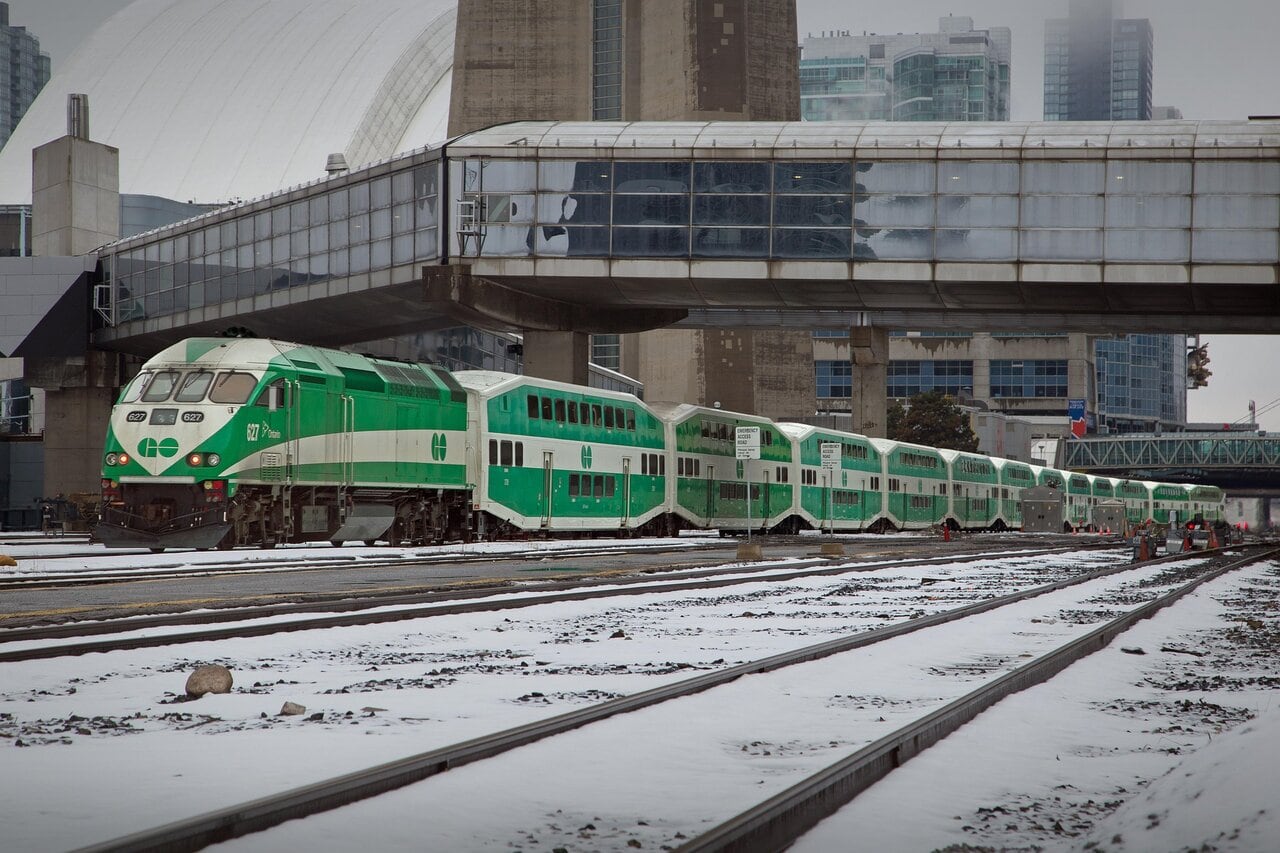
GO Trains Toronto are regional commuter trains that connect Toronto with surrounding cities and towns across the Greater Toronto Area and Southern Ontario. They are operated by GO Transit and are one of the easiest ways for visitors to travel outside the city without renting a car.
Unlike the Toronto subway, which operates only within the city, GO Trains run longer distances to places like Niagara Falls, Hamilton, Kitchener, Oshawa, Barrie, and Mississauga. This makes them extremely useful for travellers planning day trips from Toronto or staying outside the city centre.
Most GO Trains start or pass through Union Station, which is Toronto’s main transport hub. From Union Station, you can connect to the subway, streetcars, buses, the UP Express airport train, and long-distance VIA Rail services. Because everything connects at Union, it is usually the starting point for most GO Train journeys.
The trains are double-decker, comfortable, and designed for longer journeys, with toilets on board and plenty of seating. They are very different from underground metro systems and feel more like intercity trains than city transport.
For visitors, GO Trains are particularly useful because they allow easy travel to popular destinations without needing to drive, deal with parking, or navigate highways. If you are planning day trips from Toronto, you will almost certainly use the GO Train network at some point.
GO Train Routes and Lines
The GO Trains Toronto network is made up of several train lines that run from Union Station out to different regions around Toronto. Each line is named after the direction or final destination.
The main GO Train lines include routes towards Niagara Falls, Hamilton, Kitchener, Barrie, Oshawa, and Richmond Hill, along with several other suburban destinations. Some lines run frequently throughout the day, while others operate mainly during weekday commuter hours, so it is always important to check schedules in advance.
One of the most useful lines for visitors is the Lakeshore West Line, which runs from Union Station through Exhibition, Port Credit, Oakville, Burlington, and Hamilton, and continues to Niagara Falls on certain services. This is the line most travellers use for Niagara Falls day trips or visiting Hamilton.
Another useful route is the Kitchener Line, which runs from Union Station to Weston, Brampton, and Kitchener-Waterloo. This line is useful for visiting St. Jacobs Market and Kitchener-Waterloo.
The Lakeshore East Line runs from Union Station towards Pickering, Ajax, Whitby, and Oshawa, while the Barrie Line runs north towards Vaughan and Barrie, which is useful for trips towards cottage country and outdoor areas.
Nearly all GO Train journeys start at Union Station, so once you know how to get there, the network is actually very easy to use.
Ticket Prices and Fares
GO Train ticket prices are based on distance travelled rather than zones, which makes the pricing system fairly simple. The further you travel from Toronto, the more the ticket costs.
Short trips within the Greater Toronto Area might cost around $5–$10 CAD, while longer journeys such as Niagara Falls or Kitchener can cost around $20–$30 CAD each way. Prices are generally cheaper if you use a PRESTO card rather than buying single paper tickets.
Children and seniors receive discounted fares, and there are also weekend passes and group passes available, which can make travel much cheaper if you are planning multiple trips.
One of the most popular options for visitors is the GO Transit Weekend Pass, which allows unlimited travel on GO Trains and buses for a fixed price on weekends and public holidays. This can be very good value if you are planning a day trip to Niagara Falls or Hamilton.
Compared to renting a car, paying for fuel, and parking, GO Trains are often a cheaper and easier option for day trips from Toronto, especially if travelling alone or as a couple.
PRESTO Card Explained
The PRESTO card is the main travel card used for public transport in Toronto and on GO Trains, and it is the easiest way to pay for transport if you are staying in the city for a few days.
The PRESTO card works like a contactless travel card. You load money onto the card and then tap on and tap off when using GO Trains. The system automatically calculates the fare based on the distance travelled.
PRESTO can be used on:
- Toronto subway
- Toronto buses and streetcars
- GO Trains
- GO Buses
- Some regional transport systems around Toronto
Using PRESTO is cheaper than buying paper tickets, and it also makes travelling much easier because you do not need to buy a ticket for every journey.
You can buy a PRESTO card at Union Station, subway stations, airports, and some shops, and you can also load the card using machines, online, or through the mobile app.
For most visitors staying several days and planning to use both local transport and GO Trains, getting a PRESTO card is usually the easiest and cheapest option.
How to Buy GO Train Tickets
Buying GO Train tickets is straightforward, but there are a few different options and it’s worth understanding the differences before you travel. The three main ways to pay are using a PRESTO card, buying a ticket from a machine, or buying a ticket online.
The easiest option for most travellers is the PRESTO card, because you simply tap on at the station before boarding and tap off when you arrive. The system calculates your fare automatically based on distance travelled. This removes the need to work out fares in advance and is usually slightly cheaper than buying single tickets.
If you don’t have a PRESTO card, you can buy paper tickets from GO Transit ticket machines located in stations. These machines are easy to use and accept cards and cash. You select your departure station and destination, pay, and the machine prints a ticket that you must keep for the journey.
There is also the option to buy tickets online via the GO Transit website, which is useful if you want to plan ahead. You can buy e-tickets and show them on your phone when travelling.
One important thing to remember is that GO Trains use a proof-of-payment system, which means there are no ticket barriers at most stations. Instead, inspectors randomly check tickets on board. If you do not have a valid ticket or have not tapped your PRESTO card, the fines are expensive.
For most visitors staying in Toronto for a few days and planning to use public transport and trains, PRESTO is by far the easiest option and removes most of the hassle of buying tickets for every journey.
Using GO Trains from Toronto Airport
Many travellers are surprised to learn that there is no direct GO Train from Toronto Pearson Airport to Union Station, but there is a very easy connection using the UP Express airport train.
The UP Express (Union Pearson Express) runs directly from Toronto Pearson Airport to Union Station in around 25 minutes. From Union Station, you can then transfer to GO Trains to travel to destinations such as Niagara Falls, Hamilton, Kitchener, Oshawa, or Barrie.
The journey is very simple:
- Take the UP Express from Pearson Airport to Union Station
- Follow signs inside Union Station for GO Trains
- Board the correct GO Train line for your destination
Because Union Station is the main transport hub, almost all GO Trains Toronto routes pass through Union, which makes connections very easy.
If you are planning to travel directly from the airport to somewhere like Niagara Falls or Hamilton, this is usually the easiest route. In many cases, you can travel from the airport to Niagara Falls entirely by train with only one change at Union Station.
This is one of the reasons the GO Train network is so useful for visitors — you can land at Toronto Airport and reach many destinations without ever renting a car.
Best Day Trips Using GO Trains
One of the main reasons visitors use GO Trains Toronto services is for day trips outside the city, and several of the most popular destinations can be reached easily by train.
Niagara Falls is one of the most popular day trips, and there are direct GO Train services from Union Station to Niagara Falls on weekends and seasonal services, while at other times you can take the train to Burlington and transfer to a bus.
Hamilton is another very easy day trip using the Lakeshore West line, with frequent trains from Union Station taking around one hour. Hamilton is famous for its waterfalls, hiking trails, and growing restaurant and café scene.
Kitchener-Waterloo is also accessible by GO Train, and this route is popular for visiting St Jacobs Market and Oktoberfest.
Oshawa and Pickering are easy to reach on the Lakeshore East line, and these areas provide access to parks, lakefront areas, and quieter towns away from Toronto.
Because the trains are comfortable and Union Station is easy to navigate, GO Trains are one of the easiest ways to take day trips from Toronto without needing to rent a car or deal with traffic.
GO Train vs Subway vs Bus in Toronto
Visitors often get confused between GO Trains, the Toronto subway, and local buses and streetcars, but they are designed for completely different types of travel.
GO Trains Toronto are regional trains designed to travel longer distances between Toronto and surrounding cities such as Hamilton, Niagara Falls, Kitchener, and Oshawa. They are fast, comfortable, and ideal for day trips or commuting into the city.
The Toronto subway system is used for travelling within the city itself. It connects areas like downtown, North York, Scarborough, and Etobicoke, and is the main way to travel around Toronto without a car.
Toronto buses and streetcars fill the gaps between subway stations and reach areas that the subway does not cover. Streetcars mainly operate in the downtown area, while buses operate across the entire city.
The easiest way to think about it is:
- Subway → Travel within Toronto
- Streetcars & buses → Local travel within neighbourhoods
- GO Trains → Travel outside Toronto to other cities
For most visitors, you will probably use all three systems during your trip, especially if you are staying in Toronto but planning day trips outside the city.
Using a PRESTO card works across all of these transport systems, which makes travelling around Toronto and the surrounding region much easier.

Rupert’s Handy Travel Tips
Planning to use GO Trains around Toronto? Here are a few useful tips to make your journey easier:
- Union Station is the main hub: Almost all GO Trains start or pass through Union Station, so most journeys begin there.
- Remember to tap on and off: If using a PRESTO card, you must tap before boarding and after arriving.
- Check schedules in advance: Some GO Train lines do not run frequently outside rush hour.
- Weekends are great for day trips: There are often special weekend passes and direct Niagara Falls trains.
- Allow time at Union Station: It is a large station and platforms can be busy.
Want to meet the reindeer behind our travel tips? Find out more in our page Who is Rupert?.
Frequently Asked Questions About GO Trains Toronto
Are GO Trains the same as the Toronto subway?
No. GO Trains are regional trains that travel outside Toronto to surrounding cities, while the subway operates within the city itself.
Do GO Trains go to Niagara Falls?
Yes, there are GO Train services to Niagara Falls, particularly on weekends and during peak travel seasons. At other times you may need to change to a bus.
Can I use a PRESTO card on GO Trains?
Yes. PRESTO cards can be used on GO Trains, GO Buses, the Toronto subway, buses, and streetcars.
Where do GO Trains leave from in Toronto?
Most GO Trains leave from Union Station, which is Toronto’s main train and transport hub.
Are GO Trains good for day trips from Toronto?
Yes, GO Trains are one of the easiest ways to take day trips from Toronto to places like Niagara Falls, Hamilton, and Kitchener.
Further Reading & Related Toronto Travel Guides
Planning a trip to Toronto or exploring more of Canada? These guides cover transport, attractions, sightseeing, rail travel, airport transfers, and one of the country’s biggest airlines to help you build a smoother trip.
Getting Around Toronto
Compare the best ways to get into the city after landing → Toronto Airport to Downtown: Train, Bus, Taxi & Uber Guide (2026)
Travel from the city to one of Canada’s top natural sights → Toronto to Niagara Falls: Train, Bus & Travel Guide (2026)
Toronto Attractions & Sightseeing
See the city’s main landmarks from an open-top bus → Toronto Hop-On Hop-Off Bus Tours: Routes, Stops & Tickets (2026)
Decide whether Toronto’s main sightseeing pass offers value → Toronto City Pass Guide: Attractions, Prices & Is It Worth It?
Plan your full city stay with transport, attractions, and local tips → Ultimate Toronto Travel Guide (2025): Attractions, Transit & Local Tips
Explore Beyond the City
Find the best escapes for waterfalls, wine country, small towns, and scenic Ontario → Best Day Trips from Toronto: Top Destinations for 2026
Flights & Airline Planning
Learn more about Canada’s flag carrier, route network, and loyalty scheme → Air Canada Travel Guide 2026: Routes, Star Alliance & Aeroplan Explained
Last Updated
Last Updated: March 2026
Affiliate Disclosure
This page contains affiliate links. If you click through and make a purchase or booking, we may earn a small commission at no extra cost to you. This helps support our work and allows us to continue providing detailed, independent travel advice. We only recommend apps and services we personally use or have verified as high-quality.