
Budapest Metro Guide: Maps, Tickets & How to Use the Underground
Budapest’s metro system is one of the fastest and easiest ways to move around the Hungarian capital. With four lines connecting major train stations, historic districts, and many of the city’s best attractions, it forms the backbone of Budapest’s public transport network.
Visitors often discover that the metro is far quicker than buses when crossing the city, especially during busy hours. Lines run frequently throughout the day and stations are clearly marked with colour-coded signage, making navigation straightforward even for first-time visitors.
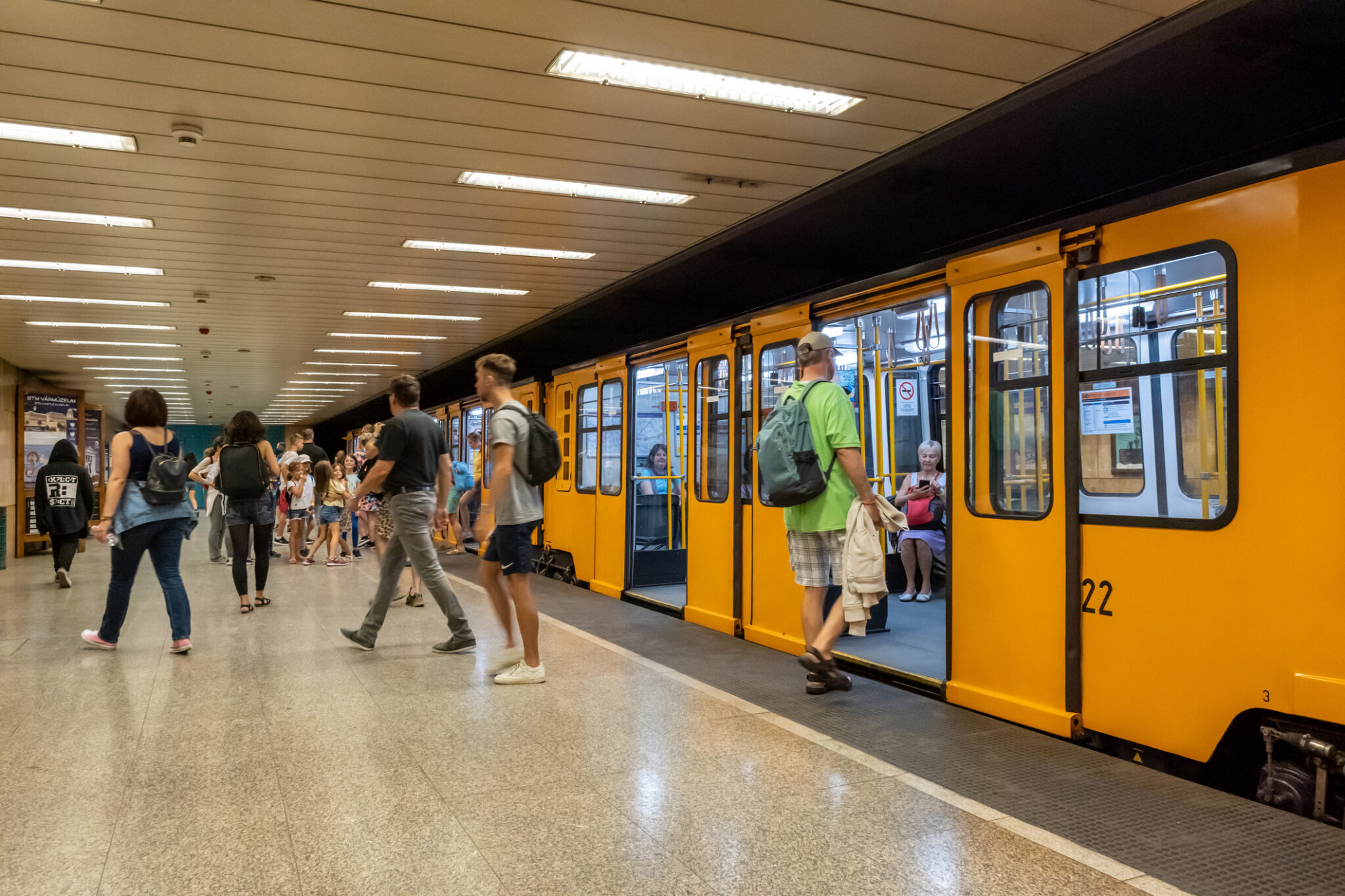
One unique feature of the network is the historic Millennium Underground line (M1), which opened in 1896 and still runs beneath Andrássy Avenue. It was the first metro built in continental Europe, and today it remains both a practical transport route and a small piece of living history.
This Budapest metro guide explains how the system works, where each line goes, how to buy tickets, and how to navigate stations with confidence. Once you understand the basics, travelling around Budapest becomes remarkably simple.
Budapest Metro Overview
Budapest currently operates four metro lines, identified by the letters M1 through M4. Each line is colour coded on maps and station signs, making it easy to identify the correct platform and route.
The network connects many of the locations visitors need most, including major railway stations, central squares, and popular sightseeing areas. Several metro lines also link directly with Budapest’s extensive tram and bus network, allowing passengers to continue their journey across the city.
Three stations act as particularly important interchange points. Deák Ferenc tér is the central hub where three metro lines meet, while Kálvin tér and Keleti pályaudvar allow transfers between other key routes. Because of this design, most journeys across the city require only one simple change of train.
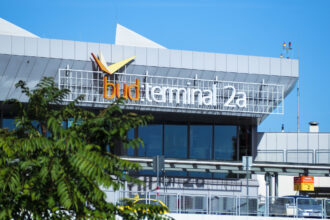
The metro also connects with airport transport services. The 200E airport bus terminates at Kőbánya-Kispest, where travellers can transfer onto Metro Line M3 and continue toward the city centre.
For most visitors, the metro becomes the quickest way to move between districts such as Pest’s historic centre, the City Park area, and the major railway stations. It is reliable, clearly organised, and easy to learn after just a few trips.
Budapest Metro Map
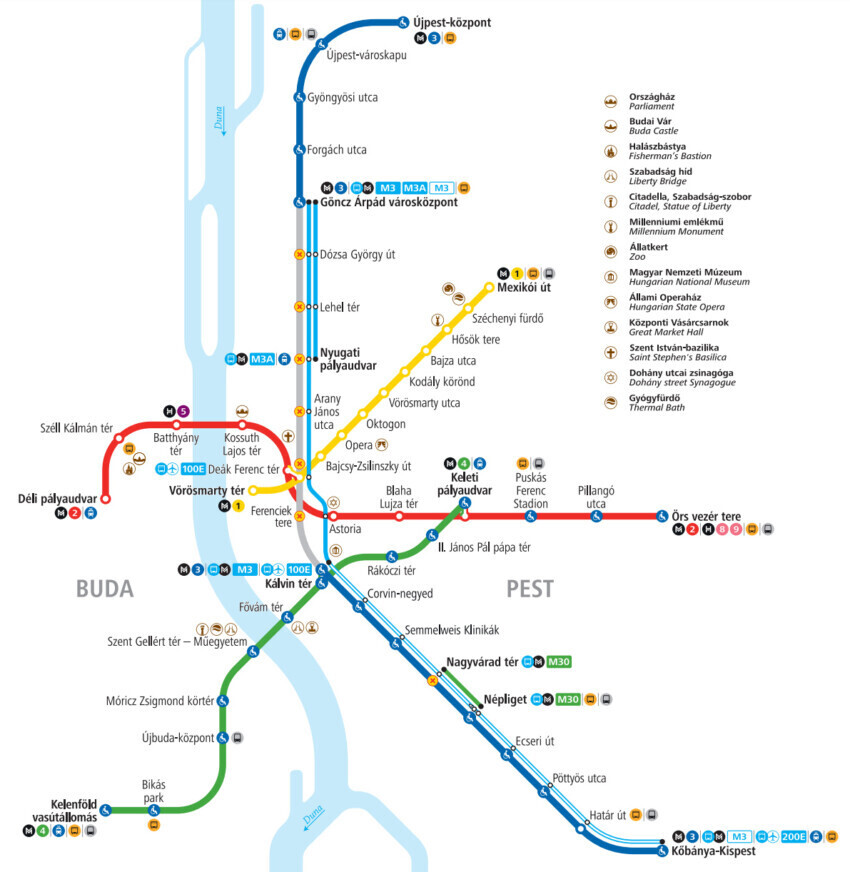
Understanding the system begins with looking at the Budapest metro map, which displays the four lines and the stations where passengers can change between them.
Each route is represented by a distinct colour. The yellow M1 line runs beneath Andrássy Avenue, the red M2 line crosses the city east to west, the blue M3 line runs north to south, and the green M4 line links key railway hubs and university districts.
Maps are displayed inside every station, on platforms, and inside metro trains, so travellers can easily check their route while travelling. The layout is straightforward and most stations are labelled in both Hungarian and English.
Several stations stand out as important transfer points. Deák Ferenc tér is the central hub of the network, where three metro lines meet. This station lies close to many attractions in central Pest and is often where travellers switch routes.
Budapest’s transport authority also provides a detailed map online through the official BKK website. Travellers can view the full system here:
Studying the map for a few minutes before travelling makes it much easier to visualise how the metro lines cross the city and where transfers are required.
Budapest Metro Lines Explained
Each metro line serves a different corridor of the city, linking residential districts, transport hubs, and popular sightseeing areas.
M1 – Yellow Line (Millennium Underground)
The M1 line is the oldest metro route in Budapest and one of the oldest in Europe. Opened in 1896 for the Millennium Exhibition, it runs beneath Andrássy Avenue from Vörösmarty tér to Mexikói út.
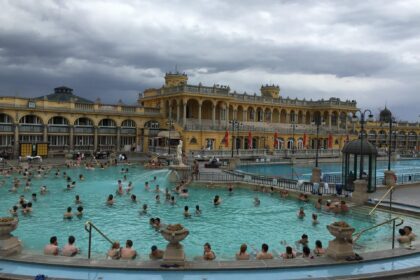
Stations along the route serve several famous attractions. Travellers can reach St Stephen’s Basilica, the Hungarian State Opera House, Heroes’ Square, and Széchenyi Thermal Baths directly from this line.
Because the platforms and trains are smaller than those on other lines, the M1 has a distinct historic feel that many visitors find memorable.
M2 – Red Line
The M2 line crosses Budapest from Déli railway station in Buda to Keleti railway station in Pest. This makes it extremely useful for travellers arriving by train or moving between the two sides of the city.
Stops include Széll Kálmán tér, Astoria, and Deák Ferenc tér, which place passengers close to many of the city’s busiest areas.
M3 – Blue Line
Metro Line M3 is the longest route in the system and runs north to south through Pest. It links major locations including Nyugati railway station, Deák Ferenc tér, and Kálvin tér.
This line also connects with the 200E airport bus at Kőbánya-Kispest, making it a key route for travellers arriving from Budapest Airport.
M4 – Green Line
The newest addition to the metro network is the M4 line, which connects Kelenföld railway station with Keleti railway station.
Along the way it serves Gellért Hill, university districts, and busy transport hubs, providing a fast cross-city link between western and eastern Budapest.
Budapest Metro Tickets & Prices
Budapest uses a simple citywide ticketing system operated by BKK, the capital’s public transport authority. The same tickets work across metro trains, trams, buses, and trolleybuses, making it easy to combine different forms of transport during one journey.
The most basic option is the single ticket, which allows travel on one metro line. If you need to change lines within the metro system, a transfer ticket is required. Many visitors prefer to avoid this complication by purchasing a travel pass instead.
For short visits, time-based travelcards are usually the most convenient option. A 24-hour, 48-hour, or 72-hour pass allows unlimited travel across the entire public transport network. This means you can use metro trains, trams, buses, and even some suburban rail services without buying separate tickets.
Typical prices are very reasonable compared with many European capitals. A single ticket generally costs around 450 HUF, while a 24-hour travelcard costs roughly 2,500 HUF. Longer passes offer better value if you expect to use public transport frequently.
For most travellers, the best strategy is simple: buy a short travel pass and use the metro freely during your stay. This removes the need to worry about transfers, ticket validation rules, or additional purchases.
Where to Buy Metro Tickets
Metro tickets in Budapest are widely available and easy to purchase. Ticket machines are located inside every metro station and accept both cash and bank cards, including international payment cards.
These machines offer multiple language options, including English, making the purchase process straightforward for visitors. After selecting the ticket type, travellers simply pay and receive a printed ticket or pass.
Another option is to buy tickets at BKK customer service centres and staffed ticket offices, which are located at several major transport hubs such as Deák Ferenc tér, Keleti railway station, and Nyugati railway station.
Many travellers also choose to purchase digital tickets through mobile ticketing apps, which allow passengers to store travel passes directly on their smartphone instead of carrying paper tickets.
The official BudapestGO app, operated by the city’s transport authority BKK, allows travellers to buy single tickets, travel passes, and airport transport tickets directly within the app. After purchasing a ticket, passengers simply scan a QR code displayed at the metro entrance or near the escalators to validate it before entering the platform.
BudapestGO also provides live public transport information, route planning, and service updates, which can be useful when navigating the city’s metro, tram, and bus network.
Some visitors also use Google Maps or Citymapper for journey planning, as both apps integrate Budapest’s public transport network and show metro routes alongside tram and bus connections.
For many travellers, using a ticket app is the simplest way to manage metro travel in Budapest, especially during busy periods when ticket machines may have queues. Once the ticket is activated on your phone, you can move through the metro system without worrying about validating paper tickets.
Whichever option you choose, it is always wise to purchase your ticket before entering the platform area. Ticket inspections are common on Budapest’s public transport system, and inspectors regularly check passengers during their journeys.


How to Use the Budapest Metro
Using the metro system in Budapest is straightforward once you understand the basic process. Stations are clearly marked, trains run frequently, and route information is displayed throughout the network.
First, travellers must purchase a valid ticket or travel pass before entering the metro platform. Single tickets need to be validated using the small orange stamping machines located near station entrances or escalators.
Once validated, passengers simply follow the colour-coded line signs to the correct platform. Each line uses a distinct colour and number, making it easy to confirm you are heading in the right direction.
Inside stations, digital boards display the next arriving trains and the direction of travel. Signs also indicate the final station on each route, helping passengers confirm which platform to use.
Metro trains run every two to five minutes during busy periods, and slightly less frequently later in the evening. The system generally operates from early morning until shortly after midnight, after which night buses replace many routes.
With clear signage and frequent services, most visitors find that navigating the metro becomes second nature after only a couple of journeys.
Key Interchange Stations
Several metro stations act as major connection points between lines, allowing travellers to change routes and continue across the city without leaving the system.
The most important hub is Deák Ferenc tér, located in the heart of central Pest. This station connects three metro lines (M1, M2, and M3) and is within walking distance of major attractions such as St Stephen’s Basilica and the Danube riverfront. Many travellers pass through this station at some point during their stay.
Another important interchange is Kálvin tér, where the M3 and M4 lines intersect. This station sits close to the Central Market Hall and the historic university district, making it a convenient point for both tourists and local commuters.
A third key station is Keleti pályaudvar, which connects the M2 and M4 metro lines with one of Budapest’s largest railway stations. Travellers arriving by international or intercity train can transfer here directly to the metro network.
Understanding these major interchange stations makes it much easier to plan efficient journeys across Budapest, especially when travelling between the city’s main districts.
Budapest Metro for Tourists
For visitors exploring the Hungarian capital, the metro is often the fastest way to move between the city’s main attractions. The network connects several of Budapest’s most famous landmarks, making it easy to travel between districts without relying on taxis or buses.
Many travellers begin their journeys at Deák Ferenc tér, the central hub where multiple metro lines meet. From here, it is only a short walk to St Stephen’s Basilica, the Danube promenade, and several of the city’s busiest shopping streets.
The historic M1 Millennium Underground line is particularly useful for sightseeing. Running beneath Andrássy Avenue, it provides quick access to the Hungarian State Opera House, Heroes’ Square, the City Park area, and the famous Széchenyi Thermal Baths. Because of this, many travellers use the line as a convenient route between the city centre and the park district.
Metro lines also connect with several important railway stations. Travellers arriving at Keleti, Nyugati, or Déli stations can transfer directly onto the underground system and continue into the city centre within minutes.
For many visitors, the metro becomes the simplest way to navigate Budapest, particularly when travelling between the historic Pest districts and areas further north or south of the centre.
Metro vs Trams vs Buses in Budapest
Budapest has one of the most extensive public transport networks in Central Europe, and each mode of transport plays a different role in moving passengers around the city.
The metro is generally the fastest option for longer journeys across the city, particularly when travelling between major transport hubs or crossing large distances through central districts. Trains run underground and avoid street traffic, which makes them reliable even during busy periods.
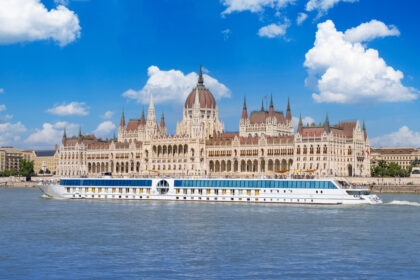
Trams, on the other hand, often provide the most scenic journeys. Some of the city’s most famous tram routes run along the Danube riverfront, offering views of landmarks such as the Hungarian Parliament and Buda Castle.
Buses and trolleybuses fill the gaps between the metro and tram networks. They serve neighbourhoods where rail transport is not available and provide connections to outer districts.
| Transport | Best For | Example Routes |
|---|---|---|
| Metro | Fast cross-city travel | M2, M3 |
| Trams | Scenic routes & riverfront | Tram 2 |
| Buses | Local neighbourhood access | Bus 16 |
For visitors exploring the city centre, a combination of metro lines and a few key tram routes usually covers most journeys.
Metro Safety & Travel Tips
Budapest’s metro system is generally safe, efficient, and well maintained, but there are a few practical tips that can make travelling smoother.
First, always ensure your ticket has been properly validated before starting your journey. Ticket inspectors frequently check passengers on platforms and inside trains. If a ticket has not been validated correctly, passengers may receive a fine.
During busy hours, especially in the morning and late afternoon, trains can become crowded around major interchange stations such as Deák Ferenc tér. Keeping personal belongings secure and being aware of your surroundings is always sensible in busy urban transport systems.
Another helpful tip is to pay attention to the final station displayed on the platform signs. Metro lines run in two directions, and checking the last station name helps confirm that you are travelling the correct way.
Travellers should also note that metro services typically run until shortly after midnight. After this time, Budapest operates an extensive night bus network that continues to connect many parts of the city.

Rupert’s Handy Travel Tips
Using the Budapest metro is easy once you know a few local tricks. Here are a few tips that can make your journeys smoother:
- Always validate single tickets using the orange machines before entering the platform.
- If you plan to travel frequently, a 24-hour or 72-hour travel pass is usually better value.
- Check the final station name on platform signs to make sure you are heading the right direction.
- The M1 Millennium Underground is not just transport — it’s one of the city’s historic attractions.
- During rush hour, allow a little extra time at major interchange stations such as Deák Ferenc tér.
Want to meet the reindeer behind our travel tips? Find out more in our page Who is Rupert?.
Frequently Asked Questions About the Budapest Metro
Is the Budapest metro easy for tourists to use?
Yes. The system is well organised, clearly signposted, and relatively small compared with many European capitals. Stations use colour-coded lines and clear direction signs, which makes navigation straightforward even for first-time visitors.
Most major attractions are either located near a metro station or within a short walk from one, so the metro quickly becomes one of the most convenient ways to explore the city.
Do Budapest metro tickets work on trams and buses?
Yes. Budapest uses a unified public transport ticket system, meaning the same tickets and travel passes work across the metro, trams, buses, and trolleybuses.
However, a standard single ticket is valid for one uninterrupted journey, so if you need to change lines you may require a transfer ticket unless you are using a travel pass.
Do metro trains run all night in Budapest?
No. The metro typically operates from early morning until shortly after midnight. After metro services stop running, the city switches to a network of night buses, which cover many of the same routes across Budapest.
Night buses are clearly marked with numbers beginning with 9, and many depart from central locations such as Deák Ferenc tér.
Is the Budapest metro safe to use?
Yes. The metro system is generally safe and widely used by locals and visitors throughout the day. Stations are busy, well lit, and regularly patrolled.
As in any large city, travellers should remain aware of their belongings in crowded areas, particularly during busy commuting hours.
Can you pay contactless on the Budapest metro?
At present, Budapest does not operate the same tap-in contactless system used in cities such as London. Travellers must buy a ticket, travel pass, or mobile ticket before entering the metro system.
Digital tickets purchased through the BudapestGO app can be validated by scanning QR codes inside metro stations.
Further Reading & Related Travel Guides
Planning a trip to Budapest or exploring more of Hungary? These guides cover transport, major attractions, day trips and travel planning to help you make the most of your visit.
Getting Around Budapest
Compare transport options from the airport → Budapest Airport Transfers Guide
Explore the city with a sightseeing bus → Budapest Hop-On Hop-Off Bus Tours Guide
Travel between two Central European capitals → Budapest to Vienna Travel Guide
Budapest Attractions & Experiences
Discover the Hungarian Parliament building → Budapest Parliament Tours Guide
See Budapest from the Danube → Budapest River Cruises Guide
Relax in Hungary’s famous thermal spas → Budapest Thermal Baths Guide
Decide whether the city pass is worth it → Budapest Card Guide
Explore Beyond the Capital
Find the best excursions outside the city → Best Day Trips from Budapest
Visit Hungary’s second largest city → Debrecen Travel Guide
Travel across Hungary by rail → Interrail Hungary Pass Guide
Last Updated
March 2026
Affiliate Disclosure
This page contains affiliate links. If you click through and make a purchase or booking, we may earn a small commission at no extra cost to you. This helps support our work and allows us to continue providing detailed, independent travel advice. We only recommend apps and services we personally use or have verified as high-quality.