
Visiting Whisky Distilleries in Scotland
Visiting whisky distilleries is one of the most popular travel experiences in Scotland, and for many visitors it becomes a major highlight of the trip rather than just a short stop. Across Scotland you will find distilleries in cities, small towns, remote glens, islands and coastal locations, and many of them are open to visitors for tours and tastings.
Most distilleries offer guided tours that explain how Scotch whisky is made, including the malting, mashing, fermentation, distillation and maturation processes. These tours usually finish with a tasting, and many distilleries also have cafés, shops and visitor centres. Even if you are not a whisky expert, the tours are usually interesting, scenic and very well presented, and they are designed for beginners as well as enthusiasts.
One of the best things about visiting distilleries in Scotland is that they are often located in beautiful landscapes, particularly in Speyside, the Highlands and on islands like Islay, Skye and Arran. This means visiting distilleries often fits naturally into road trips, scenic train journeys and island travel, rather than being something separate.
It is important to understand that not all distilleries are open to visitors, and some require booking in advance, especially in the summer. The most famous distilleries can sell out tours days or even weeks ahead, particularly in Speyside and on Islay.
Overall, a Scotland whisky distillery guide is really about planning where to go, which regions to visit, and how to organise distillery tours alongside travel around Scotland.
Whisky Regions of Scotland Explained
Scotch whisky is traditionally divided into several regions, and each region is known for different whisky styles, landscapes and distillery experiences. Understanding the whisky regions helps when planning a distillery trip, because distilleries are often clustered together within these areas.
The most famous region is Speyside, located around the River Spey in northeast Scotland. Speyside has the highest concentration of distilleries in Scotland and includes some of the most famous names in Scotch whisky. Many visitors base themselves in Dufftown, Elgin or Inverness when visiting Speyside distilleries.
Islay is a small island off the west coast of Scotland and is famous for smoky, peaty whiskies. Islay is often considered a whisky destination in its own right, and many travellers visit the island specifically to tour multiple distilleries.
The Highlands region is very large and includes distilleries spread across northern and western Scotland, including areas near Inverness, Fort William, Oban and the Cairngorms. Highland distilleries vary widely in style and location, and many are located in very scenic and remote areas.
The Lowlands cover the area around Glasgow and Edinburgh and have fewer distilleries than other regions, but they are often easy to visit as day trips from the cities.
Campbeltown is a small whisky region on the Kintyre Peninsula and was once one of the largest whisky regions in Scotland. Today there are only a few distilleries, but it is still an important historic whisky area.
Finally, the Islands region includes distilleries on islands such as Skye, Arran, Jura, Mull and Orkney. These distilleries are often combined with ferry trips and island travel, making them very popular with travellers exploring Scotland’s west coast.
Understanding these regions makes it much easier to plan a trip because most distillery visits are organised by region rather than individual distilleries scattered across the country.
Speyside Whisky Distilleries You Can Visit
Speyside is the most famous whisky region in Scotland and has more distilleries than anywhere else in the country, making it one of the best places to visit if you want to see several distilleries in a short time. Many of the world’s best-known Scotch whisky brands are produced in this region.
The town of Dufftown is often described as the whisky capital of the world, and the surrounding area contains several major distilleries that are open to visitors. The region is also very scenic, with rivers, forests, hills and quiet roads, making it ideal for a road trip.
Some of the most popular distilleries to visit in Speyside include Glenfiddich, The Macallan, Glenlivet, Aberlour, Cardhu and Balvenie. Many of these distilleries have large visitor centres, guided tours, tasting experiences and shops. Some offer more in-depth experiences where you can see warehouses and learn about maturation and blending.
One of the biggest advantages of Speyside is that many distilleries are located close to each other, meaning you can visit multiple distilleries in one day if you plan carefully. This is very different from some Highland and island distilleries, which can be far apart and require longer travel times.
Many visitors exploring Speyside stay in Inverness, Elgin, Aviemore or small villages around Dufftown, and visit distilleries over several days. Speyside is often considered the easiest whisky region to visit, especially for first-time visitors to Scotland.
Islay Whisky Distilleries You Can Visit
Islay is one of the most famous whisky destinations in the world and is particularly known for strong, smoky and peaty whiskies. The island is located off the west coast of Scotland and is usually reached by ferry or a small flight from Glasgow.
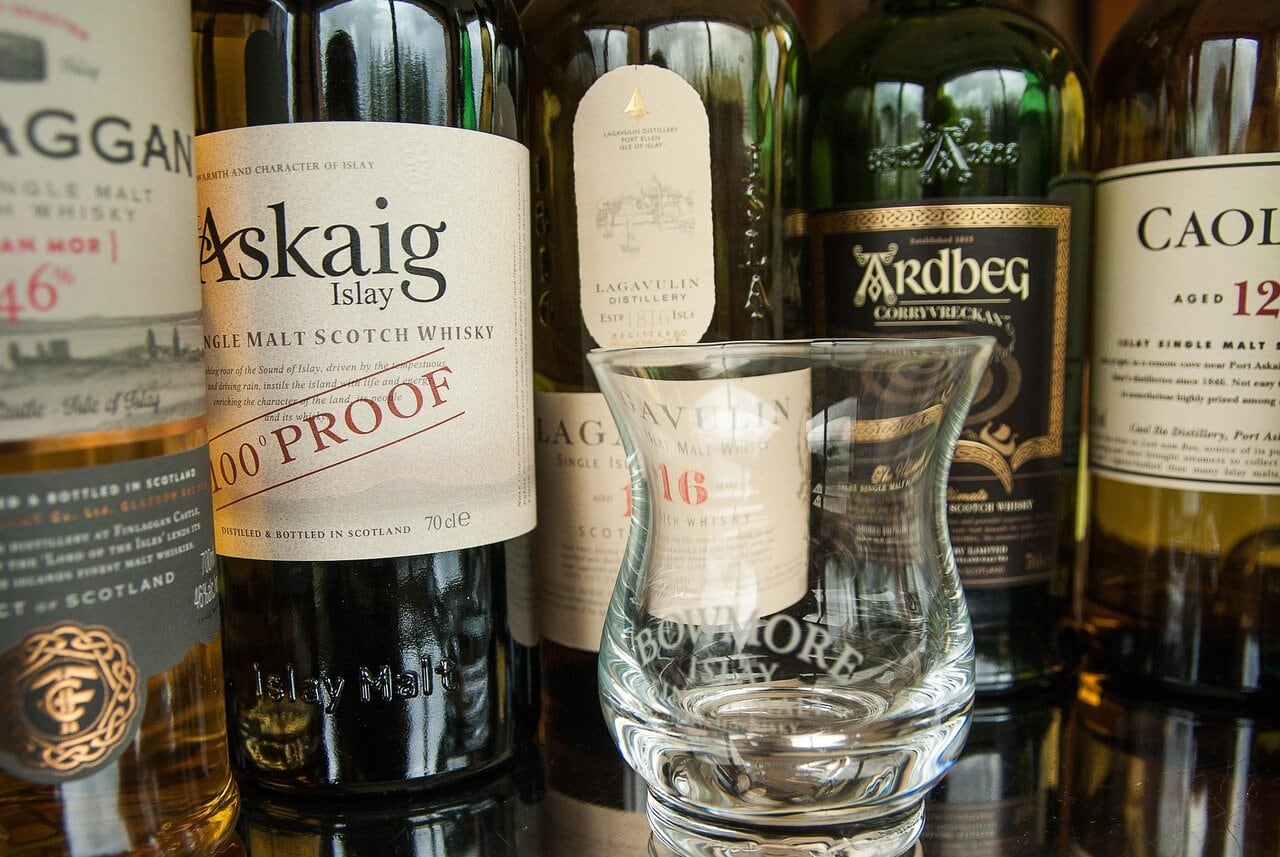
Despite being a small island, Islay is home to several world-famous distilleries including Laphroaig, Lagavulin, Ardbeg, Bowmore, Bruichladdich, Caol Ila, Kilchoman and Bunnahabhain. Many whisky enthusiasts visit Islay specifically to tour these distilleries, and the island has become a major whisky tourism destination.
One of the best things about visiting Islay is that several distilleries are located close together along the south coast of the island, particularly Laphroaig, Lagavulin and Ardbeg, which are only a short distance apart. This makes it possible to visit multiple distilleries in a single day if you plan transport carefully.
Islay itself is also a beautiful island with coastlines, beaches, wildlife and small villages, so visiting distilleries here often feels like a full island holiday rather than just a whisky trip.
Most visitors reach Islay via the CalMac ferry from Kennacraig, and many people combine an Islay distillery trip with travel around the west coast of Scotland, Oban, or the Highlands.
For whisky lovers, Islay is often considered one of the best whisky destinations in the world, and visiting the distilleries here is very different from visiting distilleries on the mainland.
Highlands Whisky Distilleries You Can Visit
The Highlands is the largest whisky region in Scotland, and distilleries are spread across a huge area that includes Inverness, Fort William, Oban, the Cairngorms and the north coast. Because the region is so large, Highland distillery visits are often combined with road trips, rail journeys or visits to castles, lochs and national parks.
One of the most famous Highland distilleries is Oban Distillery, which is located right in the centre of the harbour town of Oban. This is one of the easiest distilleries to visit because it is within walking distance of the train station and ferry terminal, making it ideal if you are travelling around Scotland without a car.
Another well-known distillery is Dalwhinnie, located in the Cairngorms National Park. This is one of the highest distilleries in Scotland and is often visited by travellers driving between Inverness and Edinburgh or Glasgow. The surrounding scenery is mountainous and remote, which makes the visit feel very atmospheric.
Near Inverness, you can visit distilleries such as Tomatin and Glen Ord, which are both relatively easy to reach from the city. Many travellers use Inverness as a base for visiting Highland distilleries as well as exploring Loch Ness, the Cairngorms and the North Coast 500 route.
There are also smaller distilleries across the Highlands such as Edradour, Ben Nevis Distillery near Fort William, and Glenturret near Crieff, and these are often visited as part of wider Highland travel itineraries.
The Highlands region is very different from Speyside because distilleries are more spread out, but the advantage is that many of them are located in some of the most scenic parts of Scotland, making the journey just as memorable as the distillery visit itself.
Lowlands Whisky Distilleries You Can Visit
The Lowlands whisky region covers the area around Glasgow, Edinburgh and southern Scotland, and although there are fewer distilleries here compared to Speyside or the Highlands, they are often the easiest distilleries to visit as day trips from Scotland’s two biggest cities.
One of the most popular Lowland distilleries is Glenkinchie Distillery, which is located not far from Edinburgh and is often included in organised whisky tours from the city. This is one of the closest distilleries to Edinburgh and is very accessible for visitors who do not have a car.
Near Glasgow, Auchentoshan Distillery is another well-known Lowland distillery and is actually located very close to the city, making it one of the easiest distilleries in Scotland to reach by taxi or public transport.
Further south, Bladnoch Distillery near Wigtown is one of the oldest distilleries in Scotland and is sometimes visited by travellers exploring southwest Scotland or travelling towards the ferry ports for Northern Ireland.
Lowland distilleries are often less crowded than Speyside distilleries and provide a more relaxed and quieter visitor experience, and they are ideal if you want to visit a distillery without travelling deep into the Highlands or onto the islands.
Campbeltown Whisky Distilleries You Can Visit
Campbeltown is one of the smallest whisky regions in Scotland but has a very important place in whisky history. In the 19th century, Campbeltown was once known as the whisky capital of the world, with more than 30 distilleries operating in the area. Today, only a few remain, but they are highly regarded and very popular with whisky enthusiasts.
The two main distilleries you can visit in Campbeltown are Springbank Distillery and Glen Scotia Distillery, both located in the town itself. Springbank is particularly famous because it still carries out the entire whisky production process on site, which is rare in modern whisky production.
Campbeltown is located on the Kintyre Peninsula, and getting there takes longer than visiting most other whisky regions. However, many visitors combine a trip to Campbeltown with a scenic drive down the Kintyre Peninsula or a ferry from Ardrossan, making it part of a wider west coast trip.
Because there are only a few distilleries here, Campbeltown is not usually the first region people visit, but for whisky enthusiasts it is an important and historic whisky destination that feels very different from Speyside or Islay.
Islands Whisky Distilleries You Can Visit
In addition to Islay, there are several whisky distilleries located on Scottish islands such as Skye, Arran, Jura, Mull and Orkney, and visiting these distilleries is often combined with island travel and ferry journeys.
One of the most famous island distilleries is Talisker Distillery on the Isle of Skye, which is located near the village of Carbost. Talisker is one of the most visited distilleries in Scotland and is often included in trips to Skye along with the island’s landscapes and famous viewpoints.
On the Isle of Arran, the Arran Distillery is located in Lochranza and is often visited by travellers who take the ferry from Ardrossan. Arran is sometimes described as “Scotland in miniature” because it has mountains, coastlines and castles, making it a great island to visit alongside a distillery tour.
On the island of Jura, the Jura Distillery is located in a very remote location and is often visited by travellers combining Islay and Jura in the same trip.
On the Orkney Islands, you can visit Highland Park Distillery and Scapa Distillery, both located near Kirkwall. Visiting these distilleries is usually combined with a longer trip to Orkney, which is known for Neolithic sites, coastal scenery and wildlife.
Island distillery visits are often some of the most memorable because they combine ferry travel, island landscapes and distillery tours, making them feel like a full travel experience rather than just a short visit.
Planning a Scotland Whisky Distillery Trip
Planning a trip to visit whisky distilleries in Scotland is not just about choosing one distillery and turning up. The distilleries are spread across the country, and the best trips are usually planned by region, travel route, or road trip, rather than trying to visit random distilleries all over Scotland.
Many visitors choose to focus on one or two regions, such as Speyside and the Highlands, or Islay and the west coast, rather than trying to see everything in one trip. Scotland may look small on a map, but travel times can be long, especially in the Highlands and on island routes.
Speyside is often the easiest region to visit if your main goal is to visit several distilleries, because many distilleries are located close together, and you can visit multiple distilleries in a single day. Inverness is often used as a base for Speyside and Highland distillery trips.
Islay trips usually require more planning because you normally need to take a ferry or flight to the island, and accommodation can fill up quickly during busy periods and whisky festivals.
If you are planning a longer Scotland trip, many travellers combine distillery visits with road trips such as the North Coast 500, west coast travel, Isle of Skye trips, or Speyside scenic routes. Distillery visits often work best when combined with sightseeing rather than being the only activity each day.
It is also important to book distillery tours in advance, especially in summer, because popular distilleries like Macallan, Glenfiddich, Lagavulin and Talisker can sell out tours in advance.
Tips for Visiting Distilleries in Scotland
Visiting distilleries in Scotland is very easy, but there are a few things that can make your trip much smoother and more enjoyable if you know them in advance.
One of the most important things to remember is that you usually need to book distillery tours in advance, especially at the more famous distilleries. Some smaller distilleries allow walk-in tastings, but guided tours are often scheduled at specific times during the day.
If you are driving, remember that Scotland has very strict drink driving laws, and the legal alcohol limit is much lower than in many other countries. Many distilleries offer driver tasting packs, where the driver can take the whisky samples away to drink later instead of drinking them during the visit.
If you are not driving, there are organised whisky tours available from Inverness, Edinburgh, Glasgow and Speyside, and these can be a good option if you want to visit multiple distilleries without worrying about transport.
Another useful tip is to avoid trying to visit too many distilleries in one day. Distillery tours usually last between one and two hours, and travel time between distilleries can be longer than expected, especially on rural roads.
The best distillery visits are usually when you combine one or two distilleries with scenic drives, castles, villages or coastal stops, rather than trying to rush between distilleries all day.

Rupert’s Handy Travel Tips
Planning to visit whisky distilleries in Scotland? Here are a few tips to make your trip easier:
- Book distillery tours in advance: Popular distilleries can sell out, especially in summer.
- Don’t drive and drink: Many distilleries offer driver tasting packs so you can take samples away.
- Group distilleries by region: Speyside and Islay are best for visiting multiple distilleries in one trip.
- Combine distilleries with sightseeing: Many distilleries are near castles, lochs and scenic routes.
Want to meet the reindeer behind our travel tips? Find out more in our page Who is Rupert?.
Frequently Asked Questions About Visiting Whisky Distilleries in Scotland
Do you need to book distillery tours in advance?
For most distilleries, especially famous ones like Glenfiddich, Macallan, Talisker, Laphroaig and Lagavulin, it is strongly recommended to book in advance, particularly between May and September. Smaller distilleries may allow walk-in tastings, but guided tours often run at fixed times and can sell out.
Can you visit distilleries without doing a tour?
Many distilleries allow visitors to enter the shop or visitor centre without a tour, and some offer tastings without the full guided tour. However, some smaller distilleries only allow access if you are booked on a tour.
How much do distillery tours cost in Scotland?
Most distillery tours cost between £15 and £30 per person, depending on the distillery and the type of tasting included. Premium tastings and warehouse tours can cost more, sometimes £40–£100, depending on the experience.
Can you visit multiple distilleries in one day?
Yes, especially in Speyside and Islay, where several distilleries are located close together. However, most tours last around one to two hours, so realistically two distilleries in one day is usually comfortable, while three can feel rushed.
Do you need a car to visit whisky distilleries in Scotland?
Many distilleries are in rural areas, so having a car makes visiting distilleries much easier, especially in Speyside and the Highlands. However, some distilleries can be reached by train or organised tour, particularly near Edinburgh, Glasgow, Inverness and Oban.
What is the best whisky region to visit in Scotland?
This depends on what you are looking for. Speyside is the easiest region for visiting multiple distilleries, Islay is famous for smoky whisky and island scenery, and the Highlands offer distilleries in very scenic locations across a large area.
Can drivers take part in whisky tastings?
Most distilleries offer driver tasting packs, where the driver is given miniature bottles to take away instead of drinking the whisky during the tasting. This is very common and makes it easier to visit distilleries while driving.
What time of year is best for visiting distilleries in Scotland?
Distilleries are open all year, but spring and summer are the most popular times to visit. Autumn is also a very good time because the scenery is beautiful and there are usually fewer visitors than in peak summer.
Further Reading & Related Guides
If you are planning a trip around Scotland and visiting distilleries, these guides will help you plan transport, routes and places to visit across the country.
Our ScotRail Guide explains train routes across Scotland, rail passes and scenic railway journeys, which can be a great way to visit whisky regions like Speyside without driving.
If you are visiting island distilleries such as Islay, Jura or Arran, our CalMac Ferry Guide explains ferry routes, booking tickets and travelling with a car to the Scottish islands.
Many whisky trips start in the Highlands capital, so see our Inverness Travel Guide for where to stay, how to get around and things to do in the area.
If your trip includes the west coast, our Isle of Skye Travel Guide covers scenic drives, castles, villages and places to visit on Scotland’s most famous island.
Last Updated
This Scotland whisky distillery guide was last updated in April 2026. Distillery opening times, tour availability and booking requirements can change, so always check distillery websites before travelling.
Affiliate Disclosure
This page contains affiliate links. If you click through and make a purchase or booking, we may earn a small commission at no extra cost to you. This helps support our work and allows us to continue providing detailed, independent travel advice. We only recommend apps and services we personally use or have verified as high-quality.