Why Japan Airlines Matters for International Travellers
Japan Airlines is one of the most important airlines in Asia and plays a major role in connecting Japan with Europe, North America, and the rest of Asia. For many international travellers, flying with Japan Airlines is one of the most comfortable and reliable ways to reach Japan, particularly if travelling from London, Paris, Frankfurt, or major US cities.
What makes the airline particularly important is its position as one of Japan’s two global full-service carriers, alongside ANA. Between them, these airlines handle a large proportion of international traffic into Japan, and Japan Airlines operates some of the country’s most important long-haul routes.
The airline’s main hubs at Tokyo Haneda and Tokyo Narita airports act as major gateways into Japan. From these airports, travellers can connect to domestic flights across the country, including Osaka, Sapporo, Fukuoka, Okinawa, and many smaller regional airports. This makes Japan Airlines especially useful for travellers planning to explore more than just Tokyo.
Japan Airlines is also a member of the Oneworld alliance, which means passengers can easily connect with airlines such as British Airways, American Airlines, Finnair, and Qantas. This alliance network makes it possible to book complex international journeys on a single ticket while still earning loyalty points and enjoying alliance benefits.
The airline is particularly well known for high service standards, punctuality, and very comfortable long-haul cabins, especially in Premium Economy and Business Class. For travellers flying long distances to Japan, these factors can make a significant difference to the overall travel experience.
Because of its strong domestic network, long-haul routes, and alliance partnerships, Japan Airlines is often one of the most practical and comfortable airlines for travelling to Japan and across Asia.
A Brief History of Japan Airlines
Japan Airlines, often referred to simply as JAL, was founded in 1951 and quickly became Japan’s national airline during the country’s post-war recovery period. In its early years, the airline focused on rebuilding Japan’s international connections, launching routes to cities such as San Francisco and Honolulu, which became some of its most important early long-haul services.
Throughout the 1960s and 1970s, Japan Airlines expanded rapidly as Japan’s economy grew and international travel became more common. The airline built a reputation for high service standards, careful attention to detail, and strong operational reliability, characteristics that are still associated with the airline today.
For many years the airline was government owned, but it was gradually privatised and became a fully private company in the late twentieth century. During this period the airline expanded its global network across Europe, North America, and Asia, becoming one of the world’s major long-haul carriers.
Japan Airlines faced serious financial difficulties in the early 2010s and entered bankruptcy protection in 2010. However, the airline underwent a major restructuring, reduced costs, modernised its fleet, and returned to profitability within a few years. This restructuring is often considered one of the most successful airline turnarounds in the industry.
Today, Japan Airlines operates a modern fleet and a large international route network while maintaining its reputation for excellent customer service, clean aircraft, and very high punctuality levels. The airline is consistently ranked among the best airlines in the world for service quality and reliability.
Japan Airlines and the Oneworld Alliance Network
Japan Airlines is a member of the Oneworld airline alliance, one of the three major global airline alliances alongside Star Alliance and SkyTeam. This alliance allows Japan Airlines to operate as part of a much larger global network, giving passengers access to hundreds of destinations worldwide.
Through Oneworld, passengers flying with Japan Airlines can connect easily onto partner airlines while travelling on a single ticket. This makes long international journeys much easier to manage, especially when travelling between continents.
Major Oneworld partners include British Airways, American Airlines, Cathay Pacific, Qantas, Finnair, Iberia, and Malaysia Airlines. This means a traveller could fly from London to Tokyo with Japan Airlines, then continue to Australia with Qantas or across Asia with Cathay Pacific, all within the same alliance network.
The alliance also provides additional benefits for frequent travellers. Passengers who are members of the Japan Airlines loyalty programme can earn and redeem miles across all Oneworld airlines, not just Japan Airlines flights. This greatly increases the usefulness of the loyalty programme.
Other alliance benefits include shared airport lounges, coordinated flight schedules, smoother connections, and priority services for elite status members. For travellers who fly regularly between Europe, Asia, Australia, and North America, this alliance membership is one of the airline’s biggest advantages.
Because of its position within Oneworld, Japan Airlines effectively operates as part of a much larger global airline system rather than just a single airline.
Japan Airlines Subsidiaries and Regional Brands
Like many large international airlines, Japan Airlines operates several subsidiary and partner airlines that help serve regional routes and lower-cost markets. These airlines feed passengers into the main Japan Airlines network and help connect smaller cities across Japan and Asia.
One of the most important subsidiaries is J-Air, which operates regional routes within Japan using smaller aircraft. These flights connect smaller cities to major hubs such as Tokyo and Osaka, allowing passengers to transfer onto international flights.
Another important airline in the group is Japan Transocean Air, which primarily serves routes in southern Japan, particularly Okinawa and surrounding islands. These routes are important for both domestic travel and tourism within Japan.
Japan Airlines has also launched ZIPAIR Tokyo, a low-cost long-haul airline that operates flights from Tokyo to destinations such as Seoul, Bangkok, Los Angeles, and other major cities. ZIPAIR is designed to compete with long-haul low-cost airlines while still being part of the wider Japan Airlines group.
This combination of mainline aircraft, regional airlines, and a low-cost long-haul subsidiary allows Japan Airlines to operate a hub-and-spoke network, where passengers from smaller cities connect through Tokyo or Osaka before continuing on international flights.
The structure helps the airline serve far more destinations than it could using only its main fleet, and it makes travelling around Japan much easier for international visitors who arrive in Tokyo but want to explore other parts of the country.
Japan Airlines’ Global Route Network
Japan Airlines operates a large international route network linking Japan with Europe, North America, Oceania, and major cities across Asia. The airline’s route system is built around its main hubs in Tokyo Haneda, Tokyo Narita, and Osaka Kansai, which act as major connection points for both domestic and international passengers.
Tokyo Haneda Airport has become one of the airline’s most important hubs for international travel in recent years, particularly for flights to Europe and the United States. Haneda is much closer to central Tokyo than Narita, which makes it a more convenient arrival airport for many travellers. As a result, many long-haul routes have gradually shifted to Haneda over the past decade.
Tokyo Narita Airport still handles a large number of long-haul international flights, particularly routes to North America and some European destinations. Narita also serves as a major hub for connecting passengers travelling between Asia and North America.
Japan Airlines operates long-haul routes to major cities including London, Paris, Frankfurt, Helsinki, New York, Boston, Los Angeles, San Francisco, Chicago, Dallas, Sydney, and Bangkok, among many others. These routes are supported by the airline’s alliance partnerships, allowing passengers to connect onward to hundreds of additional destinations.
Domestically, Japan Airlines operates an extensive network across Japan. Flights connect Tokyo and Osaka with cities such as Sapporo, Fukuoka, Okinawa, Hiroshima, Nagoya, and Kagoshima. For travellers visiting Japan, these domestic flights are often the fastest way to travel across the country, especially when visiting northern or southern regions.
When combined with Oneworld partner airlines, Japan Airlines passengers can effectively travel to hundreds of destinations worldwide on connected itineraries, making the airline a major global carrier despite Japan’s relatively small geographic size.
Aircraft Fleet and Cabin Classes
Japan Airlines operates a modern fleet made up primarily of Boeing and Airbus aircraft, designed to serve both domestic and long-haul international routes. Over the past decade the airline has invested heavily in newer aircraft to improve fuel efficiency, passenger comfort, and onboard technology.
One of the most important aircraft in the fleet is the Airbus A350, which Japan Airlines uses on both domestic trunk routes and long-haul international flights. The aircraft is known for quieter cabins, improved air pressure, and better humidity levels, all of which make long flights more comfortable.
The airline also operates the Boeing 787 Dreamliner, which is used on many long-haul international routes to Europe and North America. These aircraft are designed for long-distance travel and feature improved cabin environments compared with older aircraft types.
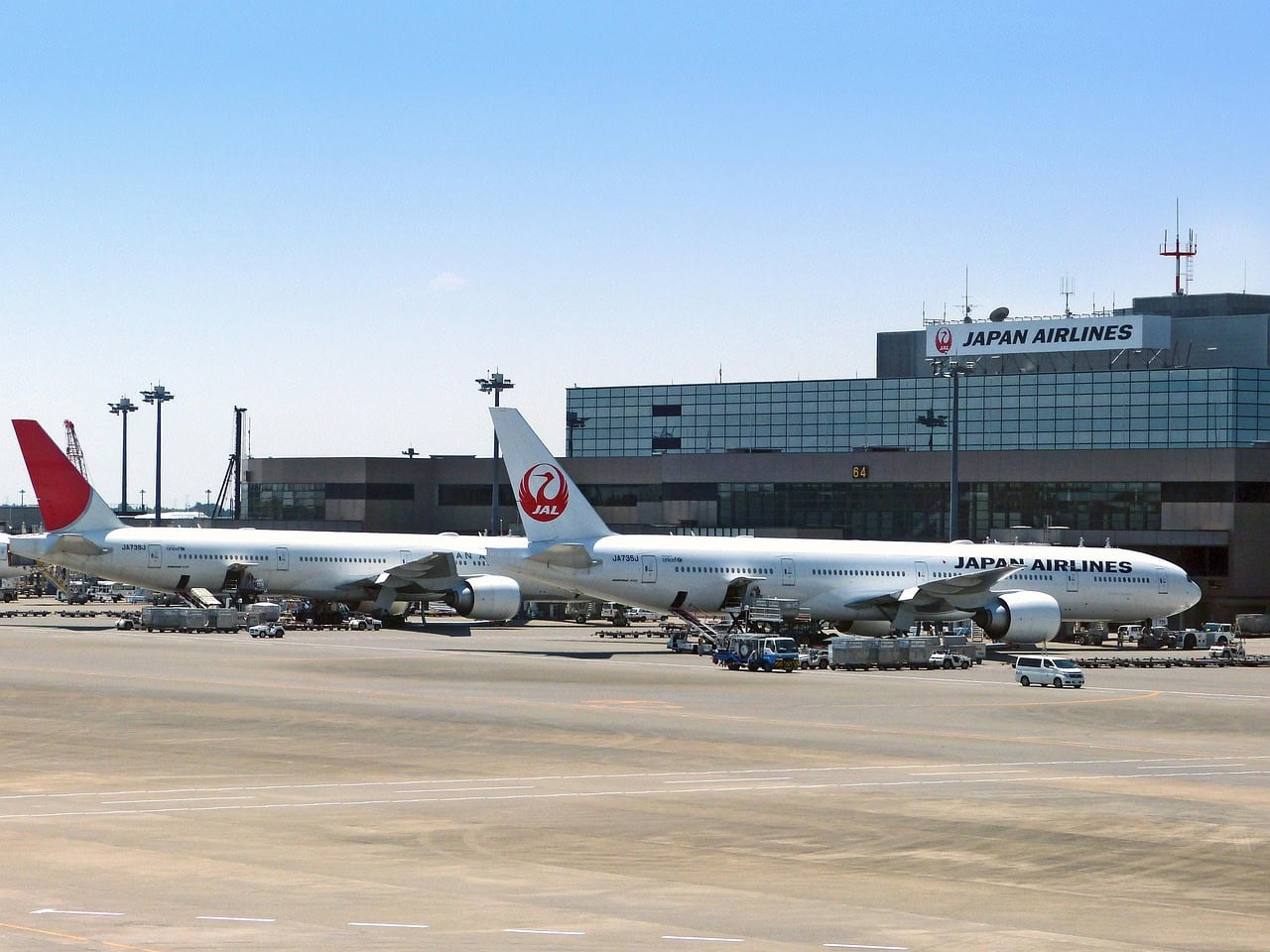
Older but still important aircraft in the fleet include the Boeing 777, which is used on some high-capacity international routes and busy domestic services within Japan.
Passengers flying with Japan Airlines can choose between several cabin classes depending on the aircraft and route.
Economy Class provides standard seating, meals, and onboard entertainment, while Premium Economy offers larger seats, more legroom, and upgraded meals, which is often considered one of the airline’s best value cabin options on long-haul flights.
Business Class features lie-flat seats on long-haul aircraft, and on selected routes the airline offers First Class cabins with very large seats, premium dining, and high levels of service.
Japan Airlines is particularly well known for excellent cabin service, very clean aircraft, and high-quality meals, especially on long-haul international flights.
The JAL Mileage Bank Loyalty Programme
Japan Airlines operates its frequent flyer programme under the name JAL Mileage Bank, often shortened to JMB. This loyalty programme allows passengers to earn miles when flying with Japan Airlines and other Oneworld airlines, as well as through partner hotels, car rental companies, and other travel services.
Members earn miles based on distance flown, ticket class, and frequent flyer status level. These miles can then be redeemed for reward flights, cabin upgrades, hotel stays, and other travel benefits.
One of the major advantages of the programme is that miles can be earned and redeemed across the entire Oneworld alliance network, not just on Japan Airlines flights. This means travellers flying with airlines such as British Airways, American Airlines, or Qantas can still earn miles in the JAL Mileage Bank programme.
The programme also offers several elite status tiers, which provide additional benefits such as priority boarding, extra baggage allowances, and lounge access when flying with Japan Airlines or partner airlines.
For travellers who regularly fly between Europe, Asia, and North America, joining the loyalty programme can be worthwhile because miles can accumulate across multiple airlines rather than being limited to one carrier.
Overall, the loyalty programme is particularly useful for travellers who frequently travel within the Oneworld alliance network or regularly fly to Japan.
The Japan Airlines App and Digital Travel Tools
Like most major international airlines, Japan Airlines provides a mobile app that allows passengers to manage their journeys directly from their smartphones. The app is an important part of the airline’s digital travel tools and can make travelling much easier, particularly for international trips.
Passengers can use the app to check in for flights, download digital boarding passes, select seats, and manage bookings without needing to visit the airline’s website. This can save a significant amount of time at the airport, especially on busy international routes.
The app also provides real-time flight information, including gate changes, boarding times, and delay notifications. For travellers connecting through large airports such as Tokyo Haneda or Narita, these updates can be extremely useful.
Another helpful feature is baggage tracking and booking management, which allows passengers to review their itinerary, update passenger details, and check baggage allowances directly within the app.
Frequent flyers can also link the app to their JAL Mileage Bank account, allowing them to track miles, manage reward bookings, and view their loyalty status.
Modern air travel increasingly relies on mobile apps and digital boarding passes, and using the airline’s official app is often the easiest way to manage flights and stay informed during travel.


How to Book Cheap Flights with Japan Airlines
Finding good value flights with Japan Airlines usually comes down to booking at the right time, being flexible with travel dates, and understanding how airline pricing works. Like most full-service international airlines, Japan Airlines uses dynamic pricing, meaning ticket prices change depending on demand, season, and how far in advance you book.
For long-haul flights between Europe and Japan, booking several months in advance is often the best strategy, particularly for busy travel periods such as cherry blossom season in spring and autumn foliage season later in the year. Prices can rise significantly closer to departure, especially on direct routes from London and other major European cities.
Many travellers use flight comparison tools to identify cheaper travel dates before booking directly with the airline. Tools such as Google Flights are particularly useful because they allow travellers to view price calendars and compare fares across multiple dates and airlines.
Another useful strategy is to consider flying into a different airport in Japan. For example, flights into Osaka Kansai can sometimes be cheaper than Tokyo, and domestic flights or trains can then be used to reach other cities.
Flexibility is often the biggest factor in finding cheaper flights. Travellers who can shift their travel dates by a few days or depart from a different airport often find noticeably lower fares.
Japan Airlines also occasionally runs promotional fares during quieter travel periods. These sales are usually available for a limited time and can offer very good value on long-haul routes if booked early.
Booking directly through the airline can sometimes provide additional benefits such as easier changes, better customer support, and the ability to manage bookings through the airline’s mobile app and loyalty programme.
Japan Airlines Strengths and Weaknesses
Like any airline, Japan Airlines has both advantages and disadvantages, and understanding these can help travellers decide whether it is the right airline for their trip.
One of the airline’s biggest strengths is its very high service standards. Japan Airlines consistently ranks among the top airlines in the world for cabin service, cleanliness, punctuality, and overall passenger experience. The airline is particularly well regarded for its long-haul Business Class and Premium Economy cabins.
Another major advantage is the airline’s extensive domestic network within Japan, which makes it very easy for international travellers to connect from Tokyo to other parts of the country. This is especially useful for travellers visiting multiple cities such as Osaka, Sapporo, Hiroshima, or Fukuoka.
The airline’s membership in the Oneworld alliance is another major strength because it allows passengers to connect easily onto partner airlines and earn loyalty miles across multiple airlines.
However, there are also some limitations. Japan Airlines is a full-service airline, which means ticket prices are often higher than low-cost carriers, particularly on routes within Asia where budget airlines are very competitive.
Another limitation is that the airline’s route network is heavily focused on Japan and major global cities, so travellers heading to smaller destinations may still need to transfer onto partner airlines or domestic flights.
Overall, the airline is generally considered one of the best choices for long-haul flights to Japan, particularly for travellers who value comfort, reliability, and good service.
Who Should Fly Japan Airlines
Japan Airlines is particularly well suited to travellers flying long-haul routes between Europe, North America, and Japan. The airline’s long-haul aircraft, high service standards, and alliance partnerships make it a strong option for international travel.
Travellers visiting Japan for the first time often find the airline especially useful because the airline’s domestic network makes it easy to connect from Tokyo to other cities across Japan. This is ideal for travellers planning multi-city trips rather than staying only in Tokyo.
Business travellers may appreciate the airline’s Business Class cabins and loyalty programme benefits, especially when combined with Oneworld alliance partners. The airline is known for punctual flights and efficient boarding, which can be important for business travel.
Leisure travellers travelling long-haul may find the airline particularly attractive because of its comfortable Premium Economy cabin, which often provides a good balance between price and comfort on long flights.
The airline is also a good choice for travellers who already collect miles with Oneworld airlines such as British Airways or American Airlines, since miles and status benefits can be shared across the alliance.
Overall, Japan Airlines tends to be best for travellers who value comfort, reliability, and smooth connections rather than simply looking for the absolute cheapest ticket.

Rupert’s Handy Travel Tips
Flying with Japan Airlines soon? Here are a few useful tips to make your journey smoother:
- Choose Haneda over Narita if possible: Haneda Airport is much closer to central Tokyo and usually results in a faster transfer into the city.
- Consider Premium Economy: Japan Airlines Premium Economy is often one of the best value upgrades on long-haul routes.
- Book domestic flights early: Flights within Japan can become expensive close to departure, especially during holidays and cherry blossom season.
- Join JAL Mileage Bank before flying: Even occasional travellers can earn miles that may later be used for upgrades or reward flights.
Want to meet the reindeer behind our travel tips? Find out more in our page Who is Rupert?.
Frequently Asked Questions About Japan Airlines
Many travellers have similar questions when deciding whether to fly with Japan Airlines, particularly when planning long-haul flights to Japan or connecting onward to other destinations in Asia. Below are some of the most common questions travellers ask before booking.
Is Japan Airlines a good airline?
Japan Airlines is widely considered one of the best airlines in Asia and regularly ranks highly for service quality, punctuality, and cabin comfort. The airline is particularly well known for clean aircraft, polite and attentive cabin crew, and reliable long-haul services between Europe, Japan, and North America. Many travellers consider Japan Airlines to be one of the most comfortable ways to fly long-haul to Japan, especially in Premium Economy and Business Class.
Is Japan Airlines part of Oneworld?
Yes, Japan Airlines is a member of the Oneworld airline alliance. This alliance includes airlines such as British Airways, American Airlines, Cathay Pacific, Qantas, and Finnair. Being part of this alliance allows passengers to book connecting flights across multiple airlines on a single ticket, earn and redeem loyalty miles across partner airlines, and access airport lounges when travelling with elite status.
What is JAL Mileage Bank and how does it work?
JAL Mileage Bank is the loyalty programme operated by Japan Airlines. Passengers earn miles when flying with Japan Airlines or other Oneworld airlines, as well as through partner hotels, car rental companies, and other travel services. These miles can be redeemed for reward flights, seat upgrades, hotel stays, and other travel benefits. Frequent travellers can also qualify for elite status levels, which provide benefits such as priority boarding, extra baggage allowance, and lounge access.
Further Reading & Related App Guides
Want to prepare for every part of your journey? These related guides will help you stay informed, connected, and ready to travel with confidence.
Learn about another major Asian airline in our guide → Malaysian Airlines Travel Guide
Explore one of the world’s largest airlines in our guide → American Airlines Travel Guide
Discover routes across South Asia and beyond → SriLankan Airlines Travel Guide
Stay connected the moment you land with our global connectivity guide → eSIM Apps Guide
Last Updated
Last updated: March 2026
Information in this Japan Airlines travel guide is reviewed regularly to ensure routes, partnerships, and airline services remain accurate for travellers.
Affiliate Disclosure
This page contains affiliate links. If you click through and make a purchase or booking, we may earn a small commission at no extra cost to you. This helps support our work and allows us to continue providing detailed, independent travel advice. We only recommend apps and services we personally use or have verified as high-quality.