
Why European Christmas Markets Are Worth Visiting
If you are planning a winter trip, a European Christmas markets guide is one of the best ways to choose where to go. Christmas markets began in Germany and Austria hundreds of years ago, and many European cities still run markets in historic squares, castle courtyards and old town centres. This is why European markets often feel more traditional than markets in the UK.
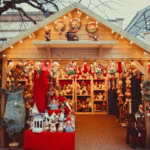
One of the biggest differences you will notice is the setting. Many markets are located in medieval town squares surrounded by historic buildings, cathedrals and cobbled streets. Cities like Prague, Vienna, Salzburg and Krakow feel particularly festive because the architecture already looks like a Christmas postcard in winter.
Another reason people travel around Europe for Christmas markets is the variety between cities. German markets often focus on traditional stalls and decorations, Austrian markets are known for elegant squares and classical music, Hungarian markets focus on food and thermal baths, and Baltic markets such as Tallinn and Riga often feel quieter and more traditional.
European Christmas markets are also ideal for short winter city breaks. Many markets are located close together, especially in Central Europe, so it is easy to visit multiple cities on one trip using trains. Popular combinations include Vienna and Salzburg, Prague and Dresden, or Budapest and Vienna.
The Christmas market season across Europe usually runs from mid-November until just before Christmas, although some cities keep markets open until early January. Because it gets dark early in winter, markets are usually best visited in the late afternoon and evening when lights, decorations and music create the best atmosphere.
For many travellers, visiting European Christmas markets becomes something they do every few years in a different city, rather than visiting the same place every year.
European Christmas Market Calendar and Typical Opening Dates
One of the most useful parts of any European Christmas markets guide is understanding when markets open in different cities. While dates change slightly each year, most European Christmas markets open between mid-November and late November and close just before Christmas.
Some cities open earlier than others, particularly in Germany and Austria where Christmas market traditions are strongest. Markets in Eastern Europe sometimes open slightly later but are often cheaper and less crowded.
Below is a general guide to popular European Christmas market cities and their typical opening dates.
| City | Country | Typical Dates | Market Style | Best For | Nearest Airport |
|---|---|---|---|---|---|
| Vienna | Austria | Mid Nov – 26 Dec | Traditional | Classic markets | Vienna |
| Prague | Czech Republic | Late Nov – Early Jan | Historic | Old town setting | Prague |
| Budapest | Hungary | Mid Nov – Early Jan | Food & lights | Winter city break | Budapest |
| Cologne | Germany | Mid Nov – 23 Dec | Traditional | Cathedral markets | Cologne |
| Munich | Germany | Late Nov – 24 Dec | Traditional | Bavarian markets | Munich |
| Nuremberg | Germany | Late Nov – 24 Dec | Historic | Famous market | Nuremberg |
| Salzburg | Austria | Late Nov – 26 Dec | Scenic | Small traditional markets | Salzburg |
| Krakow | Poland | Late Nov – 26 Dec | Affordable | Budget trips | Krakow |
| Berlin | Germany | Late Nov – 26 Dec | Large | Variety of markets | Berlin |
| Strasbourg | France | Late Nov – 24 Dec | Historic | Old town markets | Strasbourg |
| Tallinn | Estonia | Late Nov – Early Jan | Medieval | Quiet markets | Tallinn |
| Riga | Latvia | Late Nov – Early Jan | Traditional | Baltic markets | Riga |
| Brussels | Belgium | Late Nov – Early Jan | Winter festival | Lights & food | Brussels |
| Copenhagen | Denmark | Mid Nov – Late Dec | Tivoli market | Lights & rides | Copenhagen |
This table is useful when planning trips because many of these cities are close together, allowing you to visit multiple Christmas markets in one trip rather than flying to just one destination.
Best Christmas Markets in Europe
When people search for a European Christmas markets guide, they are usually trying to decide which cities are actually worth visiting. Europe has hundreds of Christmas markets, but some cities are particularly famous and attract visitors from all over the world.
Vienna is often considered one of the most beautiful Christmas market cities because markets are set in front of palaces, city halls and historic squares. The markets are elegant and traditional, with decorations, lights and classical music creating a very festive atmosphere.
Prague is famous for its Christmas market in the Old Town Square, with a large Christmas tree, wooden stalls and historic buildings surrounding the market. Prague is also relatively affordable compared to some Western European cities.
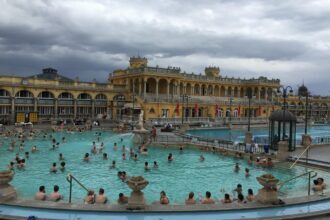
Budapest Christmas markets are known for food, lights and winter atmosphere, and many visitors combine the markets with visits to the city’s thermal baths, which makes Budapest a very popular winter destination.
Cologne in Germany is famous for its markets located around Cologne Cathedral, and the city has multiple markets rather than just one large market.
Strasbourg in France is often called the Christmas Capital of Europe, and its markets are some of the oldest in Europe.
Tallinn and Riga in the Baltic region are smaller but very scenic Christmas market destinations, often with snow, historic buildings and quieter markets.
Choosing the best market often depends on whether you want traditional markets, food markets, historic cities, or budget-friendly destinations.
Vienna Christmas Markets Guide
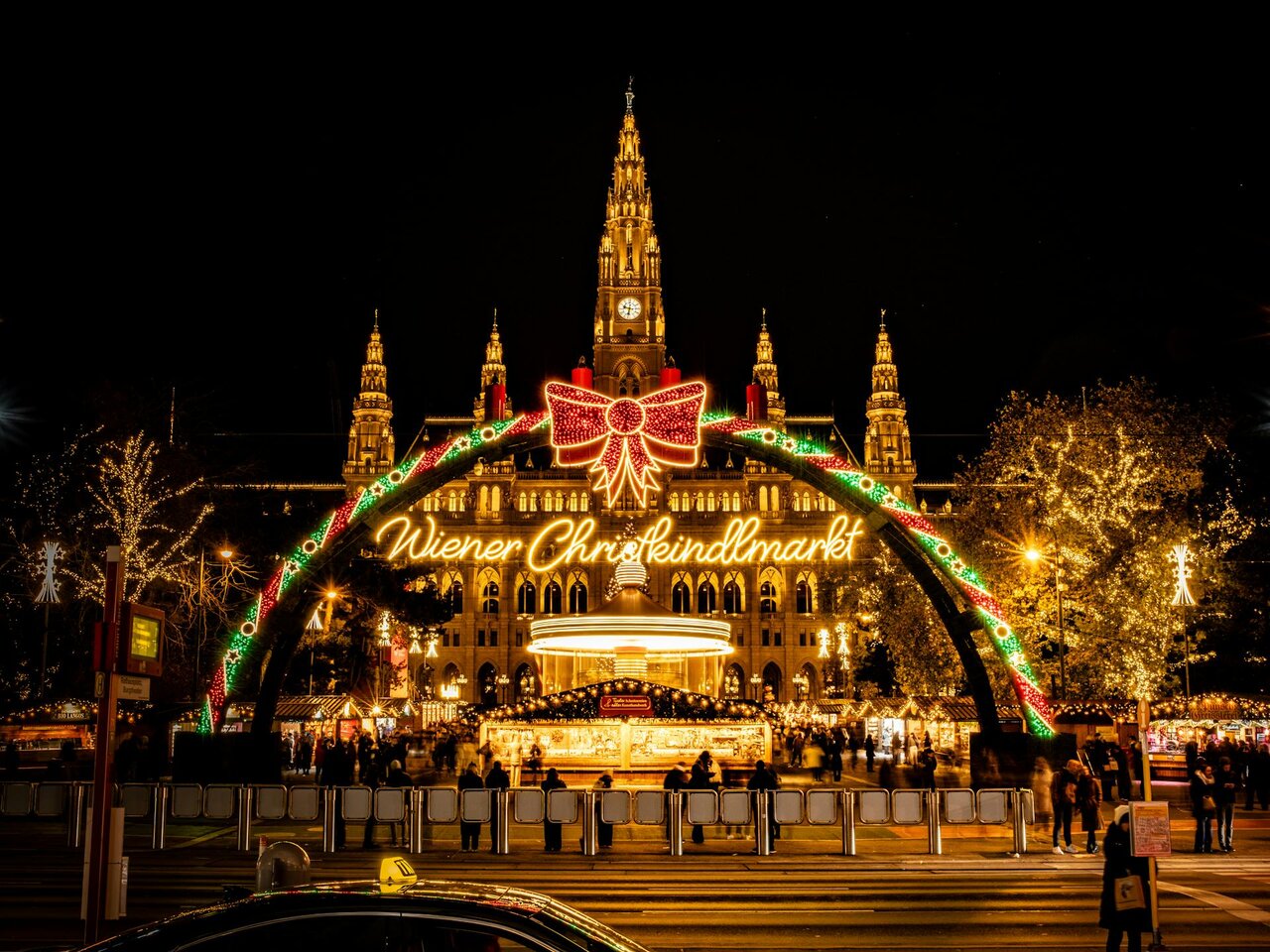
Vienna is one of the most famous Christmas market cities in Europe and is often included in any European Christmas markets guide. The city usually hosts several Christmas markets, with the most famous located in front of Vienna City Hall (Rathausplatz).
The Vienna Christmas markets are known for their elegant setting, with large decorated trees, lights across the square, and stalls selling decorations, gifts, food and drinks. The market in front of the City Hall is usually the largest, but there are also markets at Schönbrunn Palace, Belvedere Palace and other squares around the city.
Food and drink at Vienna Christmas markets include glühwein (mulled wine), sausages, pretzels, roasted chestnuts, soups and desserts. Many stalls also sell Christmas decorations and handmade gifts.
Vienna works well for a Christmas market trip because the city has excellent public transport, historic buildings, museums, and coffee houses. Many visitors combine Christmas markets with palace visits, concerts, museums and winter walks around the city.
Vienna is also well connected by train to other Christmas market cities such as Salzburg, Bratislava and Budapest, which makes it a good starting point for a multi-city Christmas market trip.
Prague Christmas Markets Guide
Prague is one of the most popular destinations featured in any European Christmas markets guide, and it is easy to see why. The main Christmas markets are located in Old Town Square and Wenceslas Square, both surrounded by historic buildings, churches and narrow streets that make the city feel especially festive in winter.
The Old Town Square market is the most famous, with a large Christmas tree, wooden stalls, food stands and live performances on a stage throughout the season. The market is particularly impressive in the evening when the tree lights are on and the historic buildings around the square are illuminated.
Food is a big part of Prague’s Christmas markets. One of the most famous foods is trdelník (chimney cake), a sweet pastry cooked over a rotating grill and covered in sugar, cinnamon or chocolate. You will also find sausages, roasted ham, soups served in bread bowls, hot chocolate and mulled wine.
Prague works well for Christmas market trips because the main attractions, markets and old town are all within walking distance, so you do not need public transport very often. Many visitors spend two or three days exploring the city, markets, castle and historic streets.
Another advantage of Prague is that it is often cheaper than cities like Vienna or Munich, especially for food, drinks and hotels, which makes it popular for winter weekend trips.
Many travellers combine Prague with Dresden Christmas markets in Germany, which are only a few hours away by train and make a good multi-city Christmas market trip.
Budapest Christmas Markets Guide
Budapest is another city that appears in almost every European Christmas markets guide, and it is particularly popular because the Christmas markets are combined with winter lights, food markets and thermal baths.
The main Budapest Christmas market is located in Vörösmarty Square, while another large market takes place near St Stephen’s Basilica, where there is usually a large Christmas tree, food stalls, and light shows projected onto the basilica in the evenings.
Budapest Christmas markets are often considered some of the best in Europe for food rather than shopping. You will find goulash, sausages, chimney cake, stews, pastries, hot wine and Hungarian desserts across the markets.
One of the reasons Budapest is such a popular winter destination is that visitors can visit Christmas markets during the day and thermal baths in the evening, which makes the trip feel different from other Christmas market destinations.
Budapest is also relatively affordable compared to Western European cities, particularly for food and accommodation. This makes it a popular destination for longer Christmas market weekends or combined trips with Vienna or Bratislava.
Many travellers visit Vienna and Budapest on the same trip, as the two cities are only a few hours apart by train.
Food and Drink at European Christmas Markets
Food and drink are a huge part of the Christmas market experience in Europe, and many people spend more time eating and drinking than shopping. Each country has slightly different foods, but some items appear at markets across most of Central and Eastern Europe.
One of the most common drinks is glühwein, which is mulled wine served hot in mugs. Many cities also sell mulled cider, hot chocolate and winter punch drinks. In some cities you pay a small deposit for the mug and can either return it or keep it as a souvenir.
Food at European Christmas markets often includes sausages, pretzels, roasted meats, potatoes, soups and stews, which are ideal for cold weather. You will also find raclette cheese, roasted chestnuts, gingerbread and pastries.
In Hungary and the Czech Republic, chimney cake is very popular, while in Germany you will see a lot of gingerbread and traditional Christmas biscuits. France and Belgium markets often have waffles, chocolate and desserts.
One of the best things about visiting multiple Christmas markets in Europe is that each city has different local foods, so travelling between markets is also a food experience as much as a Christmas trip.
Tips for Visiting European Christmas Markets
Visiting European Christmas markets is much more enjoyable if you plan ahead slightly, especially because markets can get very busy and winter travel can sometimes be affected by weather.
One of the most important tips is to visit markets in the late afternoon and evening, because this is when the lights are on and the atmosphere is best. Markets can feel quite quiet and less festive in the morning.
Another good tip is to book hotels early, especially in popular Christmas market cities such as Vienna, Prague and Strasbourg. Prices increase significantly in late November and December.
It is also important to dress very warmly, because you will spend a lot of time outside standing or walking slowly around markets. Gloves, scarves and hats make a big difference, especially in Central and Eastern Europe where temperatures can be very cold.
If you plan to visit multiple cities, trains are usually the easiest way to travel between Christmas market destinations. Many cities such as Vienna, Salzburg, Budapest and Prague are connected by direct trains.
Planning your trip so that you visit two or three cities rather than just one often makes Christmas market trips much more interesting and better value overall.
Suggested European Christmas Market Itineraries
One of the best ways to use a European Christmas markets guide is to plan a trip that includes more than one city. Many of the most famous Christmas market destinations are relatively close together, especially in Central Europe, which makes it easy to travel between them by train.
One of the most popular Christmas market trips is Vienna and Salzburg. Vienna has large, elegant markets in front of palaces and historic buildings, while Salzburg has smaller, more traditional markets set around the old town and cathedral square. The train journey between the two cities is only a few hours, which makes this a very easy combination.
Another popular trip is Prague and Dresden. Prague has one of the most famous Christmas markets in Europe in Old Town Square, while Dresden in Germany hosts one of the oldest Christmas markets in the world. These two cities are close enough to combine in one trip without too much travel time.
Many travellers also combine Budapest, Vienna and Bratislava on one trip. These three cities are all connected by train and are only a few hours apart. This type of trip allows you to visit multiple Christmas markets in different countries in one holiday.
In France, a popular Christmas market route is Strasbourg and Colmar, two historic towns with very traditional Christmas markets and decorations throughout the old town centres.
In Northern Europe, some travellers visit Tallinn and Riga, which often have snow and a quieter, more traditional Christmas atmosphere compared to larger cities.
Planning trips like this makes Christmas market travel feel more like a winter tour across Europe rather than just a single city break.
Transport Between European Christmas Market Cities
Transport is an important part of planning a Christmas market trip because many travellers visit multiple cities in one journey. Fortunately, many European Christmas market cities are well connected by train, which is often the easiest way to travel between them.
Trains are particularly useful in Central Europe, where cities such as Vienna, Salzburg, Prague, Budapest and Bratislava are all connected by relatively short journeys. Travelling by train also means you arrive in the city centre rather than at an airport outside the city.
Budget flights are another option, especially if you are travelling longer distances such as from the UK to Central Europe or between Western and Eastern Europe. However, once you are in mainland Europe, trains are often easier than flying.
Driving can work well if you are visiting smaller towns or markets that are not on main train routes, but winter driving conditions can sometimes be difficult, especially in Austria, Germany and Eastern Europe.
If you are planning to visit several Christmas market cities, it is often worth booking train tickets in advance, because prices usually increase closer to travel dates in December.
Many travellers also use Interrail or Eurail passes if they plan to visit multiple cities in one trip, as this can sometimes be cheaper than buying individual train tickets.
Where to Stay for European Christmas Markets
Where you stay can make a big difference to your Christmas market trip. In most European Christmas market cities, the best place to stay is usually close to the old town or city centre, because this is where the markets are located.
Staying centrally allows you to walk back to your hotel to warm up, drop off shopping, or rest before going back out in the evening when the markets are at their busiest and most atmospheric.
Hotels near main train stations can also be a good option, especially if you are travelling between multiple cities. Many European train stations are located close to the city centre, so this can be a convenient location for short stays.
Apartments can be a good option for longer trips or if you are travelling as a group, while hotels are often easier for short Christmas market breaks where you only stay one or two nights in each city.
It is important to book accommodation early, because Christmas market season is one of the busiest tourist periods of the year in many European cities, especially Vienna, Prague and Strasbourg.
If you are visiting multiple cities, it is often easier to stay two nights in each city rather than moving every night, as packing and travelling every day can reduce the time you actually spend enjoying the markets.
Cheapest European Christmas Markets to Visit
Some Christmas market destinations are much cheaper than others, especially in Central and Eastern Europe. If you are planning a Christmas market trip on a budget, choosing the right cities can make a big difference.
Cities such as Krakow, Budapest, Prague, Riga and Tallinn are usually much cheaper for food, drinks and accommodation compared to cities like Vienna, Munich or Zurich.
Budapest is often considered one of the best value Christmas market destinations because the markets are large, food is good, accommodation is relatively affordable, and the city has thermal baths and historic buildings to visit as well.
Krakow is another popular budget Christmas market destination, with a large market in the main square and relatively low prices for hotels and restaurants.
Riga and Tallinn in the Baltic region are also often cheaper than Western European cities and can sometimes have snow, which makes the Christmas markets feel more traditional and festive.
Choosing cheaper destinations can make it possible to visit multiple Christmas markets on one trip without spending as much as visiting one expensive city.
Frequently Asked Questions About European Christmas Markets
When do European Christmas markets start?
Most European Christmas markets open between mid-November and late November. Markets in Germany and Austria often open first, followed by markets in Central and Eastern Europe. Many markets close just before Christmas, although some stay open until early January.
Which European Christmas market is the best?
This depends on what you are looking for. Vienna is often considered one of the most beautiful, Prague has one of the most famous historic squares, Strasbourg is known as the Christmas Capital of Europe, and Budapest is very popular for food and winter atmosphere.
Which European Christmas markets are the cheapest?
Cities such as Budapest, Krakow, Prague, Riga and Tallinn are usually cheaper for hotels, food and drinks than cities like Vienna, Munich or Zurich.
Are European Christmas markets open after Christmas?
Many markets close just before Christmas Eve, but some cities keep markets, winter villages or ice rinks open until early January, especially in Prague, Budapest and Tallinn.
What should I wear to Christmas markets in Europe?
Christmas markets are outdoor events, so warm clothing is essential. A coat, gloves, scarf and warm shoes are strongly recommended, especially in Central and Eastern Europe where temperatures can be very low.

Rupert’s Handy Travel Tips
Planning a European Christmas markets trip this winter? Here are a few useful tips to make your trip smoother:
- Visit multiple cities: Many Christmas market cities are close together, so you can visit more than one on the same trip.
- Book trains early: Train prices usually increase in December, especially on popular routes.
- Stay near the old town: Most Christmas markets are located in historic city centres.
- Visit markets after dark: Christmas markets are always more atmospheric in the evening.
Want to meet the reindeer behind our travel tips? Find out more in our page Who is Rupert?.
Further Reading & Related Travel Guides
Planning a festive winter trip or looking for Christmas travel inspiration? These guides will help you plan Christmas markets, winter trips and festive holidays across the UK and Europe.
Planning a magical winter trip to the Arctic Circle? Learn about costs, activities, reindeer, Santa Claus Village and how to plan your trip → Visiting Santa in Lapland: Complete Travel Guide, Costs & Tips
Discover the best festive cities across England, Scotland and beyond, including market dates, travel tips and where to stay → UK Christmas Markets Guide: Best Festive Cities, Dates & Travel Tips
Looking for winter sun, festive cities or snowy destinations? Explore the best destinations for December travel → Best Places to Visit in December: Winter Sun, Snow & Festive Trips
Last Updated
March 2026
Affiliate Disclosure
This page contains affiliate links. If you click through and make a purchase or booking, we may earn a small commission at no extra cost to you. This helps support our work and allows us to continue providing detailed, independent travel advice. We only recommend apps and services we personally use or have verified as high-quality.