
Why Visit Dolmabahçe Palace
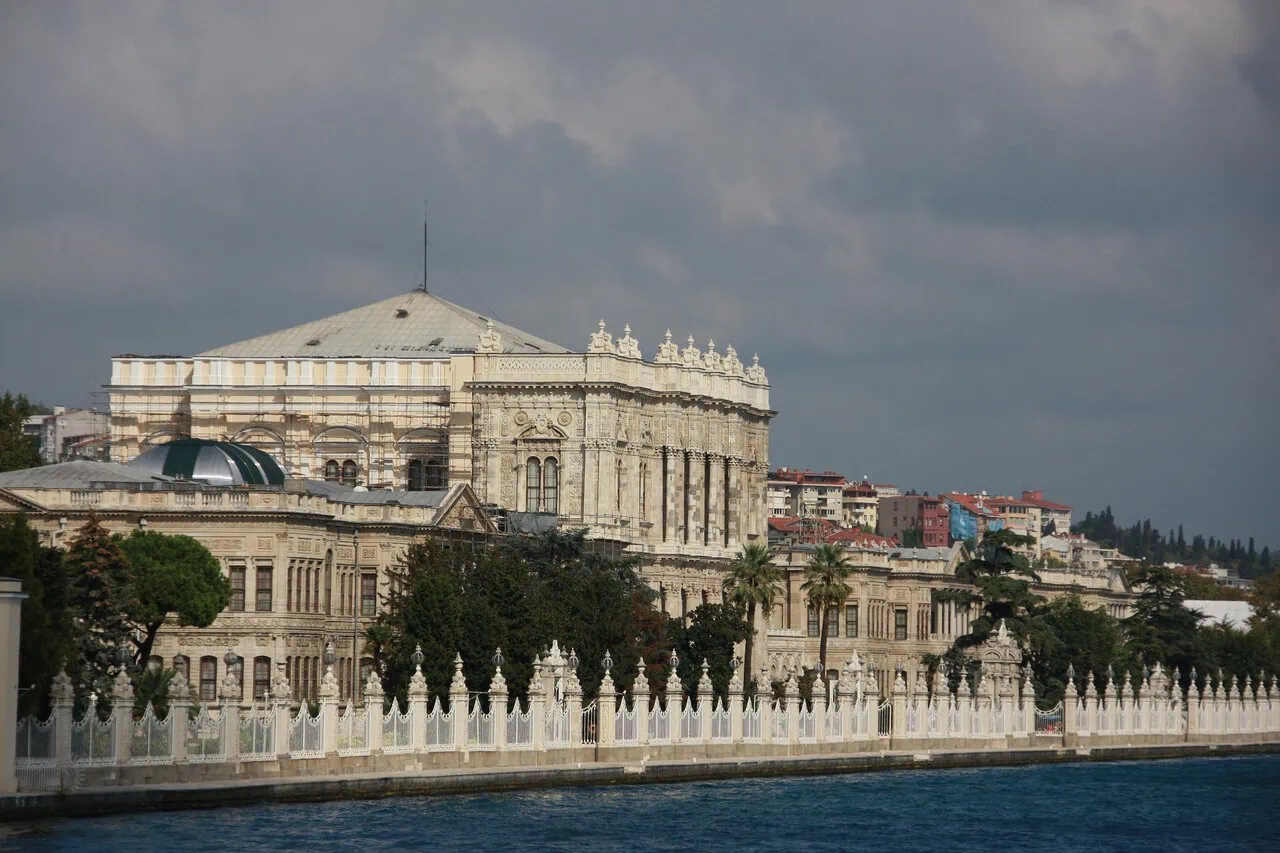
Dolmabahçe Palace is one of the most impressive and luxurious buildings in Istanbul and was the main residence of the Ottoman sultans during the later period of the Ottoman Empire. Unlike Topkapi Palace, which is made up of courtyards and smaller buildings, Dolmabahçe Palace is a large European-style palace with grand halls, chandeliers, staircases and richly decorated rooms.
The palace is located directly on the Bosphorus waterfront, which makes it one of the most beautiful palace locations in Istanbul. Many Bosphorus cruises pass directly in front of the palace, and it is often one of the most photographed buildings along the water.
Visitors often notice that Dolmabahçe Palace feels very different from other historical sites in Istanbul. While Topkapi Palace reflects traditional Ottoman architecture, Dolmabahçe Palace was built in a European style influenced by French and Italian palaces, showing how the Ottoman Empire was becoming more influenced by Europe in the 19th century.
Inside the palace you will find huge ceremonial halls, crystal chandeliers, gold decorations, grand staircases and richly decorated rooms, making it one of the most luxurious palaces in Turkey.
For visitors interested in history, architecture or royal palaces, Dolmabahçe Palace is one of the most impressive buildings in Istanbul.
The History of Dolmabahçe Palace
Dolmabahçe Palace was built in the 19th century during the reign of Sultan Abdülmecid I, who wanted a more modern palace that reflected European styles rather than the traditional Topkapi Palace. Construction began in the 1840s and the palace became the new administrative centre of the Ottoman Empire.
The palace was designed to impress foreign ambassadors and visitors and to show that the Ottoman Empire was still powerful and modern. As a result, the palace was built with very luxurious materials, including crystal, gold, marble and expensive decorations.
Dolmabahçe Palace eventually replaced Topkapi Palace as the main residence of the Ottoman sultans and remained an important political centre until the end of the Ottoman Empire.
The palace is also historically important because Mustafa Kemal Atatürk, the founder of modern Turkey, stayed in Dolmabahçe Palace during his visits to Istanbul and died there in 1938. The clock in the room where he died is famously stopped at the time of his death.
After the establishment of modern Turkey, Dolmabahçe Palace was turned into a museum and is now open to visitors. Today, it is one of the most popular historical attractions in Istanbul and gives visitors a look at the final period of the Ottoman Empire and the transition to modern Turkey.
Inside Dolmabahçe Palace
Inside Dolmabahçe Palace, visitors walk through a series of large ceremonial halls, reception rooms, staircases and royal apartments, all decorated in an extremely luxurious style. The interior is very different from Topkapi Palace and feels more like a European royal palace than a traditional Ottoman complex.
One of the most famous rooms in the palace is the Ceremonial Hall, which contains one of the largest crystal chandeliers in the world. This hall was used for official ceremonies and receptions and is one of the most impressive rooms in the palace.
Visitors will also see grand staircases, gold decorations, crystal lamps, large carpets, painted ceilings and richly decorated rooms, showing how luxurious the palace was during the final period of the Ottoman Empire.
The palace is divided into two main sections: the State Apartments, which were used for official ceremonies and government business, and the Harem, which was the private living area of the sultan and his family.
Because the palace interiors are preserved and guided routes are followed inside, visits are usually guided or follow a set route, and photography may not be allowed in some rooms.
Most visitors spend 1.5 to 2 hours visiting Dolmabahçe Palace.
Dolmabahçe Palace Highlights and What Not to Miss
Dolmabahçe Palace is very large, and there are several important rooms and areas that visitors should not miss during their visit.
One of the main highlights is the Ceremonial Hall, which is the largest and most impressive room in the palace and contains the famous crystal chandelier. The scale of this room is one of the things most visitors remember after visiting the palace.
The Crystal Staircase is another famous part of the palace and is one of the most photographed interiors. The staircase is decorated with crystal and brass and shows the luxury of the palace.
Visitors should also try to see the State Apartments, which were used for official events and receptions, as well as the Harem section, which shows the private rooms of the royal family.
Another important part of the palace is Atatürk’s room, where Mustafa Kemal Atatürk died. The clock in this room is stopped at the time of his death, and this room is historically important for modern Turkey.
Finally, the palace gardens and waterfront views over the Bosphorus are also worth spending time in, as the location of the palace is one of its most impressive features.
Dolmabahçe Palace Tickets and Entry Information
Dolmabahçe Palace requires an entrance ticket, and visitors should be aware that the palace is divided into different sections with separate ticket options, usually including the State Apartments and the Harem section. Many visitors choose a combined ticket so they can see the entire palace complex.
Unlike some other attractions in Istanbul, Dolmabahçe Palace is usually visited on a guided route or fixed visitor path, meaning you follow a set route through the palace rooms rather than walking freely around the building. This helps protect the historic interiors and furnishings.
Because Dolmabahçe Palace is very popular and visitor numbers are sometimes limited inside the palace rooms, queues can form at the ticket office, especially during peak tourist season and weekends. For this reason, many visitors choose to buy tickets in advance or book guided tours, which can help avoid waiting.
The palace interiors are very well preserved, and many rooms still contain original furniture, decorations and carpets, so photography may not be allowed in some interior rooms. Visitors should follow the rules and instructions given by staff inside the palace.
Most visitors spend between one and two hours visiting Dolmabahçe Palace, depending on whether they visit both the State Apartments and the Harem.
Because the palace is located along the Bosphorus, many visitors combine a visit to Dolmabahçe Palace with a Bosphorus cruise or a walk along the waterfront.
Opening Hours and Best Time to Visit Dolmabahçe Palace
Dolmabahçe Palace is usually open most days of the week but is typically closed one day per week, so it is important to check opening days before planning your visit. Opening hours usually begin in the morning and continue into the afternoon, with last entry before closing time.
The best time to visit Dolmabahçe Palace is usually early in the morning, shortly after opening, when there are fewer visitors and the ticket queues are shorter. By late morning and early afternoon, the palace can become quite busy.
Another good time to visit can be later in the afternoon, when some tour groups have already left, although you should make sure there is still enough time to complete the palace tour before closing.
Because the palace is located along the Bosphorus, the area around the palace is also nice to walk around before or after your visit. Many visitors combine Dolmabahçe Palace with Taksim Square, Beşiktaş or a Bosphorus cruise on the same day.
Allow around 1.5 to 2 hours for your visit to Dolmabahçe Palace, including time to walk through the gardens and along the waterfront.
How to Get to Dolmabahçe Palace
Dolmabahçe Palace is located on the European side of Istanbul along the Bosphorus, in the Beşiktaş area, and is easy to reach using public transport.
One of the easiest ways to get there is by taking the T1 tram line to Kabataş, which is one of the main transport hubs along the Bosphorus. From Kabataş, Dolmabahçe Palace is only a short walk along the waterfront.
If you are staying in Taksim, you can take the funicular down to Kabataş and then walk to the palace from there.
You can also reach the palace by bus, taxi or ferry, especially if you are travelling from other areas along the Bosphorus.
Because Dolmabahçe Palace is located directly on the waterfront, it is also easy to combine a visit to the palace with a Bosphorus cruise, a ferry trip or a walk along the Bosphorus promenade.
The palace is located in a different part of the city from Sultanahmet, so most visitors visit Dolmabahçe Palace on a different day from Hagia Sophia, Topkapi Palace and the Basilica Cistern.
Tips for Visiting Dolmabahçe Palace
Dolmabahçe Palace is different from many other attractions in Istanbul because visits to the interior rooms usually follow a set route, and you may not be able to walk freely around all areas of the palace. For this reason, it is a good idea to arrive early so you have enough time to see everything.
Because the palace interiors are very well preserved, photography is not allowed in some rooms, so visitors should be prepared for this and follow the rules inside the palace.
The palace is quite large, and you will walk through several rooms and halls, so comfortable shoes are recommended.
Many visitors combine Dolmabahçe Palace with a Bosphorus cruise, as many cruises pass directly in front of the palace, giving you a view from the water as well as from inside.
It is also a good idea to spend some time in the palace gardens and along the Bosphorus waterfront, as the location of the palace is one of its best features and offers great views of the water and passing boats.
Because Dolmabahçe Palace is located near Kabataş and Beşiktaş, you may also want to explore these areas, which have restaurants, cafes and ferry connections to other parts of the city.
Nearby Attractions to Dolmabahçe Palace
Dolmabahçe Palace is located along the Bosphorus waterfront in the Beşiktaş area, which is a different part of Istanbul from the main historic Sultanahmet district. Because of this, most visitors usually visit Dolmabahçe Palace on a different day from Hagia Sophia, Topkapi Palace and the Basilica Cistern.
One of the closest areas to explore after visiting the palace is Beşiktaş, which is a busy local district with markets, restaurants, cafes and ferry terminals. From Beşiktaş, you can take ferries across the Bosphorus to the Asian side of Istanbul, including Kadıköy and Üsküdar.
Another nearby area is Kabataş, which is a major transport hub where you can catch the tram, ferries and the funicular up to Taksim Square. Many visitors combine Dolmabahçe Palace with a visit to Taksim and Istiklal Street, which is one of the main shopping and walking streets in Istanbul.
Because Dolmabahçe Palace sits directly on the Bosphorus, many visitors also combine their visit with a Bosphorus cruise, as many cruises pass directly in front of the palace and offer great views of the building from the water.
You can also walk along the Bosphorus waterfront promenade near the palace, which is a pleasant area for a walk and offers views across the water towards the Asian side of Istanbul.
Dolmabahçe Palace is therefore often combined with Beşiktaş, Kabataş, Taksim Square or a Bosphorus cruise, rather than the Sultanahmet historical attractions.

Rupert’s Handy Travel Tips
Planning to visit Dolmabahçe Palace? Here are a few useful tips before you go:
- Arrive early: Ticket queues can get long later in the day, especially in summer.
- Photography is restricted: You may not be allowed to take photos inside some palace rooms.
- Combine with a Bosphorus cruise: Many cruises pass directly in front of the palace.
- Use Kabataş transport hub: Tram, ferry and funicular connections make this the easiest way to reach the palace.
- Allow around two hours: The palace interiors and gardens take time to explore.
Want to meet the reindeer behind our travel tips? Find out more in our page Who is Rupert?.
Frequently Asked Questions About Dolmabahçe Palace
How long do you need to visit Dolmabahçe Palace?
Most visitors spend around 1.5 to 2 hours visiting Dolmabahçe Palace, including the palace interiors and gardens.
Is Dolmabahçe Palace worth visiting?
Yes, Dolmabahçe Palace is one of the most impressive and luxurious buildings in Istanbul and shows the later period of the Ottoman Empire and European influence on Ottoman architecture.
Can you take photos inside Dolmabahçe Palace?
Photography is usually not allowed in some interior rooms, so visitors should follow the rules inside the palace.
Where is Dolmabahçe Palace located?
Dolmabahçe Palace is located along the Bosphorus in the Beşiktaş area on the European side of Istanbul.
Can you visit Dolmabahçe Palace and Topkapi Palace on the same day?
Yes, but they are located in different parts of the city, so many visitors prefer to visit them on different days.
Further Reading & Related Guides
If you are planning your trip, make sure to read our Istanbul Travel Guide, which covers where to stay, transport, attractions and how to plan your time in the city. This will help you organise your itinerary and group attractions together so you don’t spend too much time travelling across this very large city.
Because Dolmabahçe Palace is located along the Bosphorus, many visitors combine it with a Bosphorus cruise, which allows you to see the palace from the water as well as from inside.
You may also want to read our guides to Topkapi Palace, Hagia Sophia and the Basilica Cistern, which are some of the most important historical attractions in Istanbul and are located in the Sultanahmet area.
If you are planning to visit several attractions during your trip, it is also worth reading our Istanbul Tourist Pass guide, which explains which attractions are included and whether the pass is worth buying.
Reading these guides together will help you plan your Istanbul itinerary more efficiently, group nearby attractions together and make the most of your time in the city.
Last Updated
April 2026
Affiliate Disclosure
This page contains affiliate links. If you click through and make a purchase or booking, we may earn a small commission at no extra cost to you. This helps support our work and allows us to continue providing detailed, independent travel advice. We only recommend apps and services we personally use or have verified as high-quality.