
Why Visit the San Blas Islands from Panama City?
A Panama City to San Blas Islands trip works because it gives you something that’s becoming increasingly rare: a place that still feels genuinely untouched.
Panama City is modern, vertical, and fast-moving. San Blas is the opposite. The islands are low, scattered, and deliberately undeveloped, with no large resorts, no high-rise hotels, and very little infrastructure beyond what’s needed. That contrast is what makes the trip so compelling.
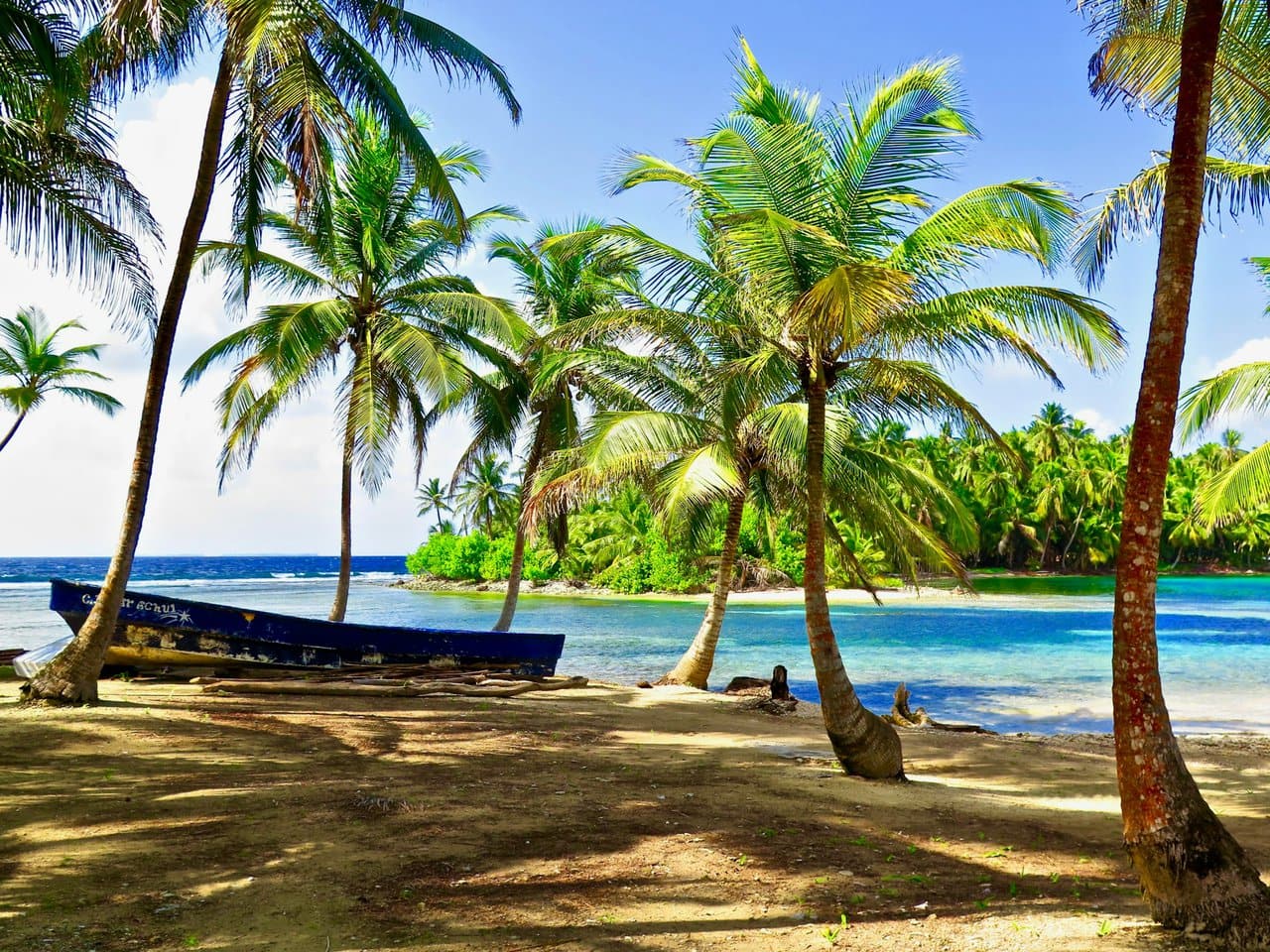
What you’re really travelling for isn’t a list of attractions. It’s the setting itself. Clear, shallow water stretches between small islands, each one feeling slightly removed from the next. You’re not navigating a destination — you’re moving through it.
The fact that the region is managed by the Guna Yala people also matters. Development is controlled, and that keeps the experience grounded. It doesn’t feel commercial in the way many island destinations do. It feels preserved, and that changes how you experience it.
This is why San Blas stands out. It’s not trying to compete with other destinations. It offers something simpler — and that simplicity is exactly what makes it memorable.
How to Get from Panama City to the San Blas Islands
Getting from Panama City to the San Blas Islands is not difficult, but it does require a different mindset from typical day trips. This isn’t a route you can improvise easily on the day.
The journey begins with a drive out of the city and into the Guna Yala region. As you leave Panama City behind, the environment changes quickly. The road becomes more rural, then more mountainous, and eventually more demanding. This part of the journey sets the tone — you’re moving away from convenience and toward something more remote.
The drive itself can feel longer than expected, not because of distance, but because of the terrain. The final stretch involves steep, winding roads that slow progress and require attention. It’s not difficult, but it’s not effortless either.
Once you reach the coast, the second stage begins. Boats take over where the road ends, carrying you out across open water toward the islands. This is the point where the journey shifts from functional to experiential, and the destination starts to come into focus.
Most travellers choose to book this as a single, organised transfer. That’s not just about convenience — it’s about practicality. Access to the region is controlled, and coordination between road and boat transport matters. Trying to manage each part separately rarely improves the experience.
When it’s planned properly, the journey feels structured rather than complicated. And that makes a big difference.
The Journey Experience: What to Expect
The journey to San Blas is part of what keeps it from becoming overrun. It’s accessible, but not effortlessly so — and that’s intentional.
The first stage, the drive, is where expectations need to be set correctly. It’s not a smooth, scenic cruise. The road becomes progressively more uneven, and the final section can feel slow and repetitive. If you go in expecting comfort, it can feel tiring. If you go in expecting transition, it makes sense.
What you’re really experiencing here is distance — not just physical, but environmental. You’re leaving behind the infrastructure of the city and moving into a region that operates differently.
Once you reach the coast and board the boat, everything changes. The movement becomes lighter, the surroundings open up, and the destination starts to feel real. The islands appear gradually, and with them, the sense that you’ve reached somewhere distinct.
Boat conditions vary, and that’s part of the reality. Some crossings are calm and easy, others are faster and more exposed. But either way, the journey becomes part of the story rather than something to get through.
Understanding this in advance is important. This is not a polished transfer designed for comfort at every stage. It’s a transition into a different kind of place — and that’s exactly why it works.
Doing the Trip Independently: Panama City to San Blas Islands Step-by-Step
If you want to travel from Panama City to the San Blas Islands independently rather than as part of an organised tour, it’s important to understand that the journey happens in two separate stages. First, you travel by road from Panama City into the Guna Yala region on the Caribbean coast. Then you continue by boat from the mainland to the islands themselves.
This is why the trip feels more complicated than the distance suggests. The islands are not far from Panama City geographically, but the transport connections are limited and controlled, so the journey requires some planning.
Understanding how the journey works in advance makes the entire trip much easier to organise.
Step 1 – Panama City to the Guna Yala Coast (Cartí Port Area)
The first part of the journey is travelling from Panama City to the Guna Yala region, where the boats to the San Blas Islands depart. Most boats leave from the Cartí port area, which is where the road ends and sea transport begins.
The drive usually takes around 2.5 to 3 hours, but the final section is slow because the road becomes steep, winding, and uneven as it crosses the hills into the Guna Yala territory. This is not a normal highway drive — the last part of the journey is rough in places and requires a 4×4 vehicle.
There is also a checkpoint at the entrance to the Guna Yala region, where passports are checked and an entrance fee is charged. This fee is usually around $20–25 per person, and it must be paid in cash.
If you are travelling independently, you generally have three options for this part of the journey:
- Hire a 4×4 rental vehicle
- Arrange a private driver
- Book a shared 4×4 transfer from Panama City
There are no regular public buses that go all the way to the boat docks, which is one of the main reasons many travellers choose organised tours instead of travelling independently.
This road journey is also part of the experience. You leave the modern city behind, pass through rural areas, and eventually reach the Caribbean coast where the boats depart for the islands.
Step 2 – Boat Transfer from the Mainland to the Islands
Once you reach the coast near Cartí, the second part of the journey begins. From here, you travel by small boat to the San Blas Islands.
The boat journey usually takes between 20 and 40 minutes, depending on which island you are visiting. Some islands are very close to the mainland, while others are further out across open water.
Boats here operate more like water taxis than scheduled ferries. They normally leave when passengers are ready, rather than running on a strict timetable. Many boats go to specific islands, especially if you are staying overnight on one of them.
If you are travelling independently, you will usually need to arrange the boat transfer in advance, either through your island accommodation or a local boat operator. Turning up without a plan can work, but it can also lead to waiting around for boats heading to the correct island.
Boat conditions vary depending on the weather. Some crossings are calm and easy, while others can be fast, bumpy, and wet, especially if the sea is rough. It’s a good idea to keep valuables in a waterproof bag and expect some spray during the crossing.
This boat journey is usually the moment when the trip starts to feel real, as the islands appear gradually on the horizon and the water becomes clearer and shallower.
Typical Travel Timeline from Panama City to San Blas
To understand how the day works, it helps to look at a typical travel timeline.
Most trips follow roughly this schedule:
Early Morning
Leave Panama City around 5:00–6:00am
Drive to Guna Yala checkpoint
Continue to Cartí port
Morning
Arrive at port around 8:30–9:00am
Board boat to islands
Arrive on island around 10:00am
Afternoon
Boat back to mainland mid-afternoon
Drive back to Panama City
Arrive back early evening
This is why most day trips start very early in the morning. The travel time is significant, even though the islands look close on the map.
Independent Travel vs Organised Tours
When deciding whether to travel independently or book an organised trip, the main difference is logistics and coordination, not distance.
Independent travel gives you more flexibility and sometimes slightly lower costs, but you need to coordinate:
- The 4×4 transport
- The Guna Yala checkpoint entry
- Boat transfers
- Island access
- Return timings
Organised tours combine all of these into one booking, which removes most of the planning and coordination. That’s why many travellers — even experienced ones — still choose organised transfers for San Blas.
The islands themselves are simple and relaxed, but getting there involves several moving parts, and everything needs to line up properly for the trip to run smoothly.
If you understand that the journey is road first, then boat, and that both parts need to be planned together, the whole trip becomes much easier to organise and much more enjoyable.
Best Option for Most Travellers
For a Panama City to San Blas Islands trip, the smartest decision you can make is to keep the logistics simple and the expectations clear.
An organised transfer that combines road and boat travel is the most effective way to do this. It removes uncertainty, aligns timings, and ensures that each part of the journey connects properly. You’re not paying for luxury — you’re paying for coordination.
Trying to arrange each element independently often leads to friction. Timings don’t align, access points aren’t always obvious, and small delays can have a knock-on effect. What looks flexible on paper quickly becomes restrictive in practice.
A structured trip avoids that. You leave early, travel as a group, and arrive with the day ahead of you. That rhythm works well because it matches the nature of the destination. You don’t need to optimise every minute — you just need enough time to experience it properly.
For most travellers, a well-planned day trip is enough. It gives you a clear window to explore, relax, and take in the setting without overextending the day. Longer stays can add depth, but they’re not essential to get value from the experience.
Keep it simple, plan it properly, and focus on why you’re going in the first place. That’s what makes this trip work.
How Long to Spend in the San Blas Islands
Planning your time for a Panama City to San Blas Islands trip is less about fitting things in and more about understanding the rhythm of the place.
Most travellers visit as part of a structured day trip, and in practical terms, that works well. You arrive late morning, spend several hours on the islands, and return in the afternoon. That window is enough to experience what makes San Blas special without overcomplicating the day.
What’s important is recognising that this isn’t a destination built around activities or a checklist. There are no major landmarks to move between, no packed itinerary to follow. The experience is in the setting itself — the water, the islands, and the sense of space.
Because of that, time behaves differently here. A few hours can feel full if you’re engaged with the environment, but long stretches can feel slow if you’re expecting constant stimulation. The value comes from how you use the time, not how much of it you have.
For most people, a single day is enough to understand the appeal. Staying longer can deepen the experience, particularly if you want a quieter, more immersive visit. But it’s not essential. The core of what San Blas offers is accessible within a well-planned day trip.
What to Expect When You Arrive
Arriving in the San Blas Islands is a clear break from everything that comes before it. After the drive and boat journey, the environment shifts immediately and noticeably.
The first thing you notice is the scale. The islands are small, low, and surrounded by shallow, clear water. There’s no skyline, no density, and very little built infrastructure. Everything feels open, exposed, and simple.
This simplicity defines the experience. You’re not moving through a designed tourist space. You’re in a place where the natural environment is the main feature, and everything else sits around it rather than competing with it.
Facilities are basic, and that’s intentional. You’ll find places to sit, eat, and rest, but not much beyond that. Expect functionality rather than polish, and the experience makes more sense.
The pace is slow, but not empty. Boats move between islands, people settle into the space, and the day unfolds without urgency. There’s no pressure to do anything specific — and that’s the point.
If you arrive expecting a resort-style experience, it can feel limited. But if you arrive understanding what San Blas is, it delivers exactly what it promises: a stripped-back, natural environment that’s increasingly hard to find elsewhere.
What You Can Actually Do on the San Blas Islands
One of the most important things to understand before visiting the San Blas Islands is that this is not a destination built around attractions or activities. There are no large resorts, no beach clubs, no nightlife, and very little infrastructure beyond what is needed for day visitors and small overnight stays. What you are really visiting for is the environment itself.
Most islands are very small, often small enough to walk around in ten or fifteen minutes. The experience is not about moving between attractions or following a schedule. It is about spending time in a place that feels remote, simple, and very different from Panama City.
If you arrive expecting a list of things to do, the islands can feel quiet. If you arrive expecting clear water, small islands, and a slow pace, then the San Blas Islands make perfect sense.
Swimming and Shallow Water Between the Islands
The main activity in San Blas is simply swimming and spending time in the water. The sea around the islands is usually very clear, warm, and shallow for a long distance from the shore. In many places you can walk far out into the water and still only be waist deep.
This creates large areas that feel more like natural swimming pools than open sea, especially around sandbars and shallow lagoons. Many visitors spend most of their time moving between sitting in the shade and swimming in the water.
The beaches are not huge, but they are usually clean, sandy, and lined with palm trees. The setting is simple rather than dramatic, but that simplicity is part of what makes the islands feel different from more developed beach destinations.
Island Hopping by Boat
Many trips to San Blas include short boat rides between different islands, and this is often one of the highlights of the day. The islands are close together, so travelling between them is quick, and each island has a slightly different feel.
You might visit one island for swimming, another for lunch, and another small sand island that feels almost deserted. Some islands have small local communities, while others are used mainly for visitors.
Moving between islands helps break up the day and gives you a better sense of how the San Blas region is made up of many small islands rather than one single destination.
Snorkelling and Marine Life
Some trips include time for snorkelling, usually around reefs or shallow areas where fish are easy to see. The snorkelling here is generally calm and easy rather than deep or challenging, and you may see tropical fish, coral, and starfish in the shallow water.
The marine life is not the main reason most people visit San Blas, but snorkelling adds another way to experience the water and the islands.
Visiting Local Guna Yala Islands
Some islands are home to the Guna Yala people, who manage and protect the entire San Blas region. Visiting one of these islands gives you a chance to see what life is like on the islands rather than just visiting a beach for the day.
These islands may have small shops, simple restaurants, wooden houses, and local boats arriving and leaving throughout the day. You may also see handmade crafts and traditional textiles for sale.
This is not a staged cultural attraction or a tourist village. It is simply a small island community that visitors are allowed to visit.
Relaxing and Doing Very Little
One of the main things people do in the San Blas Islands is very little, and that is exactly the point of visiting.
You swim, sit in the shade, walk around the island, watch boats move between islands, eat simple food, and spend time somewhere that feels very far away from cities and schedules. The pace is slow, but it does not feel empty. It just feels unhurried.
The San Blas Islands are not a place where you try to fit lots into the day. They are a place where you slow down and experience the environment rather than a list of attractions.
Understanding this before you go is important, because San Blas is not about activities, entertainment, or sightseeing. It is about clear water, small islands, and spending time somewhere that still feels undeveloped and natural.
Staying Overnight on the San Blas Islands
Many visitors travel from Panama City to the San Blas Islands as a day trip, but staying overnight on the islands is a very different experience and worth considering if you want to see San Blas when most day visitors have left.
Accommodation on the islands is very simple and basic. You will not find large hotels, resorts, or luxury accommodation here. Most places to stay are small cabins, huts, or basic rooms run by local Guna families. Facilities are limited, electricity may only run at certain times, and internet access is rare or very slow.
This is not the kind of destination where you compare hotels and amenities. Staying overnight in San Blas is more about the location than the accommodation.
What you get in return for the simple facilities is something most day visitors never experience: quiet evenings, empty beaches, and the islands after the boats leave. Once the day trips return to Panama City, the islands become much quieter and the atmosphere changes completely.
Evenings are usually simple. You eat dinner where you are staying, watch the sunset, and spend the evening on a small island with very little noise or light. At night, the sky is often very clear, and because there is almost no light pollution, the stars can be very visible.
Staying overnight also means you can experience the islands early in the morning, before the day trip boats arrive. This is often the calmest and quietest time on the islands.
Most overnight stays include meals and boat transfers as part of the price, because there are very few restaurants or shops on most islands. When booking accommodation, it is important to confirm:
- Boat transfer from the mainland
- Meals included
- Return transfer timing
- Cash payment requirements
- What facilities are available
Staying overnight is not necessary to enjoy San Blas, but it does give you a much slower and more immersive experience compared to a day trip. If you have the time and are comfortable with basic accommodation, staying one night on the islands can be one of the most memorable parts of a trip to Panama.

Rupert’s Handy Travel Tips
Heading from Panama City to the San Blas Islands? Here are a few smart tips to make your trip smoother:
- Expect a long journey: The travel time is part of the experience, not just a transfer.
- Pack light but smart: Bring essentials like water, sun protection, and cash.
- Prepare for limited facilities: This is not a resort-style destination.
- Secure your belongings: Boat transfers can be fast and occasionally rough.
- Stay flexible: Conditions and timings can change slightly on the day.
Want to meet the reindeer behind our travel tips? Find out more in our page Who is Rupert?.
Frequently Asked Questions
How do you get from Panama City to the San Blas Islands?
You travel by a combination of road and boat. There are no direct routes, and most travellers book a combined transfer.
How long does the journey take?
The full journey typically takes around 3 to 4 hours, depending on conditions and transfer timings.
Can you visit the San Blas Islands in a day trip?
Yes. Most visitors travel as part of a day trip, with early departure and afternoon return.
Is the journey difficult?
It’s manageable, but the road section can be rough and the boat ride can vary, so it’s worth being prepared.
Are the San Blas Islands easy to explore?
Yes, but in a simple way. The focus is on the environment rather than structured attractions.
Further Reading & Related Guides
If you are planning a trip to Panama City or travelling around Panama, these guides will help you plan day trips, transport and flights around the country.
Panama Canal Day Trip from Panama City: Miraflores Locks Visitor Guide
Everything you need to know about visiting the Panama Canal, including the Miraflores Locks, visitor centre, museum and how to see ships passing through.
Best Day Trips from Panama City: Canal, San Blas, Jungle & Beaches
Discover the best day trips from Panama City including the Panama Canal, San Blas Islands, rainforest tours and beach destinations.
Panama City Airport to City Centre: Metro, Taxi, Uber & Transfers Guide
Learn the easiest ways to travel from Tocumen Airport to Panama City using the metro, taxis, Uber and private transfers.
Copa Airlines Guide: Routes, Fleet, Hub, Star Alliance & Travel Experience
Flying to Panama with Copa Airlines? This guide explains routes, aircraft, the Panama City hub and what the travel experience is like.
Panama Travel Guide: Culture, Beaches & Essential Info (2025)
Plan your trip to Panama with this country guide covering culture, transport, safety, weather and the best places to visit.
Last Updated
March 2026
Affiliate Disclosure
This page contains affiliate links. If you click through and make a purchase or booking, we may earn a small commission at no extra cost to you. This helps support our work and allows us to continue providing detailed, independent travel advice. We only recommend apps and services we personally use or have verified as high-quality.