
Monaco Oceanographic Museum Overview
The Monaco Oceanographic Museum is one of the most famous attractions in Monaco and sits dramatically on the edge of the cliffs overlooking the Mediterranean Sea. From the outside alone, the building looks more like a palace than a museum, rising straight out of the rock face above the water. Many visitors actually recognise the building before they even know what it is, simply because of its spectacular location on the Monaco coastline.
Inside, the museum combines aquariums, marine science exhibitions, historic collections, and a rooftop viewing terrace, making it much more than just an aquarium. It is one of the best places in Monaco for families, but it is equally interesting for adults because the museum focuses heavily on ocean exploration, conservation, and the history of marine science.
The museum was founded by Prince Albert I of Monaco, a pioneer of oceanography, and his influence is still very visible throughout the building. The institution remains closely connected to marine research and conservation today, which gives the museum a more educational and scientific focus than many typical tourist aquariums.
Visitors usually come here for three main reasons: the aquarium tanks, the historic museum exhibitions, and the incredible rooftop terrace views over Monaco and the Mediterranean. Even if you are not particularly interested in marine life, the building itself and the views alone often make the visit worthwhile.
The Monaco Oceanographic Museum is located in Monaco-Ville (the Old Town), close to the Prince’s Palace and Monaco Cathedral, so it is very easy to combine with other attractions in the historic part of Monaco.
History of the Monaco Oceanographic Museum
The Monaco Oceanographic Museum opened in 1910 and was founded by Prince Albert I, who was known as the “Navigator Prince” because of his passion for ocean exploration and scientific research. He financed numerous oceanographic expeditions and wanted Monaco to become a global centre for marine science and research.
The building itself took 11 years to construct and was built directly into the cliffside, which was an incredible engineering achievement at the time. Even today, when you see the museum from the sea, it looks like it is part of the rock face rather than a separate building.
Prince Albert I established the museum not just as a public attraction, but as a scientific research institute, museum, and educational centre. Over time, the museum became one of the most important oceanographic institutions in Europe.
The museum was later directed for many years by Jacques Cousteau, the famous French ocean explorer and filmmaker, who helped modernise the aquariums and expand the museum’s focus on marine conservation. His influence is still very visible in many of the exhibits, particularly those focused on ocean protection and marine ecosystems.
Today, the museum continues to focus on marine science, ocean conservation, and education, which gives it a very different feel compared to purely entertainment-focused aquariums. Many of the exhibitions are designed to make visitors think about the future of the oceans, climate change, and marine biodiversity.
Understanding this history helps visitors appreciate that the Monaco Oceanographic Museum is not just an aquarium — it is one of the historic centres of oceanographic research in the world.
Aquarium & Marine Life Exhibits
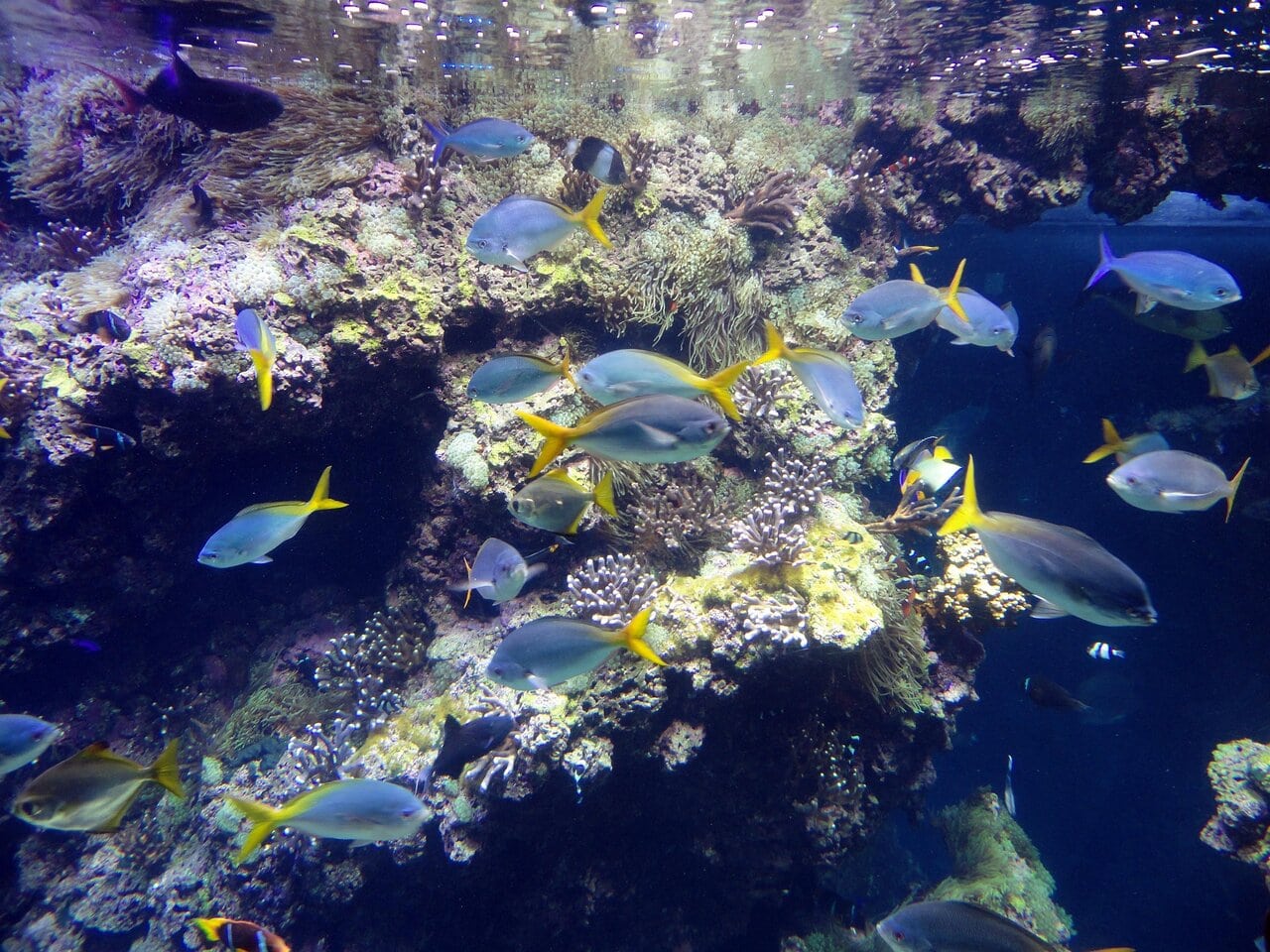
The aquarium is one of the main highlights of the Monaco Oceanographic Museum and contains over 6,000 marine species across dozens of tanks and themed environments. The aquariums are spread across several floors, and the layout encourages visitors to move slowly through different marine ecosystems.
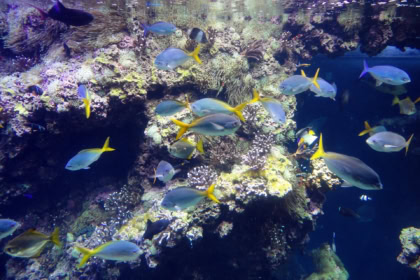
The tanks include Mediterranean Sea species, tropical coral reef fish, sharks, seahorses, jellyfish, and deep-sea creatures, and the displays are generally very well presented and clearly explained. The Mediterranean tanks are particularly interesting because they show the marine life that exists just offshore from Monaco, which many visitors do not realise is so diverse.
One of the most popular sections is the shark lagoon, where several species of sharks swim in a large open tank. There are also smaller themed tanks focusing on coral reefs, clownfish, moray eels, and exotic tropical fish.
The museum also has a touch pool area, which is particularly popular with children, where visitors can touch certain marine creatures under supervision. This makes the museum a very good attraction for families visiting Monaco.
Throughout the aquarium areas, there is a strong emphasis on marine conservation, ocean pollution, and protecting coral reefs and marine ecosystems. Many of the displays are educational and interactive, explaining how human activity affects the oceans and what can be done to protect marine life.
Overall, the aquarium section usually takes around one to two hours to explore properly, depending on how much time you spend reading the displays and watching the tanks.
Museum Exhibitions & Collections
Above the aquarium floors, the Monaco Oceanographic Museum also contains museum galleries and exhibitions focused on ocean exploration, marine science, and the history of oceanography. These sections are often quieter than the aquarium and are particularly interesting for visitors who enjoy science, exploration history, and maritime technology.
The exhibitions include historic diving equipment, ship models, skeletons of large marine animals, exploration tools, and scientific instruments used in early oceanographic expeditions. These displays help explain how scientists explored the oceans before modern submarines and technology existed.
There are also rotating exhibitions that often focus on marine conservation, climate change, plastic pollution, and ocean ecosystems, which makes the museum feel modern and relevant rather than just historic.
One of the most impressive displays in the museum is the large whale and marine animal skeletons, which help visitors understand the scale of ocean life. These exhibits are often overlooked by visitors who only come for the aquarium, but they are actually one of the most interesting parts of the museum.
The museum exhibitions usually take another hour or so to explore, and when combined with the aquarium and rooftop terrace, most visitors spend two to three hours total at the Monaco Oceanographic Museum.
Rooftop Terrace & Views
One of the most underrated parts of the Monaco Oceanographic Museum is the rooftop terrace. Many visitors come for the aquarium and exhibitions but end up spending a long time on the roof because the views are some of the best in Monaco. From here, you can look across the Mediterranean, along the Monaco coastline, and back towards Monte Carlo and the harbour.
The rooftop area is large and open, with plenty of space to walk around, take photos, and sit for a while. On clear days, the views across the Mediterranean are spectacular, and this alone can make the museum worth visiting. The terrace also gives you a great perspective of how the museum is built directly into the cliff face, which you do not fully appreciate from ground level.
There is usually a small café or restaurant area on the rooftop, which makes it a nice place to take a break during your visit. Prices are what you would expect for Monaco, but the location and views make it a memorable place for a coffee or light lunch.
For many visitors, the rooftop terrace ends up being one of the highlights of the Monaco Oceanographic Museum, so do not rush through the museum and leave without going all the way to the top.
Ticket Prices & Opening Hours
Ticket prices for the Monaco Oceanographic Museum are not cheap, but this is one of Monaco’s main attractions and the ticket includes access to the aquarium, museum exhibitions, and rooftop terrace, so most visitors feel it is worth the price.
Prices change slightly depending on the season, but in general you should expect to pay around €19–€22 for adults, with reduced prices for children and families. There are often family tickets available which can make the visit better value if travelling with children.
Opening hours vary throughout the year, but the museum is usually open every day, with longer opening hours during the summer tourist season. In winter, opening hours are slightly shorter, so it is always a good idea to check before visiting.
For the most up-to-date opening times and ticket prices, you should check the official website here.
This is the best source for current information, special exhibitions, and temporary closures.
Most visitors buy tickets at the entrance, but during busy periods and holidays it can be a good idea to buy tickets in advance to avoid queues.
How to Get to the Oceanographic Museum
The Monaco Oceanographic Museum is located in Monaco-Ville (the Old Town), which sits on top of the rock above the main harbour. Because Monaco is very compact, the museum is quite easy to reach, but you should be prepared for hills, stairs, and walking uphill if coming from the harbour area.
If you are arriving by train, you will arrive at Monaco-Monte Carlo station, which is located inside the mountain. From the station, you can either walk (around 25–30 minutes uphill) or take a local bus towards Monaco-Ville.
The easiest way to reach the museum is usually by bus, especially if you want to avoid walking uphill in the heat. Monaco’s local buses run frequently and stop near the Prince’s Palace and Old Town area, which is only a short walk from the museum.
If you are already visiting Prince’s Palace, Monaco Cathedral, or the Old Town, then the museum is very easy to reach on foot because it is located at the far end of Monaco-Ville overlooking the sea.
Driving is not recommended unless your hotel has parking arranged, as parking in Monaco can be expensive and complicated for visitors.
How Long to Visit the Museum
Most visitors spend between two and three hours at the Monaco Oceanographic Museum, which is enough time to see the aquarium, museum exhibitions, and rooftop terrace without rushing.
If you are travelling with children or particularly interested in marine life and exhibitions, you could easily spend half a day here. The aquarium alone can take quite a while if you stop at all the tanks and read the information displays.
A typical visit usually works like this: visitors start with the aquarium floors, then move up through the museum exhibitions, and finally finish on the rooftop terrace for the views and café. This natural flow through the building makes it easy to plan your visit without needing a strict itinerary.
The museum is also located in Monaco-Ville, so many visitors combine the visit with:
Prince’s Palace, Monaco Cathedral, Old Town streets, and viewpoints over Port Hercule. This makes the museum part of a full day exploring Monaco rather than a standalone attraction.
If you are visiting Monaco on a day trip from Nice, you should still have enough time to visit the Oceanographic Museum along with the Old Town and harbour areas, as long as you plan your time well.
Is the Monaco Oceanographic Museum Worth Visiting?
Whether the Monaco Oceanographic Museum is worth visiting really depends on how much time you have in Monaco and whether you are interested in aquariums, museums, or scenic viewpoints. For many visitors, this is one of the highlights of Monaco, but it is not essential if you are only visiting for a few hours.
The museum is particularly worth visiting if you enjoy aquariums, marine life, science museums, or historic buildings, because it combines all of these in one place. The building itself is impressive, the aquariums are well designed, and the rooftop terrace offers some of the best views in Monaco. Even visitors who are not particularly interested in marine life often still enjoy the visit because of the location and architecture.
However, if your main goal in Monaco is to see Monte Carlo Casino, the harbour, luxury hotels, and Formula 1 locations, then the museum may not be a priority, especially if you are only visiting Monaco for half a day.
For families, the museum is one of the best attractions in Monaco, as there are interactive exhibits, aquarium tanks, and plenty to keep children interested. For couples and adult travellers, the rooftop terrace and historic building often make the visit worthwhile even if you move quickly through the aquarium.
Overall, the Monaco Oceanographic Museum is usually considered one of the top attractions in Monaco, and if you have a full day in Monaco, it is definitely worth including in your itinerary.
Tips for Visiting the Oceanographic Museum
The most important tip when visiting the Monaco Oceanographic Museum is to arrive earlier in the day if possible, especially during summer. The museum can become busy in the afternoon when day-trippers from Nice and cruise passengers arrive.
It is also a good idea to combine the museum with Monaco-Ville (Old Town), because they are located in the same area. Many visitors walk around the Old Town, visit the Prince’s Palace and Monaco Cathedral, and then visit the museum afterwards.
Another useful tip is to take your time and move slowly through the aquarium floors, because some of the tanks and exhibits are easy to miss if you rush. The layout encourages you to move upwards through the building, finishing on the rooftop terrace.
Make sure you do not skip the rooftop terrace, as many visitors accidentally leave the museum without going all the way to the top. The terrace is one of the best viewpoints in Monaco and a great place to take photos.
If visiting in summer, remember that Monaco can be very hot, and the walk up to Monaco-Ville is uphill. Using the bus or elevators around Monaco can make the visit much easier and more comfortable.

Rupert’s Handy Travel Tips
Heading to the Monaco Oceanographic Museum? Here are a few useful tips to make your visit smoother:
- Visit Monaco-Ville first: Combine the museum with the Prince’s Palace, Monaco Cathedral, and Old Town viewpoints in one visit.
- Don’t miss the rooftop: Many visitors leave without going to the terrace, but the views are some of the best in Monaco.
- Use the buses or public elevators: Monaco is very steep, and these can save a lot of walking uphill.
- Allow at least two hours: The aquarium, museum, and rooftop terrace take longer than many visitors expect.
Want to meet the reindeer behind our travel tips? Find out more in our page Who is Rupert?.
Frequently Asked Questions About the Monaco Oceanographic Museum
Is the Monaco Oceanographic Museum suitable for children?
Yes, the aquarium tanks, touch pools, and interactive exhibits make the museum very suitable for children, and it is one of the best family attractions in Monaco.
How long does it take to visit the Monaco Oceanographic Museum?
Most visitors spend around two to three hours exploring the aquarium, museum exhibitions, and rooftop terrace.
Can you visit the Monaco Oceanographic Museum on a day trip from Nice?
Yes, the museum can easily be visited as part of a day trip to Monaco from Nice, especially if you also plan to visit Monaco-Ville and the harbour area.
Is the Monaco Oceanographic Museum open all year?
The museum is usually open throughout the year, although opening hours vary by season and it is best to check before visiting.
Further Reading & Related Monaco Guides
If you are planning a trip to Monaco, these guides may also be helpful:
Planning a trip to Monaco → Monaco Travel Guide – Casinos, beaches, day trips, transport tips, and the best things to do in Monaco.
Visiting during Formula 1 weekend → Monaco Grand Prix Guide – Tickets, grandstands, best viewing areas, hotels, and tips for visiting Monaco during race weekend.
Seeing the superyachts → Monaco Yacht Show Guide – Dates, visiting tips, where to see the yachts, and what Monaco is like during yacht show week.
Watching the famous rally → Monte Carlo Rally Guide – Route, best viewing spots, Monaco start and finish, and tips for watching rally stages.
Getting around Monaco easily → Monaco Hop-On Hop-Off Bus Guide – Bus stops, route, tickets, and whether the sightseeing bus is worth it.
Travelling from Nice to Monaco → Nice to Monaco Travel Guide – Train, bus, taxi, and helicopter transport options between Nice and Monaco.
Arriving by helicopter → Nice to Monaco Helicopter Transfer Guide – Prices, flight time, booking tips, and what the helicopter transfer is like.
Last Updated
March 2026
Affiliate Disclosure
This page contains affiliate links. If you click through and make a purchase or booking, we may earn a small commission at no extra cost to you. This helps support our work and allows us to continue providing detailed, independent travel advice. We only recommend apps and services we personally use or have verified as high-quality.