
Understanding London’s Train Stations
London’s rail network can be confusing at first because the city does not have one central train station. Instead, London has a ring of major terminal stations around central London, and each station serves different parts of the UK and Europe. If you are travelling by train from London, the station you use depends entirely on where you are going, not where you are staying in London.
This system dates back to the Victorian railway era, when private railway companies built their own lines into London and constructed their own stations rather than sharing one central hub. As a result, London ended up with multiple large railway terminals such as Waterloo, Victoria, Paddington, King’s Cross, St Pancras, Euston and Liverpool Street, all located around the edge of central London.
Today, these stations act as gateways to different regions of the country. For example, if you are travelling to the Midlands or North West England you will probably use Euston, while trains to Scotland and the North East leave from King’s Cross. Trains to the west of England and Wales leave from Paddington, and trains to the south coast often leave from Victoria or Waterloo.
Most major London train stations are well connected to the London Underground, Elizabeth Line, buses and taxis, so it is usually quite easy to transfer between stations if your journey involves changing terminals. However, some stations are quite far apart, so you should always allow enough time when changing between London stations.
Understanding London’s railway stations is very useful when planning day trips, travelling to airports, or taking longer train journeys across the UK or to Europe.
London Railway Lines Explained
One of the easiest ways to understand London’s train stations is to understand the main railway lines that run from London to the rest of the UK. Each major London station sits at the end of one of these main lines, which connect London to different regions of the country. You can think of these lines as railway motorways, carrying fast trains between major cities.
The West Coast Main Line runs from London Euston to cities such as Birmingham, Manchester, Liverpool and Glasgow. This is one of the busiest rail routes in the UK and is used by high-speed intercity trains as well as regional services.
The East Coast Main Line runs from London King’s Cross to York, Leeds, Newcastle and Edinburgh. This is the main route between London and Scotland on the east side of the country.
The Great Western Main Line runs from London Paddington to Reading, Oxford, Bath, Bristol and Cardiff, and it also connects to Heathrow Airport via the Heathrow Express and Elizabeth Line.
The Midland Main Line runs from London St Pancras International to Leicester, Nottingham, Derby and Sheffield. St Pancras is also home to the Eurostar, which connects London with Paris, Brussels and Amsterdam via High Speed 1.
The South Western Main Line runs from London Waterloo to destinations such as Windsor, Southampton, Portsmouth and Bournemouth, serving much of South West England.
The Brighton Main Line runs from London Victoria and London Bridge to Gatwick Airport and Brighton, making it one of the most important routes for travellers heading to the south coast.
The Great Eastern Main Line runs from London Liverpool Street to Cambridge, Colchester and Norwich, and also connects to Stansted Airport.
There are also important cross-London routes such as Thameslink, which runs north–south through central London connecting stations like St Pancras, Blackfriars, London Bridge and Gatwick Airport without needing to change trains.
Once you understand these main railway lines, London’s train stations become much easier to understand, because each station is simply the London end of one of these major rail routes.
West Coast Main Line – London Euston Station
The West Coast Main Line is one of the most important railway routes in the UK and connects London with the Midlands, North West England and Scotland. If you are travelling from London to cities such as Birmingham, Manchester, Liverpool or Glasgow, you will almost certainly depart from London Euston station.
Euston is a large and busy station located just north of central London, within walking distance of King’s Cross and St Pancras International, which makes it relatively easy to change between major rail routes if necessary. Inside the station you will find shops, restaurants, ticket machines, waiting areas, toilets and step-free access to most platforms.
Trains from Euston are operated mainly by Avanti West Coast for fast intercity services and London Northwestern Railway for slower regional routes. The station is connected to the Northern Line and Victoria Line on the London Underground, making it easy to reach from most parts of London.
If you are heading to Manchester, Liverpool, Birmingham or Glasgow, Euston is the London station you will most likely use.
East Coast Main Line – King’s Cross Station
The East Coast Main Line runs from London to the north east of England and Scotland, and trains on this route depart from King’s Cross station. This is the main route between London and York, Leeds, Newcastle and Edinburgh, and it is one of the most scenic long-distance train routes in the UK.
King’s Cross is located next to St Pancras International, and the two stations are connected by a short walk across a public square. This makes it easy to change between domestic trains and Eurostar services to Europe.
The station is extremely well connected to the London Underground via the Northern, Piccadilly, Victoria, Circle, Metropolitan and Hammersmith & City lines, making it one of the easiest stations to reach in London. King’s Cross is also a major hub for buses and taxis.
If you are travelling from London to Edinburgh by train, or to cities like York or Leeds, this is the station you will almost certainly depart from.
Great Western Main Line – Paddington Station
The Great Western Main Line connects London with the west of England and Wales, and trains on this route depart from London Paddington station. This is the main railway route for destinations such as Reading, Oxford, Bath, Bristol and Cardiff.
Paddington is also the main station for Heathrow Airport rail connections, including the Heathrow Express and the Elizabeth Line, which makes it one of the most important transport hubs in London for travellers arriving or departing via Heathrow.
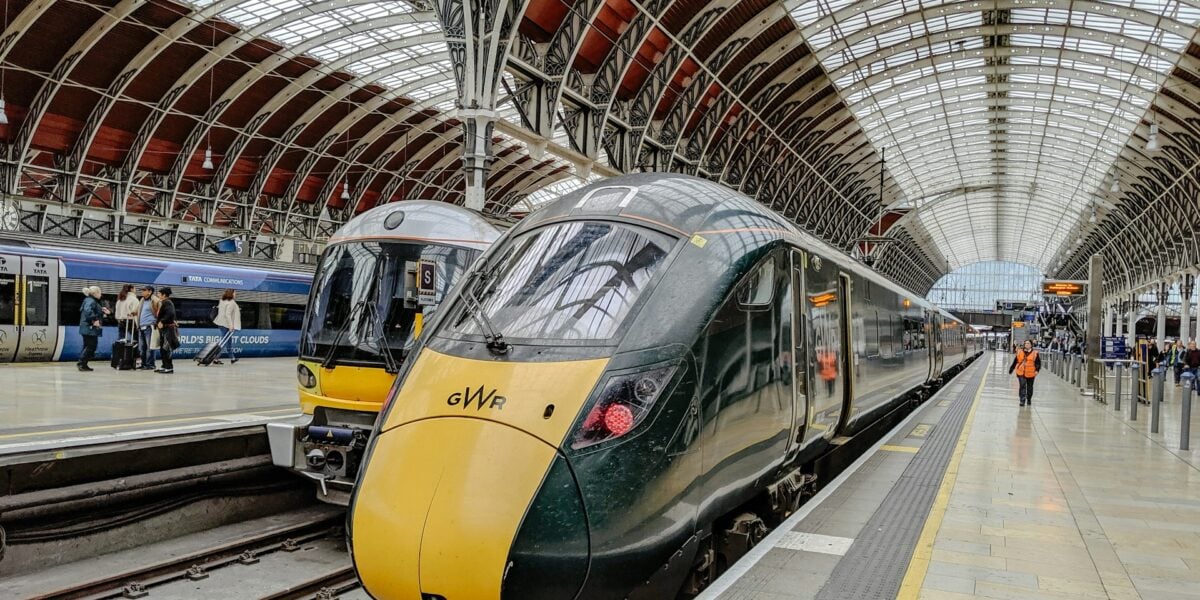
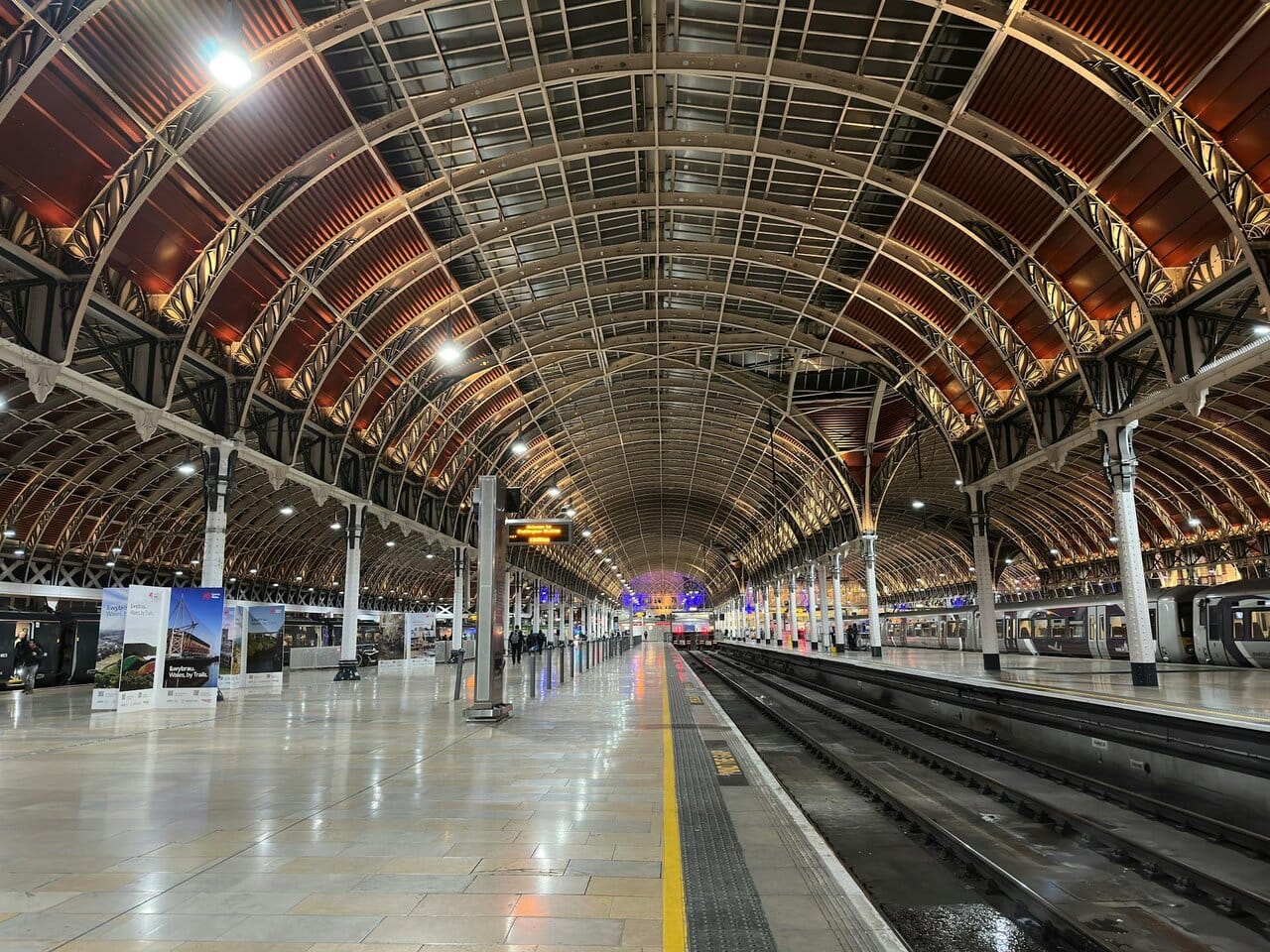
The station itself is one of the most famous in London and is known for its large Victorian train shed roof and the statue of Paddington Bear, which is a popular photo spot for visitors.
Paddington connects to the Bakerloo, Circle, District and Hammersmith & City Underground lines, as well as the Elizabeth Line, which runs east–west across London through central stations such as Bond Street, Tottenham Court Road and Liverpool Street.
If you are travelling from London to Oxford, Bath, Bristol, Cardiff or Heathrow Airport, Paddington is usually the station you will use.
Midland Main Line and Eurostar – St Pancras International
St Pancras International is one of the most important railway stations in London because it serves both domestic UK trains and international trains to Europe. Domestic trains from St Pancras run on the Midland Main Line to destinations such as Leicester, Derby, Nottingham and Sheffield.
The station is also the London terminal for the Eurostar, which connects London with Paris, Brussels and Amsterdam via the Channel Tunnel and High Speed 1 railway line. For travellers heading to mainland Europe by train, St Pancras is the station you will need.
St Pancras is located right next to King’s Cross station, and the two stations share the same Underground station, making transfers very easy. The station building itself is one of the most impressive railway stations in Europe, with a large glass roof and historic red brick hotel building attached to the front.
If you are travelling internationally by train from London, this is the station you will depart from.
South Western Main Line – Waterloo Station
The South Western Main Line runs from London Waterloo to destinations in South West England and along the south coast, including Windsor, Southampton, Portsmouth and Bournemouth. Waterloo is the busiest railway station in the UK and handles a huge number of commuter trains as well as longer-distance services.
Waterloo is located on the south side of the River Thames, close to attractions such as the London Eye, South Bank and Westminster. Because of its central location, many visitors end up passing through Waterloo even if they are not travelling far outside London.
The station connects to the Bakerloo, Northern, Jubilee and Waterloo & City Underground lines, making it easy to travel across London from here. Waterloo is also a short walk from Waterloo East station, which connects to routes towards Kent and south east London.
If you are travelling from London to Windsor Castle or the south coast, Waterloo is often the station you will use.
Brighton Main Line – Victoria Station
The Brighton Main Line runs from London to the south coast, and trains on this route usually depart from London Victoria station. This line also serves Gatwick Airport, making Victoria one of the most important stations for airport travel.
From Victoria you can travel to Brighton, Gatwick Airport, Eastbourne, Worthing and parts of Kent. The Gatwick Express runs directly between Victoria and Gatwick Airport and is one of the fastest airport rail connections in London.
Victoria station is located near Buckingham Palace and Westminster, so it is often convenient for visitors staying in central London hotels. The station connects to the Victoria, Circle and District Underground lines, providing good access across London.
If you are travelling to Brighton or Gatwick Airport, Victoria is usually the station you will use.
Great Eastern Main Line – Liverpool Street Station
The Great Eastern Main Line runs from London Liverpool Street to destinations in East England, including Cambridge, Colchester and Norwich. Liverpool Street is also the main station for the Stansted Express, which connects London to Stansted Airport.
Liverpool Street is located close to the City of London financial district and is heavily used by commuters during weekdays, but it is also very important for travellers heading to Cambridge or Stansted Airport.
The station is connected to the Central, Circle, Metropolitan and Hammersmith & City Underground lines, as well as the Elizabeth Line, which makes it very easy to reach from central London and Heathrow Airport.
If you are travelling from London to Cambridge or Stansted Airport, Liverpool Street is usually the station you will use.
London Train Station Locations
London’s main train stations are arranged roughly in a ring around central London, rather than being located in one central transport hub. This layout can seem confusing at first, but once you understand where the stations are located, it becomes much easier to navigate the rail network.
Stations such as Paddington are located to the west of central London, Euston, King’s Cross and St Pancras are located to the north, Liverpool Street is to the north east near the City of London, and stations such as Waterloo and London Bridge are located south of the River Thames.
Because the stations are spread around the city, it is sometimes necessary to change stations using the London Underground, Elizabeth Line or a taxi if you are connecting between different rail routes. For example, if you arrive in London at Paddington and need to catch a train from King’s Cross, you would normally take the Underground or Elizabeth Line across central London.
The Underground and Elizabeth Line make it relatively easy to travel between London stations, but you should usually allow at least 30–45 minutes if you need to transfer between major stations, especially during busy times.
Underground and Elizabeth Line Connections
Most major London train stations are connected to the London Underground network, which makes it easy to travel between stations and across the city. Some stations are also connected to the Elizabeth Line, which is one of the fastest ways to travel east–west across London.
The Elizabeth Line connects Paddington, Bond Street, Tottenham Court Road, Farringdon and Liverpool Street, and continues to Heathrow Airport in the west and Essex in the east. This line is extremely useful if you need to transfer between Paddington and Liverpool Street, or if you are travelling to Heathrow Airport.
Some of the most useful Underground connections between major London stations include travelling between Paddington and King’s Cross, Victoria and Euston, and Waterloo and London Bridge. In most cases, the Underground is the quickest way to transfer between stations.
When changing stations in London, always allow extra time for walking inside stations, as some Underground interchanges and station entrances can be quite large and busy.
Facilities at London Train Stations
Most major London train stations have a wide range of facilities, especially larger stations such as Waterloo, Victoria, Paddington, King’s Cross, St Pancras and Liverpool Street.
You will usually find ticket machines, ticket offices, toilets, luggage storage, shops, cafes and restaurants inside the stations. Many stations also have waiting areas, charging points, WiFi and step-free access for passengers with reduced mobility or heavy luggage.
Luggage storage is available at several major stations through companies such as Excess Baggage Company, which operate left luggage offices at stations including Paddington, King’s Cross, St Pancras, Victoria and Liverpool Street. This can be useful if you arrive in London before hotel check-in time or have time to explore the city before a train.
Most stations also have taxi ranks and bus stops located directly outside the main entrance, making it easy to continue your journey after arriving in London.
Tips for Using London Train Stations
London train stations can be very busy, especially during weekday rush hours and holiday travel periods, so it is always a good idea to arrive early and allow time to find your platform.
Unlike some countries where platforms are announced far in advance, in the UK platforms are sometimes announced shortly before boarding, so passengers often wait near the departure boards until the platform number appears.
When using escalators in London stations, remember the local rule to stand on the right and walk on the left, especially on Underground escalators. This is taken quite seriously in London and helps keep people moving during busy periods.
If you are travelling within London or making a connection to the Underground, you can usually pay using contactless bank cards or Oyster cards rather than buying separate tickets.
It is also worth checking for train strikes, engineering works or delays before travelling, especially if you are heading to the airport or catching a long-distance train.
Finally, always allow extra time when changing between London stations, as even short journeys across central London can take longer than expected during busy periods.
Further Reading & Related Guides
If you are planning to travel around London and the UK by train, these related guides will help you plan your routes, choose the best transport options, and organise your itinerary more efficiently.
If you are new to London transport, start with our Getting Around London Guide, which explains the Underground, buses, trains and the Elizabeth Line so you can understand how the whole transport system fits together.
Before travelling on the Underground or buses, it is also important to understand the difference between Oyster cards and contactless payments, as this can affect how much you pay for transport in London and how daily fare caps work.
If you are visiting London for a short trip, our itinerary guides such as London in 1 Day, London in 2 Days, London in 3 Days, and London in a Weekend will help you plan your sightseeing efficiently and avoid travelling back and forth across the city unnecessarily.
You may also find it useful to read our London Attractions Guide, which covers the main attractions across the city, and our Rainy Day London Guide and London With Kids Guide, which help you plan activities depending on the weather or who you are travelling with.
These guides will help you plan your London trip more efficiently and make the most of your time in the city.
Last Updated
April 2026
Affiliate Disclosure
This page contains affiliate links. If you click through and make a purchase or booking, we may earn a small commission at no extra cost to you. This helps support our work and allows us to continue providing detailed, independent travel advice. We only recommend apps and services we personally use or have verified as high-quality.