
Why Hagia Sophia Is One of the World’s Most Famous Buildings
Hagia Sophia is one of the most famous and historically important buildings in the world and is one of the main reasons many people visit Istanbul. For nearly 1,500 years, this enormous structure has been a church, a mosque, a museum and now a mosque again, making it one of the most unique historical buildings anywhere in the world.
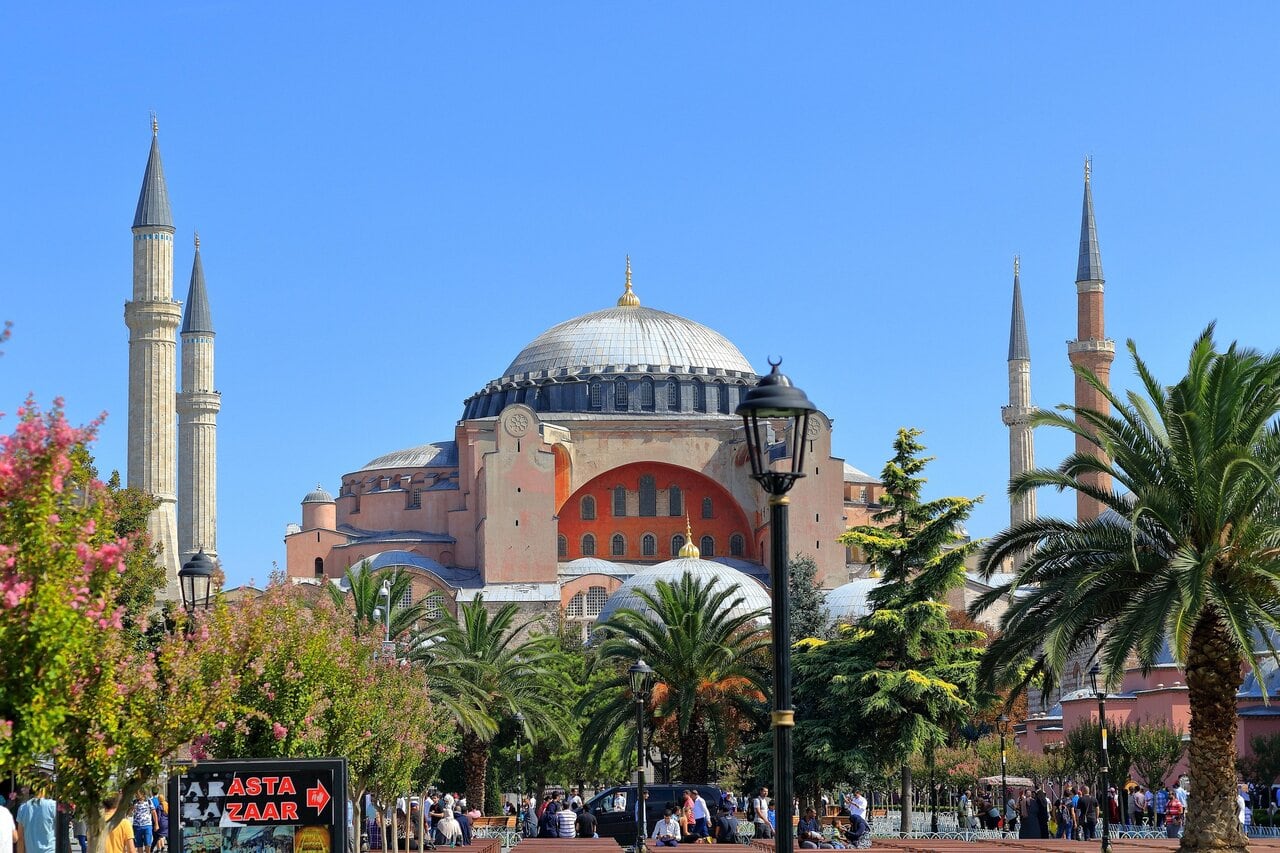
Located in the Sultanahmet district, Hagia Sophia sits opposite the Blue Mosque and close to Topkapi Palace and the Basilica Cistern, meaning it is usually one of the first places visitors see when exploring Istanbul’s historic centre. Its huge dome dominates the skyline, and the building is considered one of the greatest architectural achievements of the Byzantine Empire.
What makes Hagia Sophia particularly interesting is that it represents both Byzantine Christian and Ottoman Islamic history in one building. Inside, you will see Christian mosaics, Islamic calligraphy, huge domes, marble columns and decorative designs from different periods of history, all in the same space.
For centuries, Hagia Sophia was the largest cathedral in the world and was considered an engineering marvel when it was built. Even today, visitors are often surprised by how large the interior space is, especially when standing under the main dome.
For most visitors, Hagia Sophia is one of the must-see attractions in Istanbul, along with Topkapi Palace and the Basilica Cistern.
The History of Hagia Sophia
Hagia Sophia was originally built in 537 AD during the reign of the Byzantine Emperor Justinian I and was constructed as a cathedral for Constantinople, which was then the capital of the Byzantine Empire. At the time, it was one of the largest and most impressive buildings in the world and remained the largest cathedral for nearly a thousand years.
The building was designed with a massive central dome, which was an incredible engineering achievement for its time. The dome appears to float above the interior because of the way light enters through the windows at its base, and this architectural design influenced many later buildings.
When the Ottoman Empire conquered Constantinople in 1453, Hagia Sophia was converted into a mosque. During this period, minarets were added, Christian mosaics were covered and Islamic features such as calligraphy panels and a mihrab were installed.
In 1935, Hagia Sophia was turned into a museum during the early years of modern Turkey, allowing visitors to see both the Christian mosaics and Islamic features inside the building.
More recently, Hagia Sophia was converted back into a mosque, and it is now an active place of worship again while still open to visitors outside prayer times.
Because of its long and complex history, Hagia Sophia is not just a mosque or a church but a building that represents multiple empires, religions and periods of history, which is one of the reasons it is so famous.
Inside Hagia Sophia
Inside Hagia Sophia, the first thing most visitors notice is the enormous central dome, which dominates the interior space. The scale of the building is difficult to appreciate from outside, but inside it feels vast, with high ceilings, huge columns and large open spaces.
The interior contains a mixture of Byzantine mosaics, Islamic calligraphy, marble walls and decorative stonework, reflecting the different periods of the building’s history. One of the most famous features inside Hagia Sophia is the series of large circular calligraphy panels displaying the names of important figures in Islam.
Visitors can also see Christian mosaics that were uncovered when the building became a museum. These mosaics depict religious figures and are located in various parts of the building, particularly in the upper galleries.
The ground floor of Hagia Sophia is used as a mosque, so visitors walk around the edges of the prayer area. There is usually a large carpet covering the central floor area.
Visitors can also go up to the upper gallery level, which offers a different view of the interior and allows you to see some of the mosaics more closely. The upper level also gives a good view of the central dome and the scale of the building.
Most visitors spend about one hour inside Hagia Sophia, although you could spend longer if you are interested in history or architecture.
Hagia Sophia Architecture and Design
Hagia Sophia is considered one of the greatest architectural achievements of the ancient world, mainly because of its massive central dome and innovative engineering design. When it was built in the 6th century, nothing of this scale had been constructed before.
The main dome appears to float above the building because of the ring of windows at its base, which allow light to enter and create the illusion that the dome is suspended in the air. This design was revolutionary at the time and influenced many later mosques and churches.
The building combines a rectangular basilica layout with a large central dome, which was a new architectural idea when it was built. The interior is supported by large columns and arches that help distribute the weight of the dome.
Many Ottoman mosques built later in Istanbul were inspired by Hagia Sophia, including the Blue Mosque, which was designed to compete with Hagia Sophia and sits directly opposite it.
Inside the building, you will see a combination of marble columns, decorative stone panels, mosaics and large calligraphy panels, showing how the building changed over time as it was converted from a church to a mosque.
Even today, Hagia Sophia is considered one of the most important buildings in the history of architecture, and it remains one of Istanbul’s most famous landmarks.
Hagia Sophia Tickets and Entry Information
Hagia Sophia is now an active mosque, which means entry to the main prayer area is free, but visitors must follow certain rules and enter through designated visitor entrances rather than the main worship entrances. Because it is one of the most famous landmarks in Istanbul, there are often queues to enter, especially during peak tourist season and in the middle of the day.
Visitors are allowed to enter outside of prayer times, but the mosque may temporarily close to tourists during daily prayers. For this reason, it is often best to visit early in the morning or later in the afternoon, when there are fewer crowds and fewer interruptions.
Although entry to the mosque itself is free, some visitors choose to join guided tours to better understand the history, architecture and mosaics inside Hagia Sophia. Guided tours can be useful because the building has a very long and complex history that is not always obvious when walking around on your own.
Because Hagia Sophia is located in the Sultanahmet area, many visitors combine their visit with Topkapi Palace, the Basilica Cistern and the Blue Mosque, which are all within walking distance of each other.
Even though Hagia Sophia does not require a standard entrance ticket like Topkapi Palace or the Basilica Cistern, it is still one of the busiest attractions in Istanbul, so planning your visit time carefully can make a big difference.
Dress Code and Visitor Rules for Hagia Sophia
Because Hagia Sophia is now a functioning mosque, visitors must follow a dress code and visitor rules when entering the building. These rules are similar to those for visiting other mosques in Istanbul.
Visitors should wear modest clothing. Shoulders and knees should be covered, and visitors wearing shorts or sleeveless tops may be asked to cover up before entering. Women are required to cover their hair with a scarf inside the mosque. Headscarves are sometimes available at the entrance if you do not have one.
Shoes must be removed before entering the prayer area, so it is useful to wear shoes that are easy to remove. You will usually be given a small bag to carry your shoes inside.
Visitors should also remember that Hagia Sophia is an active place of worship, so it is important to be quiet, respectful and avoid walking in front of people who are praying.
Photography is usually allowed, but flash photography may not be permitted in some areas. Tripods are generally not allowed inside.
Understanding the dress code and visitor rules before arriving will make your visit much smoother and help avoid any problems at the entrance.
Opening Hours and Best Time to Visit Hagia Sophia
Hagia Sophia is generally open to visitors every day, but because it is an active mosque, it closes temporarily during prayer times throughout the day. Prayer times change depending on the time of year, so opening hours for visitors are not always fixed.
The best time to visit Hagia Sophia is usually early in the morning, shortly after it opens to visitors, as this is when the building is usually less crowded. Late afternoon can also be a good time to visit once many tour groups have left the area.
Midday is often the busiest time because many visitors are in the Sultanahmet area visiting multiple attractions at the same time. If possible, try to avoid visiting right in the middle of the day.
Most visitors spend around 45 minutes to one hour inside Hagia Sophia, although you could spend longer if you are interested in history, mosaics or architecture.
Because Hagia Sophia is located in the centre of the historic district, it is easy to combine your visit with Topkapi Palace, the Basilica Cistern and the Blue Mosque, which are all located very close together.
How to Get to Hagia Sophia
Hagia Sophia is located in the Sultanahmet district of Istanbul, which is the main historical area of the city and one of the easiest places to reach using public transport.
The easiest way to get there is usually by taking the T1 tram line and getting off at Sultanahmet stop. From the tram stop, Hagia Sophia is only a short walk away and is easy to find because of its large dome and minarets.
Many visitors simply walk between attractions in this area because Hagia Sophia, the Blue Mosque, Topkapi Palace and the Basilica Cistern are all within walking distance of each other.
If you are staying in areas such as Taksim, Galata or Karaköy, you can take the metro or funicular down to the tram line and then continue to Sultanahmet by tram.
Taxis are available throughout the city, but traffic in the historic centre can be slow, so public transport is often the easiest option.
Because Hagia Sophia is one of the most famous landmarks in Istanbul, it is well signposted and easy to find once you arrive in the Sultanahmet area.
Tips for Visiting Hagia Sophia
Visiting Hagia Sophia is one of the highlights of any trip to Istanbul, but it can also be one of the busiest attractions in the city, so planning your visit properly can make a big difference to your experience.
One of the most important tips is to visit early in the morning or later in the afternoon, as the building can become very crowded in the middle of the day. Large tour groups usually arrive from mid-morning onwards, and queues to enter can become quite long.
Because Hagia Sophia is now an active mosque, it is important to check prayer times before visiting, as the building will close to visitors during prayers. Planning your visit between prayer times will help avoid waiting outside.
You should also make sure you follow the dress code, covering shoulders and knees, and women should bring a scarf to cover their hair. Shoes must be removed before entering the main prayer area, so wearing shoes that are easy to take off is helpful.
When inside Hagia Sophia, take time to look up at the central dome, walk around the edges of the building to see the mosaics and calligraphy, and if possible visit the upper gallery level for a different view of the interior.
Most visitors combine Hagia Sophia with Topkapi Palace, the Basilica Cistern and the Blue Mosque, as all of these attractions are located within walking distance of each other in the Sultanahmet area.

Rupert’s Handy Travel Tips
Planning to visit Hagia Sophia? Here are a few useful tips before you go:
- Check prayer times: Hagia Sophia closes to visitors during daily prayers, so plan your visit between prayer times.
- Dress modestly: Shoulders and knees should be covered, and women need a headscarf inside.
- Arrive early: This is one of the most visited places in Istanbul and queues can get long later in the day.
- Remove shoes before entering: Bring a small bag or be prepared to carry your shoes.
- Combine nearby attractions: Visit the Blue Mosque, Basilica Cistern and Topkapi Palace on the same day.
Want to meet the reindeer behind our travel tips? Find out more in our page Who is Rupert?.
Frequently Asked Questions About Hagia Sophia
Is Hagia Sophia free to enter?
Yes, Hagia Sophia is free to enter for worship because it is an active mosque, but visitors must purchase tickets and follow dress rules and visit outside prayer times.
How long do you need at Hagia Sophia?
Most visitors spend around 45 minutes to one hour inside Hagia Sophia.
Do you need to wear a headscarf in Hagia Sophia?
Yes, women are required to cover their hair inside Hagia Sophia.
Can tourists enter Hagia Sophia during prayer time?
No, Hagia Sophia is closed to visitors during prayer times, so you must visit outside these times.
Can you visit Hagia Sophia and the Blue Mosque on the same day?
Yes, they are located directly opposite each other and are usually visited on the same day along with the Basilica Cistern and Topkapi Palace.
Further Reading & Related Guides
If you are planning your trip, make sure to read our Istanbul Travel Guide, which covers where to stay, transport, attractions and how to plan your time in the city. This will help you organise your itinerary and group attractions together so you don’t spend too much time travelling across this very large city.
Because Hagia Sophia is located in the Sultanahmet area, many visitors combine it with nearby attractions such as the Blue Mosque, Topkapi Palace and the Basilica Cistern, which are all located within walking distance of each other and are some of the most important historical sites in Istanbul.
You may also want to read our Bosphorus Cruises guide, as many visitors take a Bosphorus cruise after exploring the historic centre, especially from the nearby Eminönü area.
If you are planning to visit several attractions during your trip, it is also worth reading our Istanbul Tourist Pass guide, which explains which attractions are included and whether the pass is worth buying.
Reading these guides together will help you plan your Istanbul itinerary more efficiently, group nearby attractions together and make the most of your time in the city.
Last Updated
April 2026
Affiliate Disclosure
This page contains affiliate links. If you click through and make a purchase or booking, we may earn a small commission at no extra cost to you. This helps support our work and allows us to continue providing detailed, independent travel advice. We only recommend apps and services we personally use or have verified as high-quality.