Reviewed by our editorial team Updated
Auschwitz from Kraków: How to Visit and What to Expect
A visit to Auschwitz-Birkenau Memorial and Museum is one of the most significant and emotionally impactful experiences you can have when staying in Kraków. Unlike most attractions, this is not somewhere you go for entertainment or casual sightseeing. It is a place of remembrance, education, and reflection.
Located approximately 70 kilometres west of Kraków, the site is accessible within a day trip, but it requires more planning than many other destinations. Visitor numbers are high throughout the year, and entry is controlled through timed tickets, guided visits, and organised transport options.
Because of this, choosing how you visit is not just a logistical decision. It directly affects your experience on the day. Whether you travel independently, use public transport, or join a guided tour, each option offers a different balance of flexibility, structure, and depth of understanding.
This guide is designed to help you make that decision clearly, so you can plan your visit in a way that is both practical and respectful.
What Auschwitz-Birkenau Is and Why It Matters
The Auschwitz-Birkenau Memorial and Museum is one of the most important historical sites in the world. It preserves the remains of the largest Nazi concentration and extermination camp complex, where over 1.1 million people were murdered, the vast majority of them Jews, alongside prisoners from across Europe.
The memorial is made up of two main sites: Auschwitz I, the original concentration camp established in 1940, and Auschwitz II–Birkenau, the much larger extermination camp built later as part of the Nazi regime’s “Final Solution”.
At Auschwitz I, the experience is structured and museum-like. Visitors move through preserved barracks, exhibitions, and corridors that document the daily realities faced by prisoners. It is here that you pass under the infamous “Arbeit macht frei” gate, one of the most recognisable symbols of the camp. Inside, displays include personal belongings such as shoes, suitcases, and photographs, each representing individuals whose lives were taken. These exhibits provide a deeply personal and human perspective on events that are often understood only in terms of numbers.
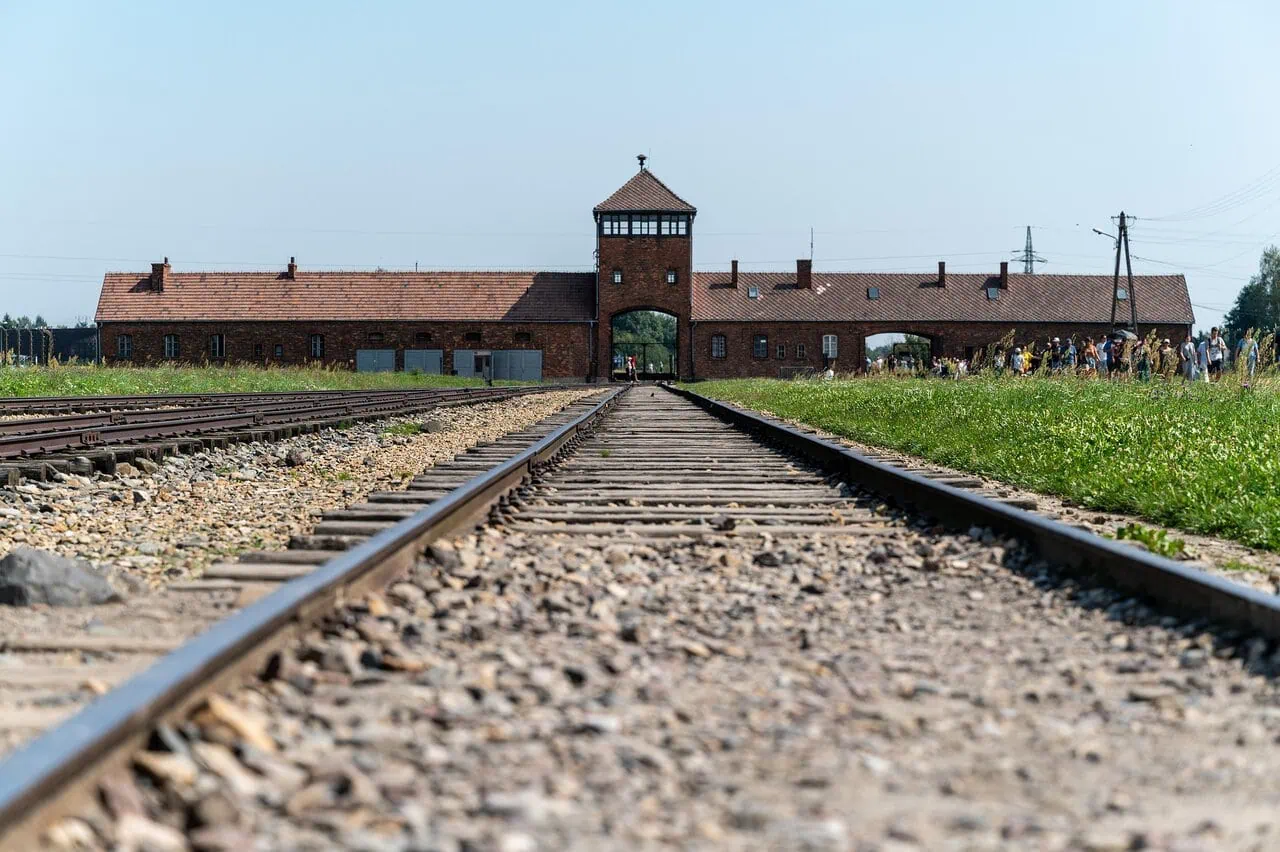
Birkenau, located around 3 kilometres away, offers a very different experience. The site is vast and largely open, with railway tracks stretching into the camp, watchtowers lining the perimeter, and the remains of gas chambers and crematoria spread across a wide landscape. The scale of Birkenau is difficult to comprehend until you see it in person. Walking through the grounds gives a sense of distance and emptiness that reflects the enormity of what happened there.
Together, the two sites provide a complete historical record, combining detailed documentation with physical space. Auschwitz I helps you understand the system, while Birkenau shows its scale and consequences.
The visit is not designed to be easy. It is a place of remembrance, education, and reflection, intended to ensure that the events of the Holocaust are understood and not forgotten. For many visitors, it is one of the most powerful and lasting experiences of their time in Poland.
UNESCO World Heritage Status
Auschwitz-Birkenau is officially recognised as a UNESCO World Heritage Site under the full title Auschwitz Birkenau German Nazi Concentration and Extermination Camp (1940–1945). It was inscribed in 1979, making it one of the earlier sites added to the World Heritage List.
This status is different from many other UNESCO listings. Auschwitz-Birkenau is not protected because it is beautiful, decorative or architecturally impressive. It is protected because it is an authentic place of memory, preserving physical evidence of one of the greatest crimes in human history.
UNESCO recognises the site as the most notorious of the Nazi German concentration and extermination camps, created under German occupation of Poland and central to the implementation of the Holocaust. The listing covers both Auschwitz I and Auschwitz II-Birkenau, preserving the barracks, railway tracks, watchtowers, ruins of gas chambers and crematoria, and the wider camp landscape.
The official name was updated in 2007 to make the historical responsibility clear: German Nazi Concentration and Extermination Camp (1940–1945). This wording matters, because the site was created and operated by Nazi Germany in occupied Poland, not by Poland.
For visitors, the UNESCO status reinforces why this is not a normal day trip from Kraków. It is a protected memorial, a place of education, and a site where respectful conduct is essential. Visiting Auschwitz-Birkenau means entering a place preserved so that future generations can understand, remember and confront what happened here.
Learn More from UNESCO
This destination is connected to a UNESCO World Heritage Site, recognised for its outstanding cultural, historical, or natural importance. You can explore official listings, background information, and protected heritage sites through UNESCO’s global database.
How the Auschwitz Site Works and What to Expect During Your Visit
Visiting Auschwitz-Birkenau Memorial and Museum is a structured experience, and understanding how the site operates in advance will make your visit significantly smoother.
The memorial is divided into two main areas: Auschwitz I and Auschwitz II–Birkenau, located around 3 kilometres apart. Most visits include both sites, with transport between them provided either by free shuttle buses, organised tour transport, or your own arrangements.
Entry is controlled through timed slots, and in most cases, particularly during daytime hours, visits are conducted with a licensed guide provided by the official museum. Even if you book through a third-party tour, the guided portion inside the site follows the same structure, as all tours are managed by the memorial’s visitor system.
At Auschwitz I, the visit is more structured. You move through indoor exhibitions, preserved barracks, and corridors, following a set route with your guide. This part of the experience focuses on documentation and personal stories, with displays that require time and attention.
At Birkenau, the visit becomes more open. The site is vast, and while there is still a guided route, there is more space to walk and reflect. Much of this section is outdoors, so conditions can vary depending on the weather.
There are also important practical and behavioural rules to be aware of. Visitors are expected to behave respectfully at all times. This is not a typical tourist attraction, and the atmosphere reflects that. Speaking quietly, avoiding disruptive behaviour, and being mindful of photography are all part of the experience.
Photography is allowed in most outdoor areas, but there are restrictions in certain indoor spaces, particularly where personal belongings of victims are displayed. Signs will clearly indicate where photography is not permitted.
Security measures are in place at the entrance, including bag size restrictions, so it is best to bring only essential items. Identification is required, and the name on your booking must match your ID.
In total, most visits last around 3.5 hours on site, but when combined with travel from Kraków, you should plan for a full day. The pace is steady and guided, with limited flexibility once inside, so it is important to be prepared both practically and mentally.
Understanding how the site operates allows you to focus on the experience itself, rather than the logistics, and ensures that your visit is respectful, well-paced, and meaningful.
Respect and Conduct During Your Visit
A visit to Auschwitz-Birkenau Memorial and Museum is very different from most places you will visit during your time in Kraków. It is a site of remembrance, and the way visitors behave contributes to the overall atmosphere.
Throughout the memorial, you are expected to act with respect and awareness of the surroundings. This means keeping noise levels low, avoiding disruptive behaviour, and being mindful that many visitors are there for reflection rather than sightseeing.
Photography is permitted in many outdoor areas, but it is important to be considerate in how you take photos. Certain indoor exhibitions prohibit photography entirely, and even where it is allowed, it should never interfere with the experience of others or the dignity of the site.
It is also worth being aware that the visit can be emotionally challenging. The content is direct and, at times, difficult to process. Taking your time, allowing space to reflect, and not rushing through the experience will help you engage with it more meaningfully.
Approaching the visit in this way ensures that it remains what it is intended to be, a place to learn, remember, and reflect.
What You Can and Cannot Take Into Auschwitz
Security checks are carried out before entering the Auschwitz-Birkenau Memorial, so it is best to travel light and arrive with enough time to pass through screening.
The Museum currently allows backpacks and handbags measuring no more than 35 × 25 × 15 cm. Larger bags should be left in your vehicle or placed in the luggage storage facilities available near the visitor entrance.
Food and alcohol cannot be consumed within the areas open for visiting, while smoking and vaping are also prohibited. Weapons, dangerous items and potentially hazardous substances are not permitted anywhere within the Memorial.
Animals are not normally allowed, with the exception of qualifying assistance dogs. Prams also cannot be taken inside the historic blocks and other buildings that form part of the visitor route, so families with young children should plan for this in advance.
The use of drones is prohibited, and mobile phones should not be used inside exhibition buildings or in designated silence areas. Photography for personal use is allowed in most parts of the Memorial, but flash photography and tripods are not permitted. Photography is also completely prohibited in several particularly sensitive locations, including areas where victims’ remains or personal effects are displayed.
Visitors are expected to dress and behave appropriately for a memorial site, remain on designated visitor routes and follow instructions given by Museum staff at all times.
Because of the security checks, the Museum recommends arriving at least 30 minutes before your reserved entry time. If you are travelling from Kraków with an organised tour, it is also worth checking whether larger bags can be left securely on the coach while you visit the Memorial.
Facilities at Auschwitz-Birkenau
While the Auschwitz-Birkenau Memorial and Museum is a historic site, it is also well organised for visitors, with basic facilities available across both Auschwitz I and Auschwitz II–Birkenau.
At Auschwitz I, which serves as the main entrance area, you will find the majority of services. These include toilets, a café, a bookshop, and visitor information points. This is the best place to take a break before or after your guided visit, as facilities inside the exhibition areas themselves are limited.
At Birkenau, facilities are more minimal. Toilets are available near the entrance, but the site is much larger and more open, with fewer services once you move further inside. It is worth planning accordingly, especially as this part of the visit involves more walking and time outdoors.
Food options are limited within the memorial, and eating is restricted to designated areas. Most visitors either use the café at Auschwitz I or bring something small with them, although large bags are not permitted due to security restrictions.
Accessibility is more challenging than at a typical attraction. Paths can be uneven, distances are significant, and some indoor areas involve stairs or narrow walkways. This is particularly relevant at Birkenau, where much of the site is exposed and spread out.
In total, while the facilities are sufficient for a full visit, it is best to arrive prepared, especially if you are travelling from Kraków and planning to spend several hours on site.
How Much Time Do You Need at Auschwitz I and Birkenau?
A standard guided visit to Auschwitz-Birkenau usually lasts around 3.5 hours, although the exact duration depends on the type of visit you book. The Museum recommends allowing time for both Auschwitz I and Auschwitz II-Birkenau, as the two sites form different but equally important parts of the overall experience.
As a minimum, the Museum suggests allowing around one hour at Auschwitz I and one hour at Birkenau, although most organised visits spend longer than this. A typical general tour gives you enough time to see the main exhibitions and historic buildings at Auschwitz I before continuing to Birkenau to visit the barracks, railway unloading area and the ruins of the gas chambers and crematoria.
You also need to allow time to move between the two sites. Auschwitz I and Birkenau are around 3 kilometres apart, and visitors on many guided visits use the Museum transfer service between them. The visit therefore involves more than simply walking through one museum building.
If you are travelling from Kraków, it is sensible to treat Auschwitz as a full-day excursion. Once transport, security checks, the guided visit and the journey back are included, the day will often take around 7 to 9 hours.
Try not to arrange another major attraction, train journey or fixed evening booking immediately afterwards. Tours can run slightly differently depending on traffic, entry arrangements and how the visitor groups are organised on the day, and many people also appreciate having some unstructured time after leaving the Memorial.
What to Wear When Visiting Auschwitz-Birkenau
A visit to Auschwitz-Birkenau involves considerably more walking outdoors than many visitors expect, particularly at Birkenau. You should therefore dress for both the weather and the amount of time you will spend on your feet.
The visitor route combines indoor exhibitions with outdoor paths and historic surfaces, including gravel, asphalt and uneven ground. Comfortable, supportive footwear is much more practical than shoes intended primarily for sightseeing around a city. The wider visit can involve several kilometres of walking.
In winter, the site can be extremely cold and exposed, particularly at Birkenau where there is relatively little shelter from the wind. Warm layers, a waterproof outer layer, gloves and suitable footwear can make a significant difference.
During summer, conditions can be hot and there are long sections of the Birkenau visit with limited shade. Lightweight clothing, sun protection and water are sensible, while still remembering that Auschwitz-Birkenau is a memorial rather than an ordinary tourist attraction.
The Museum asks visitors to dress in a manner appropriate to the nature of the site. Clothing should therefore be respectful and reasonably understated.
Whatever time of year you visit, check the forecast before leaving Kraków. Much of Birkenau is outdoors and the visit continues in rain, cold or heat, so suitable clothing can make it much easier to concentrate on the significance of the place rather than the weather.
Accessibility and Mobility at Auschwitz-Birkenau
Visitors with reduced mobility should be aware that Auschwitz-Birkenau can be physically challenging to visit. Because the Memorial preserves historic buildings, roads and surfaces as authentically as possible, there are limits to how extensively the site can be adapted for modern accessibility.
At Auschwitz I, the standard route involves approximately 1,300 metres of walking, including an initial section of almost 600 metres. Historic roads and pavements are uneven, and access to some exhibition buildings can be difficult because of steps, narrow corridors and the structure of the original buildings. Some upper floors and the basement of Block 11 cannot be accessed by wheelchair users.
Birkenau involves even greater distances, with more than 2 kilometres of walking during a typical visit. Much of the ground is uneven and exposed, while some areas around the memorial and the remains of the crematoria can be particularly difficult to navigate with a wheelchair.
There are, however, facilities to help. Wheelchairs and walkers can be borrowed free of charge from the Visitor Service Centre, subject to availability, and it is possible to request them in advance. Accessible toilets and designated parking spaces are also available.
The shuttle bus operating between Auschwitz I and Birkenau is equipped with a platform for wheelchair users, helping visitors move between the two parts of the Memorial.
Visitors with visual impairments can also make use of accessibility features including tactile floor markings, Braille information and specially prepared visitor materials. Assistance dogs are permitted when the appropriate documentation is provided.
If you or somebody travelling with you has significant mobility or accessibility requirements, it is worth contacting the Museum before your visit. This allows you to understand which parts of the route will be practical and arrange any equipment or assistance you may need.
Visiting Auschwitz-Birkenau with Children
Families should consider carefully whether a visit to Auschwitz-Birkenau is appropriate for younger children. The Museum officially states that visits by children under the age of 14 are not recommended.
This recommendation reflects the nature of what visitors encounter. Exhibitions deal directly with imprisonment, persecution and mass murder, and include photographs, personal belongings and physical evidence connected with victims of the Holocaust. Even for adults, parts of the visit can be extremely difficult and emotionally challenging.
Older children and teenagers may gain a great deal from visiting, particularly if they have already studied the Holocaust or the Second World War, but preparation beforehand can make the experience easier to understand. Explaining what Auschwitz was, why the Memorial has been preserved and what they are likely to encounter can help provide important context.
The practical demands of the visit should also be considered. A standard visit lasts several hours, involves significant amounts of walking and includes long periods where visitors need to listen quietly to a guide. Birkenau in particular involves considerable time outdoors and can be challenging during very hot, cold or wet weather.
Parents know their children best, and age alone does not determine whether somebody is ready for the experience. However, the Museum’s recommendation concerning children under 14 is an important factor to consider when deciding whether to include Auschwitz in a family trip to Kraków.
For families who decide that the visit is not appropriate for a younger child, the Museum’s visitor information notes that a supervised facility is available near the Museum where children can be left during a visit. Check the current arrangements directly with the Memorial before relying on this option.
How to Get from Kraków to Auschwitz (Overview)
Travelling from Kraków to Auschwitz is relatively straightforward in terms of distance, but the way you organise the journey can vary significantly.
The trip typically takes around 1.5 hours each way, depending on traffic and the transport option you choose. The main decision is whether you want to manage the journey yourself or have it organised for you.
Independent travel gives you more flexibility but requires you to coordinate transport and entry tickets separately. Public transport options such as buses and trains are available and affordable, but they involve additional steps once you arrive in Oświęcim, where the memorial is located.
Many organised tours simplify the process by combining transport, a reserved entry pass and a guided visit into a single booking, but inclusions vary, so check exactly what your chosen product covers before paying.
Each option works well in different situations, so understanding the trade-offs will help you choose the approach that best fits your schedule and preferences.
| Option | Transport from Kraków | Auschwitz entry included? | Guided visit included? | Best for |
|---|---|---|---|---|
| Organised full tour | Yes | Usually, but check the booking | Usually | Easiest option |
| Transport-only tour/transfer | Yes | Not necessarily | Usually not | Easy transport if you already have entry |
| Bus | You arrange it | No | No | Low-cost independent travel |
| Train | You arrange it | No | No | Flexible independent travel |
| Book direct with Auschwitz Museum | No | Yes, when successfully reserved | Depends on ticket type | Maximum control |
Visiting Auschwitz Independently (Do It Yourself)
Visiting Auschwitz-Birkenau Memorial and Museum independently gives you the most control over your day, but it also requires the most planning.
The first step is securing entry. Tickets are managed through the official system and are often released in advance, especially for guided visits. During peak periods, availability can be limited, so booking early is important. Entry without a guide is sometimes possible at specific times, but these slots are also controlled and can fill quickly.
Once you have your ticket, you need to arrange transport to Oświęcim. This can be done by bus or train, but both options require you to manage timing carefully to match your entry slot.
On arrival, you will need to move between Auschwitz I and Birkenau, which are located a few kilometres apart. Shuttle buses run between the two sites, or you can use local transport or taxis if needed.
The main advantage of visiting independently is flexibility. You can choose your own schedule and pace, and avoid being tied to a group. However, it does require careful coordination, and for many visitors, the convenience of a guided tour outweighs the additional effort.
Getting to Auschwitz by Bus from Kraków
Travelling by bus is one of the simplest and most direct ways to reach Auschwitz-Birkenau Memorial and Museum from Kraków without joining a full guided tour.
Buses run regularly from Kraków MDA Bus Station, located next to the main train station. The journey typically takes around 1 hour 30 minutes, depending on traffic, and drops you in Oświęcim, within walking distance of the memorial entrance.
This option works well if you want a low-cost, relatively straightforward journey while still maintaining independence. However, it does require coordination. You need to ensure your bus arrival time aligns with your entry ticket, and you will need to organise your return journey separately.
For many visitors, the biggest challenge is not the journey itself, but managing timing and availability, especially during busy periods when both buses and entry slots can fill up.

Check Bus Routes for your destination with Busbud
If your plans include travelling by bus to or from your destination, Busbud provides a convenient way to search routes and compare tickets.
Instead of checking individual operator websites, you can see several options together and choose the journey that best fits your itinerary.
Getting to Auschwitz by Train from Kraków
Travelling by train is a reliable way to reach Oświęcim from Kraków, but it requires a bit more coordination than taking the bus.
Services depart from Kraków Główny, with journey times typically between 1 hour 30 minutes and 2 hours, depending on the route and whether you take a direct train or one with a change. Fares are generally low, and tickets can be purchased at the station, online, or through apps such as Koleo, which is widely used in Poland for booking regional rail services.
The main thing to plan for is the final part of the journey. The train station in Oświęcim is located around 2 kilometres from Auschwitz I, so you will need to continue on foot, by local bus, or by taxi. Walking takes approximately 25 to 30 minutes, while taxis are usually available outside the station and offer a quicker transfer if you are short on time.
Because of this extra step, the train is slightly less convenient than the bus, particularly if you are working to a fixed entry time. You will need to build in a buffer to ensure you arrive at the memorial with enough time to pass through security and begin your visit.
That said, trains run regularly throughout the day, which gives you more flexibility with departure times, especially on the return journey. If you are comfortable managing the connection between the station and the memorial, rail travel can still be a practical and cost-effective option.
Booking Direct with the Official Auschwitz Museum
Admission to the grounds of the Auschwitz-Birkenau Memorial is free of charge, but an entry pass must still be reserved in advance, and passes are issued online rather than at the site itself. Fees are charged only for guided tours led by museum educators. Full details are set out in the Museum’s own visiting information.
If you prefer to organise your visit independently, you can book entry tickets directly through the official Auschwitz-Birkenau Memorial website.
Booking directly gives you full control over your visit, including selecting your entry time and tour type. You can choose between guided tours led by official museum educators or limited self-guided entry slots.
This option is often the most cost-effective, but it requires careful planning. Tickets are released in advance and can sell out quickly, particularly for popular times of day and guided visits.
It is also important to remember that booking directly only covers entry. You will still need to arrange your own transport to and from Oświęcim, as well as manage the timing of your visit.
For visitors who are comfortable planning logistics themselves, this can be the best option. For others, combining transport and entry through a guided tour may provide a more straightforward experience.
Guided Auschwitz Tour from Kraków with Hotel Pickup (SuperCracow)
For many visitors, the easiest way to visit Auschwitz-Birkenau Memorial and Museum is to join a fully organised tour from Kraków that includes both transport and entry.
This option with SuperCracow is designed to remove most of the planning. Transport is arranged in advance, entry tickets are secured for you, and the visit itself is conducted with a licensed museum guide, which is required for most daytime entries.
The day typically lasts around 7 to 9 hours, including travel time, and follows a structured format. You visit both Auschwitz I and Auschwitz II–Birkenau, with the guided portion lasting around 3.5 hours in total.
The main advantage of this option is simplicity. You do not need to coordinate transport or worry about ticket availability, which can be particularly helpful during busy periods when entry slots are limited.
Guided Auschwitz Tour from Kraków (Royal Cracow – Wide Pickup Options)
This alternative tour with Royal Cracow offers a similar overall experience, but with greater flexibility in pickup locations and scheduling.
Like other organised tours, it includes transport, entry tickets, and a licensed guide at the memorial, ensuring that your visit follows the official structure. The total duration is slightly longer at 7 to 10 hours, depending on pickup logistics and group size.
One of the main differences is scale. This operator runs a larger number of daily departures, with pickups available from a wide range of locations across Kraków. This makes it easier to find a convenient option, particularly if you are staying outside the central area.
However, this flexibility can come with more variation in timing, as pickup windows may be broader and subject to confirmation the day before.
Which Auschwitz Tour Should You Choose
The most important thing to understand is that the core experience at Auschwitz is the same, regardless of which tour you choose. The guided visit inside the memorial is controlled by the official museum system, so the content and structure are largely identical.
The real difference comes down to how the day is organised.
If you prefer a more structured and predictable experience, the SuperCracow option is slightly more streamlined, with fewer variables in pickup and timing.
If you want maximum flexibility, particularly in terms of pickup locations or language options, the Royal Cracow tour may be a better fit.
In practical terms, both are reliable and well-reviewed options. The decision is less about the visit itself and more about which logistics suit your plans best.
Before You Book: Check What Your Auschwitz Tour Actually Includes
Not every trip advertised as an “Auschwitz tour from Kraków” necessarily includes admission to the Auschwitz-Birkenau Memorial or a guided visit inside the site.
Before booking, check the “What’s included” section carefully. Ideally, your booking should specifically confirm:
- Transport from Kraków
- A reserved Auschwitz-Birkenau entry pass
- Entry to both Auschwitz I and Auschwitz II-Birkenau
- A guided visit with an authorised Museum guide-educator, if that is the experience you want
Some products may primarily provide transport to and from Oświęcim. That isn’t necessarily a bad option. In fact, an organised transfer can still be one of the easiest ways to reach Auschwitz from Kraków. However, you should not assume that transport automatically gives you admission to the Memorial.
If your chosen trip doesn’t include entry, reserve your own personalised entry pass separately through the official Auschwitz-Birkenau booking website at visit.auschwitz.org before travelling. Entry passes are limited and, since March 2026, are available online rather than at the Museum entrance.
The key is to have both parts of the day confirmed: how you’re getting there and how you’re getting in.
Important Tips for Visiting Auschwitz from Kraków
Visiting Auschwitz-Birkenau Memorial and Museum is very different from most day trips, and preparing properly will make the experience smoother and more meaningful.
The most important thing is timing. Entry is controlled through specific time slots, and these can fill up quickly, especially during peak seasons. Whether you are booking independently or through a tour, securing your place in advance is strongly recommended.
You should also be prepared for a full and emotionally demanding day. The visit typically involves several hours on site, combined with around 3 hours of travel, so comfortable shoes and appropriate clothing are essential. The sites are large, particularly Auschwitz II–Birkenau, where much of the visit takes place outdoors.
Identification is required for entry, and the name on your booking must match your ID. Security restrictions are also in place, including limits on bag size, so it is best to travel light.
Finally, allow time to reflect. This is not a rushed sightseeing stop, and many visitors find it helpful to avoid packing too much else into the same day.
Rupert’s Handy Travel Tips

Rupert doesn’t rush this one. Some places need a different pace, and this is definitely one of them.
- Book ahead: tickets and tours often sell out days in advance.
- Give the day space: don’t try to combine this with other major activities.
- Dress for the weather: much of Birkenau is outdoors.
- Bring ID: you won’t be allowed in without it.
- Take your time afterwards: it’s not a visit you rush away from.
Want to meet the reindeer behind our travel tips? Find out more in our page Who is Rupert?.




Frequently Asked Questions About Visiting Auschwitz
How long does it take to visit Auschwitz from Kraków?
Most visits take between 7 and 9 hours, including travel time and the guided tour of both sites.
Can you visit Auschwitz without a tour?
Yes, but you still need to book an entry slot in advance through the official system. Guided visits are often required during peak times.
Is it better to visit Auschwitz by tour or independently?
A tour is usually easier, as it combines transport, tickets, and guidance. Independent visits offer more flexibility but require more planning.
How far is Auschwitz from Kraków?
The distance is around 70 kilometres, with a typical journey time of 1.5 hours each way.
Is Auschwitz suitable for all visitors?
The site is open to all, but it is an intense and emotional experience, and may not be suitable for younger children.
Further Reading & Related Guides
When planning a visit to Auschwitz-Birkenau Memorial and Museum, it’s important to consider how the day fits into your wider stay in Kraków. Organising your Kraków airport transfer in advance can make your arrival smoother, especially if you are working around early tour departures or timed entry slots.
Many visitors build their itinerary around one or two major excursions, so reviewing day trips from Kraków can help you plan ahead and avoid trying to fit too much into a short stay. Alongside Auschwitz, destinations such as the Wieliczka Salt Mine or the mountain town of Zakopane offer very different experiences and are best spaced out across separate days.
Because a visit to Auschwitz is often emotionally demanding and time-intensive, it works best when balanced with lighter activities on other days. Browsing the best things to do in Kraków or using our Kraków travel guide to structure the rest of your trip will help you create a more manageable and well-paced itinerary around this important visit.
Many visitors combine this visit with the Oskar Schindler Factory Museum in Kraków itself, which offers a closely related but very different perspective on the city under Nazi occupation. For more guides in this vein, our wider Dark Tourism travel guide covers memorials, historic sites and difficult histories across Europe.